
Julia Kelley
As both external and internal conflicts rage across Cameroon, the country’s refugee struggle has been overlooked, worsening without adequate aid or media attention.
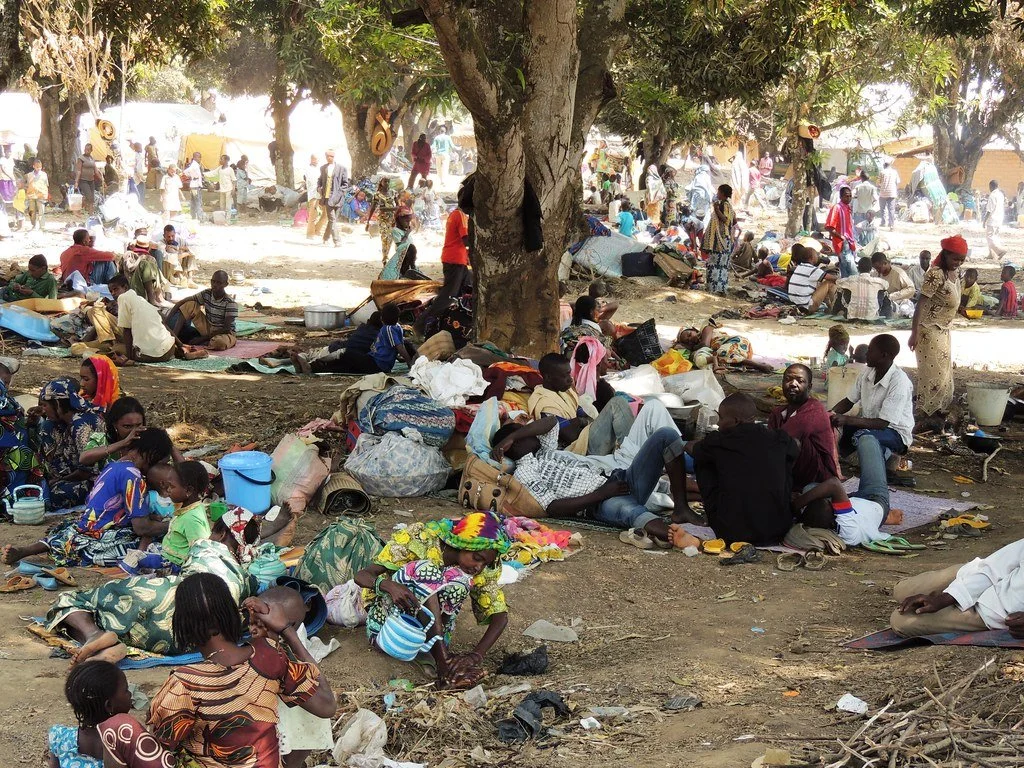
Central African Republic refugees in Cameroon. EU Civil Protection and Humanitarian Aid. CC BY-NC-ND 2.0.
Last year, Cameroon was ranked as the country with the most neglected displacement crisis by the humanitarian organization Norwegian Refugee Council. Out of a population of 28.8 million, about 1.1 million people are internally displaced, an additional 480,000 refugees from neighboring countries, namely Nigeria and the Central African Republic, are also living in the country, and another 2.8 million people are facing acute food insecurity, three crises that are severely underfunded and overlooked. These issues come as a result of converging political and social turmoil, both inside and outside of Cameroon.
The Lake Chad Basin conflict, turbulent since 2009, is one such conflict that has contributed to massive amounts of displacement. Covering countries such as Cameroon, Chad, Niger and Nigeria, the Lake Chad region in Western Africa has been riddled with violence by the insurgency of the Nigerian-based Islamic extremist group Boko Haram. The organization, intending to replace the Nigerian government with a regime based on Islamic law, led an uprising that ultimately failed but began a lasting conflict between non-state armed groups and military forces. Many experiencing brutality in their own countries, particularly in Nigeria, are seeking refuge in Cameroon. However, the struggle has since spread to neighboring countries in the region as well, and Cameroonians themselves are being displaced by armed groups, suffering from frequent attacks and suicide bombings. Together, these groups face scarce local resources and limited infrastructure, making humanitarian assistance imperative.
This is made worse by the country’s Anglophone crisis, first emerging in 2016. Previously being a colony of both Britain and France, Cameroon is now marked by a francophone majority and anglophone minorities in the North-West and South-West regions. Although these areas have been united since the 1960s, those of the anglophone population have made grievances about being marginalized, such as through an obligatory use of the French language in schools and unequal representation in government. The resulting peaceful protests in 2016 were responded to by the government with harsh imprisonments and violent crackdowns on those involved. After many brutal clashes, various separatist groups were formed, and civilian attacks, kidnappings and massacres worsened. Since its genesis, the conflict has led to over 900,000 Cameroonians being forced to flee internally and 60,000 seeking refuge abroad.
The devastating conflict in the Central African Republic has also forced many to find safety in Cameroon. Hostilities between Seleka forces, primarily armed Muslim groups and coalitions of “anti-balaka” Christian fighters have intensified since 2013, when the Seleka seized the capital of Bangui. Numerous attempts at peace agreements between the non-state armed groups and the government have been made without success, and citizens have only faced increased violence. With over 640,000 people fleeing the country, a majority of about 47% have found their way to Cameroon.
In the face of relentless conflict and increasing numbers of refugees and displacement, Cameroon is painfully struggling. This is exacerbated by its lack of representation in the media and limited humanitarian support, which has lessened even more due to overseas aid cuts in the UN made by the Trump administration. However, many in the country are in dire need of food, shelter, protection, water and health care, as resources are already insufficient, and many are left insecure. For those seeking refuge in Cameroon or who are internally displaced, the Norwegian Refugee Council reports that the crippling crises require magnified media coverage and more international diplomatic efforts.
GET INVOLVED
Those looking to help support refugees in Cameroon can check out organizations like the International Rescue Committee, the Norwegian Refugee Council or Refugees International, groups that aim to bring support to the displaced. In addition, many organizations provide specialized support, including the Refugees Welfare Association Cameroon, which supplies legal support, the Food Security Cluster, which helps support food insecurity, and the International Medical Corps, which works to implement healthcare programs in Cameroon.
Julia Kelley
Julia is a recent graduate from UC San Diego majoring in Sociocultural Anthropology with a minor in Art History. She is passionate about cultural studies and social justice, and one day hopes to obtain a postgraduate degree expanding on these subjects. In her free time, she enjoys reading, traveling, and spending time with her friends and family.