
Sofia Stidham
Envoy Pramilla Patten warns that prioritizing military funding over survivor aid is an act of gender-based violence itself, reinforcing a global cycle of sexism.
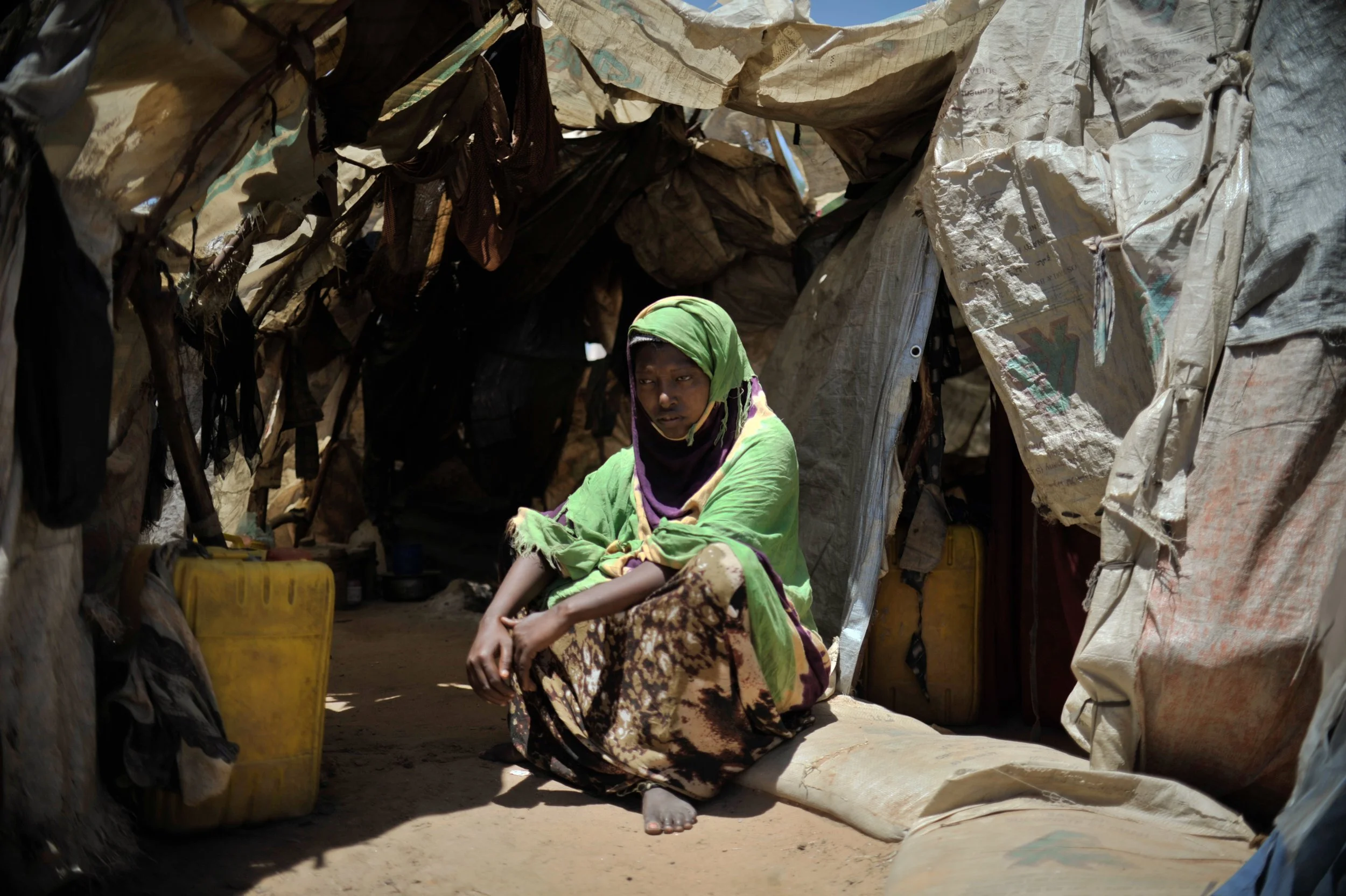
Woman outside sexual violence shelter in Somalia. Tobin Jones. CC0.
On Aug. 19, 2025, Pramila Patten, the U.N. Special Representative on Sexual Violence in Conflict, delivered a speech that revealed the startling realities of women in war zones to the Security Council. Citing a recent report from Secretary-General Antonio Guterres, Patten highlighted a 25% rise in conflict-related sexual violence from 2023 to 2024, and specifically a simultaneous 35% increase in cases against children. This upsurge occurred amid a disproportionate decline in women’s shelters and medical rape kits across 21 conflict-ridden countries of concern. Among these nations, Guetteres recorded the highest occurrences of sexual violence in South Sudan, Somalia, the Democratic Republic of Congo, Haiti and the Central African Republic.
Even though Guterres’ report included a continuum of gender-based violence, from forced marriage to rape, Patten reminded the Council that the figures were an underestimation. They do not reflect the deep psychological trauma from assaultive manifestations of misogyny. “There are many unseen faces behind the facts and figures presented in the report before us today,” she stated.
Patten also emphasized that conflict-related sexual violence is inextricably bound to gender power dynamics. 92% of cases were verified to be toward women and girls, instrumentalizing it as a weapon of war to impose masculine militaristic power.
Patten pointed out how conventional economic decisions to fund the military, defunding sexual violence shelters in turn, is an act of gender-based violence in itself, regressing women’s rights. She underscored how the world spends the same amount of money on weapons in 24 hours as it does resolving conflict-related sexual violence in a year. Patten warned that this global arrangement reinforces violent behavior, perpetuating sexual assault offenders. “What future do we expect to build on the broken bodies and broken dreams of abused women and girls?” Patten asked.
The Special Representative set out three solutions to the rise in sexual violence and the decrease in aid: ensuring compliance in perpetrating parties, enhancing service-delivery and strengthening safeguards. She called out the members of the Council for their contrasting lack of action, which prevented the progress of their 15-year-long mandate and enabled violations of the “Rule of Law.”
Edith Lederer, a war journalist for the Associated Press, stated that Patten’s speech expressed disappointment with the cuts to humanitarian aid “without naming any countries, but she was clearly referring to the United States,” which had cut 83% of its Agency for International Development (USAID) programs in March. Countries like the United Kingdom, however, have continued to fund medical, legal and psychosocial support for war’s gender-based violence survivors. “What are the humanitarian aid cuts and reversals costing us?” Patten said. Indeed, the human costs have been expensive, resulting in the U.N. Women’s Protection Advisors only being available in less than half the countries where they are needed.
Patten highlights that women in warzones are counting on the West for support more than anyone else. They have put faith in highly economically developed countries so that their bodies will no longer be treated like potentially conquered land. “We hope you will prove us right,” Patten asserted at the end of her speech.
GET INVOLVED
Anyone wanting to take action against conflict-related sexual violence can download and send a letter to their elected official, provided by the UN Action Against Sexual Violence in Conflict’s “Stop Rape Now” campaign. The recipient of the 2018 Nobel Peace Prize, Nadia Murad, has also set up programs to support ethno-religious minority women in Iraq who have suffered sexual violence under the hands of ISIS. "Nadia’s Initiative” can be donated to, and any money goes directly to aid recovery.
Sofia Stidham
Sofia is a rising fourth-year English Literature student at the University of Edinburgh, having recently completed a year-long exchange at the University of Virginia. Outside of writing, she enjoys spending time with family and friends, going to concerts, curating her wardrobe, and zoning out on long walks. She hopes to pursue a career that allows her to channel her passion for writing into intersectional feminist advocacy.