
Ashley McDermott
Visiting the caravan stopover Tash Rabat and the nearby glacial lake Chatyr-Kul can be demanding, but it is worth the journey to trek along the Silk Road on horseback.
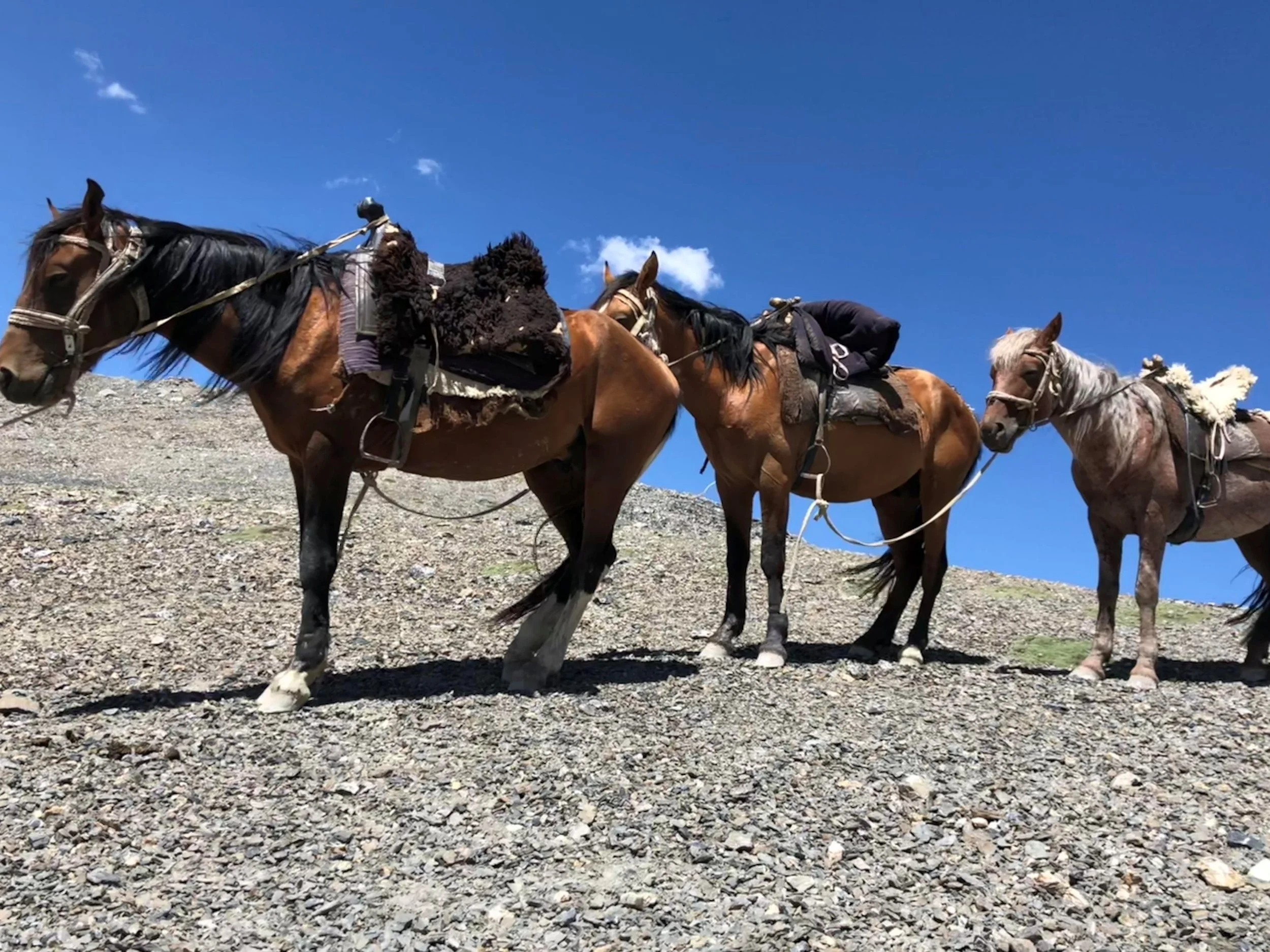
Horses on the pass to Chatyr-Kul. Ashley McDermott.
At 10,500 feet elevation in the Kyrgyz Tian Shan, well above the last strands of conifers, lies Tash Rabat, a 15th-century stone and mortar structure that dominates the landscape. For miles, there are few buildings besides white-felted wool yurts and their bright red tunduks (center supports) and kerege (lattice walls). Tash Rabat, strategically seated in a mountain pass connecting Kyrgyzstan and China, is thought by most scholars to be a Silk Road caravanserai, or caravan stop. From Tash Rabat, travelers can continue on the Silk Road route over the pass to Lake Chatyr-Kul, considered one of the most beautiful of Kyrgyzstan's many glacial lakes.
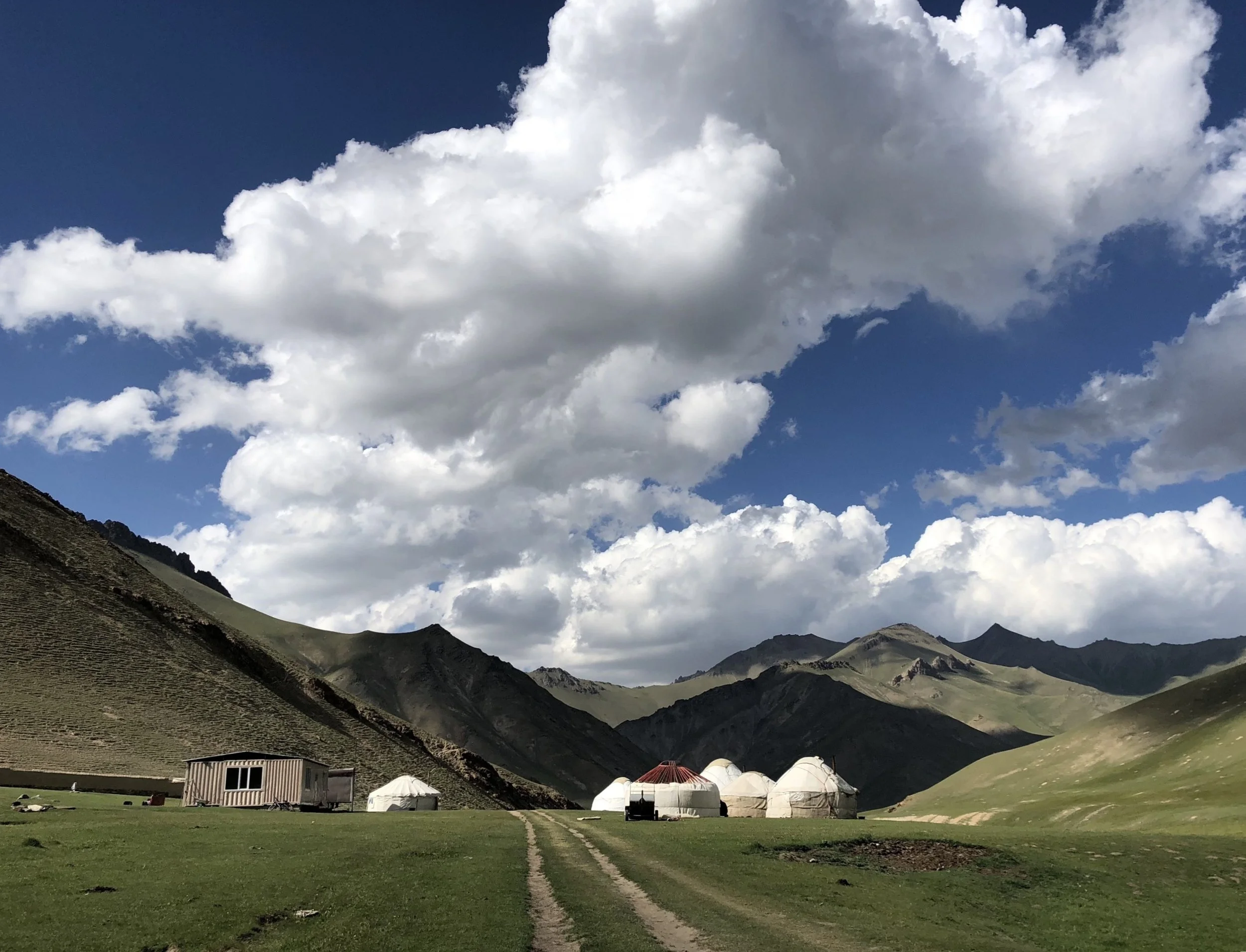
Yurts near Tash Rabat. Ashley McDermott.
To get to Tash Rabat, we drove three hours from Naryn, the namesake of the least-populated and most remote oblast, or province, of Kyrgyzstan. Despite the highway's status as a major trucking route from China, the highway was empty except for the occasional horse herd.
My partner and I traveled from Naryn City with my friend and her husband, both currently residents of Bishkek, Kyrgyzstan’s capital, as well as their family. The six of us bounced around their little silver Honda Fit as we turned off the highway onto the steep, curving dirt and mud path up the mountain. I held my breath as we forded streams that the overloaded city car was not designed to cross. There is no public transportation from Naryn to Tash Rabat, and it is imperative to have a good local driver to navigate the at-times treacherous road, known for flooding, avalanches and mudslides.
In the towering entryway of Tash Rabat sits an older woman in a floral-print headscarf. She collects 150 som, about 12 cents USD, in admission from foreigners near a wrought iron gate. Inside is completely open for exploration, though visitors have almost no visual context save a small government-sponsored sign near the entrance. Travelers are free to wander the many dark, low-ceilinged rooms, see the deep, well-like pit that local lore claims housed prisoners and even walk along the tops of the outer stone walls. Often, there are no other visitors to the site.
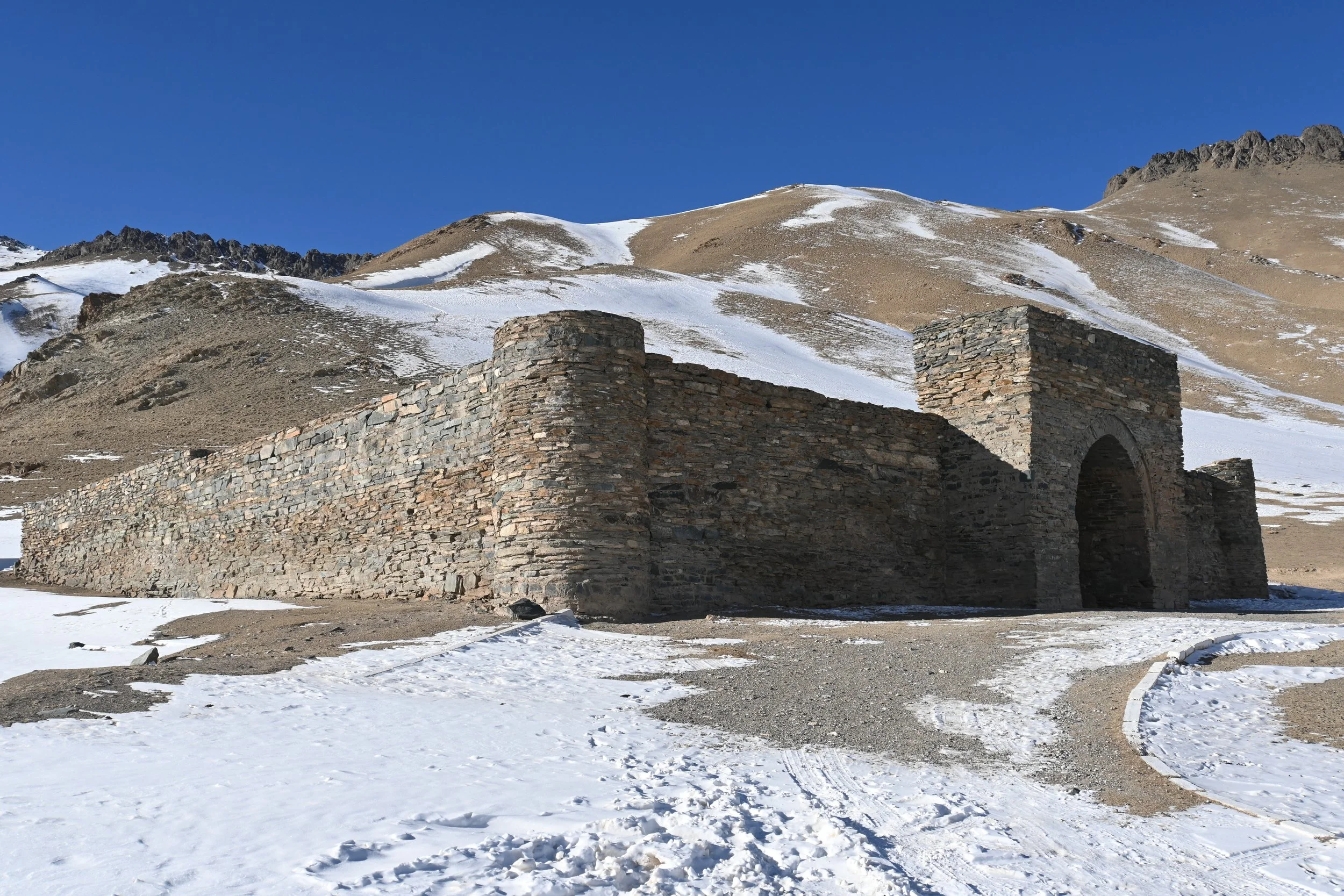
Tash Rabat caravanserai in winter. Ashley McDermott.
During our visit, a young man chanted the story of Manas while sitting in the center of the cavernous main room. Considered to be the greatest hero of Kyrgyz legend, Manas united the Kyrgyz people and guided them back to their ancestral home in the Ala-Too mountains. The epic, thought to be from the 17th century, is one of the world's longest, consisting of over 500,000 lines and taking nearly one week to recite properly.
We spent a cold summer night snuggled under heavy wool blankets, lamenting the dying fire in the yurt's small coal stove. In the morning, we woke to tea, boorsok (fried dough pieces), jam, cream and a table adorned with Russian chocolate candies. We made arrangements with our hosts to trek on horseback to the pass overlooking Chatyr-Kul Lake. The "intermediate" hike is an out-and-back, approximately 7.5 miles one-way, and takes about seven hours by horse. The route gains 3,000 feet in elevation from the camp to the pass.
Our journey started in the jailoo, the traditional summer pastures, just a half mile from Tash Rabat. As we slowly wound our way through the valley, horses serenely grazed. Some of the mares, hobbled with rope, had young foals at their sides. The mare's milk is used for kumis, a drink made by fermenting horse milk in a tall wooden churn or leather bag. Kumis is a dinnertime staple during the summer months; the night before our trek, our hosts delighted in offering us some to watch our reactions as we drank it out of little ceramic bowls.

Milking horses for kumis. Ashley McDermott.
As Tash Rabat shrank in the distance behind us, we came across a herd of yaks and their young calves, with shaggy, black and white coats. In the little valley, they had nowhere to go but forward or up, and they lackadaisically walked the trail ahead of us. Plump, tan and brown marmots popped in and out of the rocky hills as we passed. A young boy wearing flip flops rode a donkey down the hill toward the dry stream bed that paralleled the road.
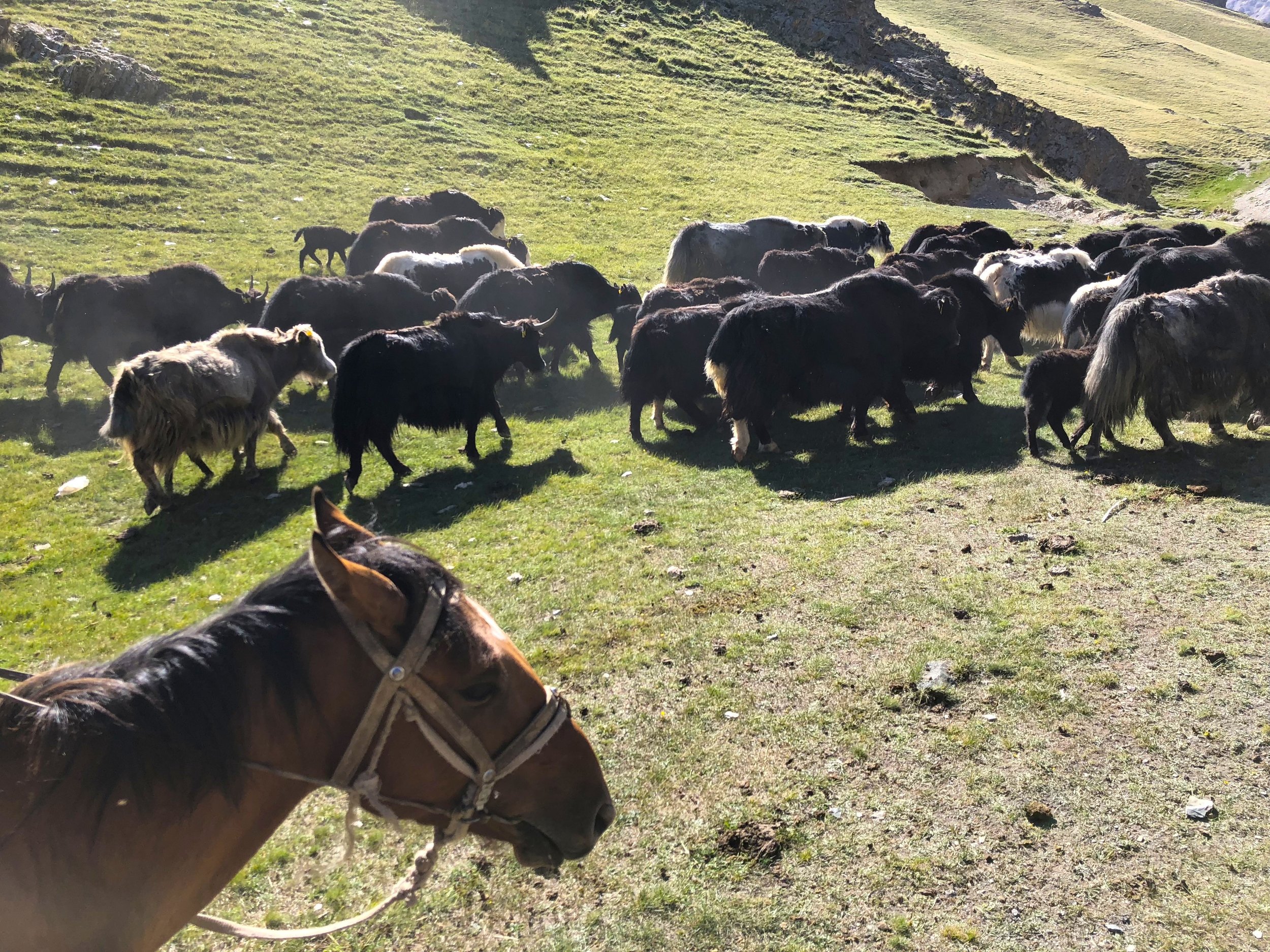
Yaks near Tash Rabat. Ashley McDermott.
The low grass gave way to rock. We rounded a bend to see the pale grey wings of a massive Himalayan vulture stretched over the carcass of a yak calf. When it noticed us, it flew off, leaving behind the remains. Though we didn't have the privilege of spotting the region's more famous alpine wildlife, these high elevations are home to Midasian Ibex and Argali sheep, with their enormous spiraling horns. Both animals are the favorite prey of snow leopards, and the mountains of Naryn are an integral area for snow leopard conservation.
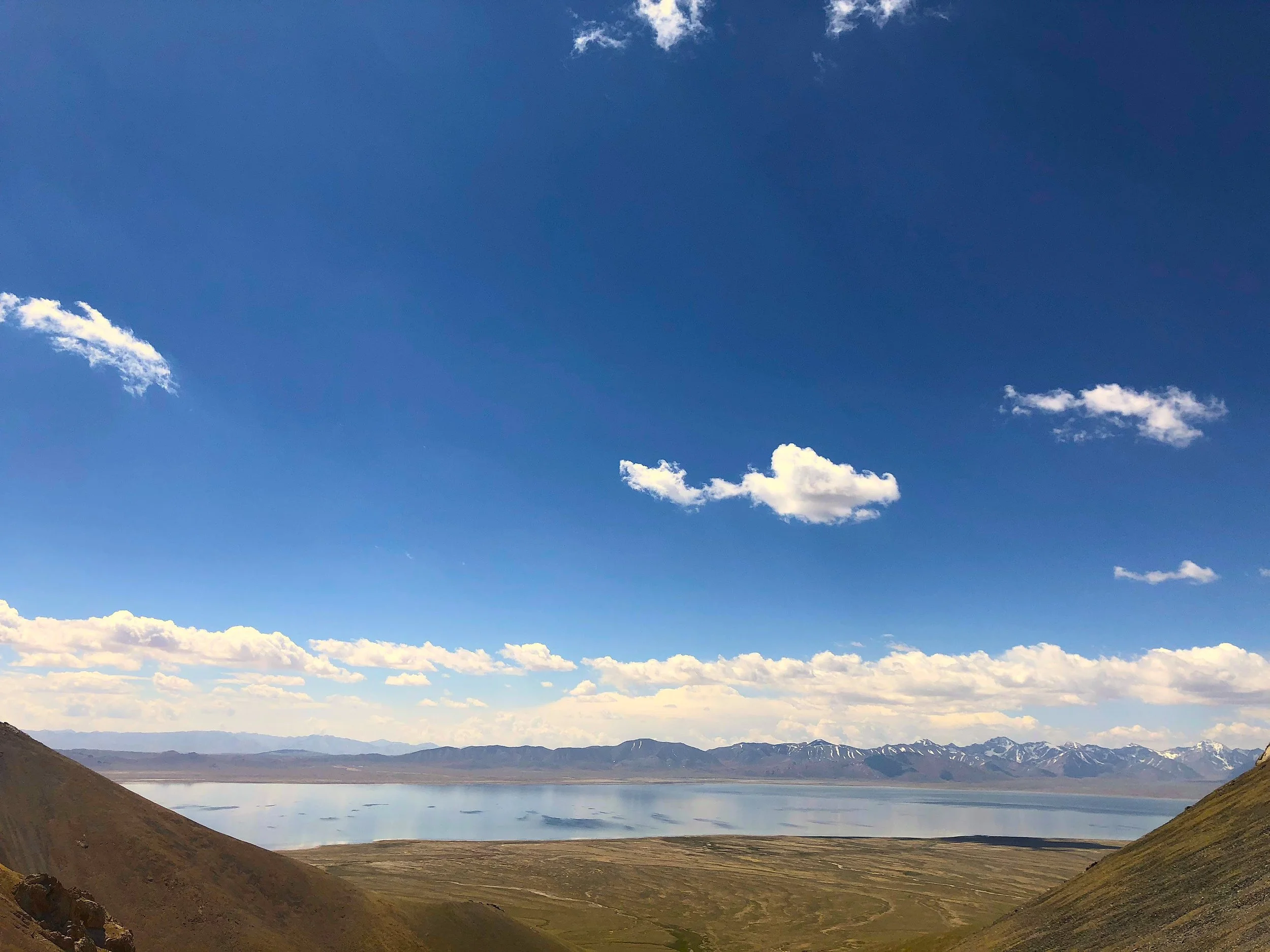
Chatyr-Kul from Panda Pass. Ashley McDermott.
Eventually, the path became so steep that our guide gestured for us to dismount. We hiked over loose scree for about half an hour until we crested the pass. Horses and humans tired from the incline, we sat to enjoy our reward: Chatyr-Kol lake, filling the horizon and glittering silver-grey in the sun. It reflected the mountains and clouds above, and the golden marsh stretched out in all directions.
GETTING THERE:
The best time to travel to Tash Rabat is June to September. Some guided tours start from Bishkek and offer transportation directly to Tash Rabat. These tour operators will also arrange for meals and your stay in a yurt camp, but local tour operators change from year to year. The best way to find a tour is by word of mouth or on Instagram. If not on a tour, public transport or shared taxi can take you from the Western bus station to Naryn. However, from Naryn you will need to take a taxi to reach Tash Rabat. Usually, you need to wait for every seat in a taxi to be filled before embarking, and wait times can vary drastically. It is possible to pay for the other seats in the vehicle, if necessary. If it is impossible to arrange a ride, you can take a taxi to the village of At-Bashi. From At-Bashi, you can then take another taxi to Tash Rabat.
Once in Tash Rabat, several yurt camps offer guest lodgings. At most yurt camps, your overnight stay includes breakfast and dinner. You can often book a yurt day of arrival, though some camps are now using online booking. Still expect to pay cash for all transportation, food, lodges and guided excursions. You may also bring your own tent and camp in the valley.
The yurt camps surrounding Tash Rabat offer horse treks to Panda Pass above Lake Chatyr-Kul for 2500 Kyrgyz som (about 29 USD) for the guide and 1500 som (about 17 USD) per horse for a full day. The cost of the guide is split among each person in the group.
For any trip to Tash Rabat, bring clothing fit for a rugged, alpine environment. You will need to pack your own food or arrange to pay for meals at one of the camps. There is no cellular coverage and no nearby medical facilities, so bring any necessary medication and a first aid bag. In addition, if you plan to stay near Chatyr-Kul or hike through the pass to the lake, you will need a border permit that is available in Naryn City.
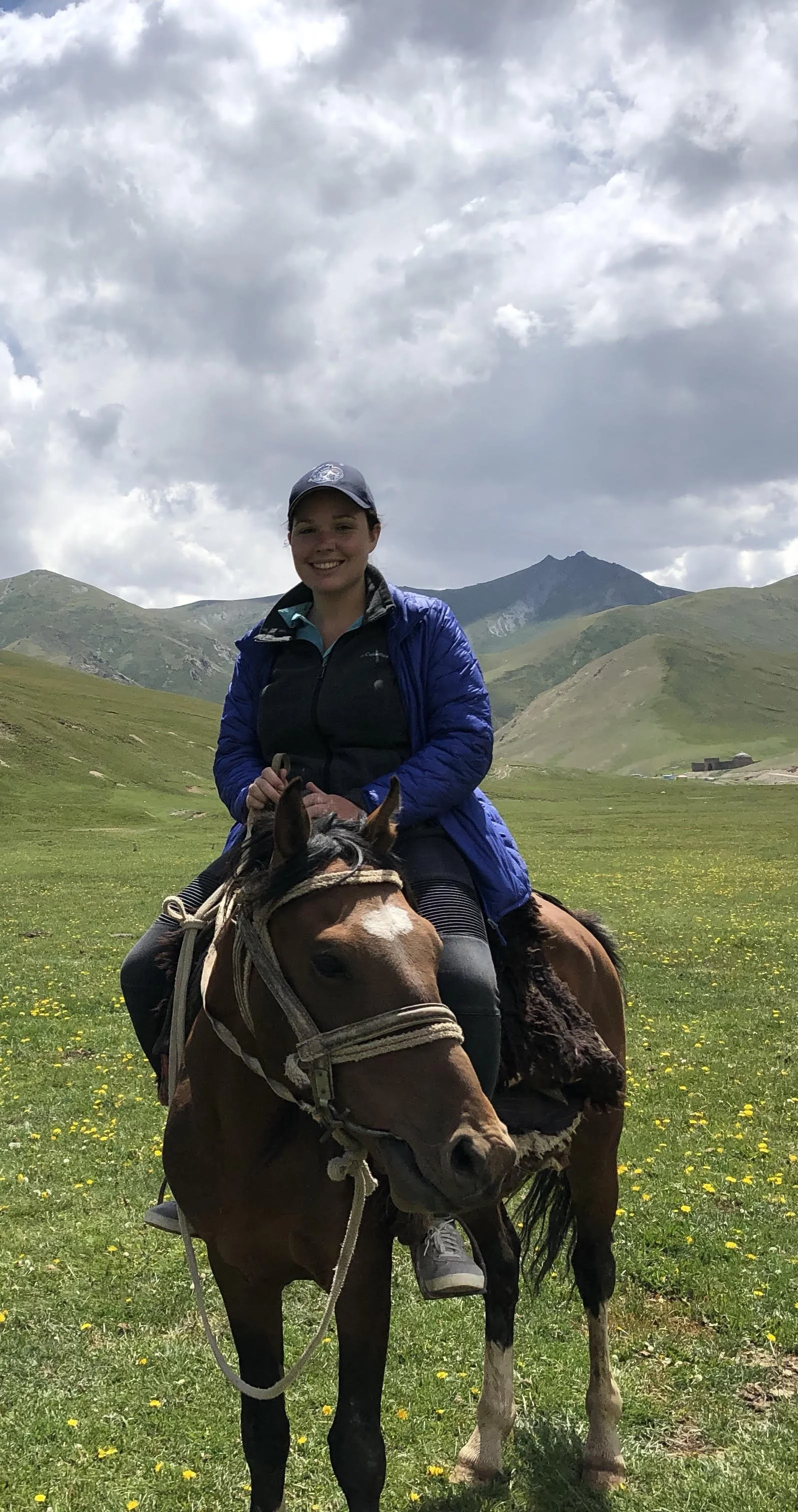
Ashley McDermott
Ashley is a PhD candidate in Linguistic Anthropology at the University of Michigan. She is committed to making her research useful for the communities she works with. Her work explores how families navigate language use and language shift in Bishkek, Kyrgyzstan. When she’s not working on her research, you’ll find her adventuring with her toddler daughter, whose commentary keeps every day interesting.