
Evelyn Garcia Medina
Japan’s unhoused crisis is masked by urban design called hostile architecture, a tool used to alienate those experiencing homelessness, affecting the public in the process.
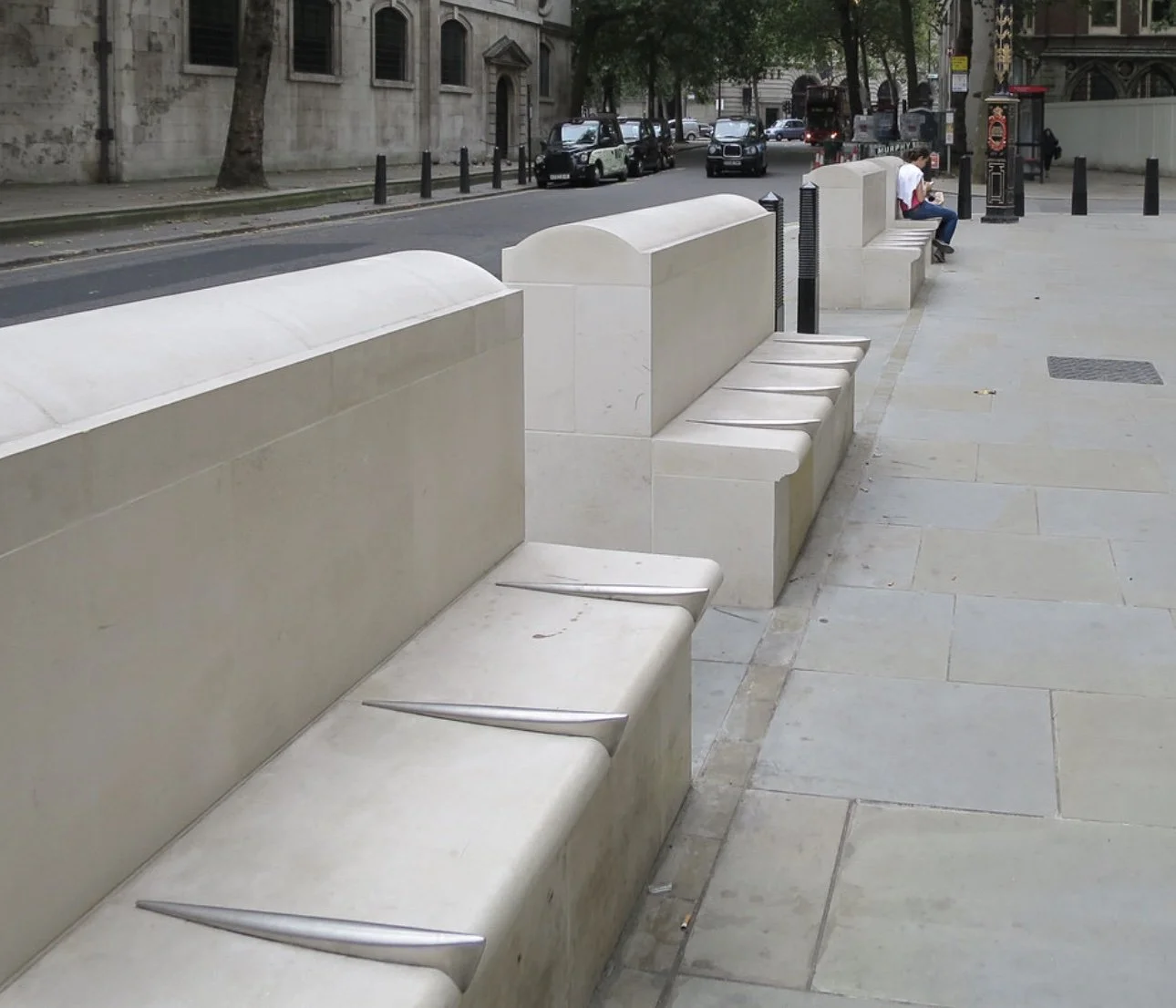
Park benches designed to prevent unhoused individuals from sleeping on them. Alan Stanton. CC BY-SA 4.0.
In Japan, people without homes are nearly invisible, but not because they don't exist. Official figures suggest the nation has almost rid itself of the problem, but beneath the surface, thousands struggle with unstable housing. As the country has grown to be polished, a quieter transformation has taken place. Some public spaces were redesigned and created to exclude the unhoused population, which has consequently also targeted others with mobility issues. Benches that can’t be slept on, barriers that limit rest and architecture that prioritizes order over welfare reflect how Japan tackles some of its social issues.
In 2025, Japan’s Ministry of Health, Labor, and Welfare reported upwards of 2,600 unhoused individuals nationwide, a low figure for a country of 125 million. By comparison, the United States, with a population of 347 million, recorded roughly 771,500 people without homes in 2025, nearly 300 times Japan’s rate. And yet, thousands in Japan live in internet cafes, capsule hotels or cramped, very poorly maintained apartments. Rooted in the economic fallout of the 1990s, which is known as the “Lost Decade,” home loss disproportionately affects older men who lost stable jobs and never regained financial footing. There are also social norms in Japan that equate poverty with personal failure, further driving the problem underground. This treatment subverts the truth about poverty and leaves many to quietly navigate life on society’s terms.
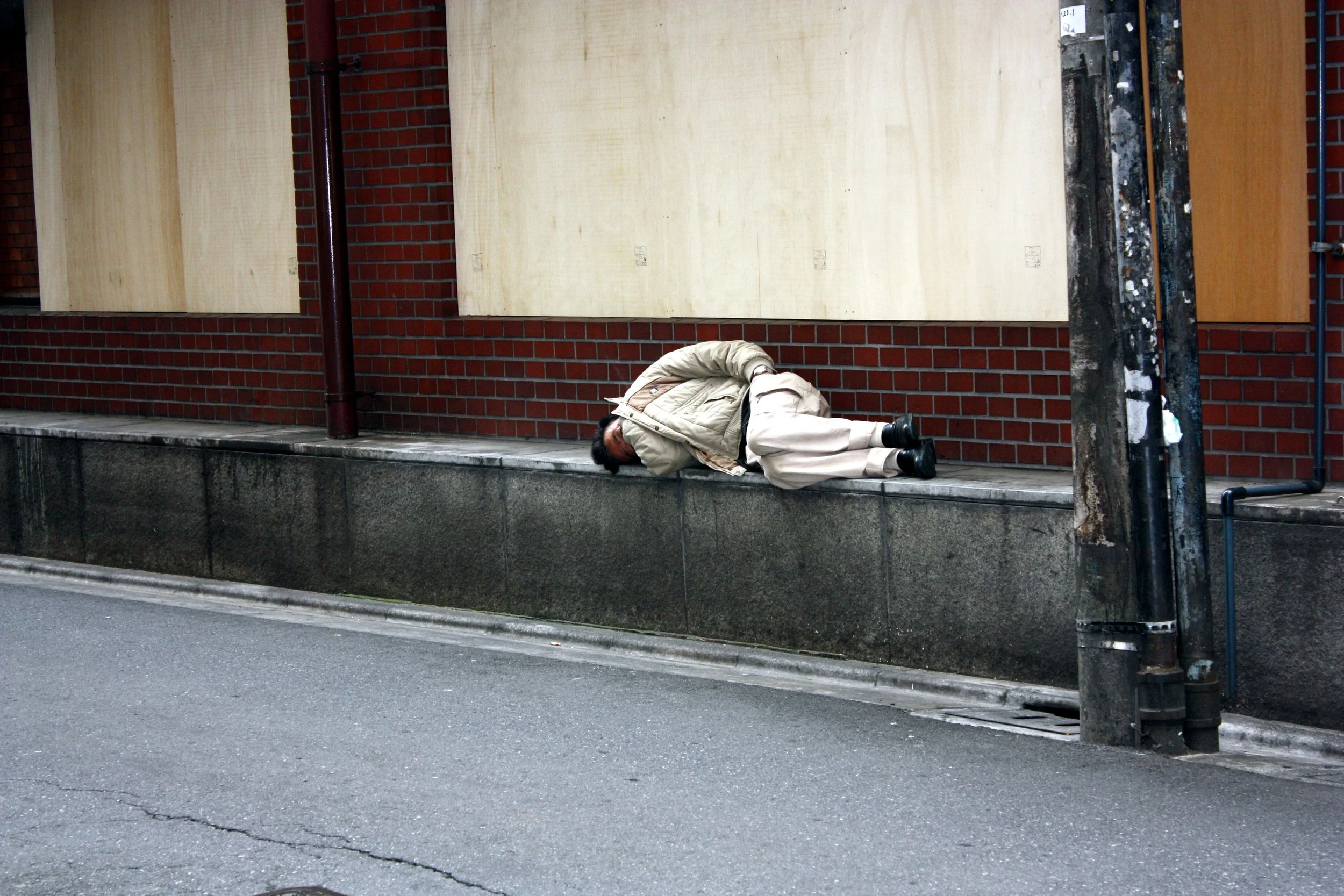
Man sleeping on slim sidewalk. James Abbott. CC BY-SA 2.0.
Hostile architecture has reshaped public spaces in Japan under the guise of artistic design and pristine living conditions. Park benches are now often fitted with armrests, curved seats or an unusually small surface area to prevent people from sleeping or resting on them. There are even steep benches at bus stops and train stations, uncomfortable for anyone to sit on. Public spaces such as these indicate a trend: prioritizing aesthetics over usability. Barriers, chained fences and crowded bike racks have turned public areas into restricted zones. Professor of architectural history and theory at Tohoku University, Taro Igarashi, explains that unhoused people “are regarded as fraudsters, and we all choose to gradually become unhappy instead of giving a tacit nod of approval to some of them.”
With its implementation, hostile architecture has also alienated the broader population, revealing an institutional unwillingness to confront the problem directly and sending a message about who is welcome in public spaces. While often justified as a deterrent against loitering or sleeping outdoors, these designs also make it increasingly difficult for the elderly, disabled and anyone with mobility challenges to function in public. By not prioritizing social welfare, cities risk alienating those who need public spaces the most.

Evelyn Garcia Medina
Evelyn is a recent Chicana graduate with a B.A. in English and Comparative Literature. Born and raised in the Bay Area, she draws inspiration from her passions: her cultural roots, environmentalism, and human rights. In her free time, she goes on hikes and enjoys learning about current social issues, history, and animals.