
Ashley McDermott
For the perfect photo or social media selfie, travelers continue to get dangerously close to wildlife with sometimes fatal results.
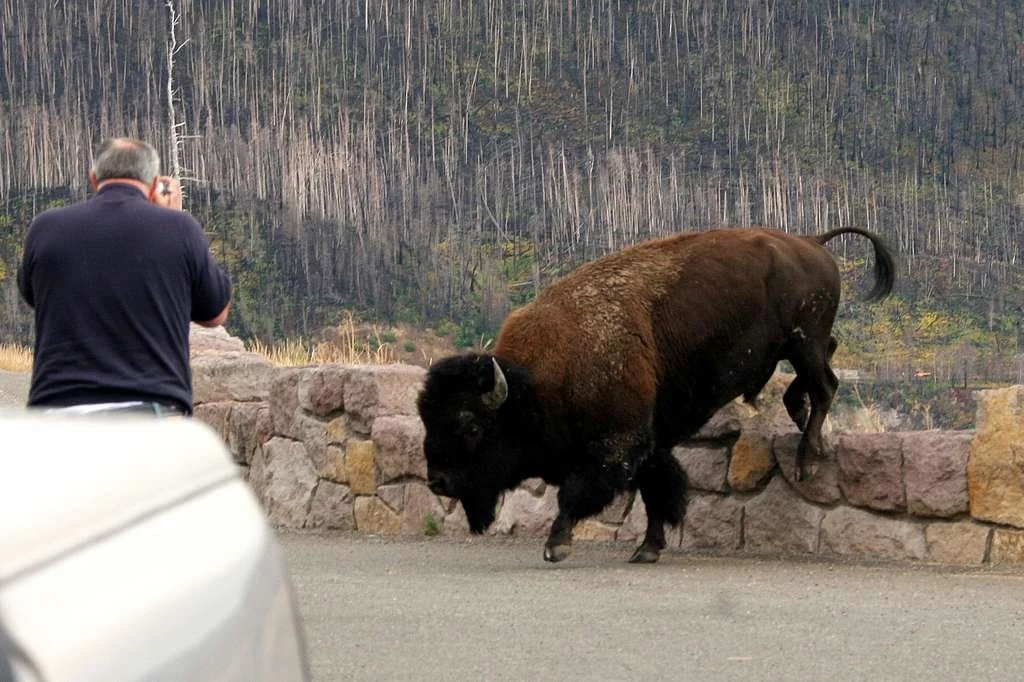
Visitor photographs bull bison jumping over wall. Arnie Spencer. PDM.
Despite public safety campaigns and news coverage of deadly encounters, many travelers still risk their lives to get close to wild animals. Starting in June 2025, three separate instances of this occurred just a few weeks from each other; a Yellowstone visitor was gored by a bison, two travelers were killed by an elephant on a walking safari in Zambia and an Italian motorcyclist died after snapping a selfie with a Romanian bear.
What drives people to disregard the risks? Researchers point to a combination of wanting close encounters, misunderstanding animal behavior and believing, “it won’t happen to me.” Social media further encourages users to imitate dangerous actions. “For posting these selfies, we are being rewarded and reinforced for our misbehavior,” explains Terry Messmer, editor-in-chief of the scientific journal Human-Wildlife Interactions. Compounding the problem, smartphone cameras with limited zoom capabilities tempt people to move closer for better shots.
In addition to trying to get the perfect picture, visitors get too close because they underestimate the dangers or overestimate their own abilities. Yellowstone regulations, for example, require everyone to stay at least 25 yards away from most wildlife, including bison, and 100 yards from bears. Yet park visitors often break this self-regulated rule, with first-time visitors particularly prone to approaching wildlife too closely. Their inexperience with animal behavior, combined with a lack of equipment, such as high-powered zoom lenses, often results in attempts to observe or photograph animals from unsafe distances.
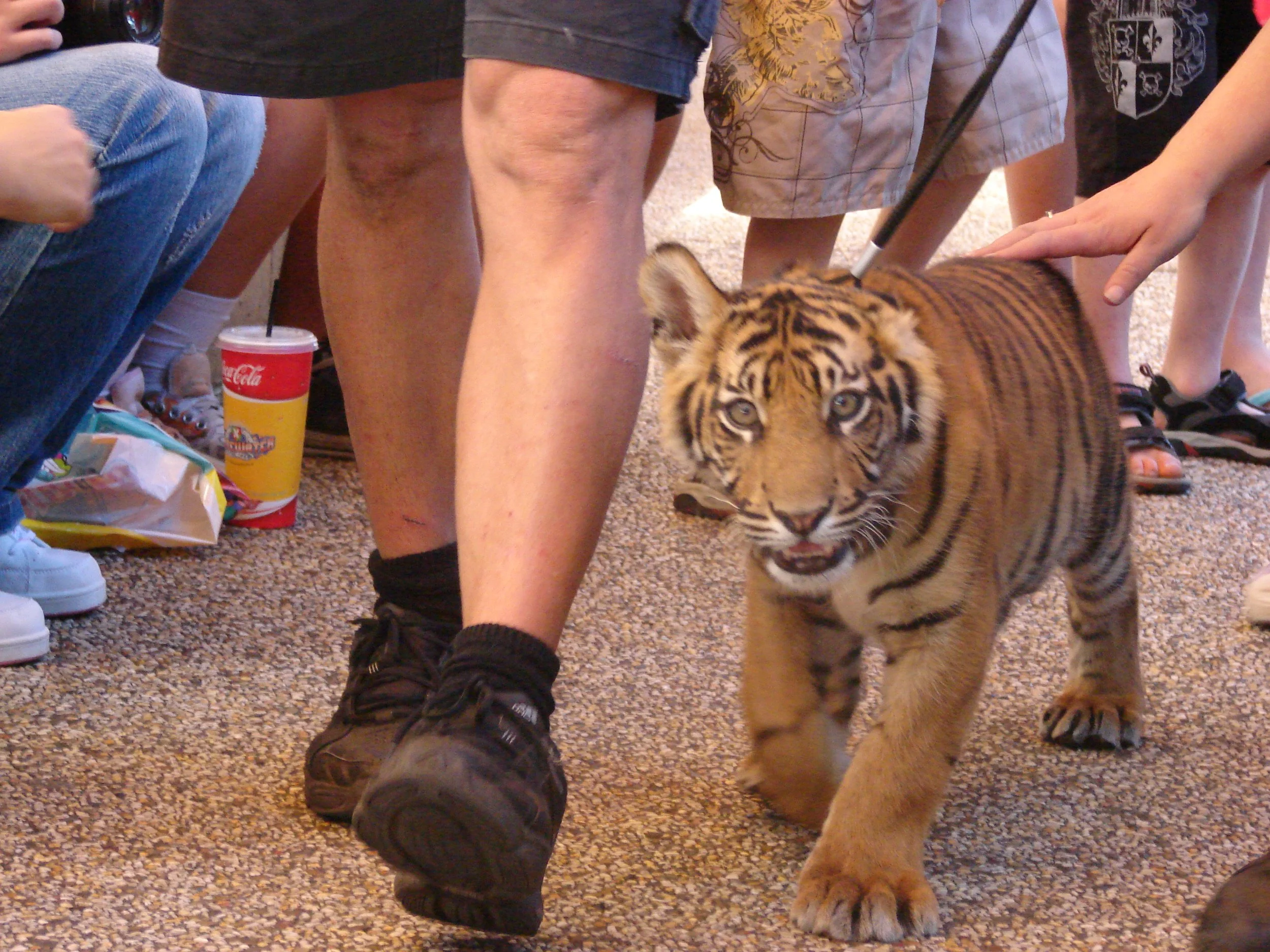
Tiger petting experience. Alikai. CC BY 2.0.
Hands-on experiences at zoos and animal photo attractions at popular tourist destinations may lead people to expect the same safety with wild animals outdoors, resulting in dangerous behavior in parks and natural areas. Attention has increasingly been brought to the poor conditions of animals involved in photo ops, where animals are drugged, chained or starved so they will lie still for photos. These situations pose significant dangers to both animals and people, as seen in the recent mauling of an Indian traveler by a captive tiger in Thailand. Approaching animals in the wild is also detrimental to their health and well-being, for animals found to be too defensive around humans must be relocated or euthanized.
Though it is easy to place the blame on social media for the rise in these deadly animal encounters, its influence may be overestimated. Today’s “roughing it” gear, like waterproof jackets crafted from synthetic fabrics, internal-frame backpacks and lightweight tents, revolutionized how we access the outdoors, opening up more regions to a broader range of people and increasing opportunities for wildlife encounters. The proliferation of all-terrain vehicles, smartphones and GPS devices drastically increased access to the point of blurring the distinction between remote wilderness and everyday environments. As technology and access continue to advance, more travelers will find themselves in precarious situations with wildlife without fully realizing the risks.
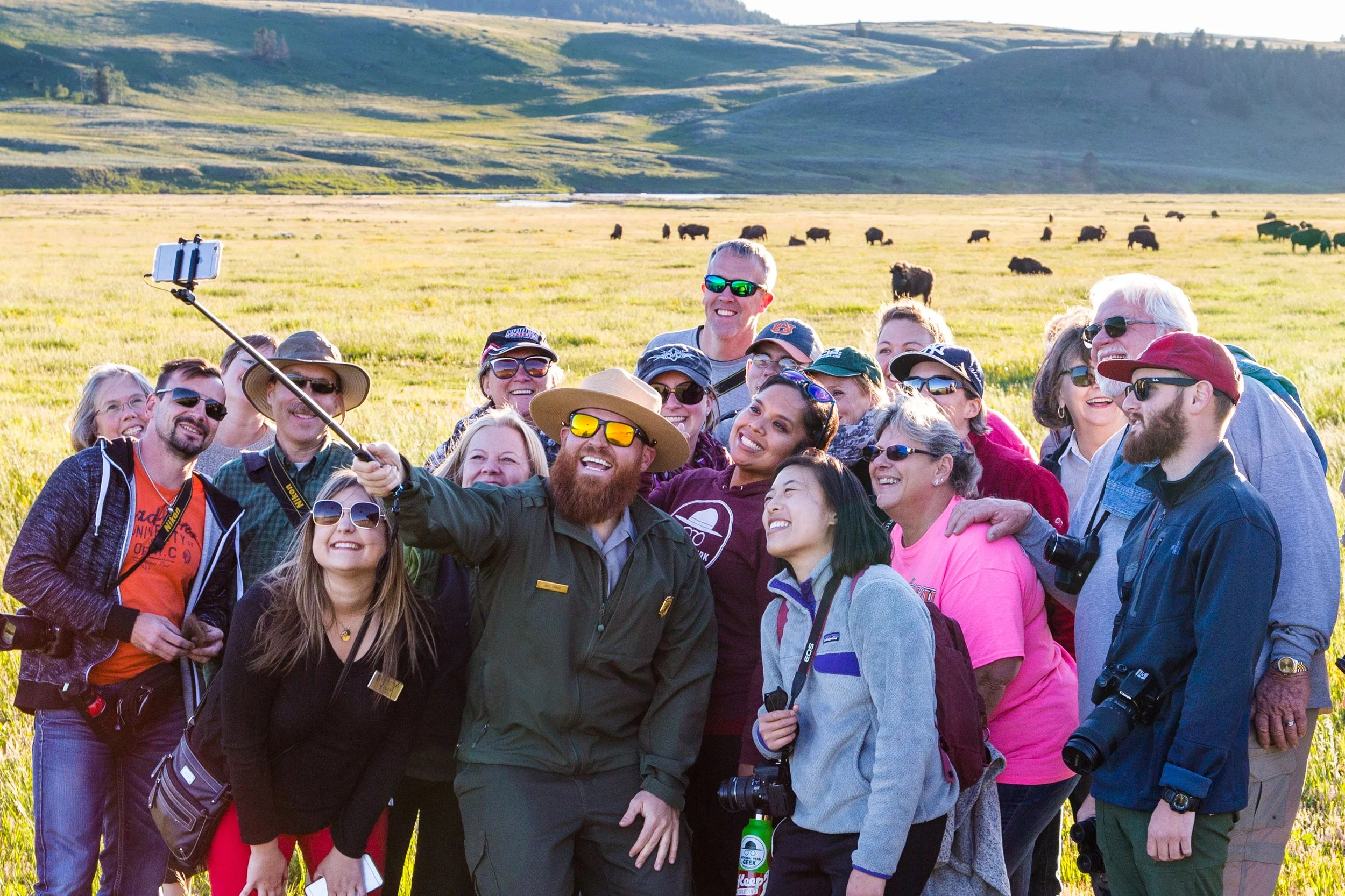
Ranger taking distant wildlife selfie with a group. Matt Ludin. PDM.
Improved accessibility, however, also comes with heightened appreciation for these spaces and concern for wildlife. Responsible wildlife photographers can use binoculars, cameras with strong zoom lenses, and respect local distance regulations. For instance, bears in Katmai National Park may react to humans at much closer distances than those in Yellowstone. The best rule of thumb, as Messmer cautions, is this: “Unless you are sure you can outrun an animal within 25 [meters]—roughly the length of two school buses—in [less than] 1.5 seconds, it’s best to stay well beyond this distance from wild animals.”
Ashley McDermott
Ashley is a PhD candidate in Linguistic Anthropology at the University of Michigan. She is committed to making her research useful for the communities she works with. Her work explores how families navigate language use and language shift in Bishkek, Kyrgyzstan. When she’s not working on her research, you’ll find her adventuring with her toddler daughter, whose commentary keeps every day interesting.