
Evelyn Garcia Medina
Aztec dances exist today as living prayers and powerful symbols of Indigenous survival, uniting Mexican Americans in the United States.

Aztec dancers in Mexico City. Secretaria de Cultura CDMX. CC BY 2.0.
There’s an Indigenous style of Mexican dance called Danza Azteca, a dance that remains heavily practiced in both Mexico and the United States. It’s a living spiritual tradition that bridges centuries of history and cultural survival. Despite its significance, danza endured near extinction and connects Mexican people on both sides of the border who see the dance not only as a way to honor their ancestors but also as a declaration that their culture is still alive.
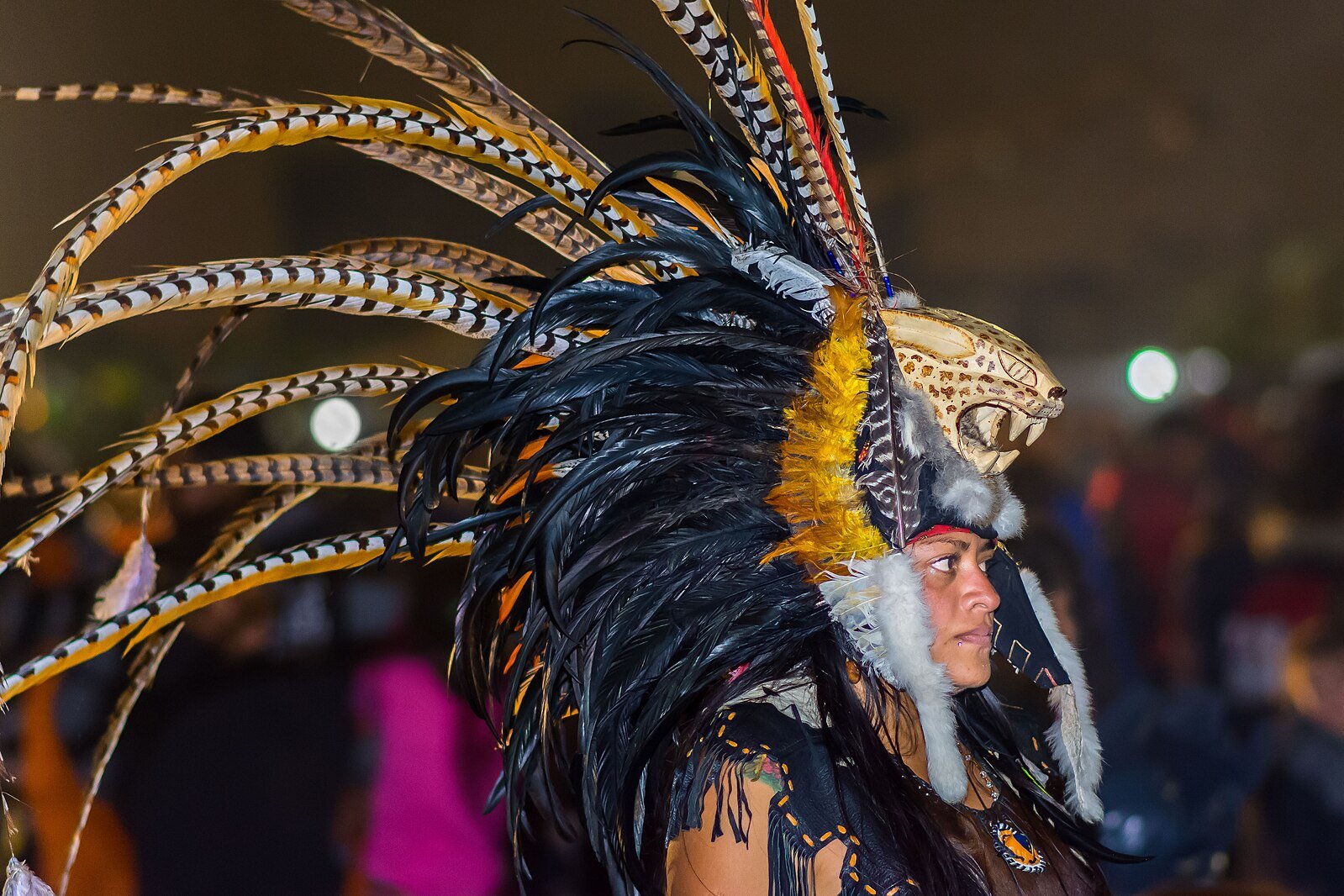
Female Aztec dancer wearing jaguar headpiece. Jonata Oregon. CC BY-SA 4.0.
Danza Azteca is a contemporary spiritual dance tradition with roots in Mexico’s colonial era. More than a performance, it’s considered a ceremony and form of prayer that reveres the cosmos and natural elements. By the 1500s, Indigenous people fell under Spanish settlers’ foreign rule and were forced to mix their spiritual beliefs with Christian ideologies. Aztec dancing then evolved, branching into three main forms now collectively known as traditional danza: Conchera, Azteca-Chichimeca, and Mexika. Eventually, Danza Azteca became a form of remembrance in Mexico and a display of protest in the United States.
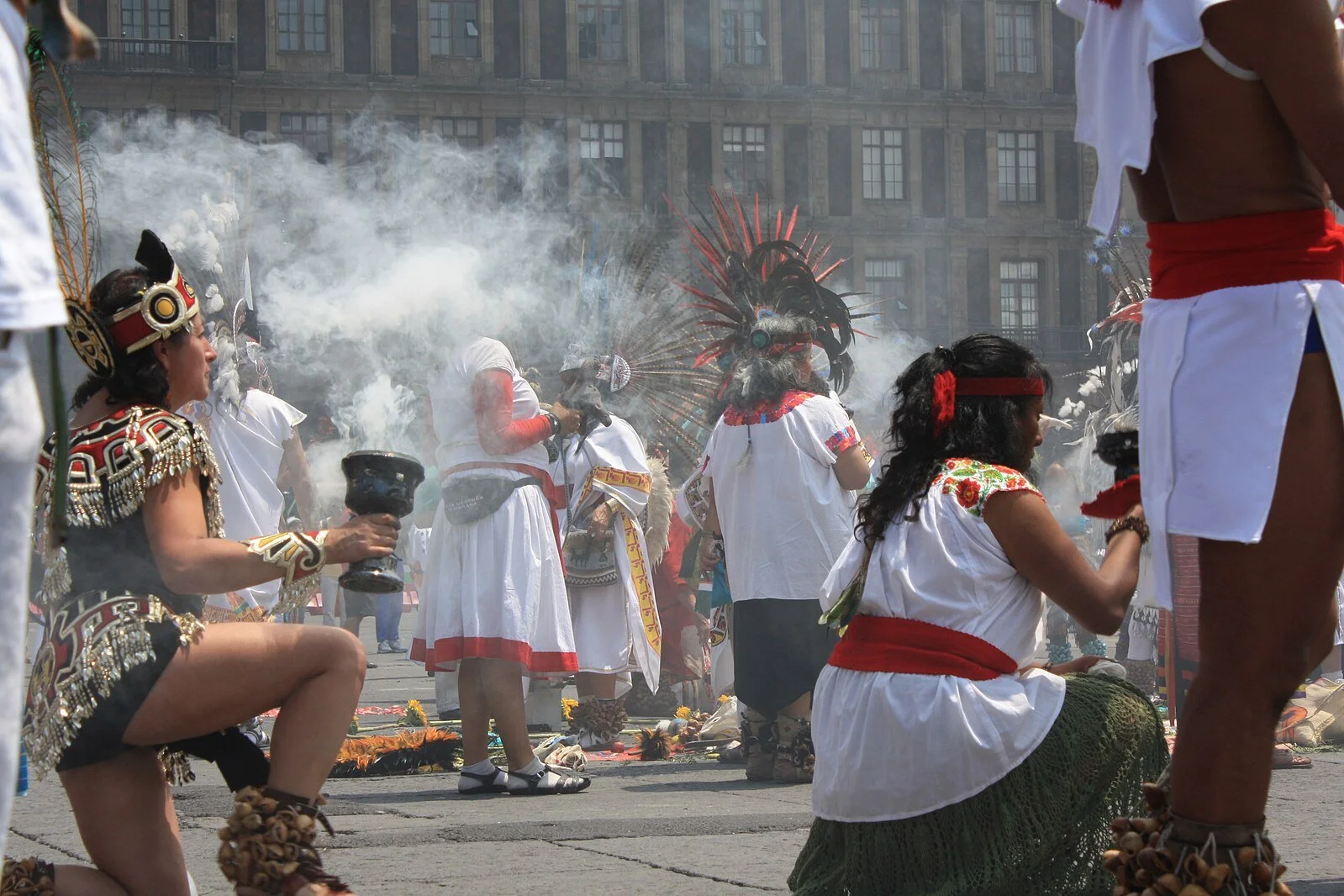
Ceremony by Aztec Dancers in Mexico City. David Cabrera. CC BY-SA 4.0.
Many Aztec dancers are located in California and continue to keep the tradition alive through ceremonies that blend spirituality and community. They frequent events like Dia de los Muertos processions and summer solstice events, but in San Francisco alone, multiple groups hold other ceremonies year-round. Oftentimes, they commit to marathon dances that can stretch up to 30 hours, with only small breaks for prayer and food. Catholicism is still part of Aztec dancing, with elements like crucifixes and Spanish hymns still lingering. Many dancers continue that blend, honoring both Indigenous and Catholic practices while continuing to stay connected to ancestral roots.
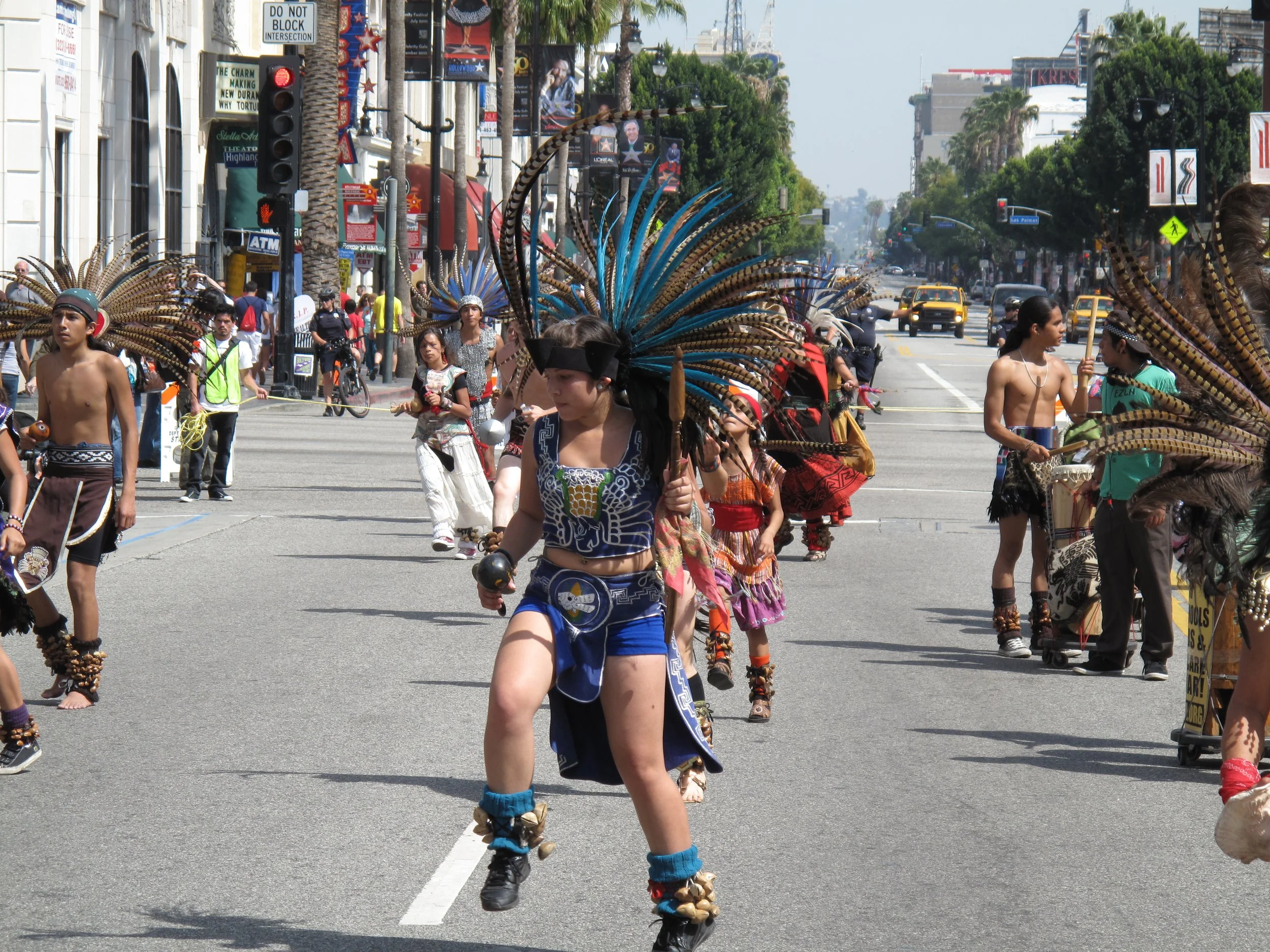
Aztec dancers at protest in Los Angeles. Michael Daines. CC BY-NC-SA 2.0.
Danza Azteca is often regarded as resistance and activism, particularly in the United States, by dancers who view it as a reclamation of Indigeneity. Elder dancers in Mexico traditionally avoid aligning with political movements due to the memory of violence against Indigenous people, but many U.S. dancers argue that simply keeping these ceremonies alive is inherently political. Danza emerged in the United States during the Chicano Movement, and many Mexican Americans began using it to reclaim their heritage. Veronica Valadez, a former Chicano studies lecturer at Cal State Channel Islands, explains that seeing danzantes on her university campus caused an “ancestral memory” to emerge within her, the steps feeling “embedded in [her] DNA.” For many Mexican Americans, the act of dancing is both a personal connection to identity and a public statement of resistance, proof that Indigenous culture survived colonization and continues to thrive.
Aztec dancing continues on through city streets and ceremonial grounds as both a spiritual, ceremonial expression and a cultural assertion. Its rhythms embody survival, identity and prayer, a reminder that danza is not just a tradition of the past but a living, breathing practice that defies erasure. Whether performed in plazas in Mexico or parks in California, danza reaffirms an enduring truth: Indigenous culture persists.
Evelyn Garcia Medina
Evelyn is a recent Chicana graduate with a B.A. in English and Comparative Literature. Born and raised in the Bay Area, she draws inspiration from her passions: her cultural roots, environmentalism, and human rights. In her free time, she goes on hikes and enjoys learning about current social issues, history, and animals.