
Zoe Lodge
Travelers join locals in protecting and preserving the coral reefs of Fiji.
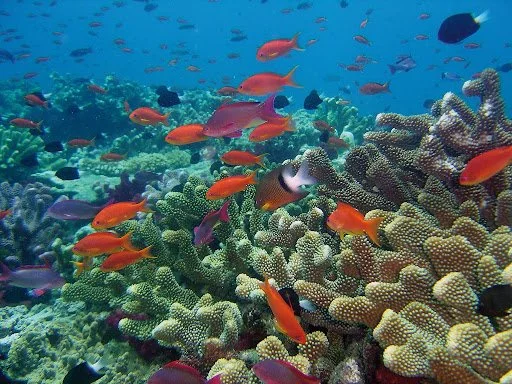
A vibrant reef in Fiji. David Burdick. CC BY NC-ND 2.0.
Fiji’s underwater world has long attracted visitors and divers with its colorful coral gardens and schools of bright reef fish. But these same reefs, which are the heart of local livelihoods and marine biodiversity, face increasing threats from warming waters, overfishing and storm damage. In recent years, many of Fiji’s villages have stepped to the forefront of ocean conservation, showing that reef protection isn’t just about preserving dive sites but also sustaining communities. Travelers drawn by Fiji’s turquoise waters and manta rays now have an opportunity to join in this effort through what locals call “reef-positive tourism.”
Fiji’s 300-plus islands border the South Pacific’s Coral Triangle, home to some of the richest marine ecosystems on Earth. The Great Sea Reef, known in Fijian as Cakaulevu, is the third-largest barrier reef in the world, stretching over 120 miles. But, like many tropical reefs, it has suffered bleaching in recent decades, and the loss of live coral causes broader issues. Reefs see fewer fish for subsistence harvests, less natural coastal protection from storms and diminished tourism revenue for rural villages. In response, community-driven conservation has blossomed. Many Fijian villages have revived the traditional practice of tabu, which is the designating of reef sections as temporary no-take zones to allow coral and fish populations to recover. Nonprofits and dive operators have partnered with these communities to plant nursery-grown corals, remove invasive species, like the crown-of-thorns starfish, and monitor reef health.
“The people of the Lau Islands have been practicing their own form of management for a long time,” said Roko Josefa Cinavilakeba, Paramount Chief in the Lau Islands. “The tabu … is a management tool adopted through traditional protocols before the idea of marine protected areas was ever introduced.”
For travelers, these efforts open a different way to experience Fiji’s legendary reefs. Rather than staying at an all-inclusive resort, visitors can book with community-run lodges or conservation-focused dive centers. On the island of Kadavu, for example, guests can dive the Great Astrolabe Reef while joining coral planting workshops led by local guides who grew up fishing the same waters. In the northern province of Macuata, home to much of the Great Sea Reef, visitors can combine snorkeling excursions with volunteering in village-run marine protected areas.
Engaging in reef-positive tourism often starts with small but deliberate choices. Travelers can seek out operators certified by the Fijian government’s Sustainable Tourism program or by the Marine Stewardship Council. Many lodges now run reef-safe dive briefings and provide biodegradable sunscreen to prevent further coral damage. Some, like on Kavewa Island, organize citizen-science dives, where tourists log sightings of indicator species such as parrotfish or hawksbill turtles, data that contributes to long-term monitoring projects.
Beyond direct reef work, spending money in locally owned guesthouses, hiring community guides and respecting village protocols all contribute to sustaining grassroots conservation. In most areas, visitors, often managed by their tour guides, are encouraged to participate in a sevusevu ceremony, presenting a gift of kava root, a South Pacific shrub associated with spiritual harmony, to the village elders, which serves as a reminder that reef protection is inseparable from cultural traditions.
The rewards of this approach are not merely ethical. Diving in community-managed reserves often means firsthand experience watching reefs rebounding in vivid color, with dense coral thickets sheltering swirls of anthias and damselfish. Many travelers describe a deeper connection to the places they explore when they know their visit is helping restore what they came to see. For visitors, embracing reef-positive tourism transforms a beach holiday into an act of good for the natural world. With reefs worldwide facing uncertain futures, Fiji offers an invitation to dive in and help ensure that these vibrant ecosystems endure for generations to come.

Zoe Lodge
Zoe is a student at the University of California, Berkeley, where she is studying English and Politics, Philosophy, & Law. She combines her passion for writing with her love for travel, interest in combating climate change, and concern for social justice issues.