
Alex Jung
With exacerbated poverty rates post-COVID, Papua New Guinea continues to experience heightened gender-based violence and domestic abuse.
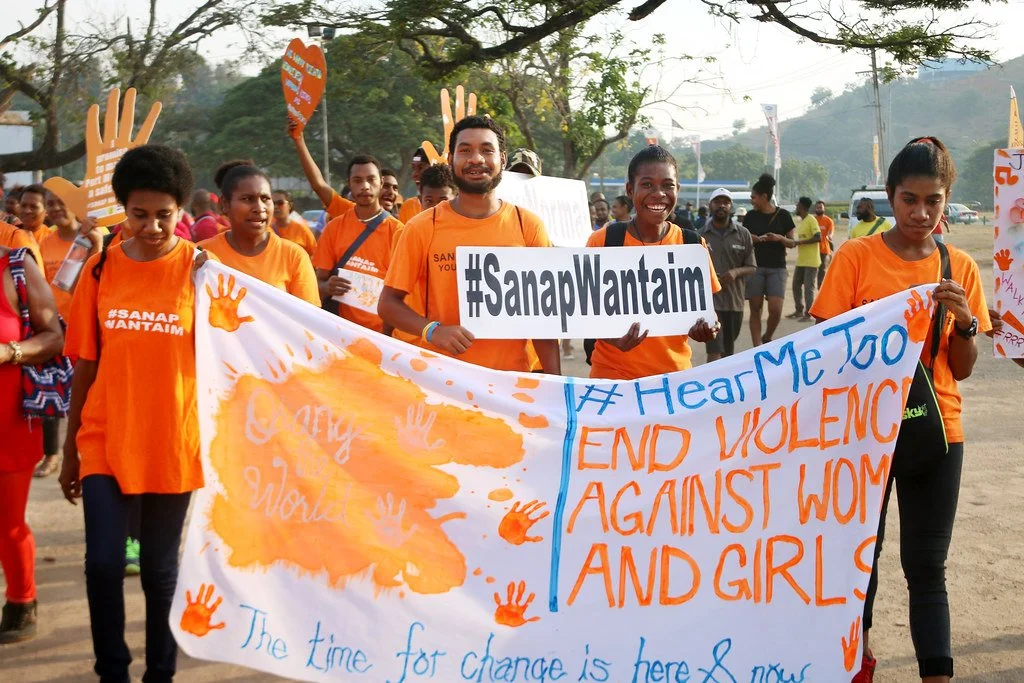
Orange the World 2018 in Papua New Guinea. UN Women. CC BY-NC-ND 2.0.
Domestic abuse and gender-based violence have been a longstanding issue within the Oceania region. Australian Prime Minister Anthony Albanese has claimed domestic abuse in Oceania and Australia to be "a national crisis," highlighting the magnitude of the issue. Papua New Guinea, a nation in Oceania, is home to 11.8 million people and over 1,000 ethnic and Indigenous groups, and it has significantly high rates of domestic abuse and gender-based violence. According to Human Rights Watch, over 1.5 billion Papua New Guineans experience gender-based violence each year, with, on average, a woman being beaten every 30 seconds.
There has been a demonstrated correlation between a higher risk of sexual and gender-based violence in many nations, including Papua New Guinea, with high rates of poverty. Various factors, such as limited access to services for victims, economic stress and hardships that were accentuated during the COVID-19 pandemic, as well as a weaker justice system, have contributed to this correlation. While the government of Papua New Guinea implemented the Family Protection Act in 2013 and the National Strategy to Prevent and Respond to Gender Based Violence in 2016, domestic abuse and gender-based violence persist as important issues to be addressed in the country.
While it is an oversimplification to assume poverty is a cause of high rates of gender-based violence, a correlation exists. According to the World Report in 2024, some 40% of Papua New Guineans live in poverty. A large reason for this is the country’s large rural population, which lacks access to electricity, clean water and other necessities. Papua New Guinea's vast landscapes have posed a great challenge to ensuring the equal distribution of resources to all tribes and communities. Oftentimes, nations with high rates of poverty have also had higher rates of domestic abuse. The Connections for Abused Women and their Children has justified this correlation, claiming, "Financial insecurity often also limits a victim’s ability to leave an abusive relationship, as they may lack the resources to secure independent housing, legal assistance, or child care." Furthermore, as Papua New Guinea has a great gender gap in formal employment, there has often been a trend for women to have increased financial dependency on their male spouses or partners. This prevalent dependency and the reality of high poverty rates in Papua New Guinea have been significant challenges to breaking cycles of violence and promoting female empowerment against domestic abuse cases. Addressing the issue of poverty has been a challenge in Papua New Guinea, as the population density is extraordinarily low, with great linguistic and cultural barriers to overcome. Nonetheless, though significant progress is still required, international organisations have offered aid, such as the European Investment Bank Global, which provided $50 million to Papua New Guinea for building roads to ease the distribution and accessibility of resources for rural populations.
COVID-19 has also been a catalyst for gender-based violence and domestic abuse cases worldwide. In Papua New Guinea, COVID-19 has had a disproportionate impact on women's well-being. Due to strict lockdown measures, women's domestic workload, which is largely unpaid, significantly increased during this period. Since the lockdowns also affected schools, many mothers had to take on a significant additional role in raising children and taking care of sick relatives. The general increase of stressful and high-tension environments that resulted from lockdowns also led to exponential spikes in gender-based violence. Simultaneously, due to a greater governmental focus on economic recovery and lockdown measures, accessing gender-based violence services and reproductive services for women became more difficult. According to U.N. Women Asia and the Pacific, there was a 31% decrease in the number of clients accessing gender-based violence services during and post COVID-19. The disruption to receiving this support has also resulted in large numbers of undocumented cases of gender-based violence and domestic abuse.
GET INVOLVED
For anyone looking to support those suffering from gender-based violence and domestic abuse in Papua New Guinea, you can do so by checking out organisations such as Oxfam Australia, Women's Peace and Humanitarian Fund (WPHF) and CARE.

Alex Jung
Alex is from New Zealand and South Korea, and is currently a student at the University of Chicago. He is majoring in Political Science and International Relations, and minoring in Middle Eastern Studies. He is passionate about social justice for minorities and indigenous communities. In his free time, he enjoys learning languages (Korean, English, Mandarin, and Persian) and writing novels and short stories.