
Evelyn Garcia Medina
When the Mexican government failed to protect its citizens, community militias rose to fight back against powerful drug cartels.
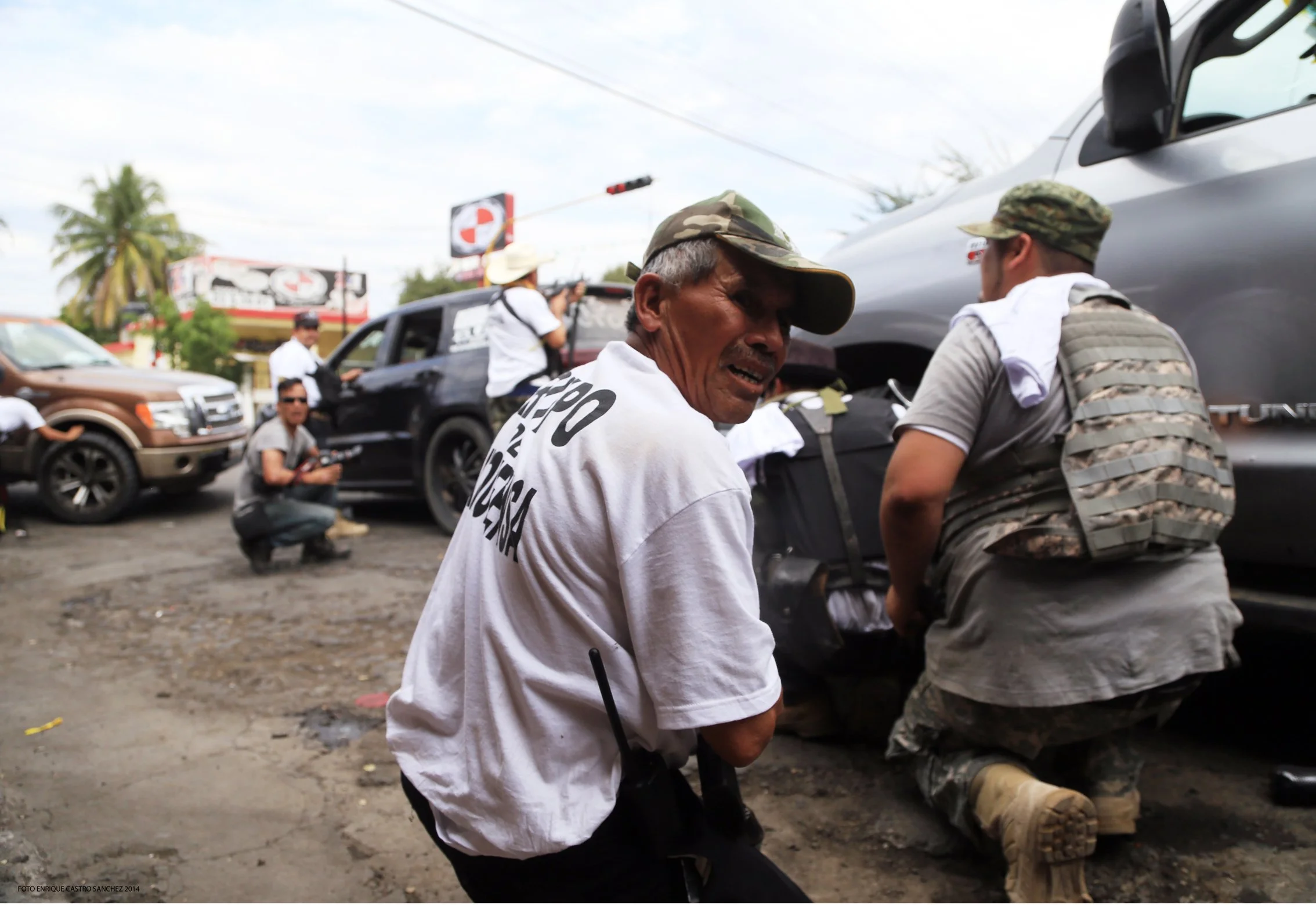
Armed men crouch behind trucks. Esther Vargas. CC BY-SA 2.0.
In the heart of Mexico’s most dangerous regions, ordinary citizens had once taken up arms where the government failed them. States like Sinaloa and Sonora have historically had a high presence of drug cartels, but other states like Michoacan, Jalisco and Guerrero aren’t immune to the violence either. Drug cartels in Mexico are one of the leading causes of crime in the country, conducting kidnappings, murders, extortion and so much more. In the 2010s, community defense groups known as “autodefensas” emerged as a response to a quiet government and drug cartel domination. The rise of these militias reflects the caring effort of local communities, but it also asserts the power cartels have maintained through their brutality.
In 2006, Mexican President Felipe Calderon launched Mexico’s war on drugs, to which cartels retaliated. They terrorized civilians, taking over towns, extorting local businesses and displacing entire families. States like Michoacan and Guerrero became easy targets because of their poverty rates, weak state presence and potential for poppy cultivation, which is used to make heroin. By 2013, the cartel fully controlled residents, to which they fought back by forming community defense groups. The rise of autodefensas was an act of survival in places where authority was distant, corrupt or complicit in the violence consuming their communities.
What began as a desperate response to rampant kidnappings and extortion evolved into an organized network of self-defense groups. In Guerrero, the Union of Peoples and Organizations of the State of Guerrero captured criminals to be publicly identified before being turned over to the police. Across the country, autodefensas patrolled roads specifically used by cartels to dump bodies, conducted vehicle checks, seized weapons and kept both cartel gunmen and corrupt police out. Members, armed with rifles, machetes and makeshift masks, coordinated over walkie-talkies, kept night watches in silence and met with neighboring militias or government officials to discuss security.
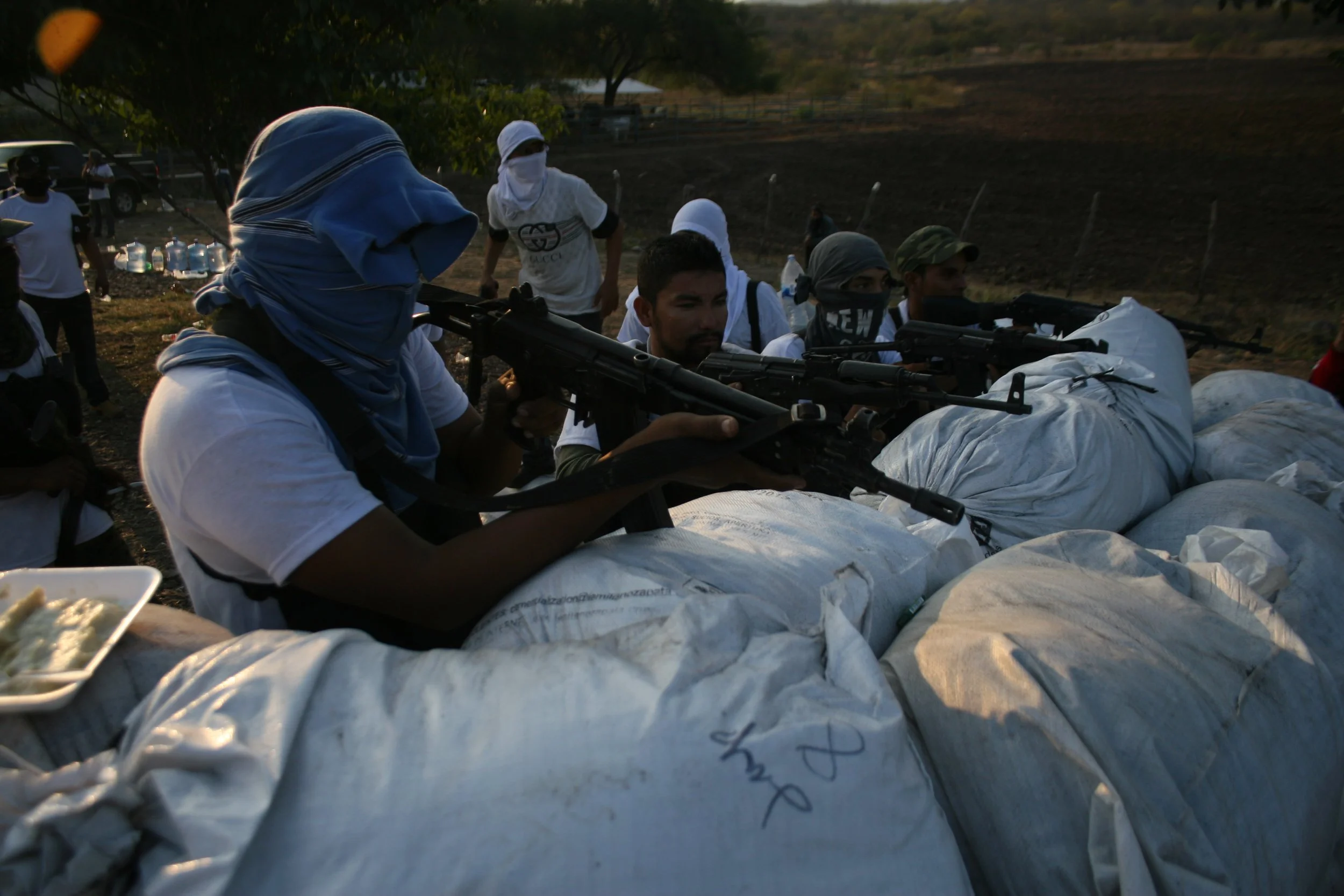
Autodefensa members stand guard in a bunker. Esther Vargas. CC BY-SA 2.0.
Public opinion on Mexico’s autodefensas has been divided. Many townspeople view them as heroic citizens who risk their lives to defend their communities. At the peak of autodefensas, they would sometimes bring food and drinks to militia members standing guard, grateful that someone was willing to protect them. But over time, some groups have been infiltrated by drug traffickers. In Michoacan, for example, leaders of certain squads have faced accusations of cocaine trafficking, raising doubts about whether they’re fighting the Jalisco Cartel or merely helping its enemies. Critics, including former Mexican President Enrique Pena Nieto, have warned that armed civilian groups could spiral out of control, becoming the very danger they once set out to stop.
The story of Mexico’s autodefensas is one of courage born from the desperation of a people forced to do what their government would not. Yet as some of these groups lost sight of their original purpose, they eventually faded away. There are very few autodefensa groups remaining, with the death of veteran vigilante leader Hipolito Mora and other prominent members leaving very few standing. Cartels continue to be a pressing issue for Mexico in a multitude of ways, and despite their seemingly unstoppable power, the formation and efforts of community militias embody the care and attentiveness Mexican citizens have for their communities.
Evelyn Garcia Medina
Evelyn is a recent Chicana graduate with a B.A. in English and Comparative Literature. Born and raised in the Bay Area, she draws inspiration from her passions: her cultural roots, environmentalism, and human rights. In her free time, she goes on hikes and enjoys learning about current social issues, history, and animals.