
Evelyn Garcia Medina
A desert island in Mexico is heavily protected by federal and global organizations to prevent ecological disruption, but still hosts seasonal, environmentally conscious glamping.
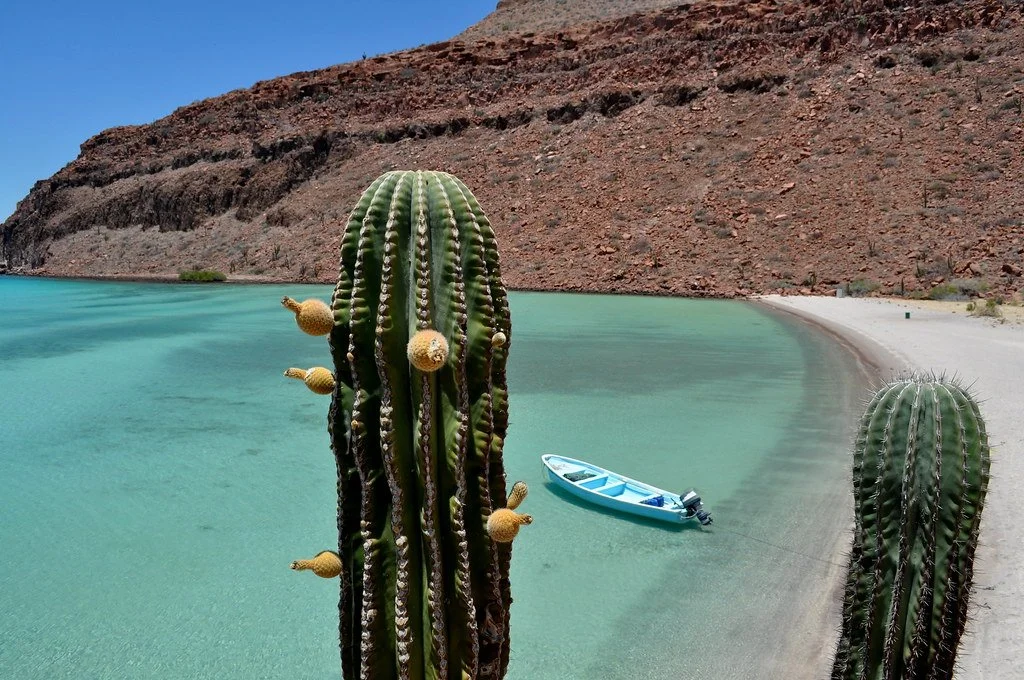
Small boat in the ocean behind two cacti. Constanza S. Mora. CC BY 2.0.
Traveling abroad often means booking a hotel, exploring different food spots and visiting popular attractions. However, some areas offer an alternative experience that highlights natural settings over developed ones. In the desert island, Isla Espiritu Santo, there are federal protections by the Mexican government to preserve the terrestrial and marine life. You can visit the island, as long as you follow their visitation protocols.
Isla Espritu Santo sits just off the coast of La Paz, Mexico, in Baja California Sur, sitting atop the Sea of Cortes. The polarity of the island to the ocean is visible through the desert topography and clear surrounding waters. Espiritu Santo was born from volcanic activity and tectonic elevation, making it a desert island nicknamed “the aquarium of the world” by oceanographer Jacques-Yves Cousteau because of its high number of sea animals.
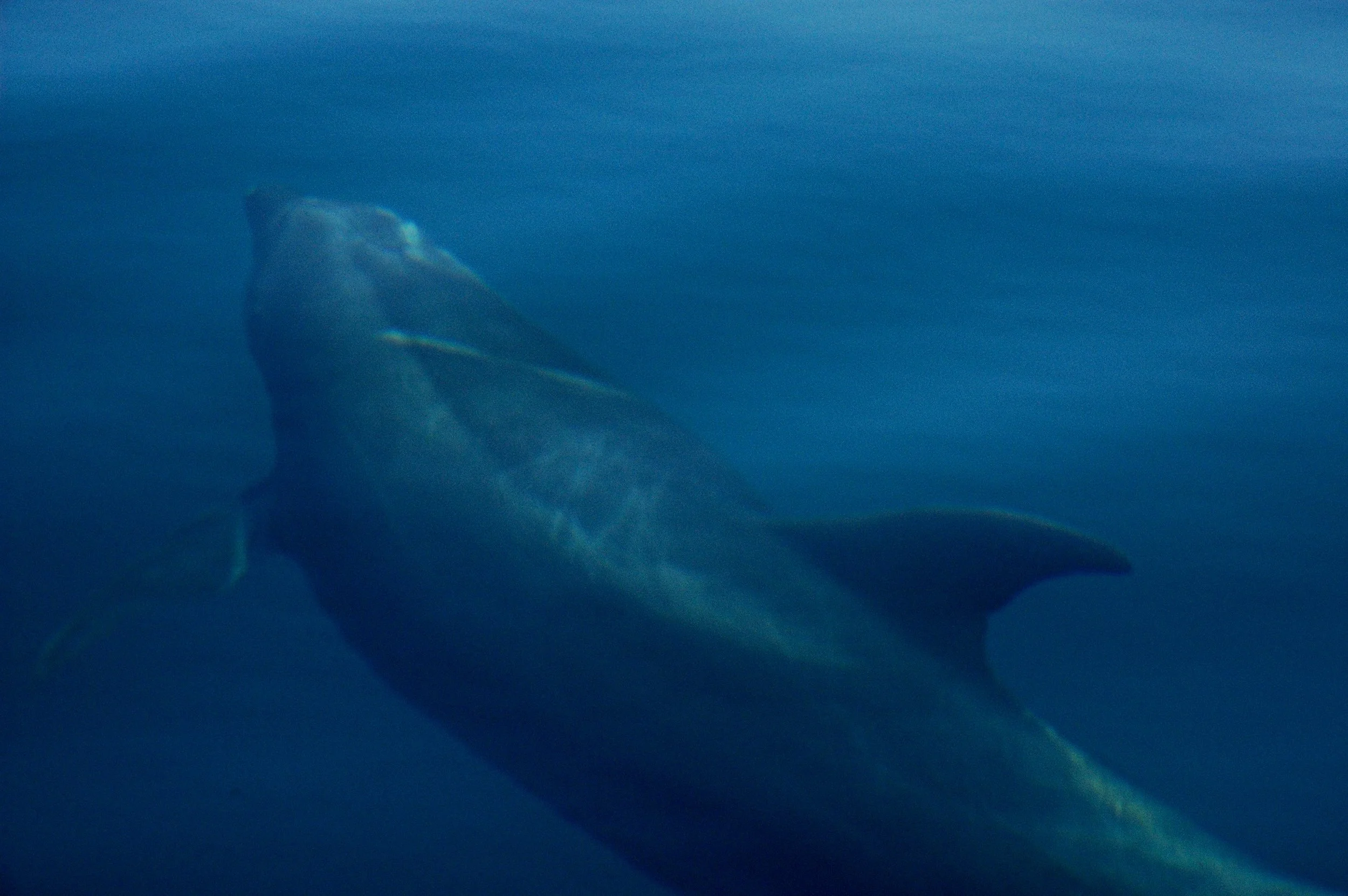
Wild dolphin swimming in the Sea of Cortes. Wonderlane. CC BY 2.0.
According to research from the California Academy of Science and the Belvedere Scientific Fund, Isla Espiritu Santo is composed of “volcanic ash, basaltic lava flow” and multicolor rock formations including pink, red, gray, umber basalt and more. Native plant life consists of the Mexican cardón cactus, which can live up to 300 years old and reach heights of up to 60 feet, making it the tallest cactus in the world. The ocean allows temperate and tropical ecosystems to mix, supporting approximately 900 fish and marine mammal species. Some animals, like the whale shark, have benefited from international fishing restrictions and reserve protections, which help maintain ecological balance by controlling plankton and algae populations.
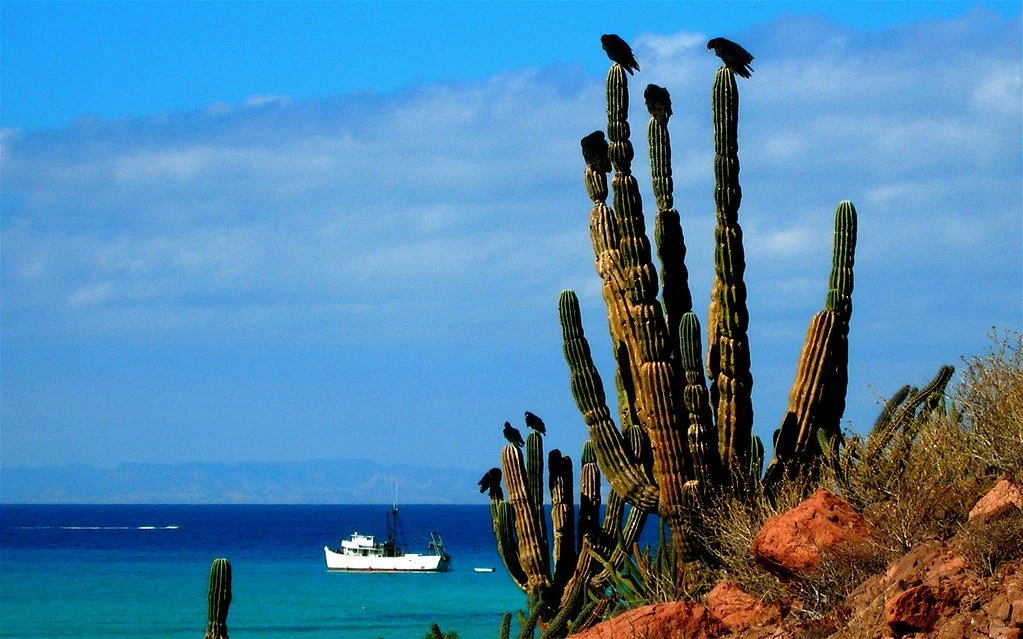
Crows sitting atop tall cardón cactus in Isla Espiritu Santo. Michael J. Slezak. CC BY-NC 2.0.
But what exactly does it mean to say that an island is protected? For Espiritu Santo and the nearest town, La Paz, it means getting Mexico’s National Commission of Natural Protected Areas, the Ministry of Environment and Natural Resources and the Federal Attorney for Environmental Protection involved. These government organizations collaborate to maintain the ecology of Mexico’s natural protected areas and ensure that all travel complies with the federal environmental protocols. Efforts to preserve the island date back a few decades. In 1995, UNESCO designated the area as a biosphere reserve, and later in 2007, Mexico, alongside the National Commission of Natural Protected Areas, declared Isla Espiritu Santo part of the Espiritu Santo Archipelago National Park. These protections have decreased environmental disruption, and preservation efforts continue today. La Paz enforces strict visitor limits, keeping capacity at no more than 40% on the island, and follows government-issued regulations for visiting a protected area.
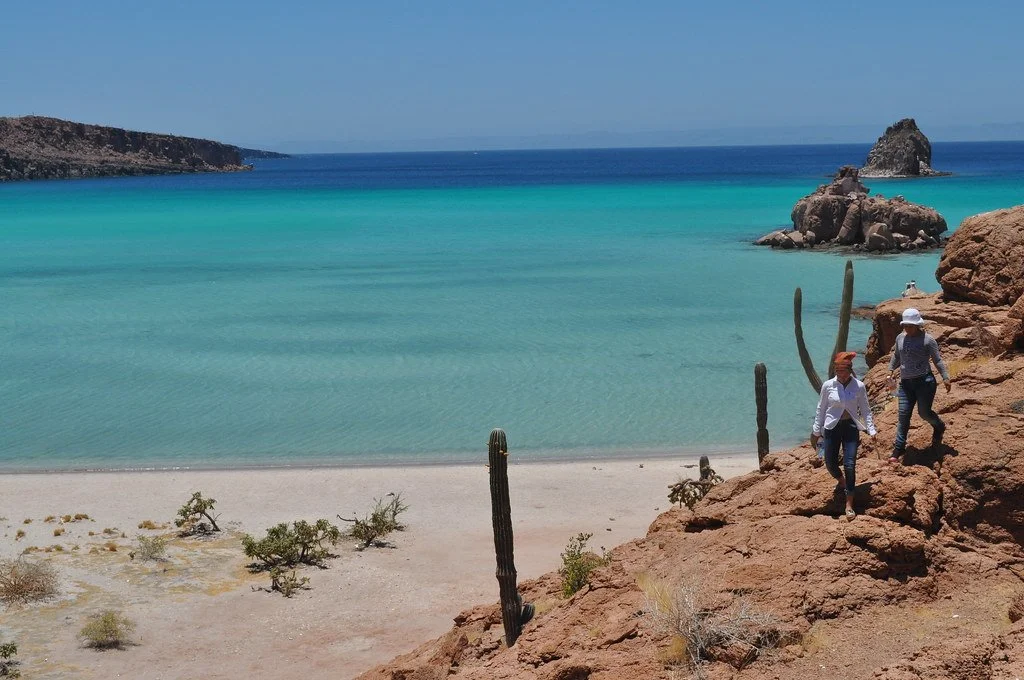
Hikers on a desert island. Constanza S. Mora. CC BY 2.0.
Although Espiritu Santo has many protections, it is still possible to visit and stay on the island, as long as federal guidelines are followed. Mexico designated FONATUR, the government administration in charge of Mexico’s low-impact travel, with the Sea of Cortés Project in 2008. Backed by CONANP and SEMARANT, an official document released by them states that this project is “the first sustainable regional tourist development in the history of [Mexico]” and promotes eco-travel. One of the approved tour operations is Adventuresmith, a small-ship adventure cruise that employs local residents, implements a strict leave-no-trace rule and hires cruise operators with environmentally conscious practices. In 2005, Adventuresmith mandated a carbon offset travel initiative, and following its launch, other small ship travel companies adopted similar carbon offsetting and low-impact approaches. They offer a glamping option called “Camp Cecil de la Isla” that holds eight seasonal tents that are broken down and removed from the island every year. Other preservation efforts include solar energy, a sun-heated water system for showers and clean composting toilets.
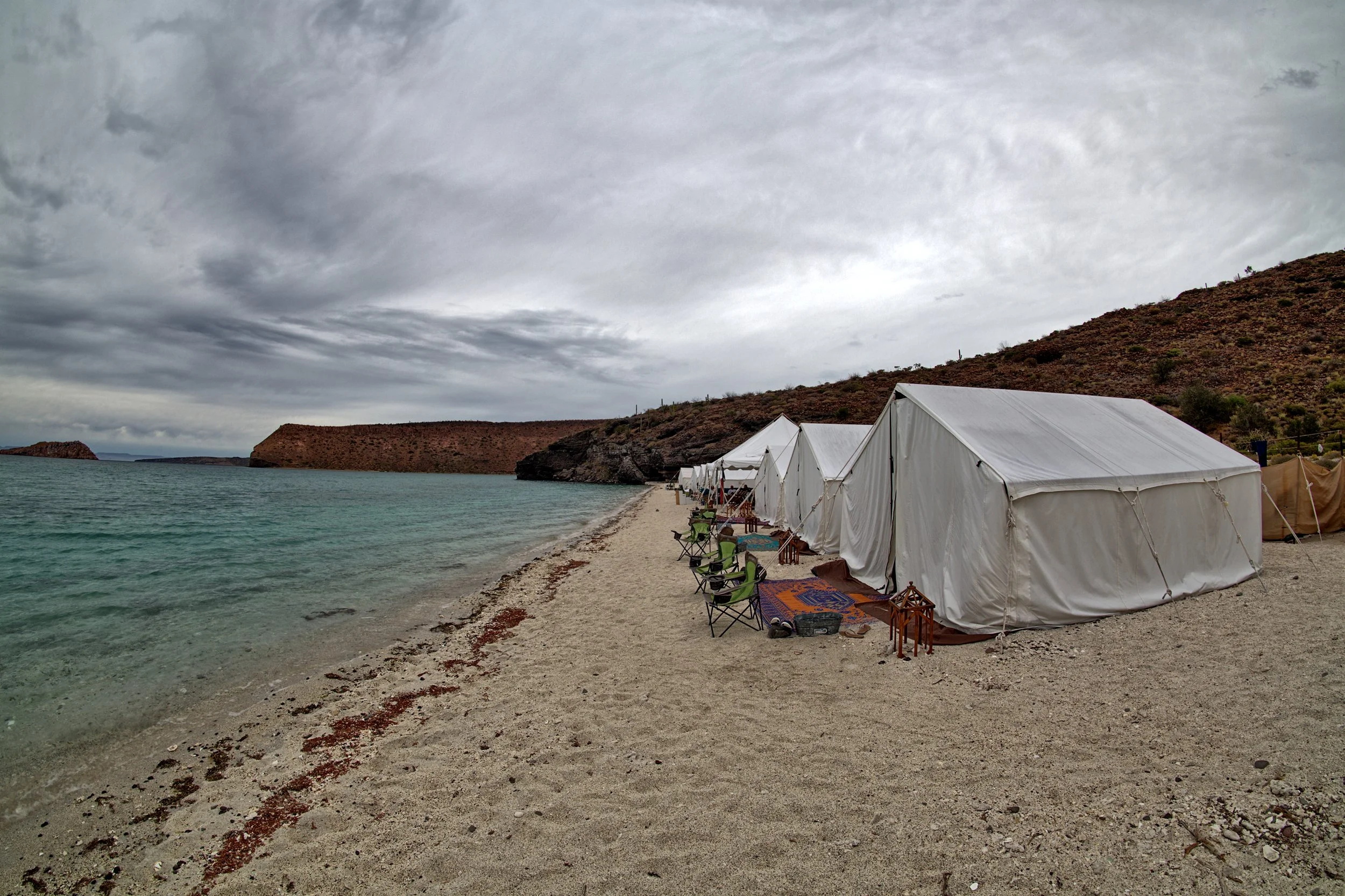
Beachfront glamping tents at Camp Cecil de la Isla. John Brandauer. CC BY-NC-ND 2.0.
Foreign travel can go one of many ways, but Isla Espiritu Santo remains an example of how environmental protections, government regulation and scientific research can align to preserve a vulnerable ecosystem. While travel is allowed, it is controlled through federal administration and enforced guidelines that limit human impact. For travelers seeking more than just a vacation, and for governments aiming to protect their natural heritage, Espiritu Santo stands as a reminder that conservation and tourism are not mutually exclusive. As travelers continue arriving, the island's future depends on the continuation of these protections and the cooperation of visitors, local communities and policymakers alike.
GETTING THERE:
Adventuresmith’s glamping at Camp Cecil de la Isla is part of their Seas & Sierra cruise, an all-inclusive eight-day trip to two islands in Baja California Sur: Isla Espiritu Santo and Sierra La Laguna Biosphere Reserve. To get there, start with a flight to Los Cabos International Airport, where their guides will drive you 90 minutes to the hotel Los Colibris Casitas in Todos Santos, Mexico. After arriving, you will have time to rest at the hotel with ocean views or indulge in the tour activities scheduled. The next morning, there is about a one-hour boat ride to Isla Espiritu Santo, where the glamping tents sit neatly in a short row.
The next three days are spent on the island and in the water, leading to a day-trip in La Paz, Mexico. After venturing into the town, stay at a local hotel in preparation for the next day’s two-hour drive to Camp Cecil de la Sierra in Sierra La Laguna Biosphere Reserve. More glamping setups rest here, and two days of activities await, some with the local ranching family that owns the property. After breakfast on the very last day, a 95-minute car ride returns to Los Cabos International Airport as an end to the trip.
This eight-day Adventuresmith cruise is priced at $3,795 per person, including everything but the flights, and is only available in November through April. If you're traveling on a budget or aren't able to spend eight days, Todos Santos Eco Adventures is another company that is worth researching. They offer another glamping option on Isla Espiritu Santo that is more flexible about the days spent there, coming in at $395 per person each night. They don’t provide a driver, but they do transport you to and from La Paz to Espiritu Santo on a boat ride and provide food during your stay.

Evelyn Garcia Medina
Evelyn is a recent Chicana graduate with a B.A. in English and Comparative Literature. Born and raised in the Bay Area, she draws inspiration from her passions: her cultural roots, environmentalism, and human rights. In her free time, she goes on hikes and enjoys learning about current social issues, history, and animals.