
Mexico City is a flourishing metropolis with a plethora of historic and modernist architectural sites. Here are a few attractions scattered around the city.
Read MoreChina Weaponizes Tourism to Erase Uyghur Culture
8,000 Uyghur mosques have been destroyed, and cafes and bars have taken their place, as China’s Han majority ethnic group flock to Xinjiang for its natural beauty. Mosques left standing have become museums catering to Han visitors, and religious pilgrims are turned away.
Read MoreUnpacking the Nagorno-Karabakh Conflict and the Armenian Diaspora
The renewed conflict in the South Caucasus region has its roots in long-standing historical divisions between Turkey and Armenia.
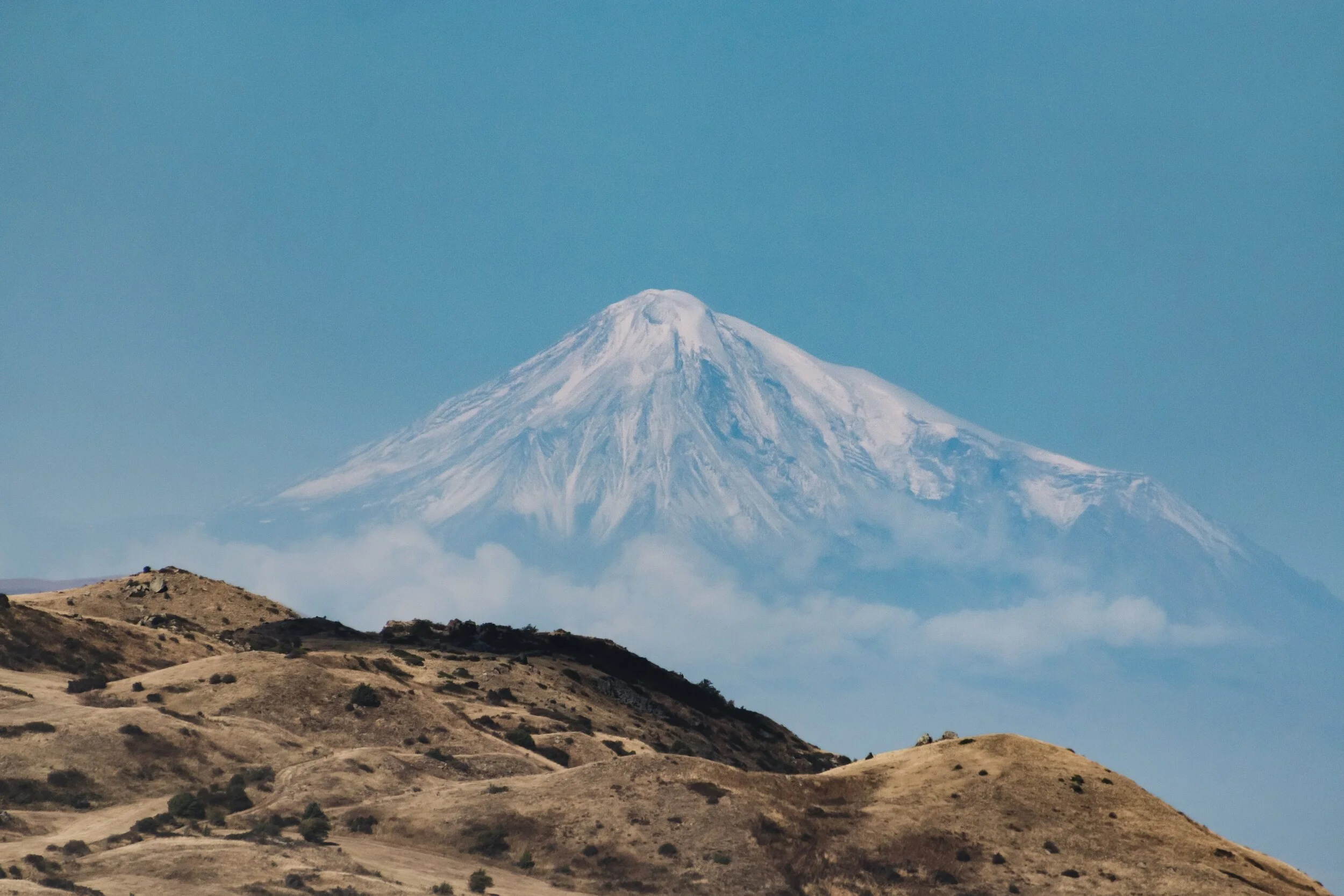
A view of Mount Ararat. West. CC2.0
Tensions between Azerbaijan and Armenia have been renewed due to the ongoing territorial dispute over Nagorno-Karabakh. Fighting started up again on Sept. 27 and has caused massive upheaval and casualties on both sides. Backed by Turkey, the Azerbaijani military bombed Nagorno-Karabakh’s regional capital of Stepanakert with intense artillery fire, while Armenia launched missiles at Ganja (Azerbaijan’s second-largest city), putting citizens in grave danger. Officials speculate that the last two weeks of fighting have proven to be the worst since a cease-fire was brokered by Russia in 1994. Although another cease-fire is a possibility, there is no prediction of what will come next. “Don’t discount the possibility of this turning into something much larger,” said Kevork Oskanian from the University of Birmingham in England. “Once a conflict like this kicks off, it has a dynamic of its own and you don’t know where it will go.”
A Brief History of the Nagorno-Karabakh Dispute

A map of the Nagorno-Karabakh region. Achemish. Wikimedia Commons. CC4.0
The recent fighting is a result of a renewed 32-year-long military conflict between Azerbaijan and Armenia. The territory of Nagorno-Karabakh, also known as Artsakh to Armenians, contains a population of about 150,000. Although completely surrounded by Muslim-majority Azerbaijan, it is governed and claimed by Christian Armenians. Josef Stalin gave the territory to Azerbaijan in 1921 and made it an autonomous region two years later. Initially, the territorial dispute was not violent, as both Armenia and Azerbaijan were under the stronghold of the Soviet Union. However, nationalistic and militaristic tensions increased between the two nations when the USSR began to dissolve. The fighting began in 1991, which resulted in 30,000 casualties and over one million displaced. Although a cease-fire was agreed to in 1994, no official peace deal has been reached. Armenia is happier with the status quo than Azerbaijan, as it was able to reclaim 20% of surrounding land during the fighting in the ‘90s (shown in yellow on the map above). However, Azerbaijan still has a large population of people displaced by the fighting who want to return to their homes.
Why Turkey is Supporting Azerbaijan
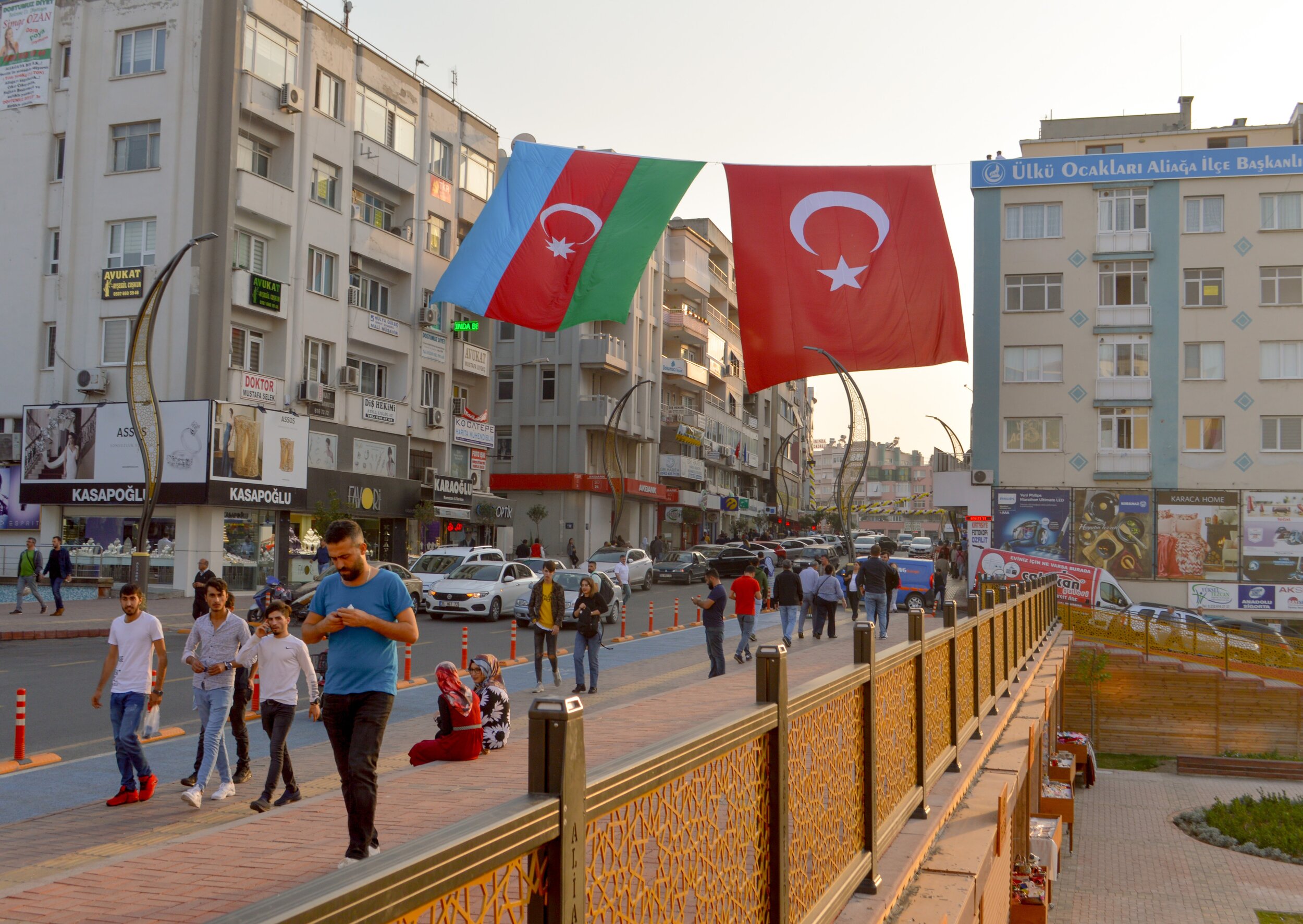
Azerbaijani and Turkish flags in Izmir, Turkey. Anzola. CC 2.0
Azerbaijan is often referred to as a little brother to Turkey, due to the two nations’ connections through cultural, linguistic and religious ties.The two have a relationship built on trade and mutual exchange. Azerbaijan provides a large portion of Turkey’s gas and oil, where the money in return is used to buy weapons from Turkey. Azerbaijan is currently using military weapons provided by Turkey to strike Nagorno-Karabakh, allowing Turkey to increase its political presence in the region. Underpinning Turkey’s involvement in the conflict are the events of 1915, where 1.5 million Armenians were killed under the direction of the Ottoman Empire (present-day Turkey), which many consider a genocide but Turkey denies. Many Armenians see Azerbaijan’s alliance with Turkey as a resurfacing of these events, providing an ultimate threat to their existence and statehood.
The Conflict Reaches the Armenian Diaspora

An Armenian church in Los Angeles. Steeds. CC2.0
Although Armenia has a population of 3 million, the diaspora population is estimated to be much larger, with notable communities in Australia, Russia, Lebanon, France and Southern California. Although the events of 1915 resulted in mass migrations of Armenians around the world, the diaspora goes as far back as the Middle Ages. Throughout history, many Armenians migrated to new corners of the world due to political upheaval. Armenian merchants often traveled to trade and sell wares, playing a key role in the economies of China, India and Persia. Armenia’s long history of migration and displacement has resulted in a strengthened cultural identity in diaspora communities. Many notable Armenian celebrities, including Kim Kardashian and Serj Tankian, are strong proponents of the Armenian cause, posting on social media to raise awareness of the Nagorno-Karabakh dispute. Armenian lobby groups have held protests in Southern California, as well as asking Armenian-Americans to bring awareness of the conflict to representatives and congresspeople. Some Armenians even contemplate returning to their country to fight Azerbaijan. According to Alex Galitsky, part of the Armenian National Committee of America’s western region, “I think a lot of people see themselves as bearing some responsibility for the defense of our nation.”
The conflict in Nagorno-Karabakh continues to escalate as nationalistic and militaristic tendencies fuel both sides. True peace will only be reached if Turkey, Armenia and Azerbaijan are willing to begin the difficult work of listening and embracing each other’s conflicting histories and narratives.

Megan Gürer
Megan is a Turkish-American student at Wellesley College in Massachusetts studying Biological Sciences. Passionate about environmental issues and learning about other cultures, she dreams of exploring the globe. In her free time, she enjoys cooking, singing, and composing music.
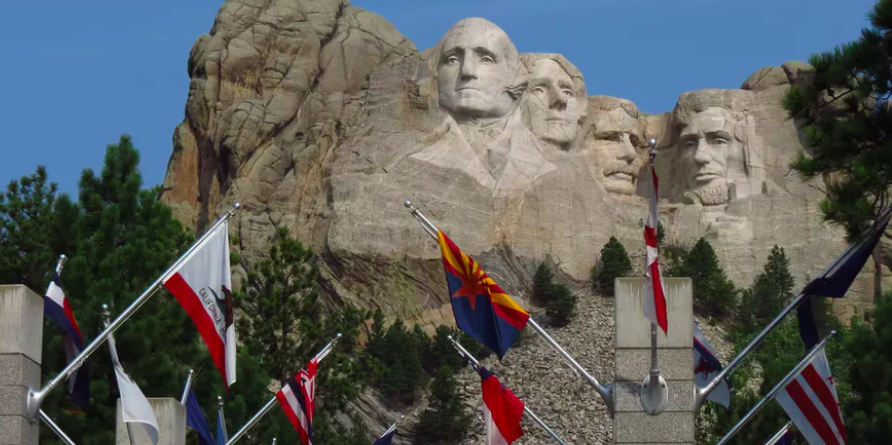
Entry to Mount Rushmore along the Avenue of Flags. Xiao Fang/Wikimedia, CC BY
Visiting National Parks Could Change Your Thinking About Patriotism
When I took a post-college job as a seasonal ranger at Grand Teton National Park 23 years ago, I noticed right away that my “Smokey Bear” hat carried some serious emotional baggage. As I later wrote in my book, “Reclaiming Nostalgia: Longing for Nature in American Literature,” park visitors saw the hat as an icon of tradition and romance, a symbol of a simpler era long gone.
For many Americans the physical grandeur of parks like Grand Teton, Yosemite and Yellowstone also inspires patriotic pride. Twenty-first-century patriotism is a touchy subject, increasingly claimed by America’s conservative right. But the national park system is designed to be democratic – protecting lands that belong to the public for all to enjoy – and politically neutral. The parks are spaces where love of country can be shared by all.
But some sites send more complex messages. In my new book, “Memorials Matter: Emotion, Environment, and Public Memory at American Historical Sites,” I explore how patriotism plays out at sites where education, not recreation, is the priority. To research it I visited seven memorials to see how their structures and natural landscapes inspire patriotism and other emotions.
For me, and I suspect for many, national memorials elicit conflicting feelings: pride in our nation’s achievements, but also guilt, regret or anger over the costs of progress. Patriotism, especially at sites of shame, can be unsettling – and I see this as a good thing. In my view, honestly confronting the darker parts of U.S. history as well as its best moments is good for tourism, for patriotism and for the nation.
Whose history?
Patriotism has roots in the Latin “patriotia,” meaning “fellow countryman.” It’s common to feel patriotic pride in U.S. technological achievements or military strength, but Americans also glory in the diversity and beauty of our natural landscapes. That kind of patriotism, I think, has the potential to be more inclusive, less divisive and more socially and environmentally just.
National memorials can summon more than one kind of patriotism. Take Mount Rushmore, which was designed explicitly to evoke national pride. Tourists walk the Avenue of Flags, marvel at the labor required to carve four U.S. presidents’ faces out of granite and applaud when rangers invite military veterans onstage during visitor programs. Patriotism at Rushmore centers on labor, progress and the “great men” that the site describes as founding, expanding and defending the U.S.
But there are other perspectives. Viewed from the Peter Norbeck Overlook, a short drive from the main site, the faces of Washington, Jefferson, Roosevelt and Lincoln are tiny elements embedded in the expansive Black Hills region. The Black Hills were and still are a sacred place for Lakota peoples that they never willingly relinquished. Viewing Mount Rushmore this way puts those rock faces in context and raises questions about history and justice.
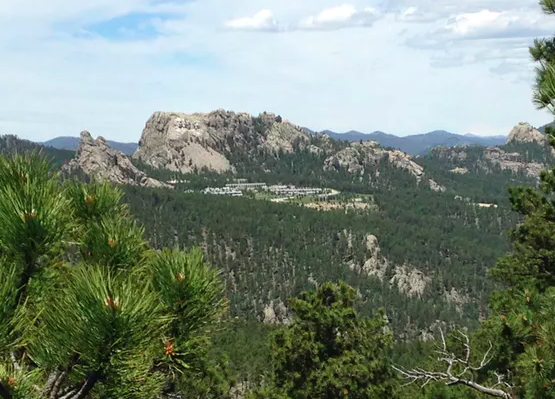
Mt. Rushmore National Memorial in South Dakota, viewed from the Peter Norbeck Overlook. Jennifer Ladino, CC BY-ND
Some national monuments conduct reenactments to help visitors relive the past and feel a sense of history and authenticity. At Golden Spike National Historic Site in Utah, tourists can view replica steam locomotives and watch a reenactment of driving the spike that completed the first transcontinental railroad.
This park also ties patriotism to technology, labor, unity and progress. But it downplays countless lives lost during construction, including a disproportionate number of Chinese laborers. There’s an implied whiteness to the patriotism here, although those Chinese workers are receiving belated recognition.
Away from the main complex, however, visitors can see an impressive natural landscape carved by geologic forces. At “Chinaman’s Arch,” they can read about ancient Lake Bonneville, which once covered 20,000 square miles. Against the backdrop of geologic time, human labor and technological power look less impressive. A different feeling of patriotism emerges here that can embrace the physical country all Americans share.

Chinese railroad workers in California’s Sierra Nevada mountains, photographed between 1865 and 1869. Alfred Hart/Library of Congress
Sites of shame
Even sites where visitors are meant to feel remorse leave some room for patriotism. But at places like Manzanar National Historic Site in California – one of 10 camps where over 110,000 Japanese Americans were incarcerated during World War II – natural and textual cues prevent any easy patriotic reflexes.
Reconstructed guard towers and barracks help visitors perceive the experience of being detained. I could imagine Japanese-Americans’ shame as I entered claustrophobic buildings and touched the rough straw that filled makeshift mattresses. Many visitors doubtlessly associate mountains with adventure and freedom, but some incarcerees saw the nearby Sierra Nevada as barricades reinforcing the camp’s barbed wire fence.
Rangers play up these emotional tensions on their tours. One ranger positioned a group of schoolchildren atop what were once latrines, and asked them: “Will it happen again? We don’t know. We hope not. We have to stand up for what is right.” Instead of a self-congratulatory sense of being a good citizen, Manzanar leaves visitors with unsettling questions and mixed feelings.
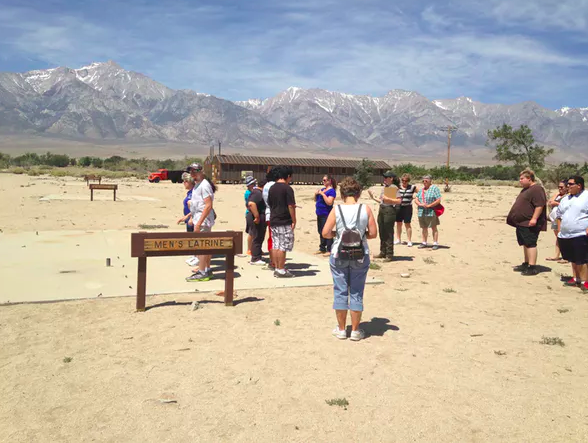

Young tourists experience the humiliating lack of privacy at Manzanar National Historic Site. Jennifer Ladino, CC BY-ND
Humble patriotism
Visiting and writing about these sites made me consider what it would take to recast patriotism as collective pride in the United States’ diverse landscapes and peoples. I believe one essential ingredient is compassion. Recent controversies over Confederate monuments showed that many Americans were unwilling to imagine how public memorials could be offensive or traumatic for others.
Greater clarity about value systems can also help. Psychologists have found striking differences between the moral frameworks that shape liberals’ and conservatives’ views. Conservatives generally prioritize purity, sanctity and loyalty, while liberals tend to value justice in the form of concerns about fairness and harm. In my view, patriotism could bridge the apparent gap between these moral foundations.
My research suggests that visits to memorial sites are helpful for recognizing our interdependence with each other, as inhabitants of a common country. In her recent book, “The Hour of Land: A Personal Topography of America’s National Parks,” Terry Tempest Williams wonders, “What is the relevance of our national parks in the twenty-first century – and how might these public commons bring us back home to a united state of humility?” Places like Manzanar and Golden Spike are part of a common heritage embedded in public lands. It’s our responsibility as citizens to visit these places with both pride and humility.
JENNIFER LADINO is an Associate Professor of English, University of Idaho.
THIS ARTICLE WAS ORIGINALLY PUBLISHED ON THE CONVERSATION