
Kleigh Carroll
US President Trump’s latest crackdown on immigration has expanded to farms in California, raising concerns over labor shortages and disruptions to supply chains throughout the country.
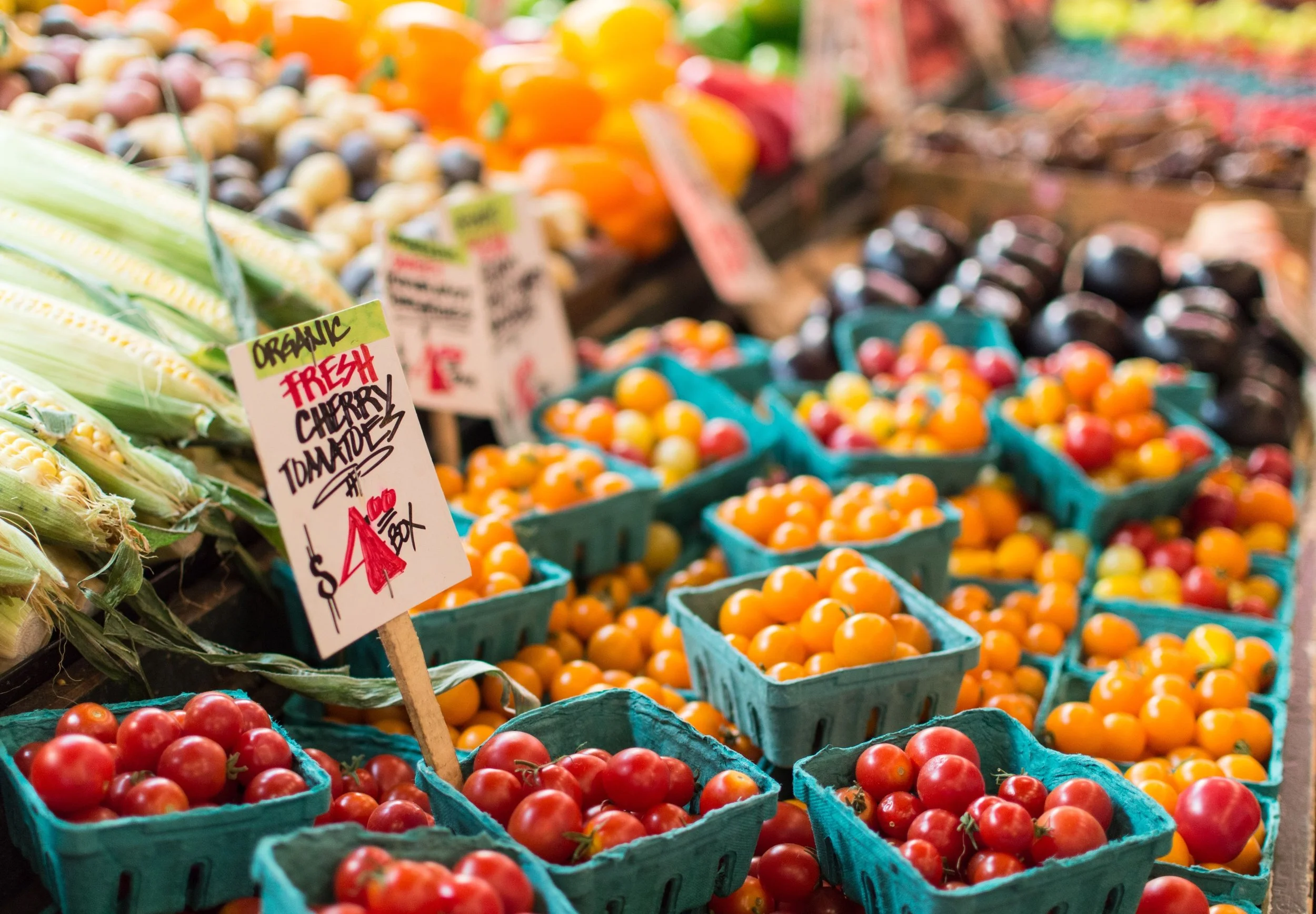
Fresh produce on display in the supermarket. Anne Preble. CC0.
Last night, I was craving a caprese salad for dinner. I had just returned from couple of weeks on the road, and nothing rings in the summer season quite like fresh, juicy tomatoes drowned in buttery olive oil and tangy balsamic, dressed up with basil and smushed between creamy layers of mozzarella cheese. But, upon a visit to my local Whole Foods, I was appalled to find a lack of fresh summer tomatoes in the produce section. Searching for heirlooms, I found only small tomatoes of the cherry variety. Picking up what appeared to be a ripe Campari, I was disappointed in the fruit’s lack of give and its hard exterior, and even more shocked when I saw the sticker, which read: “grown in Canada.” It’s late June in California — tomato season! What is going on?
The answer to that question has to do with immigration policy and ICE. In California, where my tomatoes are usually grown, 75% of farmworkers are undocumented. The Trump administration has made its intentions to crack down on illegal immigration clear, with President Trump iterating a goal of arresting 3,000 immigrants each day. An uptick in ICE raids and arrests in recent months has increased anxiety among migrant farmworkers, who, forced into hiding for fear of arrest and deportation, are afraid to come to work. This has raised concerns among farmers over food shortages and rising food prices; without workers to harvest fresh produce, crops simply rot in the fields.
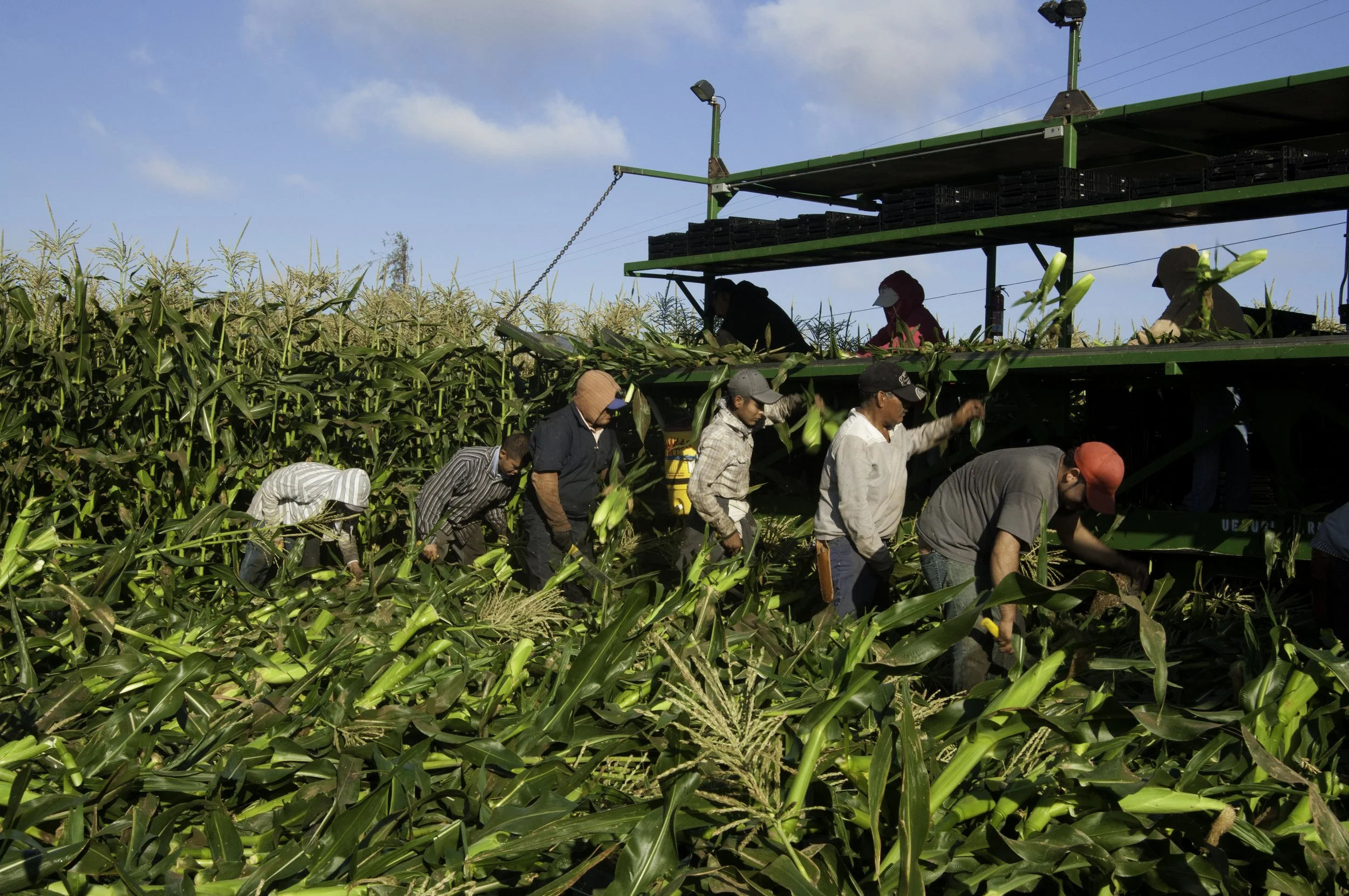
Migrant workers harvest corn on Uesugi Farms in Gilroy, California. Bob Nichols. CC BY 2.0.
Concerns over labor shortages in agriculture are not new. Almost 14.5 million tons of produce were left unharvested across the U.S. in 2023 alone. Farmers and local officials have stressed that mass deportations will only exacerbate the problem, as migrant workers make up a large portion of America’s workforce. The same year, 18.6% of the U.S. civilian workforce was foreign-born, with undocumented workers concentrated in construction, agriculture and service industries.

Border Patrol arrests two migrants. Jerry Glaser. CC0.
At the beginning of June, ICE carried out raids at farm fields and packinghouses in Ventura, Kern and Napa counties, arresting dozens of farmworkers. Lacking search warrants, the farms denied ICE agents entry, so they resorted to picking up people on the streets. The arrests have raised anxieties among laborers. According to Maureen McGuire, chief executive of Ventura County’s farm bureau, up to 45% of farmworkers have stopped showing up for work since the large-scale raids began.
While Trump claims that these raids target criminals, many farmers argue that they’re indiscriminate sweeps. Farms, hotels and restaurants that rely on immigrant labor are pushing back on the administration, urging Trump to stop attacking vital industries. In response to these concerns, Trump posted on Truth Social, “Our great Farmers and people in the Hotel and Leisure business… [say] our very aggressive policy on immigration is taking very good, long-time workers away from them... We must protect our Farmers, but get the CRIMINALS OUT OF THE USA. Changes are coming!” Hours later, a senior ICE official instructed agents to pause raids on farms, hotels and restaurants. Yet, a few days later, the policy was seemingly reversed. “There will be no safe spaces for industries that harbor violent criminals or purposely try to undermine ICE’s efforts,” Tricia McLaughlin, an assistant secretary for the Department of Homeland Security, said in a statement to The Times.
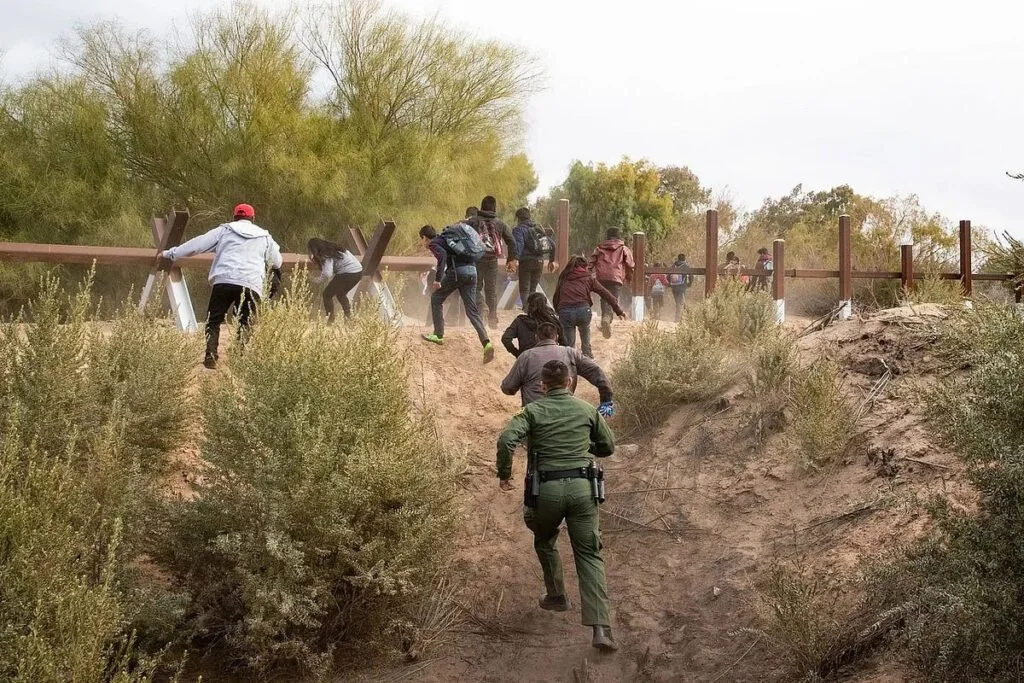
CE agents chase migrants. Jerry Glaser. CC0.
Trump’s conflicting directives have only heightened fear and uncertainty among both farmers and their workers. Bryan Little, senior director of policy advocacy at the California Farm Bureau, issued a statement claiming, “The current approach to federal immigration enforcement is having a disruptive effect on California’s rural communities and the farmers, ranchers, workers and families who live and work there.” According to Joe Del Bosque, CEO of Del Bosque Farms in Firebaugh, CA, the impact of a raid is detrimental even if only a few people are actually arrested. “It creates a lot of fear and [then] people don’t show up to work, and [the impact of that] is as bad as if they were taken away,” he explains. Del Bosque warns that farms may not be able to recover from a loss of workers. “We will lose crops [that] won’t get to market. Food prices will increase… Our system depends on being able to work every day through the season. This melon, I picked it today; if I don’t pick it by tomorrow, it’s gone.”
Without workers, farms in California and across the nation cannot survive. Many rely on workers hired under the H-2A visa program, designed to address the issue of labor shortages by hiring foreign workers for months at a time. However, farmers have long advocated for an overhaul of this system, which involves lengthy application periods and is limited in who can apply. The fact remains that 42% of farmworkers in the U.S. are undocumented. Anti-immigrant policy and rhetoric are simply not good for business. James O’Neill, the Director of Legislative Affairs for the American Business Immigration Coalition, has emphasized the importance of expanding legal pathways to citizenship for existing workers. “[It’s] also important to have future flow, pathways for additional workers that we still have a need for to be able to come here and do the work that we desperately need them to do,” he adds.
Under Trump’s new immigration policies, it is estimated that the economy would only be negatively affected. Wages would experience downward pressure, tax revenues would decline and large amounts of financial resources would be put toward covering the costs of detention and deportation. The price of food could increase by up to 14.5%, according to some reports, and mass deportations could reduce America’s GDP by 2.6% to 6.2% over the next decade. In other words, missing heirlooms are just the beginning.
GET INVOLVED:
Know your rights when engaging with immigration officials, and help inform others in your community. If you are approached by an ICE agent, you have the right to remain silent and do not have to answer questions about your deportation status. If an ICE agent comes to your door, you do not have to let them in if they do not have a warrant signed by a judge. The National Immigration Law Center provides a Know Your Rights Explainer, and the Immigrant Legal Resource Center has Know Your Rights cards online that can be downloaded in 15 languages for distribution.
You can also join local efforts to respond to immigration raids and provide support to individuals and families affected. Organizations such as the American Friends Service Committee form local rapid response teams to help track and document ICE's presence in communities and help provide legal assistance. Other organizations you can donate to include the Immigrant Legal Resource Center, the Coalition for Humane Immigrant Rights and United We Dream.

Kleigh Carroll
Kleigh is a student at UC Berkeley studying Geography and Journalism. She hopes to integrate her skills in these fields in pursuit of a career in journalism. She is passionate about being outside, exploring, and writing in all of its forms.