
Sarah Page-McCaw
Energy independence for southern Africa could boost local economies, but oil refinery aspirations hold a hidden cost, contributing to greater climate issues.
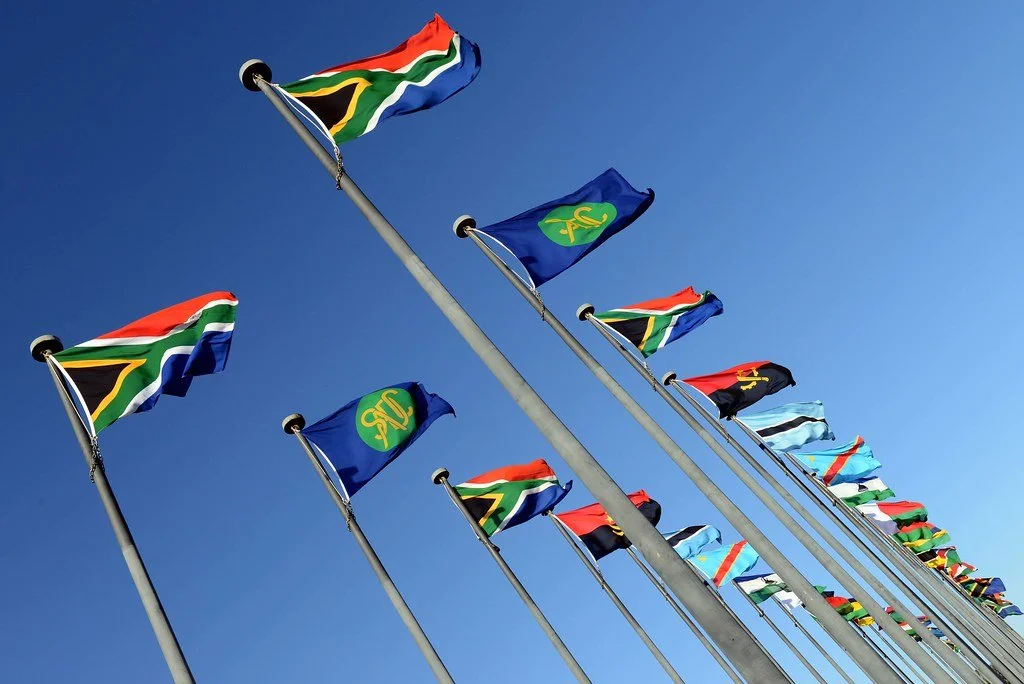
Flags of SADC Countries. Government ZA. CC BY-ND 2.0.
In May 2025, Namibia and Botswana sought a collaborative and self-sustaining future for southern African energy. Namibian President Netumbo Nandi-Ndaitwah and President of Botswana Duma Boko met in Gaborone to discuss plans for a joint oil refinery, which would promote each country’s energy security, lessen their reliance on foreign imports and boost their local economies.
The joint oil refinery is the latest in a series of collaborative efforts between Namibia and Botswana, and between southern African nations more broadly. As members of the Southern African Development Community, Namibia and Botswana are members of a Free Trade Agreement and are in talks to build a railway across the Kalahari Desert to facilitate trade across the region.
The oil refinery will decrease the region’s dependence on the exporting of diamonds as global demand for diamonds lessens. The refinery will also create jobs and add wealth to the region — Namibia claims that the production of petroleum will allow its GDP to double by 2040, and will reduce unemployment, which by 2025, has risen to 44.4% in the nation’s young people. Already, Namibia and Botswana have been rising in oil production, ranking 92nd and 103rd among global oil importers, respectively. Southern African countries like Uganda have already taken the first steps toward building their own oil refineries.
Although estimations are inexact, plans for the joint oil refinery outline an estimated 60,000 to 100,000 barrels of oil to be produced per day. If this project expands to the size of Uganda’s refinery, it could produce a maximum of 1.85 tons of carbon per year. The carbon output of southern African countries is low on a global scale, but southern Africa’s continued investment in fossil fuels could have serious ramifications if it continues to rapidly grow.
Increased fossil fuel emissions have particularly severe consequences for desert countries like Namibia and Botswana. The Kalahari Desert region is prone to droughts exacerbated by climate change as the drying effects of El Nino on the area become heightened. Such droughts have caused livestock to thin and crops to wither, increasing food poverty in the region.
In 2024, the Namibian government issued a plan to butcher hundreds of elephants, zebras, hippos and impalas in order to feed millions of starving citizens, having “exhausted” its agricultural harvest made meager from drought. In rural Namibia, farmers have begun to use weather radio stations to prepare for the unexpected droughts, floods and influxes of pests caused by climate change.
The oil refinery may boost the economies of Namibia and Botswana, increasing each country’s economic independence and combating poverty. However, it will ultimately feed into a much greater problem that disproportionately affects southern Africa — climate change.

Sarah Page-McCaw
Sarah is a student at Columbia University studying history and literature. She hopes to study law and is passionate about social justice and combating climate change. In her free time, she enjoys reading, writing, traveling, and music.