
Paige Geiser
From breathing hazards to burned forests, the consequences of Canada’s wildfires are far-reaching and long-lasting.
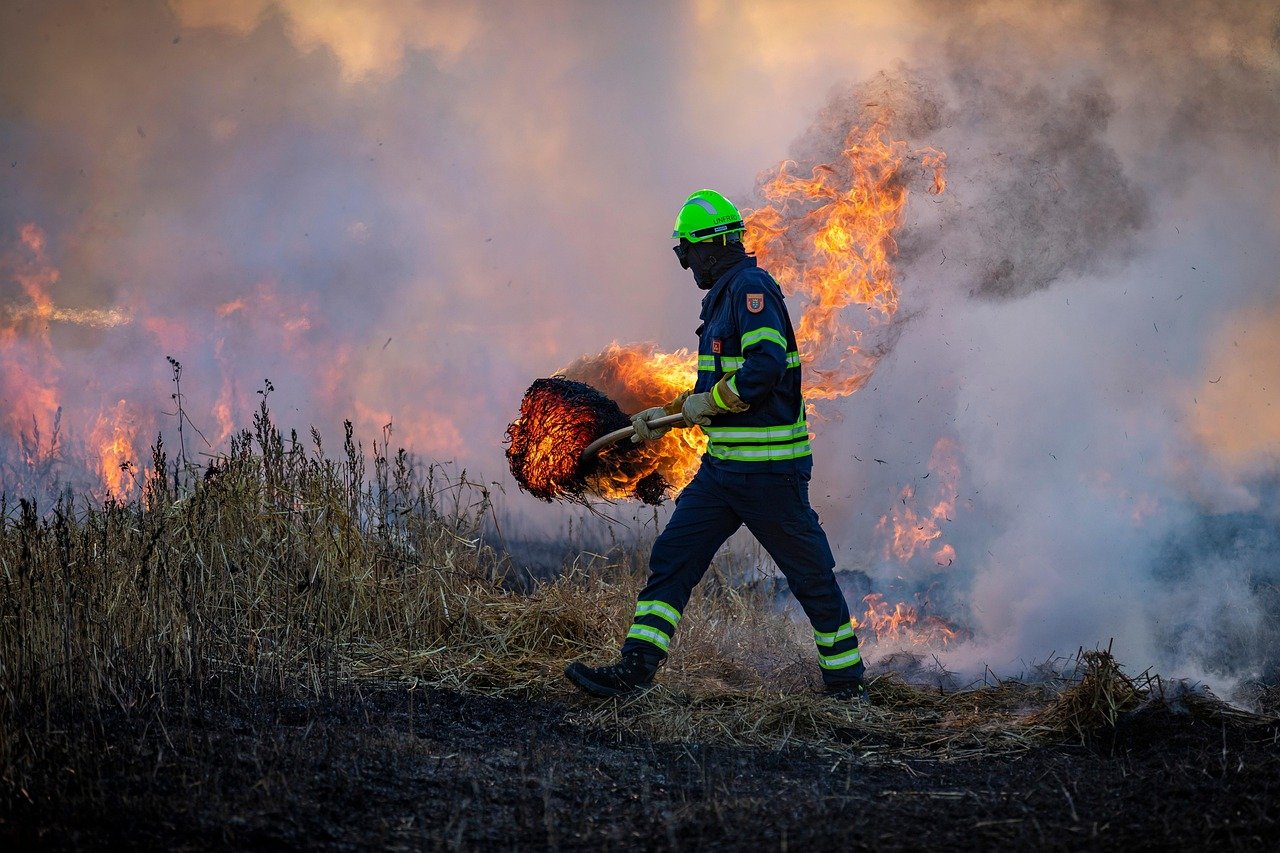
Firefighter trying to subdue a wildfire in a field. fish96. CC0.
Over the past decade, Canada has experienced a surge in wildfires, with a record-breaking fire season in 2023. That year alone, more than 6,000 fires scorched a staggering 15 million hectares of land, an area the equivalent of 21,420 football fields. To put this in perspective, the 2021 season saw a similar number of fires, 6,532, yet they burned only 793,000 hectares. “There’s no question, extreme weather, record high temperatures and dry conditions caused by climate change intensified this year's [2023] wildfire crisis,” said Jonathan Boucher, a scientist with the Canadian Forest Service, in an interview with Natural Resources Canada. The biggest starter of wildfires is lightning striking dry vegetation, a phenomenon that is responsible for around 81% of the total area burned per year. These strikes occur more frequently as summers continue to get longer and hotter. As climate change has increased, the trend of these unprecedented wildfire seasons continued into 2024, with another 5.3 million hectares of forest burned across the country.
The 2025 wildfire season has only just begun, and already 3.5 million hectares of forest have burned. With approximately 225 active wildfires burning across Canada, this fire season has the second-highest cumulative area burned for this time of year, second only to the 2023 season. Of the 225 active fires, 121 are classified as “out of control,” and according to government data, the number of fires scorching the country is double the average it was 10 years ago. If these trends continue, the effects of these fires on the local communities and nature could be crippling.
Wildfires create a plethora of health concerns, such as respiratory issues and cardiovascular problems. As wildfires burn, fine particulate matter contaminates the air, making it hazardous to breathe. Inhaling these tiny particles can lead to immediate symptoms such as coughing, throat irritation and shortness of breath. When exposed to wildfire smoke for a prolonged period, long-term health risks can develop, such as chronic respiratory diseases, cardiovascular problems and weakened immune function. Furthermore, wildfires significantly degrade air quality, which can affect people living hundreds of miles away. For example, in 2023, New York City experienced a dangerous air quality and an eerie orange haze for several days as smoke from the Canadian wildfires drifted across the border.
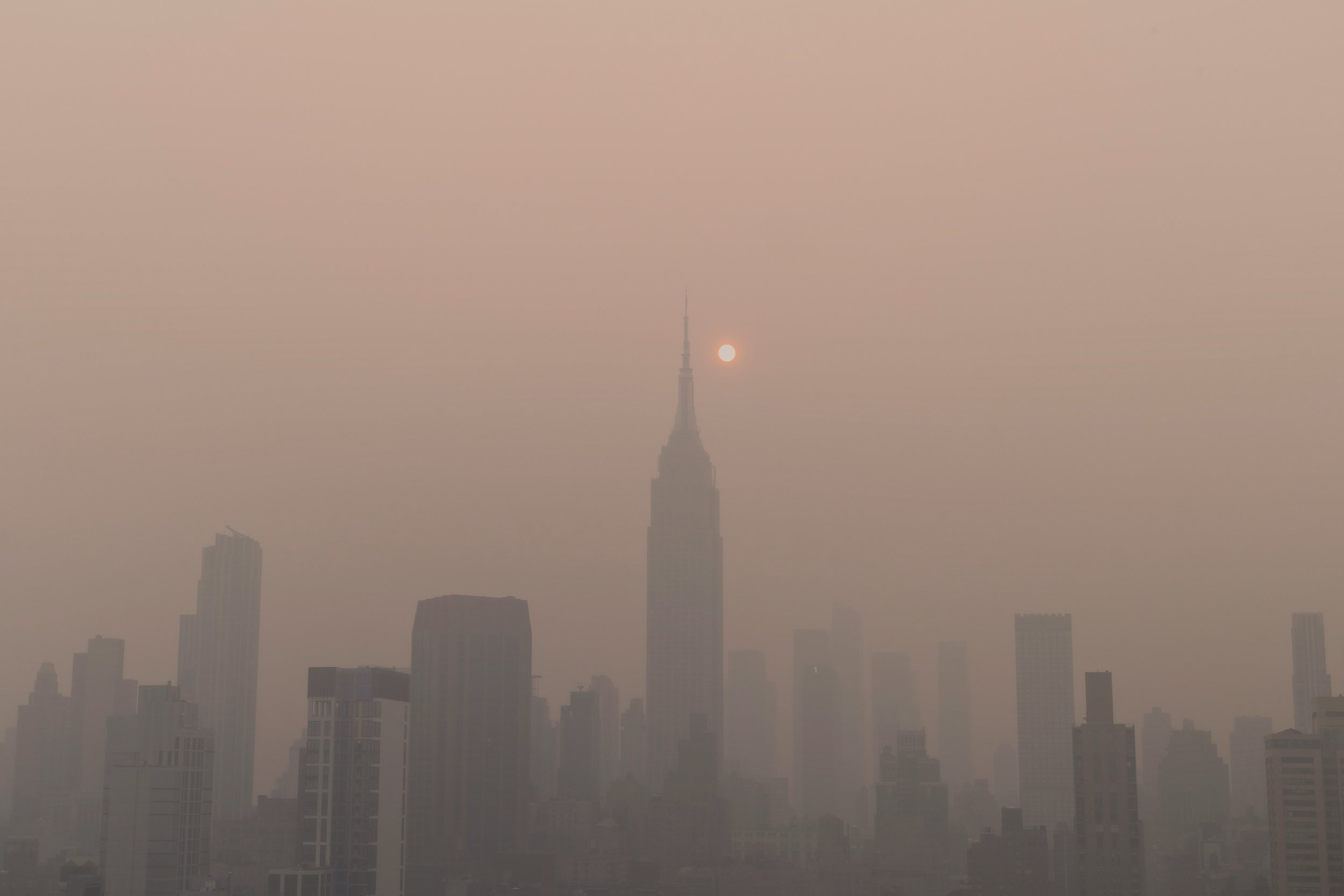
New York City during the 2023 Canada wildfires. Ahmer Kalam. CC0.
Not only do wildfires affect physical health, but they also affect mental health. Evacuations, loss of property and the uncertainty of future wildfire seasons can cause stress and anxiety that can lead to long-term psychological effects such as depression and post-traumatic stress disorder. Wildfires can also damage local watersheds, leading to long-term impacts on water supply and quality. Similarly, agricultural zones can be impacted or even wiped out, causing food production to slow and prices to increase. Food and water pollution, firefighting efforts, property damage and lost economic activity cost billions of dollars across local, state and federal budgets. As intense fire seasons become more frequent, the window for recovery and rebuilding continues to shrink, placing growing strain on both communities and economies.
Just as wildfires take a toll on human health and communities, they also have devastating impacts on the natural environment. When organic materials in soil are vaporized by heat, it causes the soil to become hydrophobic, repelling water. When the fires finally stop and rain comes, the water is unable to easily penetrate the soil, leading to surface runoff and flash floods. Destruction of vegetation also disrupts the soil and increases the likelihood of landslides because the roots that stabilize the soil have decayed. Runoffs and landslides from these effects on the soil can lead to ash and debris being carried into rivers and streams, polluting local water sources. This pollution degrades water quality for both humans and aquatic life and can take years to reverse.
Unfortunately, scientists such as Morgan Crowley from Canada’s Forest Services predict that extreme fire seasons are here to stay. As climate change continues to worsen, Canada will experience increased temperatures and droughts from longer, hotter summers. Dried-out forests mixed with the warmer weather lead to frequent lightning strikes that can ignite dry vegetation and start wildfires. This constant struggle of land being too dry and catching on fire turns into a constant feedback loop as burning forests release large amounts of greenhouse gases and black carbon into the air. This release leads to further warming temperatures, which only enhances the chances of increased wildfires.
GET INVOLVED:
While the majority of wildfires in Canada are naturally caused, 25% of wildfires are the result of human action. Organizations such as Co-operators have handy checklists and videos on how people can reduce the chances of starting a wildfire. Staying informed on possible dangers that could start a wildfire is one of the best ways to prevent them from happening. The Canadian Red Cross has started the Canadian Wildfire Fund to enhance Canada’s readiness and response to escalating wildfire risks. Donations to this organization are used for preparedness, immediate relief and long-term recovery for wildfire events throughout Canada.

Paige Geiser
Paige is currently pursuing a bachelor’s degree in English with a minor in Criminal Justice at the University of Wisconsin-La Crosse. She grew up in West Bloomfield, MI, and has been fortunate enough to travel all throughout the country. She is an active member of the university’s volleyball team and works as the sports reporter for The Racquet Press, UWL’s campus newspaper. Paige is dedicated to using her writing skills to amplify the voices of underrepresented individuals and aspires to foster connections with people globally.