
Kennedy Kiser
A close-up tour of Japan’s high-tech sleep culture across three iconic cities.
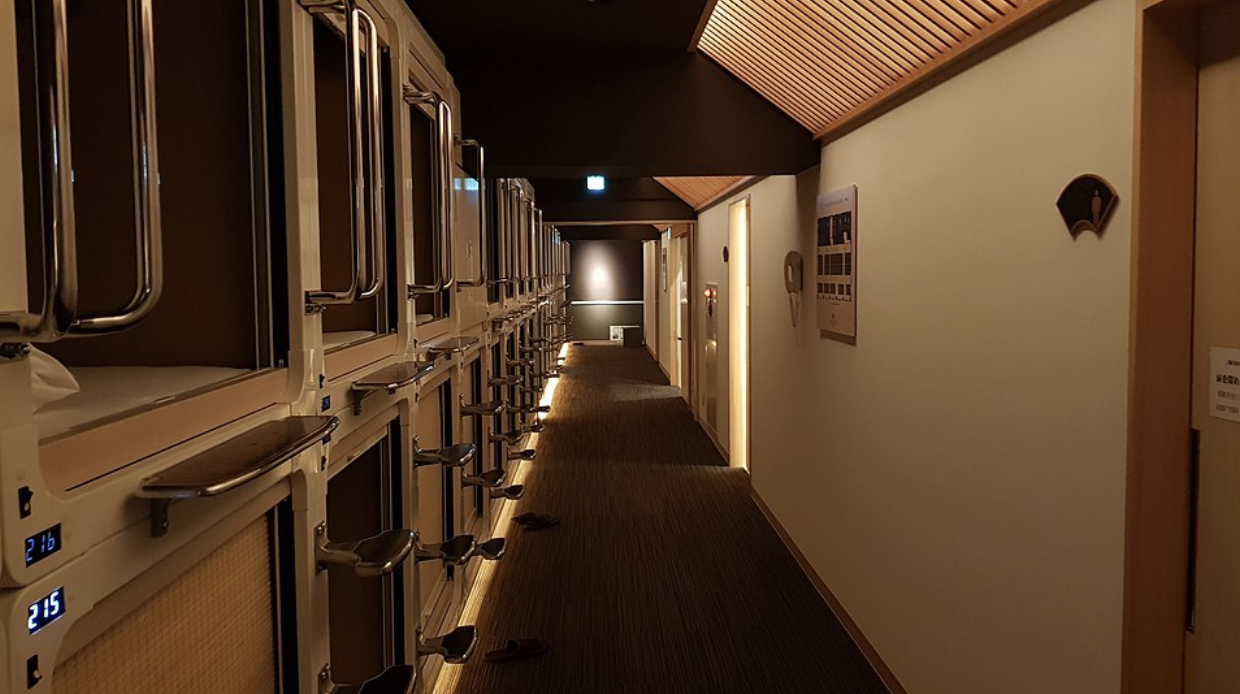
Capsule in Tokyo. Trueshow111. CC BY 4.0.
In William Gibson’s 1984 science fiction novel “Neuromancer,” the protagonist drifts through Chiba City, renting coffin-like sleep pods by the hour. Though dystopian in tone, these “coffins” weren’t far off from Japan’s real-life “capsule hotels,” where today’s travelers can rent drawer-sized sleeping quarters that blend utility with unexpected charm. First introduced in the late 1970s as practical solutions for overworked salarymen, capsule hotels have evolved into various experiences, each reflecting its surrounding city’s personality.
Nowhere does this transformation feel more evident than in Tokyo’s Akihabara district, where capsule hotels look like they were built for space missions. Guests check in through digital kiosks, stow their luggage in assigned lockers and climb into glowing pods. Inside each capsule, there are dimmable lights, climate controls, charging ports and sometimes even built-in TVs or white noise settings. The atmosphere is silent, strict and calming — ideal for introverts, night-shift workers or anyone seeking solitude.
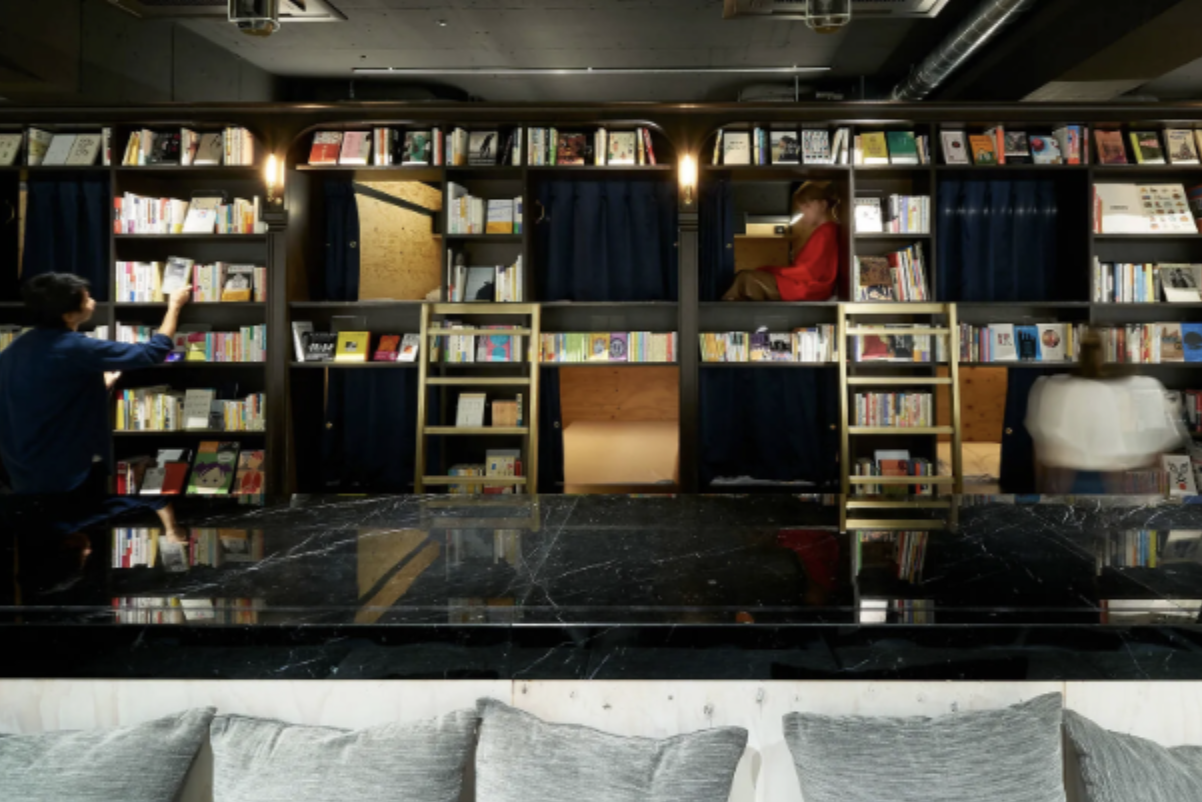
Manga Capsules. TimeOut. CC BY 2.0.
Traveling southwest to Kyoto, the capsule hotel experience softens into something more bookish. In several manga-themed hotels, the walls are lined with floor-to-ceiling shelves of Japanese comics, curated by genre or emotion. Guests wander barefoot between shelves, choosing a stack of titles to take into their capsule bunk. Soft music hums through common spaces, and staff leave handwritten notes recommending hidden gems in the collection. In this setting, the pod isn’t just a place to sleep — it’s a quiet alcove for reading until dawn. There’s a sense of intimacy here, less digital and more analog, appealing to solo travelers and manga enthusiasts alike.
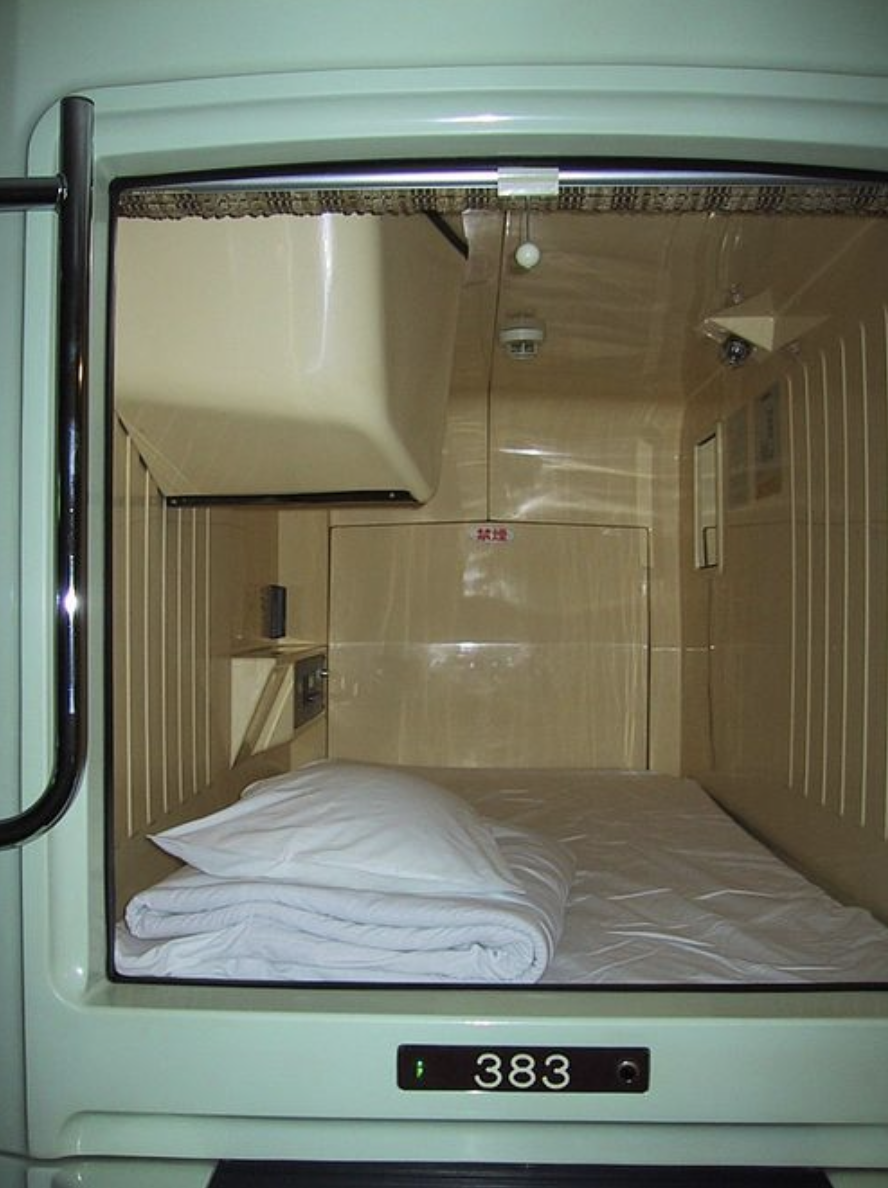
Capsule in Osaka, Japan. Chris 73. CC BY 3.0.
Osaka’s capsule hotels, on the other hand, embrace the beauty of restraint. Chains like Nine Hours offer sleek, monastic environments where everything from the font on the lockers to the color of the towels is deliberate. The goal is simple: rest, without distraction. Pods are designed with bare white interiors, soft mattresses, numbered panels, and timed routines for showering, winding down and waking up. Compared to the chaos of manga hotels or the tech-forward energy of Tokyo’s capsules, Osaka’s version feels grounded.
Regardless of location, most capsule hotels share common elements. Guests remove their shoes upon entry. Vending machines offer coffee, instant meals or spare toiletries. Bathrooms are shared but spotlessly maintained, stocked with labeled baskets, complimentary amenities and often pajamas. Many hotels include gender-separated floors, although some cater to mixed groups or international tourists. Despite the compact size of the sleeping pods, the experience doesn’t feel cheap — it feels curated. Travelers quickly adapt to the etiquette: keep voices low, move slowly and treat the silence as part of the design.

Nakagin capsule tower building in the district of Ginza, Tokyo, Japan. scarletgreen. CC BY 2.0.
TO VISIT:
Capsule hotels are widely accessible, with nightly rates typically ranging from US$40 to $70. Some hotels within this price range include Nine Hours, Do-c Shibuya Ebisu and Shinjuku Kuyakushomae. Reservations can be made online, and many platforms support English or offer translations. While some hotels still cater primarily to domestic guests, international visitors are increasingly welcomed, especially in city centers. Budget hotels in Japan typically start around $60 to $90 per night, making capsule hotels a midpoint between hostel dorms (often $25 to $40) and traditional rooms. To travel ethically through these spaces, it’s important to remember that capsule hotels aren’t just a novelty. They’re a solution to urban crowding, an architectural reflection of Japan’s approach to space and privacy, and for many residents, a temporary home. The goal isn’t to mock or romanticize the tight quarters, but to respect them — to shrink down, zip in and let the pod do its quiet work.

Kennedy Kiser
Kennedy is an English and Comparative Literature major at UNC Chapel Hill. She’s interested in storytelling, digital media, and narrative design. Outside of class, she writes fiction and explores visual culture through film and games. She hopes to pursue a PhD and eventually teach literature! @kennedy_kiser