
Isabella Feraca
The Middle East is bearing the brunt of climate change, heating up at twice the global rate and navigating devastating fallout from droughts, displacement and conflict.
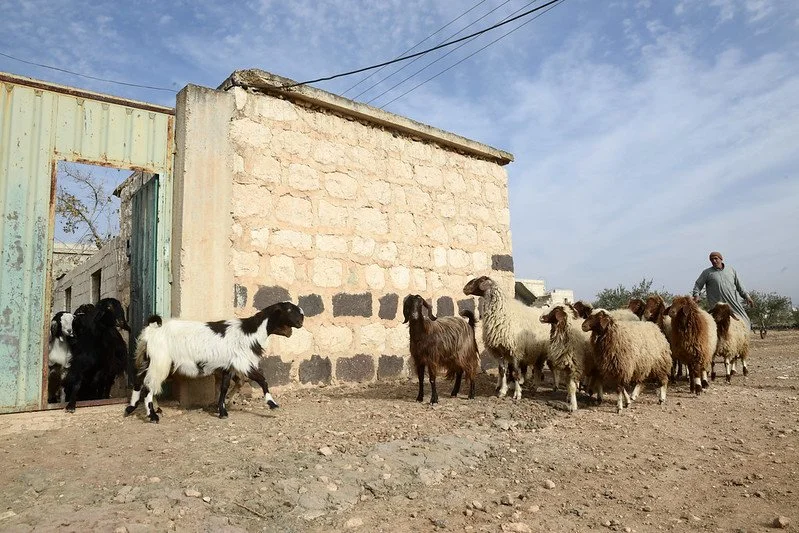
A Syrian farmer affected by the nation’s drought. George Ourfalian. CC by 2.0
Climate change has already begun to reshape the world drastically and will continue to do so in the coming decades. While every corner of the planet is at risk for climate-related catastrophe, the Middle East is particularly vulnerable to potentially devastating fallout due to its extreme climate, ongoing conflicts and heavy resource extraction. With the threat of floods, droughts and high temperatures, mass displacement could be seen across the region, compounding existing instability into one large, multifaceted crisis. Here are just some of the impacts of climate change in the Middle East, as well as the science behind it and future projections for the region.
In 2022, The Washington Post reported that the Middle East’s climate was warming twice as fast as the rest of the world, with a projected increase of about 5 degrees Celsius (41 degrees Fahrenheit) by the end of the century. The Center for Strategic and International Studies states that a temperature increase of just 4 degrees Celsius (39.2 degrees Fahrenheit) would result in a 75% drop in freshwater availability for the Middle East. As a result, water scarcity is one of the most pressing issues for the region, especially as 12 out of the world’s 17 most “water-stressed” countries are located in the area. While these projections stress immense future complications, the issue has already begun to arise in the region. For example, during the Syrian drought from 2006 to 2011, the United Nations reported that two to three million people were pushed into extreme poverty, and cattle herders lost 85% of their livestock.
Alongside water scarcity, rising temperatures will also result in heat waves and dry weather, which, when coupled with less rainfall, will greatly affect the region’s crop yield. Scientists predict that such temperature increases lead to a 5% to 12% decrease in crop yields in places like Egypt, Syria and Morocco.
Rising sea levels also pose a threat to such countries, particularly Iraq and Egypt, which have deltaic landscapes. This will not only increase yearly flooding but also result in saltwater intrusion into important freshwater sources. The International Panel on Climate Change predicts that sea levels in the Persian Gulf could increase by an average of up to 1.2 meters by 2050, making these implications inevitable.
With so much potential for climate-related fallout in the Middle East, millions of people are at risk for complications like displacement and poverty. In fact, already many families in rural Iraq have made the difficult decision to move into city centers like Basra, and urban migration like this could become even more widespread as conditions worsen. Similarly, during Syria’s five-year drought, many relocated to main cities, and some scholars even link this mass displacement to the factors that led to the nation’s civil war. As climate conditions are only set to worsen in the coming years, further displacement is likely. The International Migration Review predicts a 200% increase in human migration throughout the rest of the century. The Middle East is likely to bear the brunt of this, potentially increasing the number of similar conflicts — an alarming prospect for a region already fraught with tension, humanitarian crises and displacement.
GET INVOLVED:
For those interested in learning more, the Carnegie Endowment for International Peace has put together an extensive, multi-author report accessible here. To learn more about solutions, the Clean Air Task Force has published a list of five urgent initiatives. To take direct action, you can donate to Greenpeace, who advocate specifically to protect the people and environments of the Middle East and North Africa. You can also learn more about how climate change affects the most marginalized and donate to humanitarian efforts at the CARE Climate Change Justice Center.

Isabella Feraca
Isabella is a junior at Carnegie Mellon University studying professional writing and music technology. In her free time, she can be found reading, making music, and playing shows with her band around Pittsburgh.