
Zoe Lodge
Carbon credits are a tool to reduce emissions, but they tend to carry more weight as a marketing tactic rather than a sustainable practice.
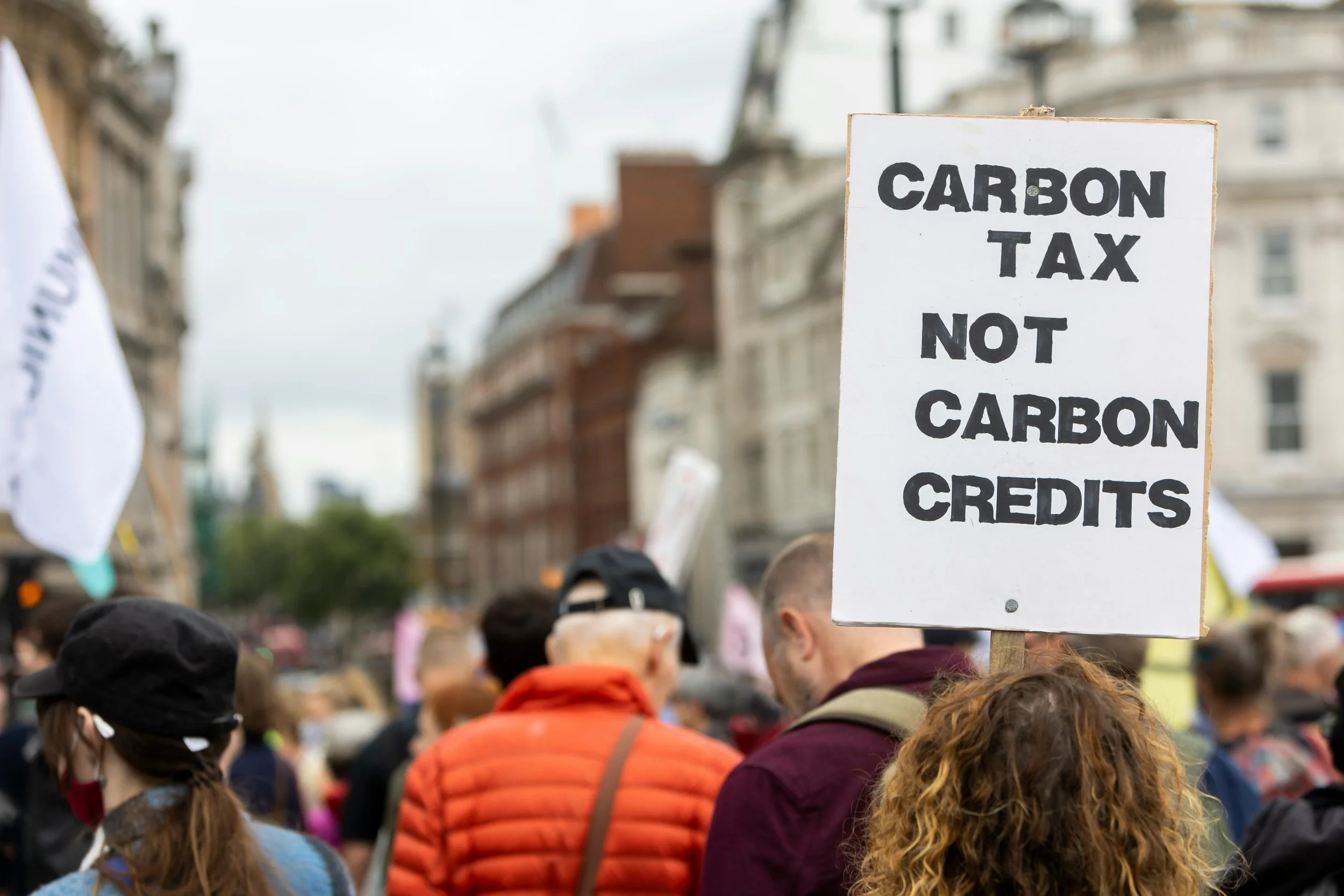
A crowd protests carbon credits. Centre for Ageing Better. CC0.
As climate change rapidly becomes a broader global concern, many major companies are making the pledge to go “net zero.” These companies claim to be leaders in the fight against climate change and gain the perks of using their net-zero status as part of their marketing strategy, but by using carbon credits, they may not truly be reducing emissions. Rather, they might just be buying their way into the green space.
Carbon credits credits are permits that allow a company to emit a certain amount of carbon dioxide or other greenhouse gases. One credit represents one metric ton of carbon dioxide emitted. Approximately two-thirds of companies that have pledged net-zero targets utilize carbon credits and purchase offsets. The carbon credit market is voluntary, but has grown increasingly popular with net-zero expectations. Companies that exceed their emission limits can purchase credits from others who have emitted less, or from projects that claim to reduce or capture emissions, such as tree planting, forest conservation or renewable energy developments. The idea behind carbon credits is to create an incentive for emission reductions and greener business practices. Global conservation and forest restoration projects that effectively reduce carbon emissions can sell these credits to large companies that have exceeded their allotted or promised emissions standards, allowing them to claim net-zero.
Some of the biggest purchasers of carbon credits include energy, tech, financial and manufacturing giants worldwide. Shell and Microsoft topped the list, with Shell having purchased over 14 million carbon credits and Microsoft acquiring around 5.5 million credits. Google, Goldman Sachs, ExxonMobil and General Motors are some of the top well-known spenders. Essentially, these massive companies were able to offset tens of millions of carbon emissions produced through these purchases, which many argue allows for "greenwashing," a tactic where companies make purchases to appear more environmentally friendly than their practices truly represent. Instead of directly reducing their emissions, many corporations rely on offsets to meet and promote their climate goals.

Chart from Allied Offsets Report and Anthony Coop.
The system in which carbon credits are sold is riddled with inconsistencies, with carbon offset credits largely found to be worthless or unsubstantiated. In 2023, an investigation by The Guardian, Die Zeit and SourceMaterial revealed that over 90% of rainforest offset credits issued by the world’s leading credit verifier, Verra, were “worthless.” Many of the world’s major corporations, including Disney and Shell, had been utilizing Verra before the scandal. Additionally, The Guardian also reported that the Kariba forest conservation scheme in Zimbabwe sold over $100 million in carbon credits, but the local rangers and those working on the project claim to have seen little to no profit used for actual carbon mitigation efforts. If these carbon credits don't represent actual emission reductions, then companies using them to balance out their emissions aren't achieving net-zero; they're just paying to maintain a green image.
For carbon credits to work in favor of the environment, companies must prioritize actual emission reductions within their operations and supply chains before utilizing carbon offset purchase options. This would require investing in clean and renewable energy sources, improving efficiency and updating supply chain and manufacturing processes to slash emissions. To keep companies in check and environmental initiatives effective, it is also important for government and legislative bodies to both establish and enforce strict standards for carbon offset projects to secure their legitimacy. Transparency is essential in this industry, and the public needs to see how companies are meeting their climate goals and the tools they utilize to do so.
Carbon credits can play a small role in the transition to a low-carbon economy, but only as a stepping stone or a last resort, after all other emissions have been scaled back. When used as a substitute for real action, they tend to do more harm than good by creating a false sense of progress and allowing corporations to wear a dishonest badge of sustainability. As the climate crisis continues to grow more dire, band-aid fixes are no longer enough. If companies want to be part of the solution and wear the “net zero” label, they need to earn it through action, not shortcuts.

Zoe Lodge
Zoe is a student at the University of California, Berkeley, where she is studying English and Politics, Philosophy, & Law. She combines her passion for writing with her love for travel, interest in combating climate change, and concern for social justice issues.