
Kennedy Kiser
Take a guided walk through Cairo’s Garbage City and discover how one community is turning waste into a way of life.

View of Garbage City from Mokattam in Cairo, Egypt. Surfing The Nations. CC BY 2.0.
Most travelers in Cairo head straight for the pyramids, the Nile or the museums. But just a few miles away, tucked into the foothills of Mokattam Mountain, there’s another side of the city — one that rarely makes it into travel guides. It’s called Manshiyat Naser, but locals and outsiders alike often refer to it as “Garbage City.” At first glance, that name might seem harsh. But once you step inside, it takes on a whole new meaning.
Here, the Zabbaleen (an informal community of mostly Coptic Christians) collect and sort around 80% of Cairo’s waste. While most formal city systems struggle to recycle even a fraction of that amount, the Zabbaleen do it by hand, using low-tech methods passed down through generations. It’s loud, messy and chaotic at times, but it works. And it’s not just about survival anymore. It’s about pride, sustainability and reimagining what waste can be.
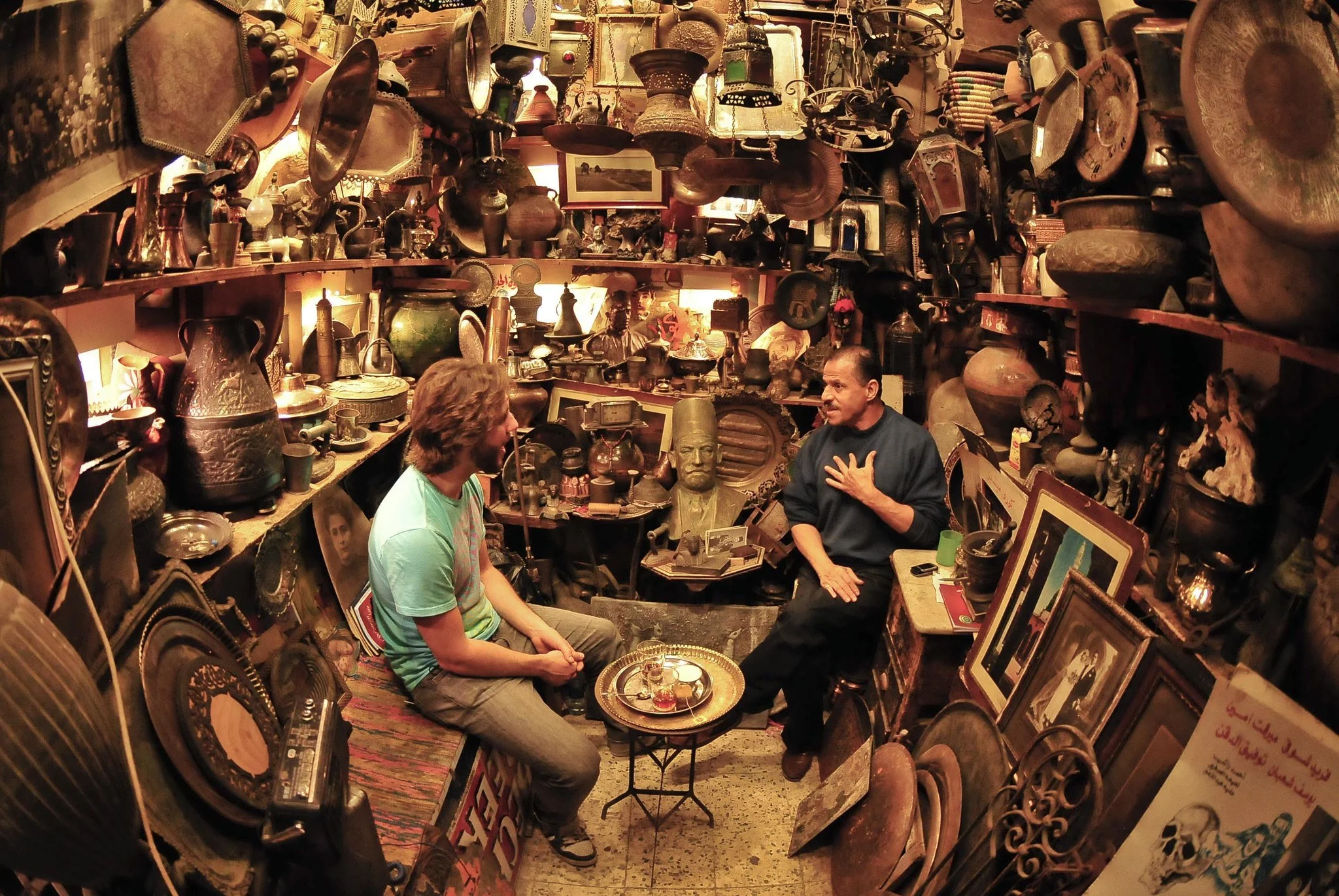
Conversation between residents in Cairo’s Garbage City district. Surfing The Nations. CC BY 2.0.
Visitors can explore this world through guided tours organized by the Garbage Dreams Project. You’ll walk down streets stacked high with plastic bottles and paper scraps, but also visit homes where families are cooking, laughing and weaving recycled fabric into beautiful rugs. You might meet kids who come to after-school programs to learn or women at the Association for the Protection of the Environment, turning scraps into handmade paper and crafts for sale.
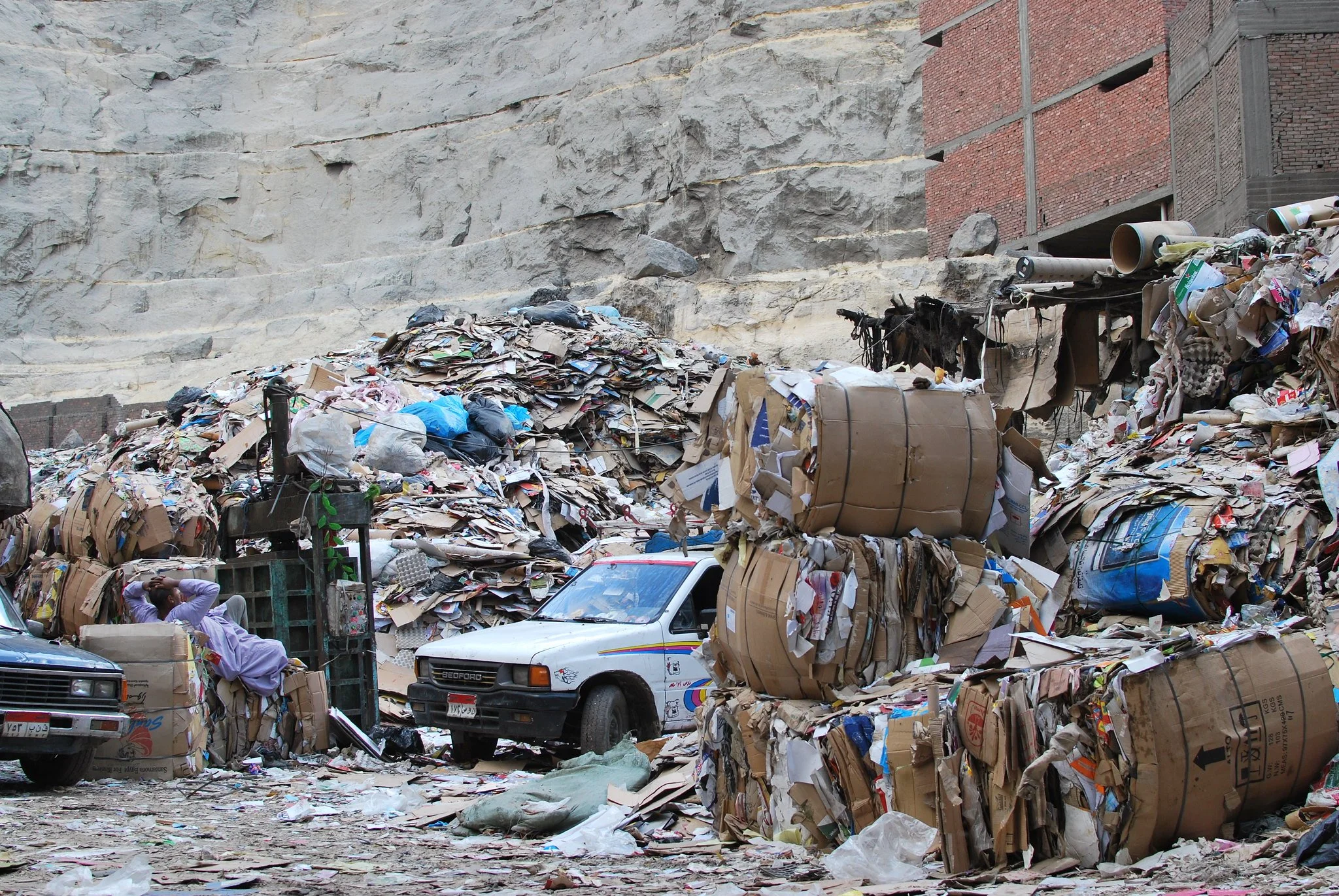
View of Manshiyat Naser, known as Cairo’s Garbage City. stttijn. CC BY 2.0.
This isn’t a polished tourist experience — but that’s the point. You’ll see firsthand how an entire community has created a circular economy, using almost nothing but grit, skill and care.
If you're planning a visit, it’s best to go with a local guide who knows the community and its customs. You can book a tour through APE or Garbage Dreams, both of which work closely with residents and ensure that your presence supports rather than disrupts daily life. If interested in buying crafts, items sold in small shops directly benefit the people who make them.
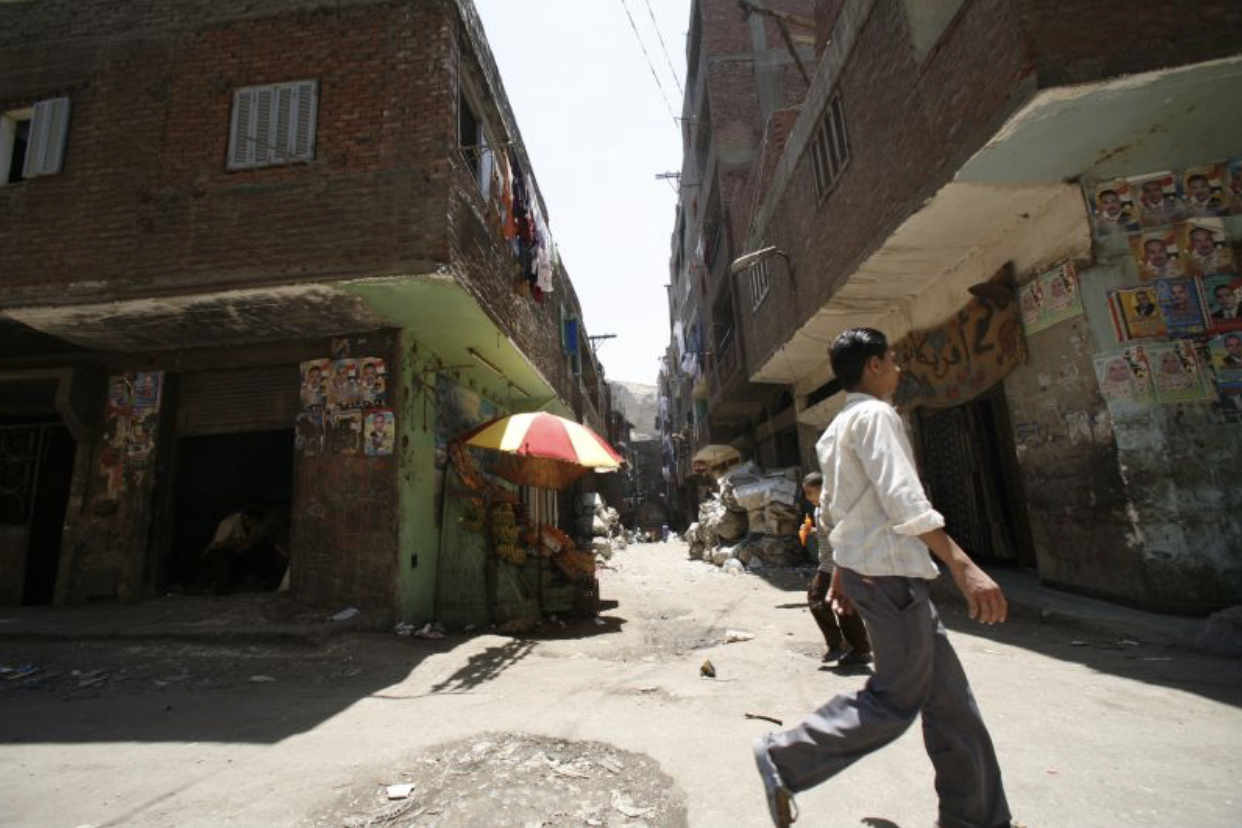
Street in Cairo’s Garbage City district, Manshiyat Naser. Salut. CC BY-SA 3.0.
Photos don’t really do Garbage City justice. It’s a place that asks you to slow down and look differently at the things we throw away. And more than that, it’s a reminder: sustainability doesn’t always come from high-tech solutions or government programs. Sometimes it starts here, with people quietly changing the world, one bottle at a time.
Kennedy Kiser
Kennedy is an English and Comparative Literature major at UNC Chapel Hill. She’s interested in storytelling, digital media, and narrative design. Outside of class, she writes fiction and explores visual culture through film and games. She hopes to pursue a PhD and eventually teach literature! @kennedy_kiser