Zimbabwe’s Mining Ban: A Potential Empty Promise?

The government of Zimbabwe now bans mining in its national parks, but environmentalists argue that the prohibition is hardly adequate. 

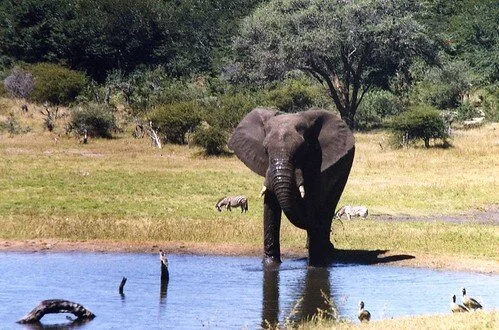
An elephant at a watering hole in Zimbabwe’s Hwange National Park. BARMCD. CC BY-NC 2.0.

After mounting pressure from conservationists, Zimbabwe’s government has declared a mining ban in the country’s national parks. Reports have circulated that Chinese companies are scouting out coal mining sites in Hwange National Park, Zimbabwe’s largest national reserve. The park stretches over nearly 6,000 square miles and is home to about 50,000 of Zimbabwe’s estimated 86,000 elephants. Extensive conservation projects are conducted in the region to preserve its plethora of wildlife species, but the call to protect the elephant population has drawn the most intense focus.

The government’s new ban is the result of a case brought to the country’s High Court by the Zimbabwe Environmental Lawyers Association. The group argues that mining would destabilize the park’s biodiversity while injuring the fragile ecotourism sector. This case was first brought to the High Court after officials of Afrochine Energy and Zimbabwe Zhongxin Coal Mining Group were arrested for conducting illegal mining projects only to be released with special permission by Zimbabwe’s President. Outrage immediately ensued, and conservationists rode the wave of anger to action. 

The immense pressure on the government to implement change follows months of anger by environmentalists claiming that Chinese mining companies have already caused catastrophic damage in other regions of Zimbabwe. Environmentalists explain that the companies dump toxic waste, clogging precious dams and resulting in substantial drops in local wildlife populations. Locals also resent the presence of Chinese mining companies due to diminishing livestock populations and disrupted irrigation routes. 

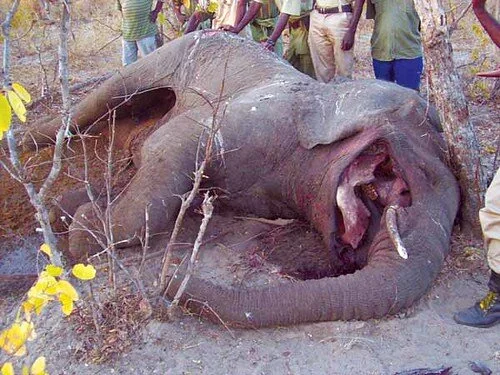
Environmental groups also argue that mining will perpetuate the drought and overcrowding problems that have already killed hundreds of elephants. Local residents deal with regular poaching disputes and rely heavily on income from ecotourism; so, many fear that failure to hold off Chinese mining companies could cause  economic damage and increased levels of conflict. Furthermore, many Zimbabweans believe that mining in Hwange is only one piece of the bigger picture. Gold and diamond mining sites pepper other parts of the nation, causing equal degrees of environmental destruction to the over 1,000 species of animals that roam the country.

Tusks removed from a poached elephant. Sokwanele. CC BY-NC-SA 2.0.

For now, it seems that the government of Zimbabwe has yielded to the demands of conservation groups, but environmentalists appear far from satisfied. The government says that it is canceling current mining titles, but conservationists are doubtful that this is enough. Shamiso Mtisi, deputy director of the Zimbabwe Environmental Lawyers Association, states that the group is demanding an interdict, which is a legally binding prohibition. Pressure on the government to act quickly increased significantly in the past week as 11 young elephants died due to an unknown bacterial infection. Investigations are now proceeding to determine the cause of the elephants’ deaths, and whether poisoning may be linked to nearby mining activity. 

Although the High Court’s verdict is already known, but whether or not Zimbabwe’s government will take the necessary steps to save the country’s natural and economic resources remains a mystery.

Ella Nguyen

is an undergraduate student at Vassar College pursuing a degree in Hispanic Studies. She wants to assist in the field of immigration law and hopes to utilize Spanish in her future projects. In her free time she enjoys cooking, writing poetry, and learning about cosmetics.

Algeria’s Relationship with the Media Grows Tense Amid Political Woes

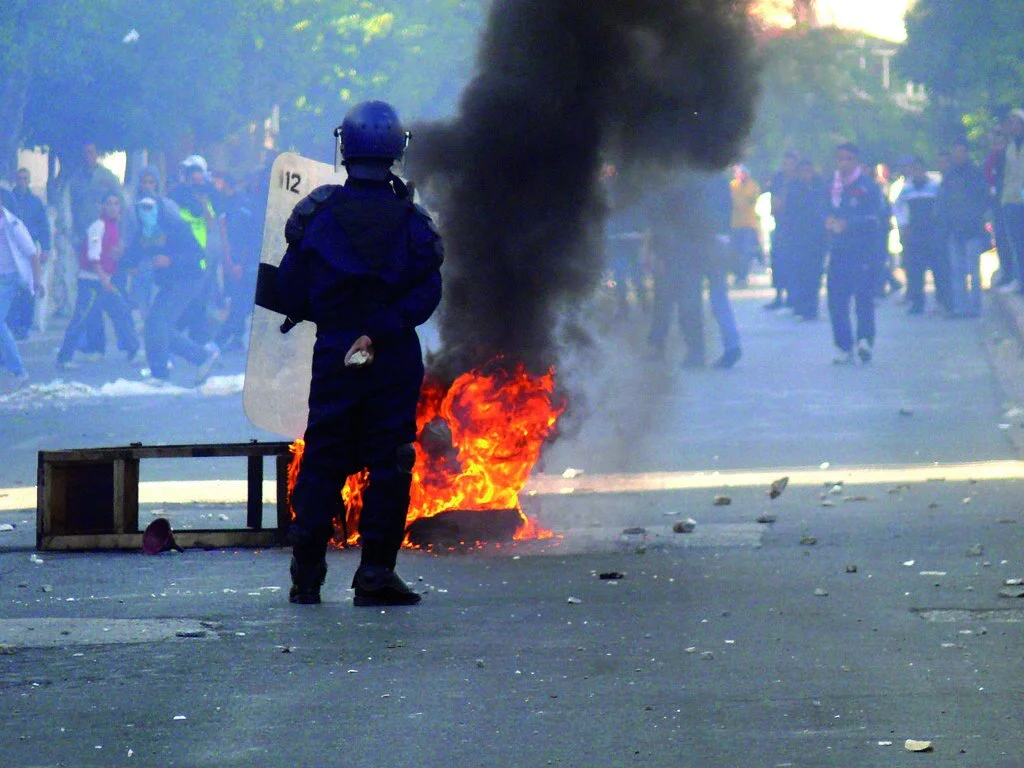
On Aug. 10, Algerian officials sentenced journalist Khaled Drareni to three years in prison for reporting on the 2019 Hirak protests. Calling for the removal of Algerian President Abdelaziz Bouteflika, the Hirak pro-democracy protests were some of the largest anti-government demonstrations since the Algerian civil war in the 1990s. While the protests were successful in removing Bouteflika from power, Algerian activists are unsatisfied with the corruption that still drives the Algerian government. Drareni’s sentencing has amplified the divide between independent publications and state-run media, drawing attention to the censorship that Algerian journalists face.

Hirak protests in Algiers. Becker. CC BY 2.0.
From 1991 to 2002, Algeria was engaged in a civil war between the government and Islamist political groups. Throughout this unrest, journalists in Algeria explored the many human rights abuses present in the country. As the war began to resolve in 1999, Abdelaziz Bouteflika was elected president of Algeria. With his 2005 Charter for Peace and National Reconciliation, he offered amnesty to groups that committed violence between 1992 and 2006. While this charter protected many Algerians from prosecution, Bouteflika also used it to restrict the press from investigating human rights violations. 

Following the enactment of this charter, independent publications were allowed a modicum of freedom as they operated independently of the state. However, the divide between independent publications and the Algerian state-run media only grew as Bouteflika consolidated his power.

An Algerian soldier barricades a street. Magha Rebia. CC BY 2.0.

In recent years, as pro-democracy movements gain traction in Algeria, independent publications have generally been the only media covering the protests. With tensions between Algerian citizens and the government mounting over the past decade, independent publications have been increasingly villainized by the state. Using state-owned companies as leverage, the Algerian government has stripped most independent publications of their primary source of income—advertisements. 

Within the past year, multiple independent media outlets critical of the regime have been blocked, including Maghreb Emergent and Radio M. Reporters Without Borders, an international organization that works to protect freedom of the press globally, now ranks Algeria 146th out of 180 countries in the 2020 World Press Freedom Index, which evaluates the degree of freedom awarded to journalists. Algeria’s ranking in this index has dropped drastically in the past five years -- in 2015, Algeria was ranked 27 places higher. 


The imprisonment of Khaled Drareni only amplifies the harsh restrictions being gradually imposed on the Algerian media. In April 2020, Algeria passed a law criminalizing “fake news” to maintain “public order and state security.” This law increases the repression of journalists in an already corrupt state. With privately-owned media facing severe blockades, social media has become a driving force in disseminating information to young people across the country. Social media platforms have become a pivotal tool for activists, allowing them to coordinate nonviolent protests and spread news that is not aired on radio or television. This movement has encouraged reporters at state-backed media companies to resign and actively fight for marginalized voices to be heard. Algeria remains in a state of flux as reporters stripped of their formal platforms are actively working toward freedom of the press through alternative means of communication.

Sarah Leidich

is currently an English and Film major at Barnard College of Columbia University. Sarah is inspired by global art in every form, and hopes to explore the intersection of activism, art, and storytelling through her writing.

Homophobia Rises in South Korea Following COVID-19 Outbreak

There has been a resurgence of discriminatory acts against South Korean LGBTQ+ individuals following a COVID-19 outbreak in May.

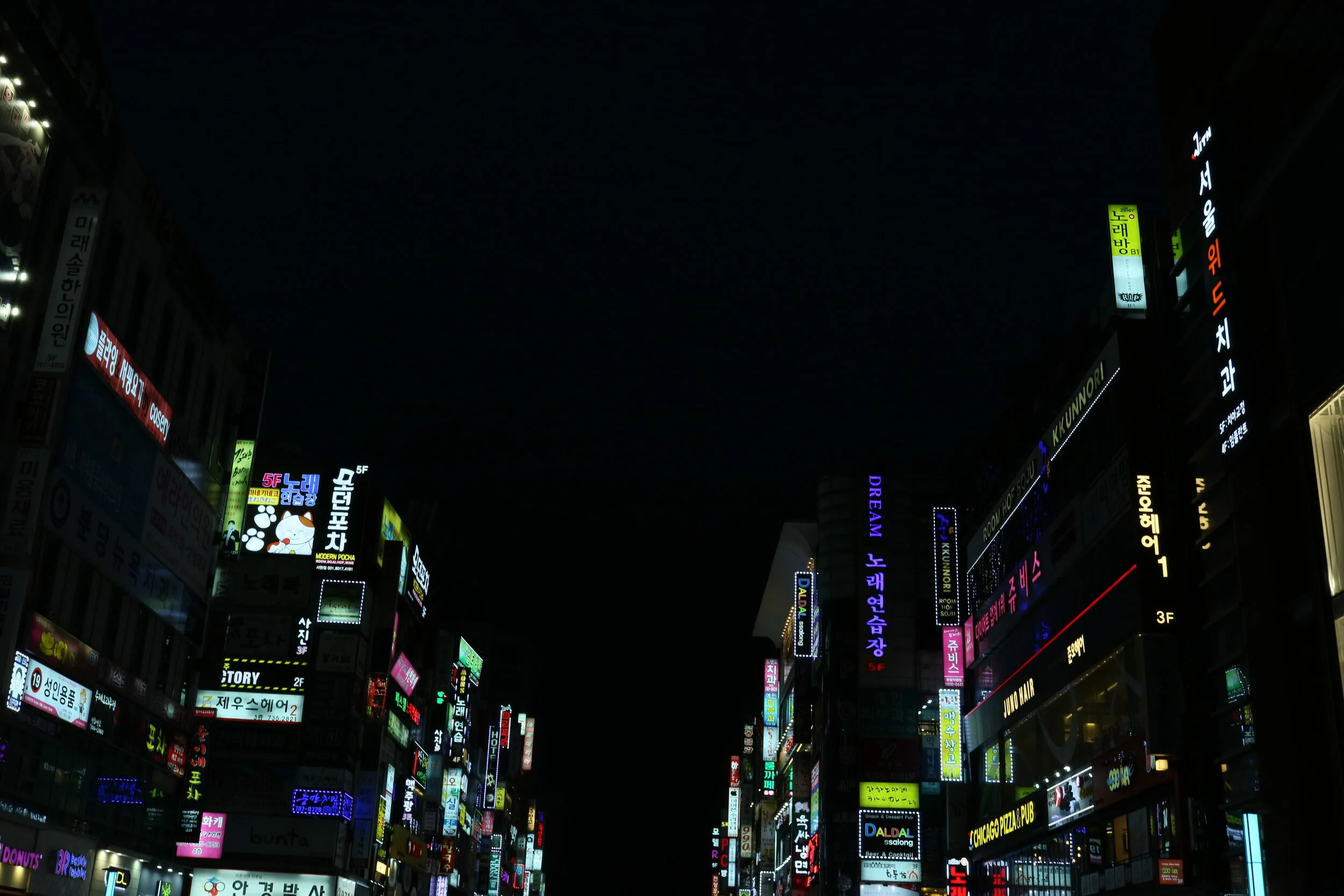
Itaewon, the district where the outbreak occurred, comes to life at night. Heather Lim.

South Korea has been globally recognized for its disease control and prevention protocol, revealing an impressively low number of COVID-19 cases. American journalists lauded this quick response as a prime example of liberal democracy’s success. South Korea’s new reputation as a world power was further cemented by its efficient system for COVID-19 prevention. 

Although South Korea’s curve has been flattened, a particular outbreak ignited political and social retaliation against one of the country’s most marginalized groups.

In May, South Korea’s surveillance system for tracing the coronavirus showed that an outbreak occurred at a nightclub frequented by members of the LGBTQ+ community in Seoul’s Itaewon district. Over 100 cases were linked to this particular outbreak, in which an infected 29-year-old man visited various gay nightclubs in one night. The tracking system used by the South Korean government quickly notified possible carriers of COVID-19 from that evening. Up to 6,000 individuals were followed and notified through the use of cell tower signals, rather than through voluntarily shared information. This particular method of tracking, along with an ample number of testing sites, helped the country to stop the spread of the virus. 

The LGBTQ+ community in South Korea soon faced a resurgence in discriminatory acts, from being profiled to losing jobs. Jong Geol Lee, a Korean gay rights activist, told CBS News in May that there had been an influx of calls to his support group from members of the LGBTQ+ community in fear of losing their jobs. Lee Youngwu, a gay man in his 30s, expressed his anguish to The Guardian, saying, “I felt so trapped and hunted down. If I get tested, my company will most likely find out I’m gay. I’ll lose my job and face a public humiliation. I feel as if my whole life is about to collapse. I have never l felt suicidal before and never thought I would, but I am feeling suicidal now.” 

South Korean news outlets exacerbated the wave of homophobia plaguing the country. Kukmin Ilbo, a newspaper closely aligned with Korean Protestant churches, released the names of the clubs visited by the 29-year-old man. The Washington Post shared that “gay club” and “gay coronavirus” were South Korea’s top search items following the outbreak, filling the internet with hate speech and derogatory slurs toward gay individuals. 

Although non-heterosexual relationships aren’t outlawed in South Korea, they are often stigmatized by hospitals and the government. Many hospitals have even refused to treat patients with AIDS. The many cases of violence against gay troops in the South Korean military have been often brushed aside and dismissed, leaving the victims unprotected and traumatized

Since May, the negative attention on the LGBTQ+ community has decreased somewhat. However, members of the group remain quiet about their identities in fear of being alienated from society. 

To combat rising levels of discrimination, LGBTQ+ rights group Chingusai has been offering support to gay men through telephone counseling. The Korean Sexual Minority Culture and Rights Center has also been fighting for the rights of Korean LGBTQ+ individuals.

Heather Lim

recently earned her B.A. in Literature in English from University of California, San Diego. She was editor of the Arts and Culture section of The Triton, a student-run newspaper. She plans on working in art criticism, which combines her love of visual art with her passion for journalism.

Mauritius Faces Ripple Effects From the Largest Oil Spill in its History


The recent oil spill in Mauritius threatens the island’s ecosystems and its people. More than 1,000 tons of oil spilled into the Indian Ocean, and the ocean’s biodiversity is at risk, fishing is no longer possible in contaminated areas and the local population has been hurt by pollution. Not to mention shattered tourism industry.

Read More

Locked Up: Unmasking Australia’s Aboriginal Youth Prison Crisis

The Aboriginal people have been severely marginalized by Australia’s government, but among the most impacted are the group’s children.

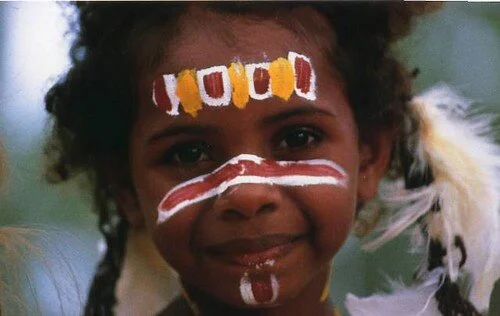
A young Aboriginal girl. mingzhuxia. CC BY-NC-SA 2.0

Indigenous people make up approximately 3% of Australia’s overall population and are considered the country’s most disadvantaged group. It is believed that the Aboriginal people lived in Australia for over 47,000 years prior to European colonization. Even today, the Aboriginal people continue to suffer some of the consequences of violent colonization such as low literacy rates, low life expectancy and a high unemployment rate.

Aboriginal children in particular are 30 times more likely to be stopped and prosecuted than other Australian youths. This reveals a pattern of racial profiling and stereotyping that has been called out by protests affiliating with the U.S.’s Black Lives Matter movement. 

Progress was made in 2018, when police in Western Australia apologized for practicing “forceful removal,” the separation of Indigenous children from their families. Forceful removal was popular throughout the late 19th century and was legal until 1969. Many refer to those impacted by forceful removal as the “Stolen Generation.” 

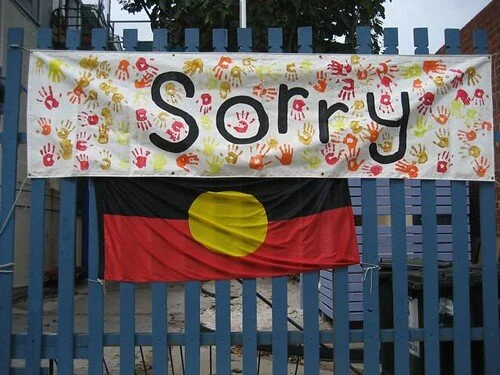
Since May 26, 1998, Australians have observed “National Sorry Day” as a way to apologize to the Aboriginal people for the harmful practice. It is a nationwide campaign committed to paying homage to affected groups while teaching youth of Australia’s harmful past actions. In 2008, former Prime Minister Kevin Rudd made a proposal in front of Parliament to help bridge the gap between Indigenous and non-Indigenous people

Australia’s National Sorry Day in 2015. butupa. CC BY-NC-ND 2.0

Yet, the gap between the Aboriginal community and other Australians remains as wide as ever. In February, the police of New South Wales revealed details about the Suspect Targeting Management Plan, which is intended to prevent future crimes by targeting likely or repeat offenders. Reports from 2016 to 2018 show that up to 72% of targeted children were likely from Indigenous descent. The youngest child identified was 9 years old. 

The minimum age of criminal responsibility in Australia is one of the lowest in the world, allowing children as young as 10 to be sentenced to jail. Additionally, Aboriginal children are 17 times  more likely to be jailed than non-Indigenous youth. Statistics from Western Australia say that 60 to 70% of children currently being held in the state’s detention centers are of an Aboriginal background. 

As of now, very little research proves that locking up children reduces criminal activity in the future. In fact, youth already in the criminal justice system are far more likely to be repeat offenders, challenging the original intent of New South Wales’ Suspect Target Management Plan. 

There is a push by lawyers and advocacy groups to raise the age of criminal responsibility in Australia to at least 14. Others believe that an alternative is to provide better health care and other social services in an attempt to elevate Aboriginal children’s socioeconomic standing. The end goal would be to improve their overall quality of life, allowing for better employment opportunities and an end to the societal obstacles currently facing the group.


Eva Ashbaugh

Eva is a Political Science and Gender, Sexuality, and Women's Studies double major at the University of Pittsburgh. As a political science major concentrating on International Relations, she is passionate about human rights, foreign policy, and fighting for equality. She hopes to one day travel and help educate people to make the world a better place.

The Back-to-Africa Movement: A Response to Racism

Some Black Americans have chosen to move to Africa to embrace their heritage and ancestral roots after experiencing racism, violence and stereotyping in the United States. 
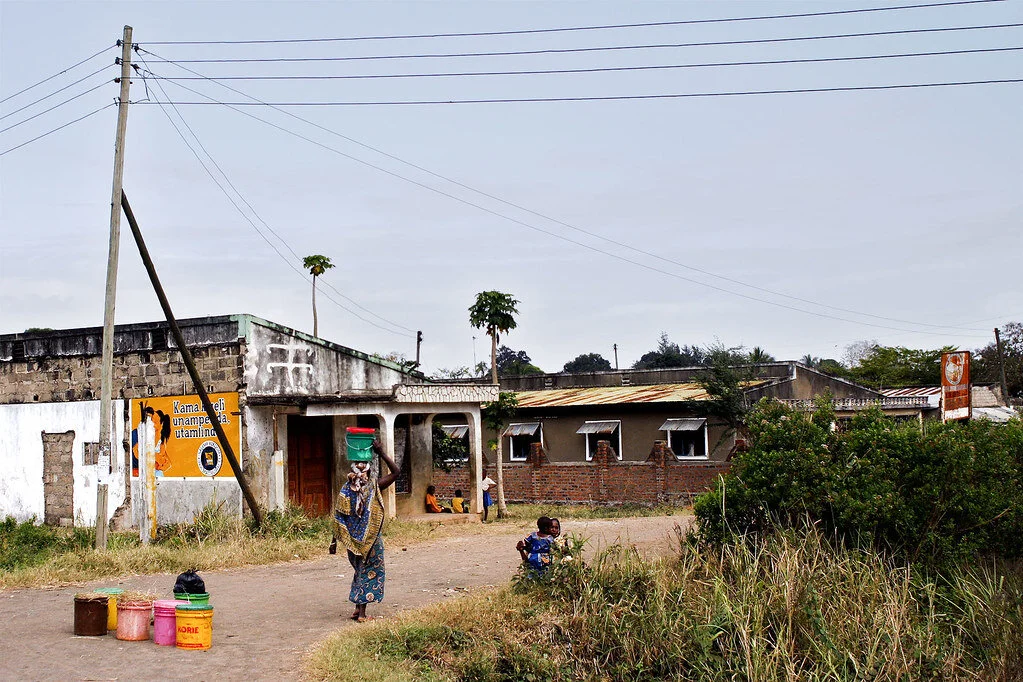
A village in Tanzania. ceasrgp. CC BY-SA 2.0

The Back-to-Africa movement was initially started to encourage those of African ancestry to travel back to Africa where their ancestors once lived. Even though many are unsure of the movement’s founder, many in the U.S. attribute it to Marcus Garvey, who founded the Universal Negro Improvement Association in 1914 in New York City’s Harlem district. He encouraged many Black people to seek social equality even if it meant moving to Africa through “self-emancipation.”

However, the Back-to-Africa movement can be traced even further back to the 19th century and the establishment of the American Colonization Society The predominantly-White group, founded by Robert Finley in 1817, shipped up to 12,000 freed slaves and freeborn Black Americans to Liberia. Historians’ views on the American Colonization Society’s work remain split; some view it as an early group dedicated to Black Americans’ freedom while others see it as nothing more than an attempt to remove Black people from the United States. Either way, the group was unpopular among the African American community, and should not be confused with more recent Back-to-Africa movements.

Painting of Marcus Garvey. David Drissel. CC BY-NC-SA 2.0.

Many African Americans have more recently picked up the Back-to-Africa movement to help strengthen Black identity. Martin Luther King Jr. and Malcom X both made visits to Ghana in order to reconnect with their heritage. 

Obadele Kambon is a recent example of the modern Back-to-Africa movement. Kambon was living in Chicago in 2007 when he was wrongfully accused of possessing a loaded firearm illegally in his car. In reality, he had an unloaded, licensed gun. The fear of mistreatment and wrongful convictions, sometimes even leading to death, was a main influence in Kambon’s decision to move to Ghana in 2008.He said his participation in the Back-to-Africa movement made him realize what it “feels like to be a White person in America, just to be able to live without worrying that something is going to happen to you.”

Many of those who have moved to Africa from the United States fear that “nothing can fix [racism].” Africa holds the potential to reconnect people with their roots while offering them a life less affected by racism and violence. 71% of African Americans in the United States have said that they have experienced discrimination in some form. For many African Americans, heading abroad frees them from the need to prove themselves to be more than their skin color.

2019 was marked by Ghanaian President Nana Akufo-Addo as the “Year of Return.” It coincided with the 400th anniversary of what is believed to be the first enslaved Africans arriving in the United States. Last year, Ghana rewarded over 100 citizenships to Black individuals from the Americas as a part of its “Year of Return” initiative. The campaign brought over 500,000 visitors to the region—and some of them have decided to stay.

Eva Ashbaugh

is a Political Science and Gender, Sexuality, and Women's Studies double major at the University of Pittsburgh. As a political science major concentrating on International Relations, she is passionate about human rights, foreign policy, and fighting for equality. She hopes to one day travel and help educate people to make the world a better place.