• Travel Features
  • Global Action
  • Take A Trip
  • Travel Guides
    • Podcast
    • Courses
    • Bookshop
  • About
  • Sign Up
Menu

CATALYST PLANET

  • Travel Features
  • Global Action
  • Take A Trip
  • Travel Guides
  • Discover
    • Podcast
    • Courses
    • Bookshop
  • About
  • Sign Up

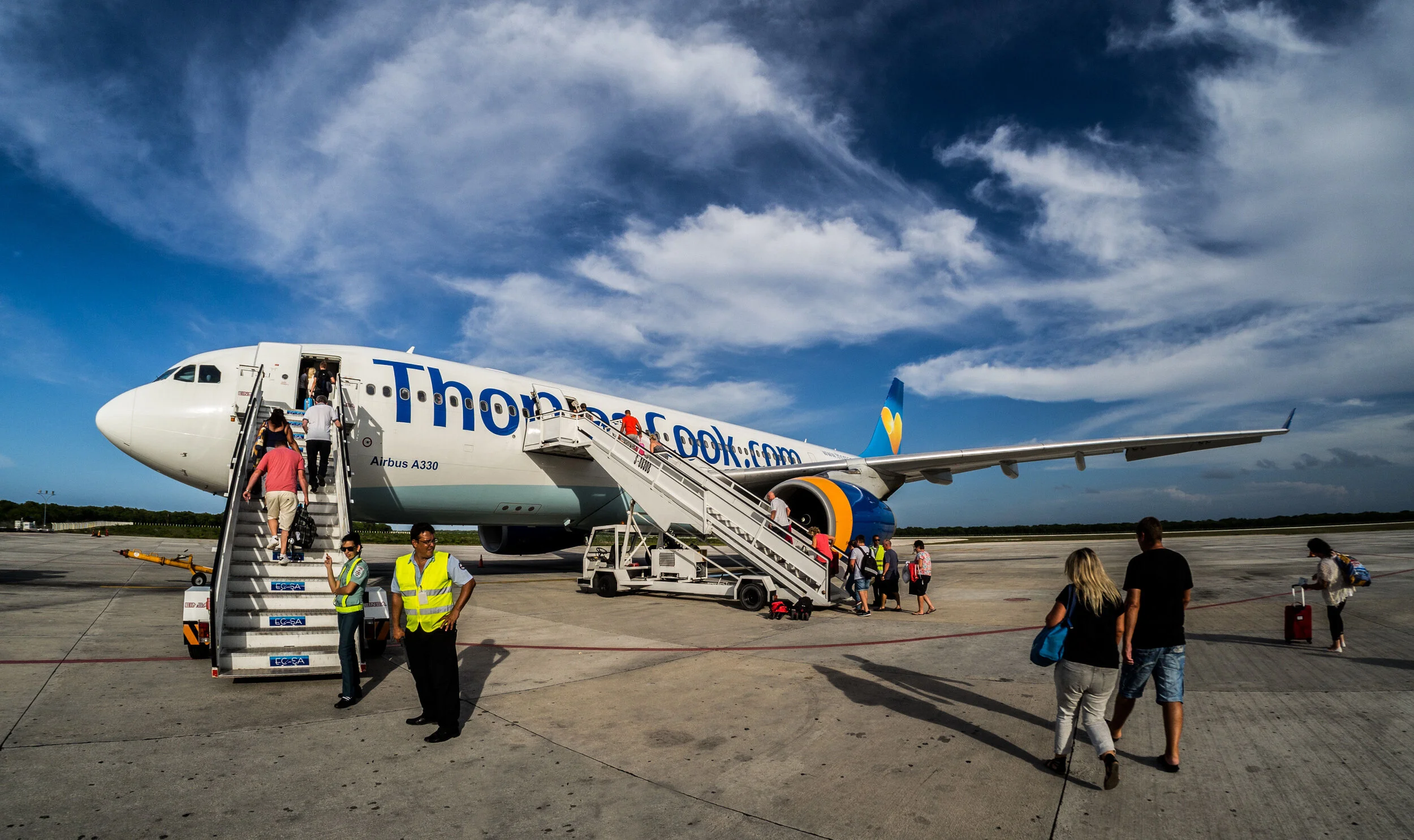
Passengers boarding a flight at Jardines del Rey Airport in Cayo Coco, Cuba. CWhatPhotos. CC BY-SA 2.0.

Trump Administration Suspends Private Charter Flights to Cuba

August 23, 2020

On Aug. 13, the United States Department of Transportation suspended nearly all charter flights between the U.S. and Cuba. The announcement comes five months after the Trump administration suspended charter flights to any airport on the island aside from Jose Marti International Airport in Havana.

Under the order, only a handful of public charter flights will be authorized to fly between Havana and the U.S., as well as flights authorized in relation to emergency medical assistance, search and rescue and “other travel deemed to be in the interest of the United States.”

In a letter to Secretary of Transportation Elaine Chao, Secretary of State Mike Pompeo explained that the measures are being taken as part of the Trump administration’s ongoing efforts against the Maduro administration in Venezuela.

“To … strengthen the economic pressure on the Cuban regime as a means to restrict the regime’s ability to repress its people and support the illegitimate Maduro regime in Venezuela … I respectfully request that the Department of Transportation suspend until further notice all charter flights between the United States and all airports in Cuba over which the Department of Transportation exercises jurisdiction, except for authorized public charters to and from Havana, and other authorized charter flights for emergency medical purposes, search and rescue and other travel deemed to be in the interest of the United States,” Pompeo wrote.

Cuban President Miguel Diaz-Canel responded to the announcement in a tweet condemning the new policy.

“The United States has suspended all charter flights: a measure which will isolate more Cuban families,” Diaz-Canel wrote in Spanish. “[This] continues hostile rhetoric, a resurgence of the blockade, and hate and scorn against Cubans.”

Proponents of the decision like Mercedes Schlapp, a Cuban-American who is currently working on President Trump’s reelection campaign, argue that while the measure will further restrict travel to the island, it will not prohibit Cuban-Americans from visiting family members.

“Under President Trump’s leadership, Cuban-Americans can continue to visit their families while the United States continues to hold the regime in Havana and its allies in Venezuela, Colombia and Nicaragua accountable,” Schlapp said in a statement in Spanish to CiberCuba.

However, opponents of the decision argue that the policy only furthers the separation of families on the part of both the Trump and Diaz-Canel administrations.

“This action only helps the Cuban regime to continue separating families - a tactic the Trump administration has disturbingly embraced,” Kevin Munoz, a spokesperson for Biden for President, stated in a press release. “Make no mistake: this is a cynical, cruel and calculated political decision, but with real, human consequences.”

Historically, the United States has maintained a standard of limited travel to Cuba. Beginning in 1963 under the Kennedy administration, travel to the island nation was prohibited for most Americans.

These restrictions, as well as the ongoing embargo against the island, began to be lifted under the Obama administration. In March 2016, President Obama announced that the Department of Transportation would allow U.S. citizens to travel to the island under a “People to People” visa, a policy which saw numerous airlines and American businesses begin working in the country. Obama notably traveled to the country to meet with then-President Raul Castro, the first time a sitting U.S. president had visited Cuba in 88 years.

This policy was reversed only three years later by the Trump administration. In June 2019, Trump removed the “People to People” visa and banned all cruise ships, private yachts and fishing boats from docking in the country.

These restrictions were further tightened later that year when Trump suspended all commercial flights to any Cuban airport aside from Jose Marti International Airport in Havana. This was done in an attempt to reinforce the long-standing tourism embargo.

Prior to last week’s charter flight suspension, the Trump administration had imposed an annual limit of 3,600 charter flights beginning on June 1, 2020, which would only be allowed to land in the nation’s capital city.

Experts believe that these increasingly restrictive policies are being made in an effort to help Trump win Florida, a swing state which contains a large Cuban-American population and has recently polled in favor of Joe Biden. However, it is unclear whether this new policy will have a dramatic effect on the outcome of the November general election.
Jacob Sutherland

is a recent graduate from the University of California San Diego where he majored in Political Science and minored in Spanish Language Studies. He previously served as the News Editor for The UCSD Guardian, and hopes to shed light on social justice issues in his work.
Tags POTIS, airline, Cuba, Department of Transportation, Biden, Trump, Travel
Comment

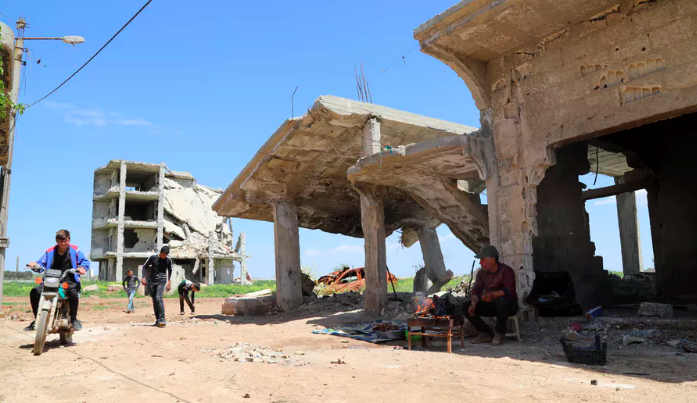
Life on the border: Kurdish men in Kobani, Syria. Ahmed Mardnli/EPA

Syria Safe Zones: What is Driving the Unexpected Rapprochement Between the US and Turkey?

September 5, 2019

After years of rising tensions between Turkey and the US over the situation in northern Syria, an unexpected rapprochement has pulled the two countries back from possible conflict.

Relations between the two countries had deteriorated over Turkish opposition to the US alliance with Kurdish fighters in northern Syria, and Turkey’s recent purchase of a Russian air defence missile system. In response, the US kicked Turkey out of its F-35 fighter programme in July.

But in August, Turkey and US announced they would collaborate to establish safe zones along the Syrian-Turkish border, managed by a joint operations centre in Turkey.

Turkey has long demanded these buffer zones across its northern border with Syria to protect against possible assaults from the Kurdish People’s Protection Units, or YPG, which leads the Syrian Democratic Forces. The safe zone will effectively serve as a buffer between the YPG-controlled area and the Turkish border, and also combat the ongoing threat of Islamic State (IS) in the region.

The Turks and Americans are yet to agree on the size of the buffer zone – with Turkey pushing for it to be larger than the US wants – and it remains unclear who will police it. But in late August, YPG leaders agreed to withdraw their troops from towns near the Turkish border in what the Pentagon said was a sign of “good faith”.

But why has the US begun to condone Turkish action in northern Syria, and why now?

Deteriorating relations

Although Turkey and the US both sought to displace the regime of Bashar al-Assad in Syria, their priorities in the region changed over time. When the US launched its coalition against IS in 2014, Turkey joined reluctantly amid fears that the fight would harm the Syrian rebels fighting against the Assad regime.

But while Turkey remained suspicious over the presence of the YPG in northern Syria, the US allied with these very forces to defeat IS and to balance Iranian influence in the region.

When US President Donald Trump declared IS had been defeated in December 2018 and that American troops would withdraw from Syria, Turkey’s President Recep Tayyip Erdoğan hurried to announce Turkish troops could replace the Americans in the region. Erdoğan has repeatedly stressed that Turkey will not harm Syrian Kurdish civilians, but rather target militant groups in the region, including the YPG which it sees as linked to the Kurdish separatist Kurdistan Workers’ Party, or PKK.

Similar styles. Ahmed Mardnli/EPA

After the reaction in Washington to the decision to withdraw from Syria – which caused resignations and criticism from senior politicians – Trump reversed his decision. In early January the US government said it would not withdraw until the Turkish government guaranteed it would not to attack Syrian Kurds who had been part of the alliance fighting against IS. Turkey has not given this guarantee.

Mistrust has festered over alleged links with each of the allies’ foes, namely Turkey with IS fighters and the US with the YPG. Amid the tensions, the US embassy in Ankara remained vacant.

Pulling back from conflict

There are three reasons for the current rapprochement. The first is a growing desire from both sides to avoid conflict between their military personnel in the region. In 2018, Erdoğan threatened that any US soldiers who stood in the way of the Turkish invasion of Afrin, a Syrian enclave in northern Syria, with an “Ottoman slap”.

Ankara now seems more willing to collaborate with Washington. The welcome extended to the new American ambassador to Turkey, David Satterfield, at the presidential palace on August 28, signalled the allies are looking to build bridges.

The second is that Assad’s forces are encroaching into the last remaining opposition stronghold in Idlib with their Russian allies. Turkey is likely to face another stream of Syrian refugees across to its borders. The search for an agreement over safe zones in northern Syria comes to the fore as Erdoğan feels the brunt of his pro-refugee politics at home.

Since its invasion of Afrin, Turkey has sought to settle Syrian refugees in safe zones in the province. The newly proposed safe zones are likely to see a push for further refugee returns. Similar goals of returning refugees are also pushing other peace efforts in the region – notably between the US and Taliban in Afghanistan.

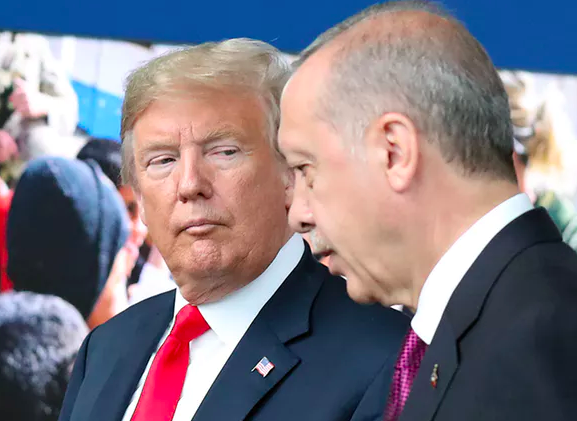
The third reason is more personal. Erdoğan says Trump has a feel for him. Both leaders are celebrity politicians, with their families at the foreground of their politics. They share anti-establishment mentalities, and use religious references and nationalist discourses to appeal to their supporters.

The Russian factor

Hanging over this rapprochement, however, is the issue of the Russian missiles. So far the Trump administration has not imposed economic sanctions on Turkey over the issue, despite criticisms from Congress over the risks it poses to NATO security. Turkey said it would not activate the missiles until April 2020, allowing negotiation channels with the US over northern Syria to remain open.

Turkey has been a proactive voice against military assaults by the Assad regime in northern Syria, yet it has remained quiet on the Russian-Syrian alliance in the region. Since the failed coup attempt in 2016, the Erdoğan regime has been increasingly pro-Putin, signalling it is turning its back on its traditional Western allies.

That’s why it’s so significant that Turkey and the US are searching for collaboration in the region despite their policy differences. In the Turkish case, this could be a way to enhance its buffer as Assad forces regain the northern provinces from the rebels. In the American case, it could be to expand its alliances to offset Russian and Iranian influence in the future Assad-ruled Syria.

TARIK BASBUGOGLU is a PhD Candidate at Glasgow Caledonian University.

UMUT KORKUT is a Chair professor at Glasgow Caledonian University.

THIS ARTICLE WAS ORIGINALLY PUBLISHED ON THE CONVERSATION

Tags Syria, crisis, government, Trump, Turkey, militants, regime, USA, International Affairs
Comment

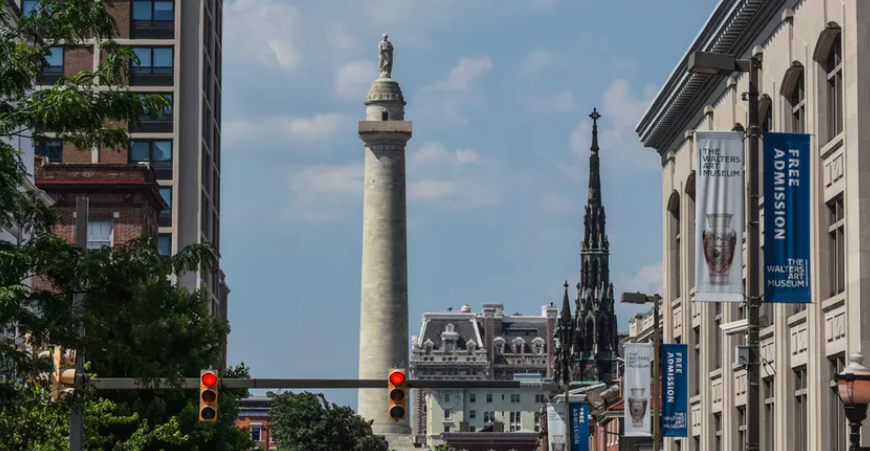
Residents of Baltimore, Maryland, seen here, were the object of dehumanizing language from President Trump. REUTERS/Stephanie Keith

There’s a Dark Political History to Language That Strips People of Their Dignity

August 10, 2019

Dehumanizing language often precedes genocide.

One tragic example: Extreme dehumanizing language was a strong contributor to the 1994 genocide in Rwanda. As I have written, the Hutu majority used a popular radio station to continually refer to Tutsi tribal members, a minority in Rwanda, as “cockroaches.”

As support for this characterization grew among Hutus, it essentially stripped away any moral obligation to see Tutsis as fellow humans. They were just vermin that needed to be eradicated.

Students of 20th century history will also recognize this pattern of dehumanizing language in the lead-up to the genocide committed by the Turks against Armenians, where Armenians were “dangerous microbes.” During the the Holocaust, Germans described Jews as “Untermenschen,” or subhumans.

On July 27, President Trump tweeted that Baltimore was a “"disgusting, rat and rodent infested mess” and “No human being would want to live there.”

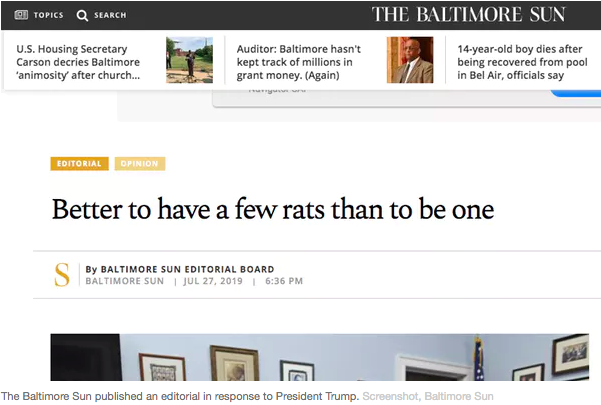
The Baltimore Sun charged back with an editorial headlined “Better to have a few rats than to be one.”

I’m a scholar of conflict management. This back-and-forth got me reflecting on how extreme, dehumanizing exchanges like this can escalate into destructive outcomes.

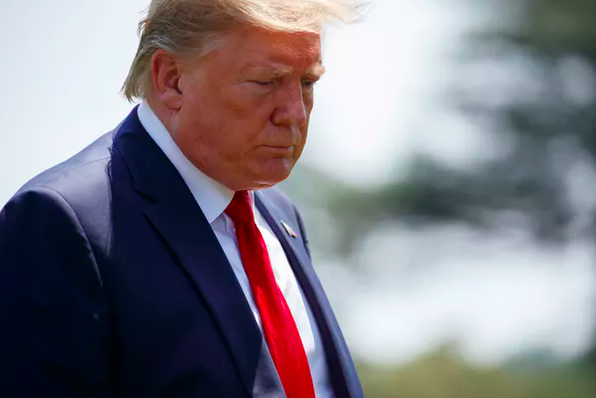
President Donald Trump. AP/Carolyn Kaster

Insults and conflict

The goal of my research in hostage negotiation and divorce mediation is to help police negotiators and court mediators shift out of a charged situation into problem solving.

Generally, when people respect one another they have a fairly easy time problem solving. But when one person challenges the other’s identity with personal insults, both parties forget about the problem-solving task and focus only on what I call “identity restoration,” which means trying to save face and restore personal dignity.

This shift pushes them into a charged conflict that can quickly escalate.

After all, many studies over the last several decades have reinforced the finding that a human being’s group identity is their most prized possession. People craft their identities to fit into a core group – as a member of a family, a profession or a tribe, for example – that is vital to our social standing. In some cases, such as adopting the identity of a U.S. Marine, for example, group belonging may be necessary to personal survival.

Most of the time identity challenges are fairly minor and easily ignored so that problem solving doesn’t get off track too quickly. A boss might say at a meeting, “Weren’t you supposed to have that report ready today?” A quick defense of one’s identity as a competent professional for that company and the matter is dropped and we’re back to work.

Conflict and Escalation

When the challenges are more severe, the identity defense becomes fiercer. Voices get raised, emotions swell and people become locked in a spiraling conflict, which is characterized by a sustained attack-and-defend cycle.

Hostage negotiators and divorce mediators are trained to shift dialogue away from identity threats and into problem solving by isolating divisive issues and coming up with specific proposals to address them.

Unfortunately, if there are no controls over language escalation, and parties start making references that can be interpreted in extreme, dehumanizing terms, they may come to believe that the only way to restore their identities is by physical domination.

Words no longer work. When parties cross over this very thin line, they fall into an identity trap with little hope of escape until the violence ends.

While I don’t expect the conflict between the president and Baltimore to escalate into actual violence, these kinds of exchanges can make it more acceptable for followers to use this kind of language.

When the President encourages crowds to chant, “Lock her up,” and “Send her back” at rallies, or describes a city as a “disgusting, rat and rodent infested mess” where “no human being” would want to live, it sets a climate in which using lethal, dehumanizing language seems normal. That is simply dangerous.

WILLIAM A. DONOHUE is a distinguished Professor of Communication at Michigan State University.

THIS ARTICLE WAS ORIGINALLY PUBLISHING ON THE CONVERSATION.

Tags language, linguistics, dignity, social, conflict, issue, social issue, social media, twitter, Trump, president, International Affairs
Comment

Also check out...

Featured
Vietnam’s Floating Markets Are Disappearing
The Supernatural Role of Masks in Nigeria’s Yoruba Tribal Culture
Opening the World to Deaf Travelers with Lily Yu

Featured trips

Featured
Offer NGO Support While Visiting Quito
Experience Life as a Mongolian Nomad
Help Grow Organic Costa Rican Coffee

Sign up for the CATALYST newsletter

Sign up for our newsletter to get the scoop on international travel, global social impact insights, our latest podcast releases, and more from around the world, all delivered right to your inbox!

We respect your privacy.

Thank you!
Newsletter Sign Up | Advertise | Careers + Internships | Privacy Policy | Submissions | Contact Us

Copyright © 2025, MISSION MEDIA LLC. All rights reserved.