
• Travel Features
  • Global Action
  • Take A Trip
  • Travel Guides
    • Podcast
    • Courses
    • Bookshop
  • About
  • Sign Up
Menu

CATALYST PLANET

  • Travel Features
  • Global Action
  • Take A Trip
  • Travel Guides
  • Discover
    • Podcast
    • Courses
    • Bookshop
  • About
  • Sign Up

Sudanese people gathering in front of a mosque. Nina R. CC 2.0.

Sudan Separates Religion and State Following al-Bashir’s Ouster

September 23, 2020

The Northeast African nation of Sudan has made the decision to separate religion from the state, dissolving 30 years of governance by Islamic law. The country, which has been attempting to rebuild itself after long periods of colonial rule and political strife, came to this decision in an attempt to quell current tensions between religious and military groups. 

Sudan was formerly under colonial rule by the United Kingdom, though the British did not make their presence in Sudan a physical one. They maintained control by partnering with Egypt through a dual colonial government known as the Anglo-Egyptian Condominium (1899–1956). This agreement separated the Muslim-dominated north from the majority-Christian south. As colonial presence grew stronger in the region, so did division along ethnic, socioeconomic, religious and linguistic lines. 

Sudan was able to gain independence in 1956, but the country is still overwhelmed with tensions as its citizens and government continue to reconcile with issues caused by colonization. They eventually led to the Second Sudanese Civil War (1983-2005) between the central government in Khartoum and the Sudan People’s Liberation Army, causing an eventual 2 million deaths and the creation of an independent South Sudan. This conflict was amplified when Omar al-Bashir took office by way of a military coup in 1989 in the middle of this 22-year-long civil war. He ruled for 30 years and did so through the suppression of political opponents as well as violence against the Sudanese people. During his presidency, multiple arrest warrants were issued to al-Bashir by the International Criminal Court on charges including war crimes and crimes against humanity, such as his attacks on citizens in Darfur.
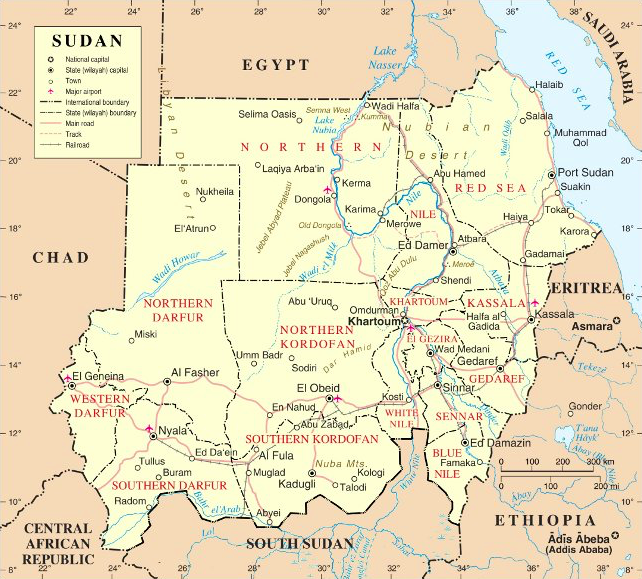
Map of Sudan. Muhammad Daffa Rambe. CC BY-SA 3.0.

Al-Bashir continued to hold his power until April 2019 when, after months of unrest, the Sudanese military toppled him. On Sept. 3, 2020, Sudan issued its declaration to sever ties between mosque and state, saying that, “For Sudan to become a democratic country where the rights of all citizens are enshrined, the constitution should be based on the principle of ‘separation of religion and state,’ in the absence of which the right to self-determination must be respected.”
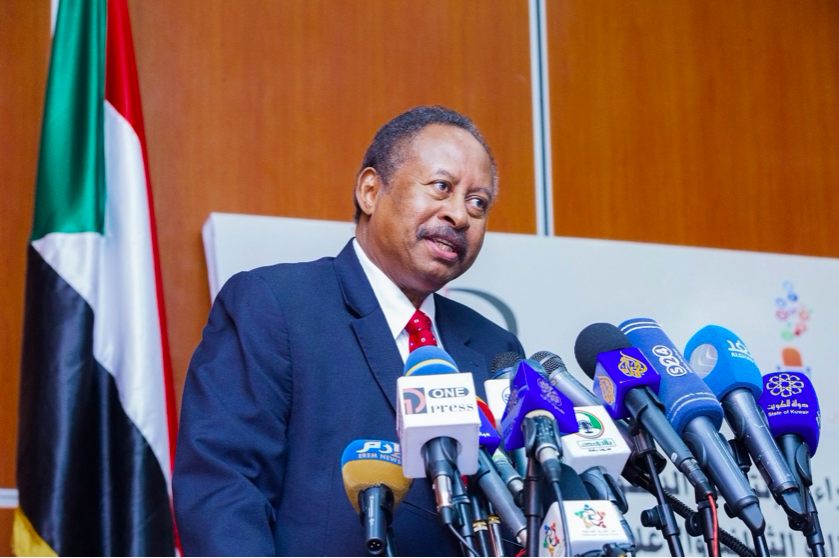
Prime Minister Abdalla Hamdok. Ola A .Alsheikh. CC BY-SA 4.0.

Prime Minister Abdalla Hamdok and Abdelaziz al-Hilu, leader of the Sudan People’s Liberation Movement-North rebel group, signed this document together. Additionally, the document emphasizes its effort toward unity with the statement, “Sudan is a multiracial, multiethnic, multireligious and multicultural society. Full recognition and accommodation of these diversities must be affirmed.” More than simply separating church and state, the declaration gives the country momentum in its push toward unification.   


Renee Richardson

Renee is currently an English student at The University of Georgia. She lives in Ellijay, Georgia, a small mountain town in the middle of Appalachia. A passionate writer, she is inspired often by her hikes along the Appalachian trail and her efforts to fight for equality across all spectrums. She hopes to further her passion as a writer into a flourishing career that positively impacts others.

In News and Social Action, Africa, Sudan, Global Politics Tags Sudan, religion, Islamic law, colonialism, Omar al-Bashir, military, Egypt, Muslim, People's Liberation Army, rebel, rebellion, diversity, religious freedom, War and Conflict, Africa
Comment

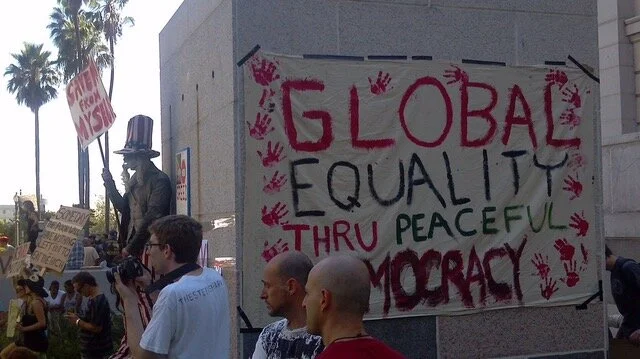
Protest in Los Angeles. Steve Devol. CC 2.0

How Defamed Statues Reflect Protests Around the World

June 17, 2020

On May 25, the world erupted in response to the death of George Floyd. That moment and the protests that followed led to actions such as public marches in the face of COVID-19 guidelines and the painting of murals in places as far off as Idlib, Syria. In the past week, however, the most prevalent form of the protests have been the tearing down of statues of figures affiliated with racism. 

The Movement Revitalized

The entire world has reacted to the events that happened in Minneapolis, but Floyd’s death only served to highlight current battles against racism. In London, 29-year-old Alex, an organizer for Black Lives Matter U.K., stated that “we stand alone in terms of creating our own moment- not just responding to what’s happened in the U.S.” The United Kingdom was one of the first places to start tearing down statues, sparking a movement that resonated on a global scale. 

In Bristol, England, a statue of Edward Colston, known for his involvement with the trans-Atlantic slave trade, was torn down and thrown into the harbor. In Brussels, Belgium, “demonstrators tore down a statue of King Leopold II, the Belgian ruler who killed millions of Congolese people, and hoisted the flag of the Democratic Republic of Congo below it.” In Richmond, Virginia, a statue of Confederate Gen. Robert E. Lee has been defaced and ruined. Even in New Zealand, a statue of British Capt. John Fane Charles Hamilton has been defaced and attempted to be torn down because of his killing of thousands of Maori people in the 19th century. Destroying statues is not necessarily a new thing, normally coming about in rebellion when people believe a certain message is being praised when it shouldn’t. “We have as humans been making monuments to glorify people and ideas since we started making art,” says art historian Jonah Engel Bromwich,” and since we started making statues, other people have started tearing them down.” The act of citizens tearing down statues all across the world serves to show the feelings of injustice that many have felt for a long time regarding issues such as racism.

The world has been battling racism for a long time and the events in Minneapolis only brought more attention to antiracist movements. Especially in light of recent events, the destruction and defamation of statues  created to honor public leaders has been a common way to showcase discontent. These acts have worked to bring attention to the inequality and problems that exist today as citizens across the world work tirelessly to bring light to problems of racism found in every culture.

Elizabeth Misnick

is a Professional Writing and Rhetoric major at Baylor University. She grew up in a military family and lived in Europe for almost half her life, traveling and living in different countries. She hopes to continue writing professionally throughout her career and publish her writing in the future.

Tags George Floyd, protest, civil unrest, Minneapolis, statue, graffiti, rebellion, global equality, equality, democracy, racism, institutionalized racism, #BLM, Race and Racism, Human Rights
Comment

Also check out...

Featured
Vietnam’s Floating Markets Are Disappearing
The Supernatural Role of Masks in Nigeria’s Yoruba Tribal Culture
Opening the World to Deaf Travelers with Lily Yu

Featured trips

Featured
Offer NGO Support While Visiting Quito
Experience Life as a Mongolian Nomad
Help Grow Organic Costa Rican Coffee

Sign up for the CATALYST newsletter

Sign up for our newsletter to get the scoop on international travel, global social impact insights, our latest podcast releases, and more from around the world, all delivered right to your inbox!

We respect your privacy.

Thank you!
Newsletter Sign Up | Advertise | Careers + Internships | Privacy Policy | Submissions | Contact Us

Copyright © 2025, MISSION MEDIA LLC. All rights reserved.