
Only accessible for a few months each year, these trails offer unrivaled volcanic and geographic sights.
Read MoreExploring Iceland’s Westfjords
Delve into the natural beauty and memorable experiences awaiting in Iceland's overlooked northwestern region.
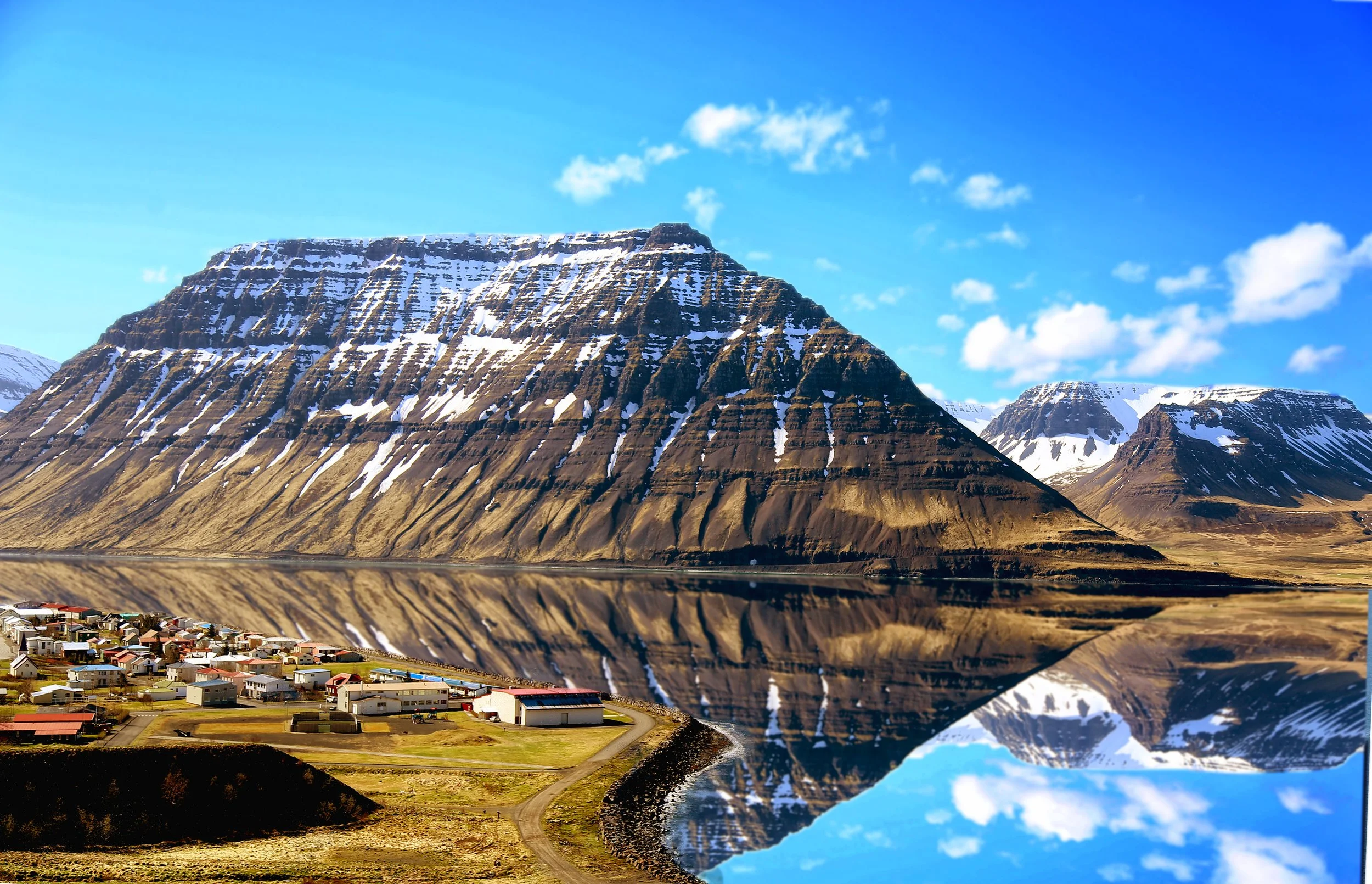
A small town on a fjord in the Westfjords, Iceland. RaulHudson1986. CC0.
The serene and volcanic landscapes of Iceland have attracted adventurous travelers for many years, especially the popular Golden Circle and Ring Road routes. Yet, both paths exclude one of the most scenic areas of the country, the Westfjords.
The Westfjords of Iceland is a sparsely populated, panoramic region with little geothermal activity that many travelers often overlook. Despite this neglect, there are many amazing experiences here to add to your Icelandic adventure.
1. Dynjandi Fjallfoss Trail (Arnarfjordur)
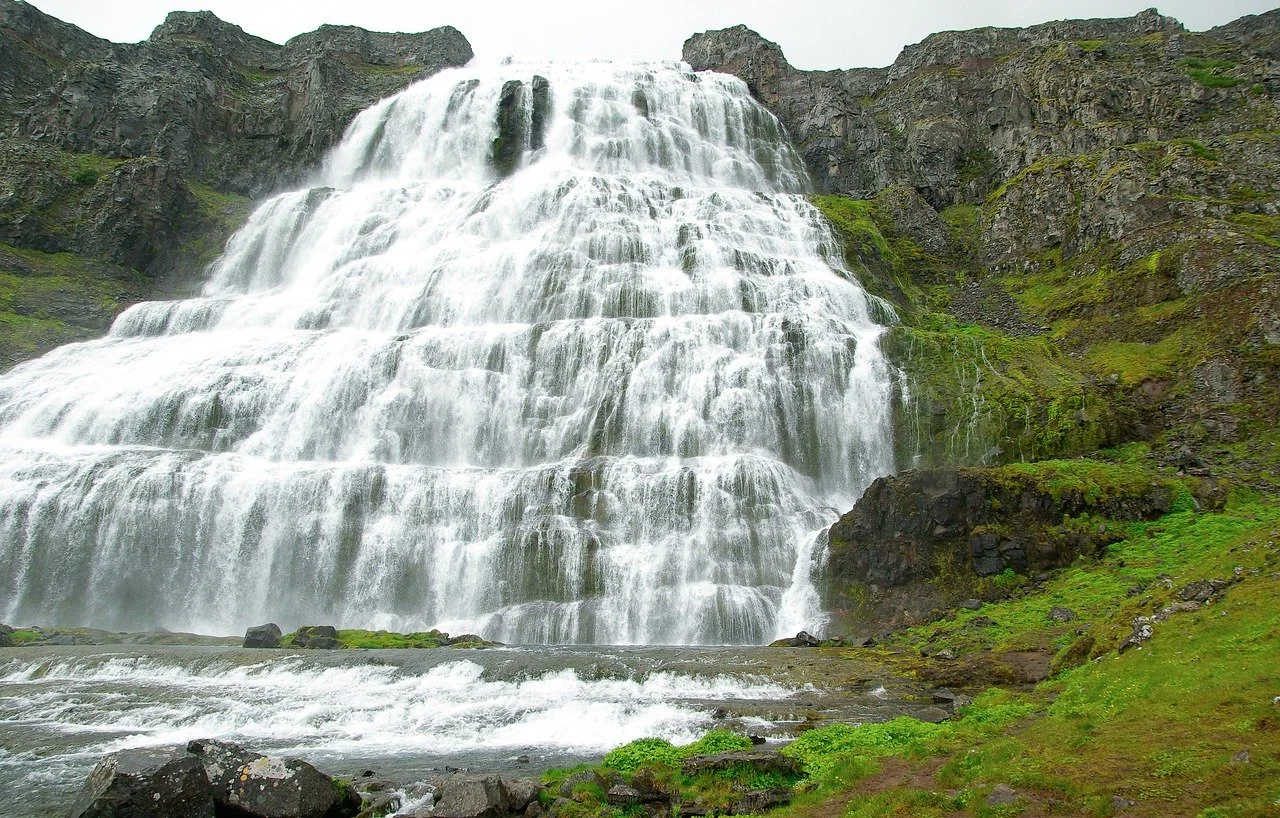
Dynjandi Fjallfoss in Arnarfjörður, Iceland. Jacqueline Macou. CC0.
This majestic waterfall is the largest in the region and is frequently referred to as the Westfjords’ most beautiful attraction. It is part of a series of seven waterfalls that unravel down the peak, originating from the waters of Lake Stora-Eyjavatn. The sound that emanates from these falls mimics thunder, and it’s understood why the waterfall’s name, Dynjandi, translates to “thunderous” or “booming."
From the parking lot, you can hike your way up the seven waterfalls, but take caution as it can be quite slippery and mossy. The average person can do this hike in around 15 minutes, but it is recommended to take your time to enjoy each one. At the peak, you can revel in the mist of the magnificent waterfall, try the fresh glacial water, and look out over the extensive views of the fjord upon your descent.
2. Museum of Everyday Life–Hversdagssafn (Isafjordur)
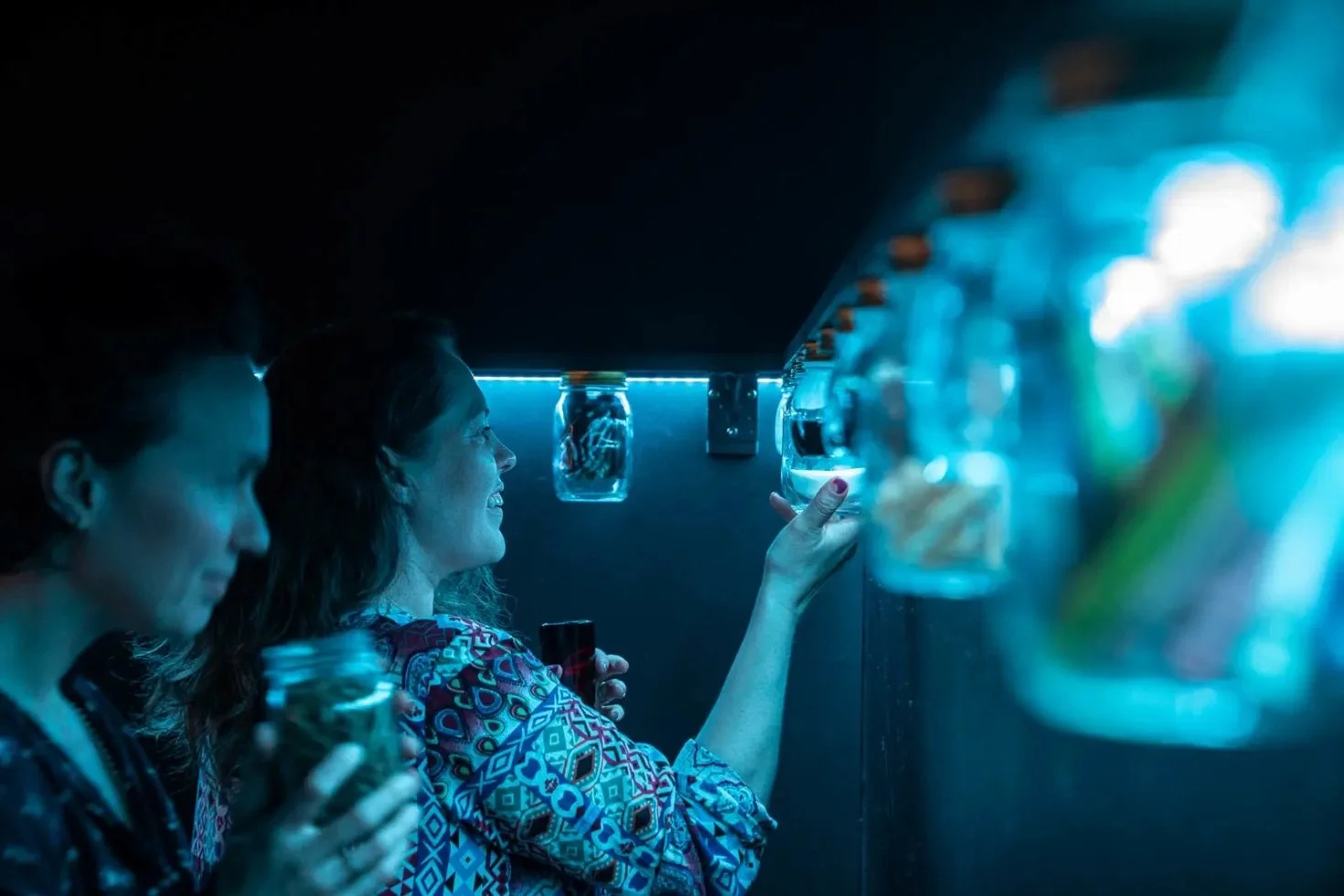
Museum guests in the sensory lab in Ísafjörður, Iceland. Courtesy of Hversdagssafn.
This museum provides an intimate perspective on the everyday life of Icelanders that is largely overlooked in mainstream tourism of the island. Founders Vaida and Björg refer to Hversdagssafn as more of an art project under the guise of a museum, one that aims to collect human connection. From exhibits on family histories told through donated books from the old church, short films about the winter seasons and a local distaste of the Northern Lights to heartfelt reflections on being an immigrant in Iceland, this museum is sure to give you a fresh perspective on life in the Westfjords and the pillar of community using all five of your senses.
3. Hike to Hornstrandir (Hornstrandir)
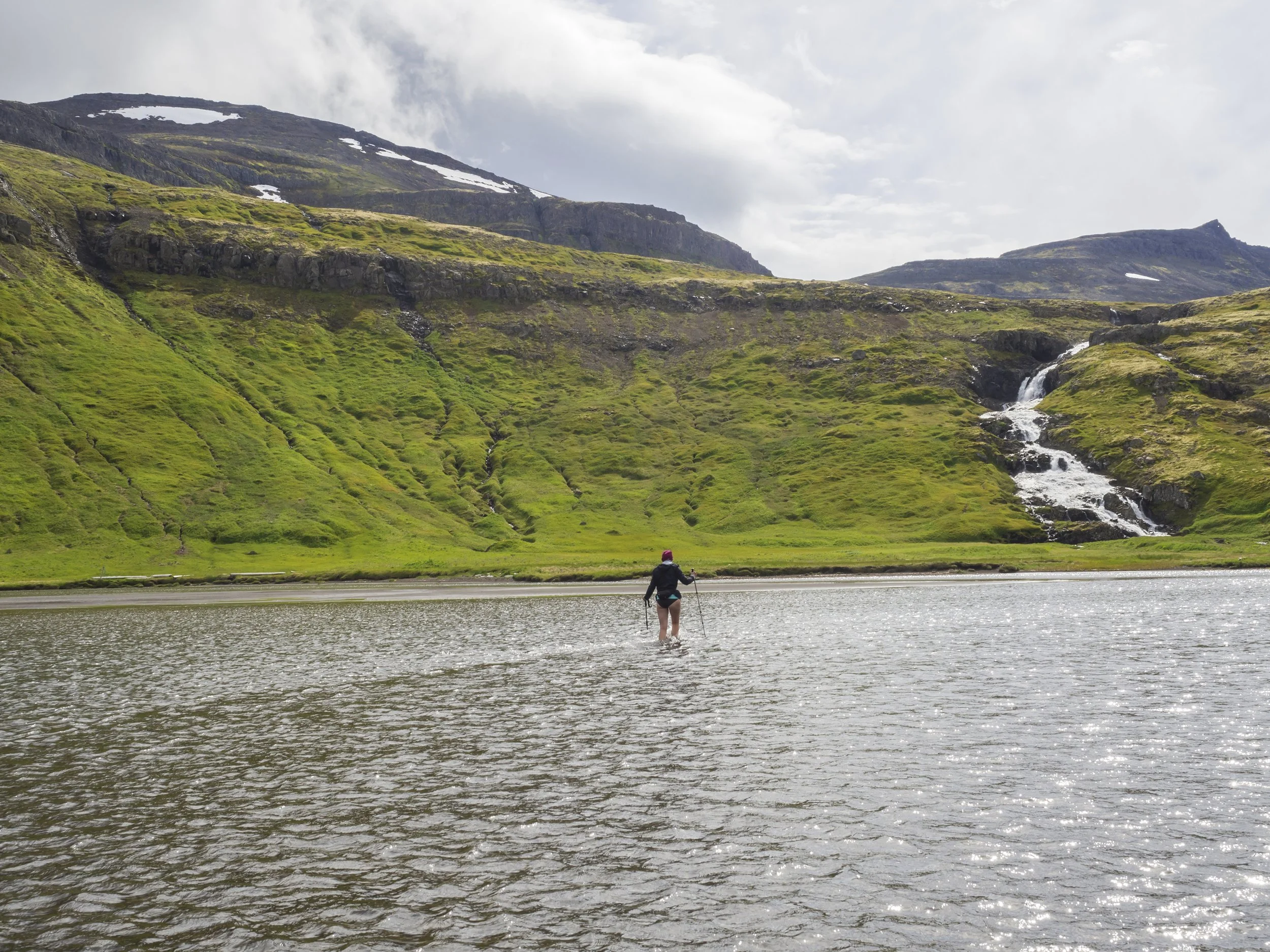
Hiker crossing the river in Hornstrandir on a trek to Hornbjarg cliff. Kristyna Sindelkova. CC0.
Hornstrandir (227-sq-mi) is an uninhabited area of the Westfjords that is only accessible by boat during the summer between June and August. It’s frequently called “Europe’s last wilderness” and deemed a “hiker’s paradise.” All of the homes on the peninsula have been restored since the last farmers left in 1952.
After establishing Hornstrandir as a protected Nature Reserve in 1975, the area’s 250 species of flowering plants and 30 species of nesting birds have thrived. Up to six million birds nest on the cliffs during the summer, with species including the Atlantic puffin, Arctic terns, black guillemots and penguins. It is the only sanctuary for Iceland’s prized native mammal, the Arctic fox. As the region is uninhabited and the animals are protected, the foxes have no fear of travelers and will often raise their kits near campsites. Polar bears have also been known to drift on ice to Hornstrandir from Greenland, though this occurrence is rare.
The area’s tundras, cliffs, flower fields and ice prove to be exciting hiking routes for self-sufficient adventurers. You can enjoy the vast region through multi-day hikes or day trips where you can eat traditional cuisine at the Old Doctor’s House. You can also do multi-day kayak tours that weave in and out of the fjords and camp overnight in the wilderness or at sleeping bag accommodations. Guided tours are highly recommended, and booking in advance is required.
4. Tjöruhúsið (Ísafjörður)
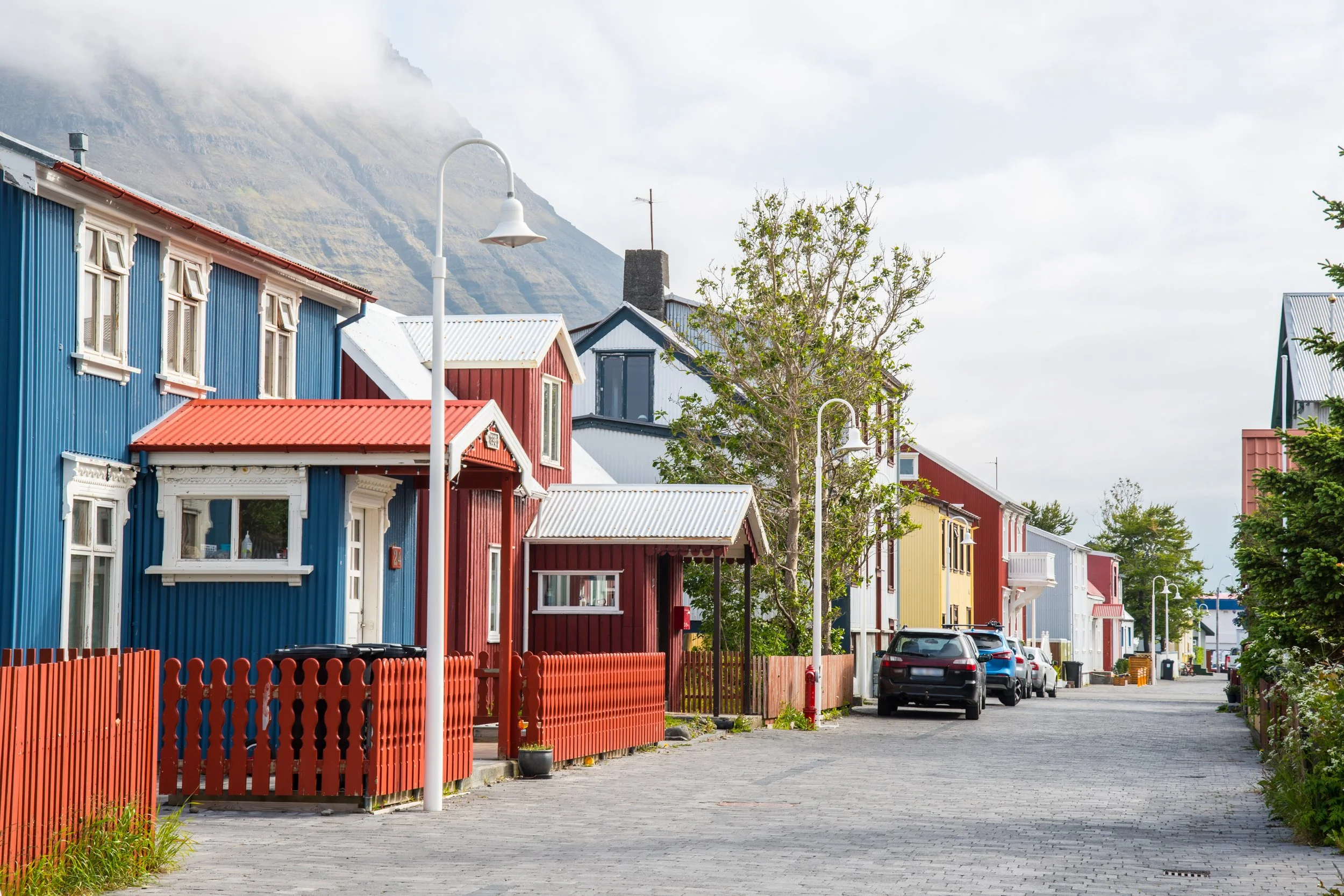
Town of Isafjordur in the Westfjords of Iceland. Gestur Gislason. CC0.
Immerse yourself in this Icelandic fish buffet, only open for dine-in during the summer season, for a communal dining experience with unlimited access to a range of unique platters and local music. It is a family-owned and run restaurant that has no menu, as the restaurant caters to the catch of the day. The atmosphere is warm, welcoming and familial. Plates vary from traditional Icelandic fish stew, to thorskkinnar (cod cheeks), monkfish and more. The restaurant also serves as a meeting space for public events within the community. Reservations for the lunch and dinner serving times during the summer seasons are highly recommended to ensure a seat at the delicious buffet-style gathering.
5. The Icelandic Museum of Sea Monsters (Bíldudalur)
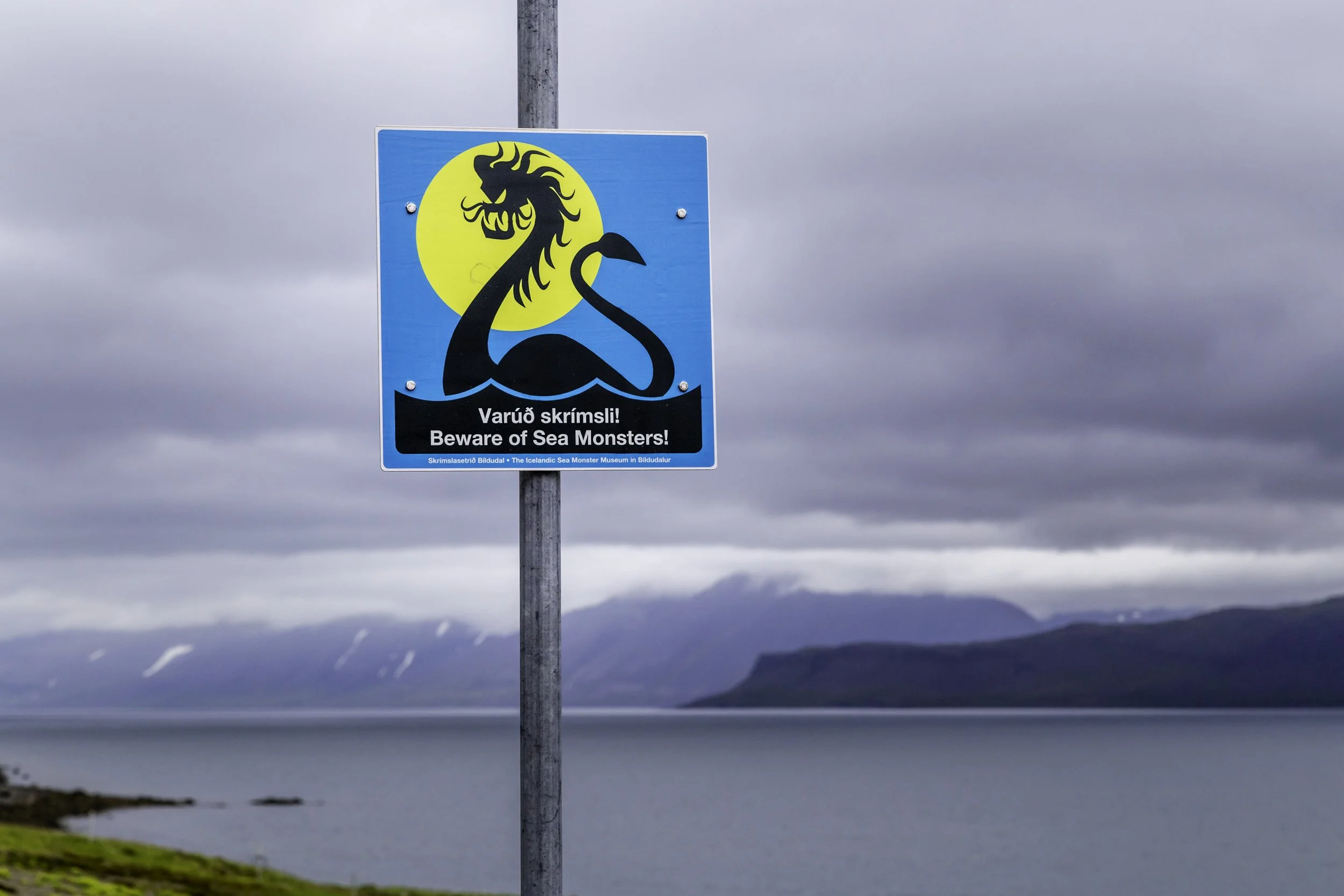
A cautionary sign was posted along the road in Iceland. Dendron. CC0.
Take a step back in time and discover old Icelandic lore and legend of the creatures that may or may not have plagued the Nordic seas. This region is known across Iceland for its historic reputation for prolific sea monster activity. At the Icelandic Museum of Sea Monsters, visitors can witness the extraordinary creatures of the deep vividly portrayed through an immersive and interactive blend of language, visuals and videos. Eyewitness testimonies are paired with scholarly insights into the realm of sea monsters, as on-screen narratives and academic perspectives infuse the space. Moreover, an array of relics and artifacts, serving as tangible remnants, color the museum, offering compelling evidence of their existence. The museum also has impressive interactive maps that draw on all kinds of monster legends from around the world.
Additionally, as you visit the museum, a highly recommended pitstop nearby is Reykjafjardarlaug Hot Spring, a geothermal pool just outside of the town for an ideal rest in warmed geothermal waters.
6. Whale Watching
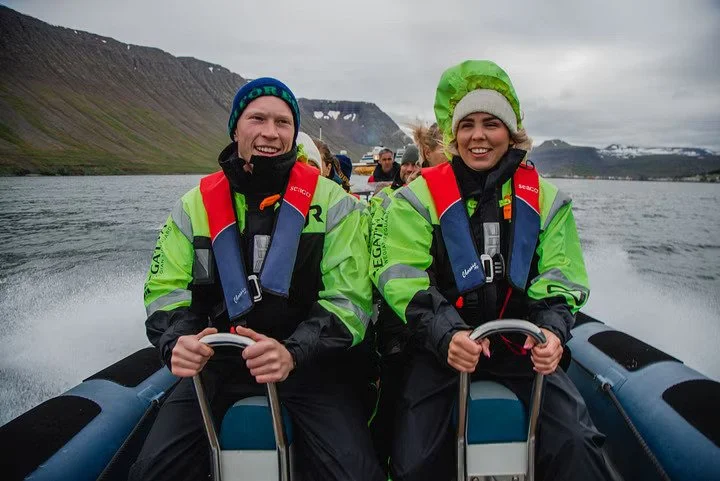
Whale watchers aboard a RIB boat in Iceland. Courtesy of West Tours. CC0.
The waters of the Westfjords are home to many arctic species, including up to 20 species of whale. Here you will likely encounter dolphins, humpback whales, beak whales, minke whales and orcas. These polar water tours are frigid and icy and thus can be experienced on more relaxed boat tours. However, if you are looking for a more adventurous and open-air whale-watching tour, you can opt for an open RIB boat safari where you can feel the pulse and spray of the ocean while capturing up-close views of marine life. Most tours depart out of Isafjordur or Holmavik and last two to six hours. Almost all tours guarantee incredible whale and nesting bird sightings.
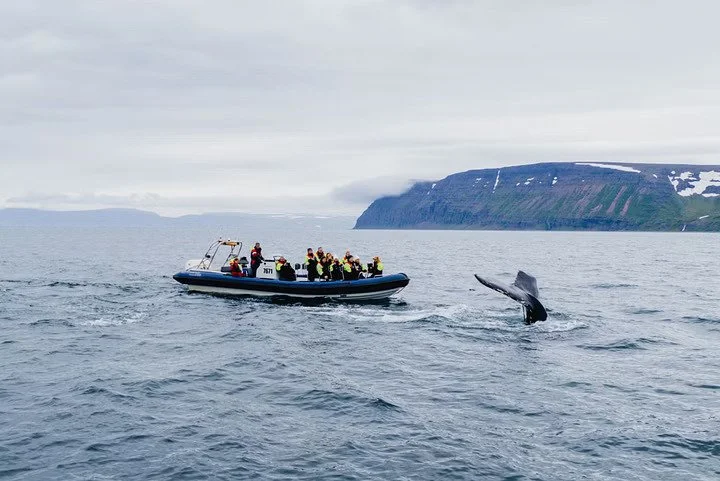
Whale watchers experiencing a whale sighting in Iceland. Courtesy of West Tours. CC0.

Julz Vargas
Julz is a student at Wellesley College studying Anthropology and Spanish. She grew up in Los Angeles, CA, and has studied all around the world in places such as Costa Rica, Greece, Iceland, and Spain. She is passionate about employing writing as a tool to explore human connection and diversity. Julz aspires to foster cross-cultural connections through community-based research, amplifying inclusive and diverse media about global cultures, foods, and people, to encourage individuals to engage more wholly with the world.
Chasing Aurora: Where To See The Northern Lights
From Norway to New Zealand, these five spots are perfect for experiencing the elusive beauty of the Aurora Borealis.

The Northern Lights as seen from the southern coast of Iceland. Cameron Pickett. CC BY 2.0.
The Aurora Borealis, better known as the Northern Lights, is one of the most magical natural phenomena to witness in person. It is caused by electrical interactions in the upper atmosphere that release waves of normally green and yellow light depending on which elements have reacted. Environmental conditions need to be perfect in order to properly experience the true beauty of the elusive lights, but there are a few locations near the Arctic Circle from which they are easier to spot. Here are five locations with an exceptionally good view for those who are trying to catch a glimpse of the lights, adjusted for the current astronomical layout of the planets and stars.
1. Rovaniemi, Finland

The Northern Lights shining down on the Santa Claus Village in Rovaniemi, Finland. Santa Claus Village. CC BY-NC-ND 2.0.
The city of Rovaniemi is the capital of Lapland, and is also well publicized as being the hometown of Santa Claus. Situated right on the Arctic Circle, it is most easily reachable by plane from Helsinki, though it is also accessible by local trains and buses. Rovaniemi is famous for its natural beauty -- its northern latitude makes it perfect for those wanting to experience the ‘midnight sun’ phenomenon, where our star is visible for a whole 24 hours. The city is the perfect destination for travelers looking to enjoy the Northern Lights, with the optimum viewing times occurring between August and April.
2. Yukon, Canada

The Northern Lights over Kluane Lake, Yukon. Keith Williams. CC BY-NC 2.0.
Located in the north east corner of Canada, the Yukon territory is home to almost 22,000 square kilometers (around 8,500 square miles) of protected land as part of the Kluane National Park and Reserve. Visitors can reach the park by plane, boat or car to visit the country’s largest ice field, an incredible grizzly bear population, and even Mount Logan, Canada’s highest peak, which stands just under 6,000 meters (around 19,685 feet) tall. While the Northern Lights can be seen from most of Canada’s provinces, the display is visible to those in the Yukon from August to April, making it one of the longest viewing seasons in the country.
3. Reykjavík, Iceland
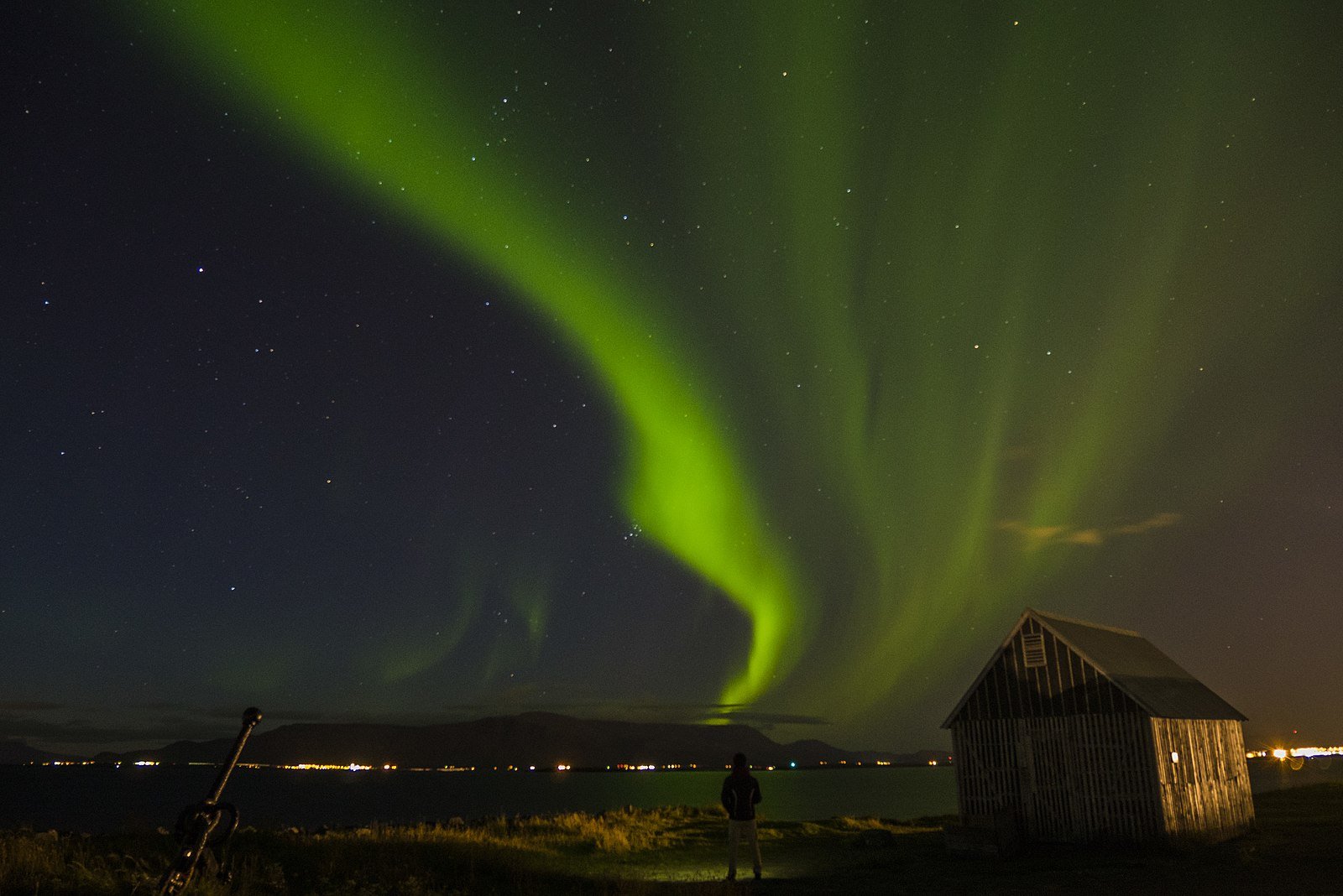
The Northern Lights seen from a small cabin just outside of Reykjavík, Iceland. Davide Cantelli. CC0.
The Icelandic capital of Reykjavík is by far the largest city in the country and is also one of the best places to watch the Northern Lights. Just a few degrees south of the Arctic Circle, many residents of the city claim to see the display from their windows on especially bright nights. Visitors can fly directly into the city’s airport and enjoy various other outdoor activities including icy glacier hikes, swimming in natural hot springs during the day and venturing to Thingvellir National Park, which is just a short drive from the city to see the aurora. Though brighter auroras can be seen from the city, avoiding light pollution makes it much easier to experience the full display between September and April.
4. Tromsø, Norway

The Northern Lights shining over the mountains in Tromsø, Norway. Maria Wulff Hauglann. CC BY-NC 2.0.
Located in the heart of the northern aurora zone, the Norwegian city of Tromsø is most well-known for its view of the Northern Lights. Visitors can book one of the many available aurora tours hosted by guides who have expert knowledge of the best local sites from which to watch the display. Many of these base camps offer excellent viewing of the lights from September all the way till April. Tromsø is just a quick 3.5 hour flight from London for those wanting to experience the local Sami culture, or for those simply looking to indulge themselves in the city with the most bars per capita than any other in Norway.
5. Kiruna, Sweden

The Northern Lights as seen from the town of Kiruna in Swedish Lapland. Martin Eklund. CC0.
The wilderness of Swedish Lapland is perfect for those looking to enjoy the Northern Lights away from other tourists. Additionally, the complete lack of light pollution allows for a particularly vibrant viewing. As the northernmost city in Sweden, Kiruna is located well within the Arctic Circle and is home to the largest underground iron ore mine in the world. The town also neighbors Jukkasjärvi, a town made recently famous for its hotel made entirely of ice. Visitors who stay here can typically enjoy the lights between September and March, though the season can often begin slightly earlier and end slightly later.
Bonus: Queenstown, New Zealand
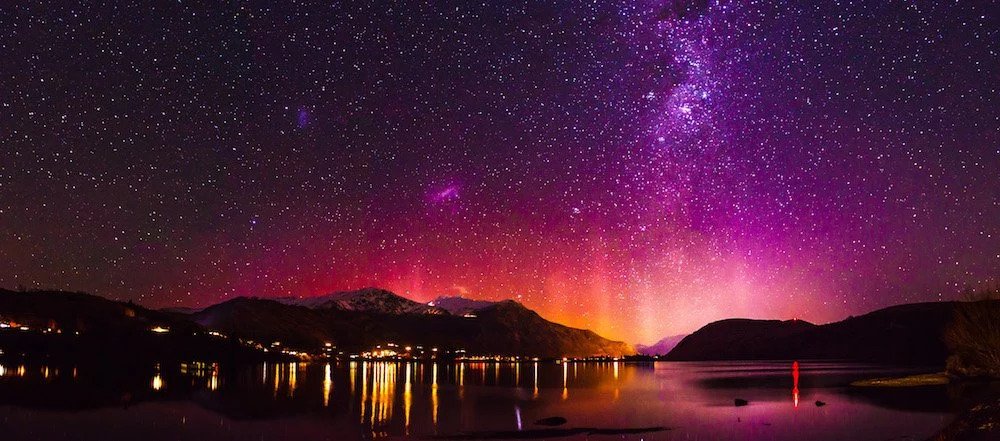
The Southern Lights captured near Queenstown, New Zealand. Bec Potter. CC BY-NC-ND 2.0.
This final destination highlights the resort town of Queenstown on New Zealand’s South Island. Unlike the other places on this list, it is a perfect place to experience the natural phenomena known as the Aurora Australis or the Southern Lights. This aurora is similarly caused by interactions between molecules in the upper atmosphere, which release waves of light across the night sky, though the Southern Lights tend to appear red and pink. This is due to the types of gas that are interacting and the atmospheric height at which the interactions take place. Visitors can fly straight into Queenstown’s international airport and enjoy the natural beauty of the nearby Lake Wakatipu during the day, before settling in to watch the display at night.

Tanaya Vohra
Tanaya is an undergraduate student pursuing a major in Public Health at the University of Chicago. She's lived in Asia, Europe and North America and wants to share her love of travel and exploring new cultures through her writing.
LGBTQ+ Life and Culture in Iceland
Iceland has a reputation for being one of the safest and most accepting countries for the LGBTQ+ community, travelers as well as Icelandic residents.

Pride flags in Reykjavík. Symbioticadesign. CC BY-NC 2.0.
While Iceland is an unusually safe and accepting place today, it has had a rocky history with LGBTQ+ rights just like everywhere else. Because Iceland is so geologically isolated from the rest of the world, Icelandic people rarely even married people from other countries prior to World War II. During World War II, Icelandic women began coupling up with and marrying non-Icelandic soldiers who were stationed in the country, and even these heterosexual relationships were met with disdain. This attachment to “traditional marriage” bled over into the public perception of LGBT+ relationships, meaning that homophobia was also rampant at that time. Even thirty years later, the first famous Icelander to come out as gay in the 1970s, Hörður Torfason, was driven out of Iceland by the extreme homophobia he faced.
However, the tide turned relatively quickly in Iceland between the 1970s and the 1990s, but not without great struggle. In 1978, the Icelandic National Queer Organization was formed, which played a major role in promoting gay rights in Iceland. In 1996, Iceland became the fourth European country to officially recognize same-sex unions. By 2004, 87% of Icelanders supported gay marriage (which was officially legalized in 2010) while in 2004, only 42% of Americans did.
Today, Iceland is a popular travel destination for LGBTQ+ travelers wishing to go somewhere that they can feel comfortable and safe. In fact, Iceland has several popular travel guides and agencies that specifically serve LGBTQ+ travelers: Gay Ice and Pink Iceland. While these websites acknowledge that like anywhere, queer people can still be targetted in Iceland, it is apparently rare, and most hotels, nightlife, gyms and other public places are known to be accommodating of same-sex relationships as well as transgender and nonbinary identities, providing gender-neutral facilities and acknolwedging and respecting preferred pronouns.
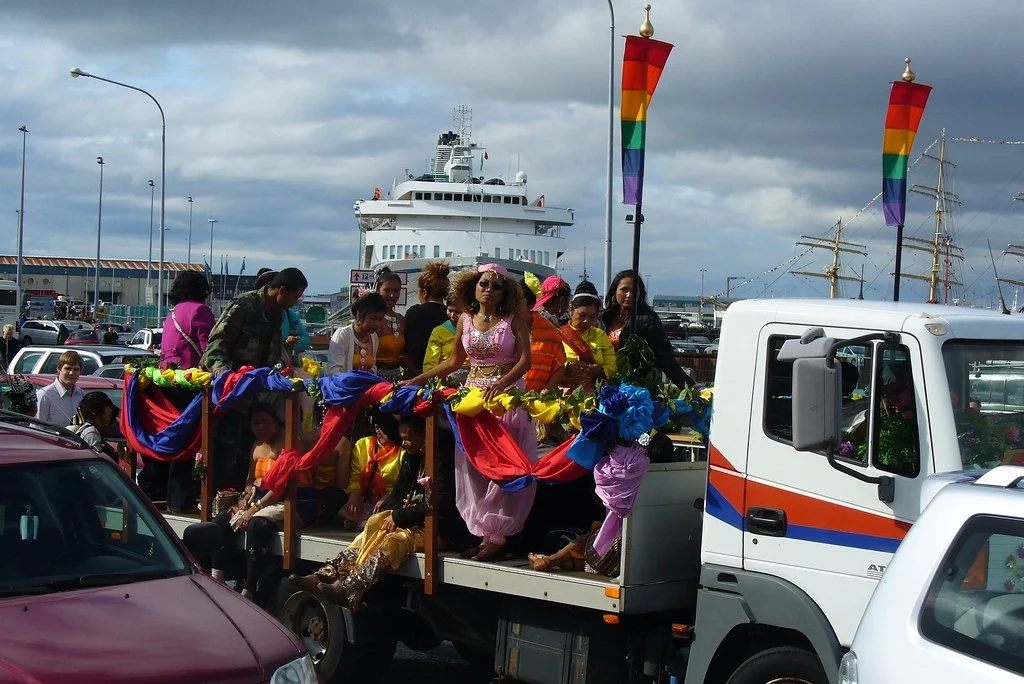
Reykjavík Pride 2009. Filip J. Cauz. CC BY-NC-SA 2.0.
A large number of businesses and homes in Iceland have pride flags outside their windows, and Iceland hosts several LGBTQ+ events throughout the year that attract hundreds of thousands of tourists. In fact, travelers for the Reykjavík Pride Festival, which occurs in August, account for nearly a quarter of the people in Iceland that month. Reykjavík Pride is regarded as one of the major events of the year in Iceland for everyone, not only people who identify under the queer umbrella. How widespread and anticipated Reykjavík Pride is each year reflects how far Iceland has come in terms of acceptance and safety for LGBTQ+ people. Reykjavík also has a festival in February, called the Reykjavík Rainbow Festival. This is another highly anticipated and attended LGBTQ+ festival in Iceland. Additionally, there are smaller celebrations throughout the year all over the country.
Iceland is known for being very open about same-sex relationships, with queer couples openly showing affection in public generally without fear. There are also LGBTQ+ historical landmarks in Iceland: Gay Ice recommends the LGBT History Walk, which is a walking tour through Reykjavík’s most important LGBTQ+ destinations, along with information about historical events in Iceland throughout the LGBTQ+ rights movement.
Iceland is an excellent destination at any time of year for anyone, but especially travelers in the LGBTQ+ community. However, August and February are two of the most interesting and inspiring times to visit, so that one can catch the famous pride festivals.

Calliana Leff
Calliana is currently an undergraduate student at Boston University majoring in English and minoring in psychology. She is passionate about sustainability and traveling in an ethical and respectful way. She hopes to continue her writing career and see more of the world after she graduates.
10 National Parks to Visit Outside the US
While most people associate National Parks with the US, there are amazing National Parks to visit around the world. Check out glaciers, tropical wetlands, the oldest desert in the world in these parks in Iceland, Namibia, Thailand, India and more.
Read MoreA Look Into Reykjavik’s Eclectic Collection of Street Art
The capital of Iceland is world renowned for its street art. Learn more about the current community of street artists, their dynamic murals and urban art landscapes.
Read More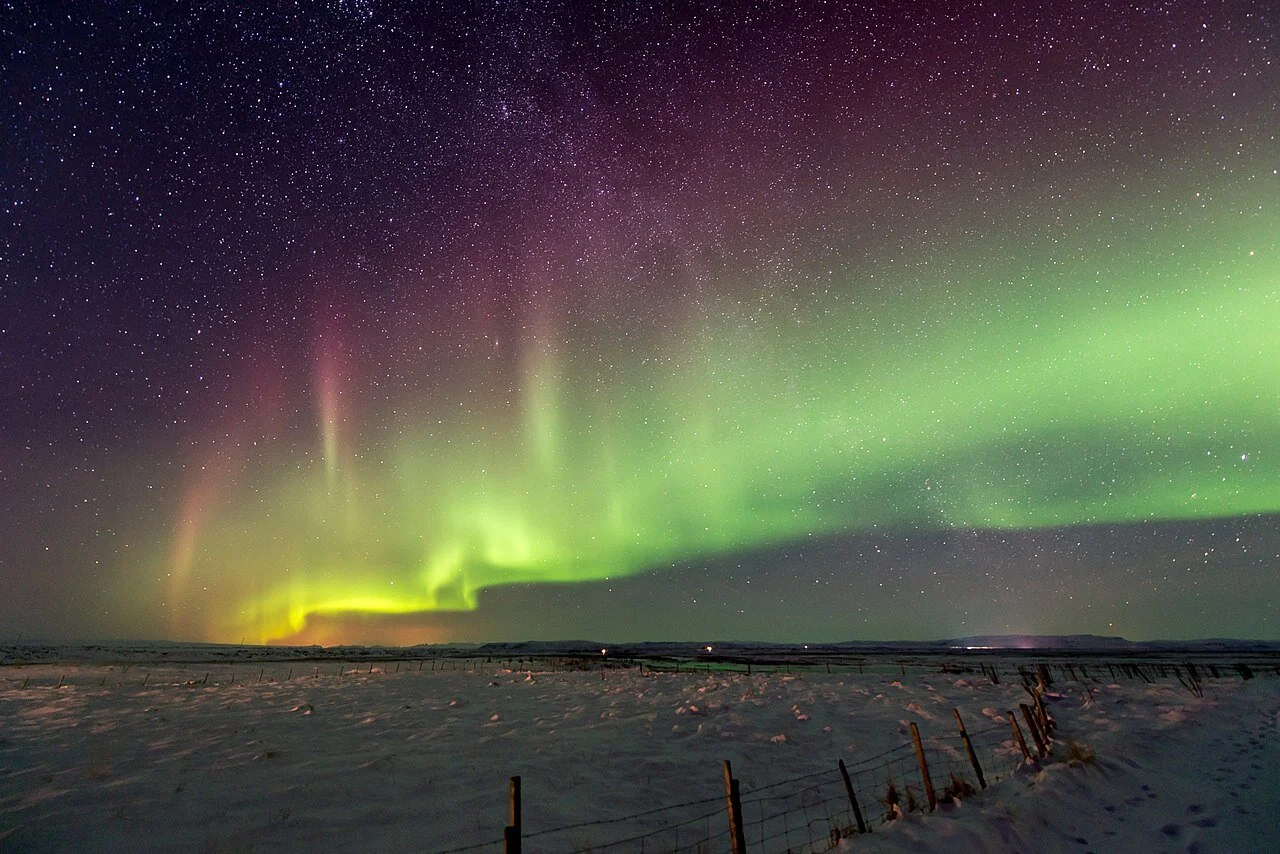
“Northern Lights in Iceland” by Cameron Pickett is licensed under CC BY 3.0
7 Off-The-Beaten-Path Adventures in Iceland
From lava caves to Elf School, here are some of the most unique travel destinations in Iceland. Enjoy!
Read MoreICELAND: Vindur Means Wind in Icelandic
The word Vindur means ”wind” in Icelandic which is relevant to the way this video was captured. For 3 minutes you will get to enjoy amazing drone footage portraying Iceland’s unbelievable landscapes. From beautiful waterfalls to endless valleys, with its unusual mountain ranges and out of this world landscapes, oceanic cliffs, old glacier, fantastic canyons and many other wonders, take look at what make Iceland so unique.
Surfing Under Northern Lights
Adventure photographer Chris Burkard is an expert at photographing surfers who ride the coldest, most punishing waves on the planet. He's used to battling the elements in order to get the perfect shot, but one fateful storm in Iceland nearly broke him. Still, he couldn't pass up the opportunity to capture an epic adventure under the greatest light show on earth.
ICELAND: Tears of Heaven
Filmmakers L'oeil d'Eos spent last June exploring the secret corners of Iceland. While visiting some of Iceland's more popular sites, they also went off the beaten path to see limitless natural beauty of this country. The trip was described as "26 days of pure wonders from north to south, west fjords to east fjords."
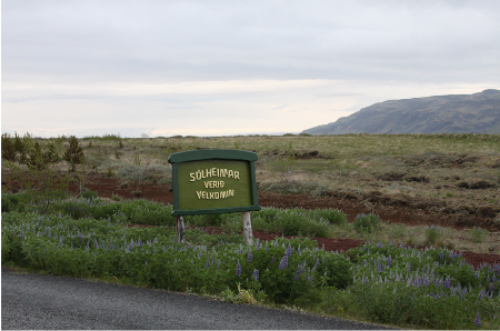
ICELAND: Home of the Sun — My Stay in an Eco-Village
We stood in a circle, holding hands. The early morning dew clung to and soaked the bottoms of my shoes, and I shivered from the wind and the excitement at welcoming the day with the people of Sólheimar. My eyes followed the held hands around, taking in a couple of young twenty-year-olds embedded in between more sober looking adult leaders of the community and the elderly.
Earlier, as groups made their way over to the morning meeting, the warmth with which the young and old greeted each other warmed me up despite the cold and the constant overcast sky. Here in the middle of farmlands and sheep, Sólheimar is an eco-village, an intentional community where the abled live along the disabled in a sustainable manner.
Sólheimar owes its founding to Sesselja Hreindís Sigmundsdóttir in 1930. Ahead of her time, especially in pre-industrial Iceland, Sesselja created the first orphanage at Sólheimar for children who are mentally disabled. She believed strongly in encouraging artistic expression in the mentally disabled, a novel concept from Rudolf Steiner in Germany. Sesselja, regarded as crazy by some in the Icelandic government for her insistence on allowing interactions between normal and disabled children and her equally important work in biodynamic farming, experienced significant roadblocks in the establishment and expansion of Sólheimar, but she overcame the judgment of the skeptics and eventually secured funding and approval from the government for her work.
The village of a hundred inhabitants sits snuggly and unassumingly in the geothermal region of southwestern Iceland; its location keeps it far-removed from the bustle of the modern capital of Reykjavik. Instead, people at Sólheimar farm and make crafts to sustain their peaceful lifestyle. Today, the President of Iceland scheduled a visit. The occasion has sent all the residents of Sólheimar busy bustling in preparation. Compared to government opposition to the project during Sólheimar’s early history, this occasion reveals that much has changed in the way Iceland perceive ideas of sustainability and social equity.
Sólheimar has embraced the concept of reverse integration where abled people accommodate and structure their lives around the disabled. Every inhabitant of Sólheimar is employed in some way in the village, whether it is cooking, taking care of the greenhouse vegetables, or making candles in the craft workshops, so everyone has a stake in the wellbeing of the community.
The first thing that caught my eye when I walked into the guest rooms was the extensive recycling system, consisting of five or six multicolored buckets each labeled with a different type of material. Sólheimar strives to function with 100% sustainability on all three pillars — environmental, economic, and social. Nevertheless, waste remains, and Sólheimar depends on outside funding.
Socially, the society functions like a well-oiled machine. The residents are the friendliest people I’ve ever met. The four-day stay here is filled with smiles, offers to try the cucumbers in the greenhouse, sharing their artwork. In the corner of the village sits a troll garden, and the dim light makes you believe that maybe, just maybe, fairies live here.
ORIGINALLY PUBLISHED ON THE YALE GLOBALIST

.jpeg)
JINCHEN ZOU
Jinchen is an undergraduate at Yale University from Houston, Texas. As a contributor to The Yale Globalist, she is an avid traveler. Jinchen also contributes to TheProspect.net, a culture/lifestyle magazine that includes helpful resources for college applicants.