
• Travel Features
  • Global Action
  • Find A Trip
  • Travel Guides
    • Podcast
    • Courses
    • Bookshop
  • About
  • Sign Up
Menu

CATALYST PLANET

  • Travel Features
  • Global Action
  • Find A Trip
  • Travel Guides
  • Discover
    • Podcast
    • Courses
    • Bookshop
  • About
  • Sign Up
No results found

The confluence of two arms of the Kaskawulsh Glacier in the Yukon. Richard Droker. CC BY-NC-ND 2.0.

Glacier Hunting in the Pacific Northwest

October 7, 2020

Glaciers have long been an object of fascination for many curious travelers and scientists. These frozen rivers, slowly ebbing and flowing past mountains for thousands of years, have become synonymous with Antarctica, Greenland, Patagonia and the Arctic.

One other region which is home to a number of glaciers is Upper Cascadia, an area encompassing British Columbia, the Canadian Rockies in Alberta, the Yukon and southeast Alaska. Given their proximity to the cities of Anchorage, Calgary, Juneau and Whitehorse, many of these glaciers are accessible to curious travelers who do not want to break the bank on a global expedition into an unknown icy world.

While many of these glaciers remain intact, all have been subjected to warm temperatures as a result of climate change, which has caused dramatic melting of ice and changes to the region’s biodiversity.

Regardless, these icy wonders continue to wow and inspire hundreds of thousands annually. For those interested in taking a glimpse into the frozen world, below is a list of some of the most popular glaciers in the Pacific Northwest.

Mendenhall Glacier — Juneau, Alaska
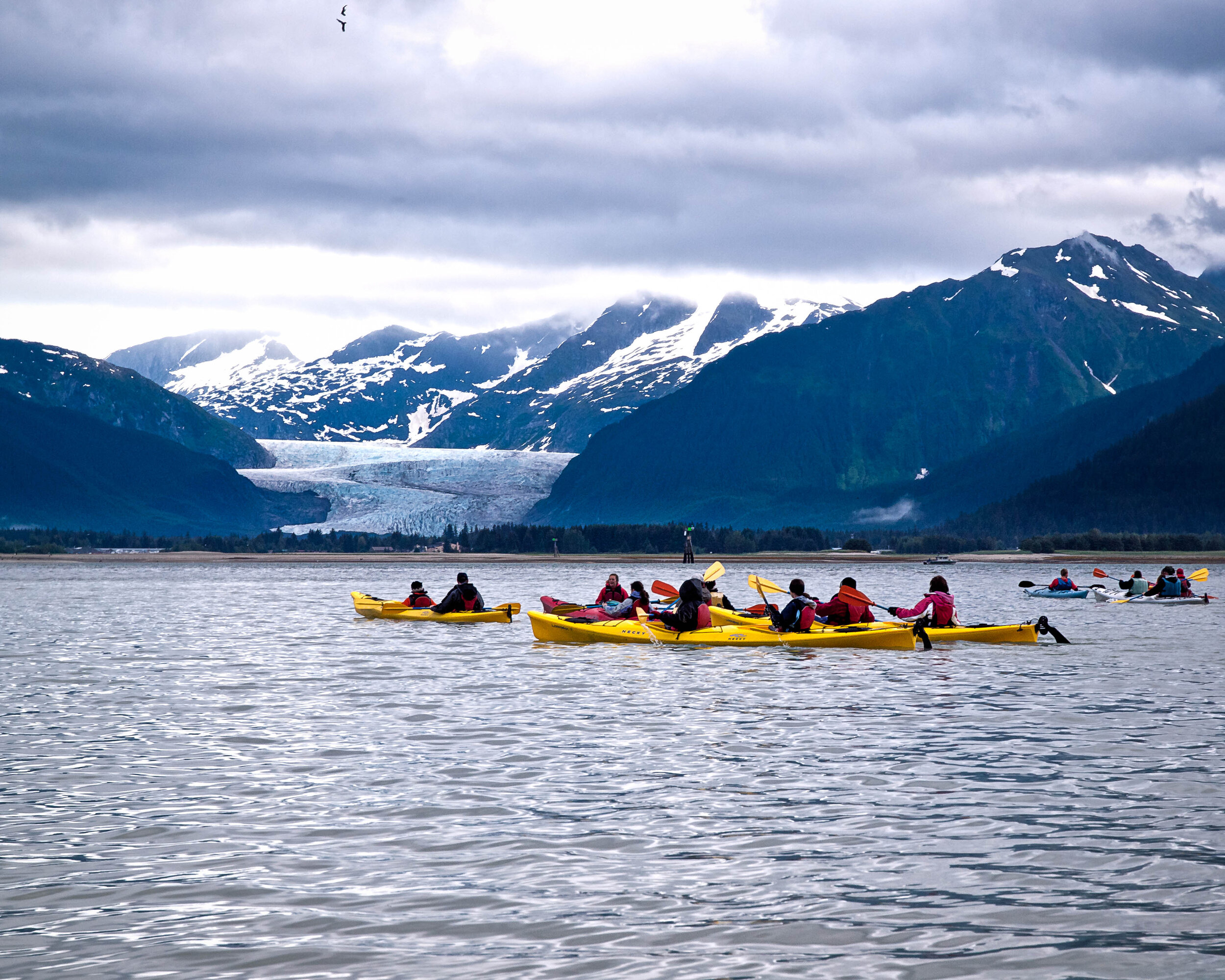
Kayakers in Mendenhall Lake, with the mouth of the Mendenhall Glacier in the background. Peter Lee. CC BY-NC 2.0.

One of the most accessible glaciers in North America, the Mendenhall Glacier is located just12 miles outside of downtown Juneau, Alaska. The glacier is a defining feature of the Tongass National Forest and draws around 500,000 visitors annually.

While visitors to the park cannot walk on the glacier itself, the forest is home to a number of activities and viewing areas which allow for a more personalized viewing experience. Kayaks, telescopes, ranger talks and a movie are available at the visitor center. Likewise, those interested in hiking can take one of five trails around the forest, with the Photo Point Trail offering the best views.

Given its proximity to Juneau International Airport, many glacier hunters visit Mendenhall before hopping on a seaplane or helicopter to head to the nearby Herbert and Taku glaciers in addition to Glacier Bay National Park.

Kaskawulsh Glacier — Kluane National Park, Yukon
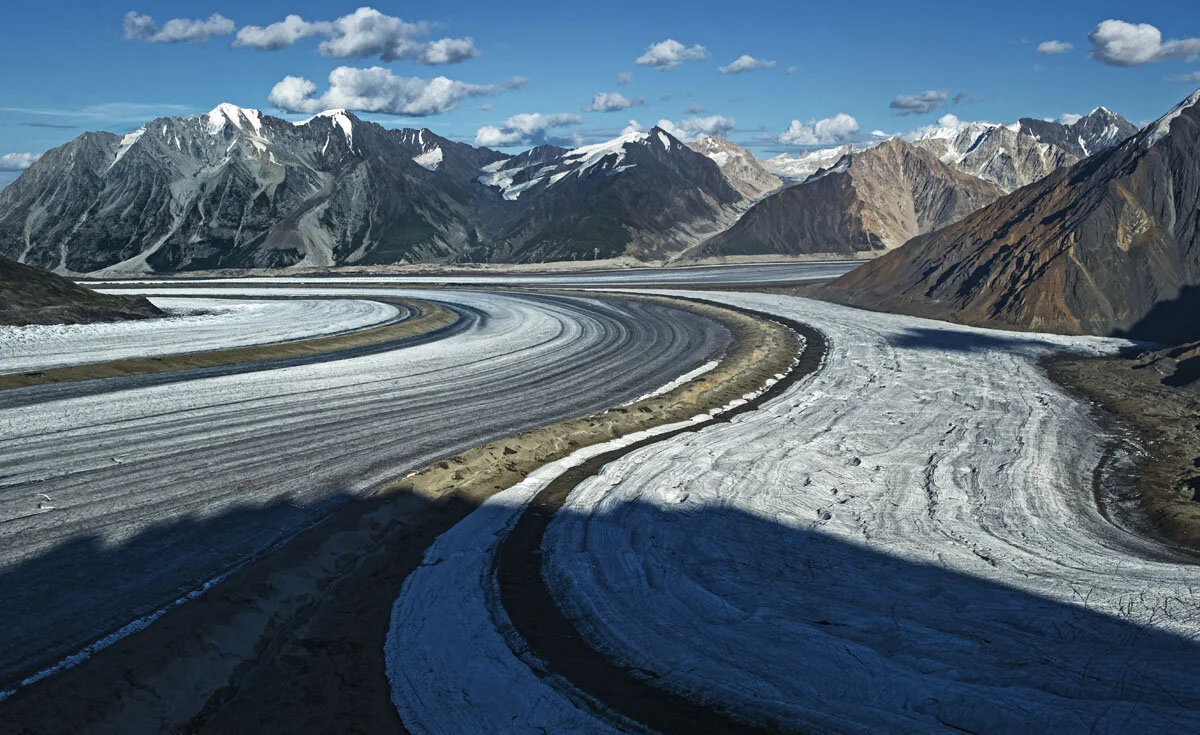
The confluence of the south arm of the Kaskawulsh Glacier. Richard Droker. CC BY-NC-ND 2.0.

Located in the St. Elias Mountains in Kluane National Park, the Kaskawulsh Glacier is one of the largest and most visited glaciers in the Yukon. While this glacier is a bit more remote—the national park is about 100 miles away from Whitehorse, capital of the Yukon and the nearest city with an international airport—many glacier hunters undertake the long trek to enjoy hiking, skiing and snowshoeing.

The Kaskawulsh Glacier in recent years has begun to retreat due to rising temperatures as a result of climate change. The St. Elias Mountains lost 22% of their ice cover between 1957 and 2007, and the Kaskawulsh Glacier specifically lost 6.6 square miles of ice between 1977 and 2007. While the region has not met the same fate as has Glacier National Park in Montana, which lost the majority of its glaciers over the past 50 years, visitors interested in visiting Kaskawulsh are encouraged to do so sooner rather than later. 

Kenai Fjords National Park — Alaska
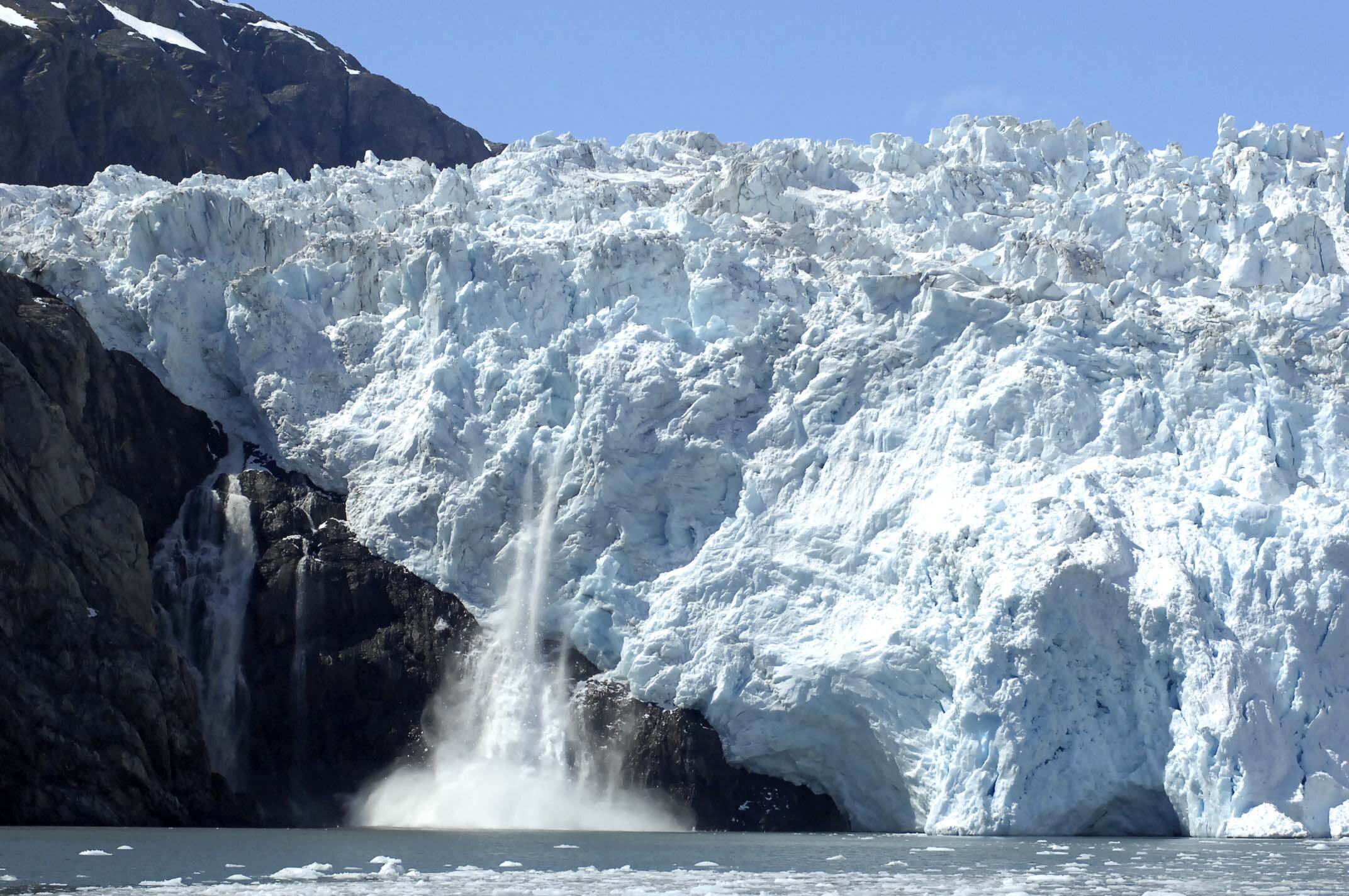
The Holgate Glacier in Kenai Fjords National Park. National Parks Service of Alaska. CC BY 2.0.

Kenai Fjords National Park, which is situated 130 miles south of Anchorage near Seward, Alaska, is home to a quarter of the state’s glaciers. While the park’s icefields have receded due to climate change, many glaciers are still intact, drawing in hundreds of thousands of visitors annually. Popular glaciers in the icefield include Bear Glacier, which is the longest in the park, and Exit Glacier, the only one accessible by road.

Visitors to the park can hike the Harding Icefield Trail, which is an intense 8.2 mile round trip trail that showcases the park’s glaciers, fauna and vegetation. Those interested in visiting the park should opt to take the Alaska Railroad, which runs daily between Anchorage and Seward and offers immaculate views of the surrounding fjords, forests and mountain ranges which lie between the two cities.

Ha-Iltzuk Icefield — British Columbia
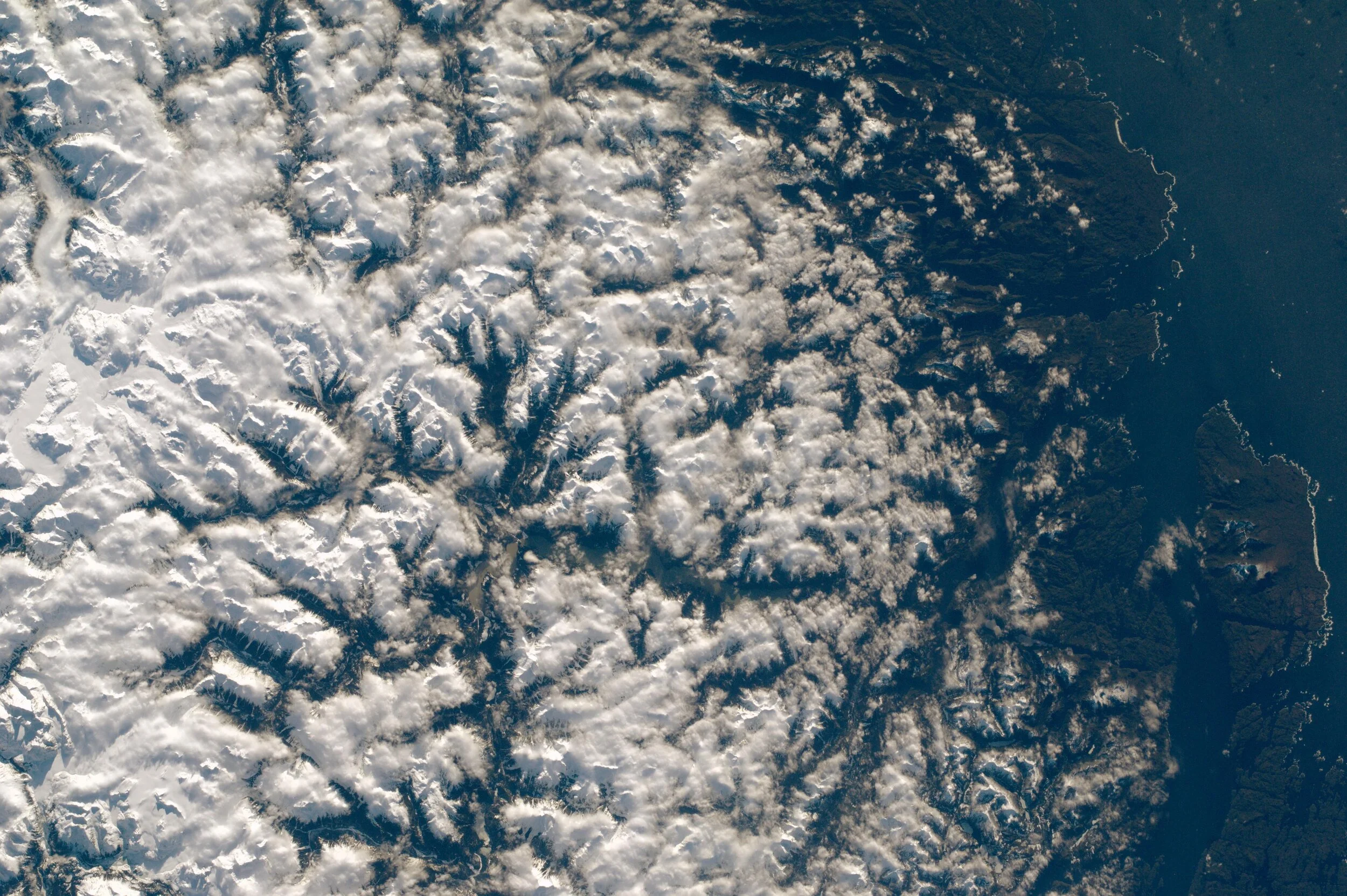
Icefields in British Columbia as seen from the International Space Station. NASA’s Marshall Space Flight Center. CC BY-NC 2.0.

The Ha-Iltzuk Icefield is the largest icefield in the Coast Mountains of British Columbia. The region is home to a number of glaciers, lakes, rivers, mountains and volcanoes. Given that the field is in a remote part of the province and is not accessible by road, most visitors opt to charter a helicopter for excursions.

While camping in the park, many choose to visit the Silverthrone and Klinaklini glaciers, both of which flow toward the south, as well Mount Silverthrone, which is surrounded by a number of smaller, unnamed valley glaciers.

Athabasca Glacier — Alberta
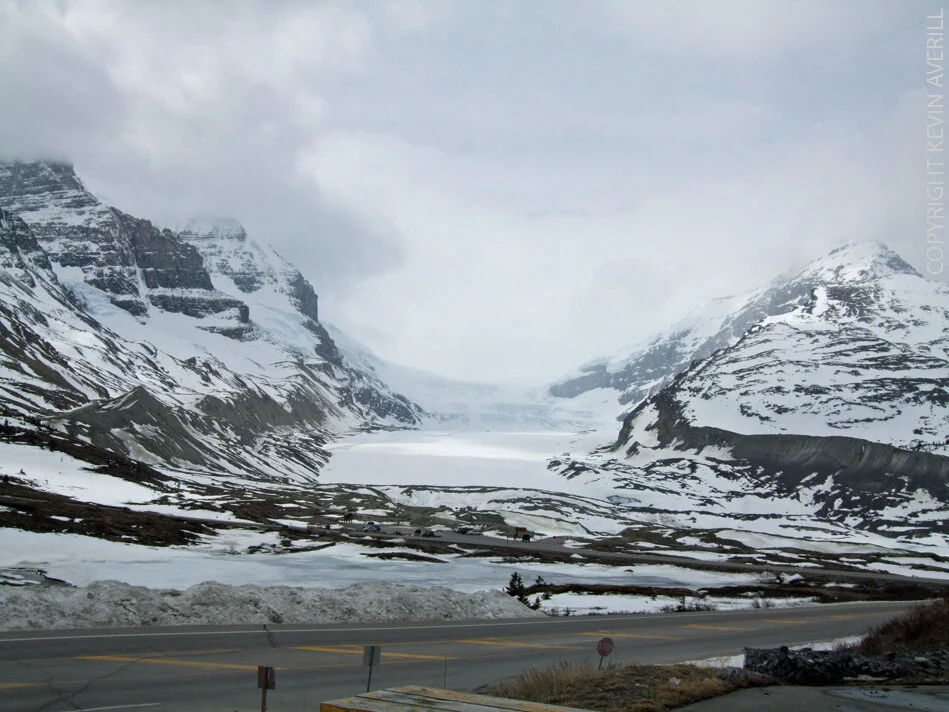
The Athabasca Glacier in the Columbia Icefield. Lord Lucan Lives. CC BY-ND 2.0.

The Athabasca Glacier is one of the six principal toes of the Columbia Icefield in Alberta’s Jasper National Park. The most visited glacier in North America, Athabasca’s four-mile length is home to some rare species of animals including flying insects which can survive in minus 30 degrees Celsius.

The glacier has receded due to climate change, losing 0.9 miles of length over the past 150 years, when markings of glacial retreat first began to be measured. The glacier currently loses an estimated 16 feet each year, and is expected to disappear near the end of the century. Visitors to the park are encouraged to be mindful of the flora and fauna and must take efforts to ensure that none of the biodiversity is disturbed by their excursions.

Jacob Sutherland

is a recent graduate from the University of California San Diego where he majored in Political Science and minored in Spanish Language Studies. He previously served as the News Editor for The UCSD Guardian, and hopes to shed light on social justice issues in his work.

Tags glacier, PNW, Pacific Northwest, Patagonia, Upper Cascadia, Canada, Alaska, Juneau, Mendenhall Glacier, Tongass National Forest, Kaskawulsh Glacier, Kluane National Park, Kenai Fjords National Park, British Columbia, Ha-Iltzuk Icefield, Alaska Railroad, Alberta, Athabasca Glacier, excursion, hiking, biodiversity
Comment
Vindur is a non-narrative short film shoot with a drone in different parts of Iceland. Vindur means wind in Icelandic which is relevant to the way its shoot. So for 3 minutes, you will get to enjoy amazing drone footage portraying Icelandic unbelievable landscapes. Beautiful waterfalls, endless valleys, unusual mountain ranges, out of this world landscapes, oceanic cliffs, old glacier, fantastic canyon and many other wonders that make Iceland so unique and such a blast to shoot using DJI Phantom 3 professional. I really hope you enjoy watching it. A semi-finalist at CineFest film Festival in Los Angeles (drone film category) Technical information for those who interested: Drone - DJI Phantom 3 Professional Filters - Polar Pro Edit - Adobe Premier Music mix - Adobe Audition Post-production - Adobe After Effects Grading - Adobe Premier & Magic Bullet All clips are available for licensing Check out my other works at www.vadimsherbakov.com Or contact me directly for ​cooperation, licensing of footage or work opportunities.

ICELAND: Vindur Means Wind in Icelandic

February 23, 2020

The word Vindur means ”wind” in Icelandic which is relevant to the way this video was captured. For 3 minutes you will get to enjoy amazing drone footage portraying Iceland’s unbelievable landscapes. From beautiful waterfalls to endless valleys, with its unusual mountain ranges and out of this world landscapes, oceanic cliffs, old glacier, fantastic canyons and many other wonders, take look at what make Iceland so unique.

Tags Icelandic, mountain, landscape, oceanic cliffs, canyon, glacier, CheckOut
Comment
Experience a beautiful timelapse trip to the Ilulissat Icefjord. This timelapse film project is made by photographer Bo Normander and timelapse expert Casper Rolsted. Photographer: Bo Normander https://www.Naturtanken.com https://www.Facebook.com/bonormander Timelapse editor and sounddesigner: Casper Rolsted https://www.CasperRolsted.com https://www.Instagram.com/CasperRolsted https://www.Facebook.com/CasperRolsted https://www.Vimeo.com/CasperRolsted ILULISSAT ICEFJORD - Greenland Ilulissat Icefjord is a natural site of outstanding beauty created by inland ice and gigantic icebergs from the Sermeq Kujalleq glacier at the head of the fjord. In 2004, Ilulissat Icefjord was included on the UNESCO World Heritage List, hence achieving the highest international recognition for nature of irreplaceable value. The purpose of the World Heritage List is to protect the world's cultural and natural heritage from destruction and stringent requirements are enforced to be admitted to the list. The Icefjord is 4 to 6 km wide and 70 km long. It is shaped like an elongated trough formed by drifting glacial ice that has cut deep into the bedrock for millennia like a river of gravel, stone, and ice. The fjord is over a thousand metres deep but at the mouth of the fjord, where it meets Disko Bay at Sermermiut south of Ilulissat, the largest icebergs run aground on the Iceberg Bank as the fjord here is only 200 to 300 metres deep. The banks were made up in pre-historic times by glacial deposits of stone and eroded material. It is an amazing view from Sermermiut overlooking the stranded icebergs – the largest of which can extend up to 100 metres above sea level. Over the past ten years, the Sermeq Kujalleq glacier has doubled its speed so that today it moves at about 40 metres per day. That makes it one of the world's fastest glaciers. It calves an impressive 40 to 50 cubic kilometres of ice a year, equivalent to one tenth of the total production of icebergs from the Greenland ice sheet. If this amount of ice was melted it would provide enough water to cover all of the United States' annual water consumption. The largest icebergs from Sermeq Kujalleq are up to 1.5 cubic kilometres with a height of up to 120 m above sea level. However, the majority of an iceberg, over 80% of its mass, is located below sea level. The Sermeq Kujalleq glacier contributes to a rich marine environment in several ways. The melt-water from the glacier ice contains varying quantities of nutrients and the icebergs create turbulence in the water column when they melt or turn around. This brings relatively warm and nutrient-rich water from deeper layers to the surface. Along with the tide, which is up to three metres between high tide and low tide, these conditions create a dynamic environment that enhances planktonic growth, which in turn attracts fish and sea mammals. The Icefjord is particularly known for its fine stocks of halibut. The icebergs also make large parts of the fjord unreachable and therefore wildlife is relatively well protected from hunting and fishing. ILULISSAT ISFJORD - Grønland Ilulissat Isfjord er et enestående naturområde skabt af gigantiske isfjelde fra den store Sermeq Kujalleq-gletsjer i bunden af fjorden. I 2004 blev Ilulissat Isfjord optaget på UNESCOs liste over verdensarv og opnåede dermed den højeste internationale anerkendelse for natur af uvurderlig værdi. Formålet med UNESCOs liste er at beskytte verdens kulturarv og naturarv mod ødelæggelse, og der stilles høje krav for at blive optaget. Isfjorden er 4-6 km bred og 70 km dyb. Den er som et meget langt trug skabt af isfjelde, der gennem årtusinder har skåret sig dybt ned i fjeldet som en flod af sten og is. Fjorden er over tusind meter dyb, men ved udmundingen i Diskobugten, nær Sermermiut syd for Ilulissat, støder de største isfjelde på grund på Isfjeldsbanken. Der er vanddybden nemlig kun 2-300 meter på grund af massive aflejringer af sten og eroderet materiale. Det er et fantastisk syn at stå ved Sermermiut og se ud over de strandede isfjelde, hvoraf de største rager næsten 100 meter op. Sermeq Kujalleq-gletsjeren har de seneste 10 år fordoblet sin hastighed, så den i dag bevæger sig med omkring 40 meter i døgnet. Det gør den til en af verdens hurtigste gletsjere. Den kælver imponerende 40 til 50 kubikkilometer is om året, svarende til en tiendedel af hele produktionen af isfjelde fra Grønlands indlandsis. Smeltede man denne ismængde, var der nok vand til at dække USAs årlige vandforbrug. De største isfjelde fra Sermeq Kujalleq fylder 1,5 km3. Hovedparten af et isfjeld (mindst 80%) befinder sig under havoverfladen. Der er målt isfjelde, der rager helt op til 120 m over havoverfladen.

GREENLAND: Ilulissat Icefjord

October 21, 2019

Experience a beautiful timelapse trip to the Ilulissat Icefjord. This timelapse film project is made by photographer Bo Normander and timelapse expert Casper Rolsted.

Tags greenland, ice, glacier, nature, timelapse, film, photography, Environment
Comment
My second visit to the southern tip of South America. My first trip in 2015 was incredible and resulted in some of my most successful videos. Even though this was a work-trip and I just had 4 days to spend in the amazing Torres del Paine Nationpark in Chile is was sight to behold. Early in spring snow, wind and stormy winds were always part of the game. Weather completely flipped from warm and calm into a snow-storm within minutes. But that's what we expect and makes Patagonia such a special and wild place. Filmed with an array of great cameras including the RED-EPIC-W "Helium", Nikon D850 and Sony A7RII and mastered in 8K 60FPS. Special Thanks to Pablo Levinas for all the help! https://vimeo.com/levinas CONTACT: martin[@]timestormfilms.net STOCK FOOTAGE: http://timestormfilms.net/patagonia-timelapse-collection/ WEBSITE: http://www.timestormfilms.com FACEBOOK: https://www.facebook.com/TimestormFilms INSTAGRAM: https://www.instagram.com/martin_heck/ MUSIC: “Dream Of Us 3" - Johannes Bornlöf EQUIPMENT: Cameras: RED EPIC-W, Nikon D850, Sony A7RII, Lenses: Zeiss Otus 28mm f1.4, Canon 11-24mm f4, Tamron 15-30mm f2.8, Sigma 50mm f1.4, Zeiss Milvus 35mm f2, Canon 70-200mm f4 Motion-Control: eMotimo Spectrum ST4, Dynamic Perception Stage 1 Plus

CHILE: Patagonia

April 8, 2019

Torres del Paine National Park is in Chile’s Patagonia region and known for its beautiful mountain ranges, icebergs and glaciers, and golden pampas, which are the grasslands that shelter wildlife such as guanacos. Some of its most iconic sites are the 3 granite towers from which the park takes its name and the horn-shaped peaks called Cuernos del Paine.

Tags Patagonia, Chile, Argentina, South America, Torres del Paine, National Parks, tourism, glacier, nature, Environment
Comment

Also check out...

Featured
Vietnam’s Floating Markets Are Disappearing
The Supernatural Role of Masks in Nigeria’s Yoruba Tribal Culture
Opening the World to Deaf Travelers with Lily Yu

Featured trips

Featured
Travel From Phnom Penh to Bangkok
See the Best of Uganda and Its Mountain Gorillas
Experience Life as a Mongolian Nomad

Sign up for the CATALYST newsletter

Sign up for our newsletter to get the scoop on international travel, global social impact insights, our latest podcast releases, and more from around the world, all delivered right to your inbox!

We respect your privacy.

Thank you!
Newsletter Sign Up | Advertise | Careers + Internships | Privacy Policy | Submissions | Contact Us

Copyright © 2025, MISSION MEDIA LLC. All rights reserved.