
Cruise through some of California’s most iconic stops along Route 66.
Read MoreSailing Beneath the Northern Lights on Norway’s Arctic Coast
Sophia Michelen
A journey through Arctic Norway examines the Northern Lights from scientific, geographic, and cultural perspectives, including aurora research, Sami traditions, and the landscapes of the Norwegian coast.
Images by Sophia Michelen
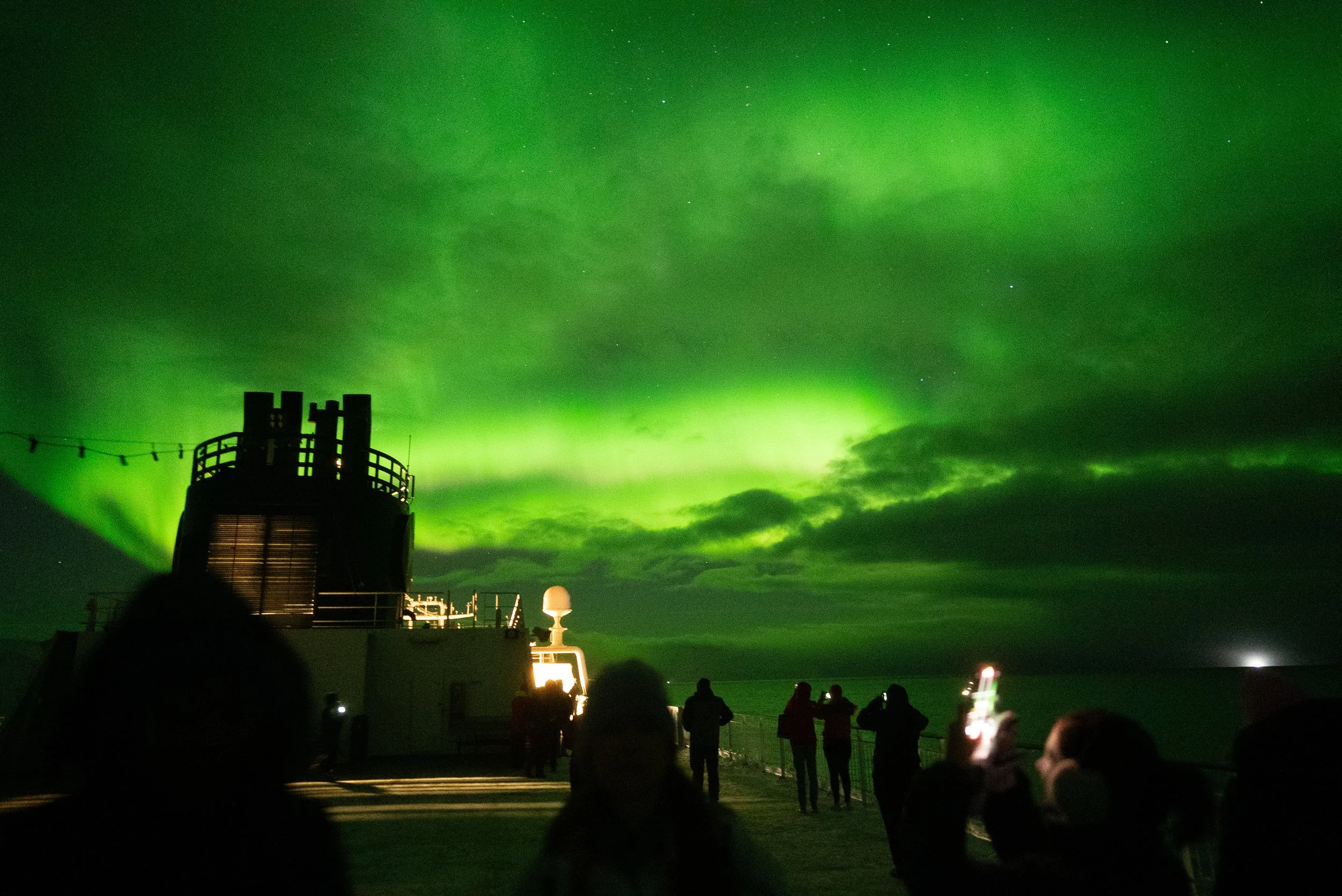
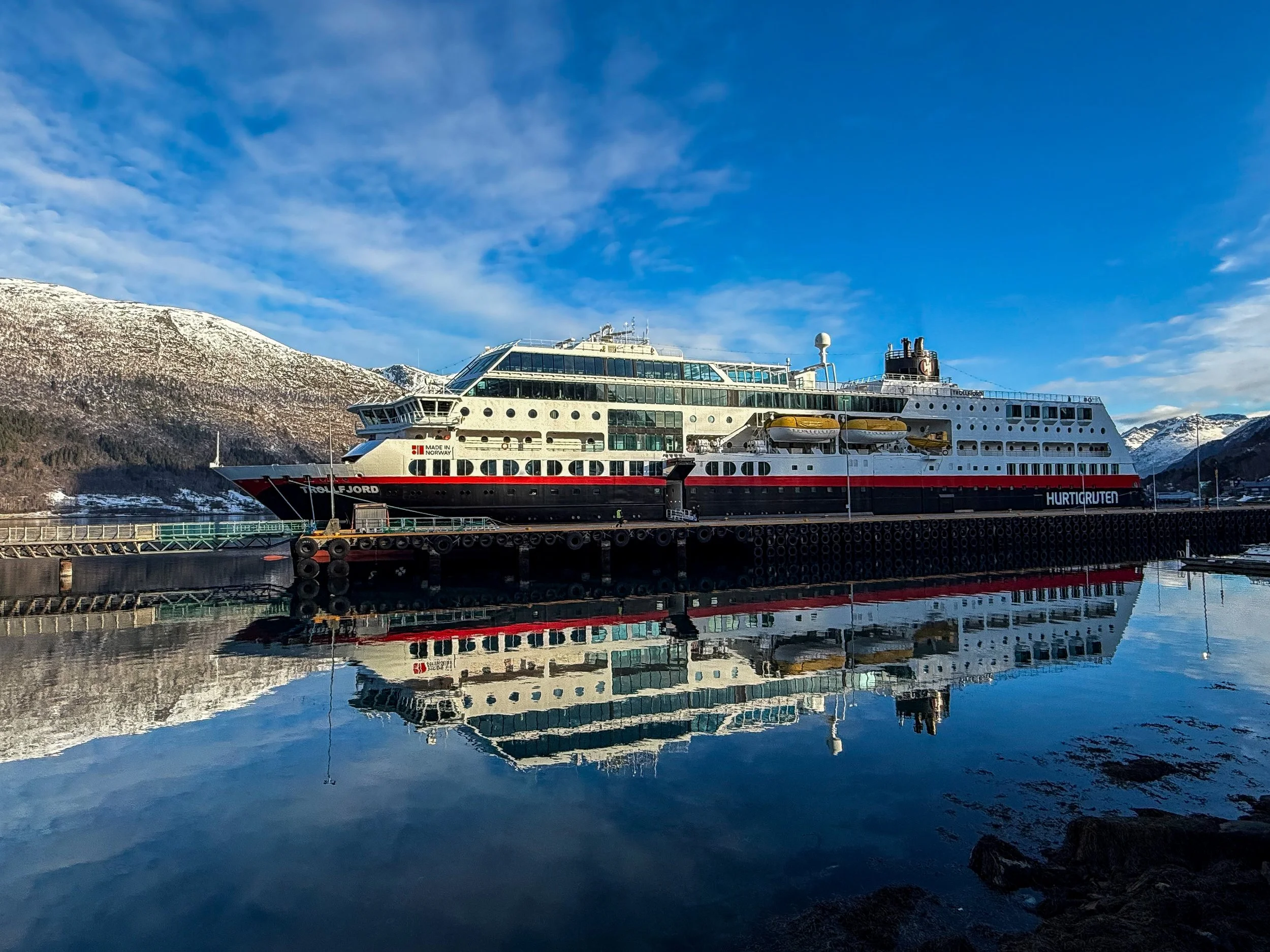
The deck lights are dimmed to red as the MS Trollfjord moves quietly through the Arctic night. Beyond the railings, the sea is black and nearly indistinguishable from the sky, and passengers stand in silence, watching. I am among them during the inaugural Hurtigruten Astronomy Voyage, sailing south from Troms along Norway’s northern coast aboard the North Cape Line. Over six winter nights, the ship travels through one of the world’s largest aurora hotspots: Troms, Finnmark, and Nordland, where long polar nights and clear Arctic skies create some of the best conditions on Earth for seeing the Northern Lights.
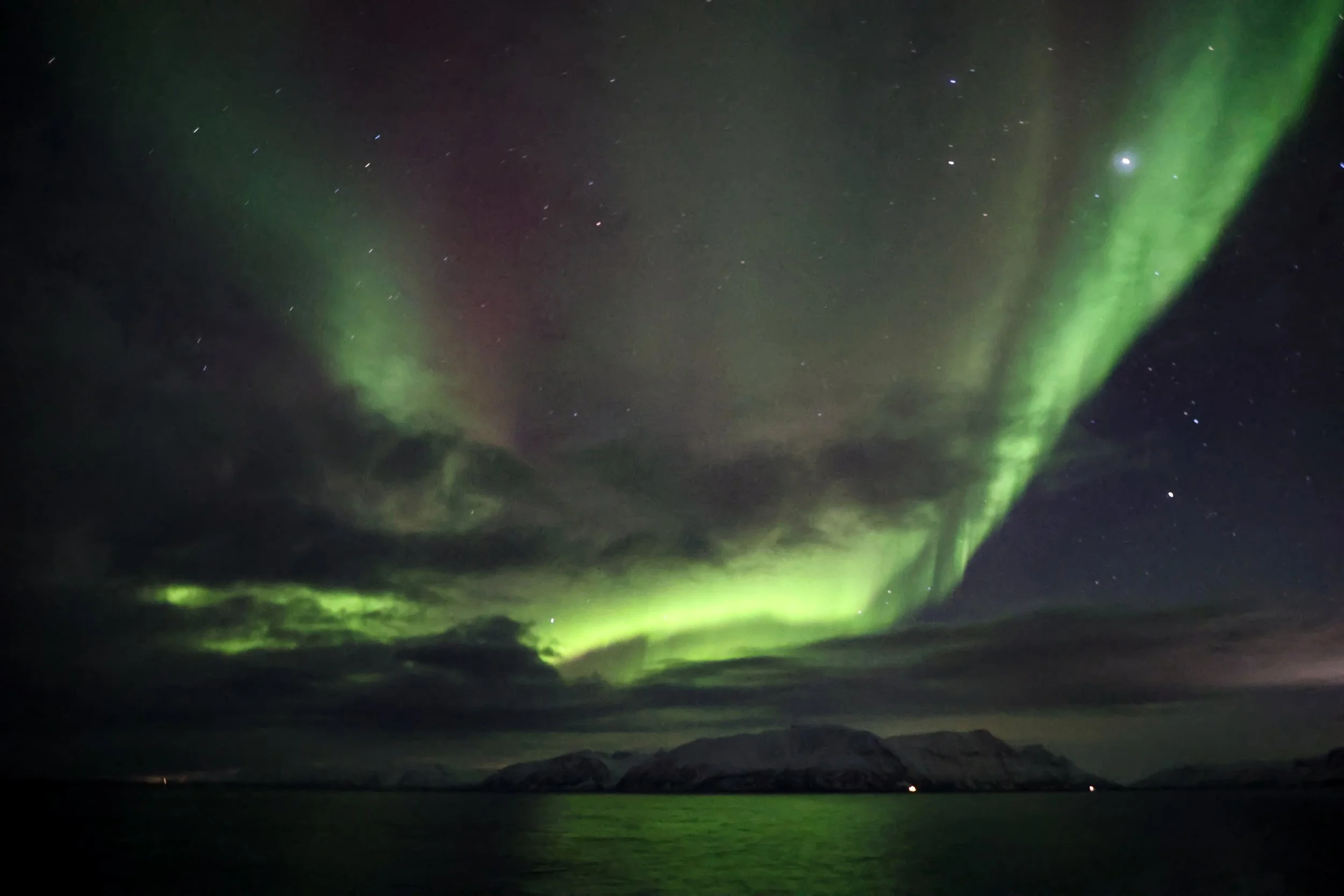
Above us, the first faint ribbon slowly appears. For centuries, the aurora has inspired mythology and speculation. Yet the phenomenon unfolding above the Norwegian coast begins far beyond the horizon, at the sun itself. “The aurora is the end of a chain of invisible processes,” explains astronomer Tom Kerss, Hurtigruten’s Chief Aurora Chaser, during a lecture earlier that afternoon. Charged particles carried by the solar wind collide with Earth’s magnetic field and are guided toward the poles. When those particles strike gases high in the atmosphere, they release energy in the form of light. From the deck of a ship moving through Arctic Norway, the science becomes something else entirely: a shifting curtain of green and pink rippling across the sky.
The Geography of the Lights
Northern Norway sits beneath the auroral oval, a ring-shaped zone around the magnetic poles where the lights appear most frequently. Long winter nights, minimal light pollution and open Arctic skies make the region one of the world’s most reliable places to witness the phenomenon.
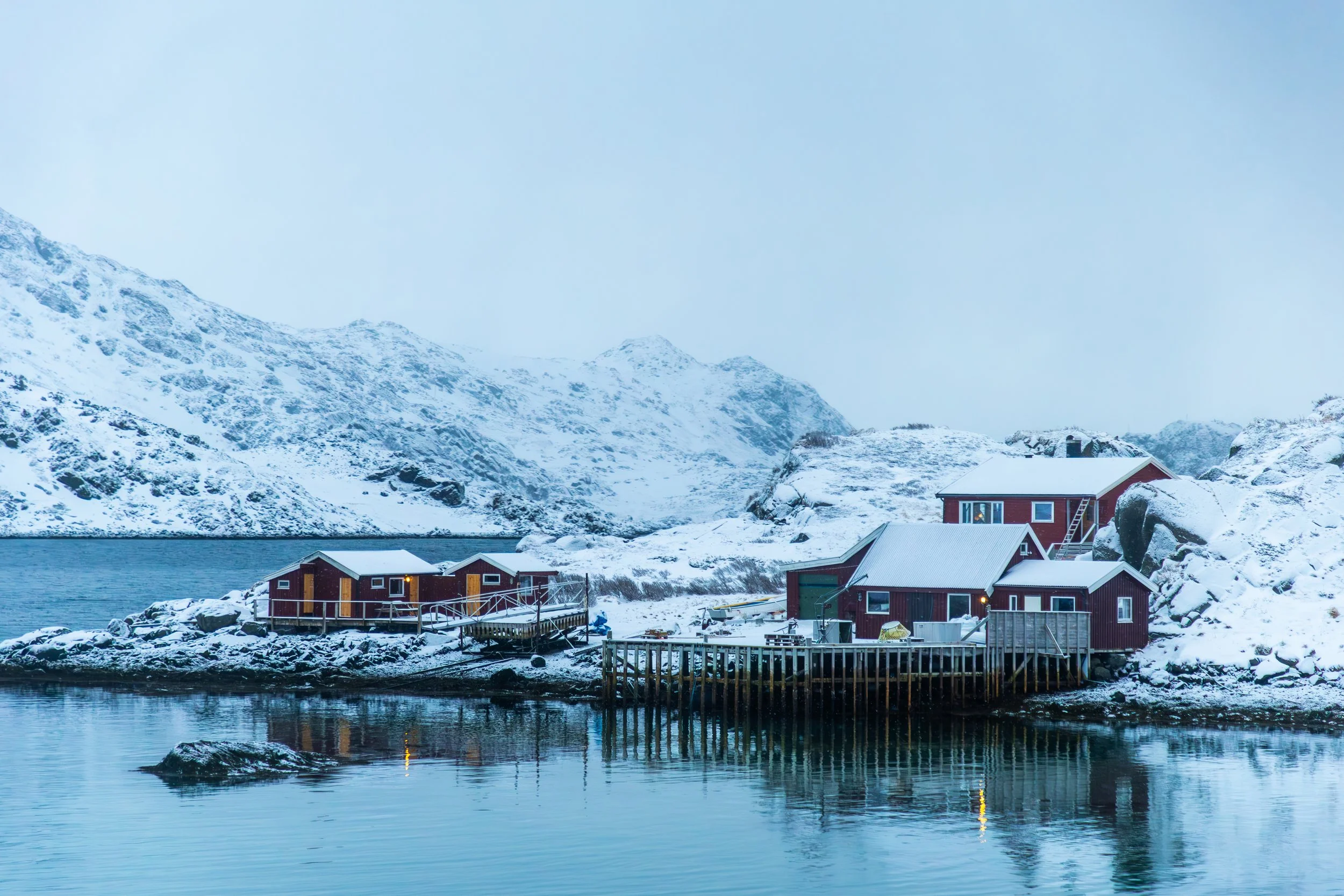
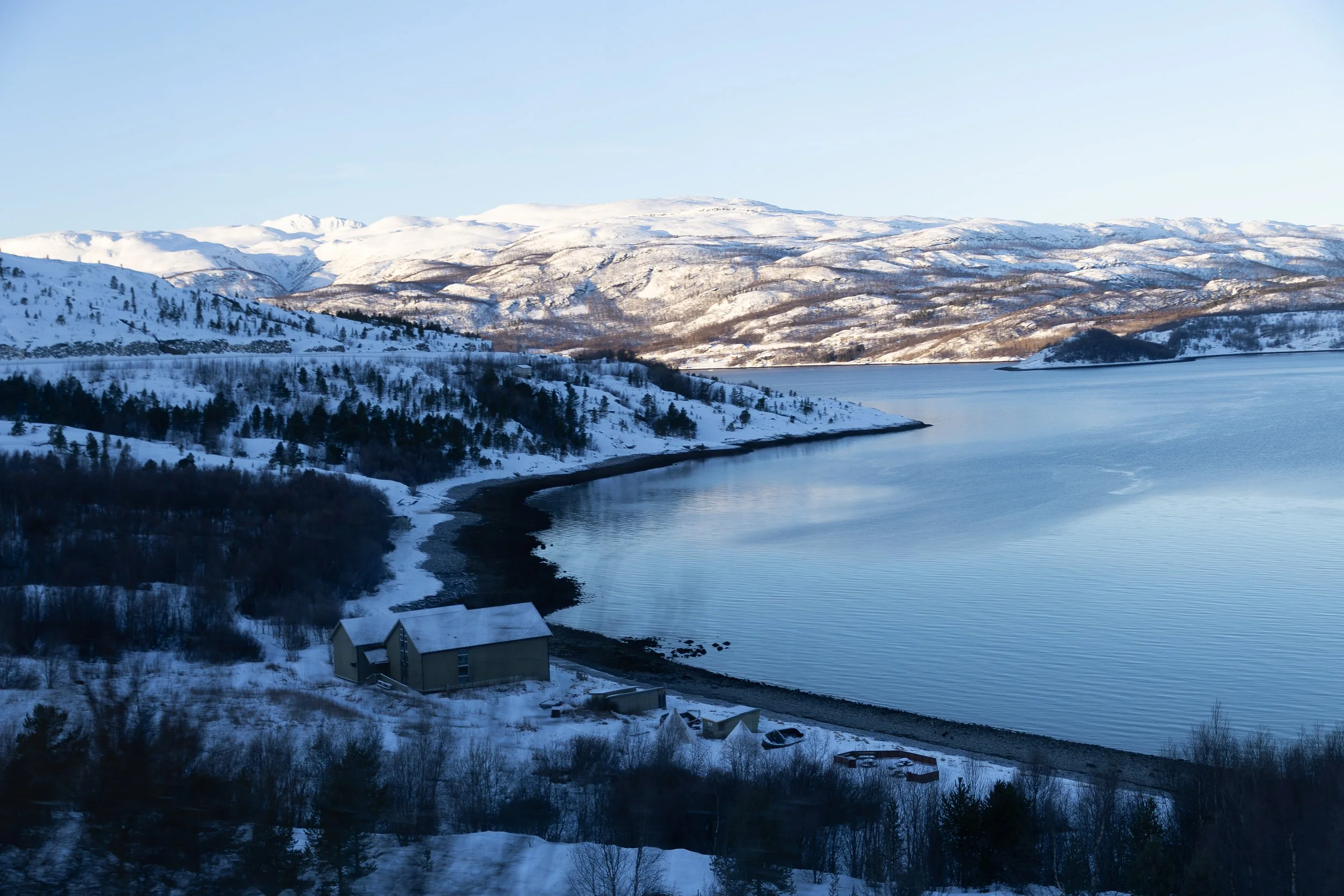
Traveling by sea also adds the advantage of mobility. Rather than waiting in a single location for the sky to clear, ships can move along hundreds of miles of coastline, navigating between weather systems and cloud cover. Along this stretch of Norway, the landscape unfolds gradually, with snow-covered mountains rising directly from the sea, small harbors tucked between fjords and villages that appear briefly along the shoreline before disappearing again behind headlands.
For Kerss, who has spent years studying and photographing auroras across the Arctic, Norway’s coast remains uniquely suited to observing the phenomenon. The lights themselves vary constantly, sometimes appearing as faint arcs barely visible against the stars and other times erupting into sweeping curtains of green stretching from horizon to horizon. On rare nights, red and violet hues ripple across the sky as oxygen and nitrogen react at different altitudes in Earth’s upper atmosphere. Even with the science explained, the moment when the sky begins to move feels almost surreal.
Life Along the Arctic Coast
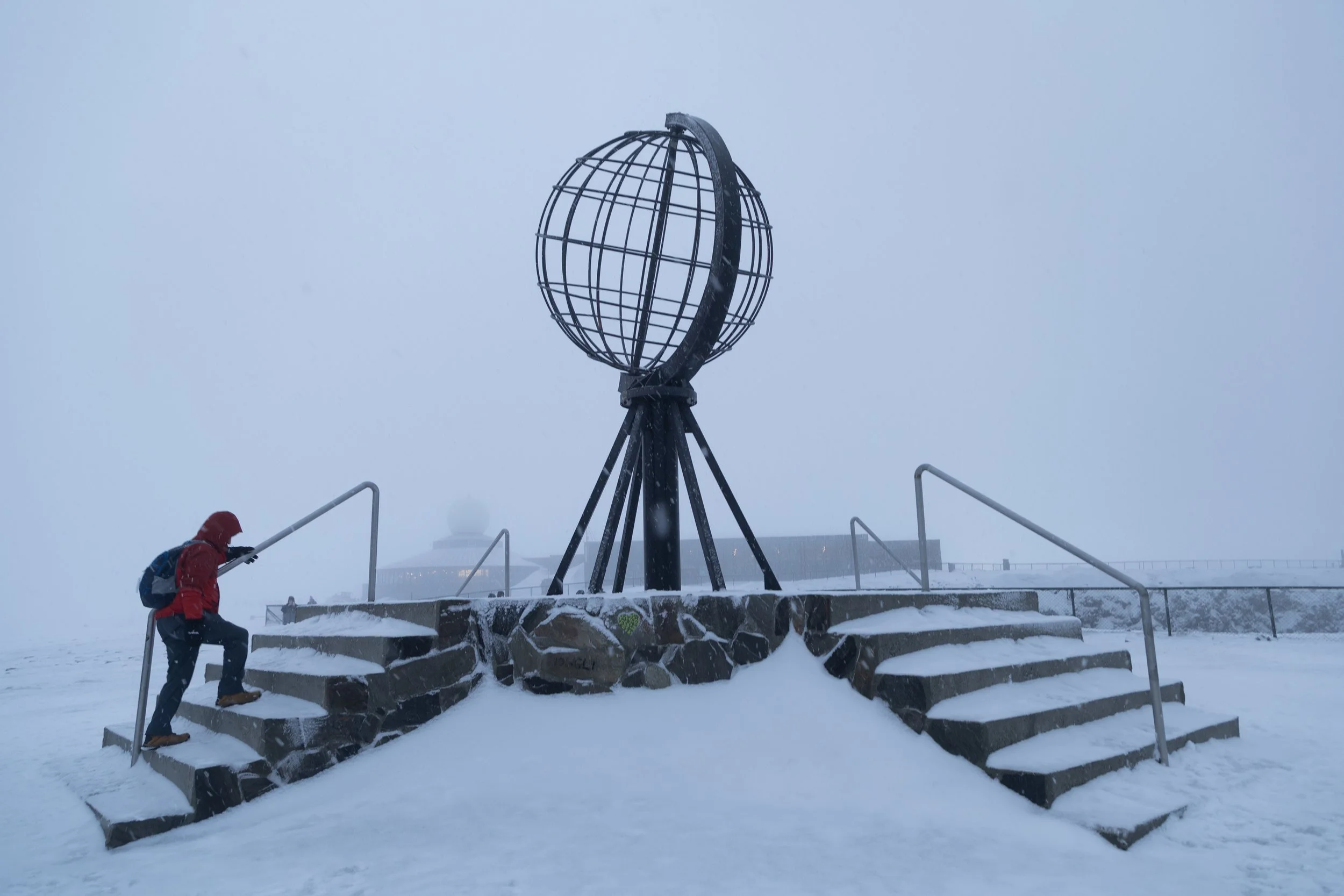
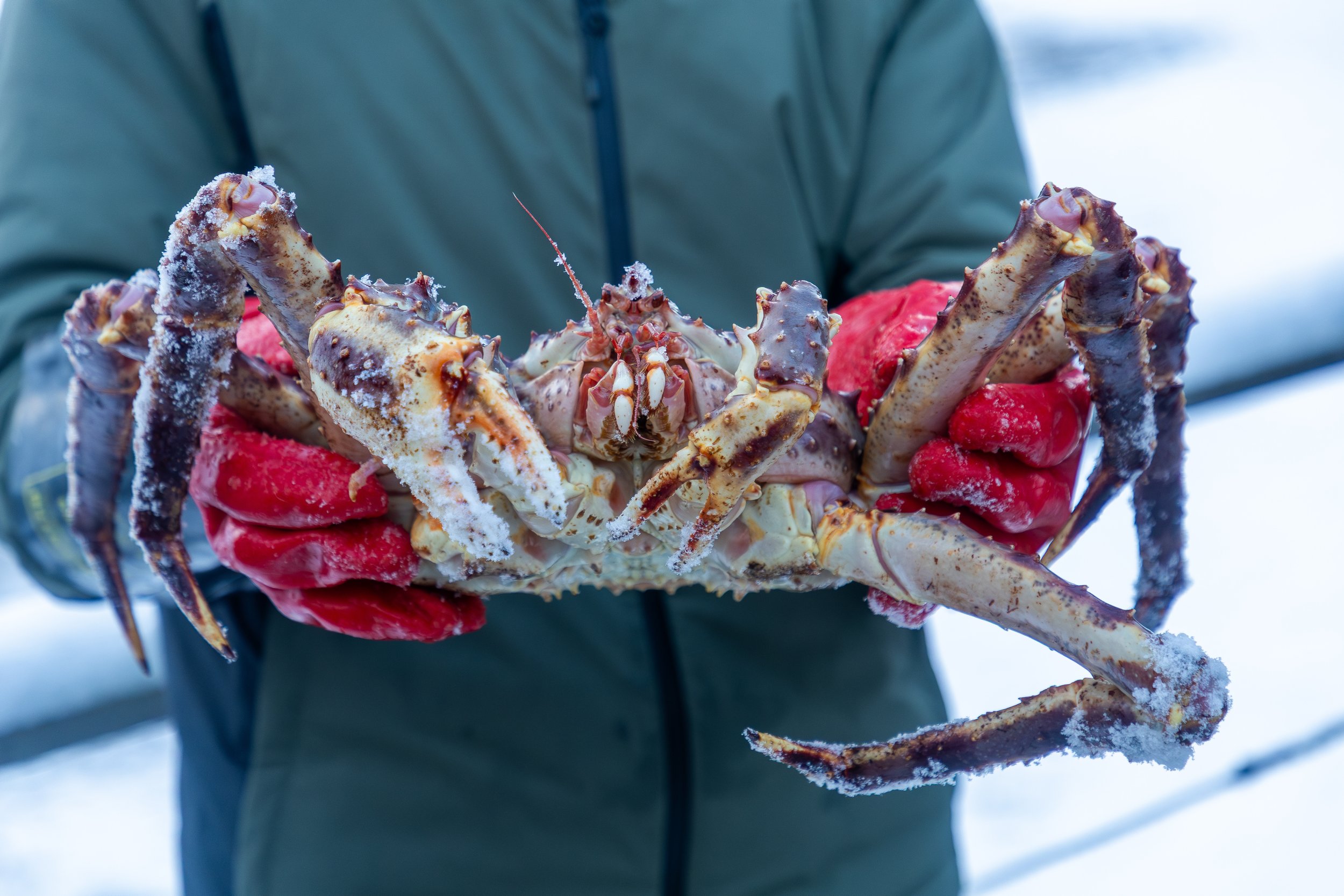
During the day, the voyage moves between small Arctic communities shaped by the sea. In Honningsvag, colorful wooden buildings cluster around a harbor where fishing boats remain central to the local economy. Offshore, the Barents Sea provides king crab, one of the region’s most recognizable delicacies. Originally introduced to these waters decades ago, the enormous crustaceans have become a defining part of northern Norway’s fishing culture. Visitors heading out onto the surrounding waters often end the excursion with a simple meal of fresh crab served with little more than bread and butter.
Further south, the landscape shifts again. Jagged mountain ranges rise sharply from the sea, their peaks dusted with snow even in early spring. The coastline twists through narrow fjords and open stretches of water, where the horizon seems to extend endlessly northward. Moving through these waters offers a sense of scale that is difficult to grasp from land alone.
Images by Sophia Michelen
Alta and the Study of the Aurora
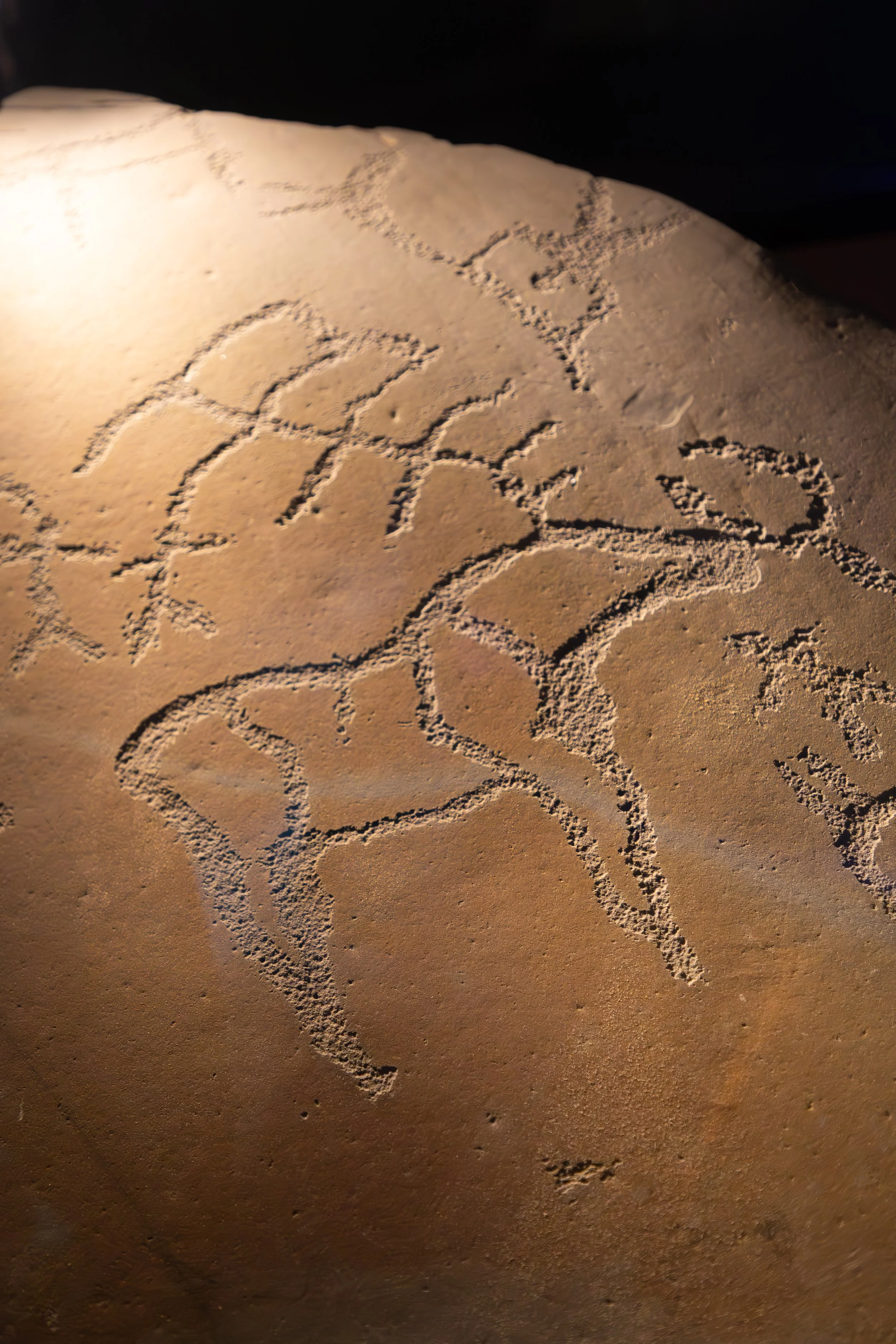
One of the most significant stops along the route is Alta, often referred to as the city of the Northern Lights. For more than a century, scientists have traveled here to study the aurora.
In the late 1800s, Norwegian physicist Kristian Birkeland conducted pioneering research that helped explain the connection between solar activity and the lights visible in Earth’s polar regions. His work laid the foundation for modern aurora science and helped transform what had long been considered a mysterious phenomenon into a subject of scientific investigation.
Today, Alta remains one of the best places in the world to see the aurora. Its inland location, wide skies and relatively dry climate create ideal viewing conditions during the long winter months. Yet even here, scientific explanation has never entirely replaced the sense of wonder that accompanies the lights.
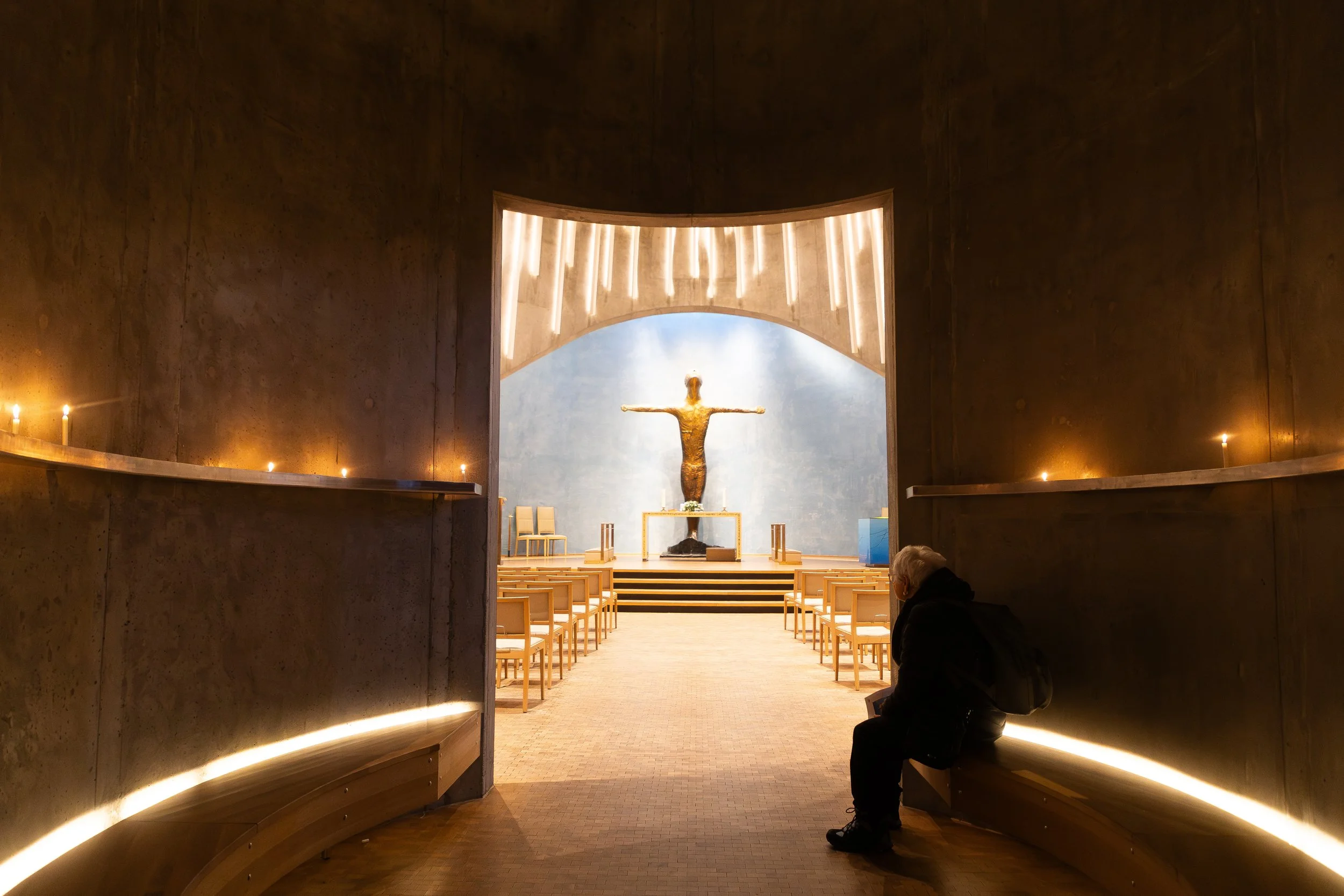
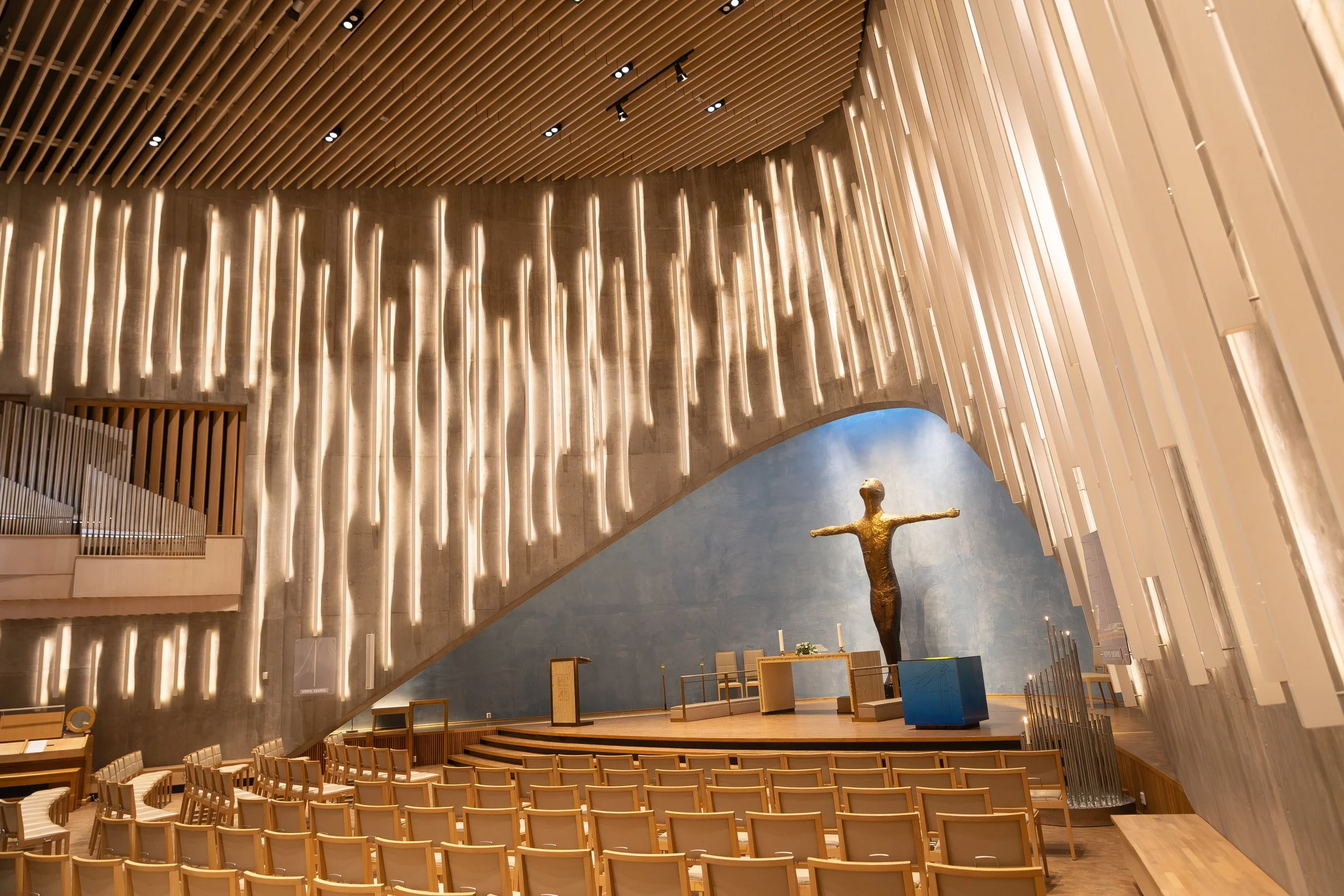
Indigenous Perspectives
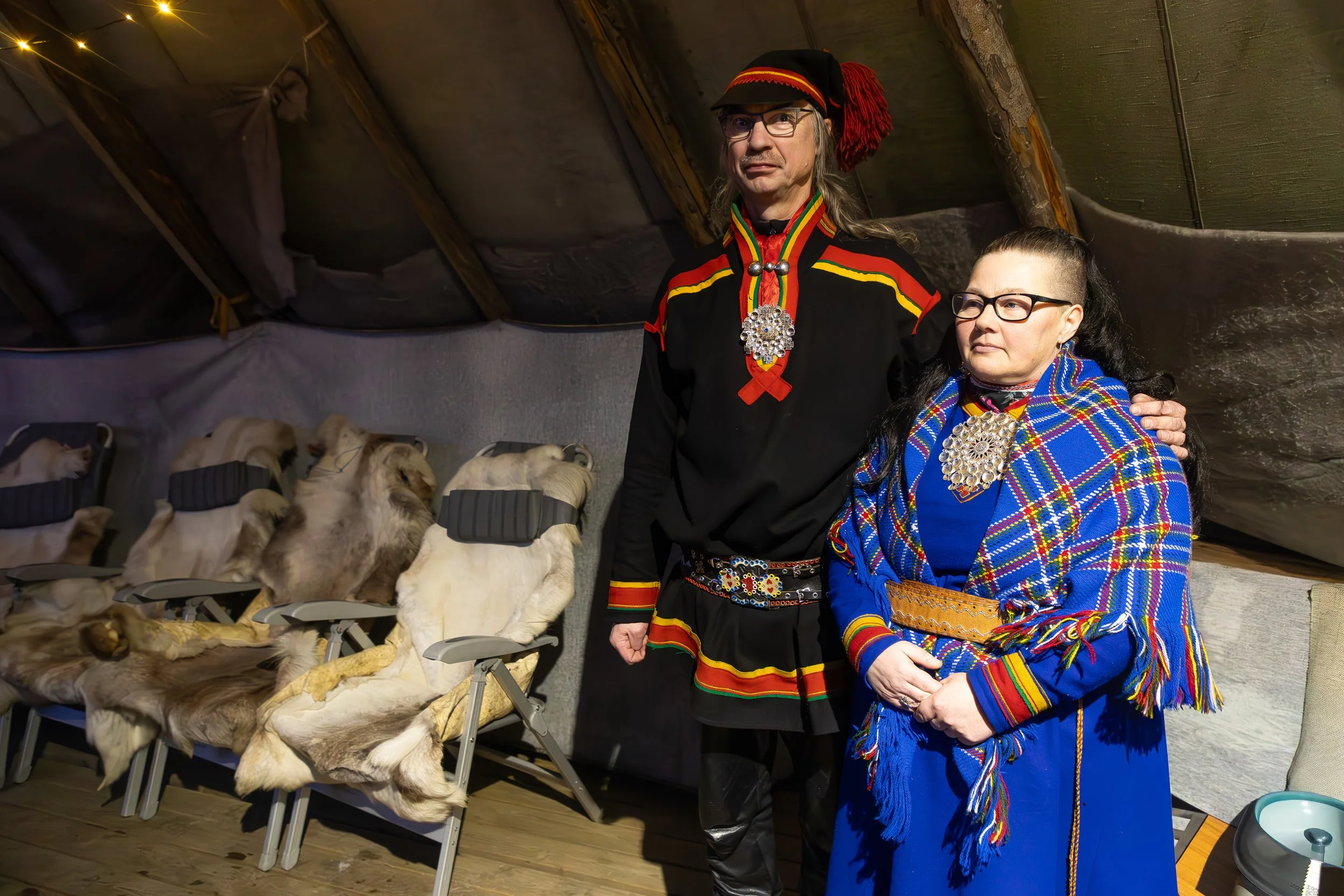
Long before scientists attempted to measure or photograph the aurora, the lights already held meaning for the Indigenous Sami people of northern Scandinavia. Their relationship with the Arctic landscape runs deep, shaped by centuries of reindeer herding, fishing and seasonal migration across tundra and forest. Their traditions reflect a worldview in which humans exist as part of a broader ecological system rather than separate from it.
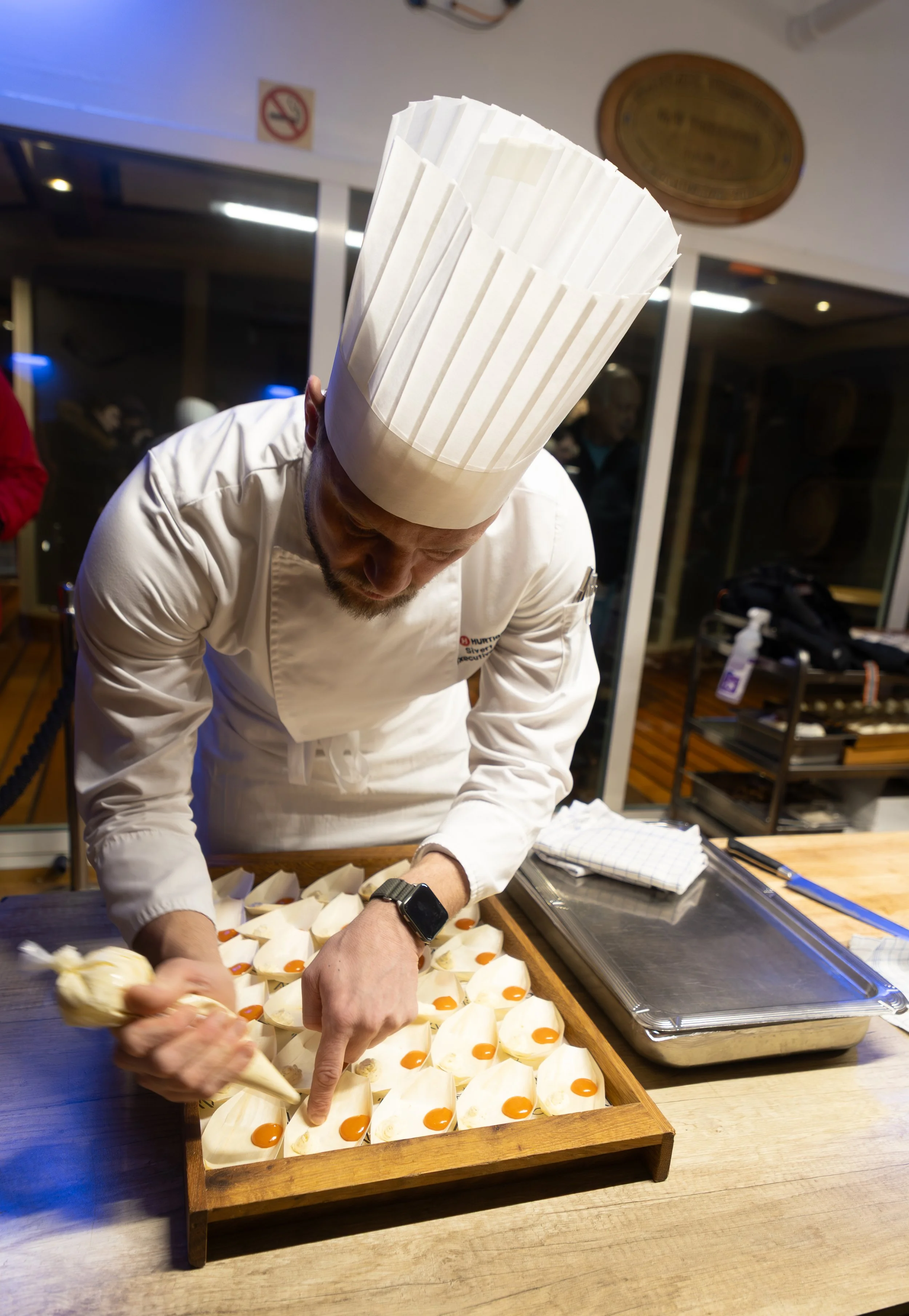
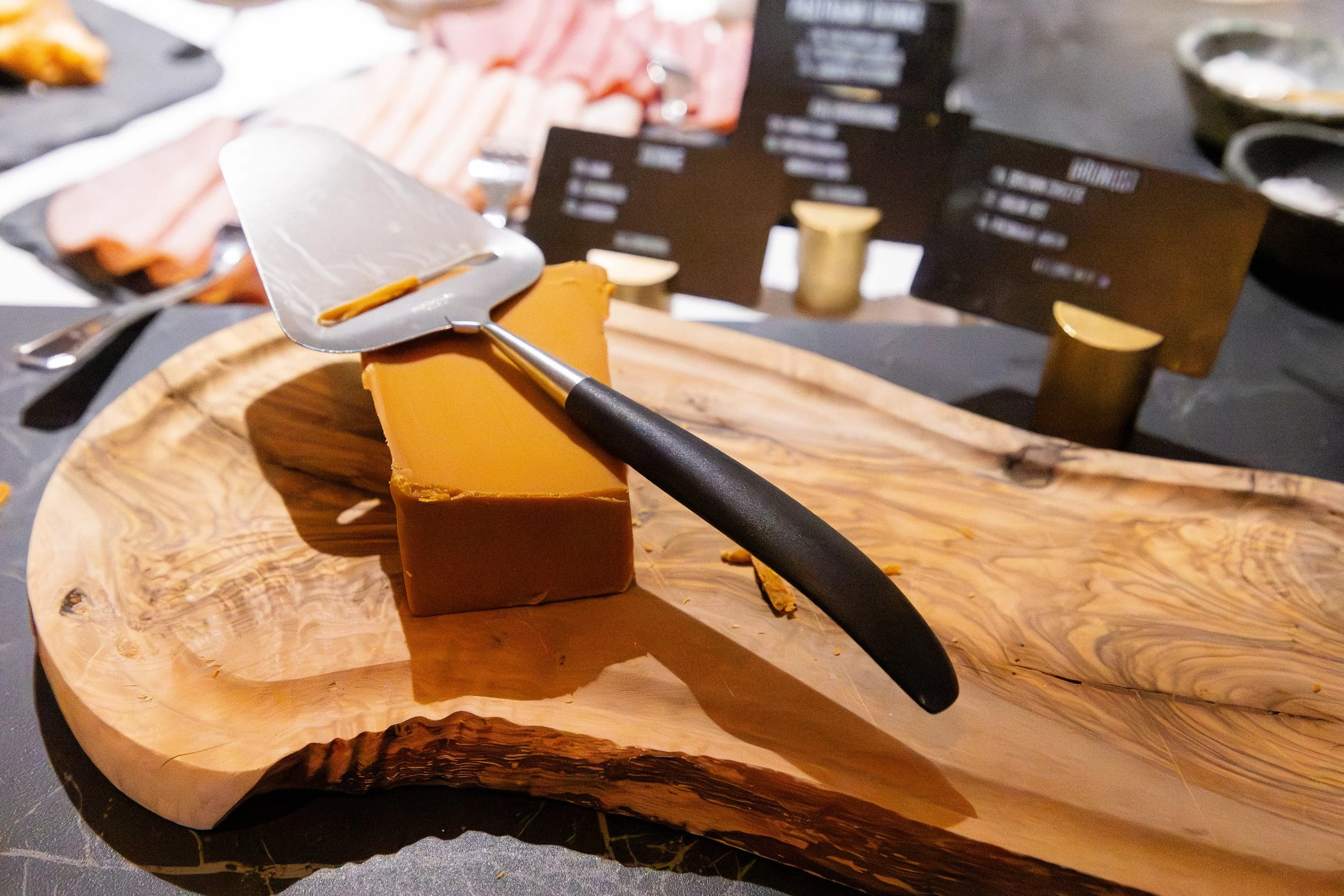
That connection is increasingly visible in the region’s culinary traditions. Sami food culture emphasizes careful use of local resources, from reindeer meat to wild berries and Arctic fish, and reflects a deep respect for the natural environment. On Hurtigruten voyages, Sami culinary ambassador Maret Ravdna Buljo introduces travelers to these traditions and the cultural values behind them, offering a glimpse into a way of life rooted in balance with the surrounding landscape. For many visitors, the experience provides a deeper understanding of how people have lived within this demanding environment for generations.
Images by Sophia Michelen
When the Sky Comes Alive
Late one evening, the ship slows as passengers gather again on the outer decks. The sky is clear, the stars unusually sharp in the cold Arctic air. At first, nothing happens. Then a pale band appears above the horizon. The light brightens gradually, stretching upward before folding into waves of luminous green. Within minutes, the entire sky seems to move. Curtains of color ripple and drift overhead, sometimes slow and graceful, other times flickering rapidly as if responding to an unseen current. The dark water below reflects faint streaks of color, doubling the spectacle.
Even with a scientific explanation in mind, the experience resists easy description. The aurora remains both predictable and mysterious, governed by solar physics yet endlessly varied in appearance. Standing on deck as the lights sweep overhead, it becomes clear to me why people have traveled north for centuries in search of this moment. Along Norway’s Arctic coast, the Northern Lights are more than a destination. They are a reminder that some of the most powerful natural phenomena unfold quietly, high above the horizon, waiting for those willing to look up.

Sophia Michelen
Sophia Michelen is a New York City–based photojournalist, travel writer and documentary producer whose work explores culture, environment and place through visual storytelling. She has reported from more than half of the world’s countries, with work appearing in publications including National Geographic Traveller India, Teen Vogue and Ms. Magazine. She is also a co-host of the PBS travel series America: The Land We Live In.
Berlin’s Punk Spirit: Interview With SO36
Take a look inside Berlin’s historic punk club and see what it takes to survive.
Read MoreA Day on the Amazon River
Kaitlin Murray
Explore the Indigenous villages, wildlife, and waterways along the Amazon River in Brazil as they adapt to tourism.
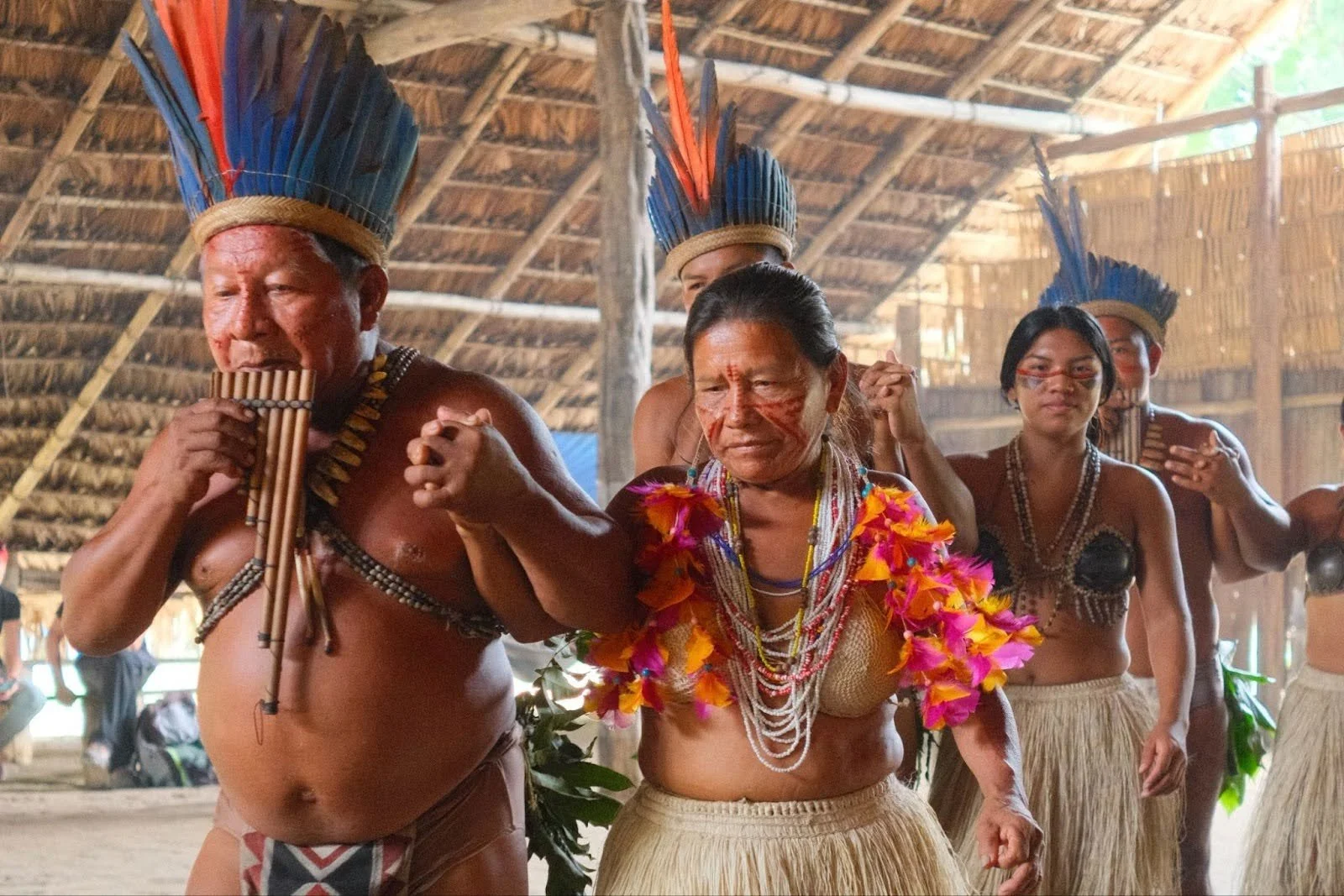
The Indigenous Desana people welcome visitors with a traditional dance. Kaitlin Murray.
Bouncing in a speed boat along the Rio Negro, the largest tributary of the Amazon River, I see the opaque dark waters extend in every direction. Leaving the busy port of Manaus, the capital city of the northwestern state of Amazonas, I look back at the skyline rising above the forest. Skyscrapers, freeways and shopping malls are the last things I expect to see in the middle of the Amazon rainforest. Before arriving in Brazil, most of what I had heard about the Amazon came from media coverage of illegal logging, deforestation or wildlife protection, not from stories about a bustling metropolis of more than two million people. Yet Manaus has existed for centuries, having been founded in the 17th century as a Portuguese fort and expanding rapidly during the rubber boom of the 19th century.
Despite its size, Manaus remains accessible only by air or river, with few roads connecting it, as the rainforest extends for long distances in every direction. Urban expansion in one of the most biodiverse regions on Earth carries far higher stakes, raising urgent concerns about deforestation, farmland expansion and river pollution from informal housing. While it may seem as though the city coexists with nature because of its location in the forest, the reality is quite the opposite. As our boat continues deeper into the trees along the river, I find myself contemplating this paradox: How can the traditional ways of life in the Amazon and urban expansion coexist, and what role is tourism playing in all of it?
As part of a river day tour, we participate in numerous activities that offer tourists a glimpse of the rainforest without trekking deep into the wilderness or traveling long distances. Our first stop is a visit with one of the river's most famous inhabitants, the pink river dolphin, commonly known as the boto. Listed as endangered, these dolphins are currently facing threats from river pollution and habitat destruction. I notice this reality as soon as we leave the main port, witnessing the extent of container ships, factories and speedboats on the water.
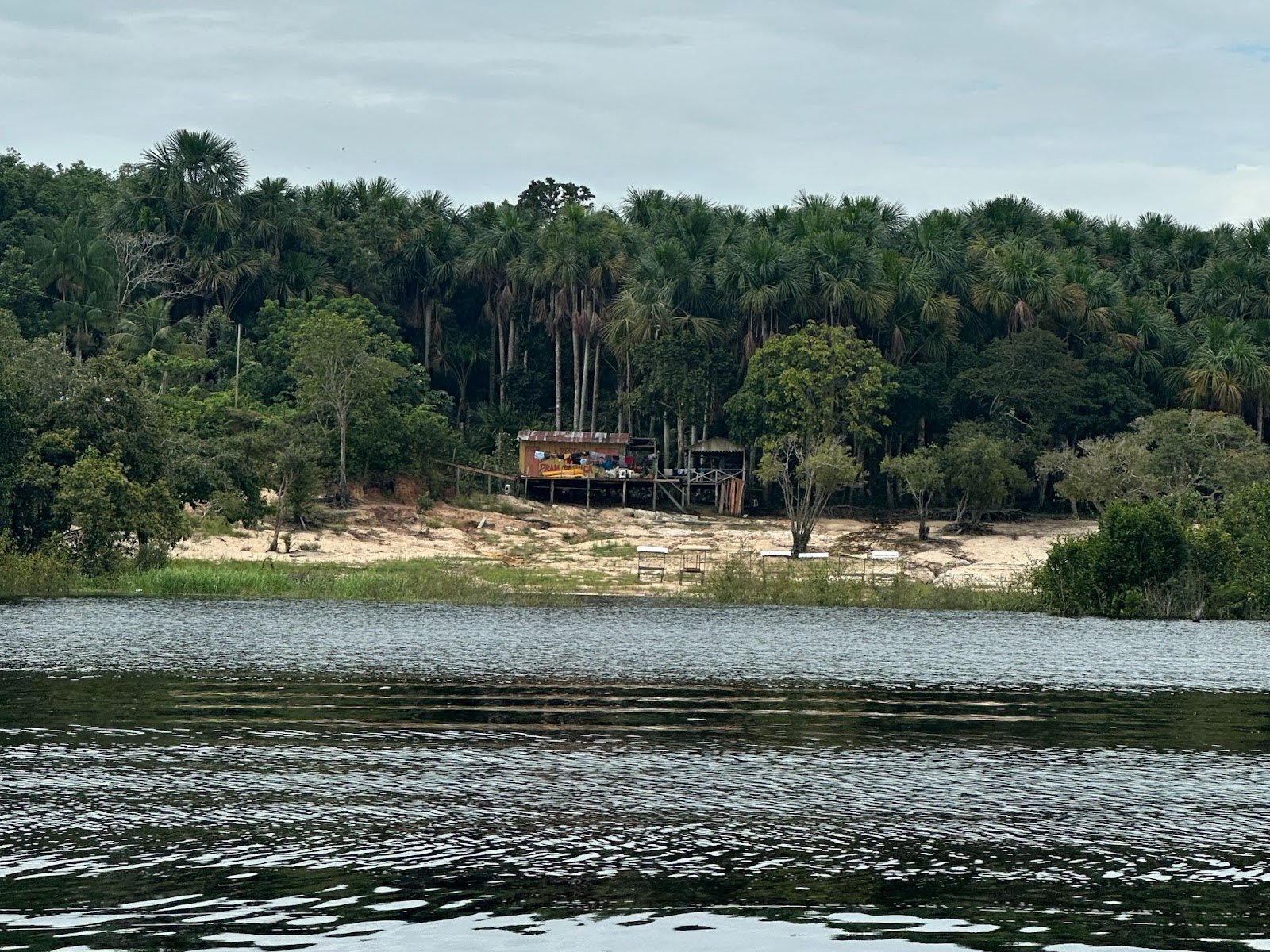
Stilt houses along the Rio Negro. Kaitlin Murray.
In the dark waters of the Rio Negro, their pink bodies appear almost orange-tinted as they rise to the surface to take fish offered by local fishermen. While these dolphins are considered wild and free to come and go from the shore, they have grown accustomed to being fed by the fishermen, who encourage visitors to jump into the water and swim alongside them. Floating in the dark waters, I feel a sense of awe, finding myself in the same river as numerous animals, including snakes, piranhas, pirarucus, manatees and otters. Looking into their eyes, I remember the Indigenous stories that our guide had recounted earlier: The dolphin is believed to transform into a man at night, walking into villages and seducing young women before returning to the river by dawn. It is also said that looking into their eyes will bring you nightmares for the rest of your life. These stories remain prevalent even amid growth and urbanization, as Indigenous communities continue to share them with younger generations and foreigners.
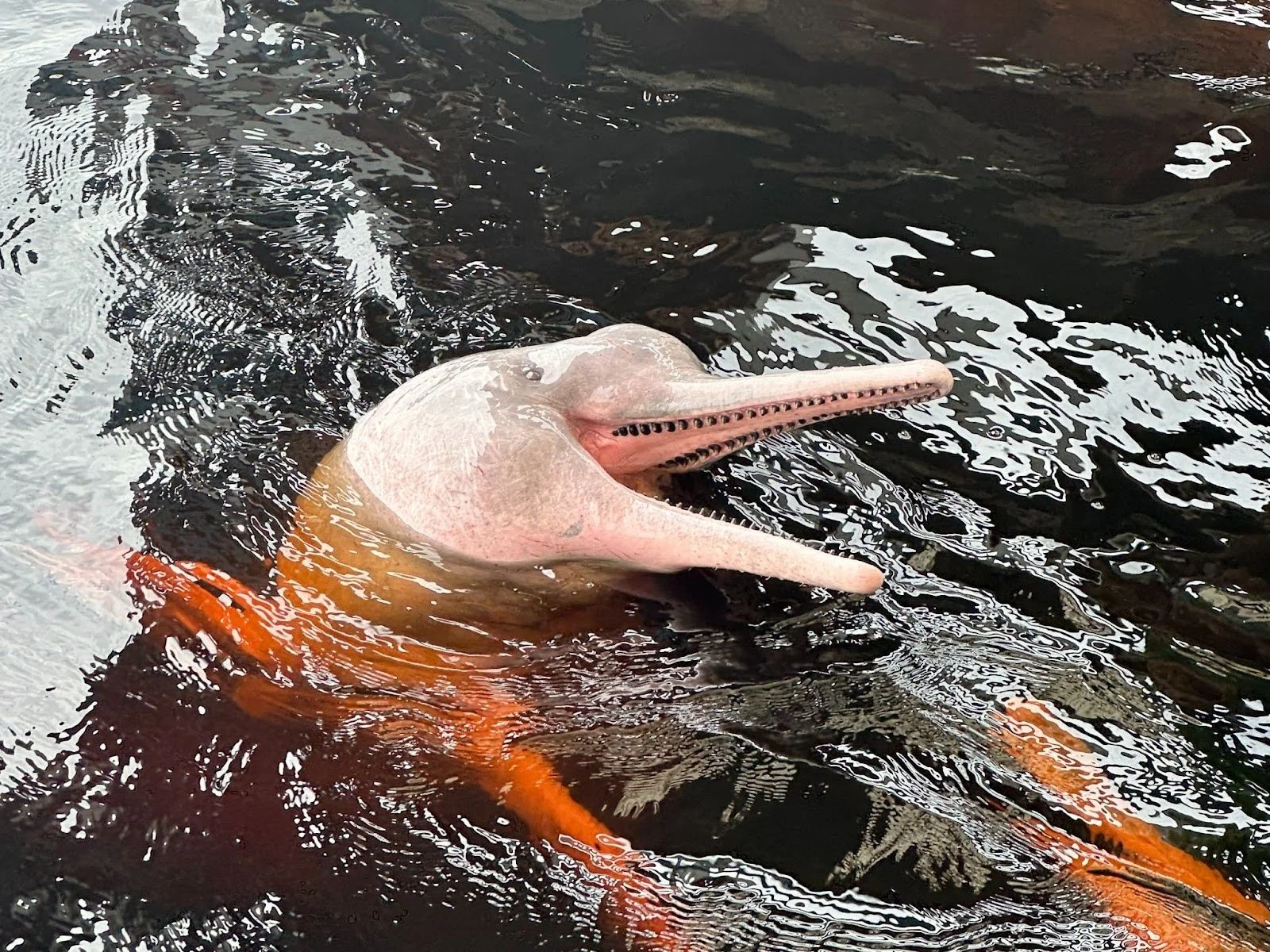
Pink dolphins in the Rio Negro. Kaitlin Murray.
Further along the river, the boat docks at an Indigenous village that now incorporates tourism into its economic model. Visitors are welcomed with performances and cultural demonstrations, and, in return, they are asked to purchase a handicraft or make a donation. As soon as we enter, the welcome performance takes place, held in a large wooden structure marking the communal space and the village boundary. Beneath it, men and women perform ritual dances in circles, accompanied by handmade musical instruments. Following the performance, the chief, in an elaborate feather headdress customary of the Desana people, shares stories about their cosmology and social structure. Afterward, we are taken to the kitchen, where we learn about local fruits and forest foods, such as Brazil nuts, tapioca, cassava, avocados and maniuara ants.
Speaking with the tribe's chief through our guide's translation, I learn that the community came from northern Brazil, nearly 600 miles away, and settled here for the city's economic prospects. Today, they benefit from tourism-related opportunities while maintaining their way of life, living in a traditional village hidden by trees to keep visitors out, yet still enjoying modern amenities, such as Wi-Fi, mobile phones and payment terminals. However, some families in the tribe have already moved elsewhere, unhappy with how tourism is exploiting their culture for profit.
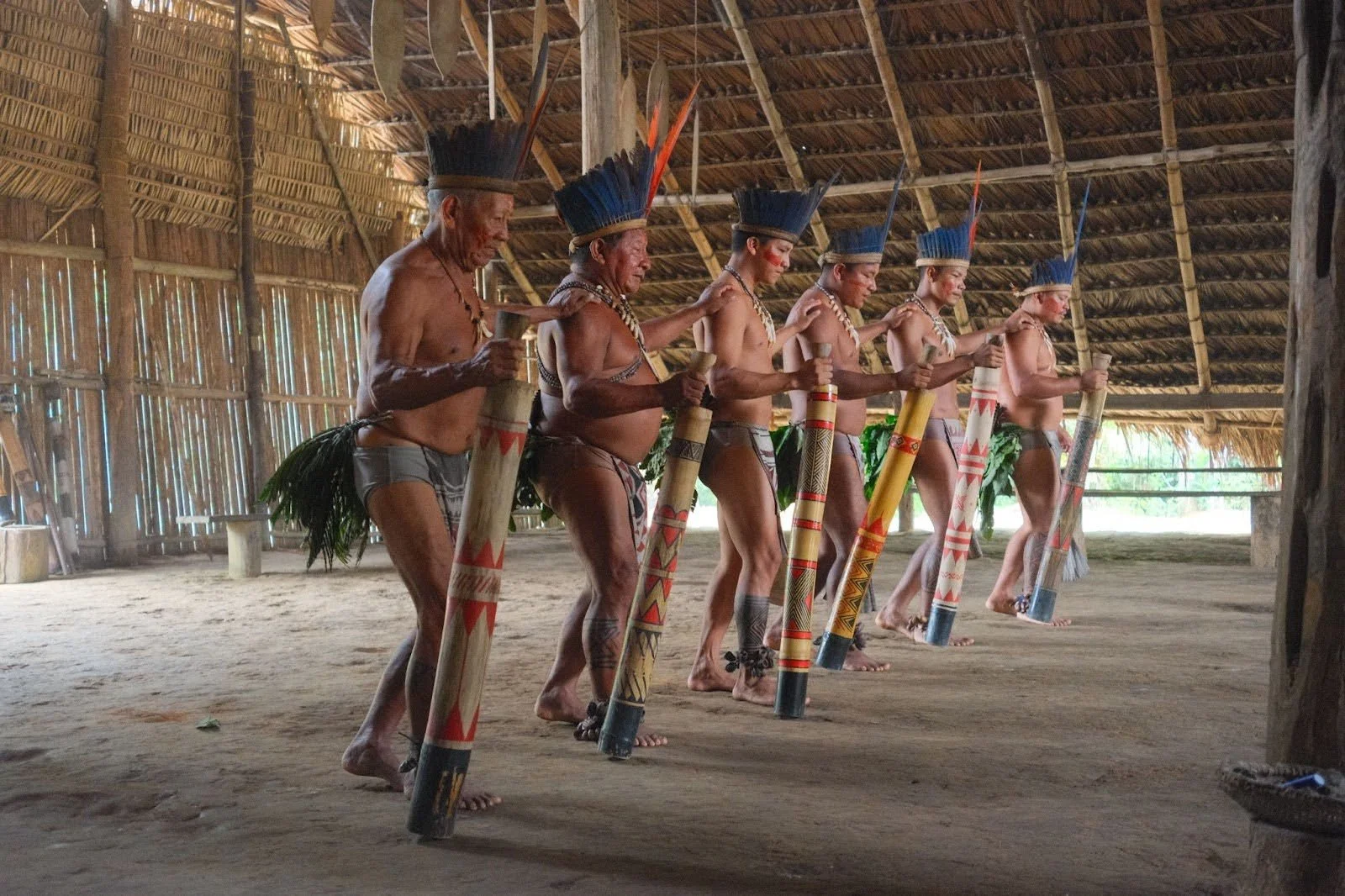
The Desana tribe welcomes visitors with a traditional dance. Kaitlin Murray.
Witnessing the adaptation of Indigenous communities to the world of cultural tourism is a double-edged sword. As an anthropology student, I have learned about the current dilemmas facing Indigenous communities around the globe, who struggle against being exoticized or profited from by international tourism companies. On the other hand, economic opportunities such as this can benefit communities in the long run, provided they generate sufficient revenue relative to the profits of tourism companies.
A short distance away, another floating barge on the water is the breeding ground of the pirarucu fish, which fishermen are raising to make money through river aquaculture. These are among the world’s largest freshwater fish, weighing up to 440 pounds and growing up to 10 feet. From the edge of the platform, their massive bodies glisten in the sun, the light reflecting off their red and green scales. The fish surface when fishing poles are dropped, as the local fishermen make a living off tourists playing a game of tug-of-war with them. It is fascinating to see how the fishermen's ingenuity has enabled them to earn extra income, living and working along the river in small villages with limited access to other opportunities.
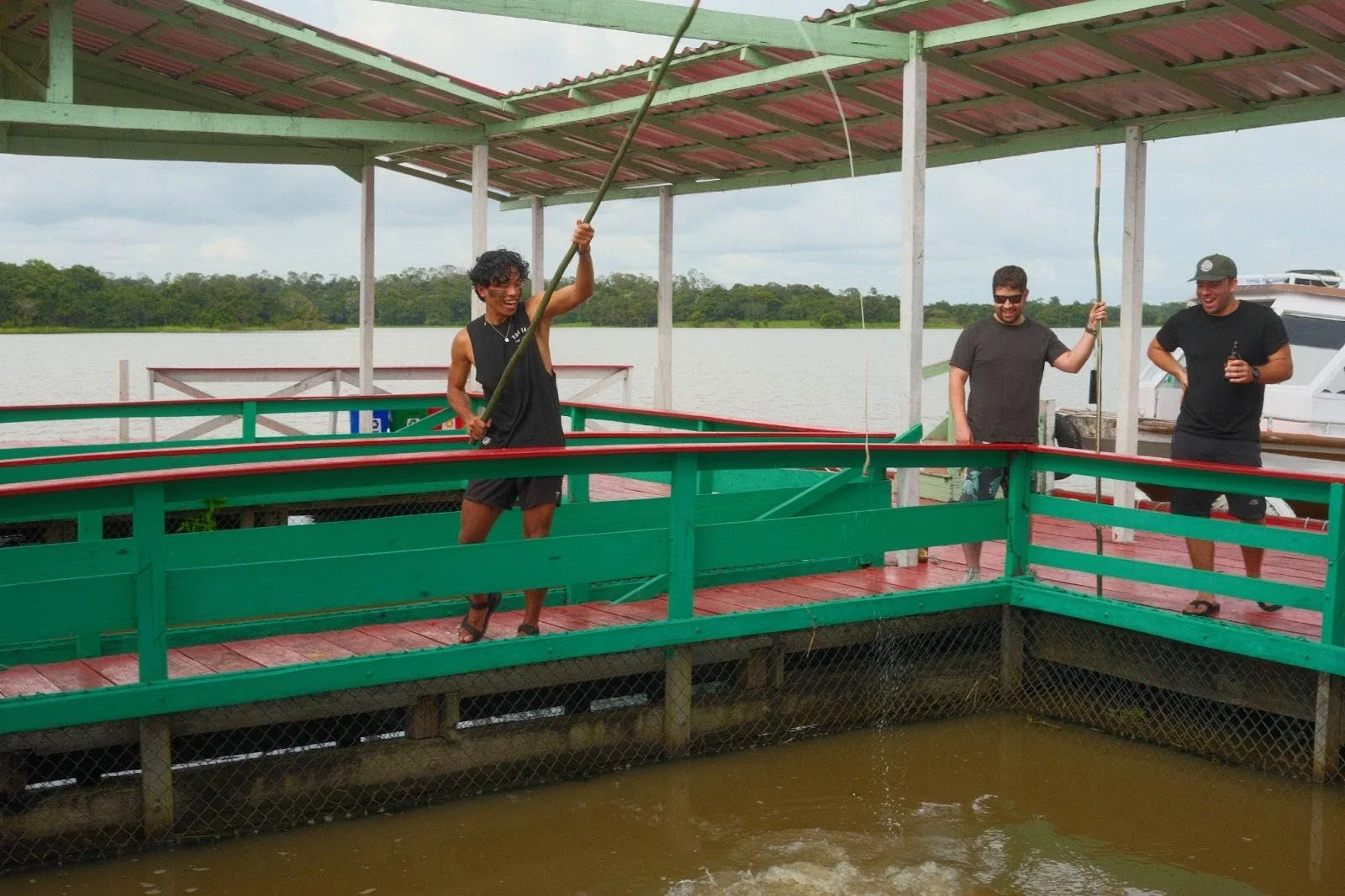
Fishing for pirarucu fish on the Rio Negro. Kaitlin Murray.
The final stop is one of the region’s most striking natural phenomena: the Meeting of the Waters. This is where the Rio Negro and the Solimoes River converge to begin the Amazon River. As the boat approaches, the contrast of the two rivers becomes immediately clear. The Rio Negro’s dark, tea-colored water hits the Solimoes’ light brown, milky water, creating what looks like milk pouring over black coffee. From above, the boundary of the two rivers is almost clear, as they don’t immediately mix due to differences in temperature, density and current.
Throughout my time in Manaus, I witness the ingenuity and changes that local people are creating in response to tourism and expansion, as they seek to balance the city with the natural world. Fishermen are supplementing their income by capitalizing on visitors’ encounters with the fish they raise. Indigenous communities are incorporating tourism without fully abandoning their way of life. Visitors can see pink dolphins while still allowing them to be wild.
Whether these shifts will ultimately protect the natural world and improve people’s livelihoods at no expense to another remains uncertain. As of now, it all appears to be balancing on a very fine line, with the potential to go either way. How will development and tourism threaten the rainforest and river ecosystems? Can the two co-exist together? At a time when an expanding metropolis sits in the heart of the most biodiverse place on Earth, the future of the city, the surrounding forest and the traditional ways of life may depend on whether urban development, tourism and Indigenous cultures can work together for the common good.
GETTING THERE:
Located deep within the Amazon rainforest in the northwest of Brazil, Manaus feels entirely cut off from the rest of the country. There are few roads leading out of the city, and distances between towns are vast. There are no trains or overland transport for visitors, as most local people use the river to get around. For travelers, the easiest way to reach Manaus is by flying into Eduardo Gomes International Airport, which connects the city to major hubs, such as Rio de Janeiro and Sao Paolo, as well as destinations across South and North America.
For those seeking a more local, budget-friendly adventure, river travel is an alternative. Ferry boats connect Manaus to other villages along the Amazon River, but the journey can take days. While it is an incredible way to experience the river, it is not recommended for first-time visitors or travelers seeking a comfort-oriented experience.
I journeyed with I’m Here Travels, a group tour company based in the Philippines that creates immersive, community-driven global experiences. They focus on crafting curated itineraries and authentic local experiences in more than 10 countries. In partnership with Compass Brazil, they designed a unique itinerary for us in Manaus to experience the best of the Amazon River and rainforest. Compass Brazil is a leading tour operator active across Brazil, helping travelers explore the country and make a positive impact on their destinations. They prioritize sustainable travel, ensuring that every experience is rooted in ethical principles and adheres to responsible travel guidelines.
Kaitlin Murray
Kaitlin Siena Murray is a travel journalist and global storyteller documenting cultures, historical places, and the people and social impact movements helping the world. Raised worldschooling across more than 129 countries with degrees in anthropology and history, her writing is driven by a commitment to global citizenship, capturing the diversity and beauty of the world through the lens of culture, history, and social change.
Denmark’s Mons Klint: The Landscape That “Looks After Itself”
Salome Liptak
Only a short trip from Copenhagen, this UNESCO World Heritage Site offers an unparalleled glimpse into the 70-million-year-long saga of a unique ecosystem.
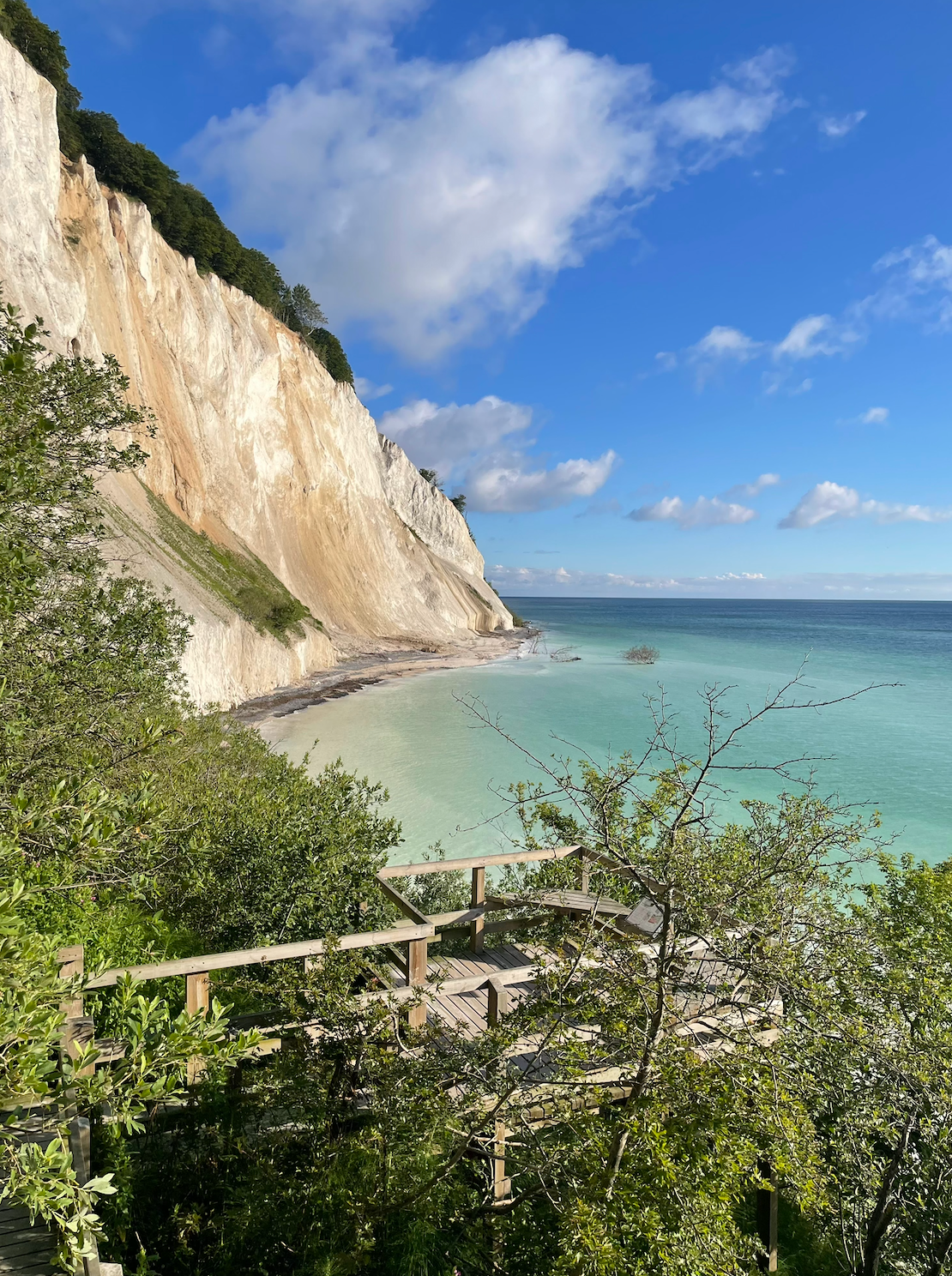
Chalk cliffs and the Baltic Sea. Salome Liptak.
On the eastern coast of Mon, a small island in Denmark, almost 4 miles of undulating chalk cliffs are a striking physical record of geological time. The cliffs, made up of 70-million-year-old seabed that was banked and compacted from the pressure of Ice Age glaciers, haven’t stopped changing since. Their soft chemical structure makes the cliffs “friable,” or easily eroded, which constantly exposes new layers of fossils. Because of this, the lapping waves of the Baltic have continued to sculpt the cliff face, and in turn, the cliffs’ minerals enrich the water close to the shore, giving it a distinct milky-turquoise color.
Alongside its historic cliffs, Mons Klint harbors a unique ecosystem. The area is the country’s sole habitat for the large blue butterfly, whose unique life cycle requires a specific diet of wild thyme and marjoram in the larval stage before it is found by a red stinging ant and carried back to its nest; after spending four seasons in the anthill, the butterfly finally pupates in July. The lime-rich soil of Mons Klint’s beech forests also makes it the perfect habitat for 18 out of 45 Danish species of orchid, many of which are particularly rare to find elsewhere in Denmark. Further, as an important roost for migratory birds, Mons Klint and its surrounding forests offer a rare glimpse into the rhythms of the more-than-human environment. In the words of The Danish Nature Agency, this is a forest that constantly adapts and “looks after itself.”
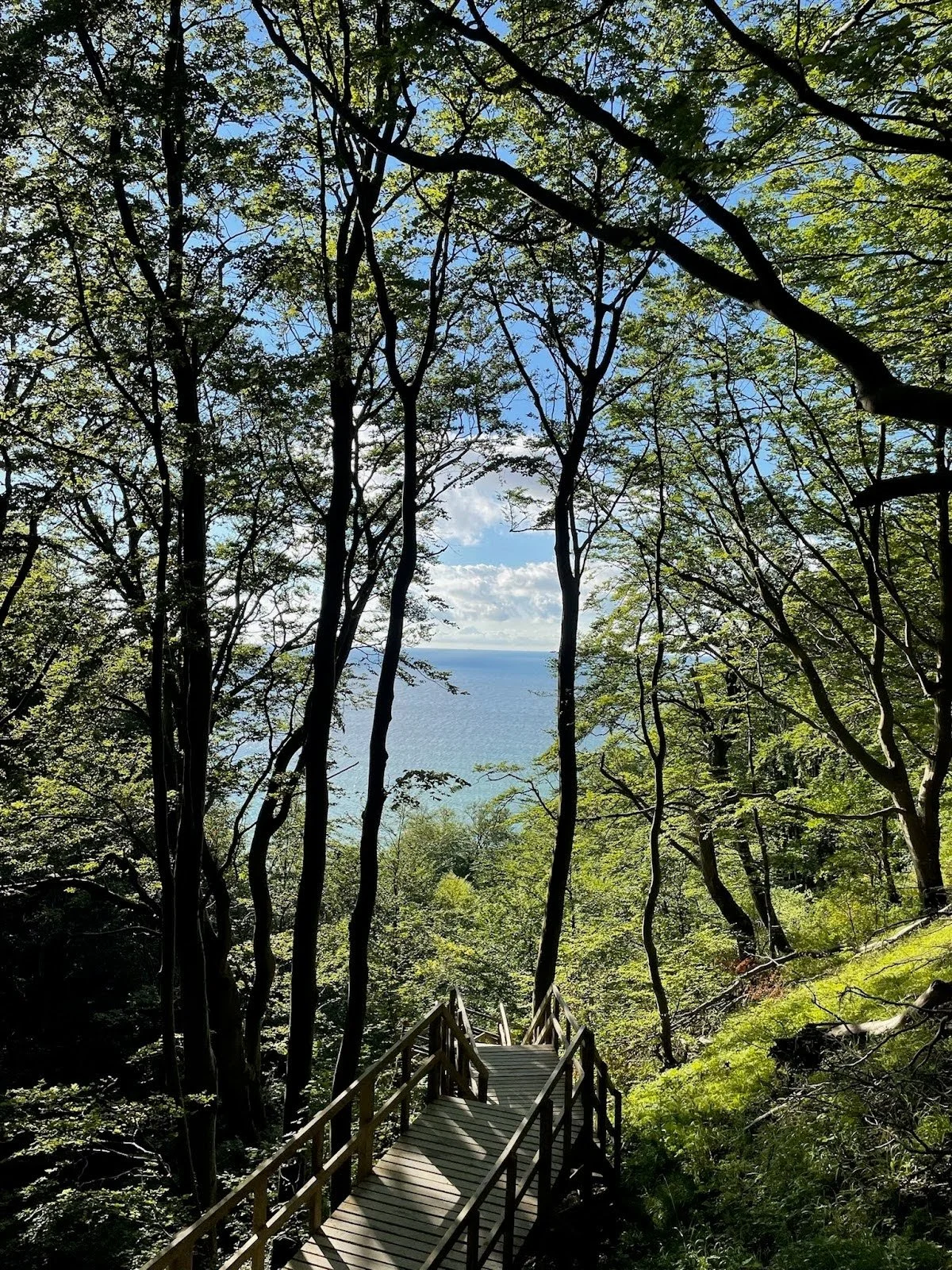
Stairs to the beach through the beech forest. Salome Liptak.
I first learned about Mons Klint when I was researching opportunities to get outdoors while interrailing in Europe. As trains mostly connect larger urban hubs, it can be hard to plan outdoor trips without renting a car. Thankfully, Mons Klint, as a popular destination for Danes, is accessible by public transport
Having since been added to the UNESCO World Heritage List in 2025, the site has also become a part of the island’s UNESCO biosphere reserve as well as Scandinavia’s first-ever Dark Sky Park. I was most excited to experience Mon’s extremely low light pollution levels, which make the Milky Way, Andromeda Galaxy, as well as comets and meteors visible to the naked eye at different times of year.

Milky Way. Salome Liptak.
Beyond stargazing, other outdoor activities, like hiking, fossil hunting, horseback riding, surfing and paddleboarding, are big draws for tourists. Guides for these activities in the park can be found on the Mons Klint GeoCenter website. It is most common to camp or stay in cabins and bed-and-breakfasts along the coast, with more budget-friendly options further inland. For international visitors travelling from Copenhagen, the nearby town of Borre is only two hours away by car or private bus and three to four hours on public transport routes, which can be mapped out online using Rejseplanen’s journey planner. If using public transport, the most direct route involves taking a Danske Statsbaner train to Vordingborg, then a bus to Mon’s biggest city, Stege. Here, a free bus will take tourists directly to the entrance of the 497 steps that lead to the base of the cliffs. It is also common to rent bikes from shops in Borre and Klintholm to ride into the park, as the wide, scenic roads along the coast and through Mon’s farmland make the ride an activity in its own right.
This being said, as more people discover the wonder of Mons Klint, it is of the utmost importance to protect the delicate ecosystem to which it is home. With rises in tourists, Mon locals have expressed concern for the wildlife, adopting the slogan “Don’t Mess with Mon” after incidents of tourists violating Leave No Trace principles, such as walking off marked trails or leaving trash behind. More information on Denmark’s specific ecological regulations and best practices is available through The Danish Nature Agency. The ever-changing landscape and ecological symbiosis that make up the wonder that is Mons Klint also make it sensitive to human interference. The geological drama that sculpted these cliffs is best enjoyed as a respectful observer, so it can continue to unfold for millions more years.
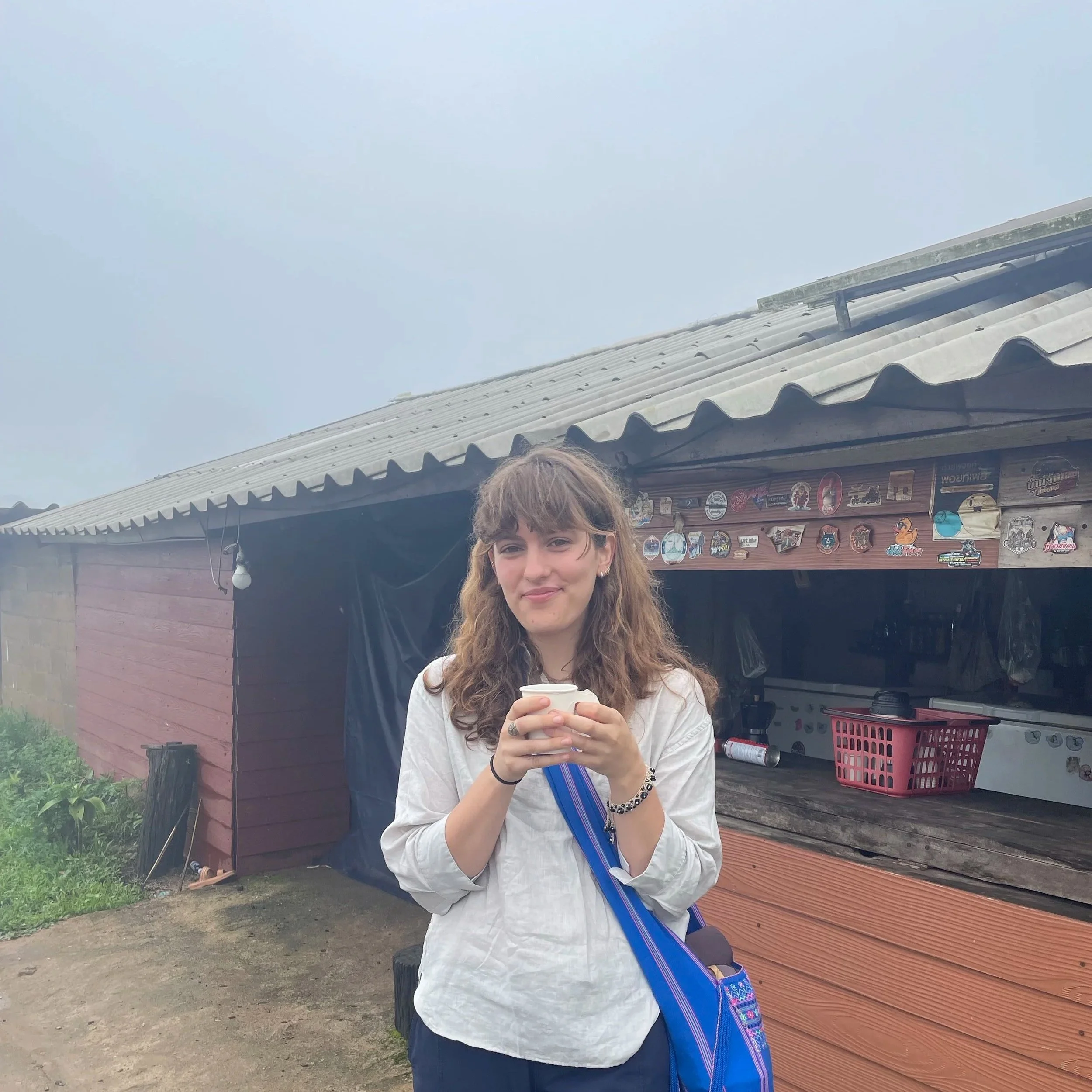
Salome Liptak
Salomé is a student at Sarah Lawrence College studying literature and writing. She is passionate about storytelling (both true and fictional) and its power to reflect the world as it is, or imagine what could be.
Surfing Morocco Responsibly: How Travelers Can Protect Culture and the Coast
Kara Karinauskaite
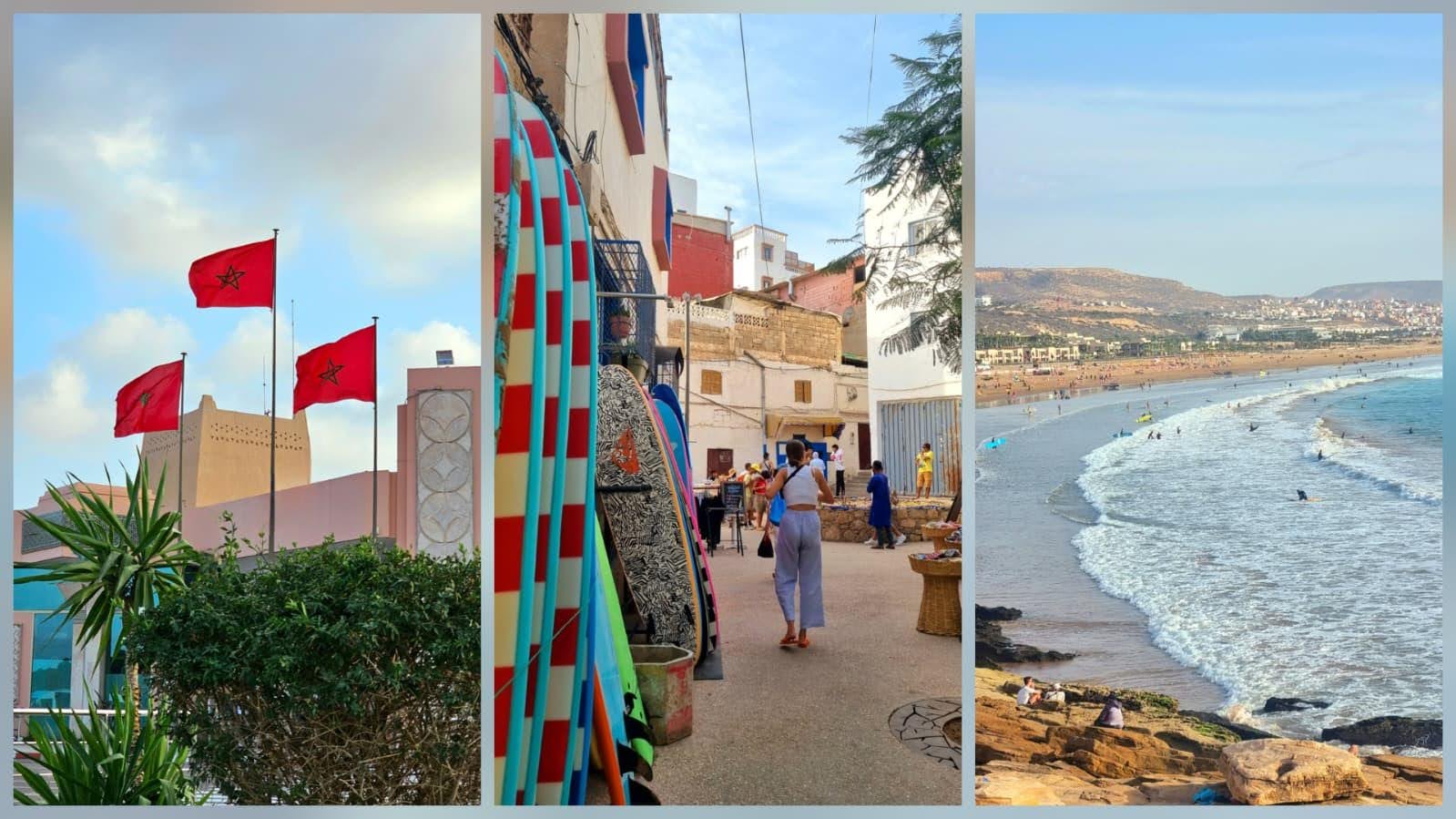
Taghazout, Morocco. Kara Karinauskaite.
Last November, I traveled to Taghazout, a small coastal town in Morocco. It was my second year in a row traveling to the country specifically to surf. Spending my days in the water and my evenings with local surfers put into perspective just how closely surf culture is tied to everyday life and the local economy.
While I was there, I learned that the Agadir tourism area, including Taghazout, recorded about 1.5 million tourist arrivals in 2025, compared with about 0.9 million tourists in 2015, showing how rapidly tourism in the region has grown over the past decade.
For generations, the people of Taghazout and the wider Agadir region have relied on fishing, argan oil production and trade as key sources of income, with the area’s Indigenous Berber heritage still evident in local culture and craftsmanship today. Taghazout has attracted international surfers and travelers since the 1960s, when its consistent waves and relaxed atmosphere caught the attention of visitors from around the world. This helped transform the local economy, leading to the development of surf camps, guesthouses and related services that now make surf tourism a major source of income alongside traditional livelihoods.
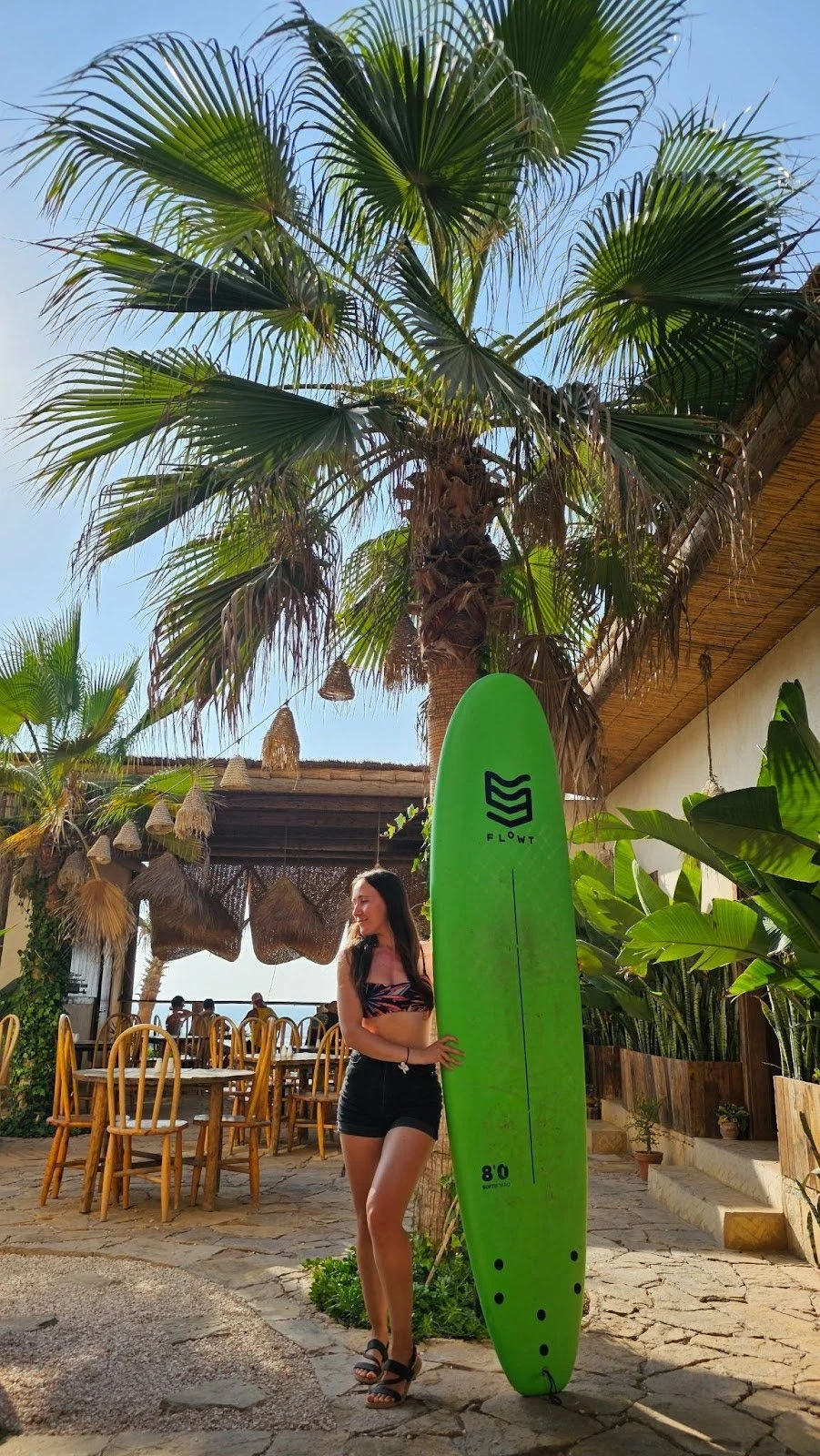
Surfing in Morocco. Kara Karinauskaite.
During my trips to Morocco, all of the surf instructors and trip guides I met were from the Agadir region, and having the direction of people who had surfed the coastline for many years made a real difference, as their deep knowledge of conditions, tides and safety spots provided me with the most well-informed surfing experience. They were always happy to talk with me about the area’s history, culture and how life in the village has changed with the growth of surf tourism, and they even took the time to teach me a few local phrases, making everyday interactions feel more personal. The surf instructors also invited us to visit their local hammam, a type of steam bath, which felt like an incredible privilege and offered a rare insight into everyday community life beyond the surf scene.
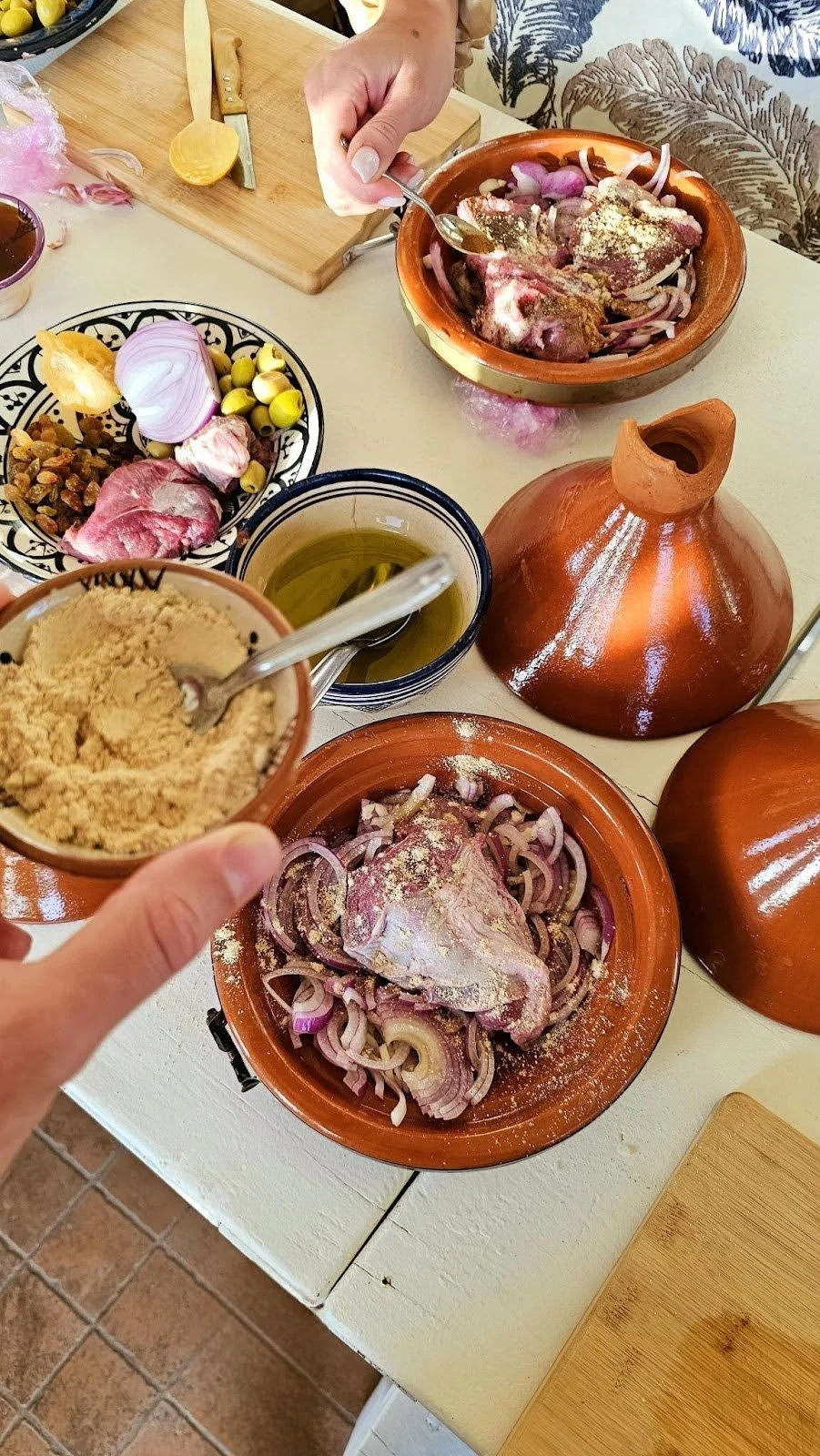
Learning local recipes at Blue Waves Morocco. Kara Karinauskaite.
While surf tourism supports an array of local businesses, such as instructors, board repairers, cafes and small guesthouses, it also increases pressure on beaches, water use and fragile coastal environments. During my visits, I learned from local instructors about practical ways to reduce these impacts.
Travelers can support the Taghazout area responsibly by choosing locally owned businesses, helping tourism income remain within the community. Respecting local culture is equally important, including dressing modestly away from the beach, asking permission before photographing people and learning a few basic words of Arabic or Amazigh. Being conscious of one’s environmental impact also makes a meaningful difference, such as by avoiding single-use plastics, taking part in beach cleanups and disposing of waste properly. Visitors can further help by conserving water through shorter showers, reusing towels and being mindful of water use in surf camps and accommodations. Protecting natural spaces by sticking to marked paths, avoiding walking on dunes and following local guidance when accessing beaches and surf spots helps preserve the coastline for both residents and future travelers.
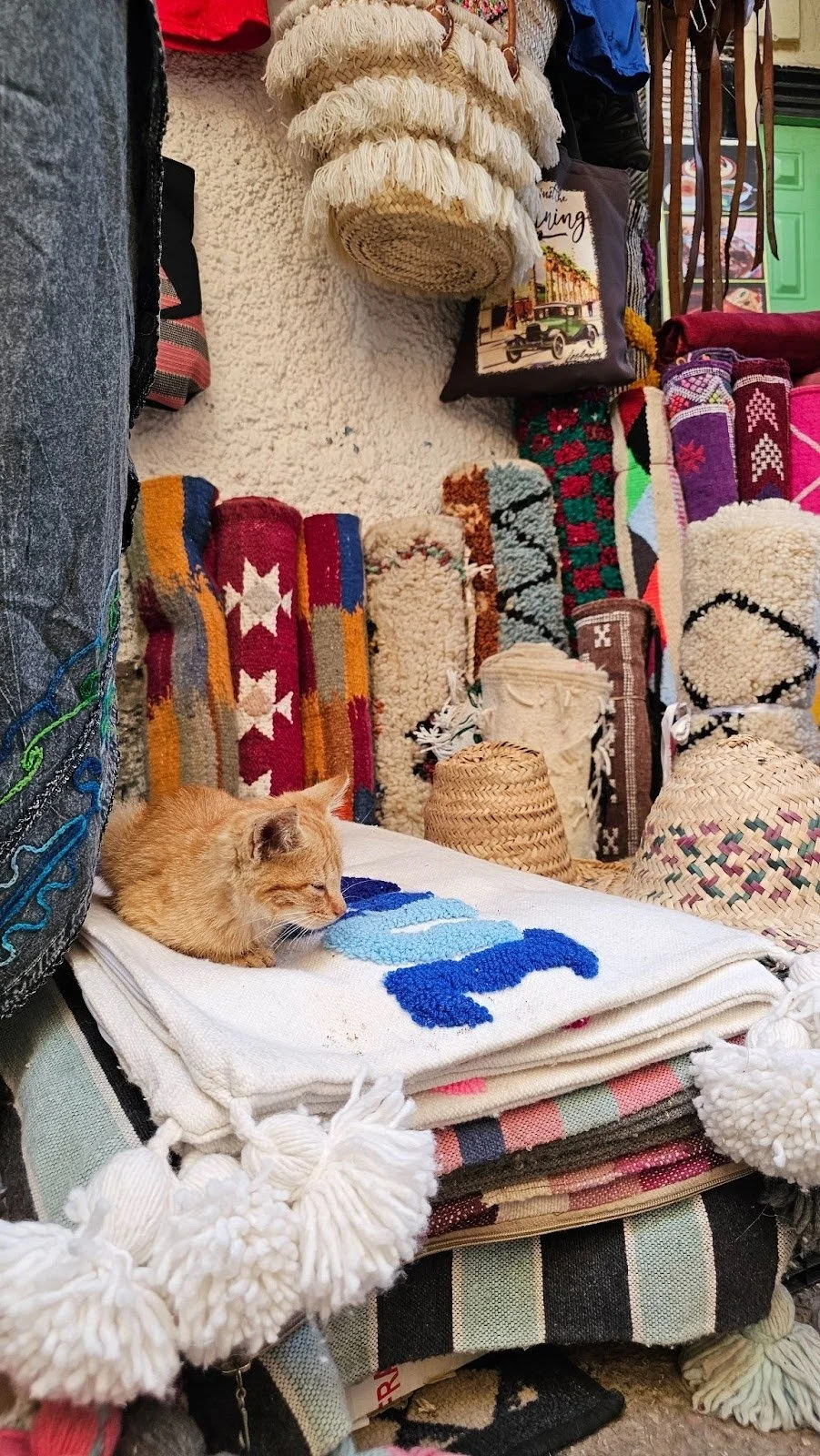
Local business in Morocco. Kara Karinauskaite.
Surfing in Taghazout has shown me how important responsible travel is for the future of its community. By supporting the local economy, respecting cultural practices and helping protect the coastline, visitors can contribute to a tourism that allows surf communities like Taghazout’s to continue benefiting from travel without losing the character and environment that define them.
GETTING THERE:
Blue Waves is a guesthouse in Anza, just a 15-minute drive from Taghazout, that is perfect for travelers who want to immerse themselves in surf culture. Local cooks and hospitality staff make the experience feel genuinely rooted in the community, and alongside its welcoming accommodations, it stands out for its use of locally made pottery and textiles.
Cafe Restaurant Surf Berbere and Dar Josephine are two eateries I particularly enjoyed in Taghazout. They attract visitors with their locally-inspired dishes and provide a warm atmosphere for dining. The town also has many small street-side restaurants offering traditional Moroccan food, which are worth exploring for a more everyday, locally-rooted experience.
Another place that should not be missed is Anza Souk, one of the largest markets in the area. Open on Wednesdays, it is a traditional market that offers a lively setting to buy spices, handmade pottery and other souvenirs.
Kara Karinauskaite
Coming from a TV editing background, Kara has worked with broadcasters including the BBC and Discovery Channel. She is a passionate traveller and filmmaker who enjoys documenting meaningful travel experiences and connecting with people who share her interest in sustainable tourism, culture, and nature.
Beyond the Pyramids: A Guide to Egypt
Carson Jelinek
Discover what else Egypt has to offer from its other natural wonders to its hearty cuisine.
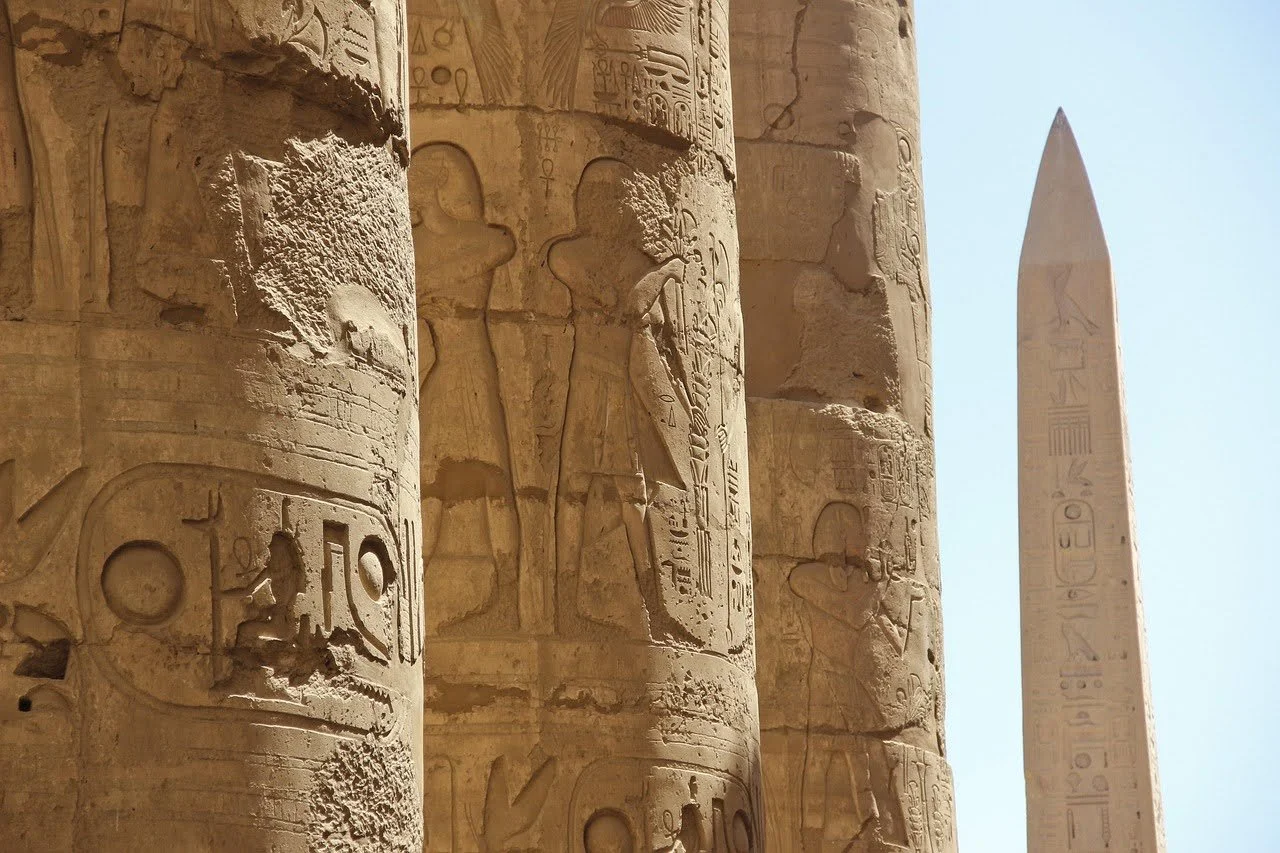
Columns in Egypt. imedias. Pixabay.
The pyramids are often the first things people picture when they think of Egypt, but they are just one part of the country’s rich heritage. With deserts shaped by wind, saltwater oases, colorful coral reefs in clear water and cities where ancient temples stand next to modern buildings, Egypt is much more than just one famous landmark. Visiting without seeing the pyramids lets you discover a deeper and more varied side of a timeless country.
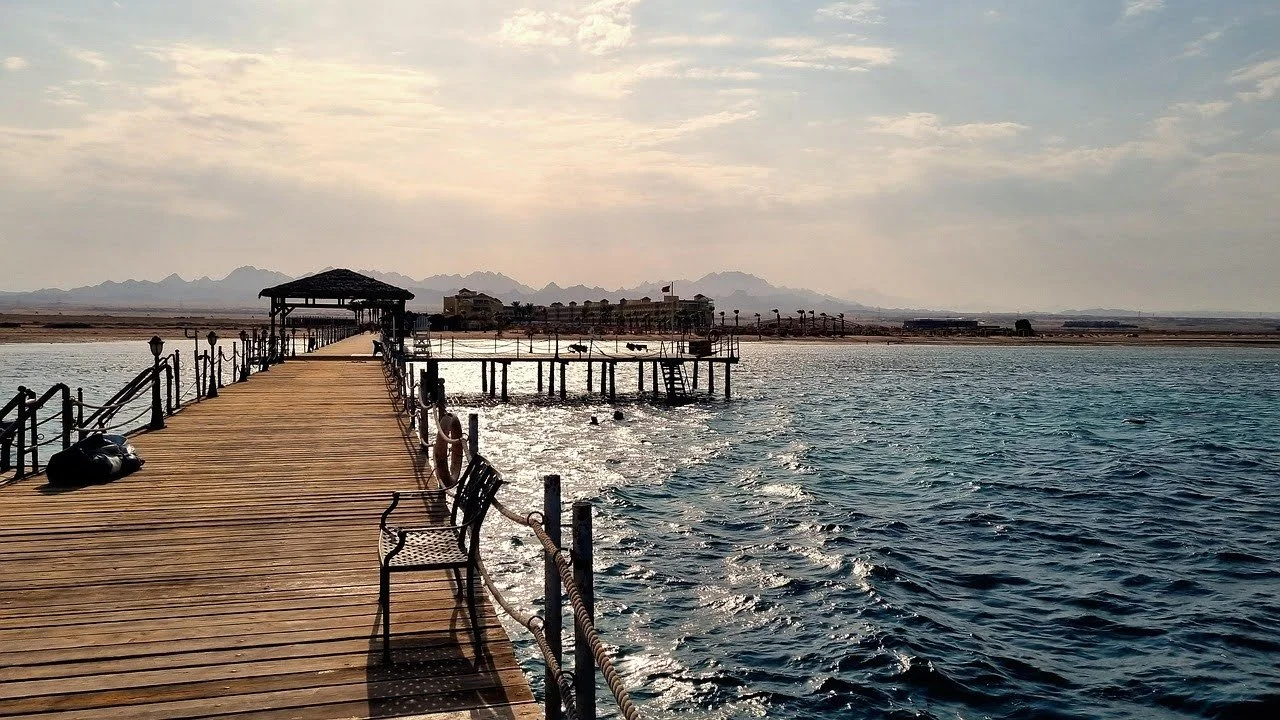
Dock at Red Sea.. Irfan Mujagic. Pixabay.
One of Egypt’s natural wonders is the Sahara el Beyda, also known as the White Desert National Park. This protected national park is famous for its surreal, otherworldly white chalk formations, sculpted by wind erosion into shapes resembling mushrooms and animals. The desert is rich in fossils from an ancient sea and is a popular nighttime camping spot because of the golden sun that sets over it.
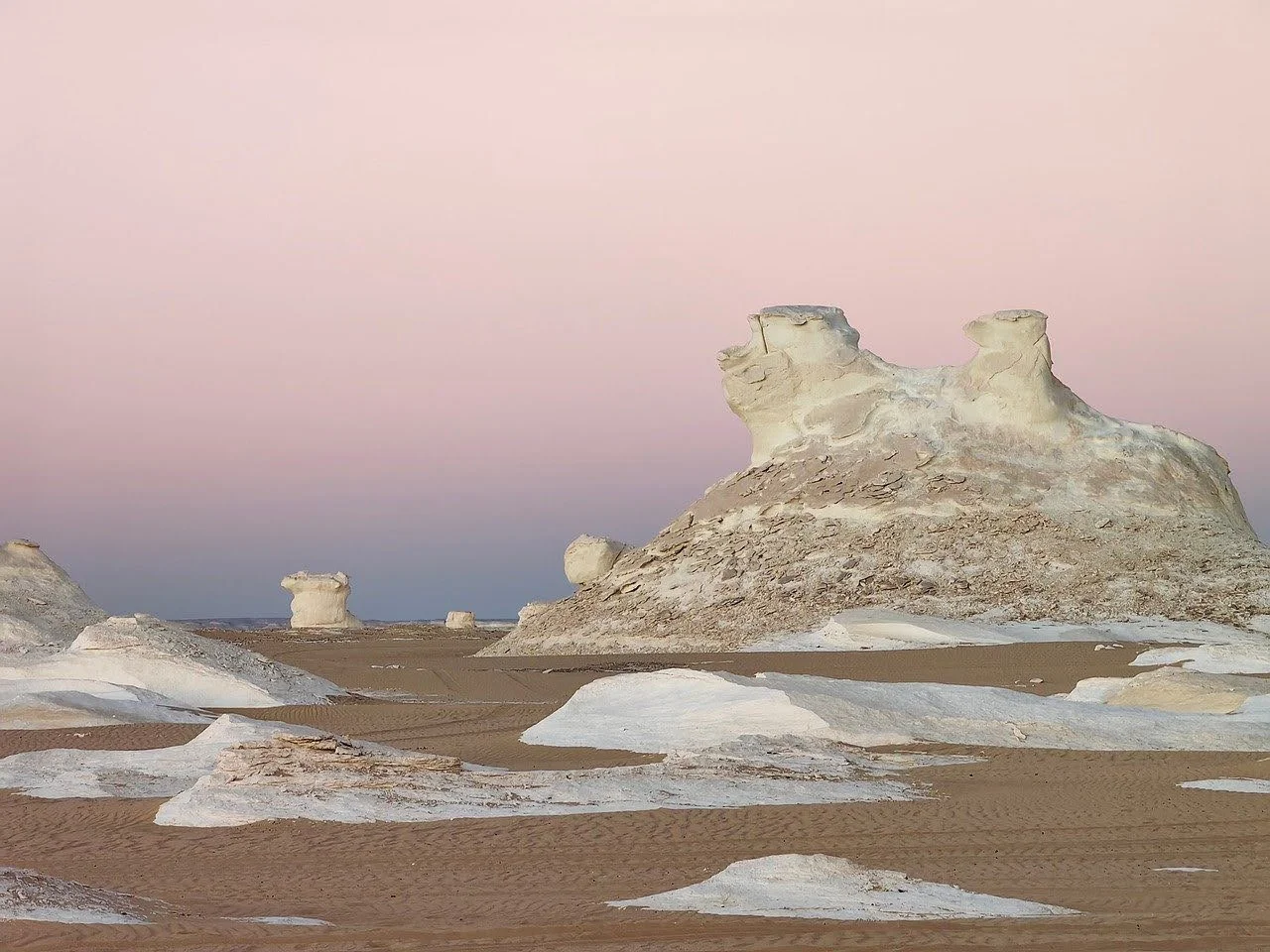
White Desert National Park. Xingchen Xiao. Pixabay.
Located near the Libyan border, the Siwa Oasis is a significant natural site characterized by hundreds of springs and thousands of olive and palm trees. The oasis is also home to the temple of the Oracle of Amun, a historical landmark once visited by Alexander the Great.
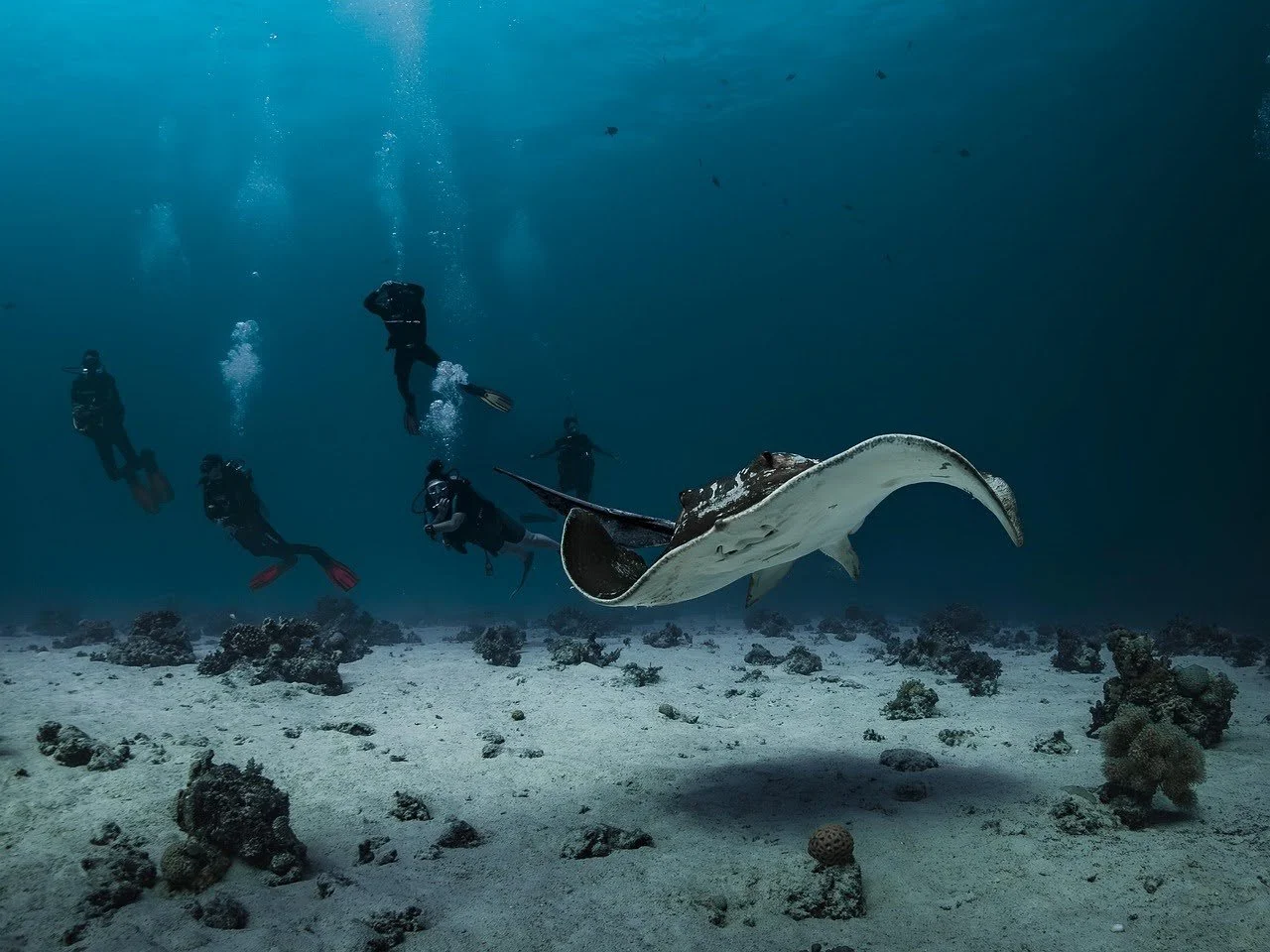
Feathertail rays in the Red Sea. Franziska Stier. Pixabay.
Stretching along the western shore of the Gulf of Aqaba and the eastern coast of the mainland lies the Red Sea Riviera. With over 1,000 miles of shoreline and clear, warm waters, this spot is perfect for diving, where travelers can observe colorful coral reefs and exquisite marine life. The Red Sea features a world-class ecosystem of over 2,000 different fish species, and 10% of which can’t be found anywhere else in the world. There are also more than 300 coral species, making it a prime spot for dugongs, spinner dolphins and various sharks.
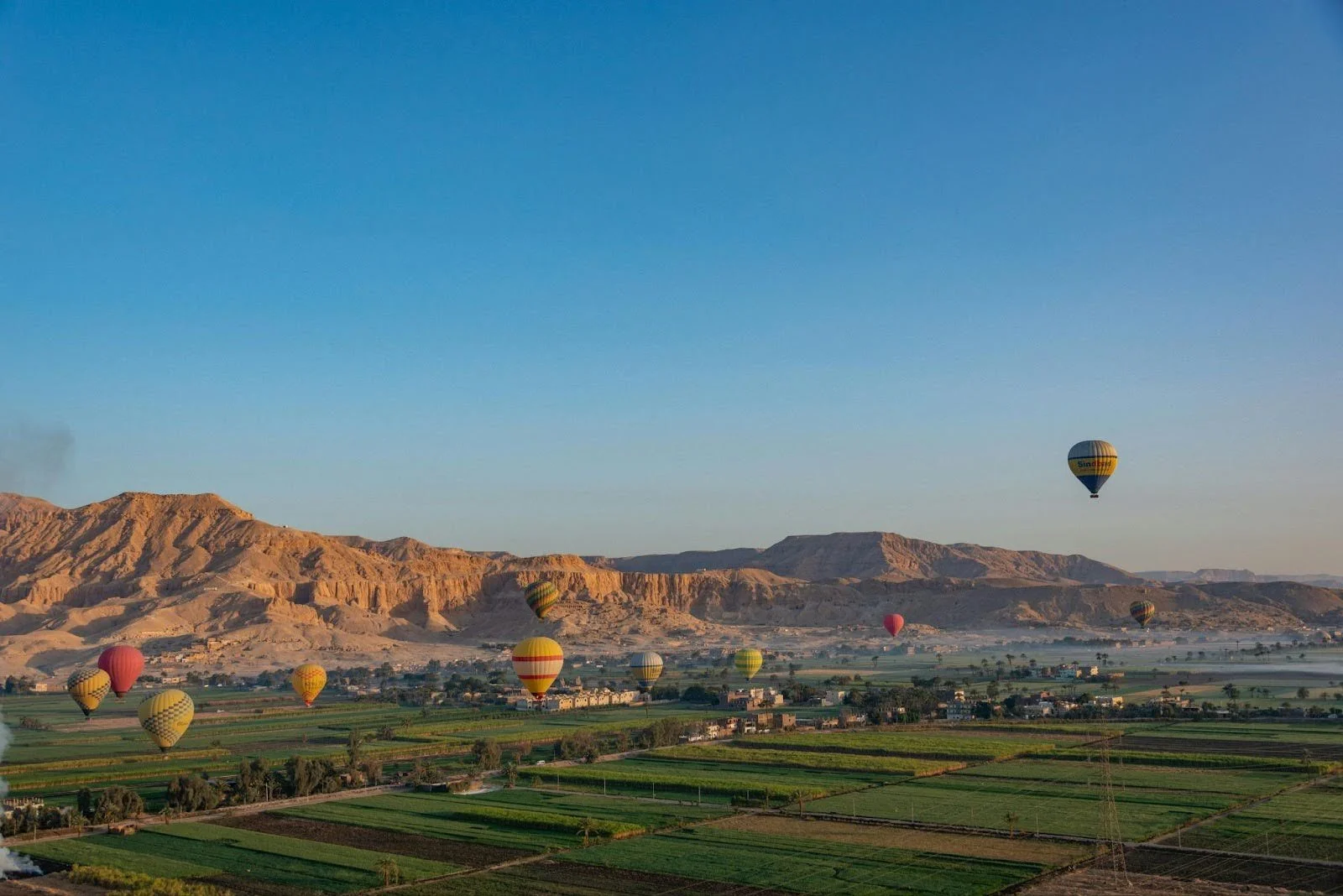
Hot air balloons in Luxor. Diego F. Parra. Pexels.
Luxor, Egypt, is renowned as the world's largest open-air museum, featuring extensive ancient Theban ruins, such as the Valley of the Kings, which contains the tomb of Tutankhamun. Visitors can also explore the city’s intricate temple complexes, like the Karnak and Luxor Temples. For a comprehensive perspective of the area, hot air balloon tours offer panoramic views of these historic sites.

Egyptian paella. koki_4ever. Pixabay.
Egyptian cuisine is characterized by flavorful dishes that prominently feature beans, legumes, rice and fresh herbs. Notable staples include koshari, which is a pasta, lentil and rice dish that serves as national street food, commonly consumed by students and office workers. Another significant dish is ful medames, a slow-cooked meal of mashed fava beans cooked in oil and spices, typically served with bread for breakfast. Both dishes are inexpensive, filling and widely available from street stalls and small local restaurants, making them an everyday option for a wide range of Egyptians.

Carson Jelinek
Carson is a 22 year old writer and filmmaker studying film and media productions at Arizona State University. His work explores travel, culture, and the people behind the places, with a focus on stories that encourage curiosity and global understanding.
China’s City of the Future
Discover how Chongqing has become a modern mountain city, known for its tall buildings, bright riverfront skyline and lively hot pot culture.
Read MoreA Mindful Guide to Costa Rica’s Manuel Antonio
Long before it became one of the a popular ecotourism destination, this park was home to Indigenous communities whose relationship with the land and sea shaped the region for centuries.
Read MoreAn Overlooked Eden: The Islands of Seychelles
Seychelles is an island paradise home to stunning mountains, beaches and marine life.
Read MoreCuracao: the Colorful Caribbean Island
Get to know the Dutch island with a unique culture, artistic heritage and a restorative atmosphere.
Read MoreBeyond the Board: Navigating the Surf Culture of Sayulita
Beyond the Pacific swells, this Mexican destination provides travelers with a community atmosphere, where modern surfing meets the ancient traditions of the Wixarika people.
Read MorePotential Signs of Life at Turkmenistan's "Door to Hell"'
After 54 years alight, the Darvasa gas crater in Turkmenistan finally shows signs of slowing, and visitors report signs of arachnid life at the crater's edge.
Read More7 Must-Try Foods in Vietnam
With 3 major regional cuisines, Vietnamese food is characterized by its fresh and fragrant flavors and ingredients.
Read MoreSoviet Legacies in the World’s (Second) Coldest Capital
Once a Soviet hub for grain, the Kazakh capital Astana has reshaped itself into a modern, future-esque city.
Read MoreThe Vibrant Culture of Granada, Nicaragua
Explore the intricate architecture and colorful scenes of this Nicaraguan city.
Read MoreHawaii’s Volcanic Crescent: Molokini Crater
Formerly a World War II bombing practice site, the Molokini Crater is now a Marine Life Conservation District and Hawaii State Seabird Sanctuary, home to hundreds of marine and wildlife species.
Read MoreMeet Liverpool: An English City With Deep Irish Roots
Liverpool’s history of Irish immigration after the Great Famine has come to deeply influence the city’s culture and traditions.
Read MoreOff the Beaten Path: 10 Places to Escape Overtourism
In a travel-hungry world, it’s time to celebrate lesser-known treasures while prioritizing eco-consciousness, intimacy and crowd-free escapes.
Read MorePeru’s Floating Islands
The Uros Floating Islands on Lake Titicaca are man-made reed constructions in an Indigenous Quechua community.
Read More