
Aidan Nisbett
Once a Soviet hub for grain, the Kazakh capital Astana has reshaped itself into a modern, future-esque city.
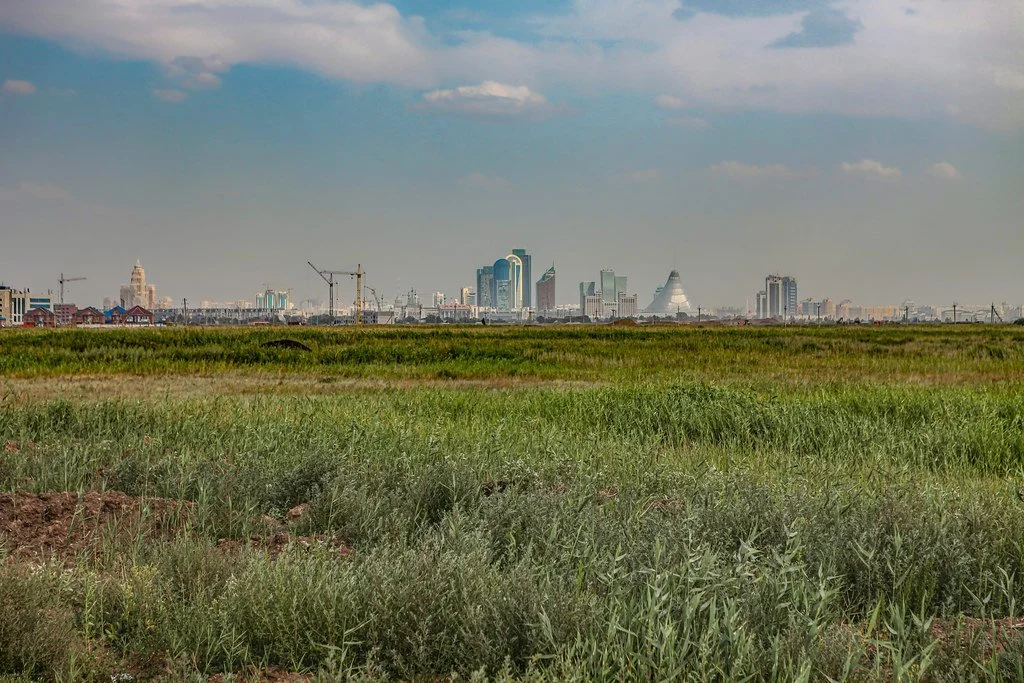
Astana, Kazakhstan, from the Steppe. Ninara. CC BY 2.0.
Within the remote interior of Kazakhstan lies the country’s capital, Astana. Surrounding the city is a grassy expanse stretching for hundreds of miles in all directions, where winter temperatures dip below minus 40 degrees Fahrenheit and summer heat climbs above 86 degrees. Interruptions within the steppe are few, save for the occasional town or wheat field, but the Ishim River is a notable exception. The Ishim runs directly through Astana, splitting the city into two distinct halves: the modern, booming left bank and the diminishing Soviet-era right bank.
Astana’s history is deeply tied to both the Russian Empire and the Soviet Union. Founded as a Russian military outpost in 1830, the settlement gradually became a trade hub, attracting migrants and modest industry. By the 1920s, Kazakhstan had become part of the Soviet Union, and in the ‘50s and ‘60s, the city, then called Tselinograd, stood at the forefront of the Virgin Lands campaign. Through a mix of incentives and pressure, thousands were mobilized to cultivate the steppe. Yet, while the campaign promised greater harvests, it ultimately failed, leaving the land overworked and famine continuing in many areas.
Despite these setbacks, the Soviet government invested heavily in Tselinograd. Housing blocks, government offices and cultural centers rose across the city, emphasizing functionality and longevity. Cheap and efficient materials, like reinforced concrete and brick, were used to construct these brutalist districts. Decoration was rare, generally confined to interiors or special cultural spaces.
Today, many of these buildings have been renovated and repurposed for modern use. One example is the Palace of the Tselinnikov, one of the city’s most important cultural landmarks. During the Soviet era, it hosted concerts, meetings and festivals, serving as a gathering space during the Virgin Lands campaign. Today, the building has been remodeled into the Yerkegali Rakhmadiyev State Academic Philharmonic, maintaining a familiar focus on music and tradition. On the other hand, the Ishim Hotel, first installed by the Soviets for travellers, saw upgrades to its accommodations but little change in appearance or structure.
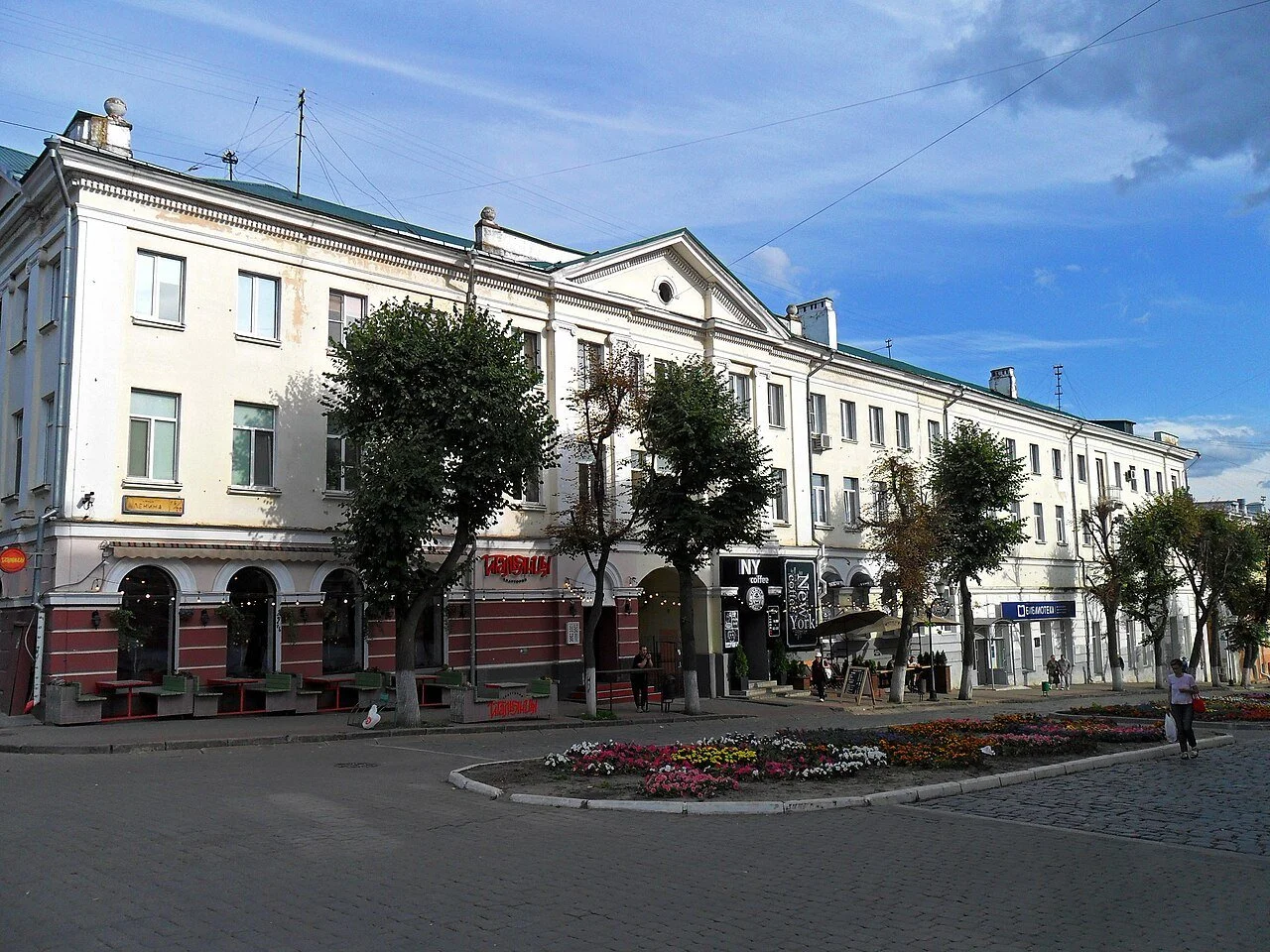
Ishim Hotel. Sviraman. CC BY-SA 4.0.
While many Soviet-era buildings have been reused, others have been demolished, generating controversy. Older residents often express nostalgia for the Soviet residential districts, recalling shared courtyards and communal spaces and respecting the buildings for how long they served their communities. Others hold a more resentful view, seeing these structures as lasting reminders of a painful chapter in Kazakhstan’s history.
There have even been instances of the public taking matters into their own hands, as seen in the damage done to the Almaty Akimat building, formerly the headquarters of the Communist Party of Kazakhstan. “If we remove it, erase it, we won't process this trauma,” said researcher Temirtas Iskakov in an interview on the subject of Astana. “One of the goals of decolonization is to create our own knowledge about certain periods of history, about our own culture, about our role in history and processes. Therefore, we should treat this heritage as an object simply built during that historical period, and we can't simply thoughtlessly demolish it.”
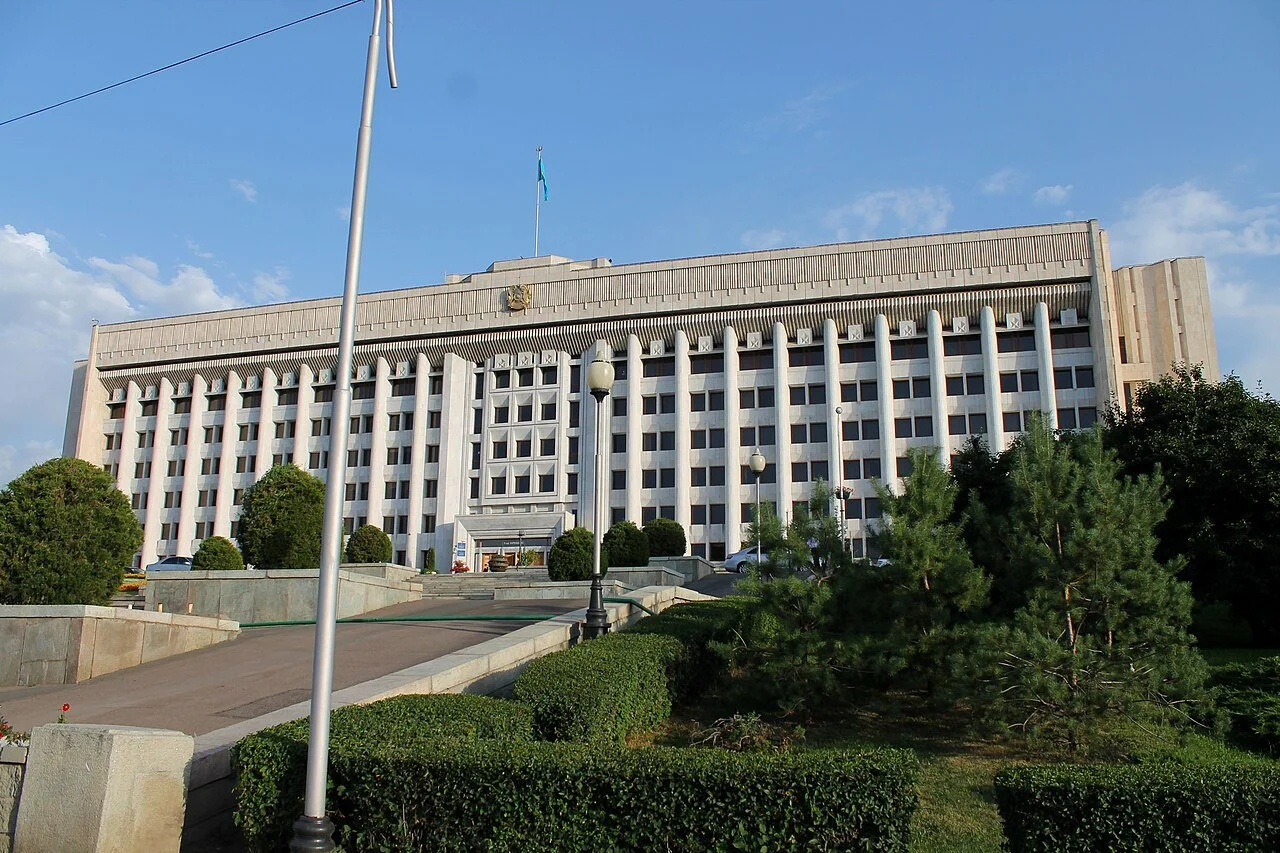
Almaty Akimat building. Meridianets. CC BY-SA 4.0.
Though the left bank of Astana continues to depart from its Soviet origins in favor of modern, monumental designs, there are growing efforts toward cultural and historical reconciliation. Kazakh architect Sergei Sartakov points to the Triumph of Astana as an example of this blending. While its exterior draws on Soviet classicism, its interior contains a gym, apartments, a swimming pool and other modern-day amenities.
“People may love it or hate it, they will discuss and people remember the building,” said Sartakov. “When people have something to say about the building, it encourages people to think, in this case, the work of the architect is well done.”
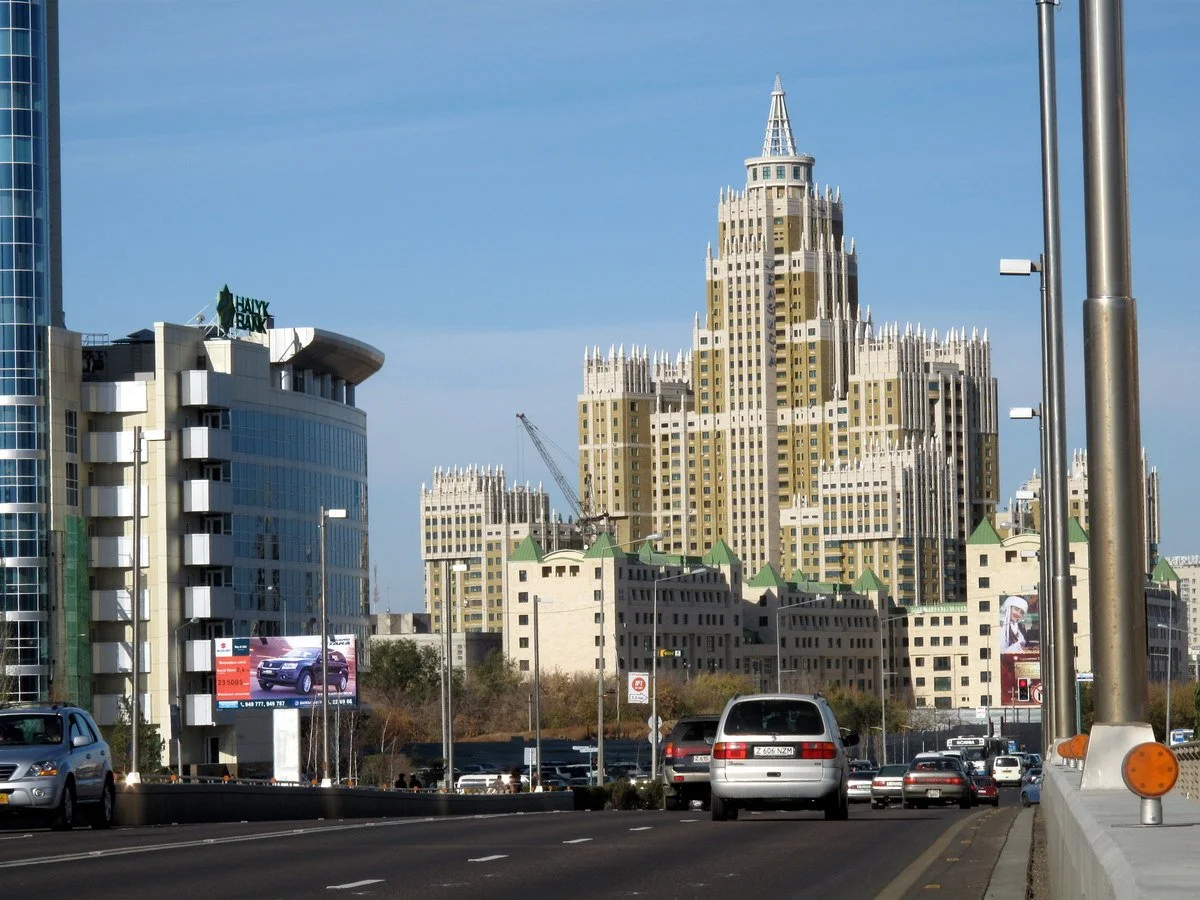
Triumph of Astana. Peretz Partensky. CC BY-SA 2.0.

Aidan Nisbett
Aidan is a student at UMass Amherst majoring in English with a minor in IT. He is dedicated to using storytelling as a way to share histories of the world, and lives for learning and travel. When he isn't reading or writing, you can find him hiking a mountain or running at a track race.