
Kelcie Lee
The history behind the Native American occupation of Alcatraz represents an effort of resistance and Native identity in the San Francisco Bay Area.
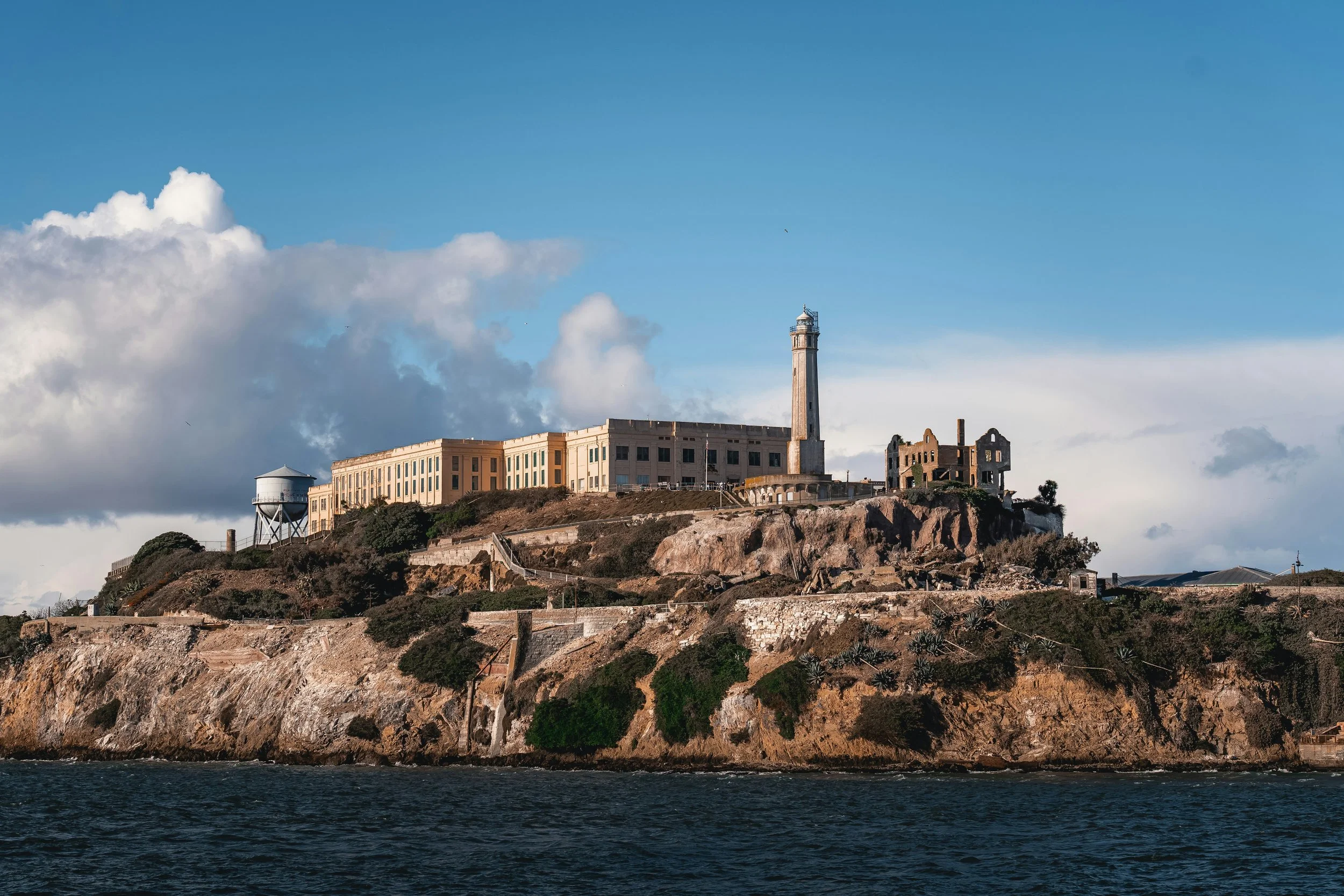
Alcatraz Island. Mauro Lima. Unsplash.
On Nov. 20, 1969, a group of Native Americans banded under the name “Indians of All Tribes” to take over Alcatraz Island in the San Francisco Bay. Their occupation lasted 19 months, demanding that the federal government give back the land the Natives once could call home. But this occupation traces back to a long history of Indigenous settlement and resistance that often goes overlooked.
Tens of thousands of years ago, before the arrival of Spanish explorers, more than 10,000 Ohlone people lived along the California coast between Point Sur and the San Francisco Bay. While the history of Native American settlement has been passed down through oral stories, reconstructing and recording this history has been difficult. However, it is generally believed that Alcatraz was used for isolation and ostracization for those who violated tribal law. Additionally, the island was used as a hiding place for those escaping the California Missions system, as well as to gather food, including bird eggs and other marine life. But when Alcatraz became a federal penitentiary in 1934, many Native Americans were incarcerated alongside military prisoners.
The first declared Alcatraz occupation occurred on March 9, 1964, and lasted approximately four hours. Five Sicangu Lakota Indians cited the Fort Laramie Treaty of 1868, which said unused and deserted federal land could be returned to the Sioux. A few weeks later, the U.S. Attorney rejected the claim, and in July 1964, the U.S. General Services Administration took custody of the island.
On Nov. 9, 1969, another occupation was initiated by Native American leader Richard Oakes among a group of Native American students within the Bay Area, namely the Indians of All Tribes. They claimed the island to be the land of Native peoples, with Oakes reading a proclamation that asked the government to construct a center for Native American history, education, ecology, job training and spiritual purposes. This new building would replace San Francisco’s American Indian Center, which burned down in a fire earlier that month.
“In the name of all Indians ... we reclaim this island for our Indian nations,” Oakes said, reading the proclamation. “We feel this claim is just and proper, and that the land should rightfully be granted to us for as long as the rivers run and the sun shall shine. We hold the Rock!”
During the 19-month-long occupation, Native American activists slept in old, empty prison cells and the warden’s quarters. They also instantly organized civil officers, education and a security force for those staying on the island. The height of the occupation reached nearly 400 people, symbolizing a high point of Native American resistance and claims to the land once taken from them.
As the months passed, the occupation began losing momentum with the number of occupiers dwindling. While many of the original students spearheading the movement went back to school, the island’s population of hippies and drug abusers increased. The federal government, in an effort to force people to leave, cut off the island’s access to electrical power and telephone services. Soon after, buildings started to catch fire and burn down. The occupation officially came to an end on June 11, 1971, when the Coast Guard and armed marshals approached the island, leading the last 15 activists to surrender peacefully and depart.
The history of the settlement and occupation of Alcatraz is a key point in Tommy Orange’s award-winning novel, “There There.” “There There” tells the stories of 12 characters of Native American descent who are planning to attend the Big Oakland Powwow. This fiction novel is an acclaimed story of Indigenous struggles and resistance, showing how the impact of historical repressions of Native American communities continues to persist to this day.
In the novel, some of the characters strive to understand their fragmented family history and past, something that they feel disconnected from. It showcases Native American culture, tradition, dress and identity through the complex reality of what it means to be perceived as Native American and the reclaiming of this history of displacement and identity.
In September 2025, the National Park Service opened the “Welcome to Indian Land: Resistance, Resilience and Activism on Alcatraz” exhibit on the island, which recognized the movement for sovereignty and power. Visitors can travel to Alcatraz by ferry, and can book tickets through Alcatraz City Cruises.

Kelcie Lee
Kelcie is a second-year student at UC Berkeley majoring in history and sociology, with a minor in journalism. She developed her passion for writing and journalism in high school, and has since written for a variety of news and magazine publications over the last few years. When she isn't writing, Kelcie can be found drinking coffee, listening to music or watching the sunset.