
Alex Jung
Digital illiteracy and misinformation remain a serious barrier to democracy and freedom in the Philippines.
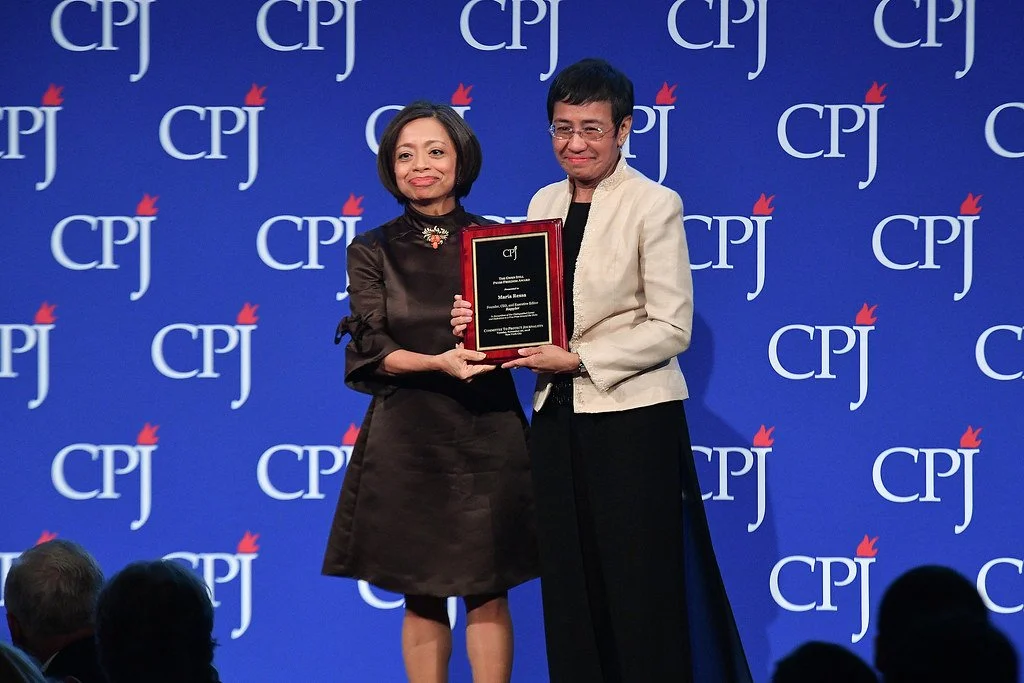
Nobel Peace Prize winner Maria Ressa at the International Press Freedom Awards. Dia Dipasupil. CC BY 2.0.
Since 2022, the Philippines has made digital transformation a top priority for social and economic reform. While progress was slower than in other ASEAN countries, the nation has continued to initiate reforms that would increase accessibility to digital services and simultaneously normalize digital processes, such as digital payment in society. Certainly, digital transformation has been developing at an efficient rate, as seen by the fact that over 50% of retail payments were made digitally in 2023, as opposed to only 1% in 2013. However, with digital transformation in the Philippine context, there has also been a large surge of online scams and fraud. According to the Asia News Network, "the Philippines is No. 1 in digital illiteracy" globally. This has left many individuals and communities, especially from lower socioeconomic backgrounds, extremely vulnerable to forms of cyber attack. In 2023, more than 16,000 digital scam cases, resulting in estimated financial losses of $37 million, were recorded in the Philippines. This raises a serious question and concern surrounding the digital illiteracy in the country and how governments can effectively take advantage of a digitally illiterate society.
One impact of digital illiteracy is the increased ability for governments to spread political misinformation through online platforms and organizations. The Philippines has been critiqued heavily by global scholars on the exercise of informational autocracy by both the Duterte and Marcos governments in affecting election results and justifying political actions. Aries Araguay, a professor at the University of the Philippines Diliman, argues that Duterte effectively spread disinformation through the funding of cyber troops and troll farms that were spread across digital platforms and services. They were designed to spread misinformation about extrajudicial killings and arrests while simultaneously praising Duterte's governance. During the COVID-19 pandemic, Duterte had a 91% approval rating, highlighting the efficacy of misinformation spreads. Ultimately, the high digital illiteracy rates in the Philippines serve as an enabler of informational autocracy and the spread of misinformation for political gain.
Digital misinformation and illiteracy have also affected many Filipinos who live abroad. Overseas Filipino Workers (OFWs), including domestic migrant workers, contribute around 8% to the Philippine GDP through remittances. However, OFWs have also often been the targets of digital scams on social media platforms that range from fraud to loan sharks and fake agencies. According to the Department of Migrant Workers in the Philippines, the most common online scams for OFWs are accounts that disguise as fake financing companies. These companies illegally demand upfront payment and fees in return for an immediate loan. Despite accessibility to the Securities and Exchange Commission (SEC) Check First App, which enables users to assess the legitimacy of a company, many still fall victim to these scams.
The issue of digital illiteracy and misinformation in the Philippines gained a large spike in global attention when Maria Ressa, co-founder of the online news site Rappler, was awarded the Nobel Peace Prize in 2021 for "their efforts to safeguard freedom of expression, which is a precondition for democracy and lasting peace." Rappler has placed a great emphasis on transparency as well as truthful journalism; its articles have often criticized the misinformation and corruption in the Philippines. Ressa has spoken at many international conventions to advocate for collaboration and communication between news outlets in the Philippines and beyond to report the truth. She claims, "If journalism doesn’t survive, democracy dies." Online services like Rappler consistently prioritize efforts to increase digital literacy through ethical and accurate reporting of the nation's political state.
Alex Jung
Alex is from New Zealand and South Korea, and is currently a student at the University of Chicago. He is majoring in Political Science and International Relations, and minoring in Middle Eastern Studies. He is passionate about social justice for minorities and indigenous communities. In his free time, he enjoys learning languages (Korean, English, Mandarin, and Persian) and writing novels and short stories.