
Kyle Morris
Explore the intricate architecture and colorful scenes of this Nicaraguan city.
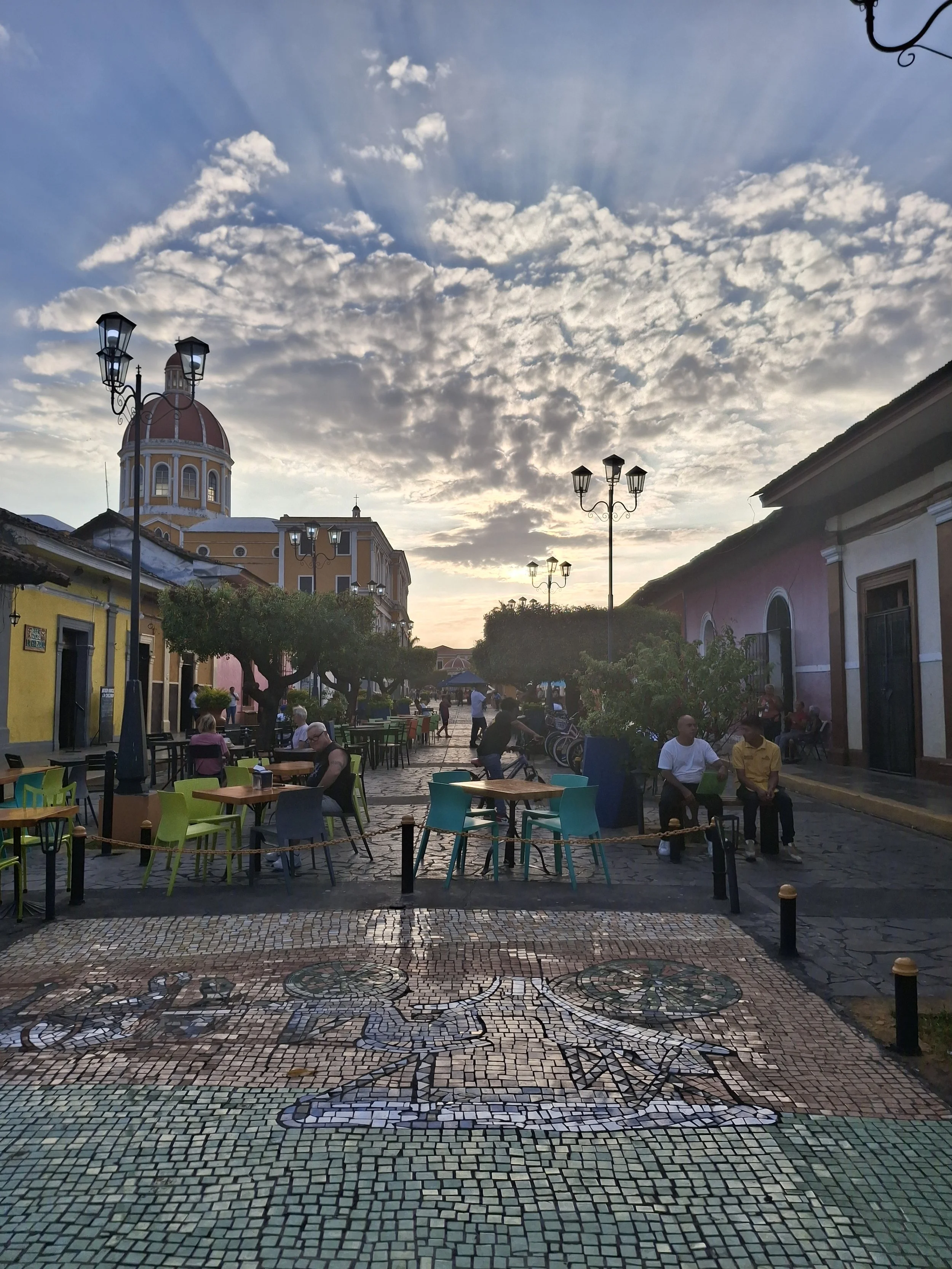
Street in Granada. Kyle Morris.
Sitting on the shores of Lake Nicaragua, the city of Granada is a concentrated dose of its country’s soul and society. It’s April when I make my visit, and as I tour the streets, daily life and culture are on full display around every corner in a place where past and present punctuate every vista. The hot, bustling, technicolor streets make up one of the most complete examples of Spanish colonial architecture in the region, and they make for a fascinating place to get lost while exploring.
It’s this rich architecture that tells the story of wealth that attracted the pirates, Spanish colonists and revolutionaries who fill the pages of the city’s history books. Founded in 1524 by Spanish conquistador Francisco Hernandez de Cordoba, Granada’s strategic lakeside location allowed it to thrive, as the city’s connection to the Atlantic via the San Juan River permitted the safe passage of ships and precious cargo back to the Old World.
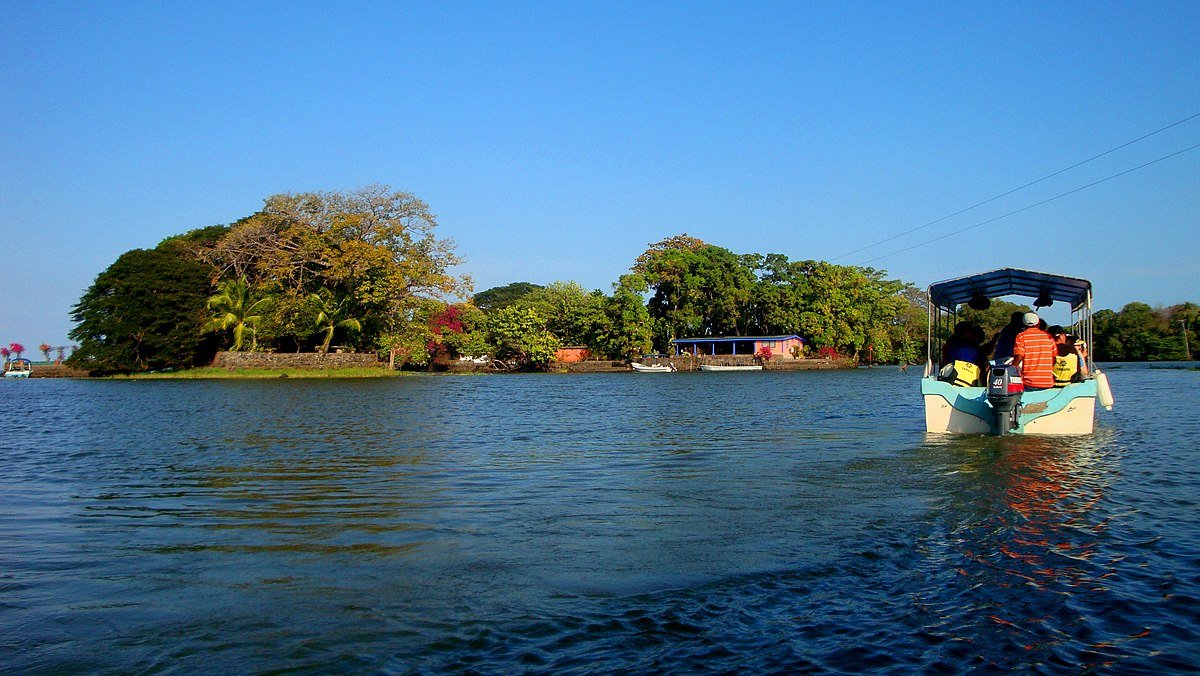
Boat on Lake Nicaragua. randreu. CC BY 3.0.
For centuries, Granada’s prosperity sparked tensions with its rival city, Leon, as both vied for political and economic dominance. The rivalry shaped the nation’s political landscape, each city trying to protect and further its interests. Granada was historically more conservative, owing to its trading links and connections to the Spanish crown, while Leon was more liberal, with larger agricultural production and educational institutions.
The city oozes with character thanks to its stout stone single-story buildings that crumble softly at the corners, holding up terracotta-tiled roofs that sag under the weight of time.
The perfect vantage point for admiring these beautiful streets is the bell tower of the Iglesia de La Merced, or the Church of Our Lady of Mercy. After paying the dollar entrance fee, I climb the tower and am greeted with a 360-degree view of the city. From here, I can see everything from the Mombacho Volcano to the lake, and I get a bird’s-eye view of the maze of streets and central courtyards that make up the old town. The best time to go is at sunset, when the city glows in the warm light, and I can watch the sun sink below the horizon.
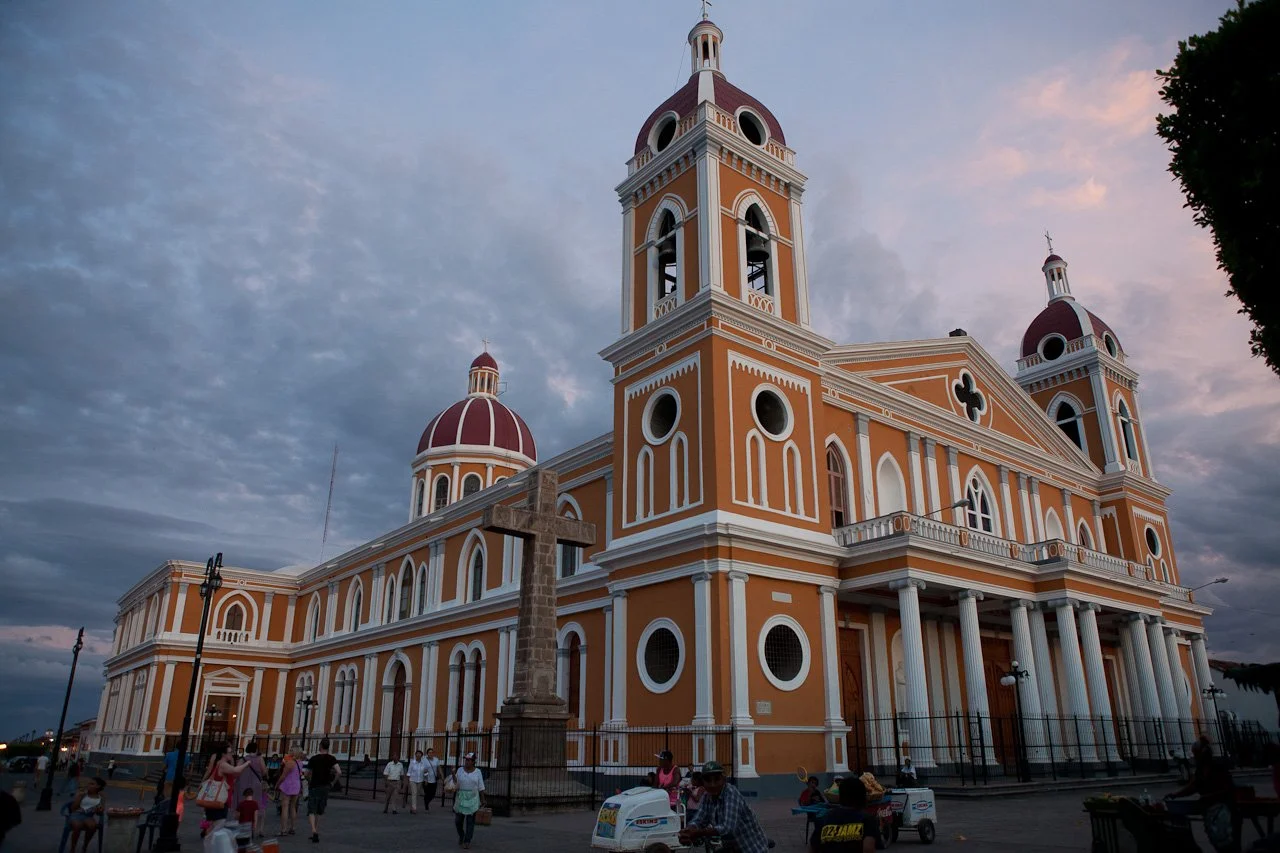
Church in Granada. Henry Alva. CC BY-NC-ND 2.0.
Set amongst the picture-postcard architecture is Granada’s market. In the beating heart of the city, its colonial past butts heads with the zeal and savvy of its present-day traders
The sprawling, chaotic maze is most alive in the early morning. Go just after the sun rises and enjoy a morning coffee, watching the world unfold as customers and traders haggle with the crazed energy of a stock market floor. The market, on Calle El Comercio, traces its roots back to the city’s formation, when traders began to congregate, attracted by the promise of buyers and a wealth of products. The current building, constructed in 1892, long ago overflowed its original stone structure and now spills freely into the surrounding hot and dusty streets under a patchwork of blue plastic canopies.
Sweltering, loud, and impossibly crowded, it sweeps me along its current, making navigation feel more like slowly floating down a river, past the bright pinks of dragon fruits and through scented clouds of freshly ground coffee. It’s an authentic slice of daily life and the perfect place for me to gather fresh, inexpensive ingredients, ideal for perfecting my guacamole recipe while chatting with vendors and practicing my Spanish.
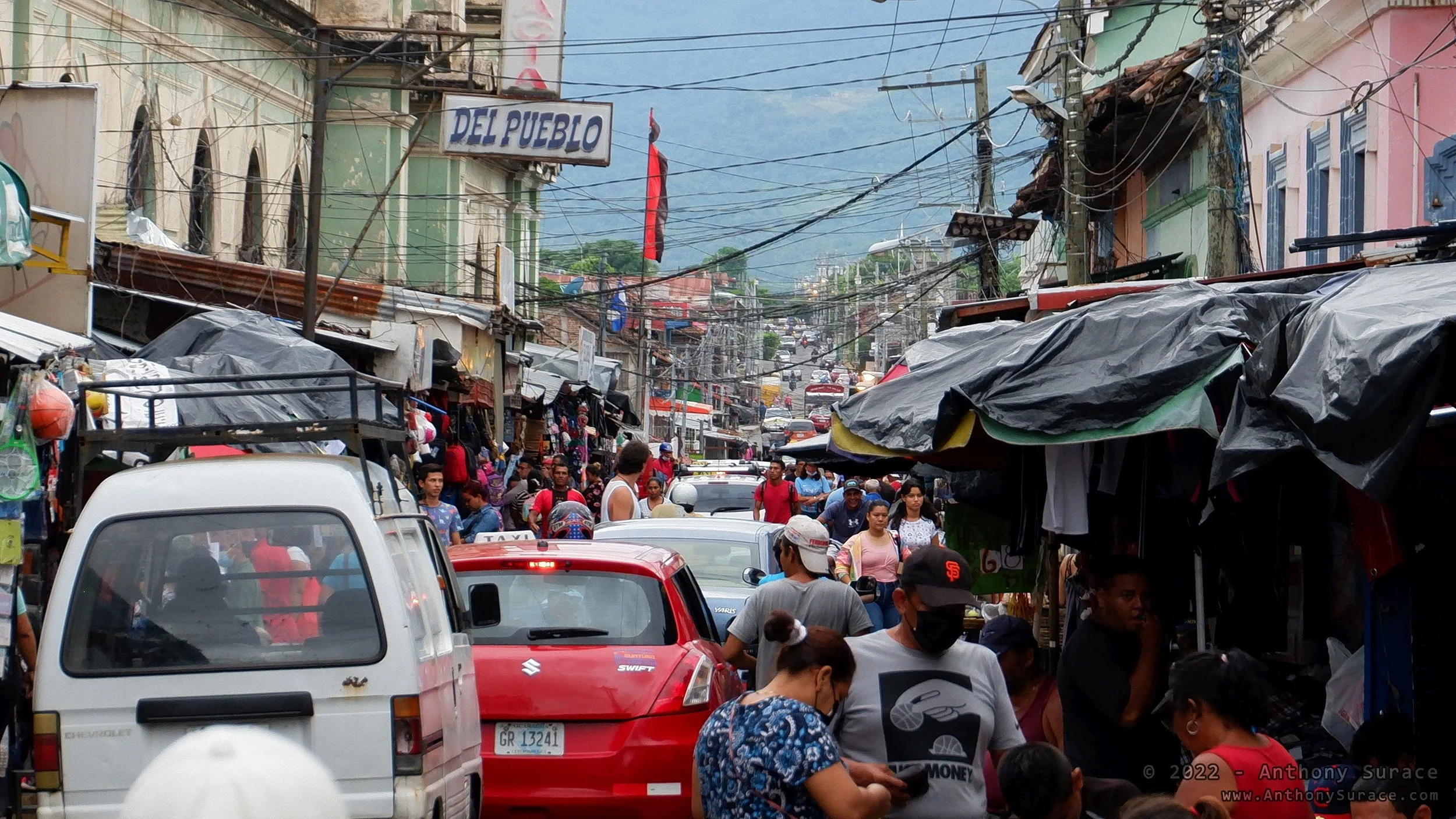
Granada’s market. Anthony Surace. CC BY-NC-ND 2.0.
Facing the Parque Central stands the yellow and white neoclassical Catedral Inmaculada Concepcion de Maria, or the Cathedral of the Immaculate Conception. From here, a grand boulevard opens up, which slowly rolls eastward to the shores of Lake Nicaragua. Passing terrace after terrace, what I find here is not a tourist trail. Instead, it’s the daily in-and-out of Granada’s locals. Young couples and families mill about, caught up in their own worlds. As the boulevard reaches the lake, it peters out, but a promenade breaks off it, where buskers juggle or sing for small crowds and locals walk their dogs unhurriedly.
From the pier, travelers can take a short boat ride to Las Isletas, an archipelago of more than 300 tiny volcanic islands scattered across the lake, where you can see the daily life of quiet fishing communities as well as abundant birdlife. On a different day, consider taking a trip to Mombacho Volcano. Rising out of a cool and verdant cloud forest, you can hike to the crater and watch the smoke rise from its angry pit. Together, these locations showcase the region’s serene waterways and dramatic volcanic heights in perfect contrast.
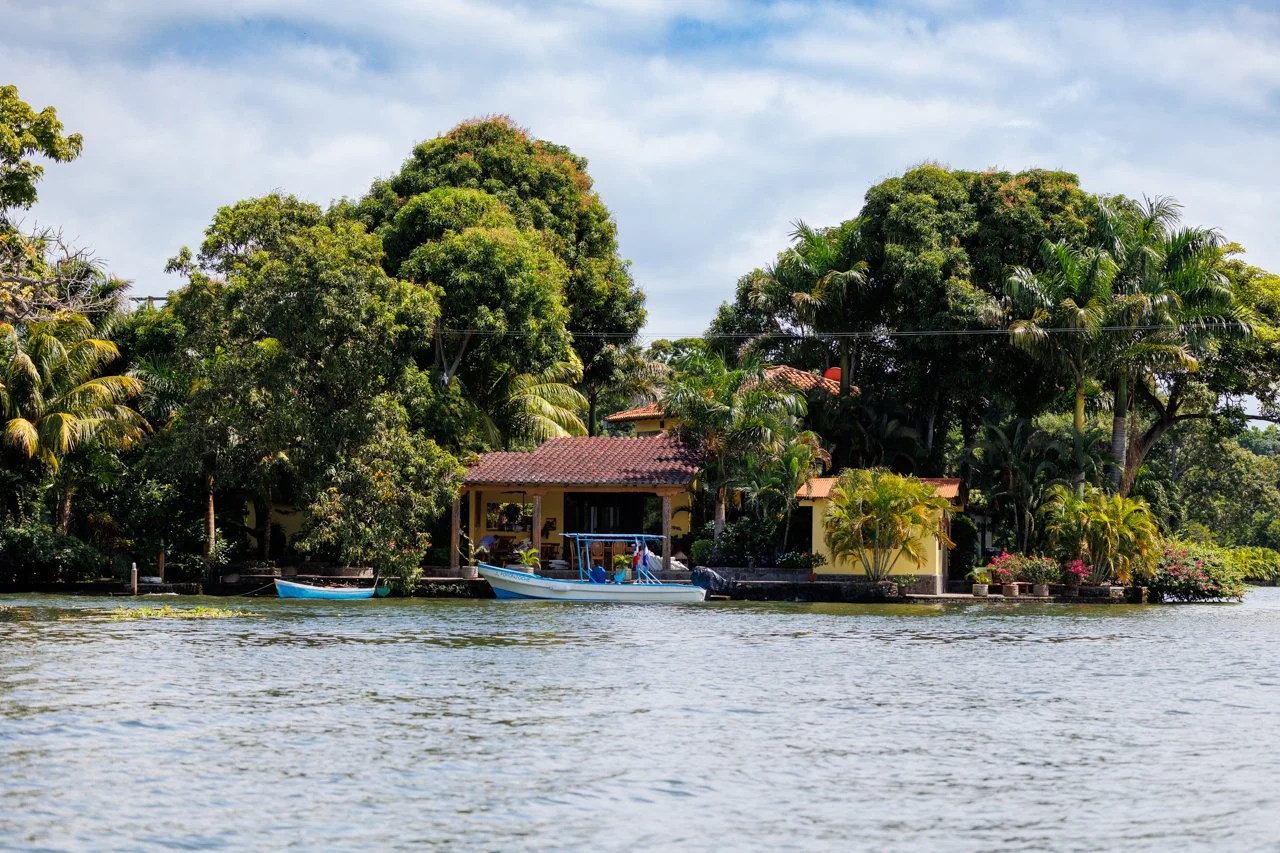
House in Las Isletas. Fabio Bretto. CC BY-NC-ND 4.0.
Granada is also one of the country’s best places to delve into Nicaragua’s roiled political history. I take a tip-based walking tour that winds through the quiet backstreets, with tales of iron-fisted leaders, revolutionaries, interventions and the inevitable bloodshed that came with them. The guide speaks openly about their country’s struggles and hopes, and the tour is far more vivid than any guidebook. Topics range from the infamous American filibuster William Walker, who briefly seized control of the country and burned Granada to the ground in 1856, to the Sandinista Revolution and accusations of authoritarianism.
All in all, Granada is a city bursting with energy, color and vigor that enchants those who walk its streets. If you give it a chance, it will certainly leave an indelible mark on your memory and a lasting impression of modern-day Nicaragua.
Kyle Morris
Kyle is an experienced journalist, with a keen interest in sustainable, slow travel. He enjoys spending his time exploring new places on foot, whether that be trekking through the mountains or routing round towns with no particular plan.