
Kelcie Lee
Formerly a World War II bombing practice site, the Molokini Crater is now a Marine Life Conservation District and Hawaii State Seabird Sanctuary, home to hundreds of marine and wildlife species.
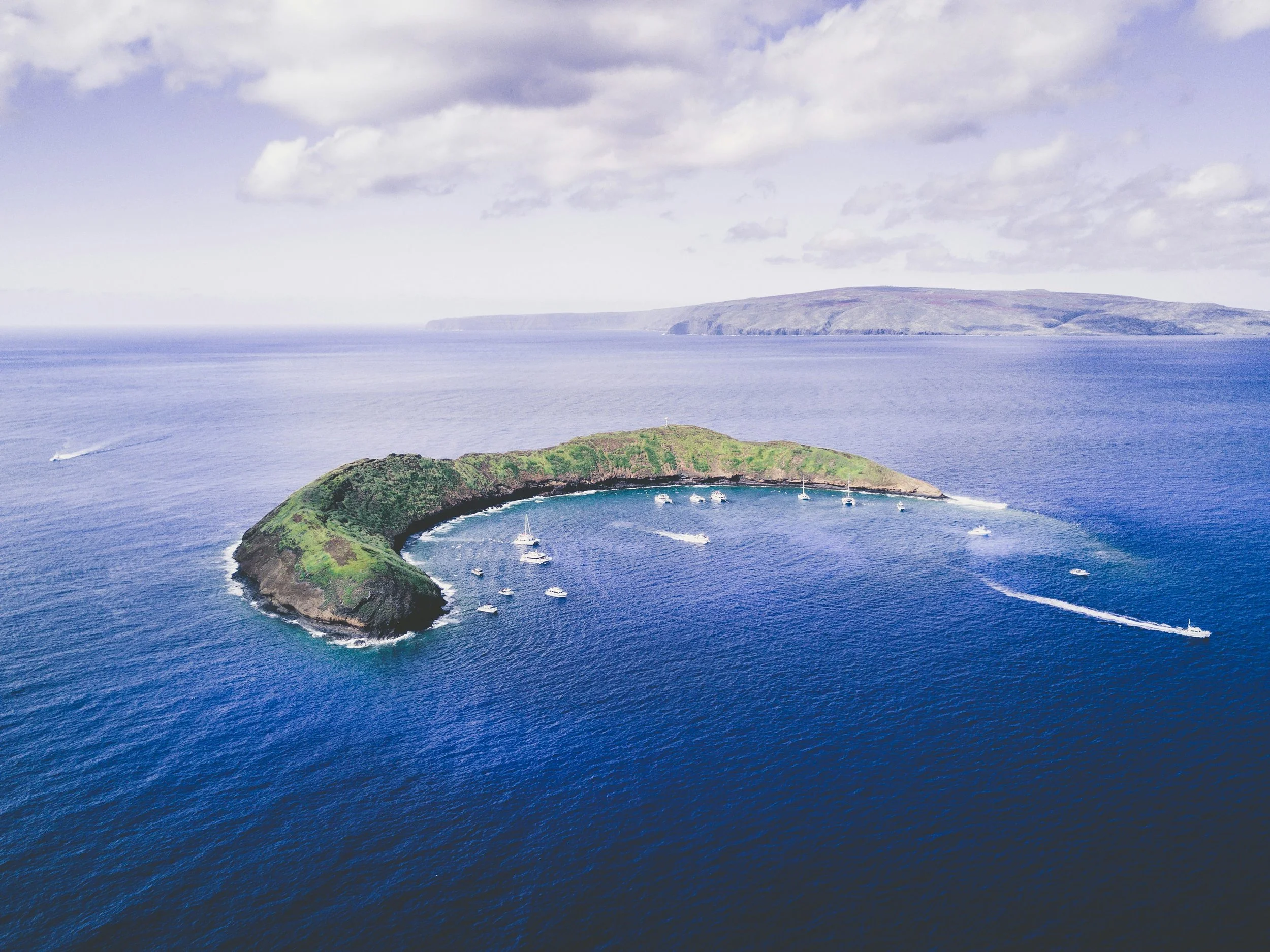
Molokini Crater. Farid Askerov. Unsplash.
Three miles off the coast of Maui, a stunning, partially submerged volcanic crater sits on the surface of the great Pacific Ocean. The Molokini Crater is a crescent-shaped island that spans over 18 acres. Its waters are filled with reefs, making for an incredible snorkeling and diving haven and offering a wide variety of 250 species of fish.
Within the shelter of the crater, marine life flourishes along Molokini’s central coral reef. The shallow area is home to fascinating tropical fish and calm, crystal-clear waters. Beyond the reef lies even more wildlife, including sea turtles, humpback whales, Hawaiian spinner dolphins, manta rays and monk seals.
Traveling in pods of up to 100, Hawaiian spinner dolphins can be spotted along Maui’s waters. Swimmers and divers should admire these creatures from afar, though, as recent laws require 50 yards of distance to be held between them and humans to protect the marine species.
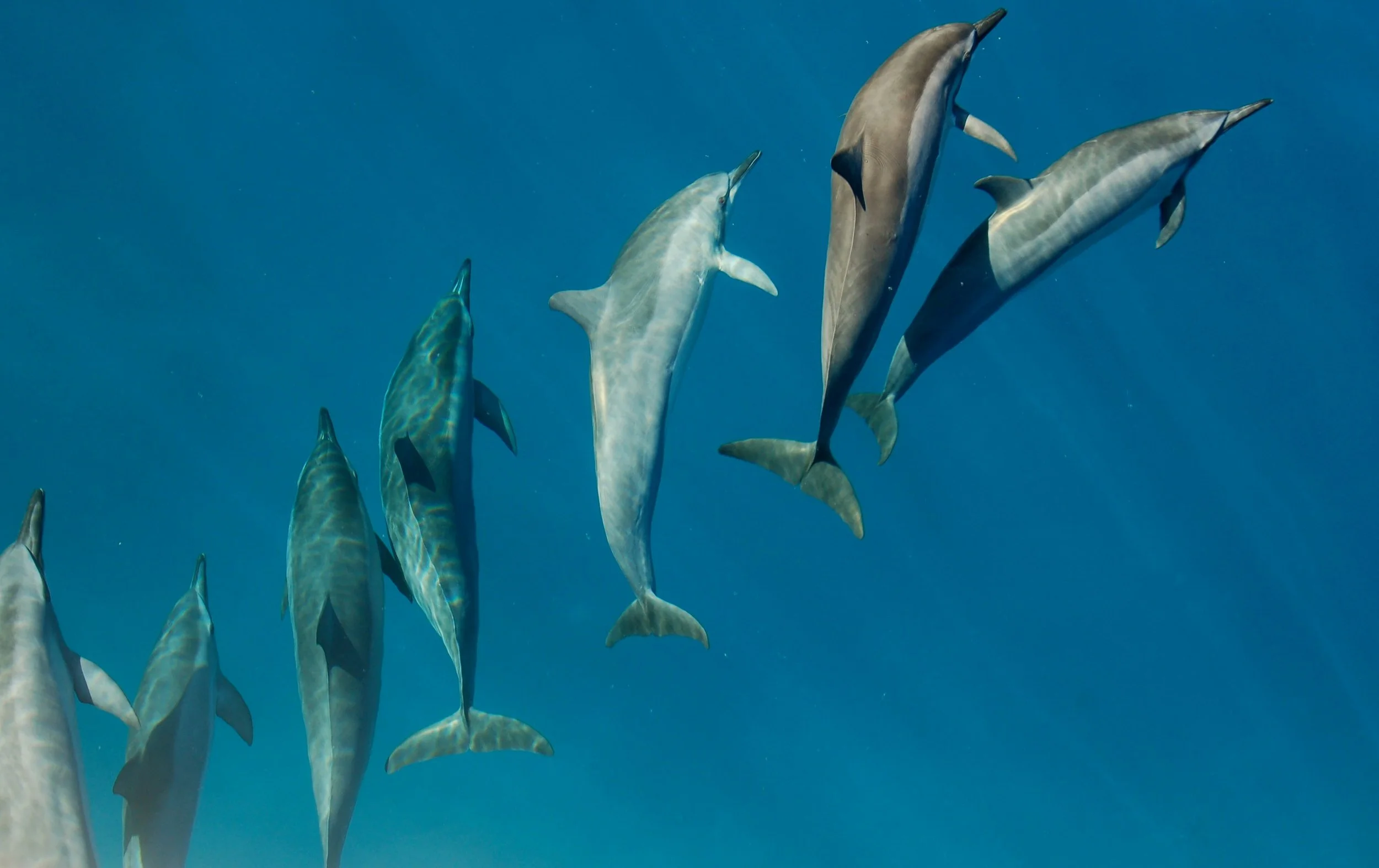
Dolphins in Molokini. Yale Cohen. Unsplash.
In addition to the diversity of marine life, Molokini is also known for being a Hawaii State Seabird Sanctuary. The two primary nesting birds on the island include the wedge-tailed shearwater, which feeds on fish and crustaceans, and the Bulwer’s petrel, which feeds on planktonic creatures on the sea surface. These birds tend to be active throughout the day, giving travelers a view of them hovering above while snorkeling.
However, the Molokini Crater was not always filled with abundant marine and wildlife. When the United States entered World War II, the U.S. military used the Molokini Crater for bomb testing and practice. The crater was found to be useful because of its long shape and thin target area that was similar to that of a battleship or submarine. Following years of protests, the U.S. government designated the Molokini Crater a Marine Life Conservation District in 1977. This conservation measure protected the area and its surrounding 77 acres, including its coral reef, its resident birds and all of its inhabiting marine life. Because the crater is a Marine Life Conservation District, the island is also uninhabited by people, protecting the wildlife that thrives there.
Since this official designation, the State of Hawaii and the University of Hawaii have worked together to monitor the water quality and reefs in Molokini. As traveling to Hawaii continues to be a controversial topic amid the anti-tourism debate, snorkeling and diving in the Molokini Crater continue to be monitored. Tour boats in Molokini are under specific restrictions in order to protect the reef, while there is also a specific number of boats that can be used at once.
Limited tours of the stunning crater are available from the Maalaea Harbor and Lahaina on Maui. While visitors are welcome throughout the day, the pristine reefs are best explored in the early morning for scuba divers and snorkelers. During the winter months, whale watching is also a popular attraction for travelers. The Molokini Crater is a truly unique snorkeling experience, offering a glimpse into the pristine and beautiful nature that Hawaii has to offer.

Kelcie Lee
Kelcie is a second-year student at UC Berkeley majoring in history and sociology, with a minor in journalism. She developed her passion for writing and journalism in high school, and has since written for a variety of news and magazine publications over the last few years. When she isn't writing, Kelcie can be found drinking coffee, listening to music or watching the sunset.