
By Caleigh Capio
Take a look inside Berlin’s historic punk club and see what it takes to survive.
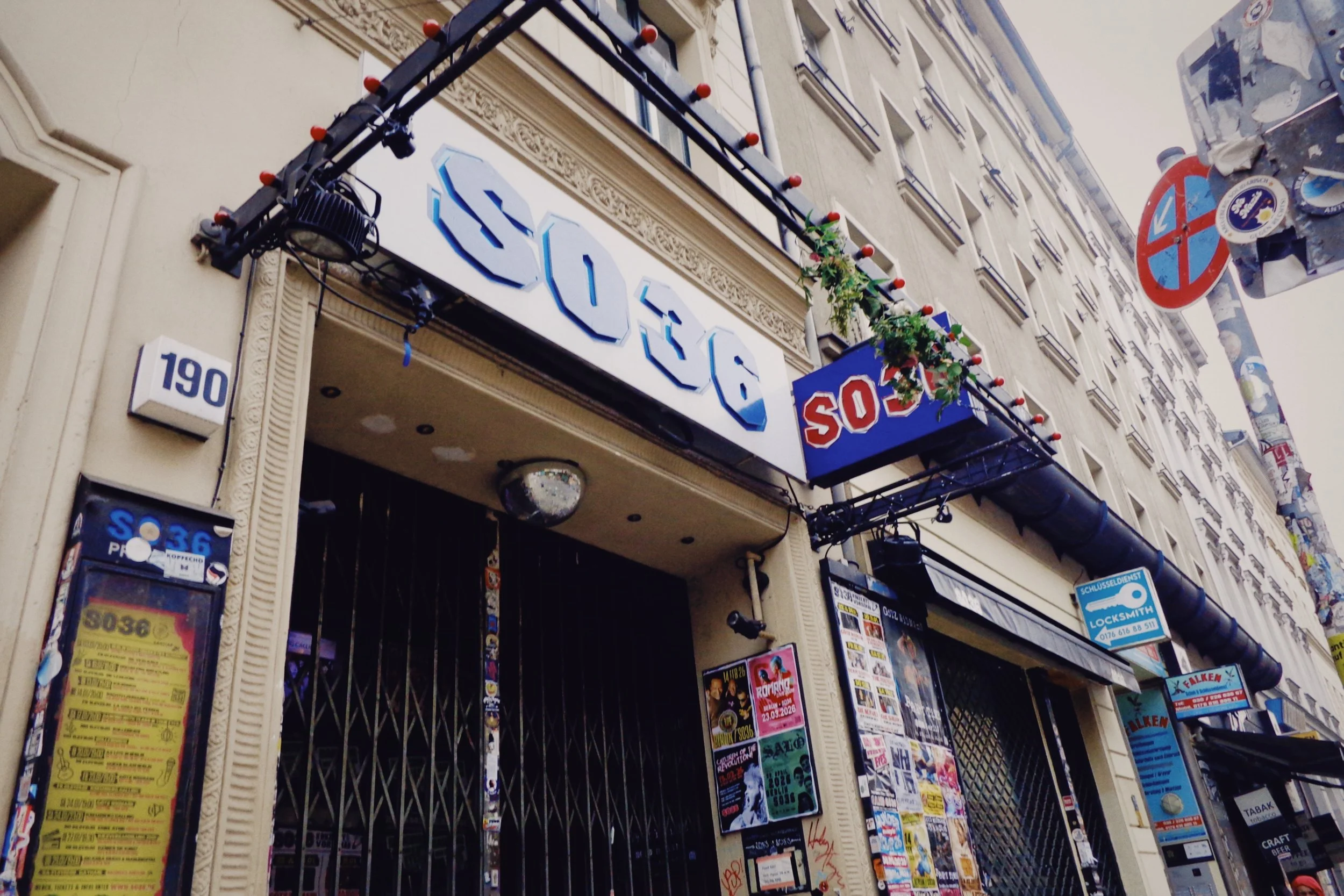
Exterior of SO36 on Oranienstrasse. Caleigh Capio.
Berlin is renowned for its nightlife, home to a thriving techno scene that UNESCO recognized for its cultural significance in 2024. It's not uncommon to find tourists swarming the doors of the exclusive club Berghain, dressed in an impression of alternative fashion and hoping to be let in. Before gaining mainstream popularity, clubs like Berghain and KitKatClub started as cornerstones of queer, alternative history in Berlin, and they continue to be so today. The clubs are localized around the city’s modern-day arts district, Kreuzberg, the center of Berlin’s countercultural life.
With its history as a squatter community in the ‘80s, Kreuzburg was a natural site for a punk scene to develop. One of the oldest punk venues in Kreuzberg, SO36, has remained a staple of punk rock bands from around the world for nearly 50 years. While visiting Berlin this January, I spoke with a manager of SO36, Nanette Feig, to investigate the punk spirit at the heart of this historic club and how it has survived throughout the years.
Catalyst Planet: Many artists and community members of SO36 reminisced on their teenage years as being formative for their involvement in the punk scene. What is your advice on how younger generations can take part in their local punk scene?
Nanette Feig: What makes this place special is that it has always been run by locals, people who needed a space. I think that it is a problem here in Berlin for youngsters. There aren't any free rooms anymore. It is the same problem in any large city. Most of the free spaces are taken. We observe that wherever people are able to get an old house, room or factory, this is like a core from which a scene can flourish. If you have a nice space where you can meet and do things and maybe make little shows or have some life, then your scene will grow around it. And that is something we always try to encourage people: Check out other places, but whenever you have the chance, get your own space. In Eastern Germany, you still have some of these free spaces, leftover school buildings or whatever it might be, which you can take, and people will be happy that youngsters stay there, because especially in rural areas, the population is very old. When the youngsters find somewhere that is worth staying, they will get support from the country, government or local government.
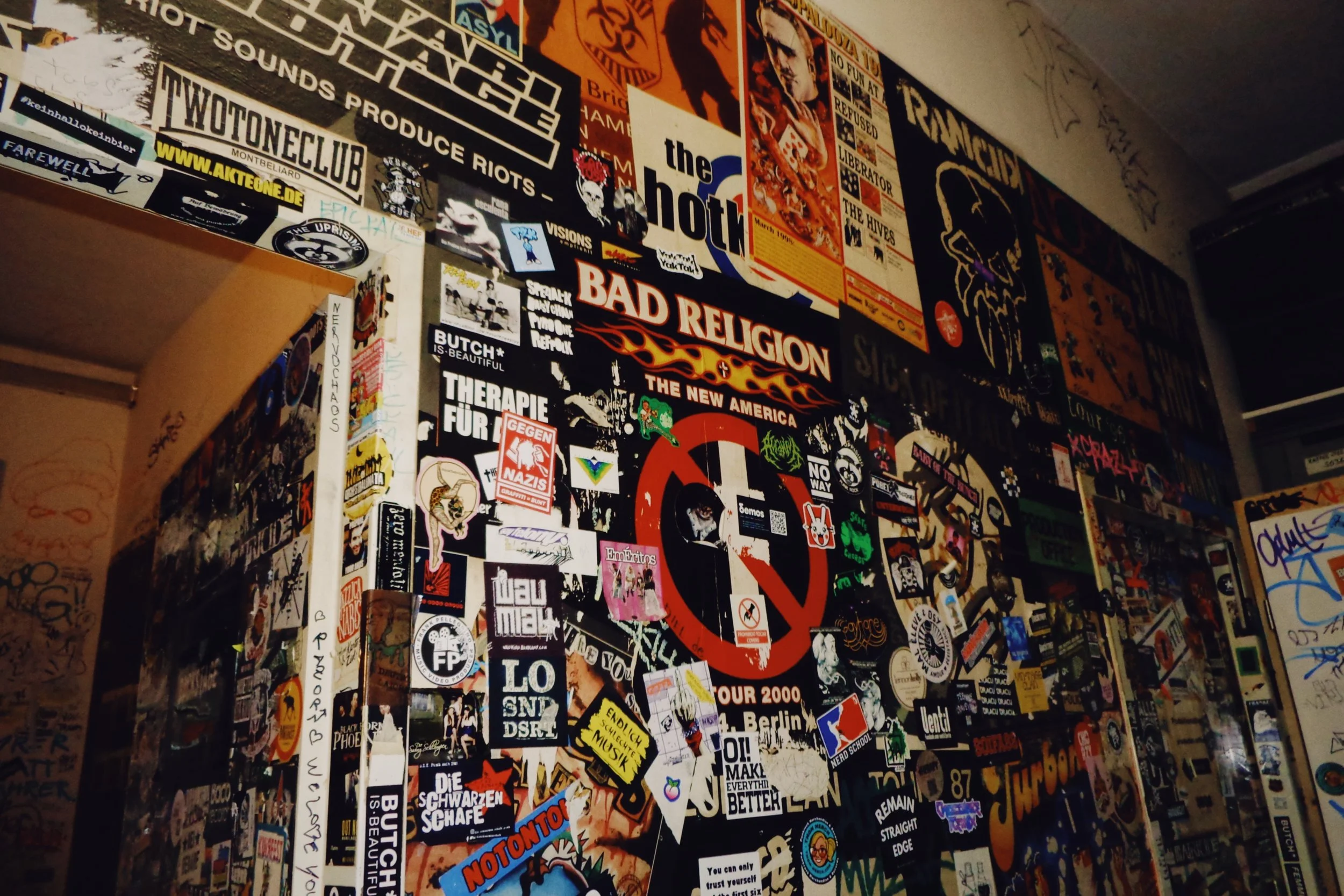
Art covering the walls inside SO36. Caleigh Capio.
How can foreigners best experience the punk scene in Berlin?
I noticed shortly before the pandemic that there was a hostile approach to tourism because of overtourism and gentrification. Flats are rented out via Airbnb, and there are no affordable flats left for the locals. Tourism was kind of part of the problem, or the enemy. It's not that bad, but you know, people are realizing Airbnb is terrible because it makes everything expensive. So what can I recommend? If people are really into the DIY scene, like getting connected to former squats and the autonomous local centers, I think it is possible, because there is quite a big expat scene. People from Eastern Europe, people from the U.S., people from everywhere. Because Berlin is the biggest city, you can find everything.
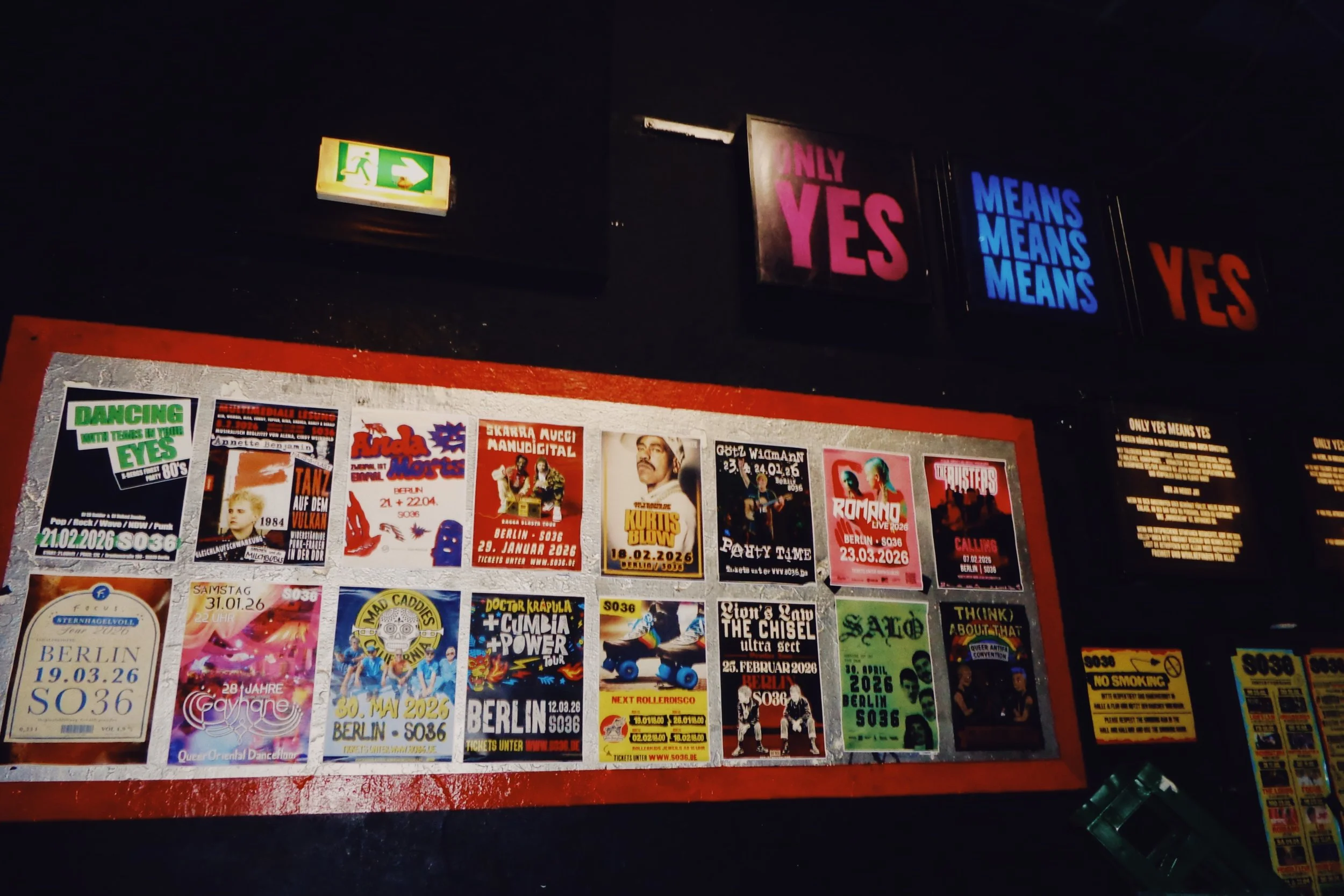
Posters with programming in the main event space. Caleigh Capio.
[Gayhane] is a good event to connect with all queer people to just meet and be involved…We will have the 28th birthday this January, but that's so unique. And it has been going on for so long, so it is something like a family meeting for the whole scene, so this is really special. So I can recommend that, and it is every month. For the more punkish people, I would recommend find a nice live concert. We have a really good rock sound here, maybe the best one in town. We have many venues, but our rock sound is really brilliant. We might not be the best place for a techno party, but for rock punk music is what we are really well known for.
How do people get connected to the punk scene in Berlin?
How to get connected is a good question. We have the Stressfaktor. It is like a calendar for the leftist scene, and…people find that it is a good start because there are soup kitchens, but also demonstrations and cultural stuff as well. You will find flyers and information at these venues, because lots of stuff is still not digital in Berlin. People like old-fashioned paper flyers. In soup kitchens, everyone is welcome. Even if you start with doing the dishes, it is a good start if you really want to be in the DIY, non-commercial stuff.
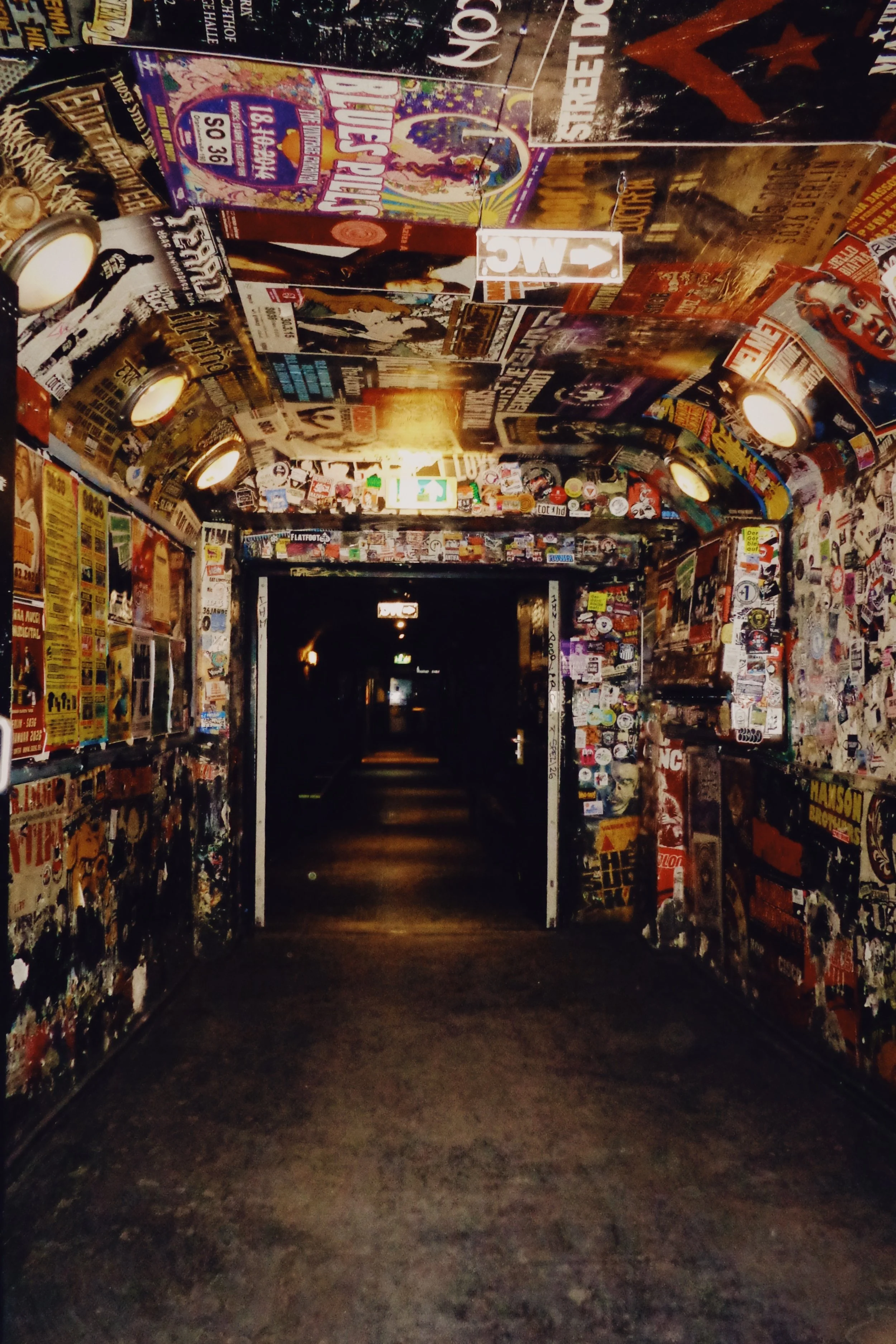
Hallway leading to the main bar area. Caleigh Capio.
How has SO36 survived as a punk venue?
We had to step further into what I would call commercial…being a DIY venue where people didn't get a proper salary. But at one point, rent was rising, and cost was rising, and the needs for bands and everyone were getting more and more. At one point, we had to professionalize. That means we are not a totally underground subcultural place anymore. We had to open up a little bit. And I understand if people do not want that. I think it is a natural cycle at one point; you might have to let go. Like, if it doesn't work out anymore, and the choice is either people get really burnt out trying to save the place or have to sell out, maybe it's time to let go. For example, we had clubs like Mensch Meier. They were younger people who ran this punk electro place. When the rent was rising, they said, “No, that’s enough. We quit. It won't be the same anymore if we go commercial, so we quit.” Some find other spaces. Some just retire. It's hard to say, in this capitalistic world, how to find a way to survive but still have fun with it, and not burn out and waste yourself in the project. People have the right to say “that's enough.”
Of course, [legalized squats] can afford it; no one gets paid, bands play for really cheap fees and everything works out without selling out and with a lot of DIY spirit. But that in this world, it only works if you don't have to pay rent. This makes Berlin special. It is that we have so many of these places left, and in our category, which is somewhere between commercial and DIY, we even have another layer of nice venues where people are doing this zone in between. That’s what’s special. I think few cities in Germany…have such a wide scene, from gay Asian to hardcore cross punk and everything in between.
Do you have any final advice for travelers?
A plea. Please don't use Airbnb! It really fucks us up. It's like 30,000 flats lost for locals because it goes to Airbnb.
Caleigh Capio
Caleigh is a recent graduate from Wellesley College with a B.A. in English and a minor in Italian Studies. She has always had a passion for storytelling, language and culture studies, and all things literary, and will continue to pursue these interests. In her free time, she enjoys reading, writing book reviews, spending time with friends, and discovering new music.