
Kaitlin Murray
Explore the Indigenous villages, wildlife, and waterways along the Amazon River in Brazil as they adapt to tourism.
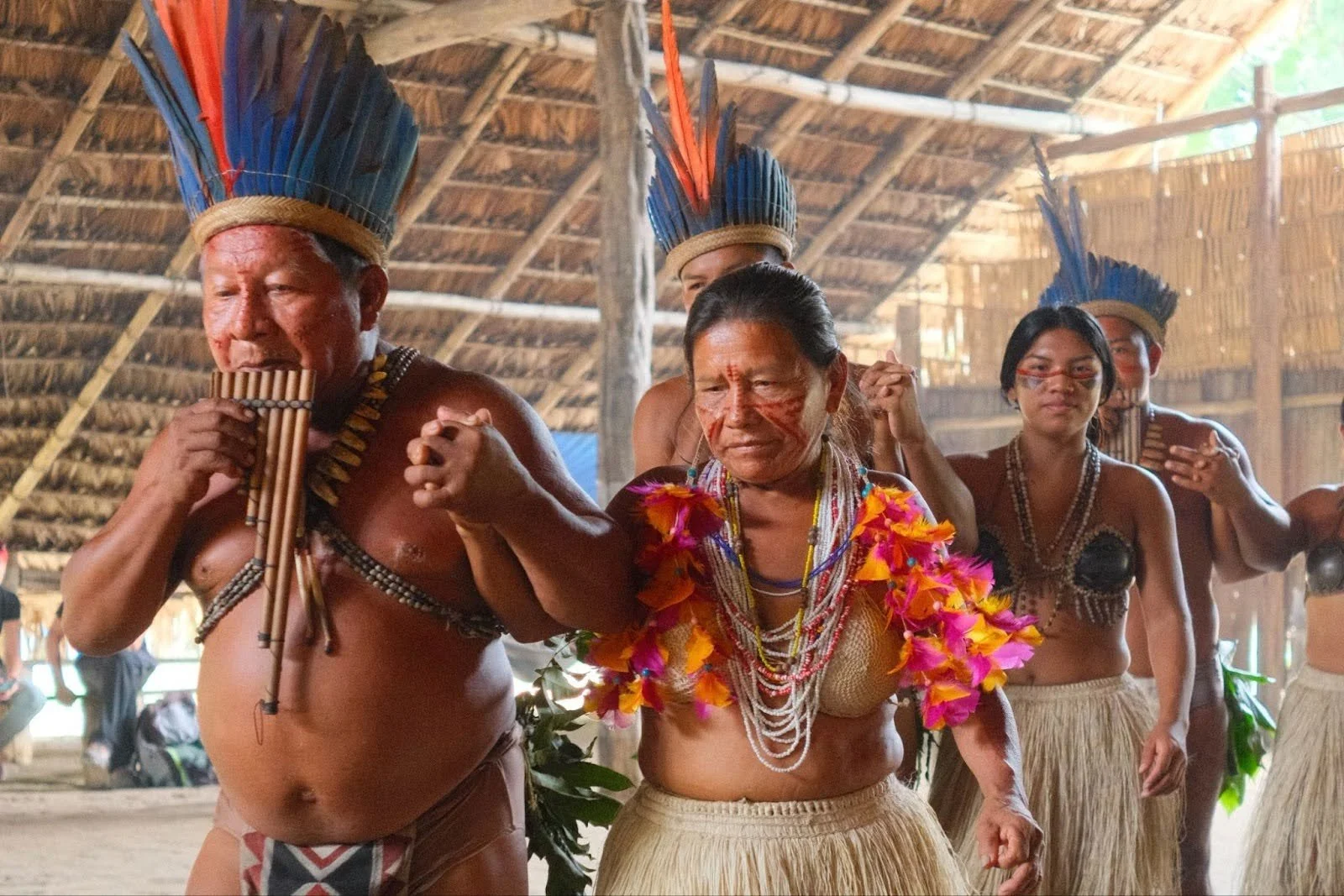
The Indigenous Desana people welcome visitors with a traditional dance. Kaitlin Murray.
Bouncing in a speed boat along the Rio Negro, the largest tributary of the Amazon River, I see the opaque dark waters extend in every direction. Leaving the busy port of Manaus, the capital city of the northwestern state of Amazonas, I look back at the skyline rising above the forest. Skyscrapers, freeways and shopping malls are the last things I expect to see in the middle of the Amazon rainforest. Before arriving in Brazil, most of what I had heard about the Amazon came from media coverage of illegal logging, deforestation or wildlife protection, not from stories about a bustling metropolis of more than two million people. Yet Manaus has existed for centuries, having been founded in the 17th century as a Portuguese fort and expanding rapidly during the rubber boom of the 19th century.
Despite its size, Manaus remains accessible only by air or river, with few roads connecting it, as the rainforest extends for long distances in every direction. Urban expansion in one of the most biodiverse regions on Earth carries far higher stakes, raising urgent concerns about deforestation, farmland expansion and river pollution from informal housing. While it may seem as though the city coexists with nature because of its location in the forest, the reality is quite the opposite. As our boat continues deeper into the trees along the river, I find myself contemplating this paradox: How can the traditional ways of life in the Amazon and urban expansion coexist, and what role is tourism playing in all of it?
As part of a river day tour, we participate in numerous activities that offer tourists a glimpse of the rainforest without trekking deep into the wilderness or traveling long distances. Our first stop is a visit with one of the river's most famous inhabitants, the pink river dolphin, commonly known as the boto. Listed as endangered, these dolphins are currently facing threats from river pollution and habitat destruction. I notice this reality as soon as we leave the main port, witnessing the extent of container ships, factories and speedboats on the water.
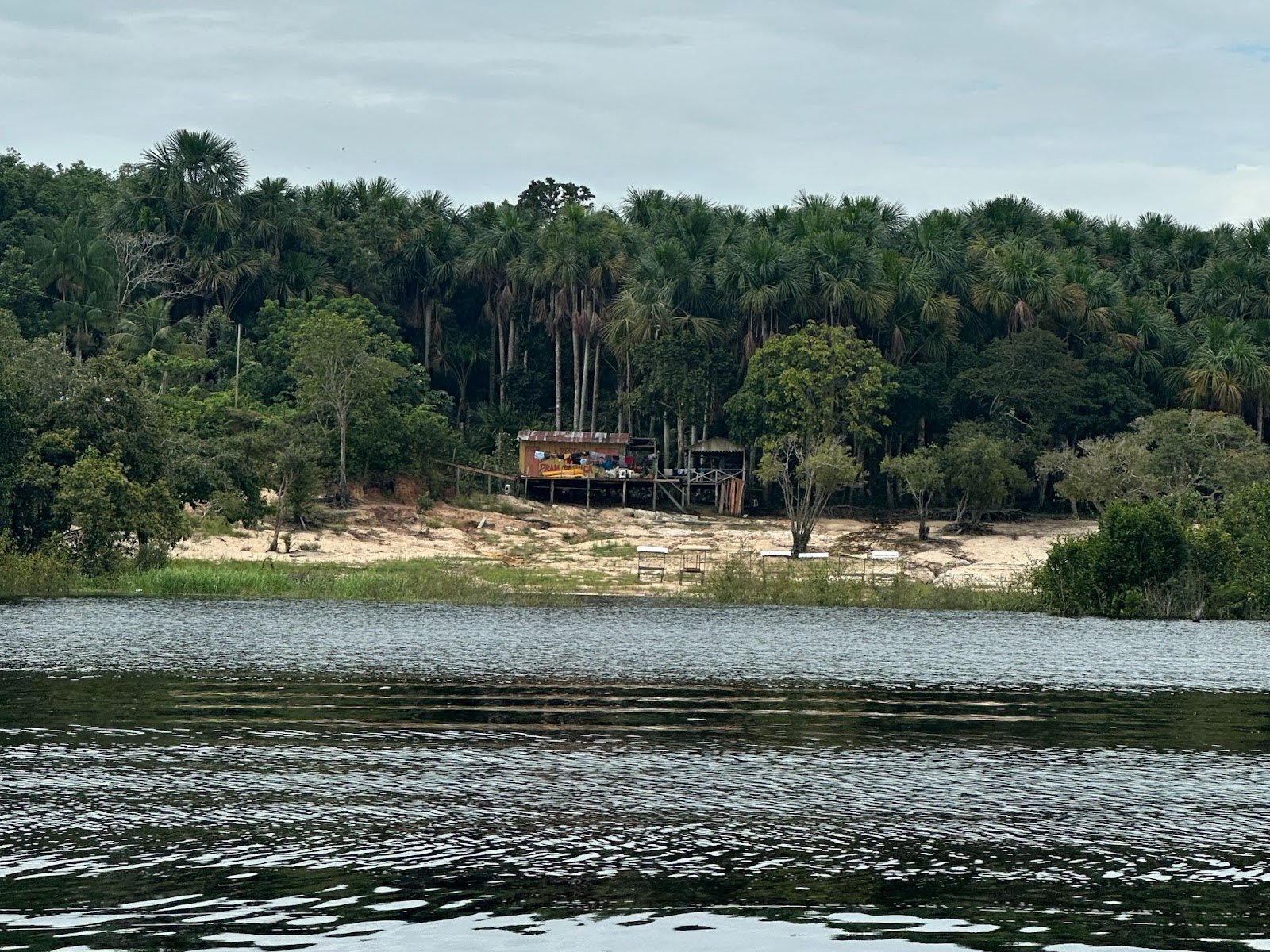
Stilt houses along the Rio Negro. Kaitlin Murray.
In the dark waters of the Rio Negro, their pink bodies appear almost orange-tinted as they rise to the surface to take fish offered by local fishermen. While these dolphins are considered wild and free to come and go from the shore, they have grown accustomed to being fed by the fishermen, who encourage visitors to jump into the water and swim alongside them. Floating in the dark waters, I feel a sense of awe, finding myself in the same river as numerous animals, including snakes, piranhas, pirarucus, manatees and otters. Looking into their eyes, I remember the Indigenous stories that our guide had recounted earlier: The dolphin is believed to transform into a man at night, walking into villages and seducing young women before returning to the river by dawn. It is also said that looking into their eyes will bring you nightmares for the rest of your life. These stories remain prevalent even amid growth and urbanization, as Indigenous communities continue to share them with younger generations and foreigners.
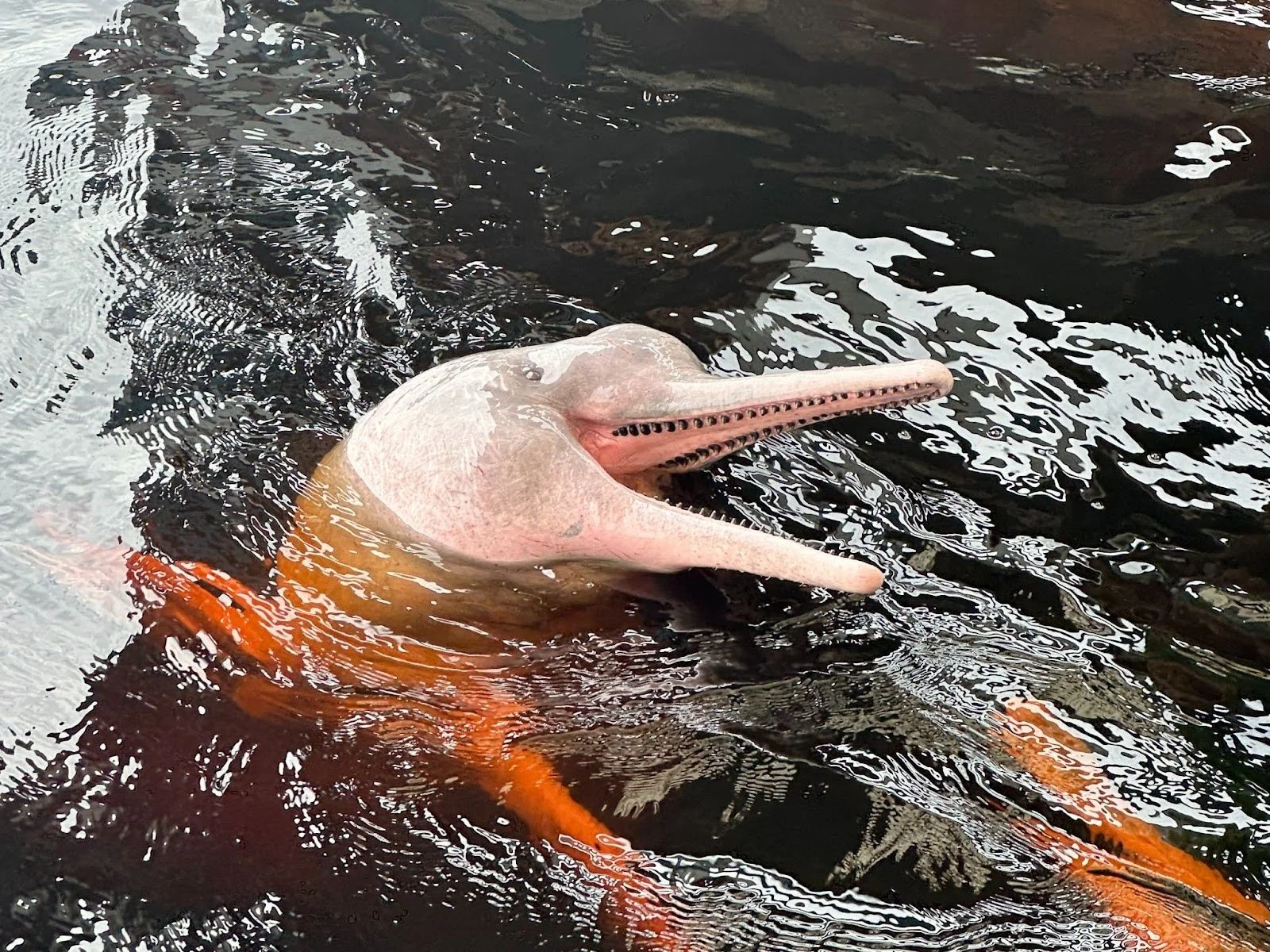
Pink dolphins in the Rio Negro. Kaitlin Murray.
Further along the river, the boat docks at an Indigenous village that now incorporates tourism into its economic model. Visitors are welcomed with performances and cultural demonstrations, and, in return, they are asked to purchase a handicraft or make a donation. As soon as we enter, the welcome performance takes place, held in a large wooden structure marking the communal space and the village boundary. Beneath it, men and women perform ritual dances in circles, accompanied by handmade musical instruments. Following the performance, the chief, in an elaborate feather headdress customary of the Desana people, shares stories about their cosmology and social structure. Afterward, we are taken to the kitchen, where we learn about local fruits and forest foods, such as Brazil nuts, tapioca, cassava, avocados and maniuara ants.
Speaking with the tribe's chief through our guide's translation, I learn that the community came from northern Brazil, nearly 600 miles away, and settled here for the city's economic prospects. Today, they benefit from tourism-related opportunities while maintaining their way of life, living in a traditional village hidden by trees to keep visitors out, yet still enjoying modern amenities, such as Wi-Fi, mobile phones and payment terminals. However, some families in the tribe have already moved elsewhere, unhappy with how tourism is exploiting their culture for profit.
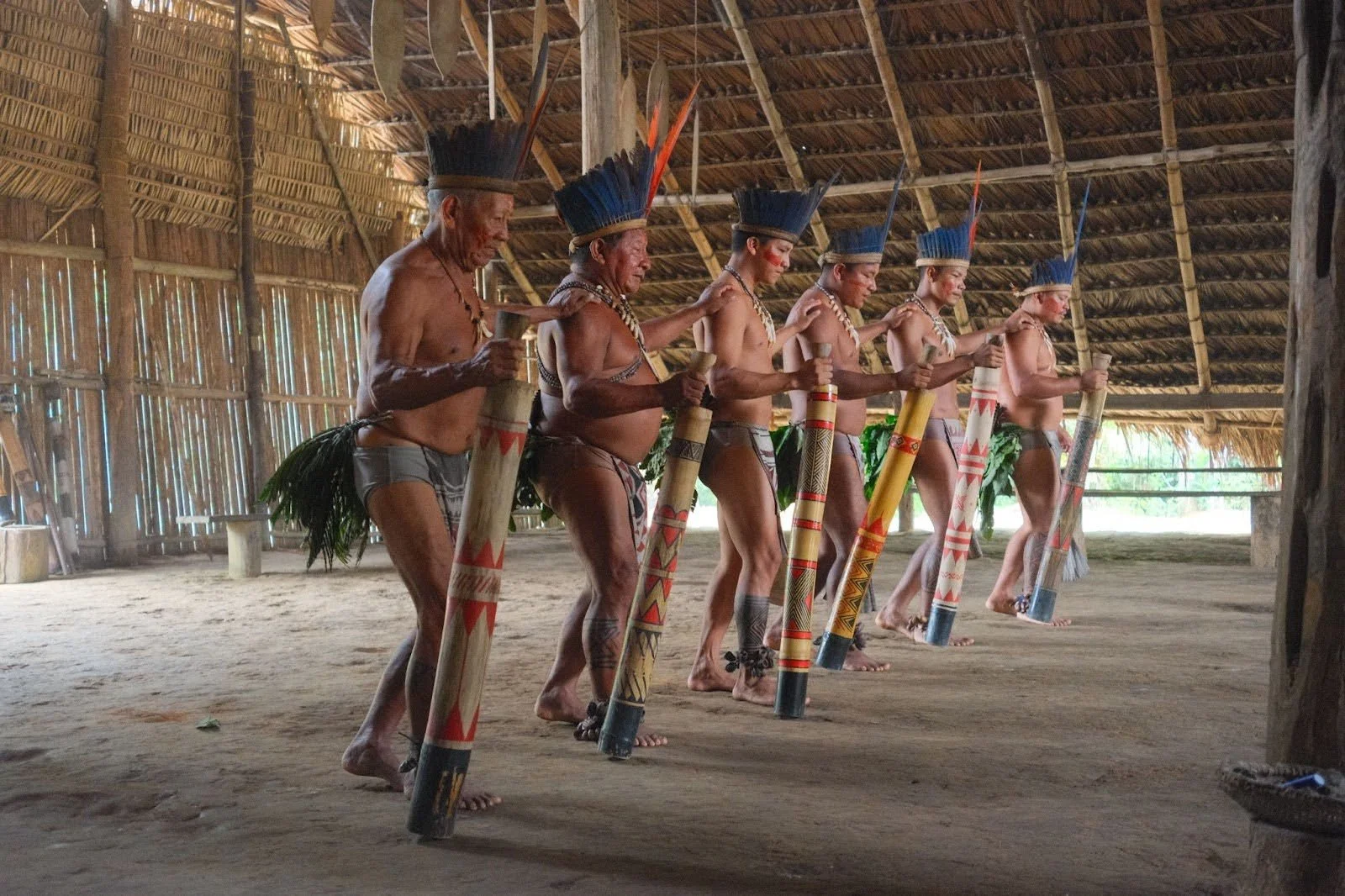
The Desana tribe welcomes visitors with a traditional dance. Kaitlin Murray.
Witnessing the adaptation of Indigenous communities to the world of cultural tourism is a double-edged sword. As an anthropology student, I have learned about the current dilemmas facing Indigenous communities around the globe, who struggle against being exoticized or profited from by international tourism companies. On the other hand, economic opportunities such as this can benefit communities in the long run, provided they generate sufficient revenue relative to the profits of tourism companies.
A short distance away, another floating barge on the water is the breeding ground of the pirarucu fish, which fishermen are raising to make money through river aquaculture. These are among the world’s largest freshwater fish, weighing up to 440 pounds and growing up to 10 feet. From the edge of the platform, their massive bodies glisten in the sun, the light reflecting off their red and green scales. The fish surface when fishing poles are dropped, as the local fishermen make a living off tourists playing a game of tug-of-war with them. It is fascinating to see how the fishermen's ingenuity has enabled them to earn extra income, living and working along the river in small villages with limited access to other opportunities.
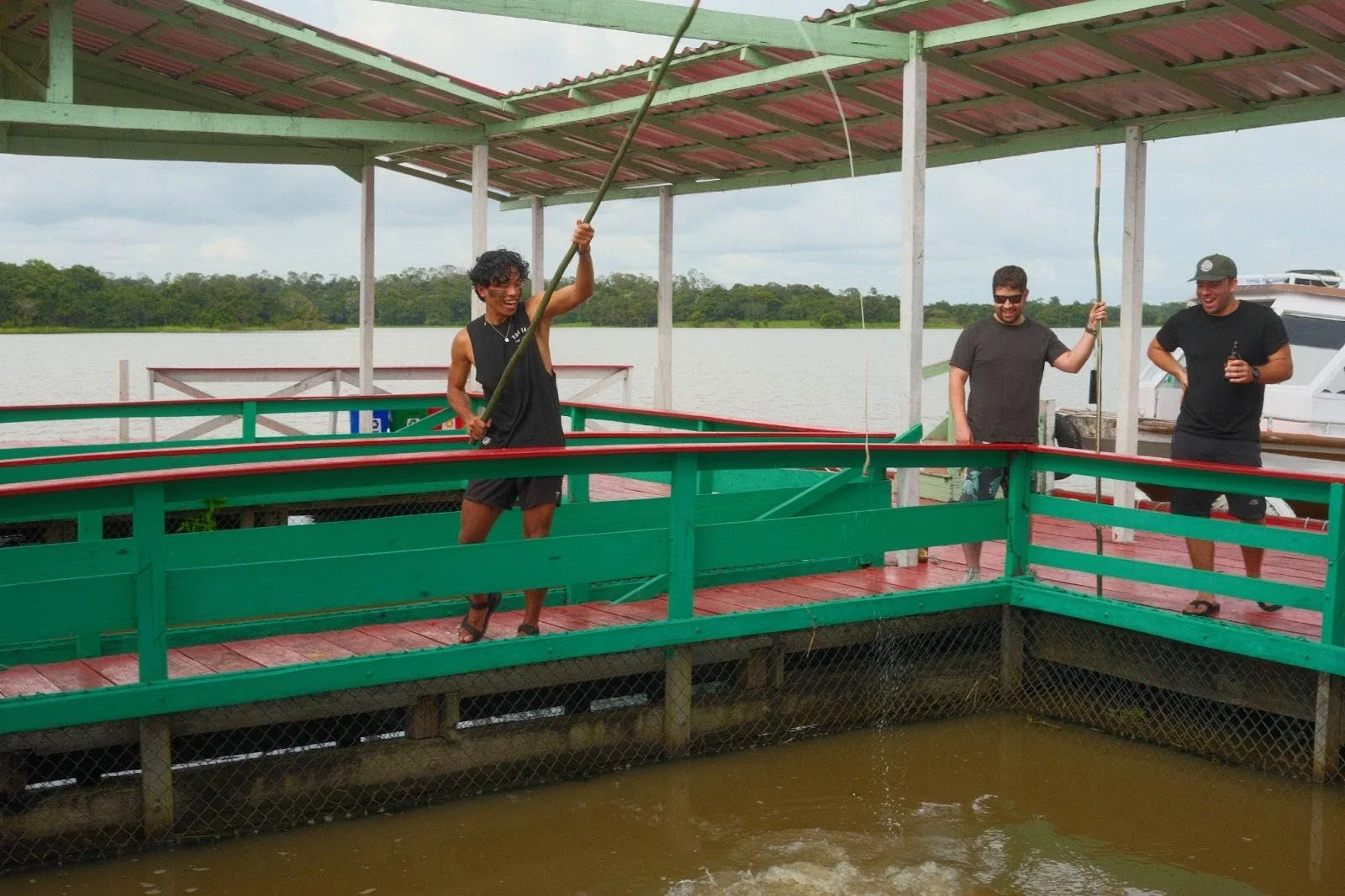
Fishing for pirarucu fish on the Rio Negro. Kaitlin Murray.
The final stop is one of the region’s most striking natural phenomena: the Meeting of the Waters. This is where the Rio Negro and the Solimoes River converge to begin the Amazon River. As the boat approaches, the contrast of the two rivers becomes immediately clear. The Rio Negro’s dark, tea-colored water hits the Solimoes’ light brown, milky water, creating what looks like milk pouring over black coffee. From above, the boundary of the two rivers is almost clear, as they don’t immediately mix due to differences in temperature, density and current.
Throughout my time in Manaus, I witness the ingenuity and changes that local people are creating in response to tourism and expansion, as they seek to balance the city with the natural world. Fishermen are supplementing their income by capitalizing on visitors’ encounters with the fish they raise. Indigenous communities are incorporating tourism without fully abandoning their way of life. Visitors can see pink dolphins while still allowing them to be wild.
Whether these shifts will ultimately protect the natural world and improve people’s livelihoods at no expense to another remains uncertain. As of now, it all appears to be balancing on a very fine line, with the potential to go either way. How will development and tourism threaten the rainforest and river ecosystems? Can the two co-exist together? At a time when an expanding metropolis sits in the heart of the most biodiverse place on Earth, the future of the city, the surrounding forest and the traditional ways of life may depend on whether urban development, tourism and Indigenous cultures can work together for the common good.
GETTING THERE:
Located deep within the Amazon rainforest in the northwest of Brazil, Manaus feels entirely cut off from the rest of the country. There are few roads leading out of the city, and distances between towns are vast. There are no trains or overland transport for visitors, as most local people use the river to get around. For travelers, the easiest way to reach Manaus is by flying into Eduardo Gomes International Airport, which connects the city to major hubs, such as Rio de Janeiro and Sao Paolo, as well as destinations across South and North America.
For those seeking a more local, budget-friendly adventure, river travel is an alternative. Ferry boats connect Manaus to other villages along the Amazon River, but the journey can take days. While it is an incredible way to experience the river, it is not recommended for first-time visitors or travelers seeking a comfort-oriented experience.
I journeyed with I’m Here Travels, a group tour company based in the Philippines that creates immersive, community-driven global experiences. They focus on crafting curated itineraries and authentic local experiences in more than 10 countries. In partnership with Compass Brazil, they designed a unique itinerary for us in Manaus to experience the best of the Amazon River and rainforest. Compass Brazil is a leading tour operator active across Brazil, helping travelers explore the country and make a positive impact on their destinations. They prioritize sustainable travel, ensuring that every experience is rooted in ethical principles and adheres to responsible travel guidelines.
Kaitlin Murray
Kaitlin Siena Murray is a travel journalist and global storyteller documenting cultures, historical places, and the people and social impact movements helping the world. Raised worldschooling across more than 129 countries with degrees in anthropology and history, her writing is driven by a commitment to global citizenship, capturing the diversity and beauty of the world through the lens of culture, history, and social change.