
Sophia Michelen
A journey through Arctic Norway examines the Northern Lights from scientific, geographic, and cultural perspectives, including aurora research, Sami traditions, and the landscapes of the Norwegian coast.
Images by Sophia Michelen
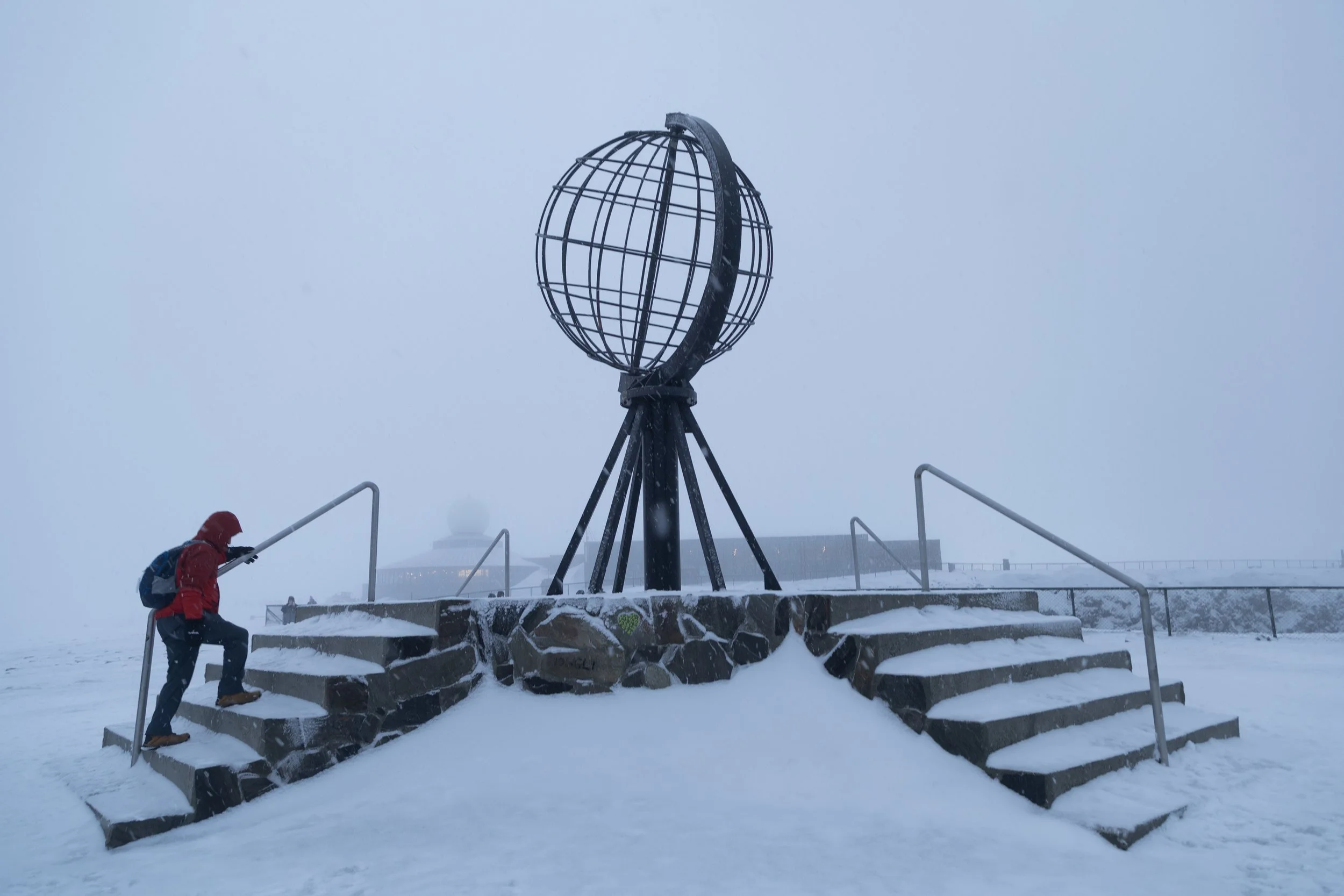
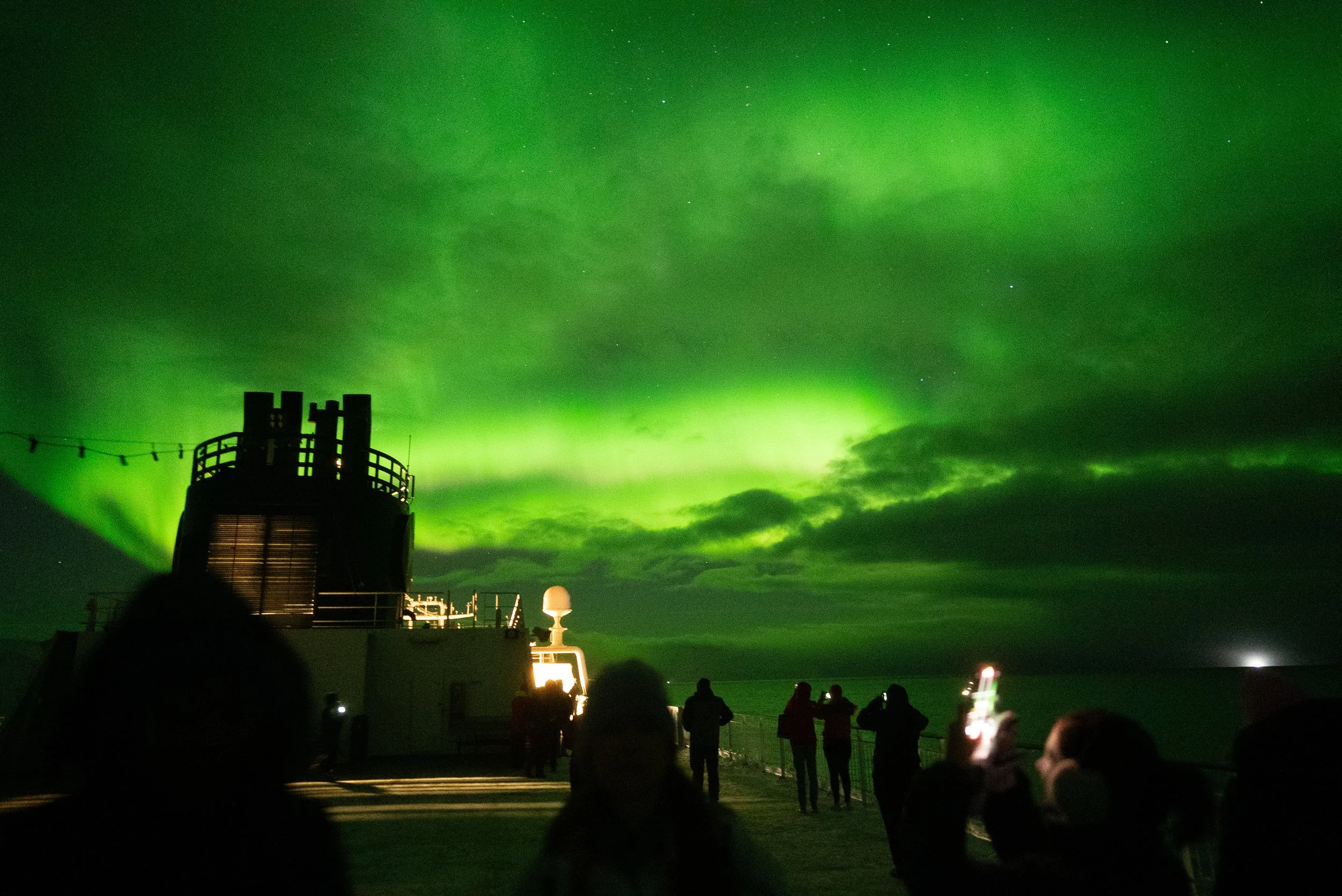
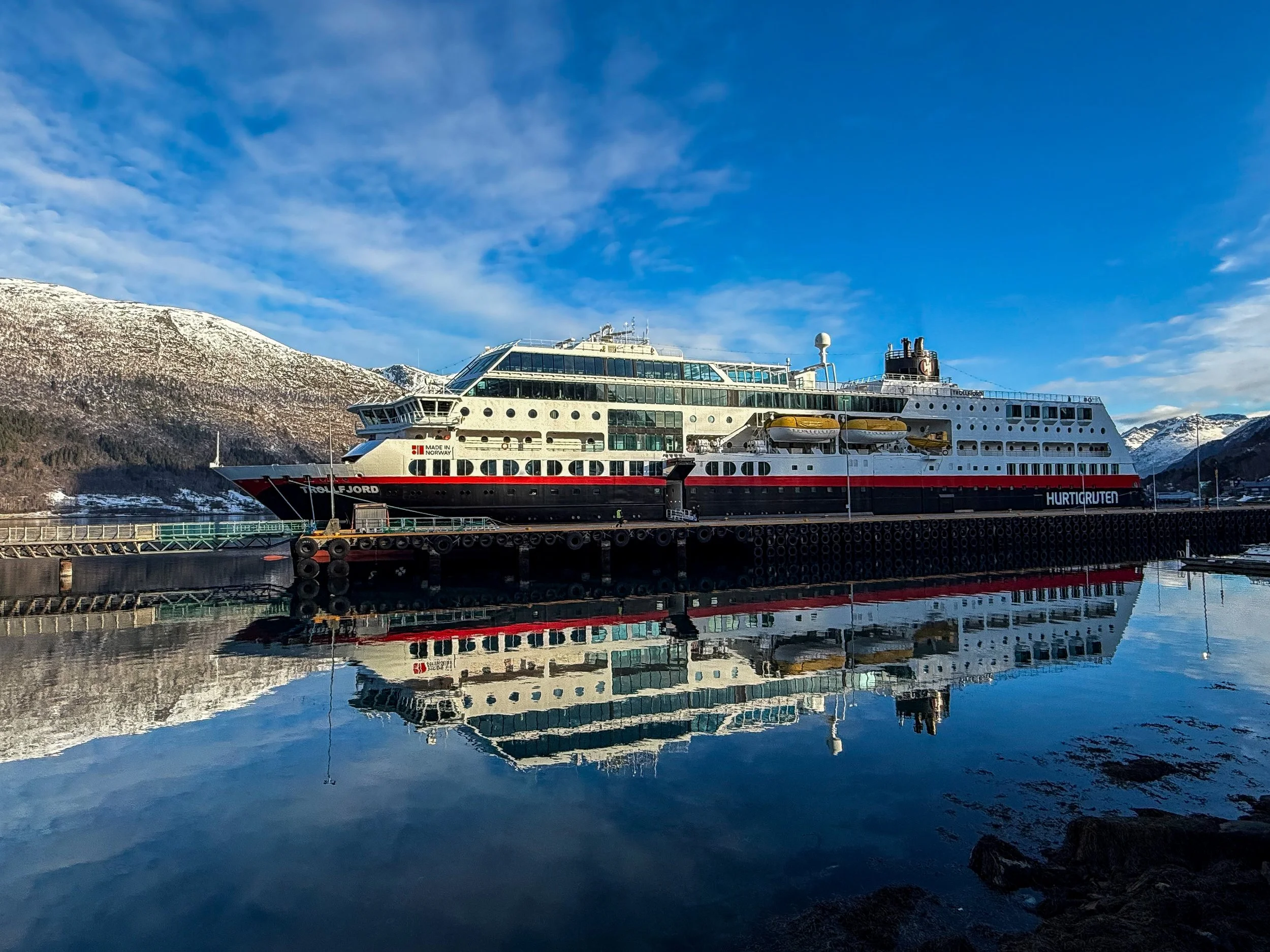
The deck lights are dimmed to red as the MS Trollfjord moves quietly through the Arctic night. Beyond the railings, the sea is black and nearly indistinguishable from the sky, and passengers stand in silence, watching. I am among them during the inaugural Hurtigruten Astronomy Voyage, sailing south from Troms along Norway’s northern coast aboard the North Cape Line. Over six winter nights, the ship travels through one of the world’s largest aurora hotspots: Troms, Finnmark, and Nordland, where long polar nights and clear Arctic skies create some of the best conditions on Earth for seeing the Northern Lights.
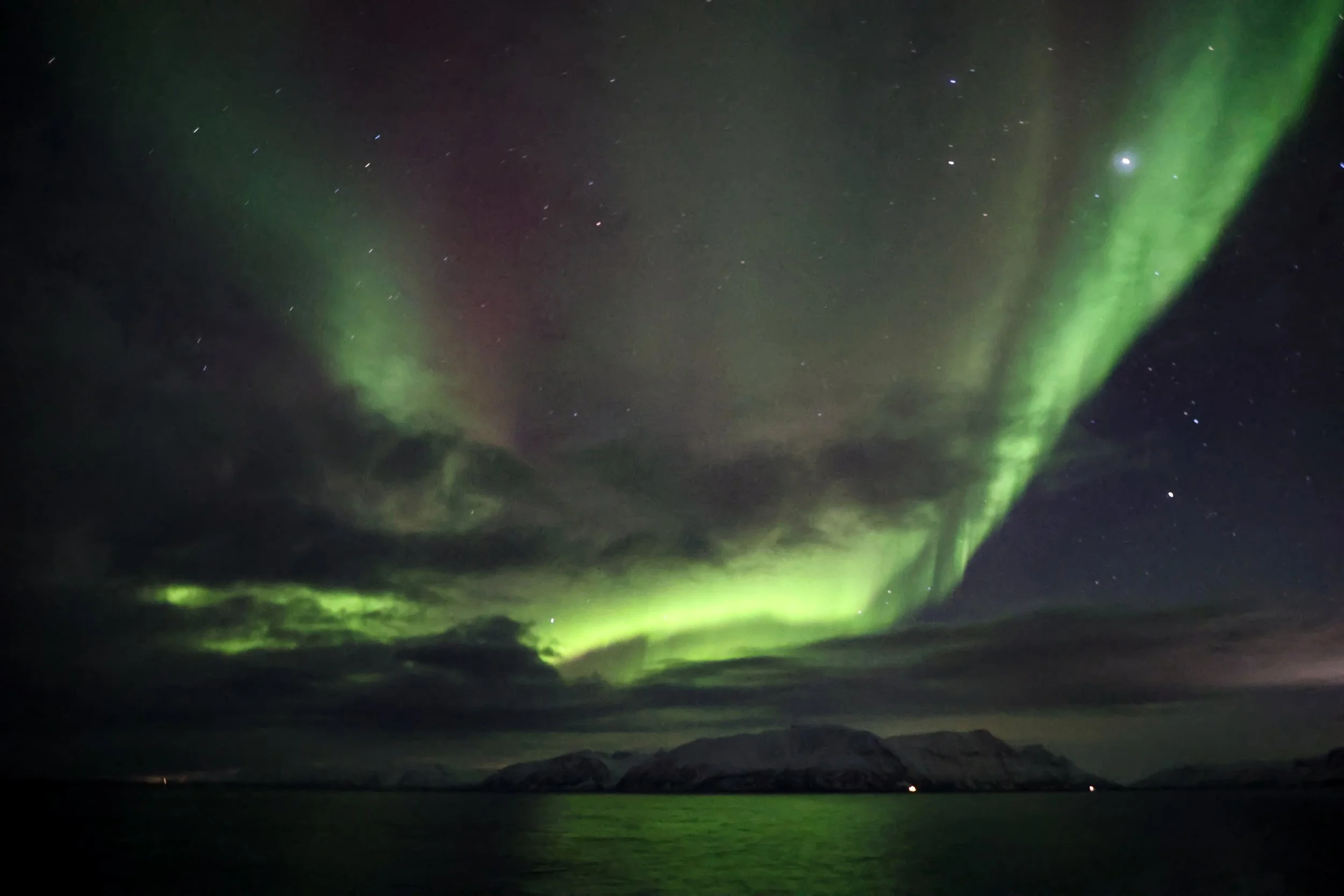
Above us, the first faint ribbon slowly appears. For centuries, the aurora has inspired mythology and speculation. Yet the phenomenon unfolding above the Norwegian coast begins far beyond the horizon, at the sun itself. “The aurora is the end of a chain of invisible processes,” explains astronomer Tom Kerss, Hurtigruten’s Chief Aurora Chaser, during a lecture earlier that afternoon. Charged particles carried by the solar wind collide with Earth’s magnetic field and are guided toward the poles. When those particles strike gases high in the atmosphere, they release energy in the form of light. From the deck of a ship moving through Arctic Norway, the science becomes something else entirely: a shifting curtain of green and pink rippling across the sky.
The Geography of the Lights
Northern Norway sits beneath the auroral oval, a ring-shaped zone around the magnetic poles where the lights appear most frequently. Long winter nights, minimal light pollution and open Arctic skies make the region one of the world’s most reliable places to witness the phenomenon.
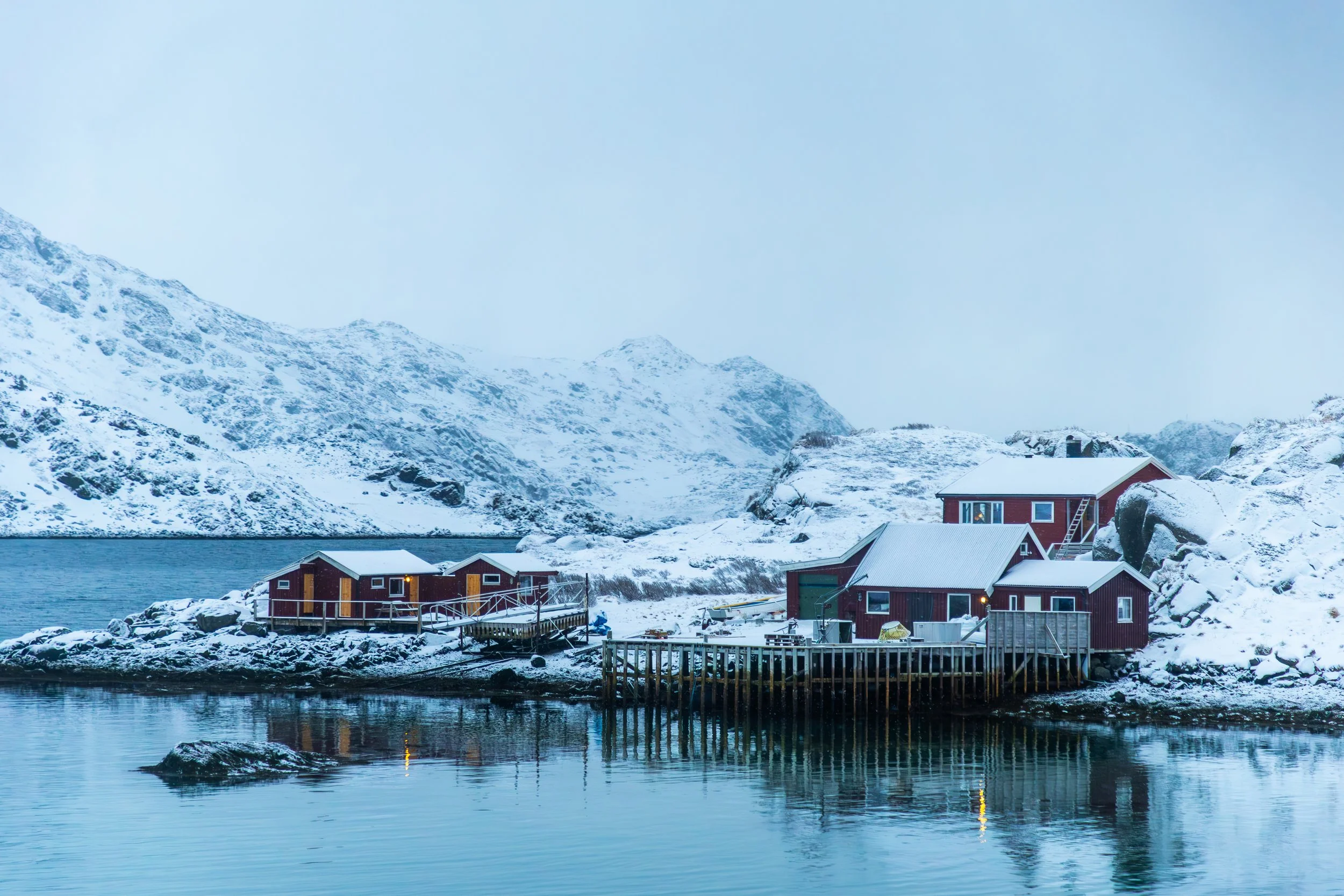
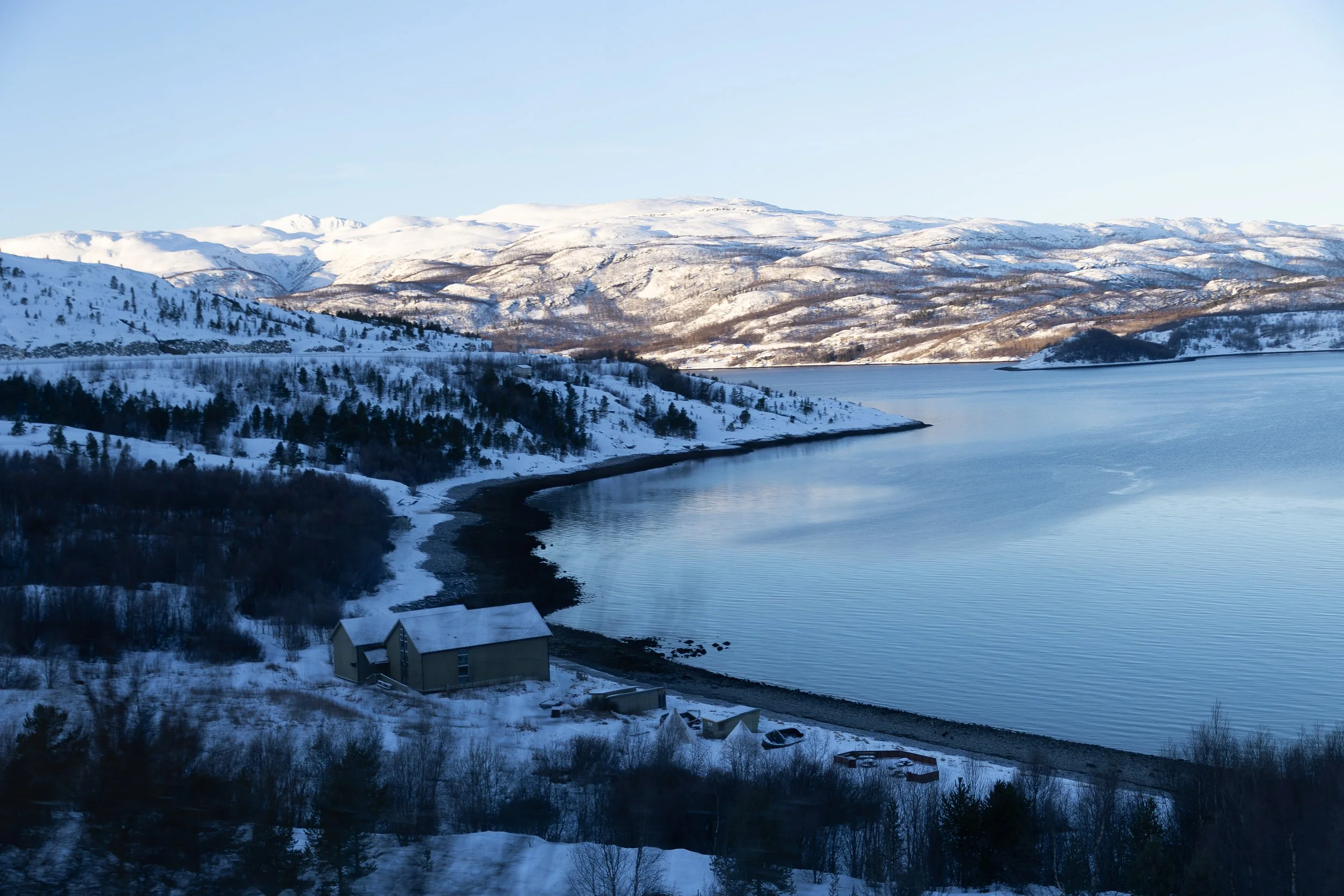
Traveling by sea also adds the advantage of mobility. Rather than waiting in a single location for the sky to clear, ships can move along hundreds of miles of coastline, navigating between weather systems and cloud cover. Along this stretch of Norway, the landscape unfolds gradually, with snow-covered mountains rising directly from the sea, small harbors tucked between fjords and villages that appear briefly along the shoreline before disappearing again behind headlands.
For Kerss, who has spent years studying and photographing auroras across the Arctic, Norway’s coast remains uniquely suited to observing the phenomenon. The lights themselves vary constantly, sometimes appearing as faint arcs barely visible against the stars and other times erupting into sweeping curtains of green stretching from horizon to horizon. On rare nights, red and violet hues ripple across the sky as oxygen and nitrogen react at different altitudes in Earth’s upper atmosphere. Even with the science explained, the moment when the sky begins to move feels almost surreal.
Life Along the Arctic Coast
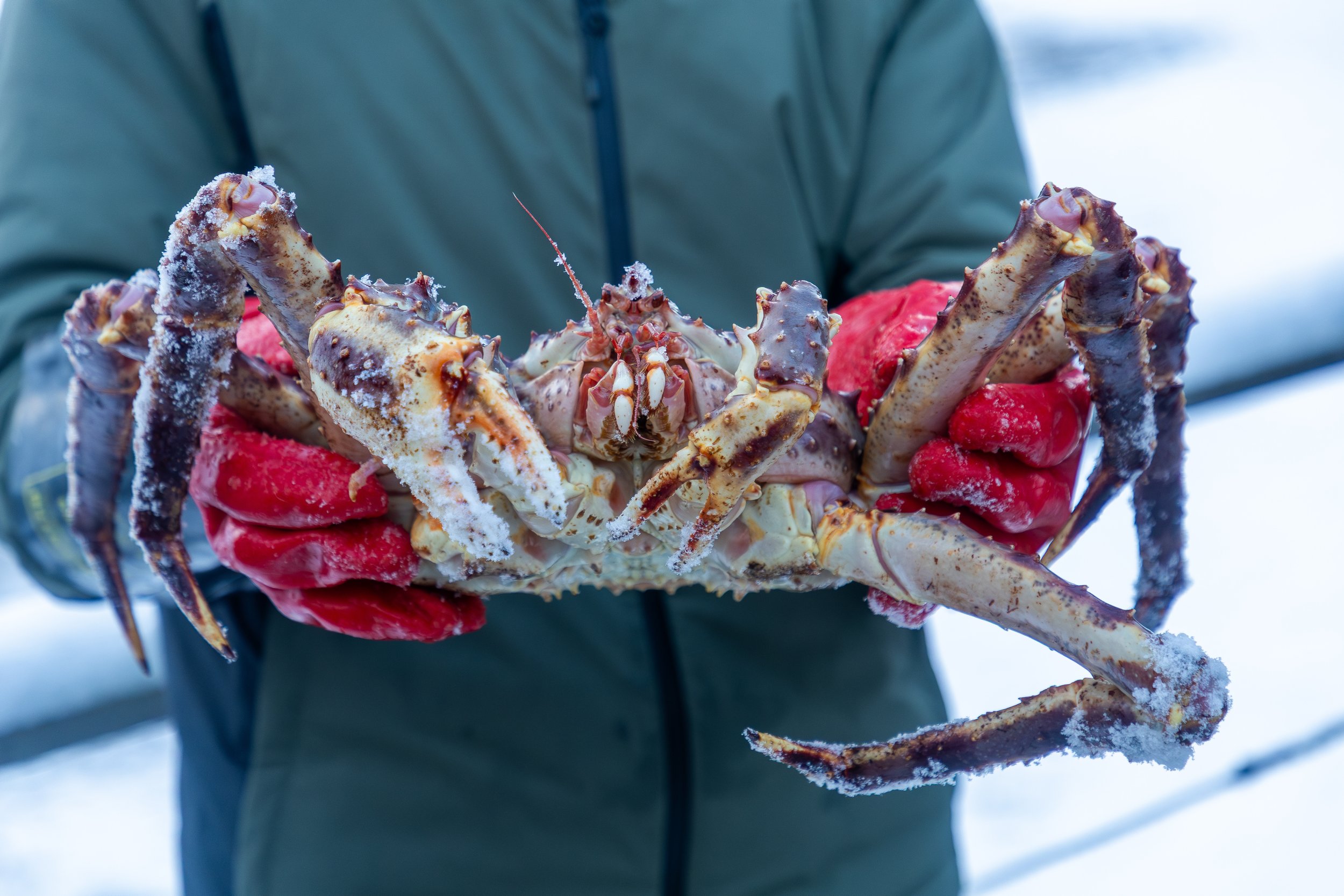
During the day, the voyage moves between small Arctic communities shaped by the sea. In Honningsvag, colorful wooden buildings cluster around a harbor where fishing boats remain central to the local economy. Offshore, the Barents Sea provides king crab, one of the region’s most recognizable delicacies. Originally introduced to these waters decades ago, the enormous crustaceans have become a defining part of northern Norway’s fishing culture. Visitors heading out onto the surrounding waters often end the excursion with a simple meal of fresh crab served with little more than bread and butter.
Further south, the landscape shifts again. Jagged mountain ranges rise sharply from the sea, their peaks dusted with snow even in early spring. The coastline twists through narrow fjords and open stretches of water, where the horizon seems to extend endlessly northward. Moving through these waters offers a sense of scale that is difficult to grasp from land alone.
Images by Sophia Michelen
Alta and the Study of the Aurora
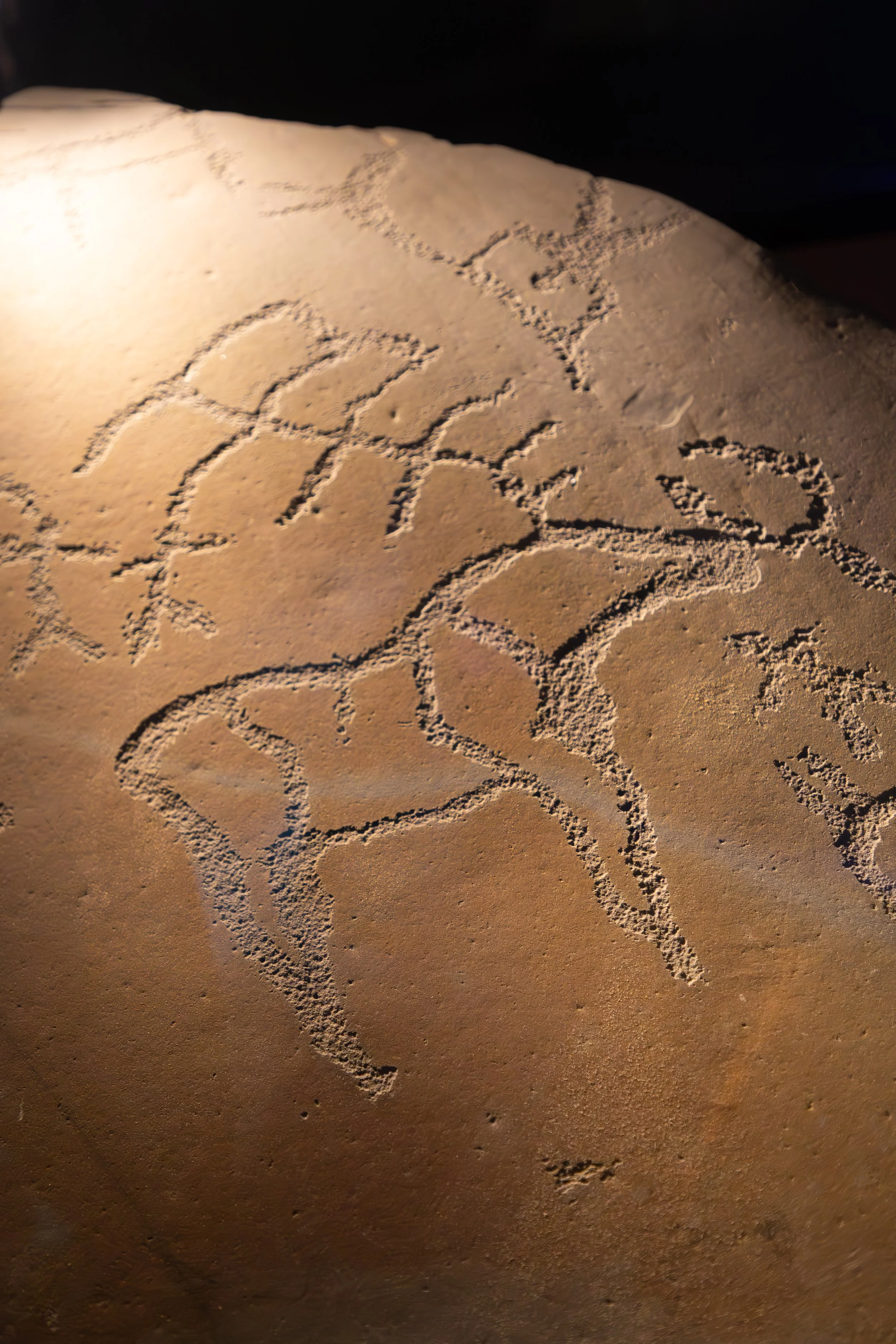
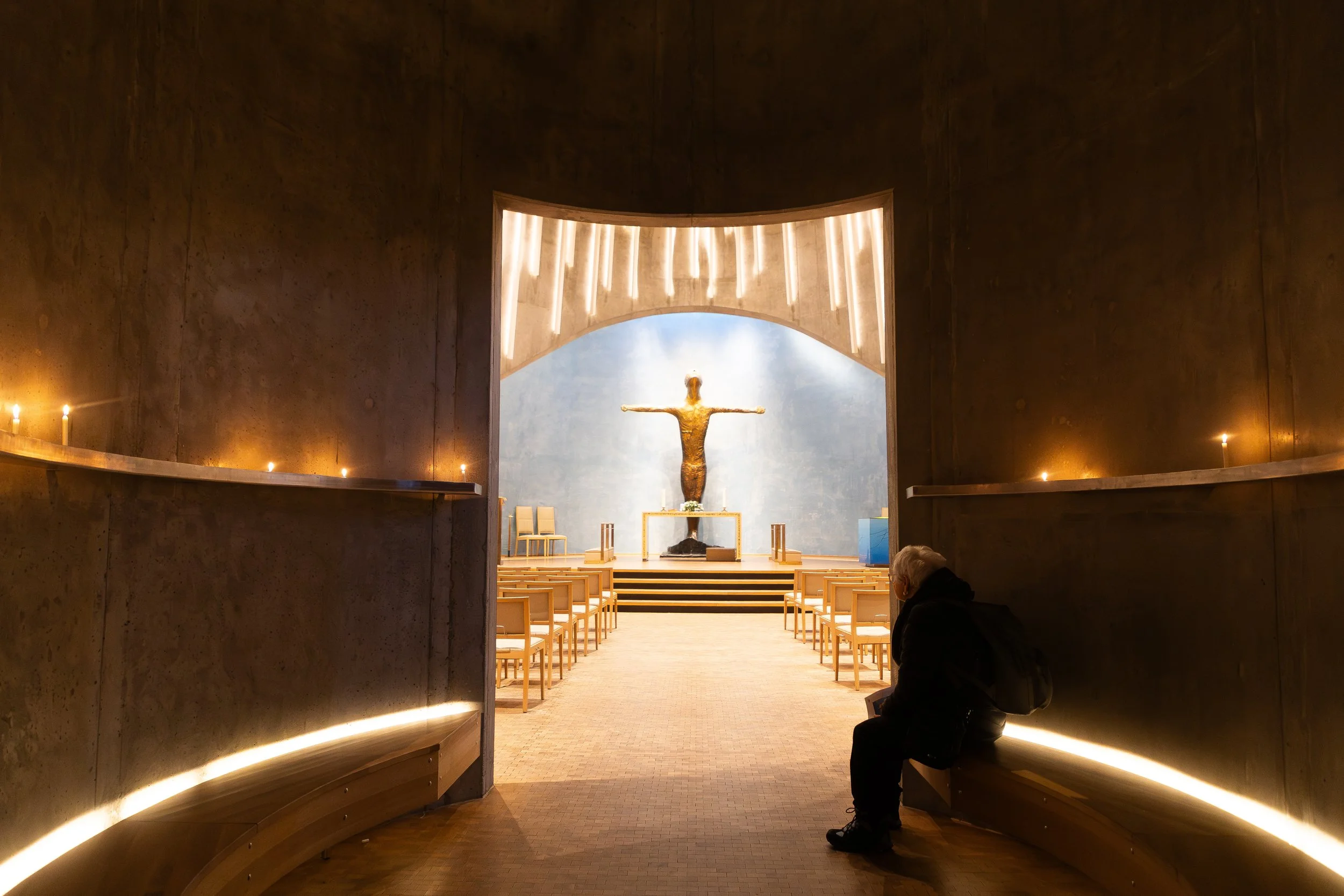
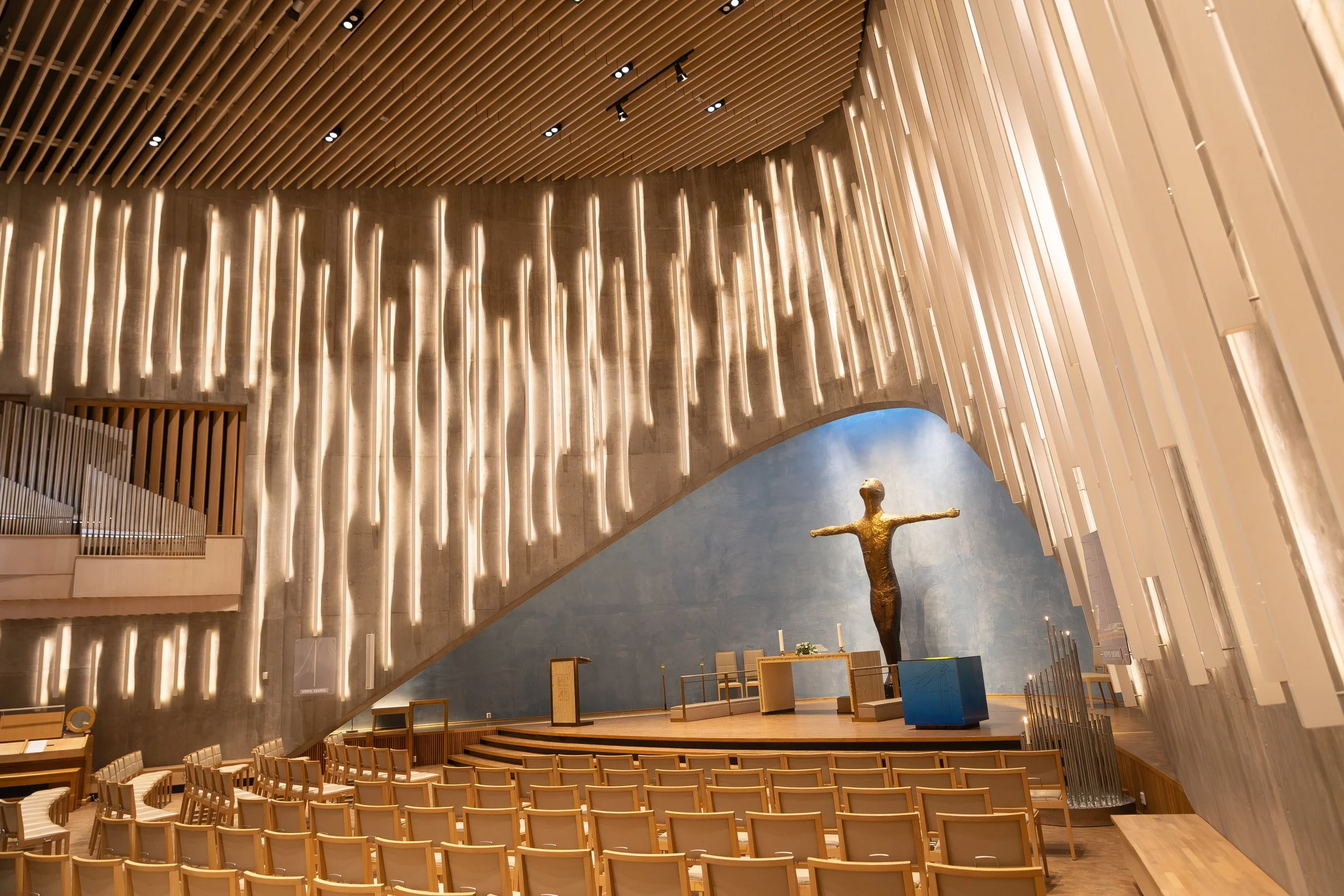
One of the most significant stops along the route is Alta, often referred to as the city of the Northern Lights. For more than a century, scientists have traveled here to study the aurora.
In the late 1800s, Norwegian physicist Kristian Birkeland conducted pioneering research that helped explain the connection between solar activity and the lights visible in Earth’s polar regions. His work laid the foundation for modern aurora science and helped transform what had long been considered a mysterious phenomenon into a subject of scientific investigation.
Today, Alta remains one of the best places in the world to see the aurora. Its inland location, wide skies and relatively dry climate create ideal viewing conditions during the long winter months. Yet even here, scientific explanation has never entirely replaced the sense of wonder that accompanies the lights.

Indigenous Perspectives
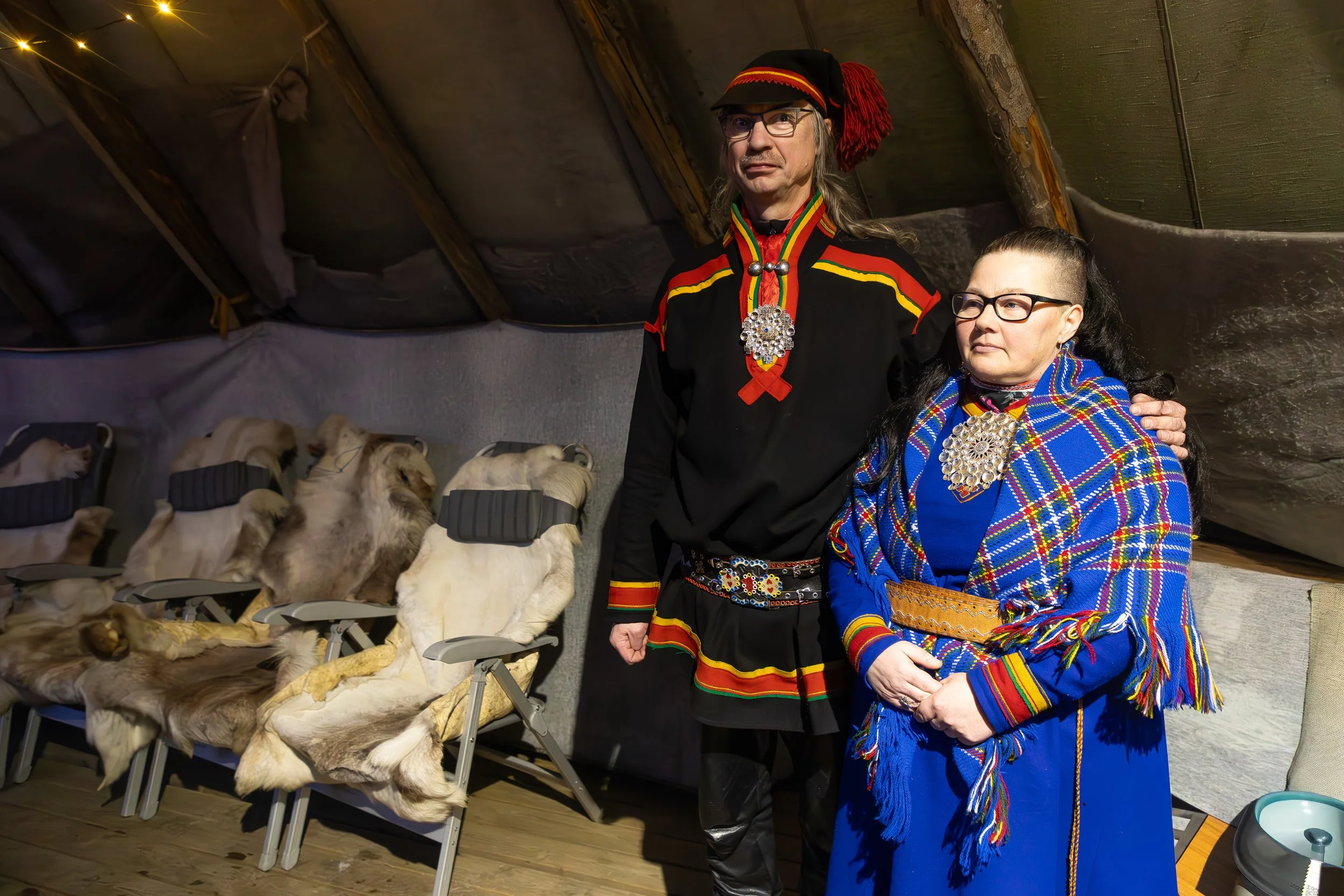
Long before scientists attempted to measure or photograph the aurora, the lights already held meaning for the Indigenous Sami people of northern Scandinavia. Their relationship with the Arctic landscape runs deep, shaped by centuries of reindeer herding, fishing and seasonal migration across tundra and forest. Their traditions reflect a worldview in which humans exist as part of a broader ecological system rather than separate from it.
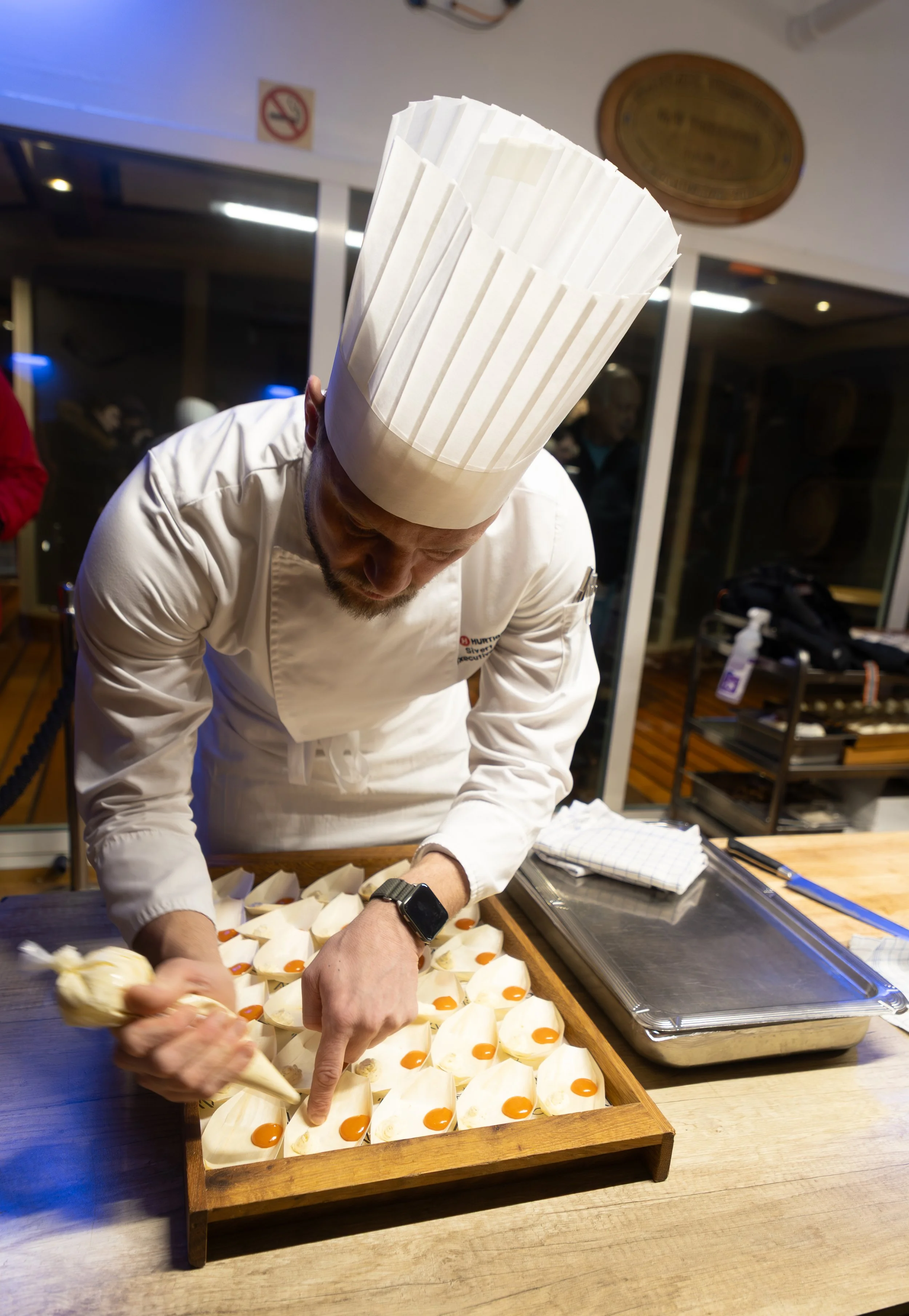
That connection is increasingly visible in the region’s culinary traditions. Sami food culture emphasizes careful use of local resources, from reindeer meat to wild berries and Arctic fish, and reflects a deep respect for the natural environment. On Hurtigruten voyages, Sami culinary ambassador Maret Ravdna Buljo introduces travelers to these traditions and the cultural values behind them, offering a glimpse into a way of life rooted in balance with the surrounding landscape. For many visitors, the experience provides a deeper understanding of how people have lived within this demanding environment for generations.
Images by Sophia Michelen
When the Sky Comes Alive
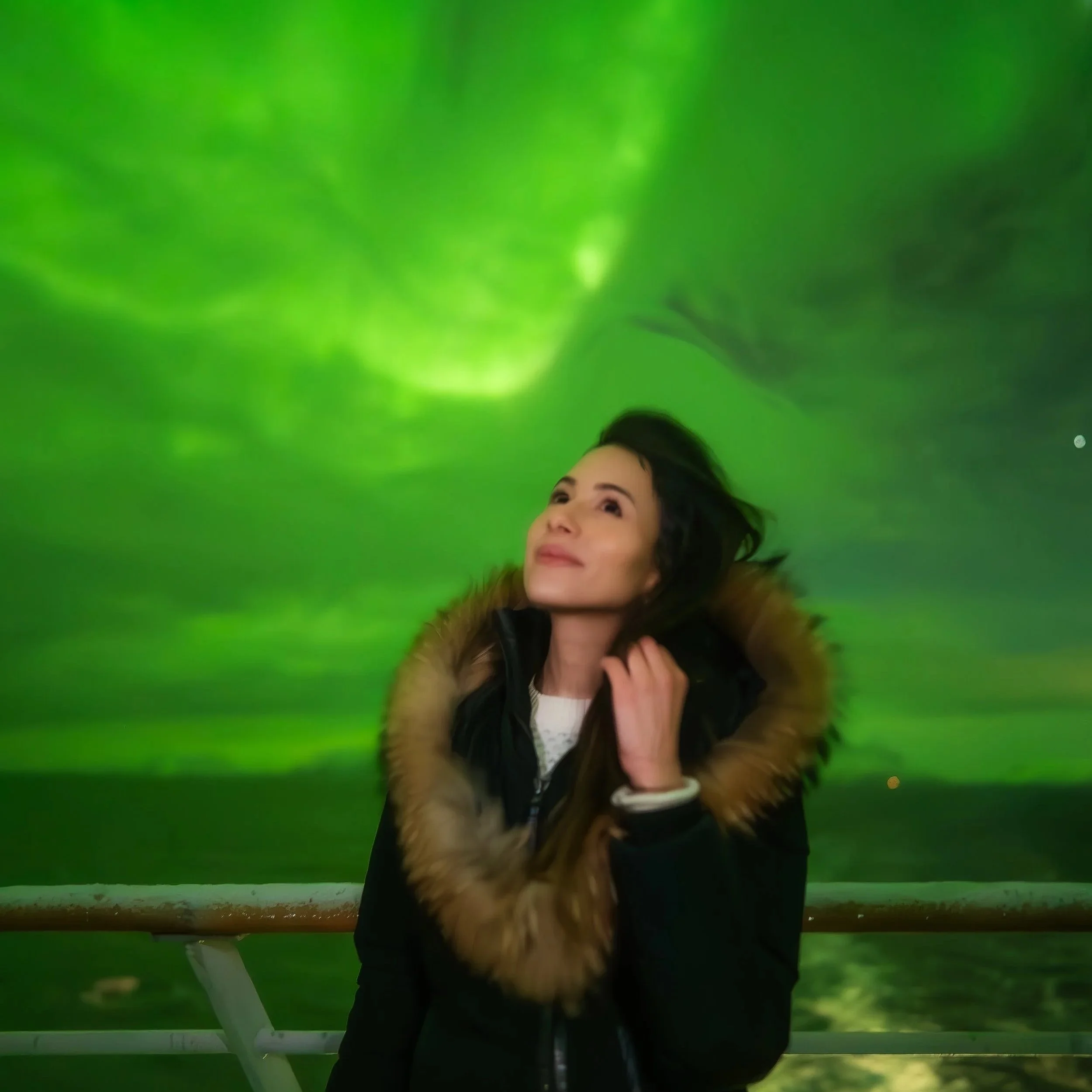
Late one evening, the ship slows as passengers gather again on the outer decks. The sky is clear, the stars unusually sharp in the cold Arctic air. At first, nothing happens. Then a pale band appears above the horizon. The light brightens gradually, stretching upward before folding into waves of luminous green. Within minutes, the entire sky seems to move. Curtains of color ripple and drift overhead, sometimes slow and graceful, other times flickering rapidly as if responding to an unseen current. The dark water below reflects faint streaks of color, doubling the spectacle.
Even with a scientific explanation in mind, the experience resists easy description. The aurora remains both predictable and mysterious, governed by solar physics yet endlessly varied in appearance. Standing on deck as the lights sweep overhead, it becomes clear to me why people have traveled north for centuries in search of this moment. Along Norway’s Arctic coast, the Northern Lights are more than a destination. They are a reminder that some of the most powerful natural phenomena unfold quietly, high above the horizon, waiting for those willing to look up.
Sophia Michelen
Sophia Michelen is a New York City–based photojournalist, travel writer and documentary producer whose work explores culture, environment and place through visual storytelling. She has reported from more than half of the world’s countries, with work appearing in publications including National Geographic Traveller India, Teen Vogue and Ms. Magazine. She is also a co-host of the PBS travel series America: The Land We Live In.