
By Caleigh Capio
Cruise through some of California’s most iconic stops along Route 66.
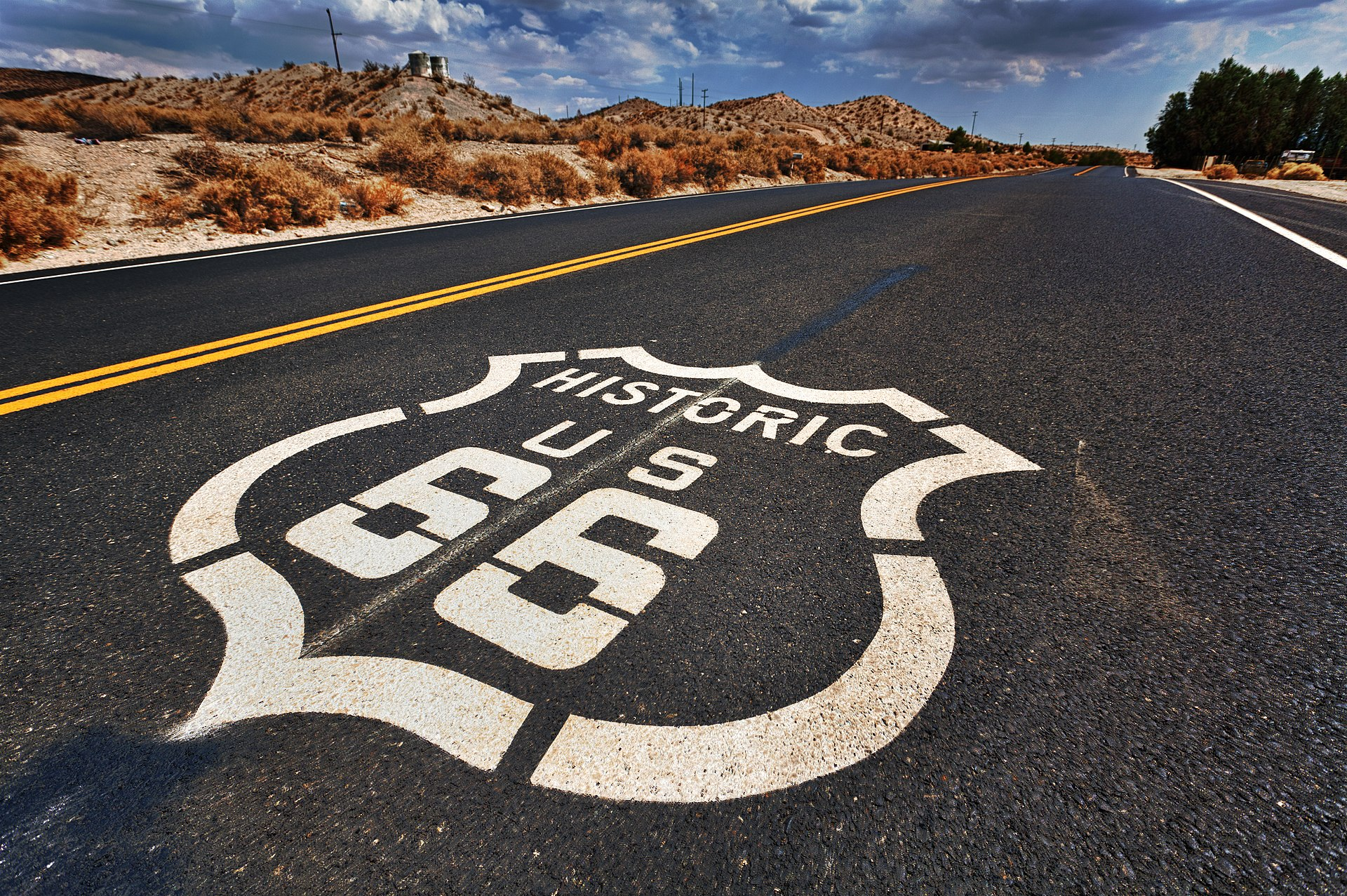
Stretch of historic Route 66 pavement. Randy Heinitz. CC BY-2.0.
Running through eight states, Route 66 is one of America’s most famous cross-country roads. California’s portion of Route 66 spans 316 miles, stretching from the Mojave Desert to the Santa Monica coastline. In honor of the Route 66 Centennial celebration this year, we are highlighting a few of California’s must-visit stops along the Mother Road.
If you’re someone who loves to wander, this is the perfect road trip for you. Although you can complete the drive in 4 hours, we recommend taking two to three days to explore the charm of the small towns and enjoy your time in the surrounding areas. Whether you’re basking in the desert sun, cooling off at a cafe or chasing the ocean breeze, Route 66 is an interactive time capsule that showcases America’s heyday. At the heart of any Route 66 journey is a passion for discovery, dotted with kitschy diners, motels and remarkable roadside attractions waiting to be visited. Travel bloggers Mike and Anne from HoneyTrek write, “That’s the beauty of the Mother Road, it’s a treasure hunt reserved for those with a sense of adventure and an appreciation for the past.”
Needles
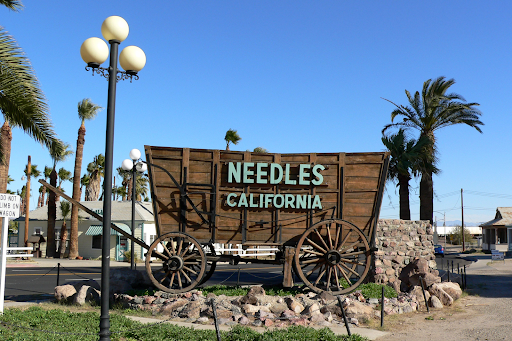
Needles welcome wagon. Stan Shebs. CC BY-SA-3.0.
Needles is the gateway city to California for westbound travelers on Route 66. Great for nature lovers seeking a desert oasis, Needles is nestled next to the Colorado River and features the dramatic backdrop of the Mojave National Preserve. Initially established as a railroad town, Needles later became an essential stop on Route 66 for its dreamy desert landscape. The El Garces in Needles was the “crown jewel” of the Harvey House hotel chain, a series of luxury hotels built by the Fred Harvey Company to serve patrons of the Santa Fe Railroad. After the rise of automobile travel, Needles continued to cater to travelers with old-west-style establishments, like the Wagon Wheel Restaurant. With scenic desert views and exciting outdoor activities, Needles is the perfect place to stretch your legs before getting back on the road. Take a break from the heat in the shining waters of the Colorado River or go on a refreshing hike in Havasu National Wildlife Refuge.
Amboy
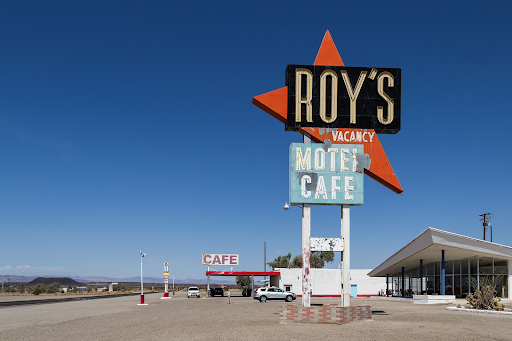
Roy’s Motel and Cafe. Dietmar Rabich. CC BY-SA 4.0.
The Mojave Desert is scattered with ghost towns waiting to be explored. Typically abandoned mining and railroad settlements, most towns have become nothing more than ruins decorating the desert. But can ghost towns come back to life? One of these towns, Amboy, became a passion project of the late Juan Pollo franchise owner Albert Okura, who purchased the town on eBay in 2005. Okura is survived by his son, Kyle, the town’s de facto mayor and owner of Amboy’s main attraction, Roy’s Motel and Cafe. At night, Roy’s towering 50-foot neon sign illuminates the desert sky and is a stunning example of the classic Route 66 Googie-style architecture, making it a popular photo op among visitors. Through the Okura’s work and with the help of other Route 66 preservationists, Amboy has regained popularity as a Route 66 landmark against all odds. Travelers from around the world can visit this “living ghost town” and experience the true retro, Americana experience. Amboy’s story is one of resilience and hope; even in the desolate desert, ghost towns like these have a second chance to bloom.
Newberry Springs
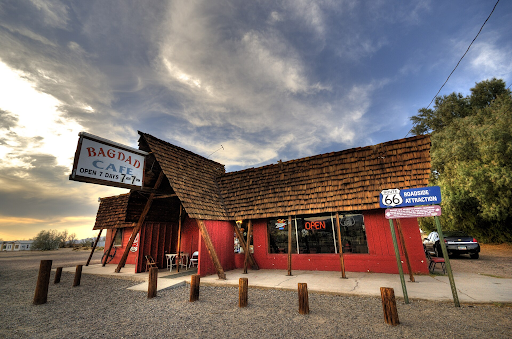
Outside of Bagdad Cafe. Vicente Villamon. CC BY-SA 2.0.
At first glance, Newberry Springs’ history is similar to Amboy’s. Once a thriving stop on the Mother Road, Newberry Springs quickly became a semi-ghost town after the construction of I- 40 in the 1970s bypassed it altogether. Although many of the buildings and homes remain abandoned and swallowed by sand dunes, current residents are diligently working to revitalize the town before the upcoming Route 66 Centennial Caravan arrives. The town is a cozy and welcoming stop that embodies the rural American spirit of Route 66. Local business owner Renee Kaminski comments, “I think Newberry really illustrates that whole mantra of ‘Mother Road.’ We will take you in and make sure you’re safe on Route 66.” One of Newberry Springs’ quirkiest attractions is the Bagdad Cafe, where the cult classic German film of the same name was shot. The cafe is a must-stop for film enthusiasts and foodies and has tremendous international appeal, often packed with more European travelers than Americans.
Barstow
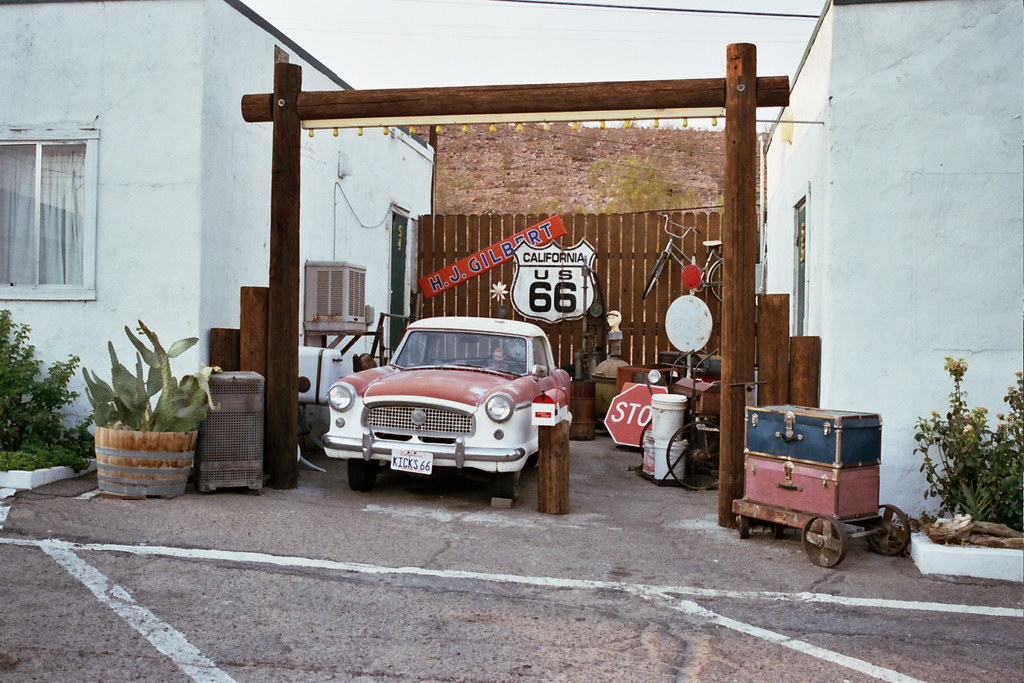
Decor outside the Route 66 Motel in Barstow. Daniel Garcia Peris. CC BY-ND 2.0.
Travel back in time through a visit to Barstow, another essential stop along Route 66. The city’s rich history is connected to its desert roots and is perfect for those who want to learn more about early American history. The sweeping multi-colored canyons of Rainbow Basin around Barstow are a geological wonder. Discover the vast collections of ancient Native American petroglyphs carved throughout Black Canyon, which is one of the largest Native American rock art galleries available to the public. The historic Harvey House in Barstow, Casa del Desierto, also houses the Route 66 Mother Road Museum and the Western America Railroad Museum. Both museums honor Barstow’s long legacy of serving Route 66 and railroad passengers. Filled with vibrant vintage signs, cars and other memorabilia, the museums help illustrate the fascinating history of travel in California.
Victorville
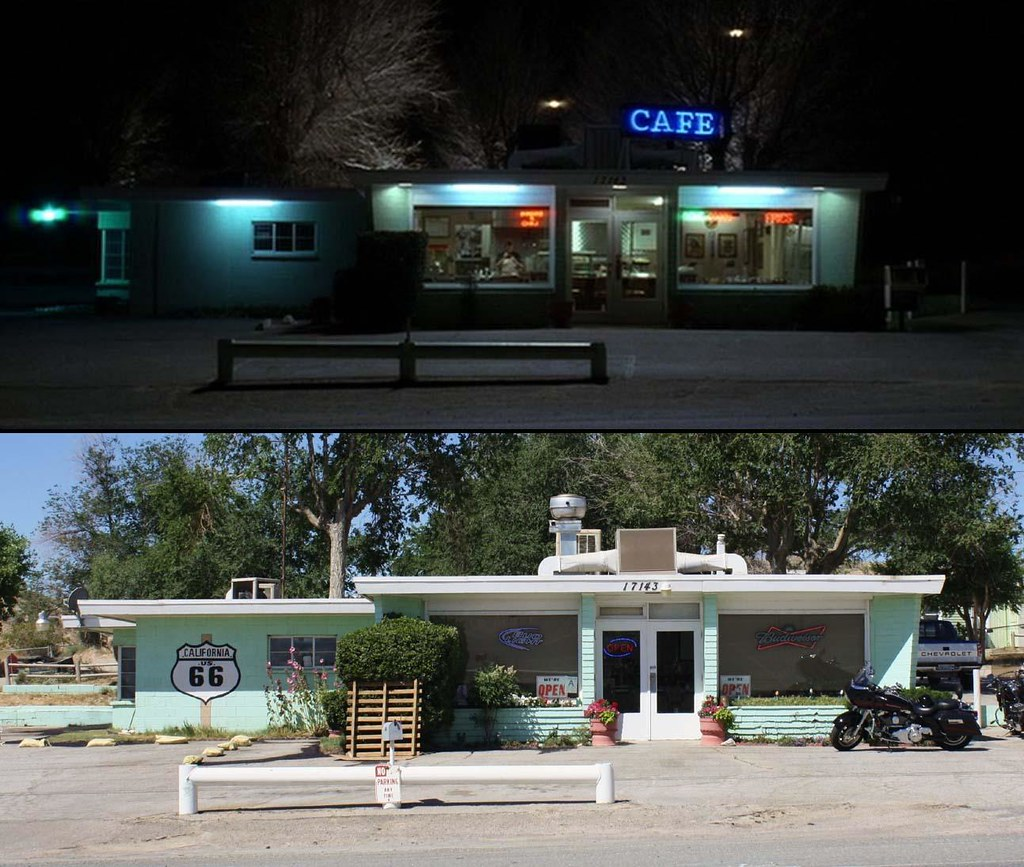
Emma Jean’s Holland Burger Cafe in “Kill Bill: Volume 2” (2004). Tony Hofarth. CC BY-NC-ND 2.0.
Victorville’s most famous attractions include the Route 66 Museum and Emma Jean’s Holland Burger Cafe. Immerse yourself in Victorville’s past at the Route 66 Museum, which offers photo ops and collections of retro memorabilia for visitors to enjoy. With its inviting mint green exterior, the cafe has been a Victorville staple for decades and is a relaxing place for drivers to grab a comforting meal. Serving classic American diner food to residents and tourists alike, it is also recognized for appearing in the film “Kill Bill Volume 2.” If you’re looking for a legendary roadside curiosity, turn to Elmer’s Bottle Tree Ranch in Oro Grande near Victorville. The ranch is a beloved spot for many Route 66 travelers, famous for recycling bottles into a colorful, glistening glass forest that sings when the wind blows.
San Bernardino
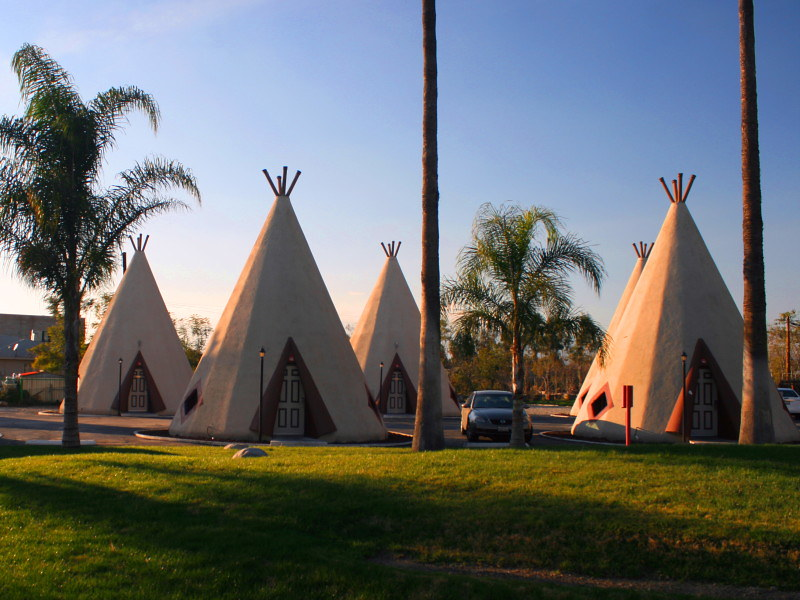
Wigwam Motel in San Bernardino. Chuck Coker. CC BY-ND 2.0.
Nestled at the base of the San Bernardino Mountain Range, San Bernardino is a refreshing rest stop for travelers exiting the Mojave Desert. Surrounded by crystal clear lakes and lush mountain forests, the city’s mountain scenery is a nice change of pace after stretches of desert, but it still has plenty of eccentric Route 66 spots to visit. One of the most visited roadside attractions in San Bernardino is the Wigwam Motel, built in 1949 by Frank Redford. Originally from Kentucky, Redford’s designs inspired several wigwam villages across the country, but they have also received criticism for cultural inaccuracy and appropriation. Although Redford named his creations ‘wigwams,’ the motels are actually modeled after teepees, another type of Native American dwelling. Despite this, the motel remains a historic and unique Route 66 landmark, even serving as inspiration for the Cozy Cone Motel in Pixar’s Route 66 homage movie “Cars.”
Santa Monica
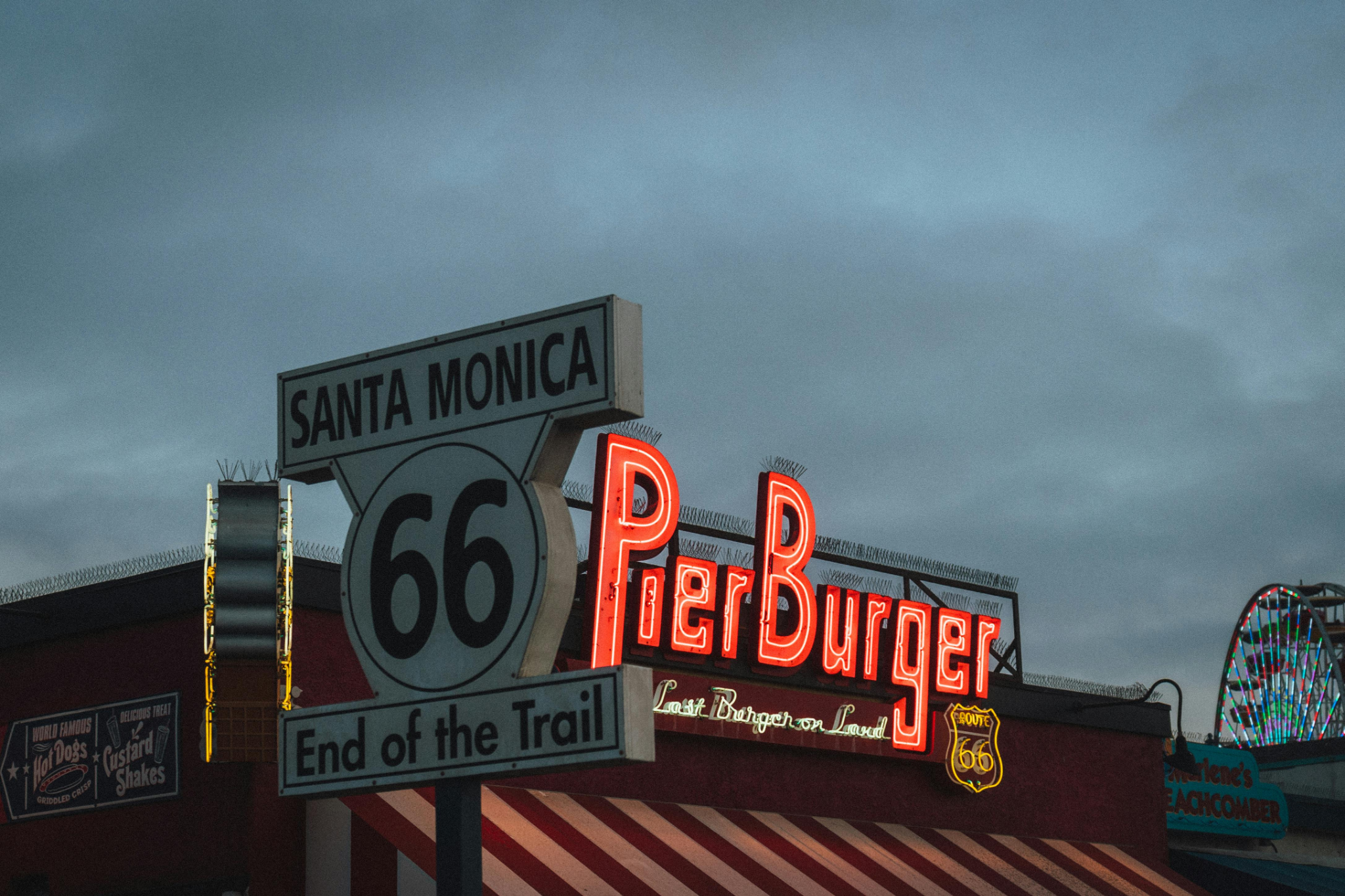
Route 66 sign at Santa Monica Pier. Enric Cruz Lopez. Pexels.
After journeying through desert and mountains, the oceanside city of Santa Monica welcomes weary Route 66 travelers with a sign that reads “End of the Trail.” The sign was placed in 2009 in a partnership between the Route 66 Alliance and the Santa Monica Pier Restoration Corporation to mark the symbolic end of Route 66. Historically, the end of the trail was located between Olympic and Lincoln Boulevards, about a mile before the Santa Monica Pier. Celebrate the end of your journey with a well-deserved meal at Mel’s Drive-In, located near the end of Route 66. The diner features the classic Googie architecture and a mural to commemorate the historic end of the trail.
California’s Route 66 offers unique snapshots into American history and invites travelers to become part of it. When driving on this road, history, legends and stories come to life. In an essay reflecting on his Route 66 drive, travel writer Gustavo Arellano says, “I learned that Route 66 shouldn’t be encased in amber as some relic of better times. At its best stops, the route today is a wormhole through which you can glimpse the past while enjoying the present and envisioning the future.” From desert ghost towns to major cities, each stop celebrates its current place along the historic road. Discover all the Route 66 Centennial California events at the official Route 66 Centennial website.
Caleigh Capio
Caleigh is a recent graduate from Wellesley College with a B.A. in English and a minor in Italian Studies. She has always had a passion for storytelling, language and culture studies, and all things literary, and will continue to pursue these interests. In her free time, she enjoys reading, writing book reviews, spending time with friends, and discovering new music.