
Here’s how to plan a sustainable multi-city European trip using world-class public transportation.
Read MoreWhere Traffic Meets Trafficking: Inside India’s Child Begging Rackets
Children are being kidnapped, maimed and drugged as trafficking networks force them onto India's streets to beg.
Read MoreMEGA: Make England Great Again
The rise of populism in Great Britain marks a search for national renewal.
Read More10 Global Art Exhibitions Worth Viewing This Summer
The top art shows of the summer explore what it means to live in the modern world.
Read MoreThe Indian Dowry Death: A Commodified Marriage and Clandestine Death
Despite continued legal action barring the practice, thousands of Indian women die each year as dowry-giving practices evolve.
Read MorePeriods, Pads and Power: How Women in Nepal Are Challenging Menstrual Stigma
In rural western Nepal, women-led organizations are fighting intense menstrual stigma through reusable pads and education initiatives.
Read MoreThe Hidden Cost of Turtle Hatching Tours
Sea turtle hatching tours are often marketed as ecologically beneficial experiences, but choosing the wrong one could prioritize visitor entertainment over animal welfare and effectively haunt hatchlings for the rest of their lives.
Read MoreCats from Taiwan to New Zealand: Village Mascots or Invasive Species?
From Stephens Island to the Houtong Cat Village, local communities address cat populations differently based on their economic and environmental impacts.
Read MoreTwo Different Koreas on Two Different Paths
As South Korea sentences its former president to life in prison, North Korea’s Kim Jong Un becomes the most powerful leader in the country’s history.
Read MoreAlbania’s Wild River: How the Vjosa Is Reshaping Sustainable Travel
Thanks to the country’s recent UNESCO recognition, Albania is working to reduce pollution and balance sustainability with travel along the Vjosa.
Read MoreRefugees Wait for Relief in Lesvos
A decade after the start of the migration crisis in Europe, the outlook for refugees in Lesvos is bleak.
Read MoreWhy Ceasefires Fail
From Gaza to Lebanon to Iran, ceasefire agreements meant to halt conflict have been met with continued airstrikes and targeted killings.
Read MoreThis 3,000-Year-Old Mesoamerican Ball Game is Making a Comeback
After centuries of near disappearance, Mexico's oldest sport is being reclaimed by a new generation.
Read MoreNepali Women Challenging Traditional Himalayan Mountaineering
Women in Nepal are redefining the climbing industry and offering women-led treks.
Read MoreThe Green Promise of New Zealand Tourism
Guided by the Tiaki Promise, visitors discover New Zealand, a land where tourism protects what it celebrates.
Read More10 Places to See Before They Disappear
The casualties of industrialization and climate change.
Read MoreHaiti Forced to Change World Cup Jerseys After FIFA Rejects ‘Political’ Imagery
FIFA’s order for Haiti to redesign its 2026 World Cup jerseys and remove their revolutionary symbolism sparks questions over history, race and political neutrality.
Read MoreAmid War in Iran, the World's Rarest Big Cat Is Running Out of Time
By Kaitlin Murray
In the face of conflict, road accidents, and other threats, scientists are working to pull the Asiatic cheetah back from the brink of extinction.
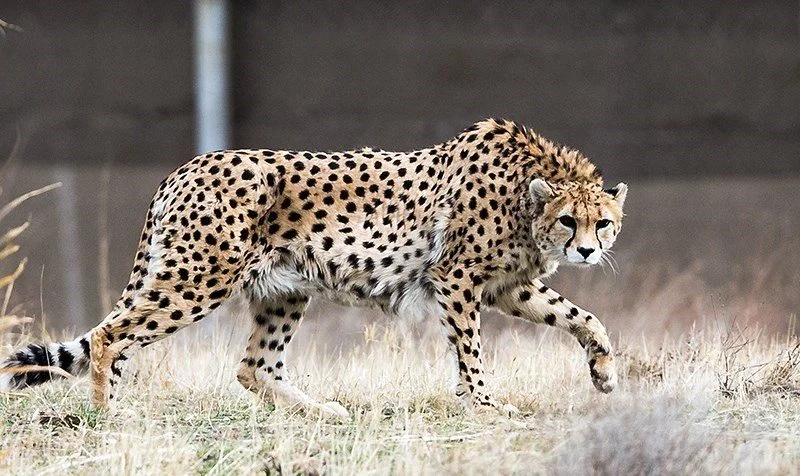
Asiatic cheetah. Erfan Kouchari. CC BY 4.0.
In February 2026, nine days before the United States and Israel launched strikes against Iran, rangers filmed a female cheetah with five cubs in the North Khorasan province, the largest litter ever recorded for the subspecies. This comes at a time when fewer than 30 Asiatic cheetahs are believed to be left in the wild. While the subspecies once roamed vast distances spanning the Arabian Peninsula, the Middle East, and Central Asia, today they are only spotted in the rugged deserts of Iran. Given the uncertainty of the ongoing war and the Asiatic cheetah’s classification as critically endangered, it is more important than ever to ensure their future is protected.
While a cousin of the African cheetah, the subspecies is visibly different, with smaller heads, shorter legs, thicker coats, and a more powerful neck. It is believed they diverged from the African cheetah between 32,000 and 67,000 years ago, adapting to the different terrain of the Asian continent over time. The Asiatic cheetah was known throughout history, with the Mughal emperors keeping them for hunting and Emperor Akbar reportedly keeping over 1,000 during his lifetime.
Throughout the 20th century, the cheetah began disappearing. By the 1940s, it had gone extinct in 13 countries, including Saudi Arabia, Afghanistan, Iraq, and India. Pakistan’s final sighting was in 1997. What remains of the species now roam the desert regions of Yazd, Semnan, Kerman and Isfahan in Iran, which is only 16% of its original territory. While the country granted the species protected status in 1959, the Islamic Revolution and the Iran-Iraq War halted conservation efforts for decades. Today, the global population stands at 27 individuals that have been ID-carded, plus five in breeding sites and six more in captivity.
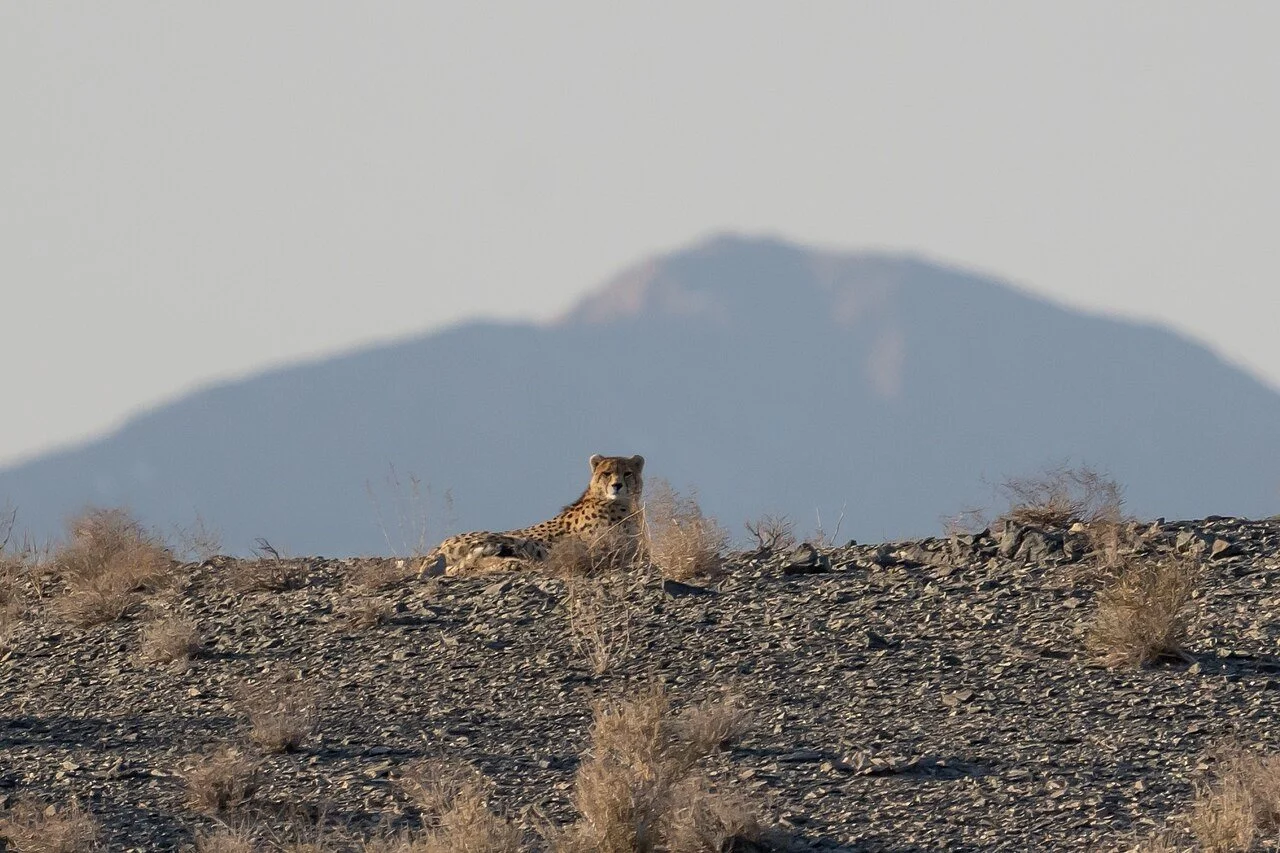
Asiatic cheetah lives in rugged terrain. Mousa Mazinanian. CC BY 4.0.
Current Threats to Conservation
Long before the first bombs were dropped in February 2026, the Asiatic cheetah was already fighting for its survival. The number in 2026 had recovered from only 20 individuals recorded in August 2025 and from 12 at its lowest point in 2022. Every new cub recorded is a victory, given the numerous threats they face, including poaching, human-wildlife conflict, habitat fragmentation, low genetic diversity, and road accidents, all of which threaten their livelihoods.
Of all these obstacles, road accidents are the deadliest. The story of beloved Helia, the female with the cubs who made history in January 2026, illustrates the danger of road accidents. In 2024, she was spotted with two cubs in the Miandasht Wildlife Refuge after traveling more than 130 kilometers from the Turan reserve. Tragically, one of her cubs was struck and killed by a vehicle on the “Death Road” that cuts through the Semnan province. For a week after her cub's death, she stayed near the road, with volunteers on guard to block traffic in case they tried to cross again.
The ongoing war adds another layer to an already volatile crisis. While the cheetah was given a protected status and national parks were established, the Islamic Revolution in 1979 and the subsequent Iran-Iraq War set back conservation work by decades. Recently, conservationists have been the target of questioning and even arrests by the Iranian government.
One of the most notable organizations focused on protecting the cheetah is the Persian Wildlife Heritage Foundation, which had previous partnerships with the UN and international NGOs. The Tehran-based group used camera traps to monitor wildlife, including the Persian leopard, the Asiatic cheetah and the Asiatic black bear. Camera traps monitor wildlife without human presence and are widely used around the globe. However, in Iran, the usage was enough for nine members of the organization to be arrested for espionage in 2018.
One member, Kavous Seyed-Emami, an Iranian-Canadian scientist and the foundation’s founder, died after two weeks in Evin Prison under “suspicious circumstances.” Though his death was ruled a suicide, his family tried to launch an investigation. Thankfully, the other seven members were freed in April 2024, more than six years after their arrest. This sent a chill throughout the international conservation community, as foreign investments and international organizations were hesitant to work in Iran again.
While camera traps are a great start for tracking cheetah movements, experts have cited that GPS collars could be an important tool in the future. They have been used before to study Persian leopards and, according to recently published research, could “provide essential insights into habitat use, movements and survival, enabling more effective conservation strategies.”
For Iranians, the cheetah is more than just an endangered animal; it is a source of national pride and cultural identity. When Iran’s national football team took to the pitch at the 2014 World Cup in Brazil, the cheetah was printed on their kit. Meraj Airlines painted the animal across their planes.
Looking Toward the Future
Amid the ongoing war, sanctions from Western nations and sporadic internet shutdowns, conservationists in Iran are concerned about the fate of the species. When will the conflict end? What is the current state of the cheetahs in inaccessible regions? How will new funding be accessed? These are all questions that conservationists and scientists around the world continue to ask themselves in the face of such an uncertain future.
Jamshid Parchizadeh, a research scientist, when asked by Mongabay about the future of the war, stated, “Before the war, cheetah conservation received limited funding from the government. But after the war, I doubt that the government has any money left for the conservation of the cheetah.”
GET INVOLVED:
Getting involved in protecting the cheetah in Iran can be complicated, especially with the ongoing conflict. The Cheetah Conservation Fund has permits to work in Iran that allow for close partnerships with groups on the ground. Visit their site to learn more about how you can help their cause to protect cheetahs around the world.
Other ways to get involved include learning about the Asiatic cheetah and raising awareness. You can help by sharing the cheetah's story online and spreading awareness of its protection. For updates and news on the status of the cheetah, visit Mongabay, an independent news platform focused on global and environmental challenges. The Felidae Fund also provides information and steps to raise awareness through social media platforms and community work.

Kaitlin Murray
Kaitlin Siena Murray is a travel journalist and global storyteller documenting cultures, historical places, and the people and social impact movements helping the world. Raised worldschooling across more than 129 countries with degrees in anthropology and history, her writing is driven by a commitment to global citizenship, capturing the diversity and beauty of the world through the lens of culture, history, and social change.
Albanian Backlash Threatens Trump-Linked Luxury Resort
By Jeremy Gordon
Jared Kushner’s luxury development project sparks massive backlash from citizens and environmentalists.
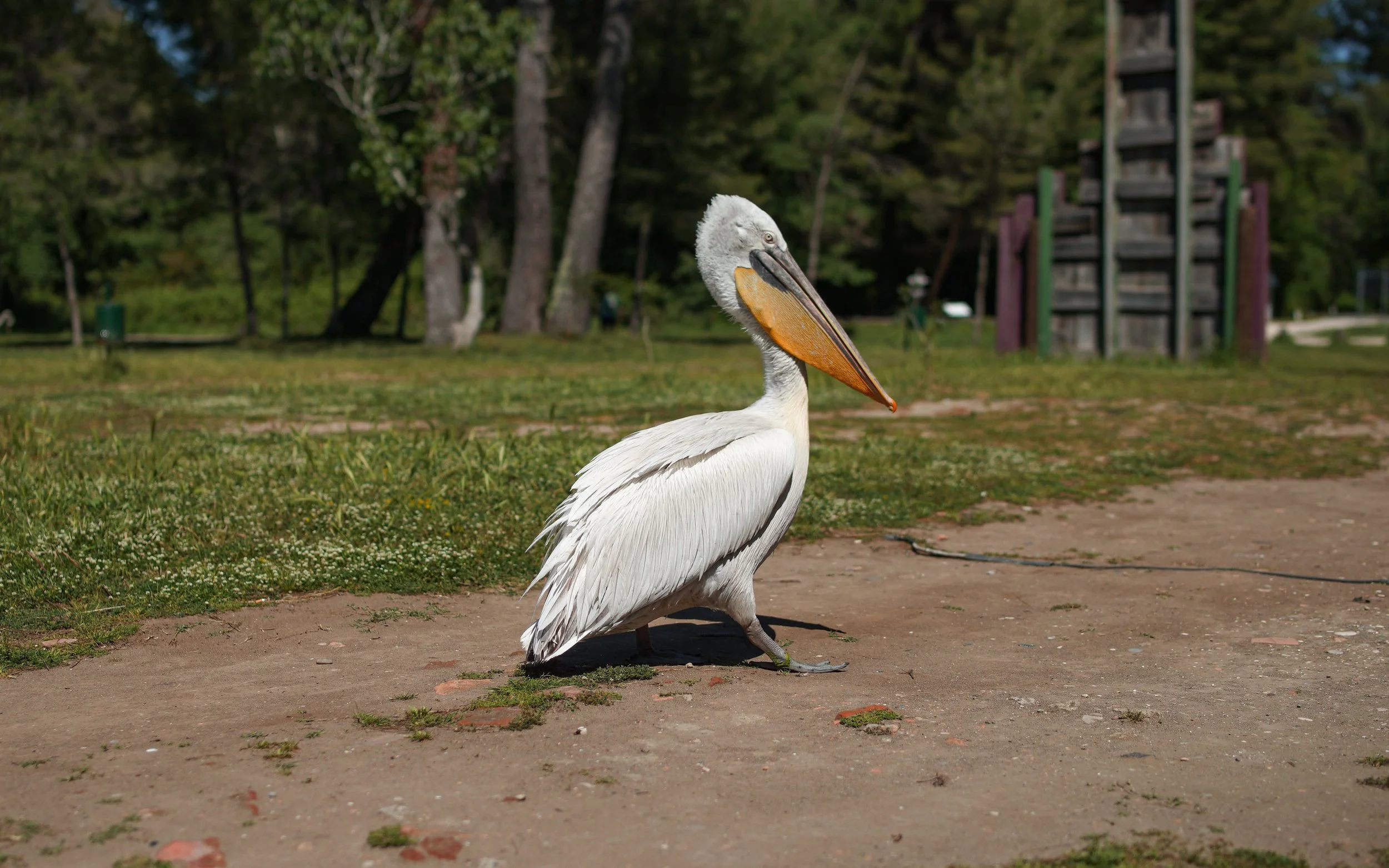
Dalmatian pelican in Albania. Kostiantyn Klymovets. Pexels.
The first week of June saw tensions flare in Albania over the construction of a new luxury resort in one of the country’s most biodiverse regions. The project, backed by Donald Trump’s son-in-law, Jared Kushner, is set to wreak havoc on the local environment and spark affordability issues for locals. Protests have spread from the barbed-wire barricades surrounding the site to the capital of Tirana, where thousands have taken to the streets carrying flamingo-shaped signs and chanting their discontent.
The region in question is Vjosa-Narta. It is where the Vjosa River, which arises in the Pindus Mountains of northwestern Greece and stretches over 270 kilometers, empties into the Adriatic Sea. The wetland surrounding this Adriatic delta is one of the most ecologically vital habitats in Europe, home to over 200 bird species, including flamingos and Dalmatian pelicans, and over 70 endangered species, including the Mediterranean monk seal and loggerhead sea turtle. It is part of the Adriatic Flyway, a major migration corridor for millions of birds that fly between Africa and Europe each year.
The $1.2 billion development project threatens to ravage the natural habitat, destroy ancient dunes protected under Albanian law and cut off tidal exchange between the Narta Lagoon and the Adriatic, plunging the marine food chain into chaos. Concrete and barbed-wire barriers have been erected, blocking locals from entering parts of the lagoon and beach. Over 40 environmental groups called for cessation of the project in January, though those calls were ignored by the Albanian government, which has amended its laws and permitting processes to pave the way for the project. Critics have decried the lack of transparency and potential corruption surrounding the decision. Prime Minister Edi Rama has stood firm in support of the project, warning against appearing hostile to foreign investment.
The project is the brainchild of Jared Kushner through his investment firm Affinity Partners. The plans call for the wetland to be transformed into a sprawling, sparkling seaside plot of hotels, villas and high-end apartments. It is part of a larger push to transform Albania into an elite tourist destination. Tourism is the major driver of the Albanian economy, accounting for roughly 20% to 25% of the GDP. It has been the surest route to Westernization since the fall of the communist government in 1992.
At the heart of Kushner’s development project is Sazan Island, a place with a long military history. It was known to the ancient Greeks and the Romans, and it later became an important naval outpost for the Ottoman Empire. When Albania gained independence in 1912, the island’s ownership fell into dispute. It was occupied by the Italians in 1914 and became a fortified military base under Benito Mussolini.
After World War II, the island reverted to Albanian ownership and became a secret military site for Enver Hoxha, the repressive communist prime minister from 1944 to 1954. Underneath its lush pine forests sprouted a vast network of underground tunnels and bunkers, including a cinema, school and hospital. Even after the fall of communism, the island retained military relevance, becoming a joint Italian-Albanian base.
In the 2010s, as Albania was being granted EU candidate status and making itself more attractive to foreign investment, the island’s surrounding sea was designated a national marine park. It became a tranquil spot for citizens to bask and enjoy the local wildlife. And in 2024, the island came to the attention of Jared Kushner and Ivanka Trump. In an interview with podcaster David Senra earlier this June, Ivanka claimed that the couple was “on a friend’s boat” and “stopped for a swim” when they found the island and became captivated by it. That set in motion the chain of events that led to the skirting of environmental protection laws, the detrimental construction project and the subsequent fiery protests.
The protests have borne some fruit. Albania’s anti-corruption prosecutor SPAK (Special Structure against Corruption and Organized Crime) has opened an investigation into the shadowy legal maneuvering that initiated the project. The European Commission has warned Albania that the project could be detrimental to its EU membership, conflicting with the larger body’s environmental rules. A spokesperson for Sofjan Jaupaj, Albania’s environmental minister, has downplayed progress of the development, claiming that “no final project proposal has been submitted and construction activities have not commenced as no construction permit has been approved.”
Sazan Island and its surrounding region now enter a new, uncertain era. It has been an ancient naval outpost, a communist military base, a coastal getaway and may now become a glitzy tourist attraction backed by billions in foreign investment. The transformation is emblematic of Albania’s larger race to shed its past and join the West. And it features all of the pitfalls that go along with that.
Jeremy Gordon
Jeremy is a graduate student at Johns Hopkins University studying Creative Writing. He graduated from the University of Maryland with a bachelor's in Criminology and Criminal Justice and worked for four years as an Investigative Specialist with the Public Defender Service for DC.
As the World Cup Nears, Reboot FIFA Challenges Football’s Governing Body
By Sehr Khosla
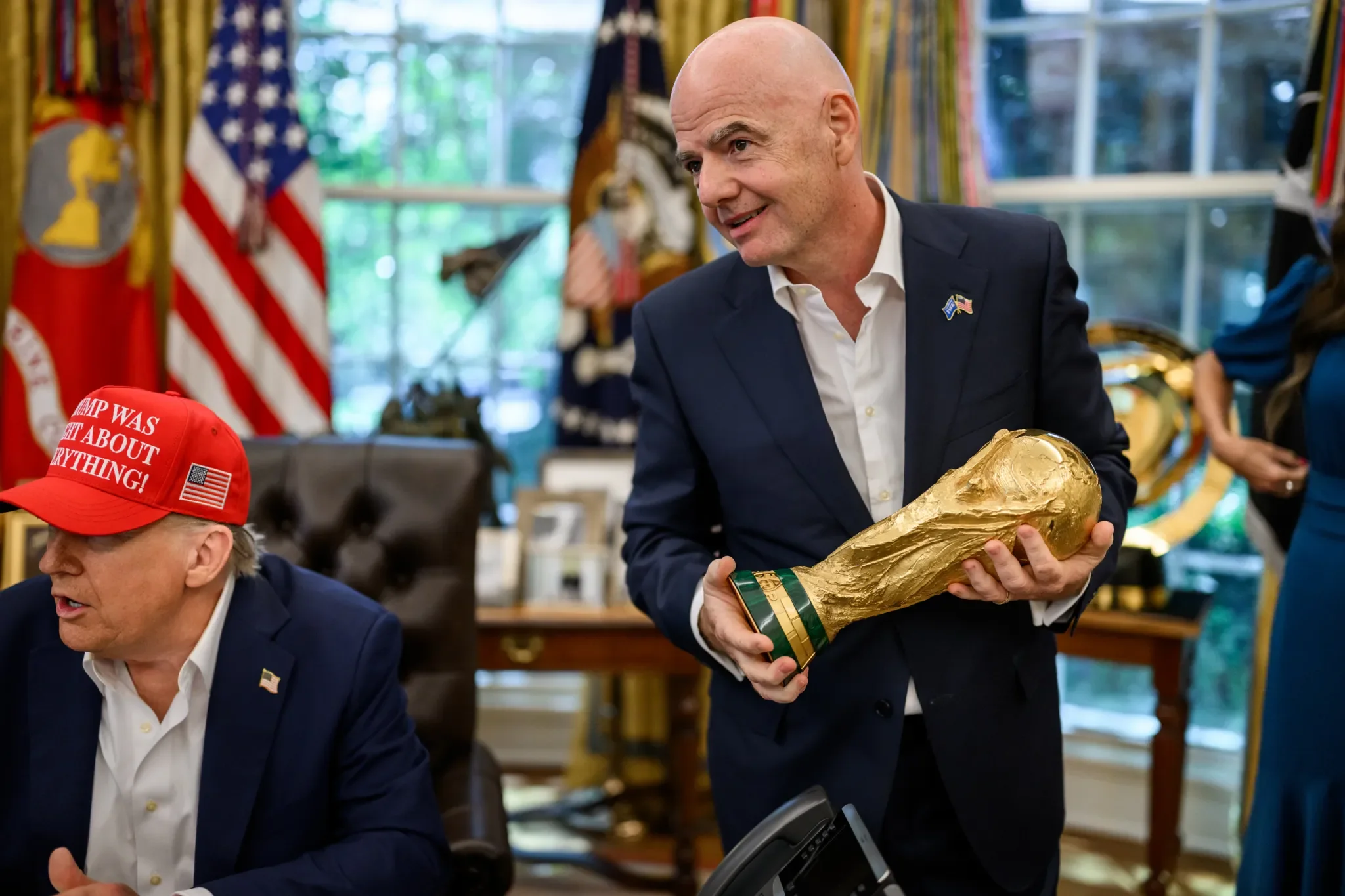
President Donald Trump and FIFA President Gianni Infantino announce Kennedy Center as FIFA World Cup 2025 draw location. The White House. CC0.
One week before the start of the 2026 FIFA World Cup, advocacy organization FairSquare launched Reboot FIFA, a public campaign urging supporters to join what it hopes will become the largest ethics complaint ever filed against the association. The complaint accuses FIFA President Gianni Infantino of repeatedly violating the organization’s political neutrality rules through his public support for U.S. President Donald Trump and argues that the allegations reflect deeper governance problems within football’s governing body.
Launched early this June, Reboot FIFA invites members of the public to add their names to an updated ethics complaint originally submitted by FairSquare in December 2025.
FairSquare argues that Infantino’s appearances alongside Trump, including his involvement with the FIFA Peace Prize awarded to the president and subsequent cooperation with Trump’s Board of Peace initiative, violated FIFA’s requirement that officials remain politically neutral. FIFA has not publicly accepted that characterization and maintains that its governance reforms have strengthened accountability and oversight.
With global attention turning toward the World Cup, the campaign highlights that the tournament provides a rare opportunity to pressure FIFA over issues of accountability and transparency.
For many supporters, the controversy recalls FIFA’s 2015 corruption scandal, when U.S. prosecutors charged dozens of football officials in a sweeping investigation into bribery, racketeering and money laundering. The scandal forced the departure of longtime FIFA President Sepp Blatter and prompted promises of far-reaching institutional reform.
Under Infantino, FIFA has repeatedly pointed to increased transparency measures, independent audits and billions of dollars invested in football development worldwide. Following “deep-rooted governance and management reforms,” as a FIFA spokesperson told The Guardian, the organization insists that it is now more accountable than ever.
For FairSquare, however, the persistence of controversy suggests otherwise. The NGO argues that FIFA’s problems are structural rather than personal.
“FairSquare has long argued that FIFA’s structural problems cannot be fixed from within and that external reform is critical,” the organization wrote in launching the campaign.
More significant to fans than the complaint itself is what it reveals about FIFA’s governance model, with FairSquare arguing that the organization simultaneously acts as football’s regulator and commercial powerhouse, creating conflicts of interest. Among the reforms proposed by the campaign are stronger auditing of FIFA’s finances, greater transparency in decision-making, and a clearer separation between its commercial operations and governance functions.
The campaign has also received support from the Norwegian Football Federation, whose president, Lise Klaveness, has called for the complaint to be properly assessed by FIFA’s ethics committee. This backing matters for fans because it suggests that concerns about governance are not limited to activists and watchdog groups but are increasingly being voiced by member associations themselves.
Whether Reboot FIFA succeeds in forcing change remains uncertain, especially considering that previous reform efforts have often struggled against an institution whose leadership is ultimately accountable to the same internal structures that elect it. Nonetheless, the campaign’s significance lies less in the fate of a single ethics complaint than in the question it raises. Years after FIFA’s most serious corruption crisis, football's governing body continues to face accusations of weak accountability and conflicts of interest. If FIFA wishes to claim it represents the global game, critics argue, it must do more than organize tournaments. Now, it must convince players, supporters and member associations that it is answerable to them as well.
Readers can learn more about the Reboot FIFA campaign and add their names to the ethics complaint through FairSquare's campaign website: https://rebootfifa.com/sign/
Sehr Khosla
Sehr is a student at Georgetown University studying Classics and Government with a minor in Journalism. In the future, she hopes to combine her passion for social justice with communications to advocate for change. Outside of writing, she enjoys travelling and reading murder mysteries.