
By Kaitlin Murray
In the face of conflict, road accidents, and other threats, scientists are working to pull the Asiatic cheetah back from the brink of extinction.
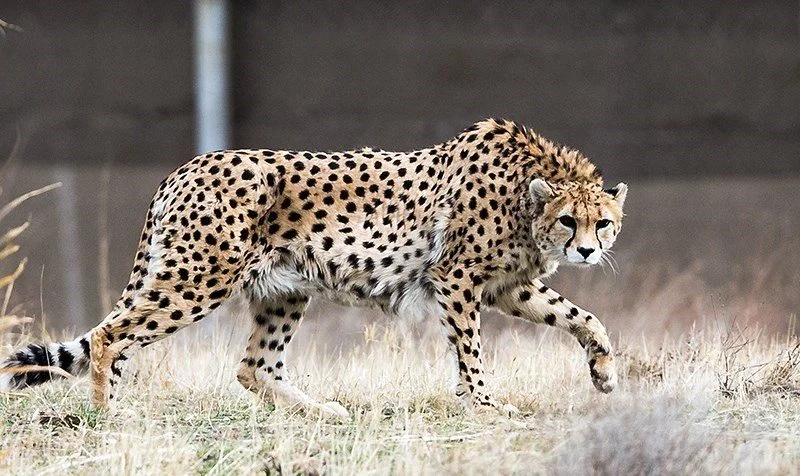
Asiatic cheetah. Erfan Kouchari. CC BY 4.0.
In February 2026, nine days before the United States and Israel launched strikes against Iran, rangers filmed a female cheetah with five cubs in the North Khorasan province, the largest litter ever recorded for the subspecies. This comes at a time when fewer than 30 Asiatic cheetahs are believed to be left in the wild. While the subspecies once roamed vast distances spanning the Arabian Peninsula, the Middle East, and Central Asia, today they are only spotted in the rugged deserts of Iran. Given the uncertainty of the ongoing war and the Asiatic cheetah’s classification as critically endangered, it is more important than ever to ensure their future is protected.
While a cousin of the African cheetah, the subspecies is visibly different, with smaller heads, shorter legs, thicker coats, and a more powerful neck. It is believed they diverged from the African cheetah between 32,000 and 67,000 years ago, adapting to the different terrain of the Asian continent over time. The Asiatic cheetah was known throughout history, with the Mughal emperors keeping them for hunting and Emperor Akbar reportedly keeping over 1,000 during his lifetime.
Throughout the 20th century, the cheetah began disappearing. By the 1940s, it had gone extinct in 13 countries, including Saudi Arabia, Afghanistan, Iraq, and India. Pakistan’s final sighting was in 1997. What remains of the species now roam the desert regions of Yazd, Semnan, Kerman and Isfahan in Iran, which is only 16% of its original territory. While the country granted the species protected status in 1959, the Islamic Revolution and the Iran-Iraq War halted conservation efforts for decades. Today, the global population stands at 27 individuals that have been ID-carded, plus five in breeding sites and six more in captivity.
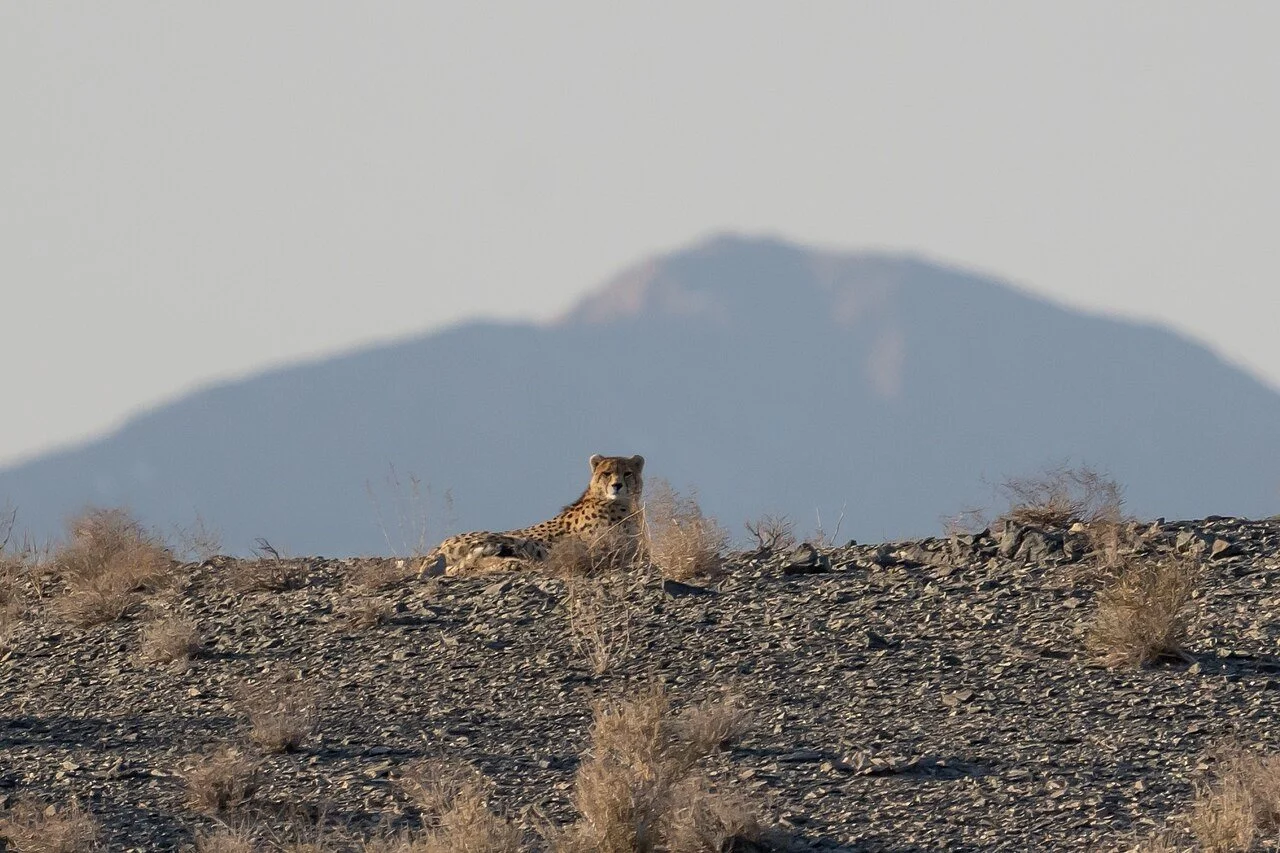
Asiatic cheetah lives in rugged terrain. Mousa Mazinanian. CC BY 4.0.
Current Threats to Conservation
Long before the first bombs were dropped in February 2026, the Asiatic cheetah was already fighting for its survival. The number in 2026 had recovered from only 20 individuals recorded in August 2025 and from 12 at its lowest point in 2022. Every new cub recorded is a victory, given the numerous threats they face, including poaching, human-wildlife conflict, habitat fragmentation, low genetic diversity, and road accidents, all of which threaten their livelihoods.
Of all these obstacles, road accidents are the deadliest. The story of beloved Helia, the female with the cubs who made history in January 2026, illustrates the danger of road accidents. In 2024, she was spotted with two cubs in the Miandasht Wildlife Refuge after traveling more than 130 kilometers from the Turan reserve. Tragically, one of her cubs was struck and killed by a vehicle on the “Death Road” that cuts through the Semnan province. For a week after her cub's death, she stayed near the road, with volunteers on guard to block traffic in case they tried to cross again.
The ongoing war adds another layer to an already volatile crisis. While the cheetah was given a protected status and national parks were established, the Islamic Revolution in 1979 and the subsequent Iran-Iraq War set back conservation work by decades. Recently, conservationists have been the target of questioning and even arrests by the Iranian government.
One of the most notable organizations focused on protecting the cheetah is the Persian Wildlife Heritage Foundation, which had previous partnerships with the UN and international NGOs. The Tehran-based group used camera traps to monitor wildlife, including the Persian leopard, the Asiatic cheetah and the Asiatic black bear. Camera traps monitor wildlife without human presence and are widely used around the globe. However, in Iran, the usage was enough for nine members of the organization to be arrested for espionage in 2018.
One member, Kavous Seyed-Emami, an Iranian-Canadian scientist and the foundation’s founder, died after two weeks in Evin Prison under “suspicious circumstances.” Though his death was ruled a suicide, his family tried to launch an investigation. Thankfully, the other seven members were freed in April 2024, more than six years after their arrest. This sent a chill throughout the international conservation community, as foreign investments and international organizations were hesitant to work in Iran again.
While camera traps are a great start for tracking cheetah movements, experts have cited that GPS collars could be an important tool in the future. They have been used before to study Persian leopards and, according to recently published research, could “provide essential insights into habitat use, movements and survival, enabling more effective conservation strategies.”
For Iranians, the cheetah is more than just an endangered animal; it is a source of national pride and cultural identity. When Iran’s national football team took to the pitch at the 2014 World Cup in Brazil, the cheetah was printed on their kit. Meraj Airlines painted the animal across their planes.
Looking Toward the Future
Amid the ongoing war, sanctions from Western nations and sporadic internet shutdowns, conservationists in Iran are concerned about the fate of the species. When will the conflict end? What is the current state of the cheetahs in inaccessible regions? How will new funding be accessed? These are all questions that conservationists and scientists around the world continue to ask themselves in the face of such an uncertain future.
Jamshid Parchizadeh, a research scientist, when asked by Mongabay about the future of the war, stated, “Before the war, cheetah conservation received limited funding from the government. But after the war, I doubt that the government has any money left for the conservation of the cheetah.”
GET INVOLVED:
Getting involved in protecting the cheetah in Iran can be complicated, especially with the ongoing conflict. The Cheetah Conservation Fund has permits to work in Iran that allow for close partnerships with groups on the ground. Visit their site to learn more about how you can help their cause to protect cheetahs around the world.
Other ways to get involved include learning about the Asiatic cheetah and raising awareness. You can help by sharing the cheetah's story online and spreading awareness of its protection. For updates and news on the status of the cheetah, visit Mongabay, an independent news platform focused on global and environmental challenges. The Felidae Fund also provides information and steps to raise awareness through social media platforms and community work.

Kaitlin Murray
Kaitlin Siena Murray is a travel journalist and global storyteller documenting cultures, historical places, and the people and social impact movements helping the world. Raised worldschooling across more than 129 countries with degrees in anthropology and history, her writing is driven by a commitment to global citizenship, capturing the diversity and beauty of the world through the lens of culture, history, and social change.