
By Jeremy Gordon
Jared Kushner’s luxury development project sparks massive backlash from citizens and environmentalists.
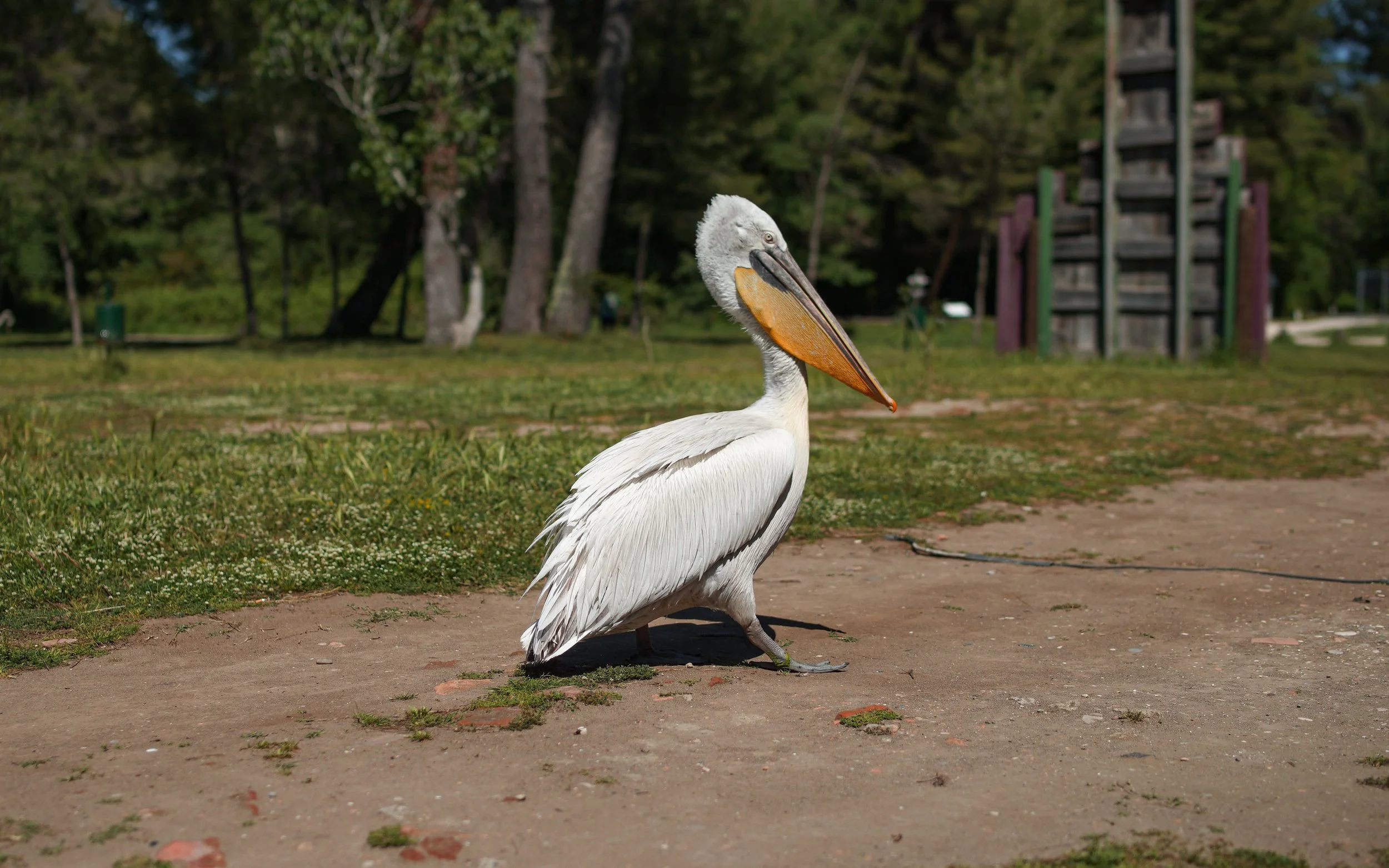
Dalmatian pelican in Albania. Kostiantyn Klymovets. Pexels.
The first week of June saw tensions flare in Albania over the construction of a new luxury resort in one of the country’s most biodiverse regions. The project, backed by Donald Trump’s son-in-law, Jared Kushner, is set to wreak havoc on the local environment and spark affordability issues for locals. Protests have spread from the barbed-wire barricades surrounding the site to the capital of Tirana, where thousands have taken to the streets carrying flamingo-shaped signs and chanting their discontent.
The region in question is Vjosa-Narta. It is where the Vjosa River, which arises in the Pindus Mountains of northwestern Greece and stretches over 270 kilometers, empties into the Adriatic Sea. The wetland surrounding this Adriatic delta is one of the most ecologically vital habitats in Europe, home to over 200 bird species, including flamingos and Dalmatian pelicans, and over 70 endangered species, including the Mediterranean monk seal and loggerhead sea turtle. It is part of the Adriatic Flyway, a major migration corridor for millions of birds that fly between Africa and Europe each year.
The $1.2 billion development project threatens to ravage the natural habitat, destroy ancient dunes protected under Albanian law and cut off tidal exchange between the Narta Lagoon and the Adriatic, plunging the marine food chain into chaos. Concrete and barbed-wire barriers have been erected, blocking locals from entering parts of the lagoon and beach. Over 40 environmental groups called for cessation of the project in January, though those calls were ignored by the Albanian government, which has amended its laws and permitting processes to pave the way for the project. Critics have decried the lack of transparency and potential corruption surrounding the decision. Prime Minister Edi Rama has stood firm in support of the project, warning against appearing hostile to foreign investment.
The project is the brainchild of Jared Kushner through his investment firm Affinity Partners. The plans call for the wetland to be transformed into a sprawling, sparkling seaside plot of hotels, villas and high-end apartments. It is part of a larger push to transform Albania into an elite tourist destination. Tourism is the major driver of the Albanian economy, accounting for roughly 20% to 25% of the GDP. It has been the surest route to Westernization since the fall of the communist government in 1992.
At the heart of Kushner’s development project is Sazan Island, a place with a long military history. It was known to the ancient Greeks and the Romans, and it later became an important naval outpost for the Ottoman Empire. When Albania gained independence in 1912, the island’s ownership fell into dispute. It was occupied by the Italians in 1914 and became a fortified military base under Benito Mussolini.
After World War II, the island reverted to Albanian ownership and became a secret military site for Enver Hoxha, the repressive communist prime minister from 1944 to 1954. Underneath its lush pine forests sprouted a vast network of underground tunnels and bunkers, including a cinema, school and hospital. Even after the fall of communism, the island retained military relevance, becoming a joint Italian-Albanian base.
In the 2010s, as Albania was being granted EU candidate status and making itself more attractive to foreign investment, the island’s surrounding sea was designated a national marine park. It became a tranquil spot for citizens to bask and enjoy the local wildlife. And in 2024, the island came to the attention of Jared Kushner and Ivanka Trump. In an interview with podcaster David Senra earlier this June, Ivanka claimed that the couple was “on a friend’s boat” and “stopped for a swim” when they found the island and became captivated by it. That set in motion the chain of events that led to the skirting of environmental protection laws, the detrimental construction project and the subsequent fiery protests.
The protests have borne some fruit. Albania’s anti-corruption prosecutor SPAK (Special Structure against Corruption and Organized Crime) has opened an investigation into the shadowy legal maneuvering that initiated the project. The European Commission has warned Albania that the project could be detrimental to its EU membership, conflicting with the larger body’s environmental rules. A spokesperson for Sofjan Jaupaj, Albania’s environmental minister, has downplayed progress of the development, claiming that “no final project proposal has been submitted and construction activities have not commenced as no construction permit has been approved.”
Sazan Island and its surrounding region now enter a new, uncertain era. It has been an ancient naval outpost, a communist military base, a coastal getaway and may now become a glitzy tourist attraction backed by billions in foreign investment. The transformation is emblematic of Albania’s larger race to shed its past and join the West. And it features all of the pitfalls that go along with that.
Jeremy Gordon
Jeremy is a graduate student at Johns Hopkins University studying Creative Writing. He graduated from the University of Maryland with a bachelor's in Criminology and Criminal Justice and worked for four years as an Investigative Specialist with the Public Defender Service for DC.