
By Mia Gooch
Women in Nepal are redefining the climbing industry and offering women-led treks.
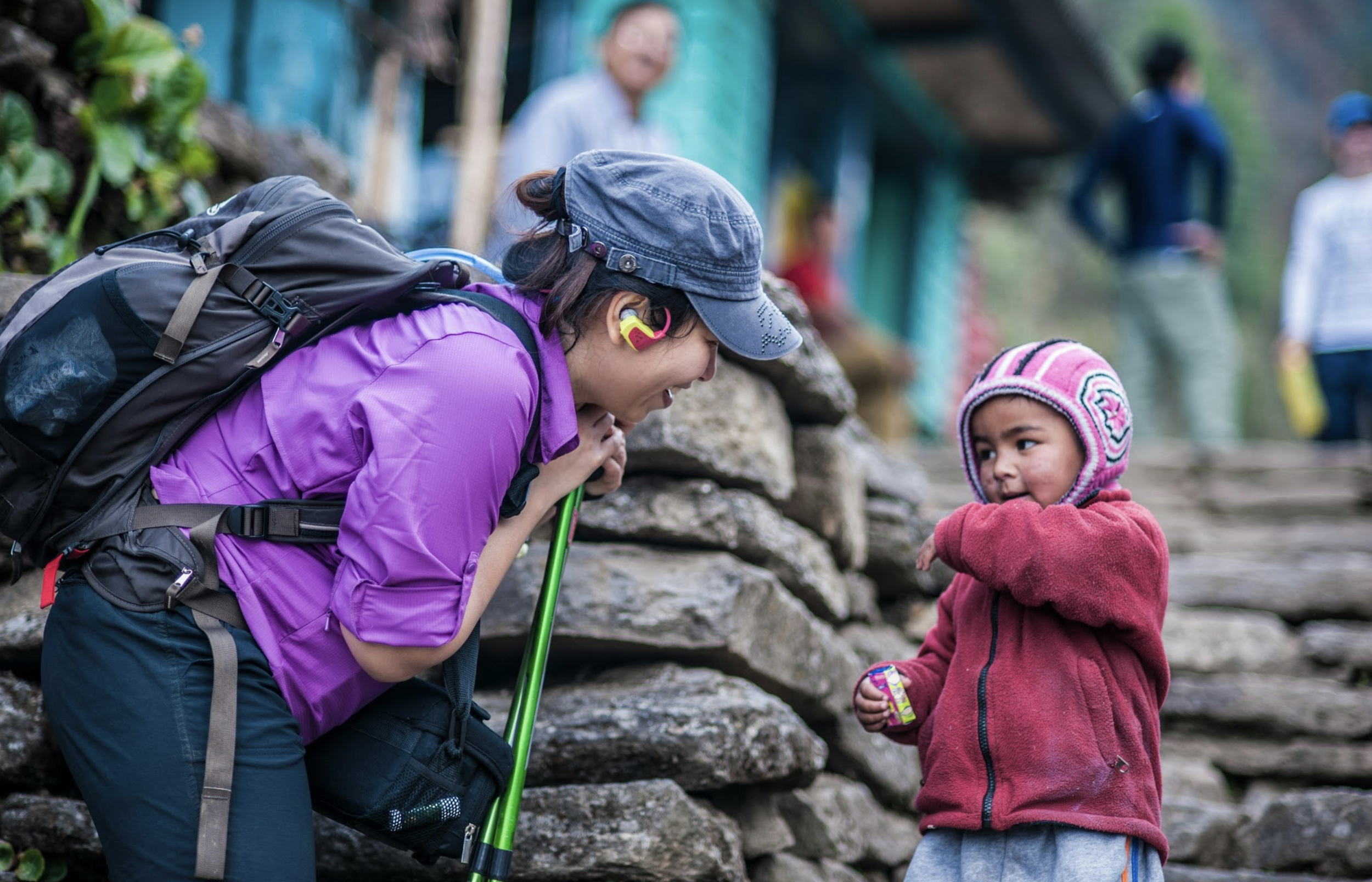
Female trekker with child in Nepal. Sherine. Pexels.
Embedded into the topography of five countries, the Himalayan mountain range spans about 2,400 kilometers. Since its formation roughly 50 million years ago, the Himalayas have been scaled by countless people mountaineering for both survival and sport. In our modern day, this extensive stretch of stone, soil and ice attracts thousands of climbers each year, many of whom depend on local guides and porters to navigate the challenging terrain.
In the sovereign country of Nepal, Himalayan trekking makes up a significant portion of the country’s profits. Many locals have taken advantage of the climbing industry’s economy, holding positions as trekking guides and porters. Knowledgeable and skilled in alpine navigation, these locals exclusively make up the companies that strategize pathways and accompany climbers when scaling the Himalayan peaks.
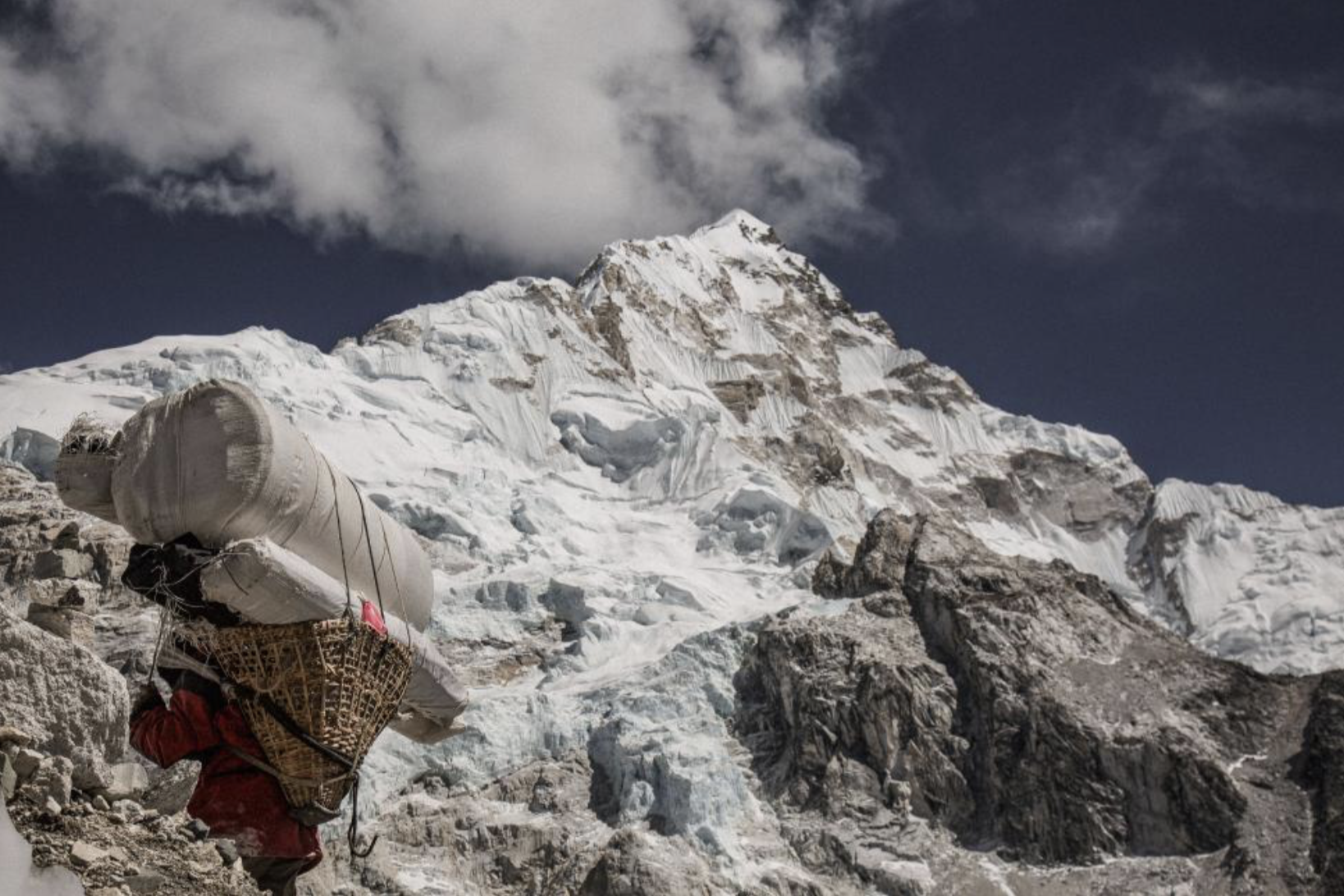
Porter carrying load on a Himalayan mountain trek. Christopher Burns. Unsplash.
However, these trekking positions are predominantly held by Nepali men. Despite their equal knowledge of the Himalayan mountain ranges and their climbing capabilities, Nepali women are often absent from leadership positions in Nepal’s climbing industry. This is largely due to societal expectations and hierarchies in Nepal; traditional climbing practices are based around the expectation that men are more fit and able-bodied, therefore they are deemed more capable to carry large loads as porters. For women, the primary obstacle to representation is not physical capability but limited access to experience and training. In an effort to achieve this representation, teams of local women are organizing all-female climbing expeditions across Nepal’s mountains, advocating that equally sustainable climbing can be led by any gender.
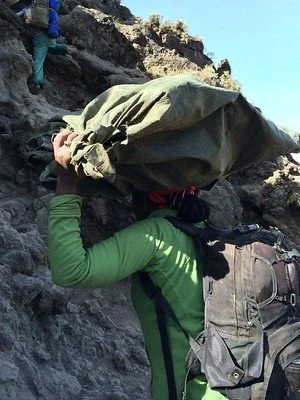
Female porter lifting supplies on a trek. Nano Anderson. CC BY 2.0.
The creation of all-female agencies emphasizes empowerment and environmental stewardship among climbers. Agencies such as 3 Sisters Adventure Trekking, WNF Nepal and World Expeditions are examples of organizations creating trek line-ups dedicated to women and adventuring in Nepal. They work to provide fair compensation and representation for women seeking careers in the trekking industry as well as exciting outdoor experiences for global alpinists.
All-female agencies stand for empowerment in intense professions. When operating in the high-altitude terrain of the Himalayas, people are exposed to extreme weather and risks of natural disasters. So having both logistical and emotional support in these treks can help to reduce uncertainty among climbers. In a 2024 interview with National Geographic, trekking porter Sumitra Acharya shared that she was “discouraged by male porters” during her initial experiences in Nepal’s climbing industry. Constantly addressed with sexist commentary, she felt alienated by the male climbers and workers throughout the extreme treks. She explained that her choice to continue was made possible by the people she gradually met throughout her expeditions: climbers who had genuine respect and guidance to offer. Mutual trust in trekking groups is important for a successful climb, as navigating alpine environments can be easier when in the company of people with likeminded values of trust and strength.
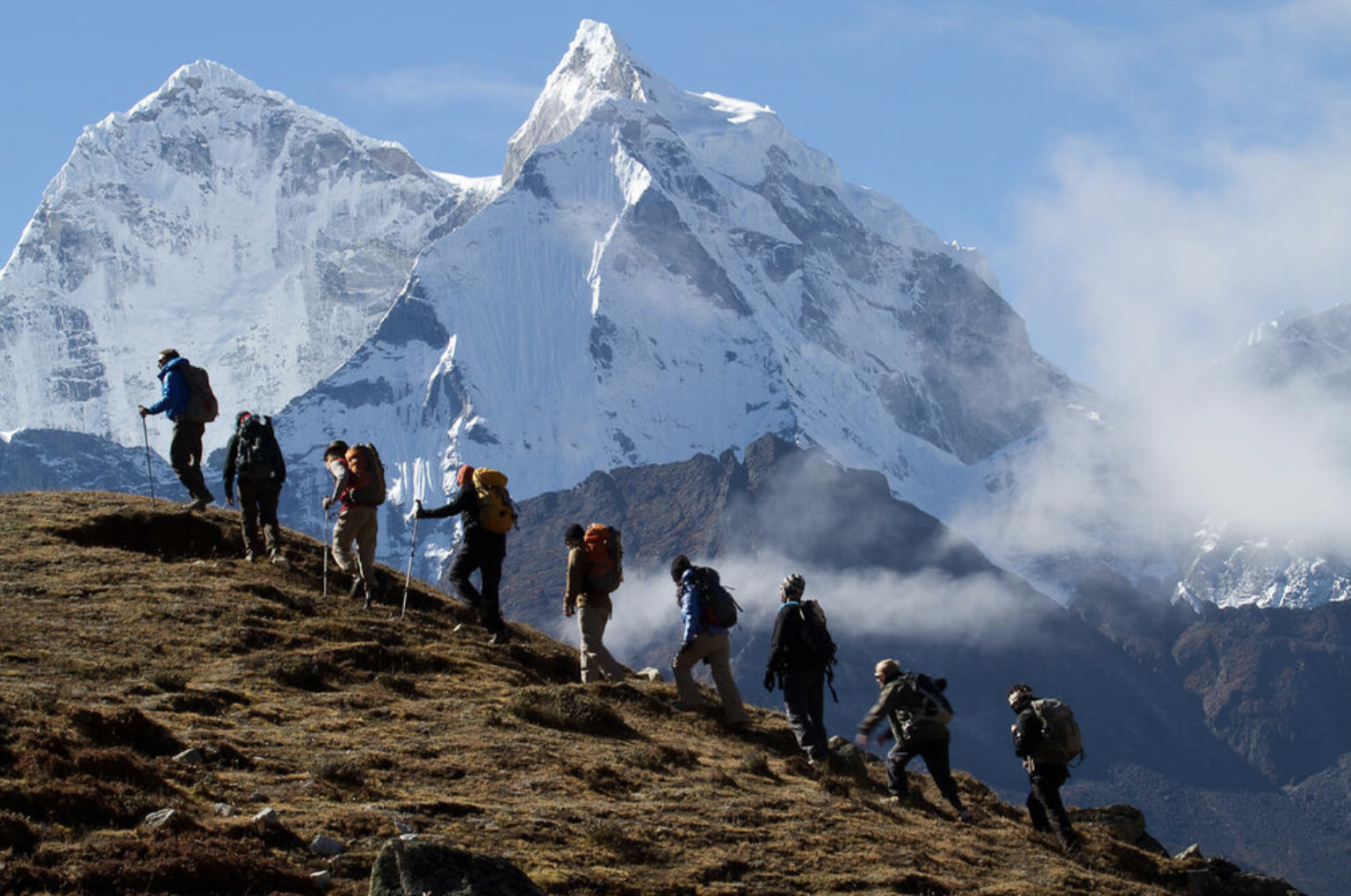
A group of trekkers climbing in Pheriche, Nepal. Didrik Johnck. CC BY-NC-SA 2.0.
This movement for gender equity in Nepali portership and agency work is supported across various regions in the world. Female alpinists cite the growing presence of women in mountaineering as a source of motivation for their own careers, crediting both the pioneering women who helped establish climbing strategies and the younger generations of women who may pursue mountaineering in the years to come. When asked about her proudest achievement as a trekking porter, Acharya said, “If one single girl is inspired by my story, that’d be it.”
Although Nepal’s climbing industries remain male-dominated, women are beginning to reshape such patterns. As more women enter trekking leadership roles and more climbers support them, they are creating opportunities for themselves and future generations of mountaineers in hopes of conquering social limitations.
GET INVOLVED:
Friends of Himalayan Children accepts donations to aid underrepresented communities in Nepal, including young women in the mountaineering industry. Partial donation scholarship funding is distributed for “empowering young women,” offering financial assistance, education and training.
Empowering Women of Nepal aims to improve the lives of Nepali women and girls through adventure sports and sustainable travel. People interested in getting involved can participate in their grassroots adventure tourism and mentoring programs.
TO BOOK A WOMAN-LED TREK:
Brown Girl Trekker is founded by Marinel M. de Jesus, Esq., a former civil rights attorney who left her career in Washington, D.C., to pursue mountaineering. Her goal is to elevate the voices of women and underrepresented communities in mountain trekking. She offers trek training assistance, donation recommendations and various different trek locations, including Nepal.
Base Camp Himalayas offers multiple women-led treks with pricing and trek planning resources in a set-up similar to other booking sites.

Mia Gooch
Mia a student at the University of North Carolina at Chapel Hill, majoring in Media & Journalism with a double minor in Education and Social & Economic Justice. She’s passionate about informal education and creating fun experiences where people of all ages can explore new perspectives and develop new skills. When she’s not in the classroom, she loves contemporary dance classes, spending time with friends and family, baking, and being outdoors!