
By Kate Dawson
Guided by the Tiaki Promise, visitors discover a land where tourism protects what it celebrates.
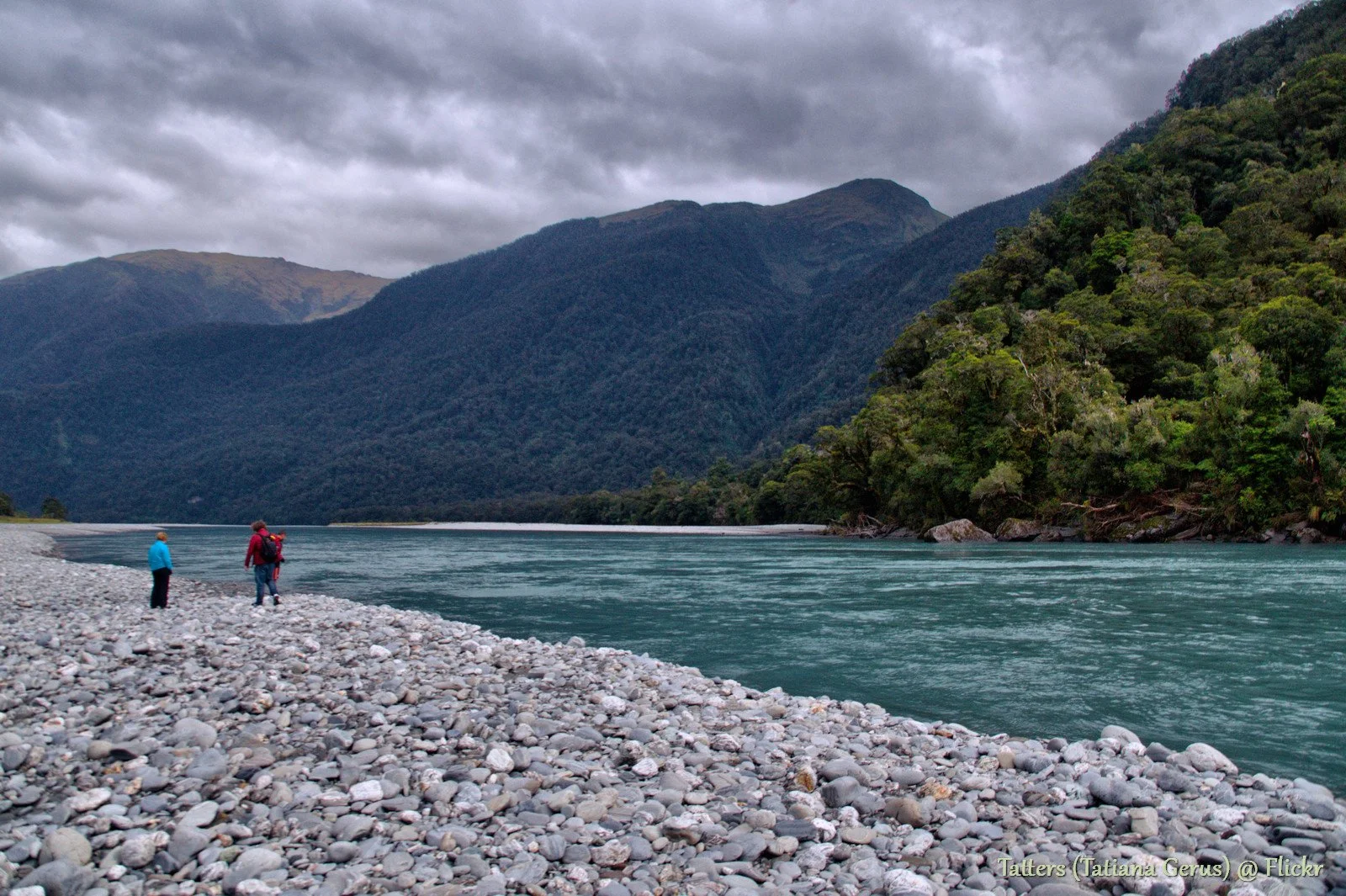
River along the West Coast of New Zealand. Tatters. CC BY-SA 2.0.
Known for alpine and coastal sceneries, the presence of the Indigenous Maori culture and outdoor adventure sports, New Zealand offers a landscape of great contrasts and diversity. While encouraging visitors to experience what New Zealand has to offer, the country also values protecting its biosecurity and culture.
Since the 1980s, ecotourism has grown as travelers increasingly choose destinations based on environmental values. The ecotourism industry consists of three direct impacts: economic, environmental and sociocultural. New Zealand’s “pure” brand image has been founded upon the underpinning terms of connection with nature, a variety of experiences, and clean air and water, which can be considered a comparative advantage and a feature of differentiation from other international destinations.
View of New Zealand homes. Jason Pratt. CC BY 2.0.
New Zealand acts as a global pioneer in ecotourism with its blend of conservation and sustainable travel. The country relies on the Tiaki Promise to ensure that visitors care for the land, sea and local communities. Travelers following the Tiaki Promise are making a commitment to New Zealand to act as “a guardian, protecting and preserving [their] home.”
Environmental stewardship has become central to the nation’s identity, with around 30% of the region protected as a conservation estate. Fiordland National Park, for instance, is a UNESCO World Heritage Site, deemed as having outstanding universal value to humanity. The New Zealand Government has noted the climate change risks that impact the quality of land. It is essential that businesses are also determined to be climate-resilient to work toward the target of net-zero emissions by 2050.
Chief Executive of New Zealand Maori Tourism, Pania Tyson-Nathan, shared, “Tangata whenua (people of this land/Indigenous to Aotearoa New Zealand) are informed by values, such as manaakitanga (hospitality, kindness, respect, generosity) and kaitiakitanga (guardianship of the environment). These also underpin the Tiaki Promise. When manuhiri travel our country upholding these values, they will begin to see the interconnectedness of the world around them and gain a more meaningful and unique visitors’ experience.”

New Zealand tourist on a nature bridge hike. Ardison Garcia. CC BY-NC-ND 2.0.
Research supports this approach, showing that travelers heading to eco-friendly or “green” destinations benefit from understanding local values. In New Zealand, this means helping visitors appreciate how deeply natives value their home. By offering clear guidance on how to care for the land, the Tiaki initiative aims to inspire more responsible and respectful behavior. These cultural values are reflected not only in tourism initiatives but also in how visitors are encouraged to interact with the environment.
The long-running 100% Pure New Zealand program is a globally recognized marketing campaign launched by Tourism New Zealand. For over 25 years, the campaign has promoted New Zealand's natural landscapes and encouraged people to consider it as their next travel destination.
Responsible travel would align with the commercial guidelines from New Zealand’s Department of Conservation. Staying on established roads and tracks can prevent disturbing natural wildlife habitats. Water is sacred and of spiritual value in Maori culture, and further research on the history of a lake or river before swimming can help demonstrate respect.
When traveling to New Zealand with sustainability in mind, it’s essential to obtain an NZeTA (New Zealand Electronic Travel Authority), which includes an International Visitor Conservation and Tourism Levy (IVL). The IVL directly supports the upkeep of tourism infrastructure and funds conservation and environmental initiatives across the country.
Sustainable tourism operators are primarily identified through Qualmark, the country’s official tourism agency certification. There are other recognized programs, such as Toitu and ecolabels like Green Globe, that help travelers identify businesses committed to verified eco-friendly and regenerative practices.
New Zealand’s partnership with a wide range of travel agencies highlights that the country is more than a destination. It is a place where travelers build meaningful bonds with locals, strengthen connections with the people they journey alongside and engage in travel that gives back to the land.

Kate Dawson
Kate is a student at the University of North Carolina at Chapel Hill, double majoring in Public Policy and Journalism. Her passion to share stories and love for environmental justice inspires her writing. She hopes to change the world by empowering others.