
Bali, with its intoxicating mix of vibrant culture, lush landscapes and tranquil seas, has always held a special place in my heart as a travel photographer and adventure seeker.
Read MoreDefining Gender and Biology: The Struggle For Transgender Rights
As more global governments define gender and biological sex as a singular identity, transgender communities face a potential loss of rights and social stigma from the U.S. and the U.K. to New Zealand.
Read MoreTrash to Treasure: A Tour Through Cairo’s Garbage City
Take a guided walk through Cairo’s Garbage City and discover how one community is turning waste into a way of life.
Read MoreVenezuela’s Drowned Church of Potosi
The Drowned Church of Potosi in Uribante remains a powerful reminder of the historical resilience of the Venezuelan people and the challenges they endure today.
Read More10 Places to See Before They Disappear
The casualties of industrialization and climate change.
Read MorePreserving Heritage and Habitat: Indigenous Australian Rangers Redefine Ecotourism
Indigenous Australians are blending ancient traditions with modern science to preserve and protect endangered ecosystems and species.
Read MoreRefusing Silence: Afghan Women Fight Back Through Prose
In the face of censorship and exile, Afghan women are creating new paths to keep their writing alive.
Read MoreMorocco: A Colorful Tapestry of Heritage and Natural Beauty
Morocco is a land of contrasts, from the vastness of the Sahara to the intricate mazes of its ancient medinas. Each moment spent here is like stepping through the pages of a vividly illustrated storybook, where every corner promises a new adventure
Read More7 Loving Mother’s Day Traditions Across the Globe
From observing religious customs to simply gifting their mothers flowers, individuals around the world take part in cherishing maternal figures through their own Mother’s Day celebrations.
Read More7 Eco-Adventures in Tuvalu: The World's Least-Visited Country
With fewer than 4,000 travelers each year, the beautiful island nation of Tuvalu is a perfect destination for exploring rich Pacific culture, ecotourism and marine conservation.
Read MoreCalifornia’s Fashion Act: Fighting For Accountability
California’s Fashion Accountability Act is bringing environmental transparency to the trillion-dollar industry.
Read MoreAnti-American Sentiment Increases Caution for Traveling Americans
Julia Kelley
After introducing controversial war plans and import taxes, Donald Trump’s recent proposals have escalated negative attitudes toward American tourism worldwide.
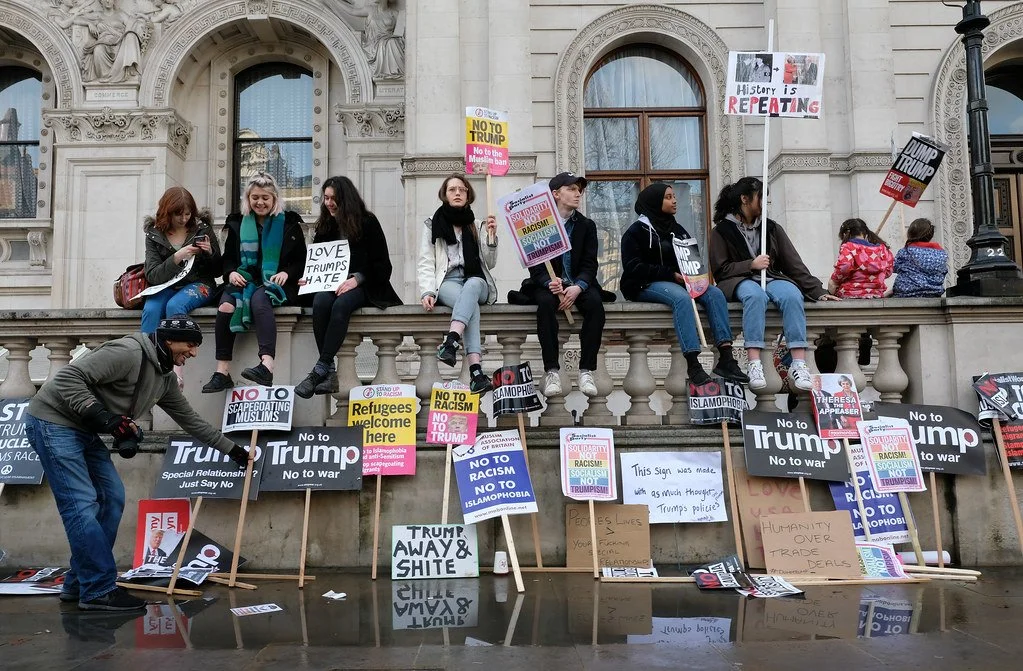
Anti-Trump Protest in London. alisdare1. CC BY-SA 2.0.
During the 20th century, the United States found itself a burgeoning political, economic and cultural world power, gaining increasing international influence. However, since President Donald Trump’s recent inauguration in January 2025, a string of controversial political and economic decisions has seen a subsequent drop in warm foreign sentiments toward the United States. In populations across the globe, those who perceive America as a positive influence number only 46%. Notably, Trump proposed that the U.S. “take over” and “own” Gaza in response to the Israel-Palestine conflict, resettling the population at the same time. These claims were met with widespread condemnation from countries in the Middle East, including Egypt, Saudi Arabia and Jordan, all of whom fiercely rejected the plans and saw them as a violation of the numerous peace agreements between the countries. This contributes to a revival of anti-American views in the Middle East since the beginning of the Israel-Palestine war, as many view the U.S. government as a domineering and pro-Israel force. Despite garnering support from Israel, Trump’s remarks have also been opposed by other powerful countries like China, the United Kingdom, Germany, Australia and Brazil, who consider the proposed relocation of Gaza’s citizens to be an extreme misstep in power.
More recently, Trump has introduced a vast set of tariffs that his administration affirms will secure the economy. Not only did this legislation drastically damage global markets, but many affected countries considered it a threat of global tariff war and an insult to the good relationships between foreign economies. Although the current U.S. tariff plans exclude Canada, an initial tariff placed on Canadian imports increased tensions between the two countries and resulted in a call to boycott American products, naming the U.S. as an enemy. American product boycotts have also been staged in Europe, with U.S. favorability falling across countries such as Denmark, Sweden, Germany and France. For example, the Danish Facebook group Boykot varer fra USA (Boycott products from USA) has amassed over 95,000 followers, while setting fires to Tesla cars has sprung up as part of the “Tesla Takedown” movement in Italy, a protest against Elon Musk’s involvement in international affairs. China has also seen a rise in anti-American perceptions, coinciding with Trump’s decision to place the largest tariff increase on the country at 104%.
In the wake of such turbulent politics, discontent toward America has grown. Overseas travel to the U.S. has declined exponentially in the last few months, seeing an overall drop of 12% in foreign visitors from the previous year. Regions that are usually strong sources of tourism show stark differences, with the number of Canadian tourists dropping by 32% and Mexican tourists by 17% as of March 2025. In many online forums, those from other countries are making their views of Americans known, presenting an overall negative reception of tourists. On a European Reddit forum, user @Iplaymeinreallife from Iceland said, “we want nothing to do with him [President Trump] or a country that would vote him into office a second time,” while user @Mapey from Latvia noted how, despite their initial love for America, they now “hate it to the bone as America stands for absolutely everything” they despise. Americans already face stereotypes while traveling abroad, generally characterized as loud, ignorant or entitled, but such labels are becoming more frequent. More than anything else, countries have replaced an admiration for the U.S. with widespread confusion and antipathy for Trump. In turn, this festering distaste finds itself projected onto American travelers and their experiences, disrupting their hoped-for escapism.
As a result of this U.S. resentment, international travel has become increasingly risky. In a survey done by Global Rescue, 72% of people noted that Americans traveling abroad will be perceived more negatively, while many had already encountered disputes. One California-based traveler described how they “experienced much more negativity,” while a Wyoming tourist reported having “numerous arguments about American policy” with people they did not know. Some travel agencies are also seeing drops in sales for international travel by Americans, and prospective tourists have begun flooding online travel forums with questions asking if it is safe to travel or if foreign countries will accept them. Many, in an effort to avoid the anti-American attitude altogether, have simply cancelled planned trips and tours. New strategies are being taken by those currently abroad as a way of curbing any possible anti-American sentiment, as noted in Rick Steves’ European forum. One poster, named Emily, describes how she has “made an effort to appear less American” while living in Austria, and another, named Volva, in the UK, says it is important not to start any political discussion. Despite where they are in the world, however, Americans abroad and international citizens alike note that rising political tensions have left a lasting impact on the country’s once-amiable image.
Julia Kelley
Julia is a recent graduate from UC San Diego majoring in Sociocultural Anthropology with a minor in Art History. She is passionate about cultural studies and social justice, and one day hopes to obtain a postgraduate degree expanding on these subjects. In her free time, she enjoys reading, traveling, and spending time with her friends and family.
Tax Incentives Drive Gentrification in Puerto Rico
Kleigh Carroll
Wealthy investors and tech entrepreneurs are buying up land in Puerto Rico, driving up property rates and forcing locals out of their neighborhoods.
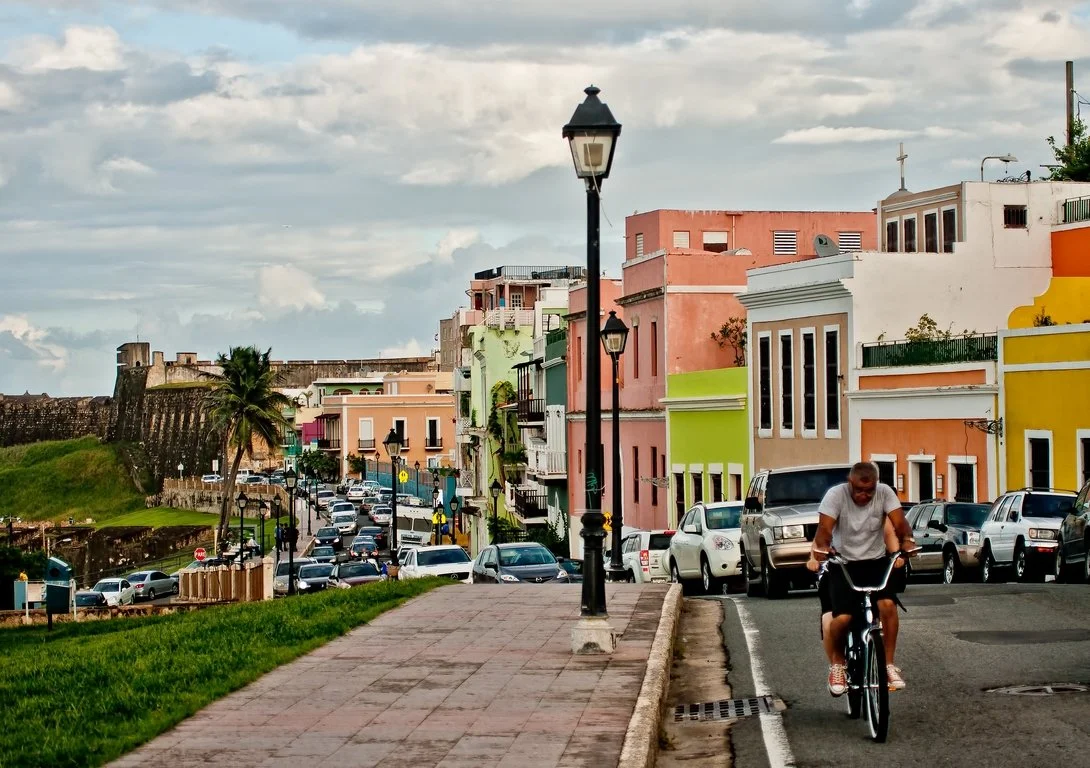
Street in San Juan, Puerto Rico. R9 Studios FL. CC-BY-2.0.
The island of Puerto Rico struggled with an economic recession from 2006 to 2017, during which the economy contracted by 10% and unemployment shot up to nearly 15% at its peak. To draw in foreign investment and stimulate economic growth, the government passed legislation designed to attract tech, finance and wealthy investors to the island. The first of two acts, Act 20, provided tax incentives for companies that establish and expand export services businesses in Puerto Rico. The second, Act 22, provided a total exemption from income taxes on all interest and dividends realized after an individual becomes a bona fide resident. The laws were further revised and repackaged in 2019, now known collectively as Act 60.
Living in a United States territory, residents of Puerto Rico normally benefit from a unique tax status that exempts them from federal income tax. However, Act 60 does not apply to long-time residents of the island. As a result, the incentives have only worsened income inequality and exacerbated a mass exodus of Puerto Ricans to the United States.
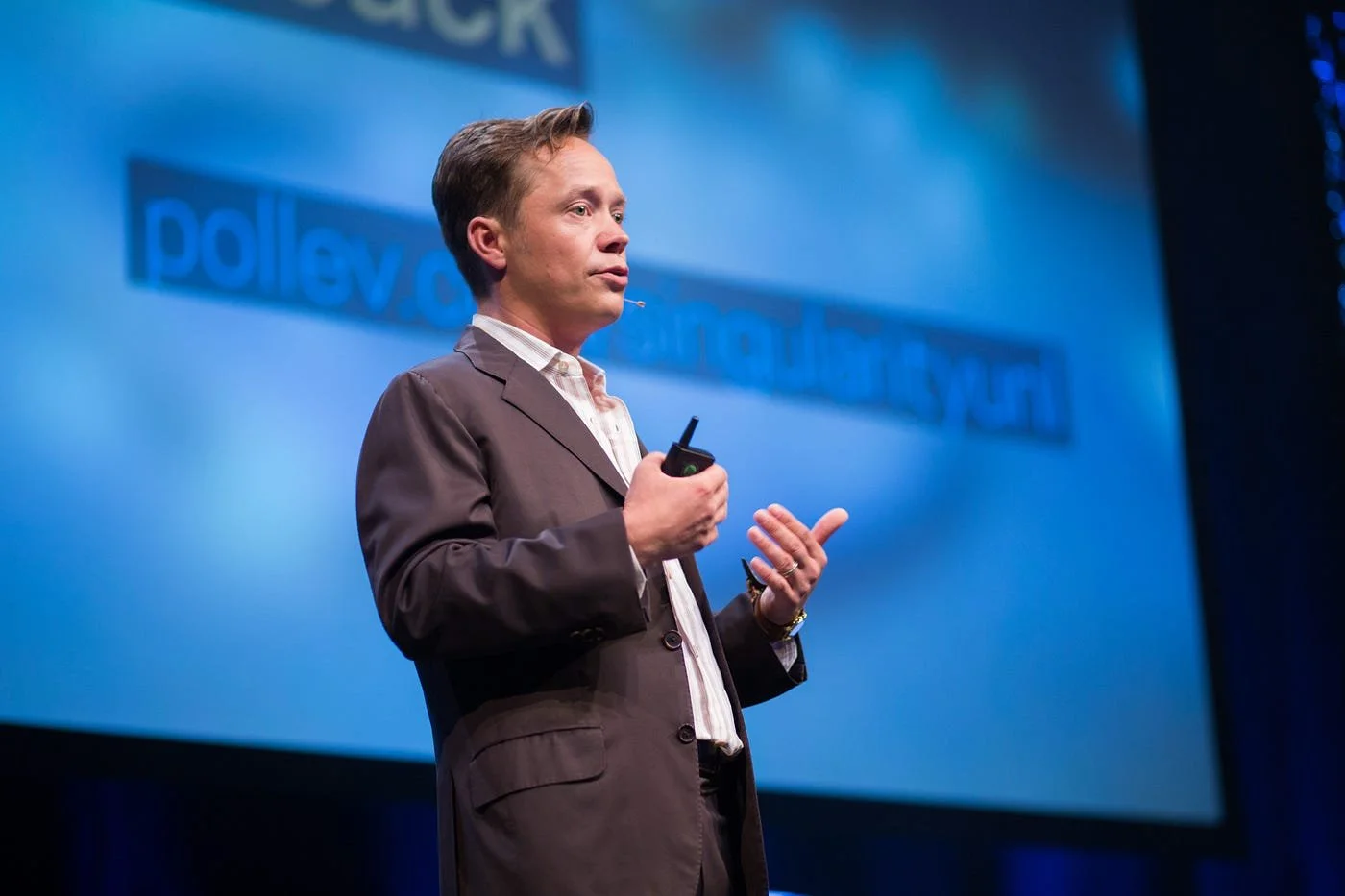
Brock Pierce speaks at a conference. Sebastiaan ter Burg. CC-BY-4.0.
In the aftermath of Hurricane Maria, which ravaged the island in 2017, U.S. crypto investors saw an opportunity to take advantage of tax incentives. They hoped to rebuild a part of the capital, San Juan, into what they called “Puertopia” — a modern city run on virtual money and public contracts. Members of this community who flocked to the island included men like Brock Pierce, co-founder of the digital currency Tether, and social media influencer Logan Paul. Upon moving to the island in 2017, Pierce and his partners took over numerous properties, including a beachfront hotel in Vieques and a museum in Old San Juan. They made grand promises to revitalize the economy using blockchain, refurbishing historic neighborhoods and building their own airports and docks.
But there is little evidence that wealthy newcomers like Pierce have done anything to stimulate economic growth on the island. Instead, they have contributed to a surge in housing prices, driving up the cost of living for locals and displacing Puerto Rican families, especially in coastal towns like Rincon, where beachfront property is prime real estate. Housing prices in San Juan increased by 22% between 2018 and 2021 as tax law beneficiaries spent an estimated $1.3 billion on real estate between 2015 and 2019, according to research conducted by Puerto Rico’s Department of Economic Development and Commerce.
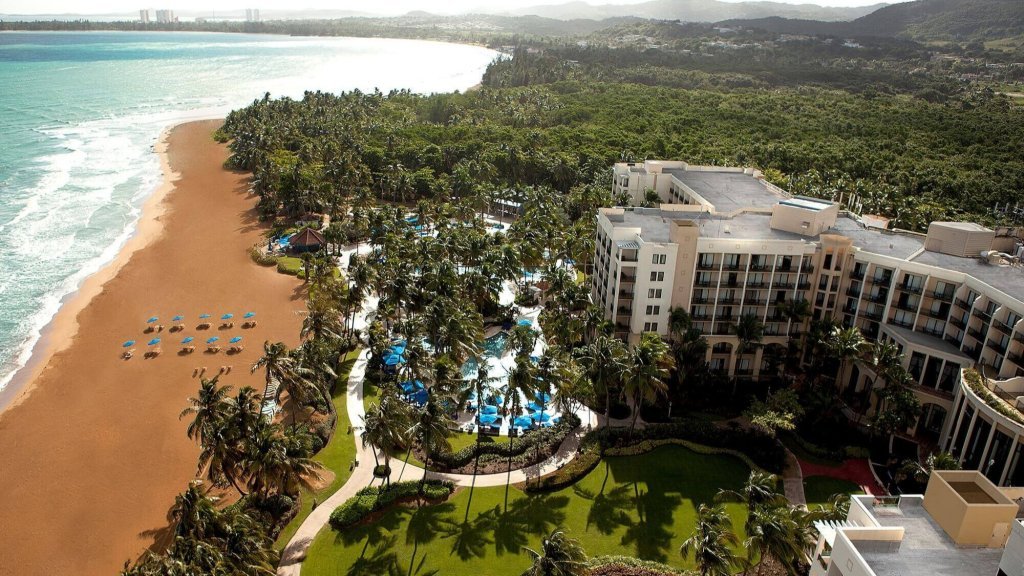
Golf resort in coastal Puerto Rico. Your Golf Travel. CC BY-NC-ND 4.0.
According to the 2023 census, the median household income in Puerto Rico is $25,096 — less than a third of the median household income in the United States. Many locals forced to relocate have to commute longer distances and pay expensive tolls. Marina Reyes Franco, an art curator at the Museo de Arte Contemporaneo in Puerto Rico, told the Guardian that she has struggled to find affordable housing in recent years. She blames the tax laws, claiming, “At the end of the day, this is about a new era of colonialism and laws that only benefit the elite.”
Gentrification culturally erodes communities and contributes to a loss of heritage and identity. Not only does it mean that locals can no longer afford to live in the places they call home, but an influx of wealthy newcomers can alter the character of neighborhoods, displacing local businesses, cultural institutions and the unique cultural fabric of Puerto Rican communities.

Solidarity With Puerto Rico Rally in Chicago, Illinois. Charles Edward Miller. CC BY-SA 2.0.
GET INVOLVED:
#AbolishAct60 is a grassroots movement aimed at repealing Act 60. By using social media to raise awareness and inspire collective action, they encourage the Puerto Rican diaspora to put pressure on their representatives. Help amplify their message here.
Diaspora en Resistencia is a nonprofit utilizing social media to mobilize support through online petitions demanding that the Puerto Rican government take action.
You can also petition your representatives to reevaluate Puerto Rican tax policies. U.S. lawmakers, including Chuck Schumer and Alexandria Ocasio-Cortez, have already spoken out against the measure.
Kleigh Carroll
Kleigh is a student at UC Berkeley studying Geography and Journalism. She hopes to integrate her skills in these fields in pursuit of a career in journalism. She is passionate about being outside, exploring, and writing in all of its forms.
Vietnam’s Floating Markets Are Disappearing
Kennedy Kiser
Climate change, migration and tourism are reshaping life on the Mekong Delta’s rivers.
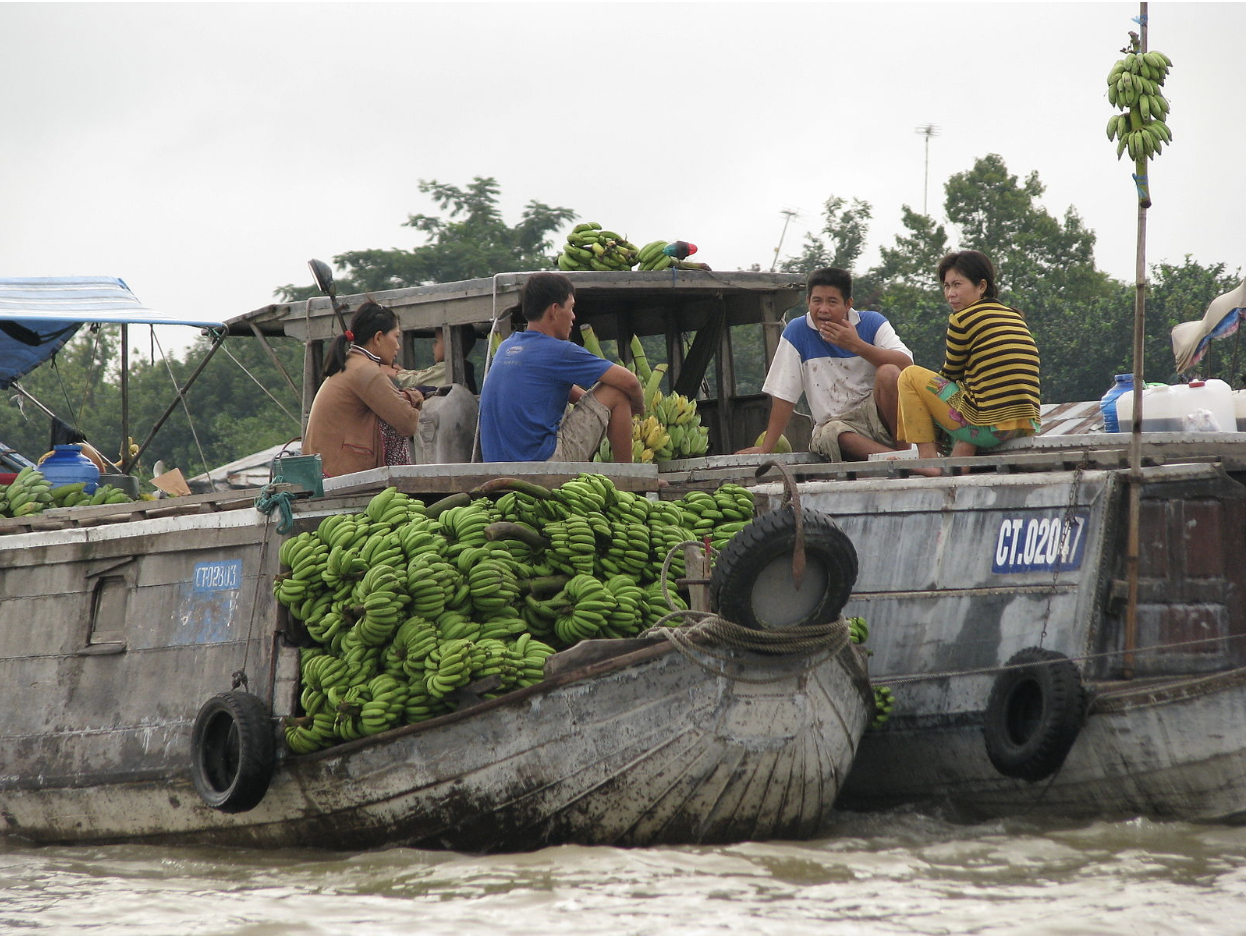
Bananas being traded at the Cai Be floating market in Vietnam. McKay Savage. CC BY 2.0.
In Vietnam’s Mekong Delta, boats once crowded with fruits, vegetables and steaming bowls of noodle soup now drift by in dwindling numbers. The iconic floating markets, such as Cai Rang in Can Tho, are in decline. Rising sea levels and saltwater intrusion have transformed daily life in the delta, threatening these vibrant centers of commerce and culture. These markets have been around for generations, and in the 1990s, were major trade hubs. But today, many of these boats are gone.
The decline is largely environmental. The Mekong Delta, which supplies half of Vietnam’s rice and a third of its GDP, is being overwhelmed by rising sea levels and saltwater intrusion. Climate change has intensified these threats, but human activity plays a role too. According to Environmental Law Alliance Worldwide, the overuse of groundwater, upstream hydropower dams and sand mining have all accelerated the erosion and subsidence of the delta. As saltwater continues to creep further on land, fertile rice paddies turn sterile and make freshwater harder to access. For boat vendors, this means fewer crops to sell, higher transportation costs and increasingly unreliable river routes.
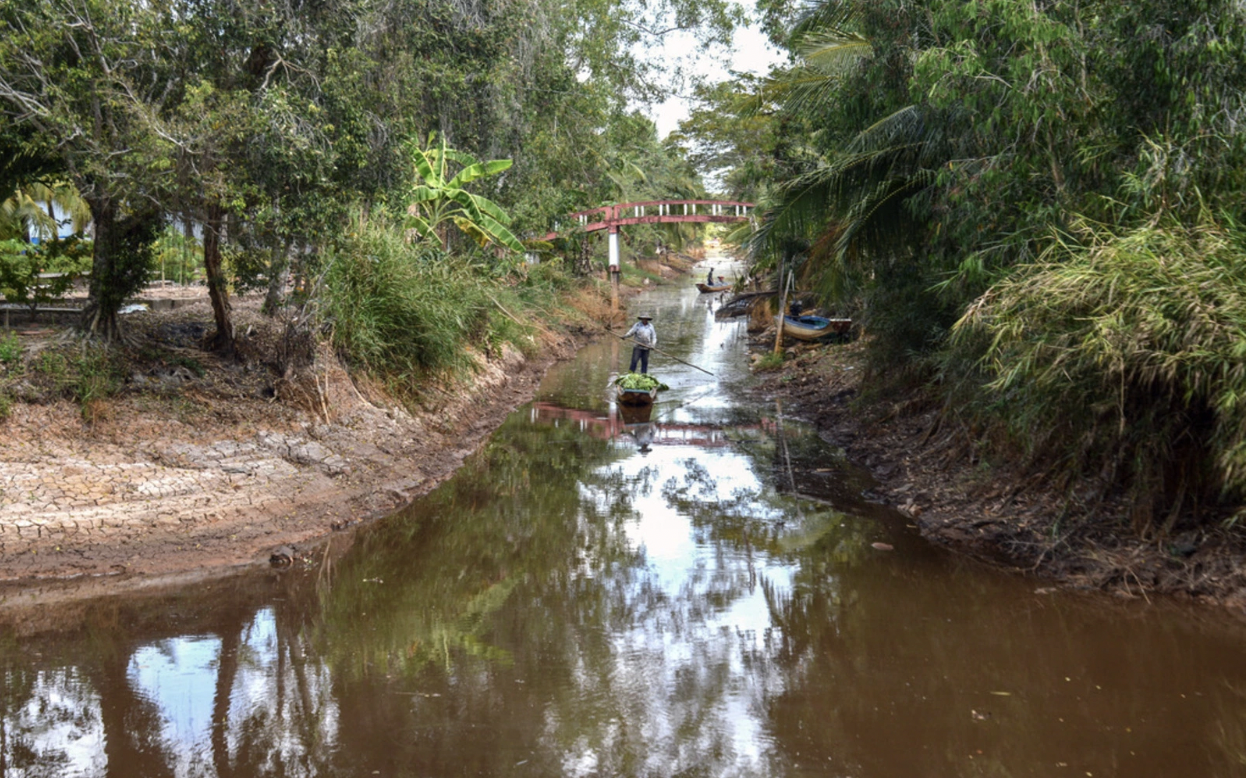
Saltwater intrusion impacts farmland in Vietnam’s Mekong Delta. AFP. CC BY 4.0.
This decline in floating markets severely impacts local families, especially those who depend on the markets. Many vendors face dwindling incomes, leading to increased migration to urban areas in search of better opportunities. For instance, Nguyen Thi Thuy, a former farmer, was forced to leave her home due to saltwater intrusion and now works as a security guard in Ho Chi Minh City. Just a decade or two ago, her income from selling fruit on the water would have been enough to sustain a family.

Aerial view of storm surge over Thi Nai Bay, Quy Nhon, 1969. Bill Gann. CC BY 2.0.
Adding to this shift is an increasing generational divide. Many younger residents no longer see a future in river-based life. Education and tech-based jobs in the cities hold more appeal than selling local produce. In part, local governments are struggling to maintain these markets as an increasing number of vendors’ children choose to leave instead of inheriting the family business. As fewer people choose to stay, the floating communities face cultural erosion.
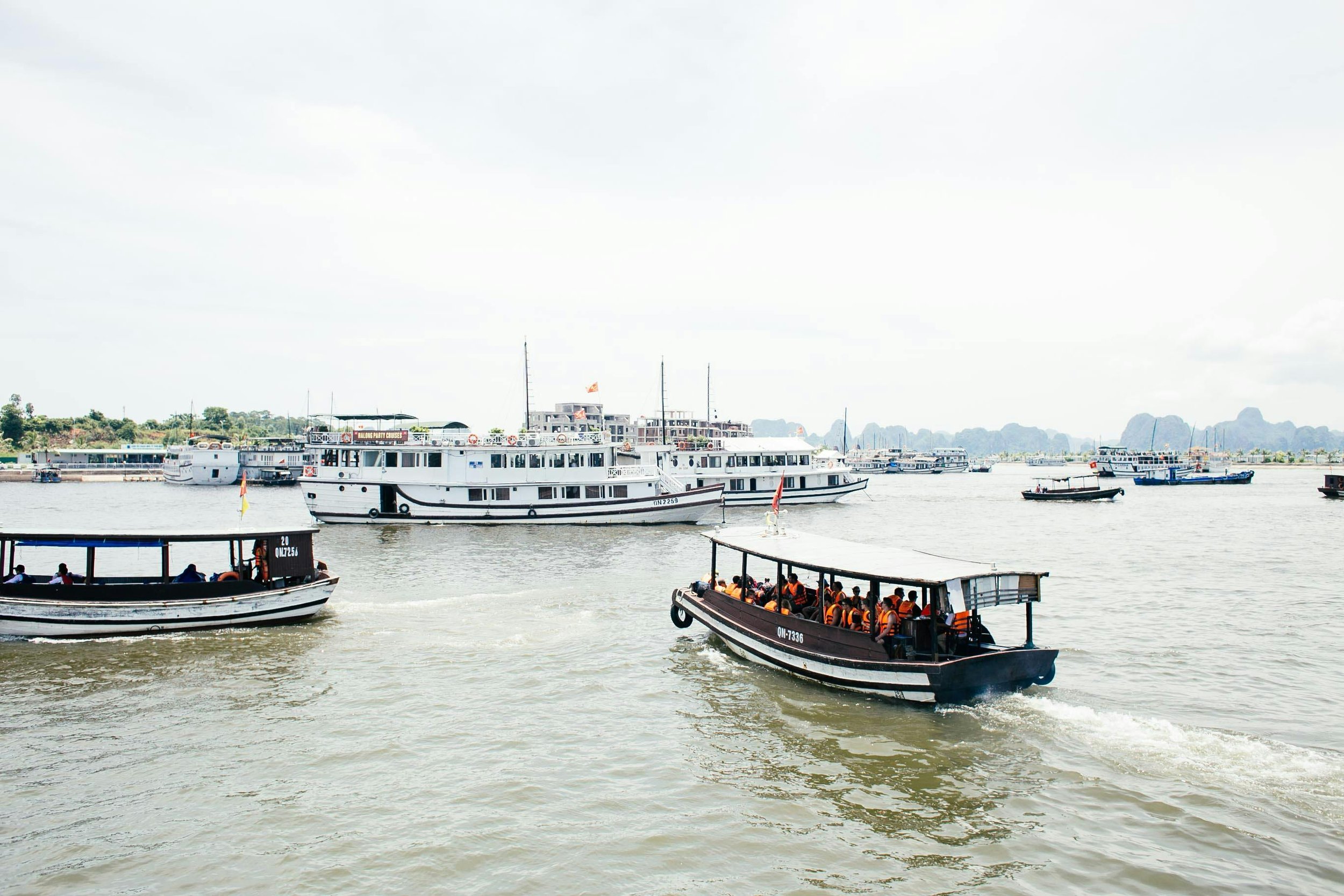
Passenger ferries at a harbor in Vietnam. Rachel Claire. CC0.
Tourism presents both challenges and opportunities for the preservation of floating markets. While increased tourist interest can provide economic benefits, it can also lead to cultural commodification and environmental degradation. Some markets that have become more tourist-oriented have, in turn, seen their authenticity and traditional practices diminish.
However, efforts are underway to balance tourism development with cultural preservation. In 2016, the Can Tho City People’s Committee approved the Preserving and Developing Cai Rang Floating Market project. This project aims to promote tourism and environmental hygiene while transforming Cai Rang into a “hub for the Mekong Delta’s agricultural products.”.
The future of Vietnam’s floating markets hinges on sustainable practices that honor their cultural significance while adapting to environmental realities. Community engagement, responsible tourism and environmental conservatism are key to ensuring the survival and success of these markets. As the Mekong Delta navigates the challenges of climate change, preserving the unique heritage of its floating markets remains crucial.
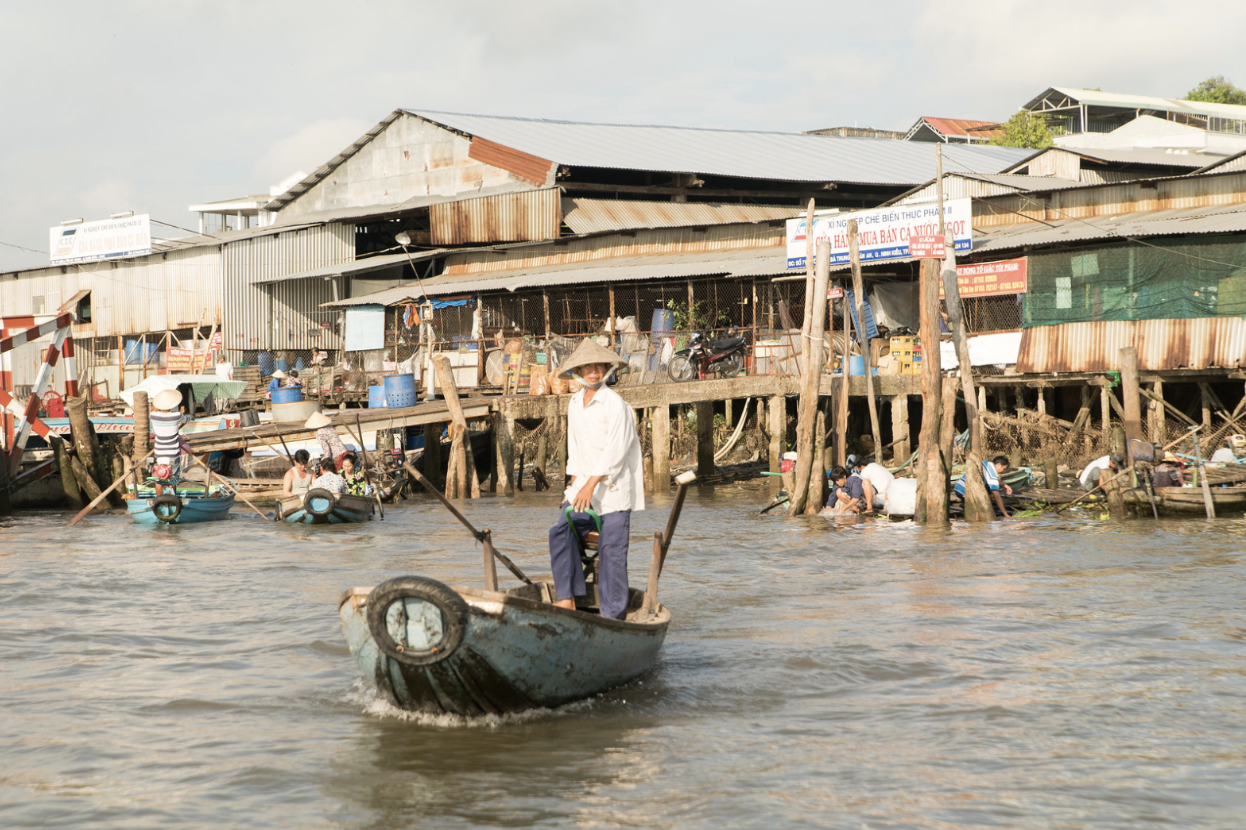
Boats at the Cai Rang floating market in Can Tho, Vietnam. pixiduc. CC BY 2.0.
For travelers hoping to experience the floating markets, visiting with care and intention matters. Cai Rang in Can Tho remains the largest and most accessible market. It is best visited early in the morning when trading is at its peak. Smaller markets like Phong Dien offer a local, less touristy atmosphere and are perfect for travelers seeking a quieter glimpse of daily life. Opt for small, locally operated boat tours and avoid bringing single-use plastics that could end up in the river. Supporting vendors by buying fresh produce or food dishes directly from their boats will not only enhance your experience but also help maintain these communities. By traveling mindfully, visitors can help preserve the spirit of Vietnam’s floating markets for generations to come.
Kennedy Kiser
Kennedy is an English and Comparative Literature major at UNC Chapel Hill. She’s interested in storytelling, digital media, and narrative design. Outside of class, she writes fiction and explores visual culture through film and games. She hopes to pursue a PhD and eventually teach literature! @kennedy_kiser
What Happened to Australia’s ‘Stolen Generation’?
Zoe Lodge
A look into the history and consequence of removal practices against indigenous Australian youth, the “Stolen Generation.”

Indigenous Australian children. Mark Roy. CC BY-SA 2.0.
From the early 20th century until as late as the 1970s, Australia carried out a government-sanctioned campaign that forcibly removed Indigenous children from their families in a bid to assimilate them into white society. While much global attention has focused on the legacy of boarding schools for Indigenous children in North America, similar practices were inflicted on Aboriginal and Torres Strait Islander peoples under British colonial rule, often with the encouragement of the Roman Catholic Church and other Christian institutions. These efforts left generational scars, contributing to the systemic inequality and social fragmentation that persist into the modern day.
This dark chapter in Australian history is commonly referred to as the “Stolen Generation.” According to a report conducted by the U.S. Department of the Interior, which investigated comparable initiatives across the globe, roughly one in three Indigenous children in Australia were forcibly taken from their homes between 1910 and 1970. These children were placed in church- and state-run institutions or sent to live with white families that exemplified Western values, where they were stripped of their language, culture and identity. The underlying goal, both ideological and colonial, was to “civilize” these children by erasing their cultural roots and integrating them into a white-dominated society.
These practices were grounded in a racist belief system that deemed white Australian culture, rooted in Western European culture, inherently superior. Authorities at the time regarded the removal of Indigenous children as a moral duty and a practical solution to what was referred to as “the Aboriginal problem.” In reality, the result was a trauma that has rippled through generations. Children taken from their families frequently endured physical and emotional abuse, neglect, and, in many cases, sexual assault. They were often treated as cheap labor and denied access to adequate education and healthcare.
Although Australia never formally established a network of Indigenous boarding schools akin to those in the U.S. and Canada, the assimilationist mission was no less destructive. Despite making up only about 6% of Australia’s youth population, Indigenous children account for almost 50% of those in out-of-home care, which includes placement in foster care, group homes and with kinship carers. This gaping disparity emphasizes the lasting effects of these programs, leaving First Nations people to deal with dislocation, cultural loss and intergenerational trauma.
In recent years, the Australian government has taken steps to acknowledge and atone for these policies. A national apology was issued in 2008, followed by reparations exceeding $375 million for surviving members of the Stolen Generation. Additionally, individual states have contributed over $200 million in compensation funds for those affected. However, many argue that financial reparations, while important, cannot undo the profound harm caused by decades of systemic cultural erasure and displacement.
Australia’s history with its Indigenous populations is not unique. As the DOI report highlights, these tactics of domination and forced assimilation are not isolated but part of a broader colonial pattern seen across Canada, the United States and New Zealand. These initiatives, driven by the dual forces of governmental policies and religious institutions, sought to erase Indigenous culture in favor of Eurocentric ideals. From the earliest boarding schools in the United States and Canada to parallel programs in Australia and New Zealand, the common thread was the colonial power’s blatant disregard for the autonomy, culture and humanity of Indigenous communities, particularly through religious messaging and values. These institutions inflicted lasting harm, not only by physically removing children from their homes and subjecting them to abuse but also by obliterating the cultural traditions and languages that sustained Indigenous identities for generations.
GET INVOLVED:
One of the primary organizations focused on bringing justice to the First Nations people of Australia is ANTAR, which offers several ways to get involved, raise awareness and contribute to justice for the Indigenous people of Australia. Locals can volunteer with the organizations, and citizens worldwide can contribute to fundraising efforts or participate in global education and awareness campaigns. Other organizations with similar missions include Pay the Rent, IWGIA and the Aboriginal Legal Service.

Zoe Lodge
Zoe is a student at the University of California, Berkeley, where she is studying English and Politics, Philosophy, & Law. She combines her passion for writing with her love for travel, interest in combatting climate change, and concern for social justice issues.
The Supernatural Role of Masks in Nigeria’s Yoruba Tribal Culture
Julia Kelley
Whether the feminine celebration of the Gelede mask or the spiritual transformation through the Egungun mask, these cultural objects perform an imperative role in the Yoruba people’s religious culture.

Egungun Festival Masks. Fermi12. CC BY-SA 4.0.
African masks have been functionally used for thousands of years. Recognized for their supernatural qualities, they transform wearers into new entities, symbolize animal or ancestor spirits, mythological heroes, or moral values, and can even be a way of honoring specific individuals. Moreover, specific ceremonies and masks act as visual representations of local customs. With a vibrant music and dance tradition, the Yoruba people are known for their notable mask culture. The Yoruba are one of Nigeria’s largest ethnic groups, mainly concentrated in the southwestern part of the country but also found in smaller groups throughout Benin and Togo. For over 1,500 years, they have also been defined by their advanced urban kingdoms, strong economy and unique artistic tradition. Ceremonies are imperative to their way of life; vibrant festivals, rituals and weddings display cultural pride, celebrate history and connect the physical realm to the spiritual. Beyond the symbolic instruments and costumes used during these occasions, masks are also extremely vital due to their mystic transformative qualities.
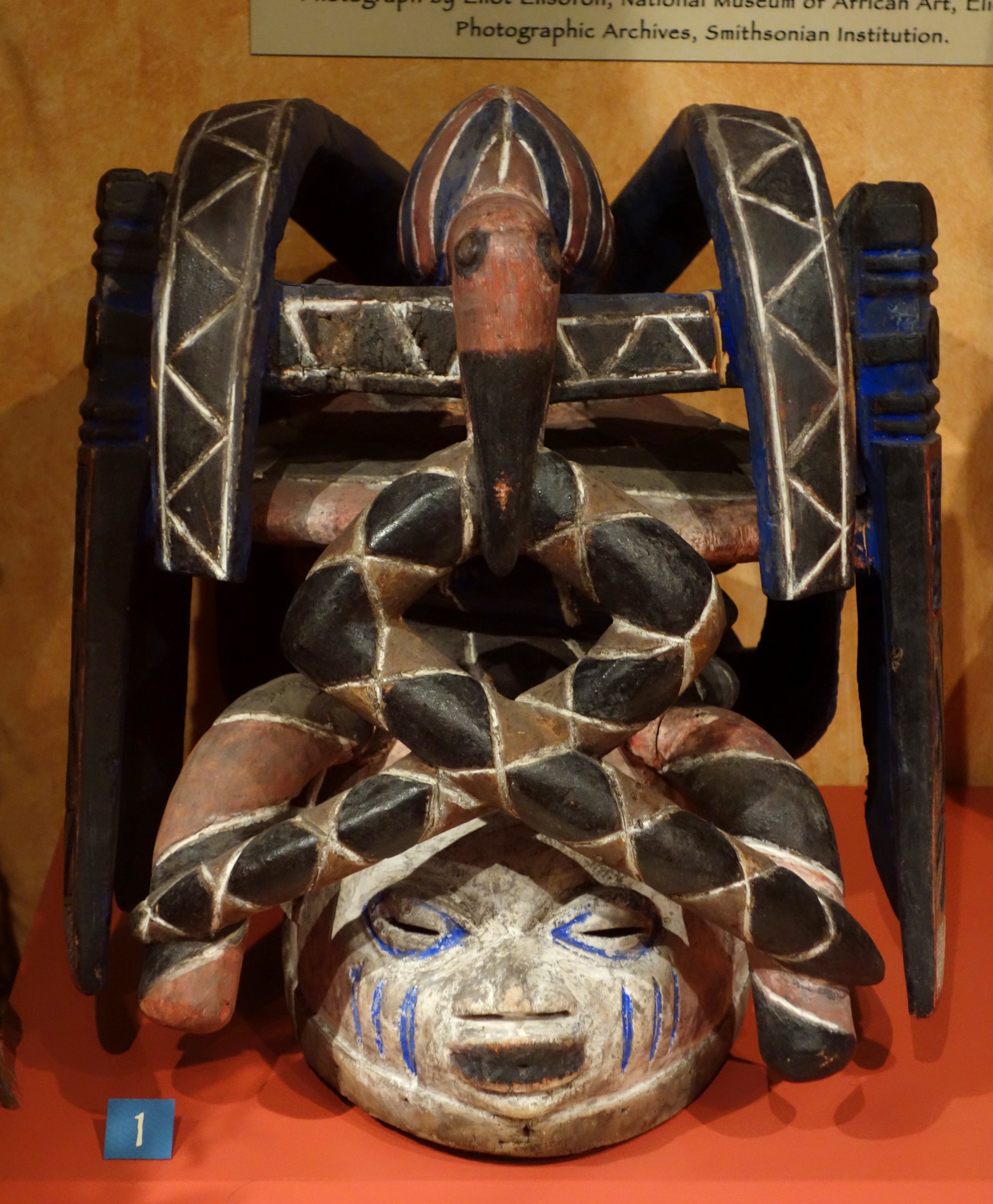
Gelede Mask With Animal Figure. Daderot. CC0 1.0.
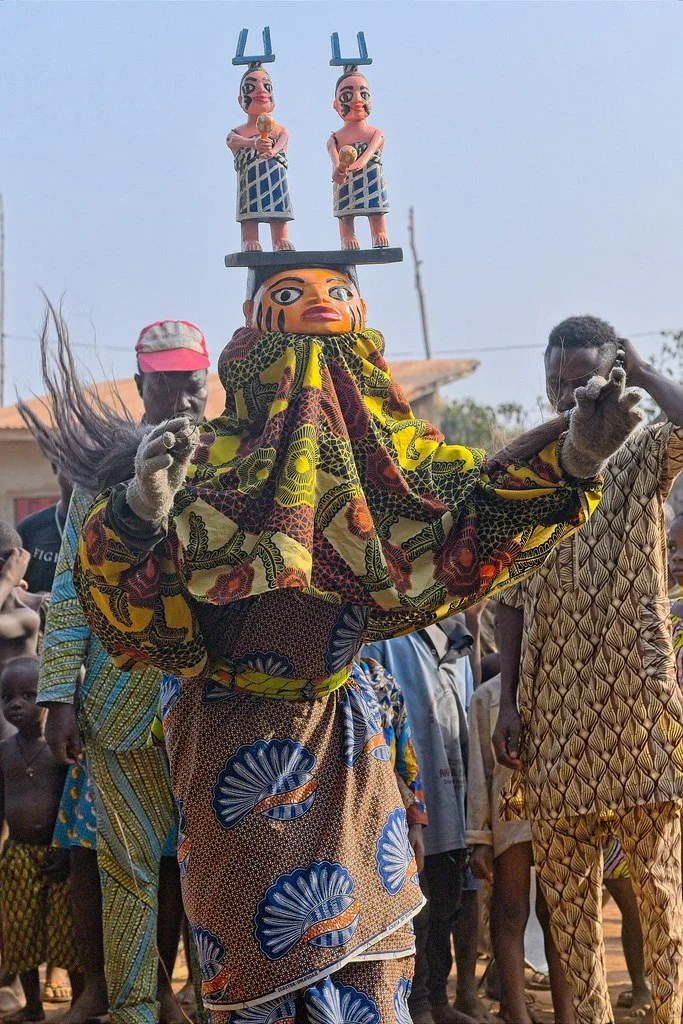
Gelede Dance. dave massie. CC BY 2.0.
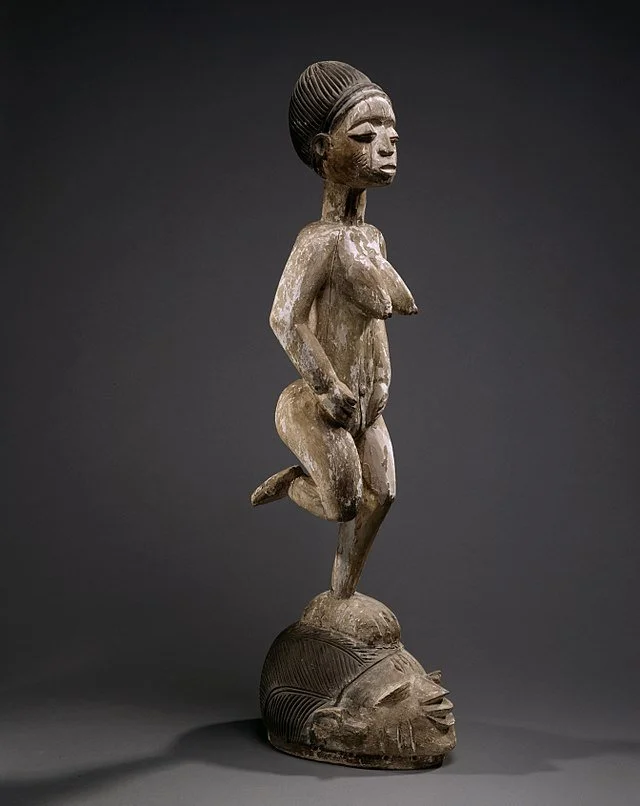
Gelede Mask With Woman Figure. Kugbenu (Vervaardiging). CC0.
However, when and how masks are used depends on their corresponding festivals. The Gelede mask, for example, is used during the Gelede dance. This ceremony is performed as a way to pay tribute to the primordial mother Iyà Nlà and recognize women’s role in social organization and development. Retracing the history and myths of the people, the Gelede takes place annually after harvests and during times of drought and epidemics. The masks, adorned with intricate motifs and vibrant colors, are worn as a way to honor “mothers,” or good witches who have power over bad ones, in their efforts to protect the community from negative forces. Individual masks reflect local traditions, such as through unique facial markings or figures included on the masks.
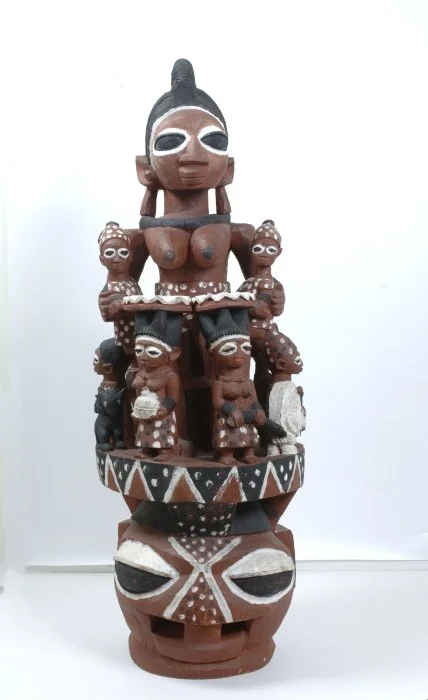
Epa Festival Mask. Beeldhouwer / sculptor: Jospeph Agbana. CC BY-SA 3.0.
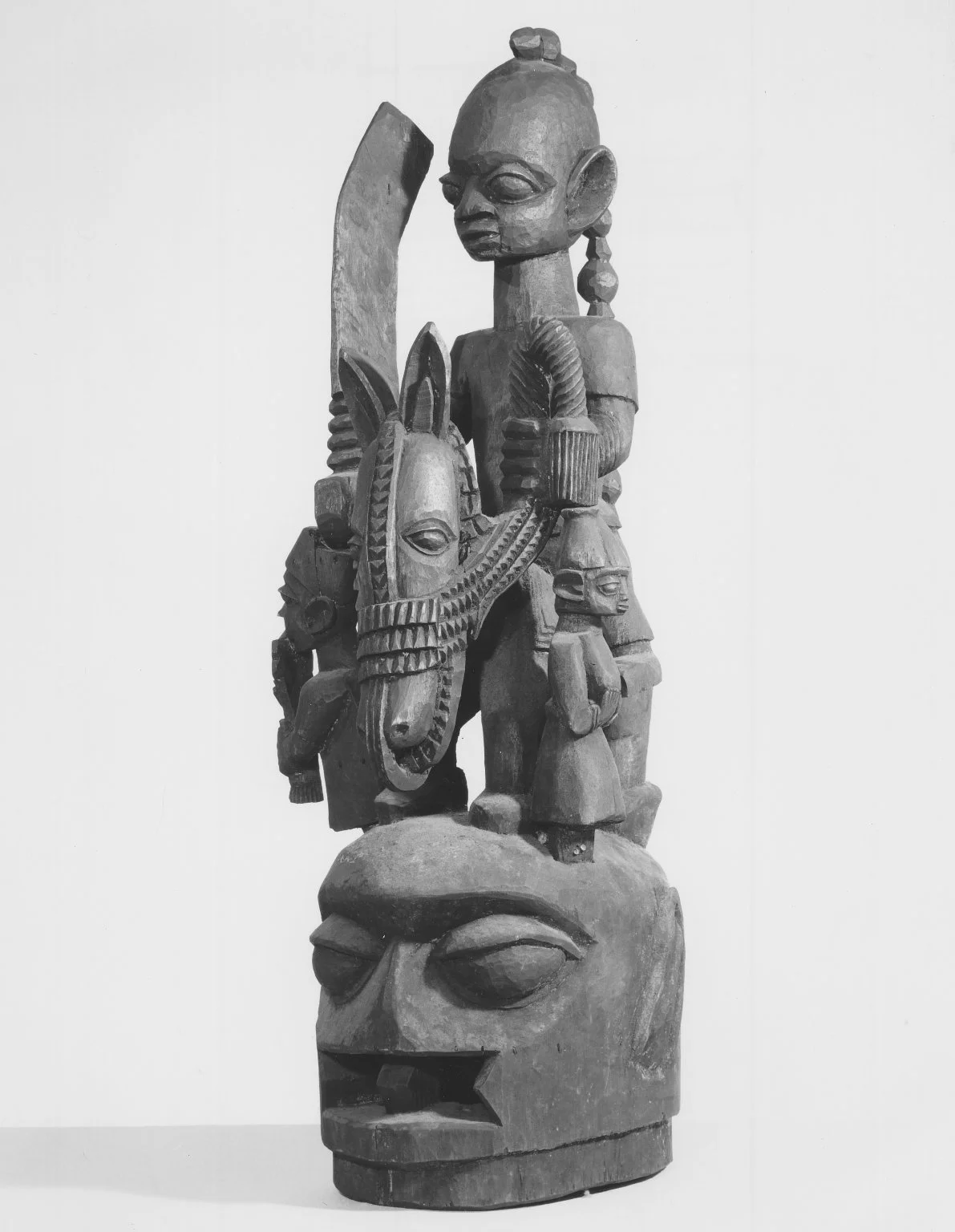
Epa Mask With Warrior Figure. Unknown author. CC BY 3.0.
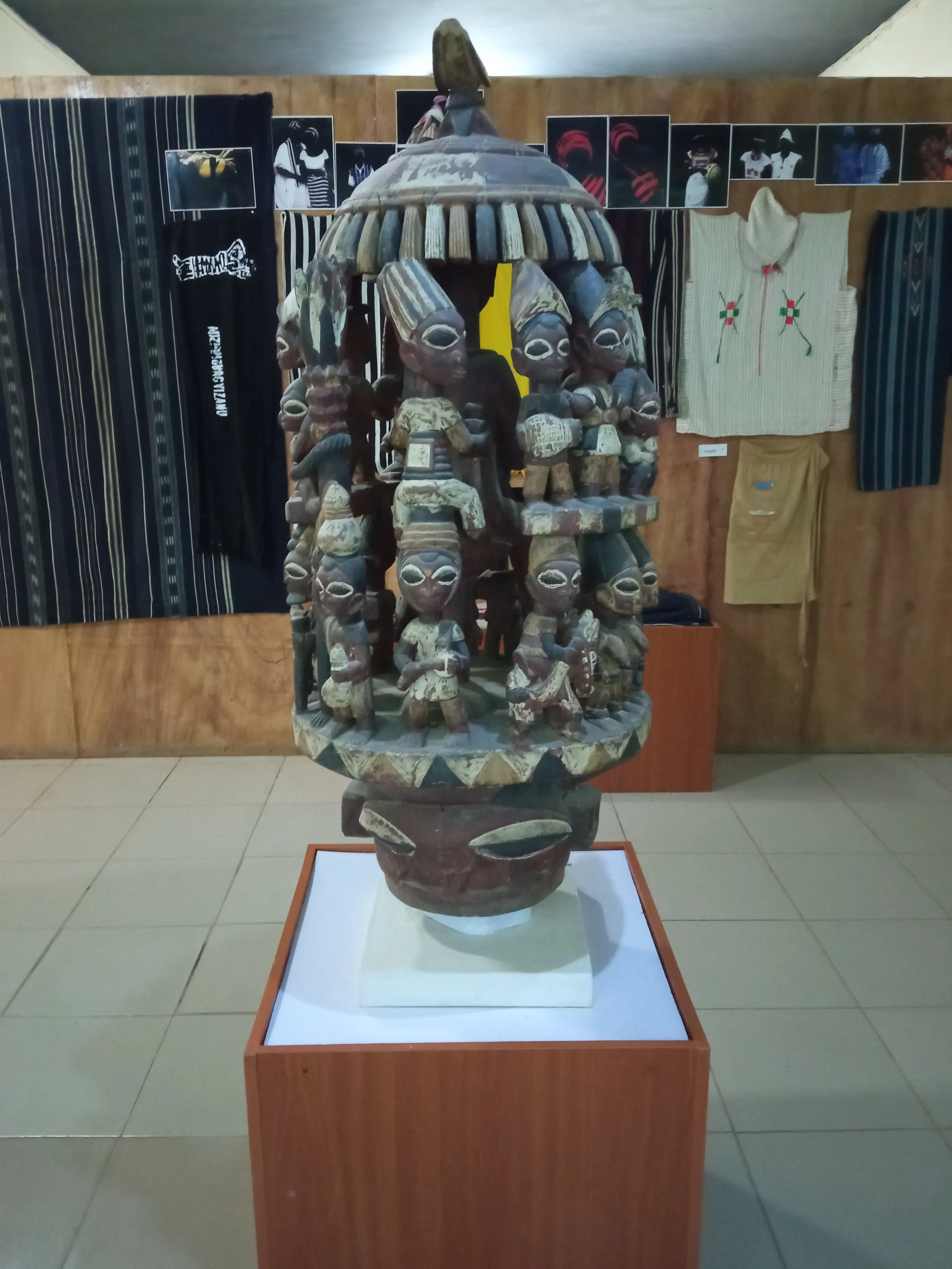
Large Epa Helmet Mask. Em-mustapha. CC BY-SA 4.0.
Epa masks are worn during yam harvest festivals by young male dancers as they leap onto mounds. The rigorous movements of this dance indicate the community’s fate over the next year; if the dancer successfully leaps, then all is well, but if not, sacrifices are made to the forces that made him fail. Leading up to these ceremonies, the masks are kept in shrines, where they are fed to increase their power and efficacy. Since they are believed to contribute to the wearer’s success, heavy weight and symbols associated with war are characteristic of these masks.
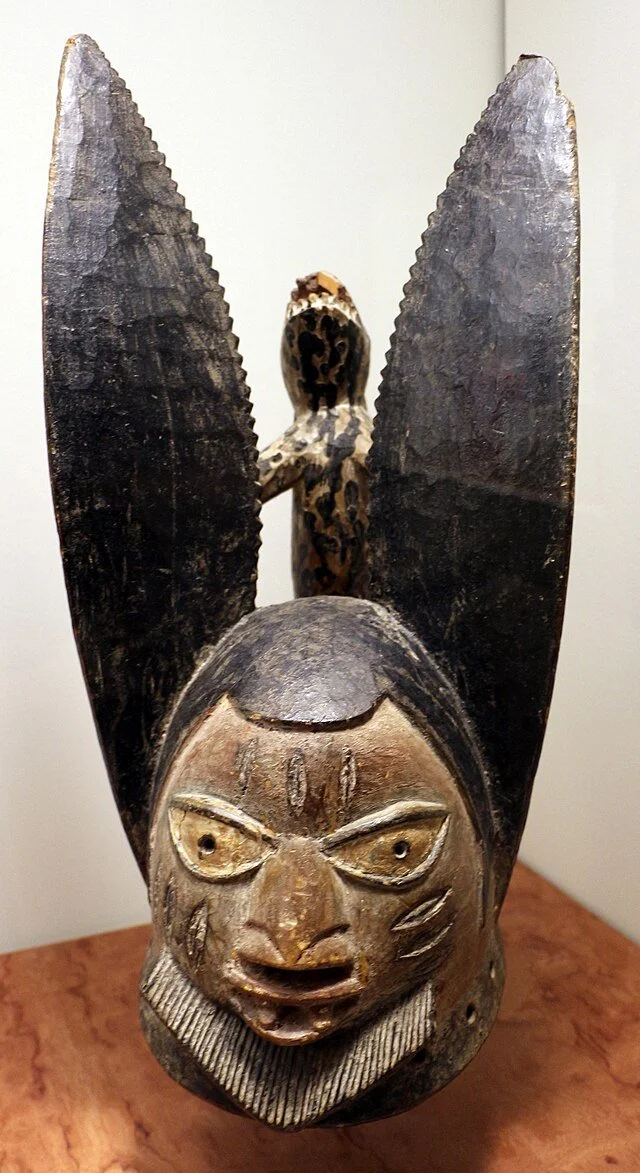
Ancestor Egungun Mask. Sailko. CC BY 3.0.

Egungun Festival. Fermi12. CC BY-SA 4.0.
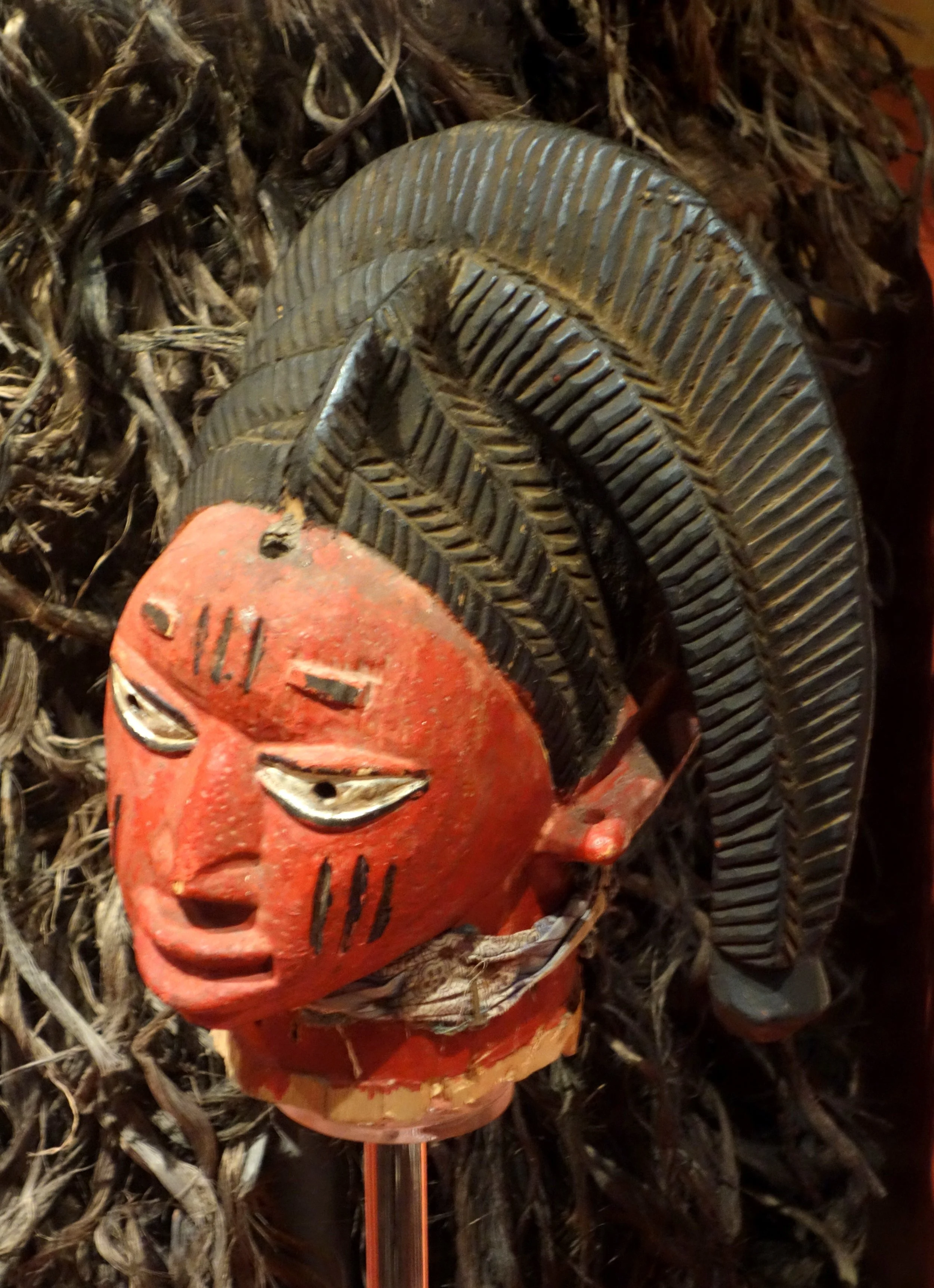
Yoruba Egungun Mask. Daderot. CC0 1.0.
One of the most important masks in their ritual culture, the Yoruban Egungun masks are worn to worship ancestors. These are used during Odun Egungun or “masquerade” festivals, during which men move through town wearing masks as they embody their ancestors. These masks act as a visual manifestation of those being depicted, offering members of the community the opportunity to strengthen their familial bonds and ask for protection or blessings.
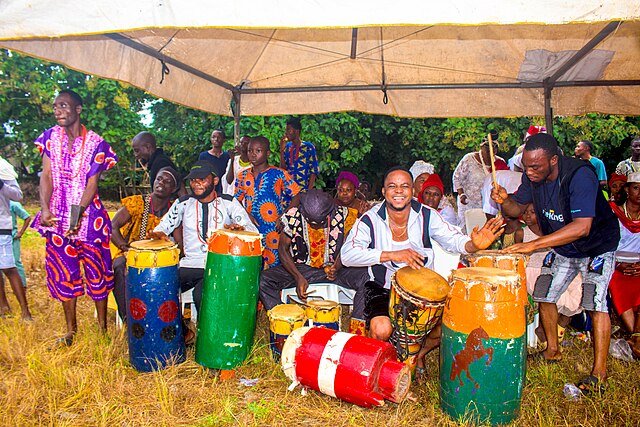
Yoruba Festival Music and Dance. Tunde Akangbe. CC BY-SA 4.0.
Developed over centuries, ceremonial masks remain a significant part of Yoruban culture. African masks have also become admired in museums worldwide for their intricate designs, but contemporary artists and historians have noted that they are exhibited mostly as ethnography. Moreover, African masks have inspired many well-known European artworks, most notably in Picasso’s 20th-century modernist paintings. This Westernization has helped shape stereotypes around African communities, decontextualizing their current cultural significance. However, as the Yoruba masks demonstrate, festivals recommence every year, and the masks continue to visually represent the community’s rich history and religious tradition.
Julia Kelley
Julia is a recent graduate from UC San Diego majoring in Sociocultural Anthropology with a minor in Art History. She is passionate about cultural studies and social justice, and one day hopes to obtain a postgraduate degree expanding on these subjects. In her free time, she enjoys reading, traveling, and spending time with her friends and family.
Opening the World to Deaf Travelers with Lily Yu
Zoe Lodge
The creator of Deaf Journey strives to make travel more accessible, one destination at a time.
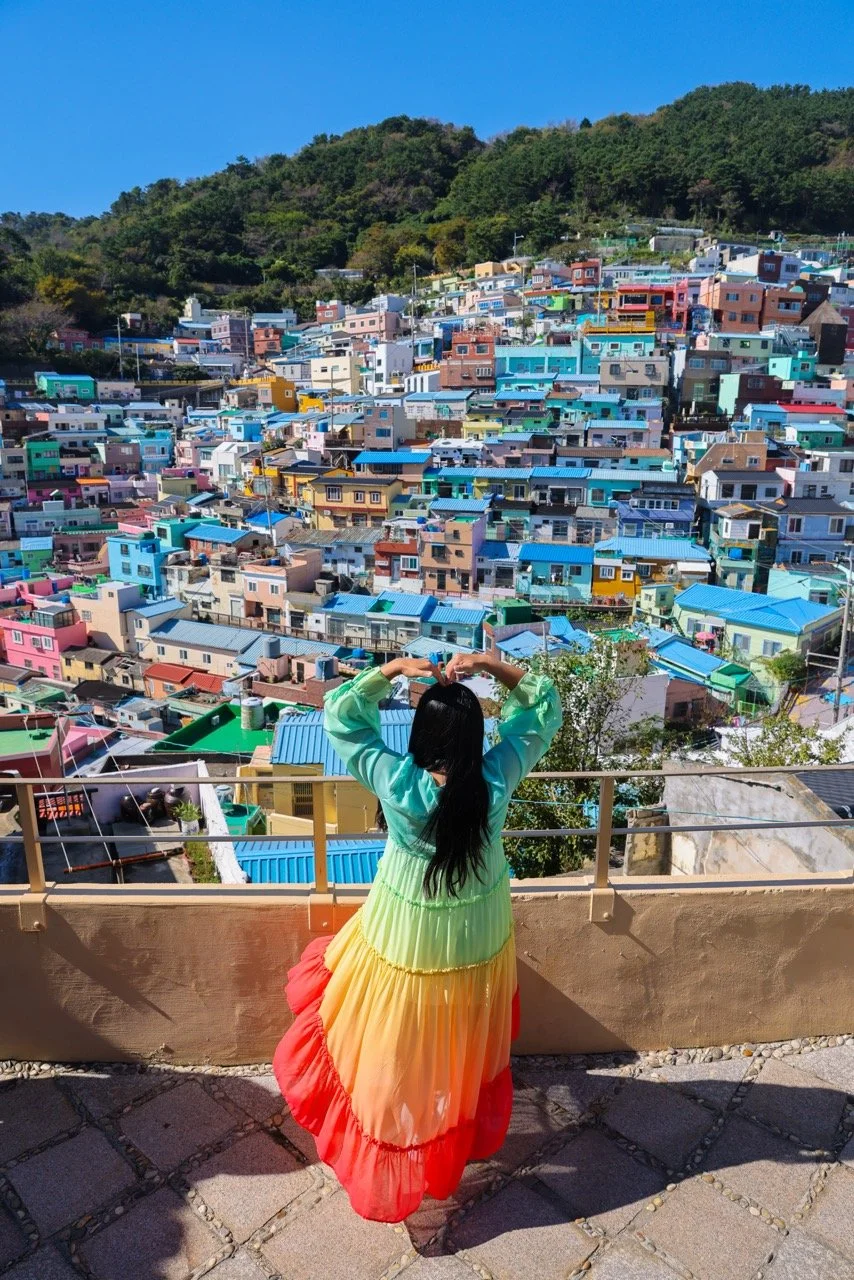
Gamcheon Culture Village in Busan, Korea.
When Lily Yu and her husband, Daniel Heidemeyer, both deaf individuals, began sharing travel photos on social media in 2018, she didn’t expect it to grow into a viral movement and a new career opportunity. What began as a private account for friends and family soon evolved into Deaf Journey, a travel media brand focused on sharing accessible guides, amassing over 100,000 followers across Instagram, Facebook, TikTok, YouTube and her blog.
Yu’s mission goes far beyond that of a typical content creator focused on travel. As a deaf traveler, she’s become a leading advocate for accessible travel, working to ensure that deaf and other disabled individuals are considered and included in every part of the travel experience, from hotel rooms to museum tours. “I want to make sure traveling is accessible for the deaf community,” Yu says. “That means having interpreters, flashing light fire alarms and visual doorbells in hotels, and captions or transcripts in museums and tours.”
Yu was raised on the East Coast and is a graduate of Gallaudet University, America’s only liberal arts university for the deaf. She began her travel content journey by posting photos from her trips for close friends. “People would ask, ‘How did you find that place?’” she said. “So I kept sharing, and then my husband and I created a public account. That’s when Deaf Journey really began.” Since then, the couple has traveled across all 50 U.S. states, partnered with nearly 40 tourism boards and visited 54 countries. Her husband often handles videography, while Yu takes the lead on editing and blogging. “I love writing and sharing stories that not only inspire but also educate,” she said.
Traveling while deaf presents unique challenges. Yu pointed out that travel accessibility tends to focus on mobility, including ramps, elevators and wheelchair access, but often allowing deaf-specific needs to fade into the background. “Hotels might have accessible rooms for wheelchairs, but nothing for deaf people. When we’re showering, we can’t hear someone knocking or a fire alarm going off,” she said. “I give advice to hotels about things like flashing light signals, visual doorbells or providing video relay services with interpreters.”
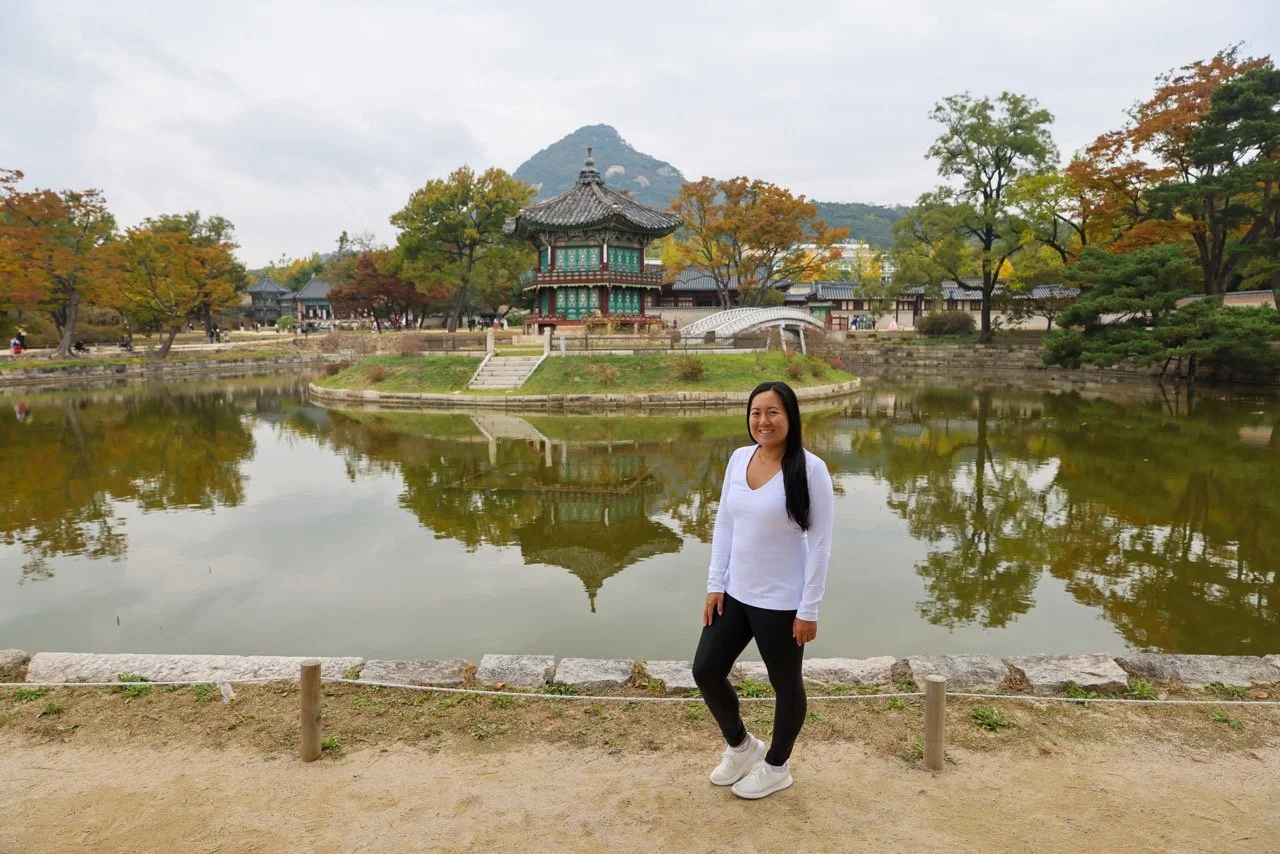
Gyeongbokgung Palace in Seoul, Korea.. Courtesy of Lily Yu.
From the sweeping beauty of national parks to hidden small-town charm, Yu's adventures have offered a broad view of the diverse travel landscape available within the United States. She described the natural beauty of Hawaii, noting the islands as one of her favorite destinations within the U.S. However, Yu was also surprised by smaller cities like Boise, Idaho, and Bentonville, Arkansas. “Boise had amazing food and outdoor activities. Bentonville really impressed me with its modern art museums and bike trails,” she said. “Every place is different, and that’s what makes traveling here so special.”
While visiting every corner of the U.S. was her first major travel goal, Yu is now setting her sights globally. She’s already visited 54 countries and has noted Japan as a particular champion of accessibility. “In Japan, even the soda cans have braille,” she says. “Crosswalks have both visual lights and floor indicators, which are helpful for blind travelers too. And in hotels, you can select your language on digital screens to communicate. I’ve never seen that level of accessibility before.” Yu also shared how museums in places like Ireland and Boston have become exemplary leaders in the world of accessibility. “During our trip to Ireland, the Guinness Storehouse provided us with an iPad featuring an International Sign interpreter. I’m also fluent in International Sign, which is different from American Sign Language (ASL). In Boston, there was a deaf guide giving an ASL tour. That kind of access makes a big difference.”

Yu with a capybara at Zoo to You in Paso Robles, California. Courtesy of Lily Yu.
Yu’s vision for Deaf Journey is not just to document her own experiences as a deaf traveler and content creator, but also to provide ease for future travelers. She’s passionate about providing accessibility tips, raising awareness on social media and consulting directly with businesses. “I think spreading awareness is key,” she says. “We need to educate hotels, airlines, museums and tourism boards on how to be more inclusive. And we need to share both the positives and the gaps, what works and what doesn’t, so we can keep improving.” Yu also emphasized the importance of using respectful and inclusive language. “We prefer to be called ‘deaf,’ not ‘hearing impaired,’” she said. “That term feels outdated and even offensive within our community.”
After conquering all 50 states, Yu’s next challenge is tackling the rest of the world, one accessible destination at a time. “I haven’t made a full plan yet,” she said. “TBut I’m hoping to partner with more tourism boards internationally. There’s still so much work to do.” With every post, blog and video, Lily Yu is proving that travel doesn’t have to be outside of the realm of possibility for disabled adventurers. It can, and should, be made accessible for everyone.
Zoe Lodge
Zoe is a student at the University of California, Berkeley, where she is studying English and Politics, Philosophy, & Law. She combines her passion for writing with her love for travel, interest in combatting climate change, and concern for social justice issues.
Russian Poets and the Risk of Resistance
Kennedy Kiser
From public readings to prison cells, Russian poets are paying the price for speaking against the war.

Protesters march in Moscow against repression and fabricated charges. DonSimon. CC0.
“Kill me, militiaman!
You’ve already tasted blood!
You’ve seen how battle-ready brothers
Dig mass graves for the brotherly masses.
You’ll turn on the television—you’ll lose it,
Self-control has never been your strong suit.”
— Artyom Kamardin, “Kill Me, Militiaman”
In December 2023, Russian poet Artyon Kamardin was sentenced to seven years in prison for reciting anti-war verses during the public “Mayakovsky Readings” in Moscow. Fellow poet Yegor Shtovba, who performed at the same event, received a sentence of five and a half years. Kamardin was reportedly beaten and sexually assaulted during his arrest for reciting poetry in response to Russia’s war in Ukraine.

Daria Serenko at the Moscow International Book Fair in 2019. Sergey Leschina. CC BY 4.0.
Their cases are not isolated. In April 2024, feminist poet and activist Daria Serenko was added to Russia’s federal wanted list. Known for combining poetry with political action, Serenko has faced years of harassment. Her arrest warrant, however, marked a shift in the state’s approach. Where once artists were threatened, they are now hunted.
Literature has long played a role in Russian resistance. During the Soviet era, banned texts circulated underground through samizdat networks. Today, Telegram channels and independent journals continue that tradition, sharing poetry that challenges state narratives. But the stakes are now much higher. Poets are not just being silenced; they are being criminalized. The penalties include imprisonment, forced exile and public brutality.
At the center of this increased repression is the state’s fear of language itself. Poetry distills dissent into a form that is emotionally direct and difficult to contain. It spreads quickly, often through digital platforms, in defiance of Russia’s 2022 censorship laws. Unlike journalism or political commentary, verse can bypass logic and speak directly to the reader’s gut. As poet Osip Mandelstam once wrote, “Only in Russia is poetry respected — it gets people killed. Is there anywhere else where poetry is so common a motive for murder?”
This crackdown is not limited to well-known names. Emerging writers, students and performers with modest online followings have also been detained or investigated for speech-related offenses. In some cases, posting a poem on VKontakte, Russia’s largest social network, has led to criminal charges. The line between art and activism has been effectively erased, especially for those who oppose the war.
International literary organizations have responded by offering emergency grants, publication platforms and legal aid. PEN International, Freemuse and countless other organizations have condemned Russia’s actions, calling for the immediate release of detained artists. Yet the risks persist. For many Russian writers, exile is the only path to safety, though it often comes with the painful cost of losing direct access to their audiences.
Repressing writers like Kamardin, Shtovba and Serenko reveals a broader strategy: to eliminate not just protest but the imagination of a different future. By imprisoning poets, the government also suppresses the potential for alternative visions of the world.
Still, Russian poetry persists. In exile, through online platforms and underground readings, writers continue to speak out. In a regime that fears language, each poem becomes an act of resistance.
GET INVOLVED:
These organizations offer support to writers and artists facing political persecution. From legal aid to international advocacy, their work helps protect freedom of expression and document human rights abuses. Getting involved means helping preserve creative resistance in some of the world’s most repressive environments.
To learn more about PEN International, click here.
To learn more about Freemuse, click here.
To learn more about Memorial International, click here.
Kennedy Kiser
Kennedy is an English and Comparative Literature major at UNC Chapel Hill. She’s interested in storytelling, digital media, and narrative design. Outside of class, she writes fiction and explores visual culture through film and games. She hopes to pursue a PhD and eventually teach literature!
7 Less Traveled Wonders of the Natural World
As urban spaces dominate more and more of the world, it is important to remember the natural beauty the Earth has to offer. Here is a list of 7 less popular but equally enchanting wonders.
Read MoreThe Fight Against a Sinking City: Jakarta’s Sea Wall
Julia Kelley
While Indonesia’s government seeks to build a large sea wall to protect Jakarta from detrimental floods, criticism in the name of environmental and economic loss urges them to look for other solutions.
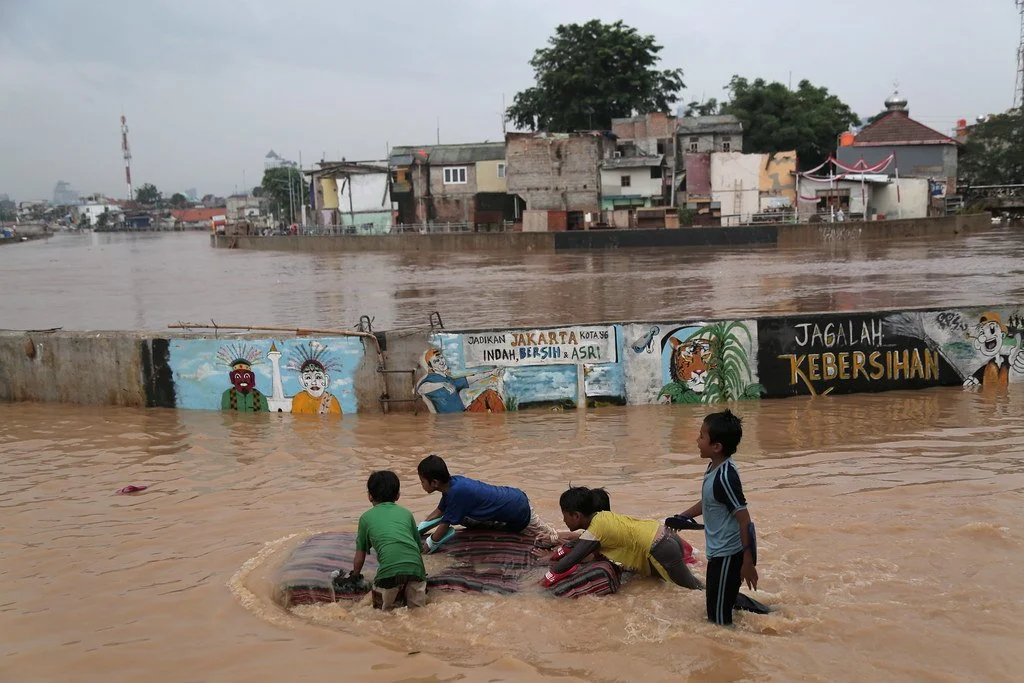
Flooding Ciliwung River in Jakarta Region. World Meteorological Organization. CC BY-NC-ND 2.0.
On the northwest coast of Indonesia stands Jakarta, the country’s capital and largest city. Sitting upon a low, flat alluvial plain with swampy areas, Jakarta is notably susceptible to major floods every few years from its multiple rivers and the adjoining Java Sea. This is made worse by excessive groundwater extraction and rising global sea levels, which have seen a worldwide mean increase of about eight to nine inches since 1880 due to global warming. Rapid urbanization, population growth and a change in land use have crowded more and more people into high-risk floodplain areas, leaving thousands displaced and large parts of the city submerged underwater during these natural disaster events. Although the Indonesian government built a coastal wall in 2002 to combat this, its collapse in a storm only five years later renewed the call for protective measures against destructive flooding. A new mega-project began in 2014, outlining both the construction of a new 29-mile-long sea wall and the so-called “Giant Sea Wall.” This “Giant Sea Wall,” a 20-mile-long artificial island shaped like a Garuda bird, Indonesia’s national symbol, will not only block storm surges but is also planned to contain homes, offices and recreational facilities.
This massive undertaking officially kicked off in February 2025 and is said by supporters to be key in dealing with the country’s land subsidence and flooding. Both President Prabowo Subianto and Minister of Infrastructure and Regional Development Agus Harimurti Yudhoyono claim that the project could save the government billions of dollars in disaster mitigation over the following 30 years. Despite this optimism, critics have come out against the large project, citing an array of detrimental economic and environmental issues that could result from construction. For example, many have noted how the proposed solution does not address the over-extraction of groundwater, which comes from excessive use by industrial and economic activities. In addition, the sea wall could disrupt marine biodiversity and, subsequently, the fishing industry, one of Indonesia’s strongest monetary sources. According to Maleh Dadi Segoro, a coalition of environmental and social groups, the sea wall would potentially narrow and close fishing catch areas, disrupting marine ecosystems and threatening the livelihoods of those who depend on them for food and income. Jakarta already faces low water quality in its rivers and canals, causing sewage and a lack of proper sanitation. Closing off Jakarta Bay for this sea wall, critics say, would turn the water into a “septic tank” or “black lagoon,” which necessitates a stronger water sanitation system immediately.
Controversy stirred up by the sea wall proposal has thus solicited alternative solutions. There has been an interest in using the water to its advantage, rather than working against it. This would entail diverting surplus waters, including that from floods, to surrounding farm areas where it could be stored. Restoration has also been widely proposed, as described by professor of oceanography Alan Koropitan for The Guardian: “If, instead, we can restore the bay and its polluted waters, that would mean something good for civilization in Indonesia.” Among all these suggested plans, environmental, social and economic protection are set at the center, urging the Indonesian government to rethink its monumental and costly plan.
GET INVOLVED:
Those looking to help support those affected by floods and flood prevention in Indonesia can do so by checking out relief organizations, such as The International Federation of Red Cross and Red Crescent Societies’ Disaster Response Emergency Fund, Peace Winds and Mercy Corps, all of which provide immediate and long-term support. Furthermore, individuals interested in combating sea level rise can look into taking actions that counter global warming, including using renewable energy, reducing greenhouse gas usage, considering electric vehicles, recycling, decreasing food waste, keeping the environment clean, or getting involved with local communities and government to organize plans and legislation.
Julia Kelley
Julia is a recent graduate from UC San Diego majoring in Sociocultural Anthropology with a minor in Art History. She is passionate about cultural studies and social justice, and one day hopes to obtain a postgraduate degree expanding on these subjects. In her free time, she enjoys reading, traveling, and spending time with her friends and family.