
Analysts say Israel’s recent strikes on Syria aim not only to protect the Druze minority but also to serve its goals of geopolitical influence.
Read MoreRussian Draft Dodgers Stir Tensions, Temporarily Boost Economies
After nearly one million Russian men fled conscription in 2022, the countries that received them are still grappling with the impacts of this influx three years later.
Read MoreIs Nuclear Proliferation Simply Inevitable?
With conflicts around the world heating up, the efficacy of diplomacy is put to the test as the threat of nuclear proliferation looms.
Read MoreThai Prime Minister’s Suspension Reveals Gender Bias Pattern
Thailand’s Constitutional Court has suspended its second woman prime minister, just like it did to its first, raising concerns about democracy and gender biases in Thai politics.
Read MoreKenya Protests: The Cost of Dissent
The roots of Kenya’s political crisis are echoed as protests shake the nation.
Read MoreVanishing Archives: Hong Kong Artists Resurrect Protest
In the wake of censorship and arrests, Hong Kong’s artists are quietly preserving protest materials through informal and digital means.
Read MoreBezos Protestors Reject Venice as a Billionaire Playgroun
Venetians call their protests a success as the Bezos-Sanchez wedding relocates to the outskirts of the city following the inflatable crocodile threat.
Read MoreIbrahim Traoré: The Making of a Modern Anti-Colonial Icon in Africa
At age 37, Ibrahim Traoré, Burkina Faso’s young leader, is going viral for his pan-African speeches and anti-Western stance. Still, his ties to Russia raise difficult questions about sovereignty and influence in West Africa.
Read MoreSchool Shootings and Gun Violence Spread to Austria
The rare school attack in Austria prompts a reflection on rising violence in the West and debates over firearm policy.
Read MoreSelling Citizenship: A Saving Grace or Path to Corruption?
Numerous programs offering citizenship in exchange for hefty investments have popped up worldwide, bringing problems and questions along.
Read MoreGang Violence: Haiti’s Fight for National Security
Suffering from centuries of economic and political turmoil, Haiti strives for nationwide stability as gang violence worsens humanitarian crises in the country.
Read MoreGreta Thunberg Sets Sail to Gaza to Raise Awareness
As Israel’s blockade threatens famine, Thunberg and other activists launch a civilian flotilla with humanitarian aid, in protest.
Read MoreCartoonists Under Fire: The Fight for Free Expression in India
Political cartoonists in India are facing legal threats and online abuse for criticizing the government, revealing how satire itself is now under siege.
Read MoreInternational Students Put at Risk by Harvard Ban
The Trump administration’s ban on admitting international students to Harvard leaves them in uncertainty amid First Amendment violations and poses concerns to all international students in the US.
Read MoreAnti-American Sentiment Increases Caution for Traveling Americans
Julia Kelley
After introducing controversial war plans and import taxes, Donald Trump’s recent proposals have escalated negative attitudes toward American tourism worldwide.
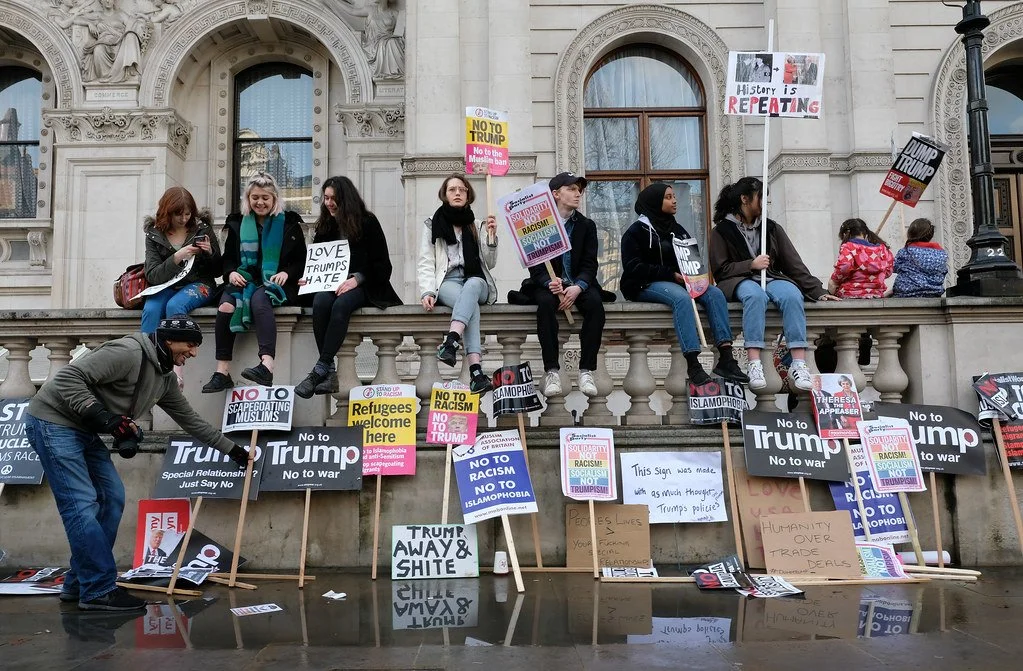
Anti-Trump Protest in London. alisdare1. CC BY-SA 2.0.
During the 20th century, the United States found itself a burgeoning political, economic and cultural world power, gaining increasing international influence. However, since President Donald Trump’s recent inauguration in January 2025, a string of controversial political and economic decisions has seen a subsequent drop in warm foreign sentiments toward the United States. In populations across the globe, those who perceive America as a positive influence number only 46%. Notably, Trump proposed that the U.S. “take over” and “own” Gaza in response to the Israel-Palestine conflict, resettling the population at the same time. These claims were met with widespread condemnation from countries in the Middle East, including Egypt, Saudi Arabia and Jordan, all of whom fiercely rejected the plans and saw them as a violation of the numerous peace agreements between the countries. This contributes to a revival of anti-American views in the Middle East since the beginning of the Israel-Palestine war, as many view the U.S. government as a domineering and pro-Israel force. Despite garnering support from Israel, Trump’s remarks have also been opposed by other powerful countries like China, the United Kingdom, Germany, Australia and Brazil, who consider the proposed relocation of Gaza’s citizens to be an extreme misstep in power.
More recently, Trump has introduced a vast set of tariffs that his administration affirms will secure the economy. Not only did this legislation drastically damage global markets, but many affected countries considered it a threat of global tariff war and an insult to the good relationships between foreign economies. Although the current U.S. tariff plans exclude Canada, an initial tariff placed on Canadian imports increased tensions between the two countries and resulted in a call to boycott American products, naming the U.S. as an enemy. American product boycotts have also been staged in Europe, with U.S. favorability falling across countries such as Denmark, Sweden, Germany and France. For example, the Danish Facebook group Boykot varer fra USA (Boycott products from USA) has amassed over 95,000 followers, while setting fires to Tesla cars has sprung up as part of the “Tesla Takedown” movement in Italy, a protest against Elon Musk’s involvement in international affairs. China has also seen a rise in anti-American perceptions, coinciding with Trump’s decision to place the largest tariff increase on the country at 104%.
In the wake of such turbulent politics, discontent toward America has grown. Overseas travel to the U.S. has declined exponentially in the last few months, seeing an overall drop of 12% in foreign visitors from the previous year. Regions that are usually strong sources of tourism show stark differences, with the number of Canadian tourists dropping by 32% and Mexican tourists by 17% as of March 2025. In many online forums, those from other countries are making their views of Americans known, presenting an overall negative reception of tourists. On a European Reddit forum, user @Iplaymeinreallife from Iceland said, “we want nothing to do with him [President Trump] or a country that would vote him into office a second time,” while user @Mapey from Latvia noted how, despite their initial love for America, they now “hate it to the bone as America stands for absolutely everything” they despise. Americans already face stereotypes while traveling abroad, generally characterized as loud, ignorant or entitled, but such labels are becoming more frequent. More than anything else, countries have replaced an admiration for the U.S. with widespread confusion and antipathy for Trump. In turn, this festering distaste finds itself projected onto American travelers and their experiences, disrupting their hoped-for escapism.
As a result of this U.S. resentment, international travel has become increasingly risky. In a survey done by Global Rescue, 72% of people noted that Americans traveling abroad will be perceived more negatively, while many had already encountered disputes. One California-based traveler described how they “experienced much more negativity,” while a Wyoming tourist reported having “numerous arguments about American policy” with people they did not know. Some travel agencies are also seeing drops in sales for international travel by Americans, and prospective tourists have begun flooding online travel forums with questions asking if it is safe to travel or if foreign countries will accept them. Many, in an effort to avoid the anti-American attitude altogether, have simply cancelled planned trips and tours. New strategies are being taken by those currently abroad as a way of curbing any possible anti-American sentiment, as noted in Rick Steves’ European forum. One poster, named Emily, describes how she has “made an effort to appear less American” while living in Austria, and another, named Volva, in the UK, says it is important not to start any political discussion. Despite where they are in the world, however, Americans abroad and international citizens alike note that rising political tensions have left a lasting impact on the country’s once-amiable image.
Julia Kelley
Julia is a recent graduate from UC San Diego majoring in Sociocultural Anthropology with a minor in Art History. She is passionate about cultural studies and social justice, and one day hopes to obtain a postgraduate degree expanding on these subjects. In her free time, she enjoys reading, traveling, and spending time with her friends and family.
Tax Incentives Drive Gentrification in Puerto Rico
Kleigh Carroll
Wealthy investors and tech entrepreneurs are buying up land in Puerto Rico, driving up property rates and forcing locals out of their neighborhoods.
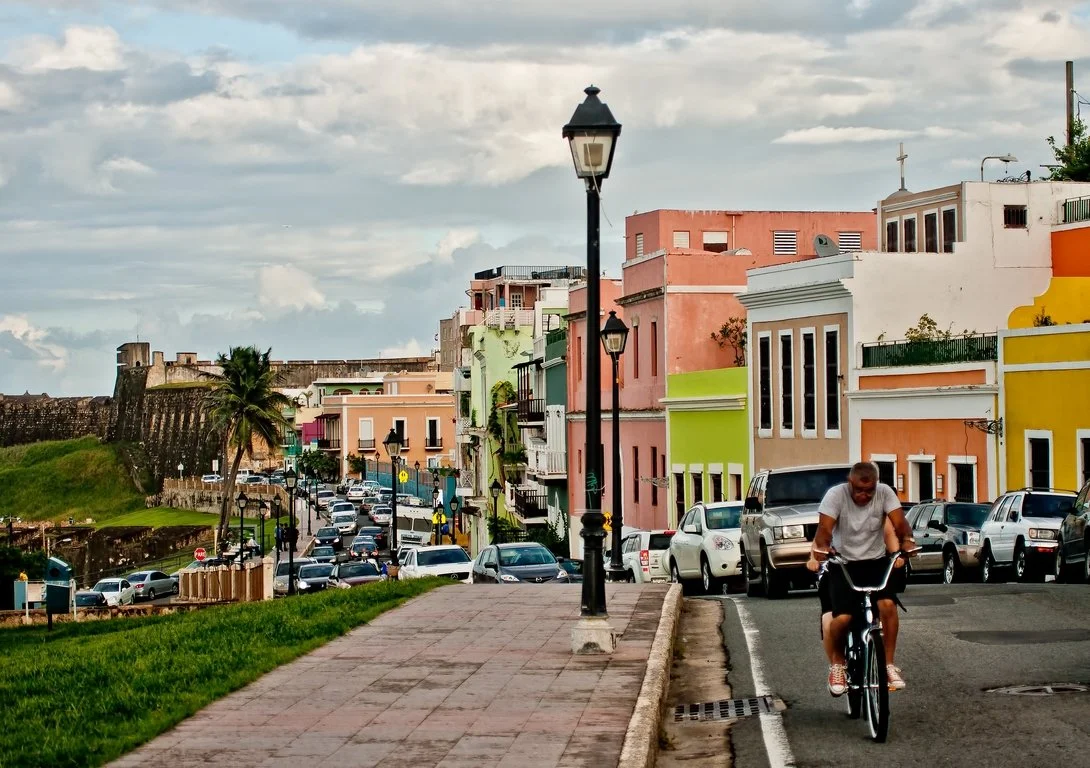
Street in San Juan, Puerto Rico. R9 Studios FL. CC-BY-2.0.
The island of Puerto Rico struggled with an economic recession from 2006 to 2017, during which the economy contracted by 10% and unemployment shot up to nearly 15% at its peak. To draw in foreign investment and stimulate economic growth, the government passed legislation designed to attract tech, finance and wealthy investors to the island. The first of two acts, Act 20, provided tax incentives for companies that establish and expand export services businesses in Puerto Rico. The second, Act 22, provided a total exemption from income taxes on all interest and dividends realized after an individual becomes a bona fide resident. The laws were further revised and repackaged in 2019, now known collectively as Act 60.
Living in a United States territory, residents of Puerto Rico normally benefit from a unique tax status that exempts them from federal income tax. However, Act 60 does not apply to long-time residents of the island. As a result, the incentives have only worsened income inequality and exacerbated a mass exodus of Puerto Ricans to the United States.
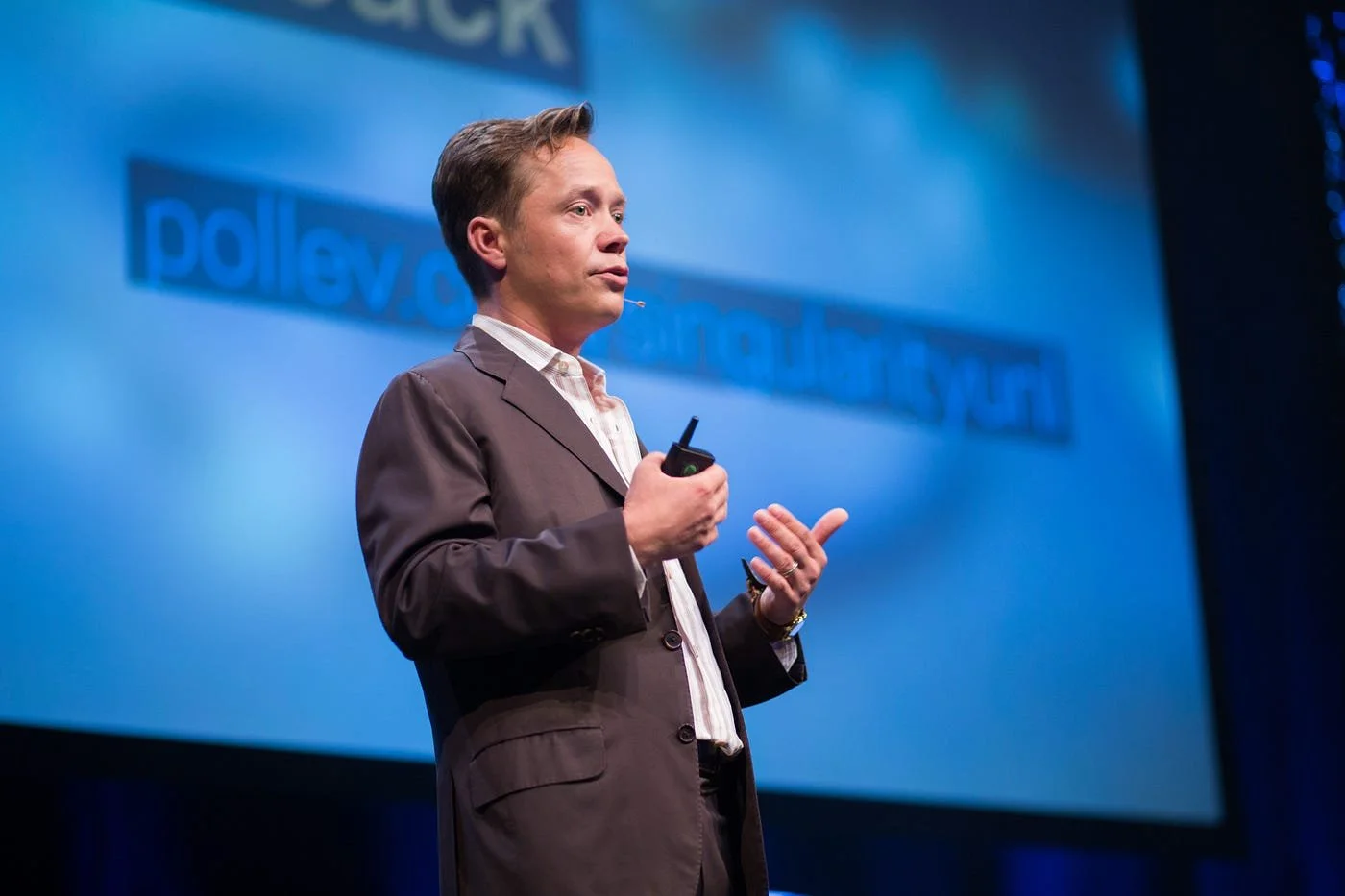
Brock Pierce speaks at a conference. Sebastiaan ter Burg. CC-BY-4.0.
In the aftermath of Hurricane Maria, which ravaged the island in 2017, U.S. crypto investors saw an opportunity to take advantage of tax incentives. They hoped to rebuild a part of the capital, San Juan, into what they called “Puertopia” — a modern city run on virtual money and public contracts. Members of this community who flocked to the island included men like Brock Pierce, co-founder of the digital currency Tether, and social media influencer Logan Paul. Upon moving to the island in 2017, Pierce and his partners took over numerous properties, including a beachfront hotel in Vieques and a museum in Old San Juan. They made grand promises to revitalize the economy using blockchain, refurbishing historic neighborhoods and building their own airports and docks.
But there is little evidence that wealthy newcomers like Pierce have done anything to stimulate economic growth on the island. Instead, they have contributed to a surge in housing prices, driving up the cost of living for locals and displacing Puerto Rican families, especially in coastal towns like Rincon, where beachfront property is prime real estate. Housing prices in San Juan increased by 22% between 2018 and 2021 as tax law beneficiaries spent an estimated $1.3 billion on real estate between 2015 and 2019, according to research conducted by Puerto Rico’s Department of Economic Development and Commerce.
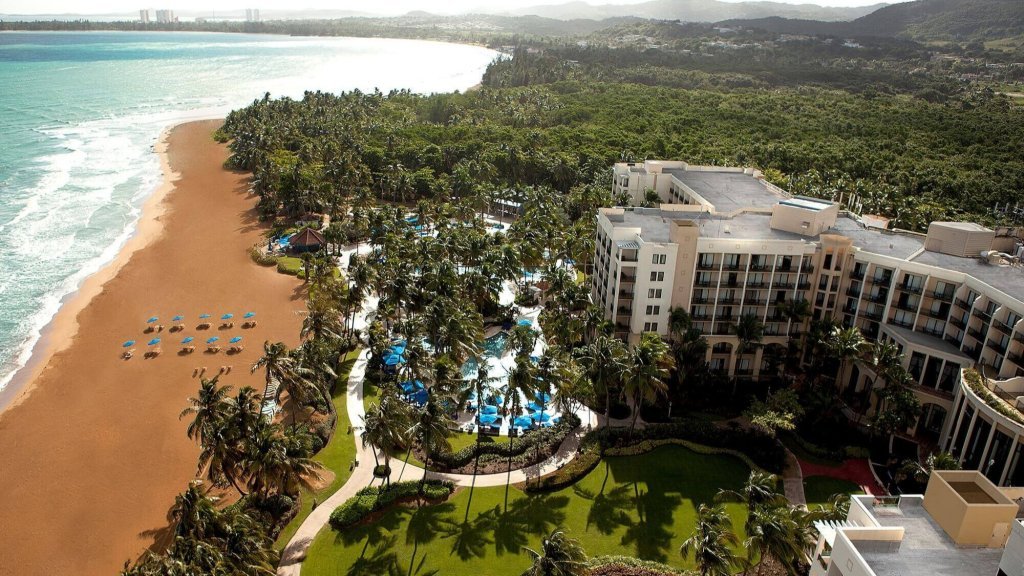
Golf resort in coastal Puerto Rico. Your Golf Travel. CC BY-NC-ND 4.0.
According to the 2023 census, the median household income in Puerto Rico is $25,096 — less than a third of the median household income in the United States. Many locals forced to relocate have to commute longer distances and pay expensive tolls. Marina Reyes Franco, an art curator at the Museo de Arte Contemporaneo in Puerto Rico, told the Guardian that she has struggled to find affordable housing in recent years. She blames the tax laws, claiming, “At the end of the day, this is about a new era of colonialism and laws that only benefit the elite.”
Gentrification culturally erodes communities and contributes to a loss of heritage and identity. Not only does it mean that locals can no longer afford to live in the places they call home, but an influx of wealthy newcomers can alter the character of neighborhoods, displacing local businesses, cultural institutions and the unique cultural fabric of Puerto Rican communities.

Solidarity With Puerto Rico Rally in Chicago, Illinois. Charles Edward Miller. CC BY-SA 2.0.
GET INVOLVED:
#AbolishAct60 is a grassroots movement aimed at repealing Act 60. By using social media to raise awareness and inspire collective action, they encourage the Puerto Rican diaspora to put pressure on their representatives. Help amplify their message here.
Diaspora en Resistencia is a nonprofit utilizing social media to mobilize support through online petitions demanding that the Puerto Rican government take action.
You can also petition your representatives to reevaluate Puerto Rican tax policies. U.S. lawmakers, including Chuck Schumer and Alexandria Ocasio-Cortez, have already spoken out against the measure.

Kleigh Carroll
Kleigh is a student at UC Berkeley studying Geography and Journalism. She hopes to integrate her skills in these fields in pursuit of a career in journalism. She is passionate about being outside, exploring, and writing in all of its forms.
Russian Poets and the Risk of Resistance
Kennedy Kiser
From public readings to prison cells, Russian poets are paying the price for speaking against the war.
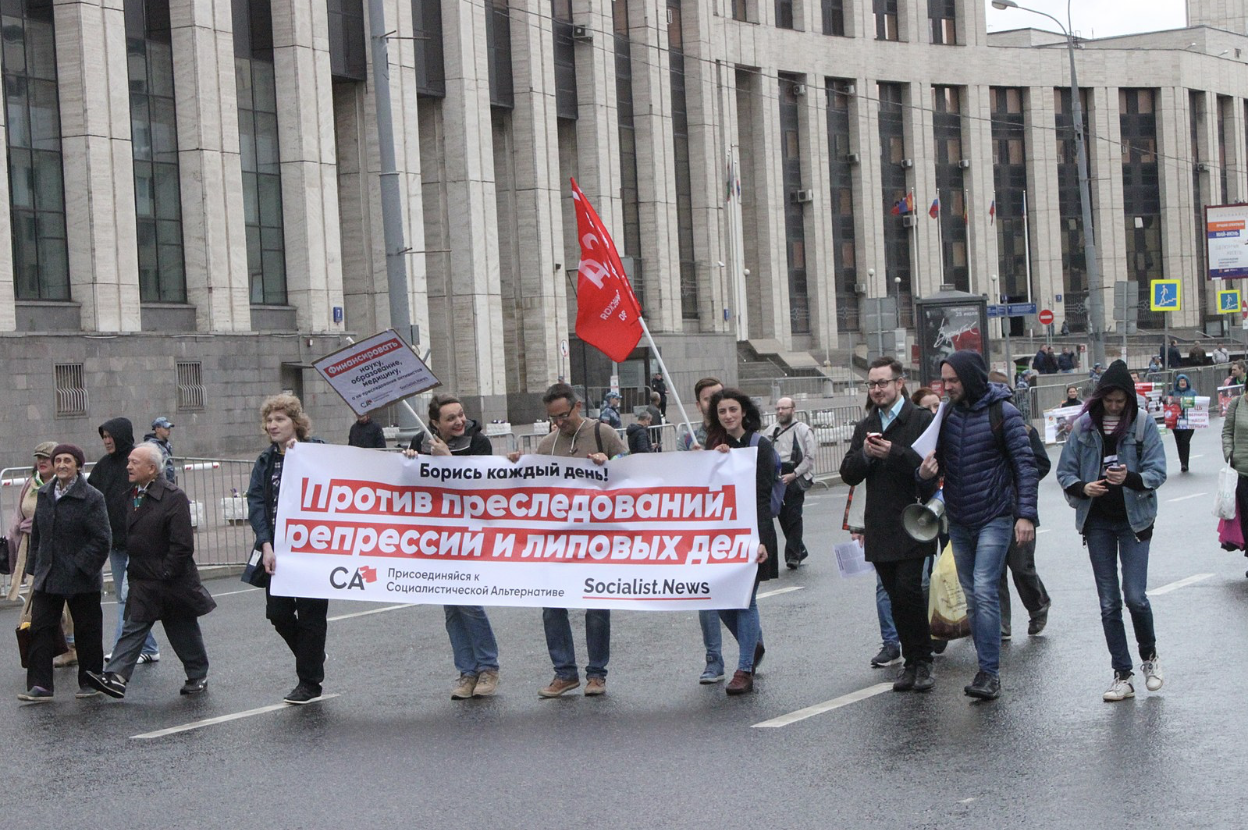
Protesters march in Moscow against repression and fabricated charges. DonSimon. CC0.
“Kill me, militiaman!
You’ve already tasted blood!
You’ve seen how battle-ready brothers
Dig mass graves for the brotherly masses.
You’ll turn on the television—you’ll lose it,
Self-control has never been your strong suit.”
— Artyom Kamardin, “Kill Me, Militiaman”
In December 2023, Russian poet Artyon Kamardin was sentenced to seven years in prison for reciting anti-war verses during the public “Mayakovsky Readings” in Moscow. Fellow poet Yegor Shtovba, who performed at the same event, received a sentence of five and a half years. Kamardin was reportedly beaten and sexually assaulted during his arrest for reciting poetry in response to Russia’s war in Ukraine.

Daria Serenko at the Moscow International Book Fair in 2019. Sergey Leschina. CC BY 4.0.
Their cases are not isolated. In April 2024, feminist poet and activist Daria Serenko was added to Russia’s federal wanted list. Known for combining poetry with political action, Serenko has faced years of harassment. Her arrest warrant, however, marked a shift in the state’s approach. Where once artists were threatened, they are now hunted.
Literature has long played a role in Russian resistance. During the Soviet era, banned texts circulated underground through samizdat networks. Today, Telegram channels and independent journals continue that tradition, sharing poetry that challenges state narratives. But the stakes are now much higher. Poets are not just being silenced; they are being criminalized. The penalties include imprisonment, forced exile and public brutality.
At the center of this increased repression is the state’s fear of language itself. Poetry distills dissent into a form that is emotionally direct and difficult to contain. It spreads quickly, often through digital platforms, in defiance of Russia’s 2022 censorship laws. Unlike journalism or political commentary, verse can bypass logic and speak directly to the reader’s gut. As poet Osip Mandelstam once wrote, “Only in Russia is poetry respected — it gets people killed. Is there anywhere else where poetry is so common a motive for murder?”
This crackdown is not limited to well-known names. Emerging writers, students and performers with modest online followings have also been detained or investigated for speech-related offenses. In some cases, posting a poem on VKontakte, Russia’s largest social network, has led to criminal charges. The line between art and activism has been effectively erased, especially for those who oppose the war.
International literary organizations have responded by offering emergency grants, publication platforms and legal aid. PEN International, Freemuse and countless other organizations have condemned Russia’s actions, calling for the immediate release of detained artists. Yet the risks persist. For many Russian writers, exile is the only path to safety, though it often comes with the painful cost of losing direct access to their audiences.
Repressing writers like Kamardin, Shtovba and Serenko reveals a broader strategy: to eliminate not just protest but the imagination of a different future. By imprisoning poets, the government also suppresses the potential for alternative visions of the world.
Still, Russian poetry persists. In exile, through online platforms and underground readings, writers continue to speak out. In a regime that fears language, each poem becomes an act of resistance.
GET INVOLVED:
These organizations offer support to writers and artists facing political persecution. From legal aid to international advocacy, their work helps protect freedom of expression and document human rights abuses. Getting involved means helping preserve creative resistance in some of the world’s most repressive environments.
To learn more about PEN International, click here.
To learn more about Freemuse, click here.
To learn more about Memorial International, click here.
Kennedy Kiser
Kennedy is an English and Comparative Literature major at UNC Chapel Hill. She’s interested in storytelling, digital media, and narrative design. Outside of class, she writes fiction and explores visual culture through film and games. She hopes to pursue a PhD and eventually teach literature!
How Congo and Rwanda Arrived at the Brink of War
In their fight over marginalized peoples and access to rare minerals, the Congolese military and Rwanda-backed rebels risk triggering a broader regional war in southeast Africa.
Read MoreTrump’s USAID Freeze: A Staggering Loss for Humanitarian Aid
Trump’s decision to freeze USAID threatens millions worldwide who rely on humanitarian aid for survival
Read MoreUS Declares Genocide in Sudan
After two years of famine, disease, and misery, the U.S. has given an official deemed the ongoing conflict in Sudan as genocide.
Read More