
Sofia Stidham
The Trump administration’s ban on admitting international students to Harvard leaves them in uncertainty amid First Amendment violations and poses concerns to all international students in the US.
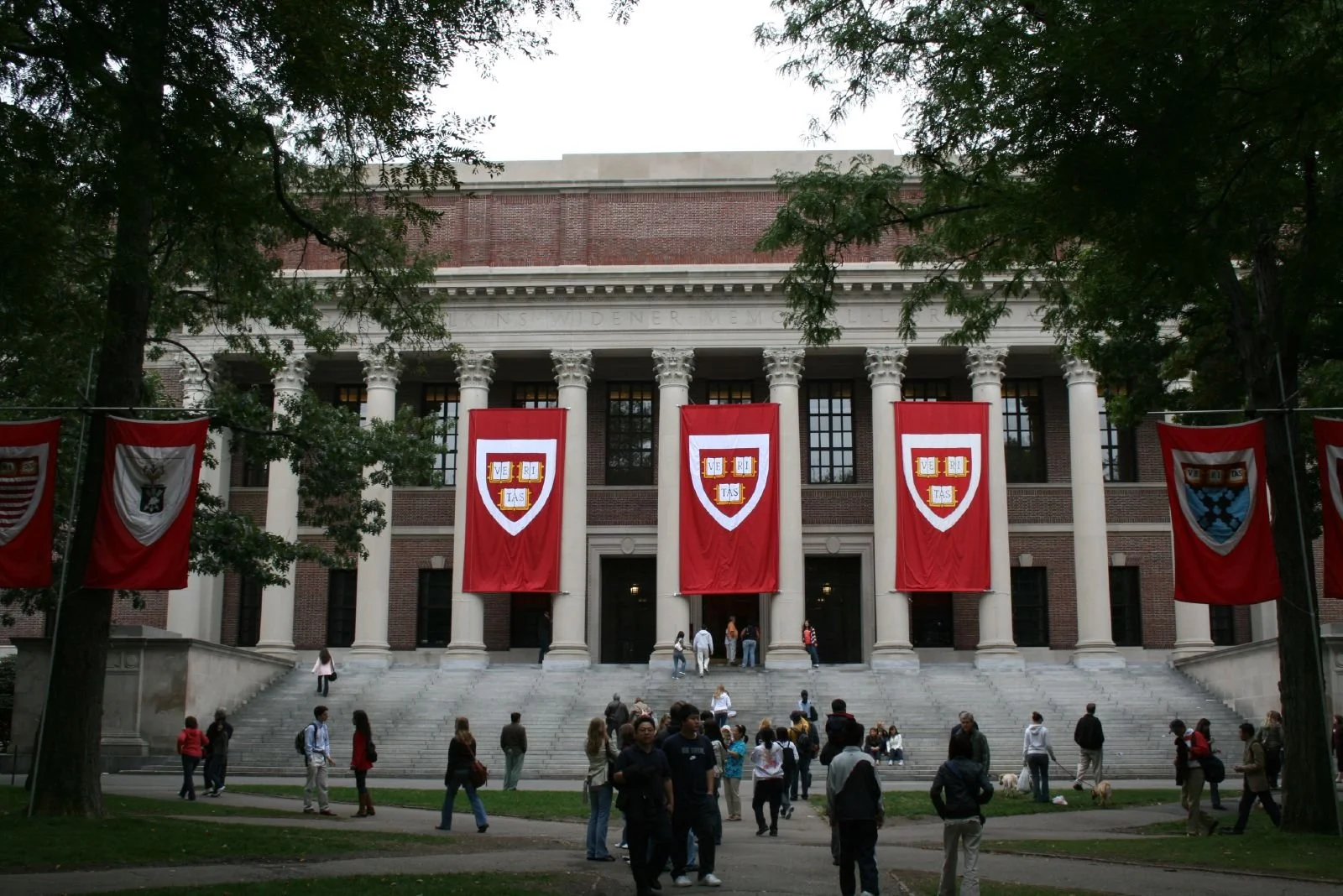
Harvard University Widener Library. Joseph Williams. CC BY 2.0.
On May 22, 2025, the U.S. Department of Homeland Security released a statement that placed the 6000 international students currently attending Harvard University in a state of doubt: “Harvard can no longer enroll foreign students, and existing foreign students must transfer or lose their legal status.” If the ban goes ahead as planned, the decision will not only affect current Harvard students, but also the thousands of future international students worldwide planning to move to the United States in the fall to seek its top-class education. Among them is the future Queen of Belgium, Princess Elisabeth. For now, U.S. District Judge Allison Burroughs has placed a temporary restraining order on the ban, and a hearing is set to happen on May 29, 2025 to potentially prolong it.
In Harvard’s lawsuit against the Trump administration, the university emphasized that the government’s revocation of international students’ place there “is a blatant violation of the First Amendment.” As a result, the document indicates that the government’s attacks on its diversity, equity and inclusion policies are a part of broader attempts to suppress the academic and institutional autonomy driven by the Constitution.
The voices of Harvard’s foreign students reveal that the disintegration of their right to education and freedom has psychological impacts. Student newspaper The Harvard Crimson expressed that the lack of clarity, in addition to the fact that university transfer deadlines have long passed, has left their international students in anxiety. Vince, who plans to go to Harvard next year, told Free Malaysia Today, “We are certainly feeling pretty nervous, and it’s been a dream for me to come from a small town in Taiwan all the way to Harvard.”
The United States’ position as the world’s third most populous and fourth largest country can contribute to a predominantly domestic focus, highlighting the importance of incorporating international perspectives. “You have so much to learn from different cultures, from people of different backgrounds. And everybody really valued that,” Harvard international student Shreya Mishra Reddy told the BBC. As a result, the effect of restricting admission to only U.S. students raises social concerns due to the positive significance of a diverse student body.
Not only do international students provide cultural enrichment, but data shows that they also have a wide-scale economic impact, reaching beyond universities themselves. NAFSA: Association of International Educators found that U.S. international students contributed $43.8 billion to the country in just the 2023-2024 academic year. Therefore, the government’s ban on international students will come at a high expense for the U.S. economy.
Furthermore, D.H.S.’s actions toward Harvard reflect a wider pattern of the government’s mechanization of immigration restrictions at other top American universities. Inside Higher Ed reported that nearly 2000 students have already lost their J-1 or F-1 visa status under the Trump administration. President Trump, when asked by a reporter whether he was “considering stopping other universities besides Harvard from accepting foreign students,” gave the ambiguous reply that they are “taking a look at a lot of things." Harvard President Alan Garber wrote, “It imperils the futures of thousands of students and scholars across Harvard and serves as a warning to countless others at colleges and universities throughout the country who have come to America to pursue their education and fulfill their dreams.” As many across the world await the verdict of the restraining order hearing on May 29, the question stands: how far will Harvard’s foreign student ban go, and how will other educational immigration policies affect both the future of America and the world?
GET INVOLVED:
Anyone impacted by these immigration policy changes can find legal information, including a “Know Your Rights” toolkit, on the National Immigration Law Center website. The Immigrant Legal Resource Center also offers “red cards” that outline what to do during encounters with immigration enforcement.
Those looking to support international students can take action through NAFSA’s advocacy campaigns, urging Congress to protect the rights of foreign scholars, or can sign one of the many petitions on the American Civil Liberties Union website, such as preserving free speech on campuses.
Sofia Stidham
Sofia is a rising fourth-year English Literature student at the University of Edinburgh, having recently completed a year-long exchange at the University of Virginia. Outside of writing, she enjoys spending time with family and friends, going to concerts, curating her wardrobe, and zoning out on long walks. She hopes to pursue a career that allows her to channel her passion for writing into intersectional feminist advocacy.