Observe “Re-wilded” Asian Elephants in their Natural Habitat in Thailand

Salome Liptak

The Mahouts Elephant Foundation offers a unique opportunity for sustainable tourism while also contributing to Asian elephant conservation and Indigenous livelihoods.
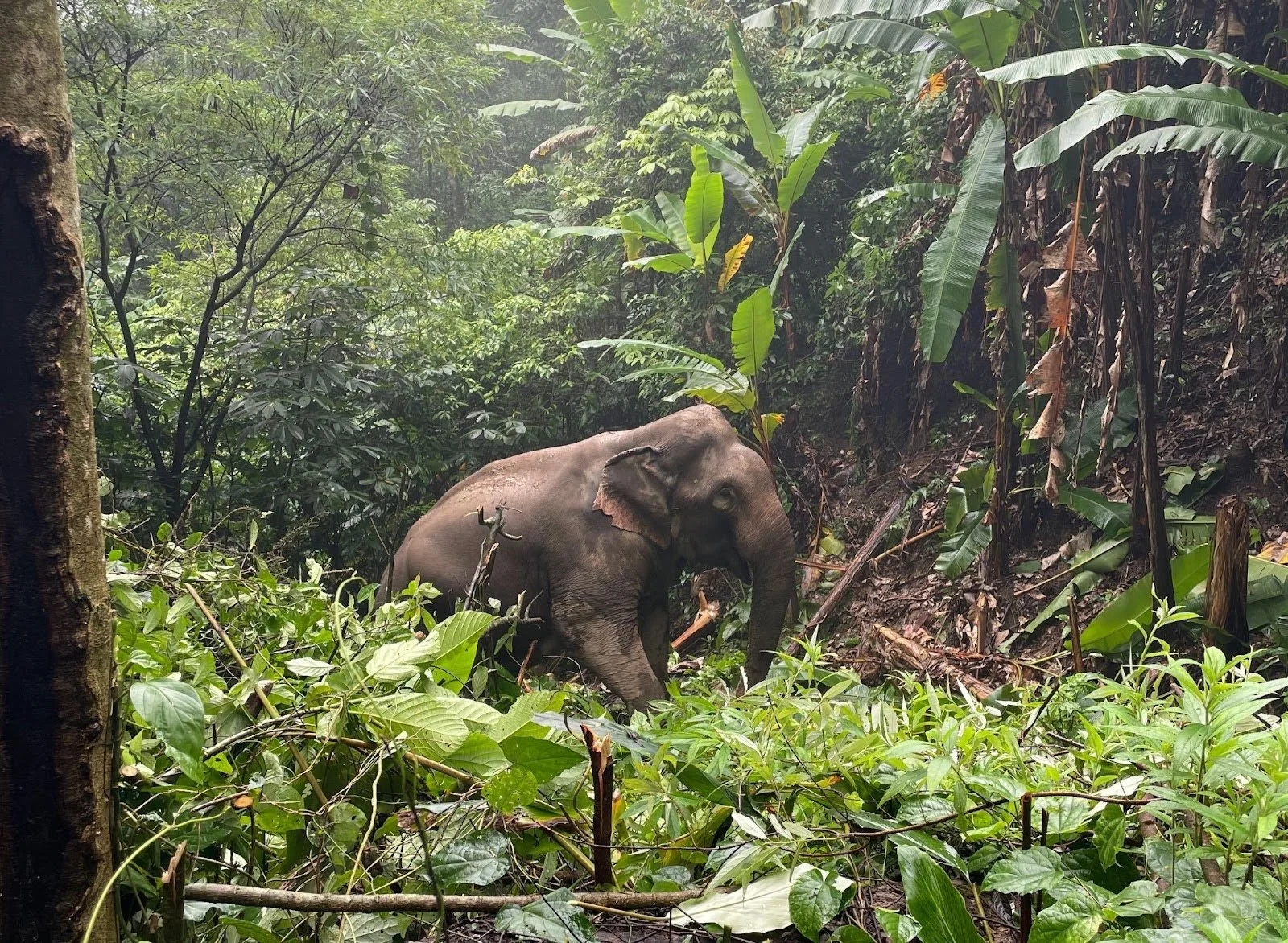
Asian elephant in cloud forest. Salome Liptak.

Deep in Thailand’s mountainous Western Forest Complex, a group of travelers observes Asian elephants as they sleep, forage and socialize in the lush cloud forest that is their natural home. Between the visitors and elephants stand the mahouts, or caretakers, who trek out to check on the animals anywhere from once a week to once a day, depending on their individual needs. The mahouts also act as expert guides for the travelers, tracking the elephants’ courses by the plants they crush in their wake and maintaining the safety of both the humans and animals present. Speaking in their Indigenous Karen language to translators, they can tell where the elephants will want to pass, instructing the visitors on where to move next.

This unique experience has been made possible by the Mahouts Elephant Foundation, a non-profit focusing on Asian elephant conservation and sustainable tourism, founded by Sarah Blaine and her family. Offering different trips with outdoor adventure, conservation education and volunteer focuses, the foundation prioritizes cultural immersion in the Karen community through host families sharing language, food and Indigenous craftsmanship. As a sustainable tourism organization, they utilize a multi-faceted and multi-disciplinary approach to fill the gap in elephant conservation efforts in Thailand.

Elephants have made up a large portion of Thailand’s tourism sector since 1989, when the government imposed a logging ban that left thousands of elephants and their mahouts unemployed. Taking care of an elephant is expensive, and mahouts and their families, who were suddenly destabilized by the economic crisis, were often unable to find new livelihoods that provided enough for them to continue caring for the animals. The majority of these mahouts belong to ethnic minorities, including refugees from Myanmar, and they were therefore especially economically vulnerable. Mahouts consider their elephants as members of their family, which makes the prospect of needing to sell one inconceivable. Despite this, many were forced to lease their elephants into the tourism industry, creating ethical concerns for the well-being of the animals and caretakers alike. The subsequent move to larger cities left mahouts separated from family members as they worked in unfamiliar and dangerous conditions.

Tourist camp practices range from the seemingly benign acts of elephant feeding and bathing to the more obviously unnatural training of elephants to paint, walk on their two hind legs and carry people. While these practices are on a spectrum of severity, all of them require a form of behavioral subjugation, wherein an elephant is trained to do what it would not do naturally. At its most violent, this process is referred to as “crushing” an elephant and involves separating young calves from their families, chaining them in small cells and systematically prodding and hitting them with sharp tools until they follow commands. Elephants are large, powerful animals that can be dangerous to humans, especially in these abusive conditions.

The mahouts, as the legal owners of the elephants, are essentially indentured in the tourist camps. They endure immense levels of stress from the responsibility of keeping the elephants from revolting and hurting tourists. Poverty, the separation from family and the trauma of facilitating or witnessing the crush have contributed to the mental health struggles of mahouts working in tourist camps. These ethical issues have called for reforms in the industry and caused a surge of elephant sanctuaries to open in Thailand, with various approaches and visions of what conservation looks like. Still, today, wild elephants are greatly outnumbered by captive ones, 75% of which are being used in the tourism entertainment industry in some form. 

In the foundation’s own words, their mission to combine conservation and community collaboration “cuts off the supply of elephants to the tourism industry, stops the demand of tourists by offering ethical alternatives, brings a sustainable source of income to impoverished communities, and provides science-based evidence showing good elephant welfare.” Their model is unique in its integration of the humanitarian issues of the tourism industry with strict policies on ethical interactions with the elephants.

Elephants brought onto their projects are referred to as “re-wilded,” meaning that while the organization has legal and financial ownership, the animals continue to be looked after by their mahouts and live in the forest as they would naturally. There is no immediate contact between visitors and elephants, including feeding or bathing, with visitors always kept at a distance. The foundation’s conservation and behavioral research contributions are also unique, stemming from research director Liv Baker’s approach, which focuses on individual animal well-being beyond overall population statistics. This informs their trip policies, prohibiting behaviors that many other elephant sanctuaries in Thailand allow and questioning the right of human visitors to interact with the animals.

By fully collaborating with the Indigenous community, Mahouts Elephant Foundation has created a unique environment where conservation research exists alongside an ethical tourism experience. While guests are welcomed and thoughtfully cared for, they must remain conscientious of their role as visitors, staying mindful of the locals, elephants and landscape without thinking of themselves as an audience to be entertained. 

GET INVOLVED:

Mahouts Elephant Foundation lets students, volunteers and adventurers hike through the cloud forest in Northern Thailand to observe re-wilded elephants in their natural habitat. For those looking to support the Karen people’s work to foster peace and security in their communities, visit the Karen Organization of Minnesota or check out the Karen cultural crafts for sale at Borderline Collective. Those interested in digging further into animal ethics and wellbeing can visit PAN Works for their extensive work with Asian elephants, as well as other members of the more-than-human community.

Salome Liptak

Salomé is a student at Sarah Lawrence College studying literature and writing. She is passionate about storytelling (both true and fictional) and its power to reflect the world as it is, or imagine what could be.
The Gray Area Between Animal Rides and Animal Rights

Nick Dauk

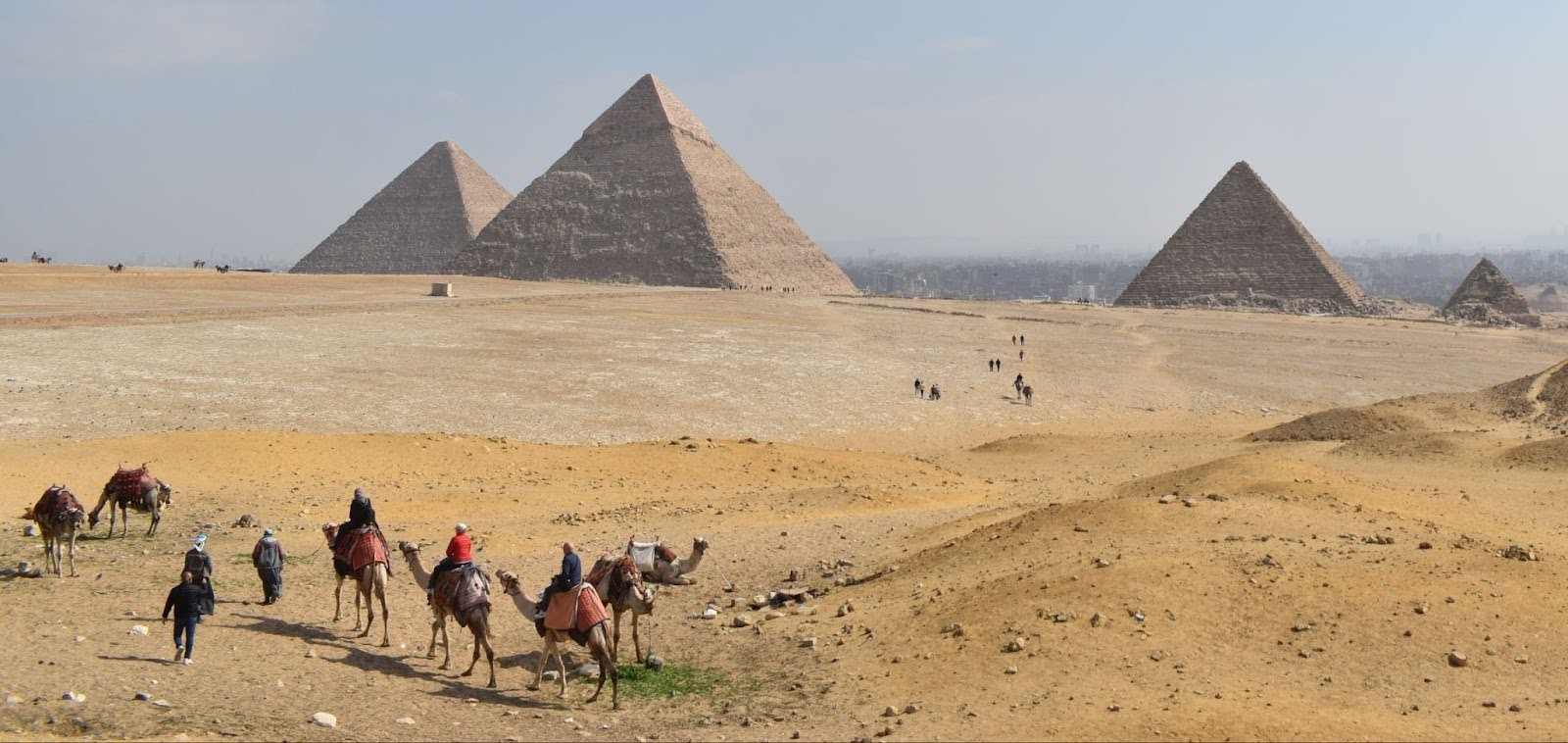
Camel rides and horse-drawn carriages in the tourism industry create moral dilemmas for travelers.

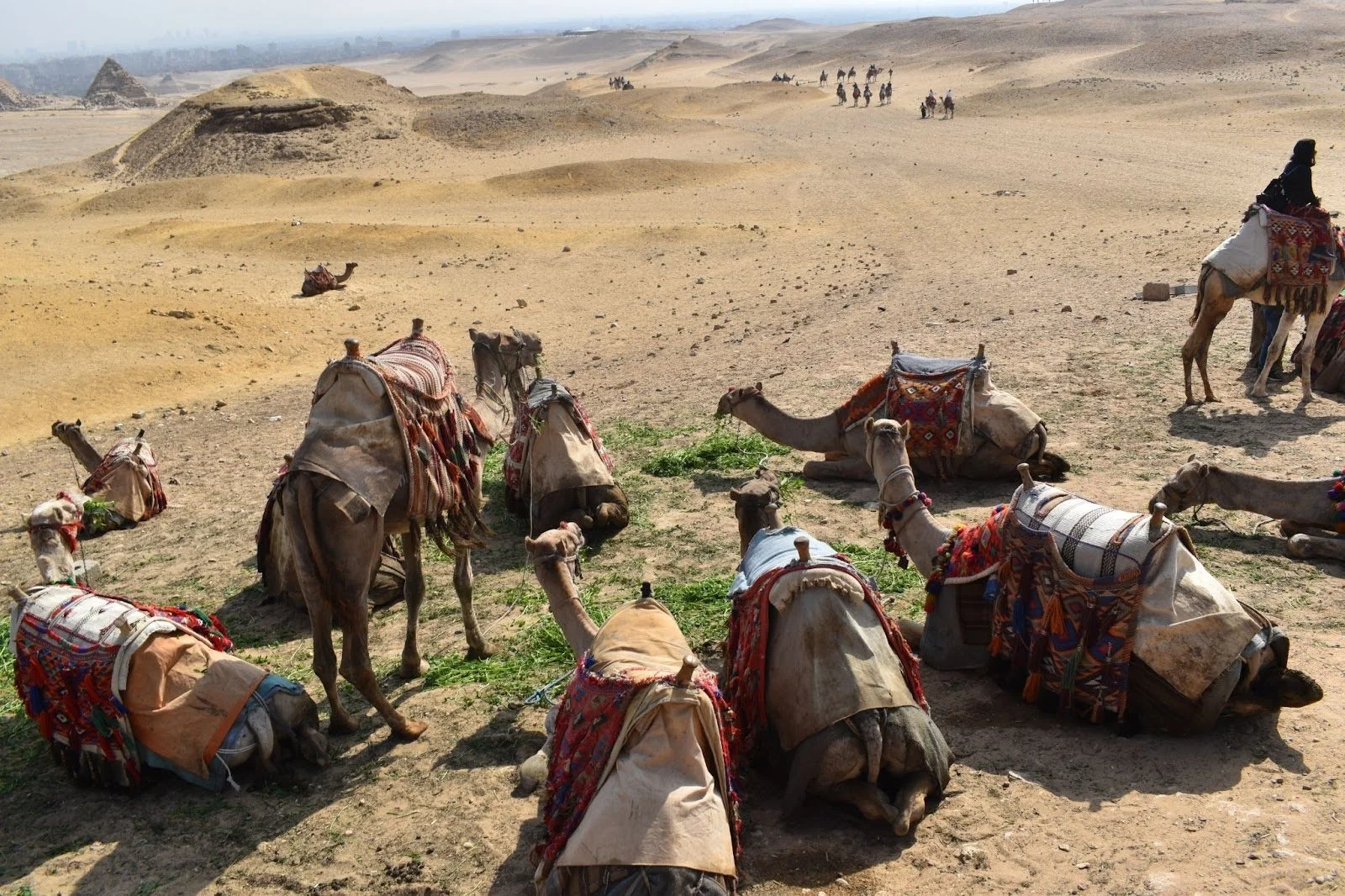
Camels used for tourist rides at the Pyramids of Giza. Nick Dauk.   

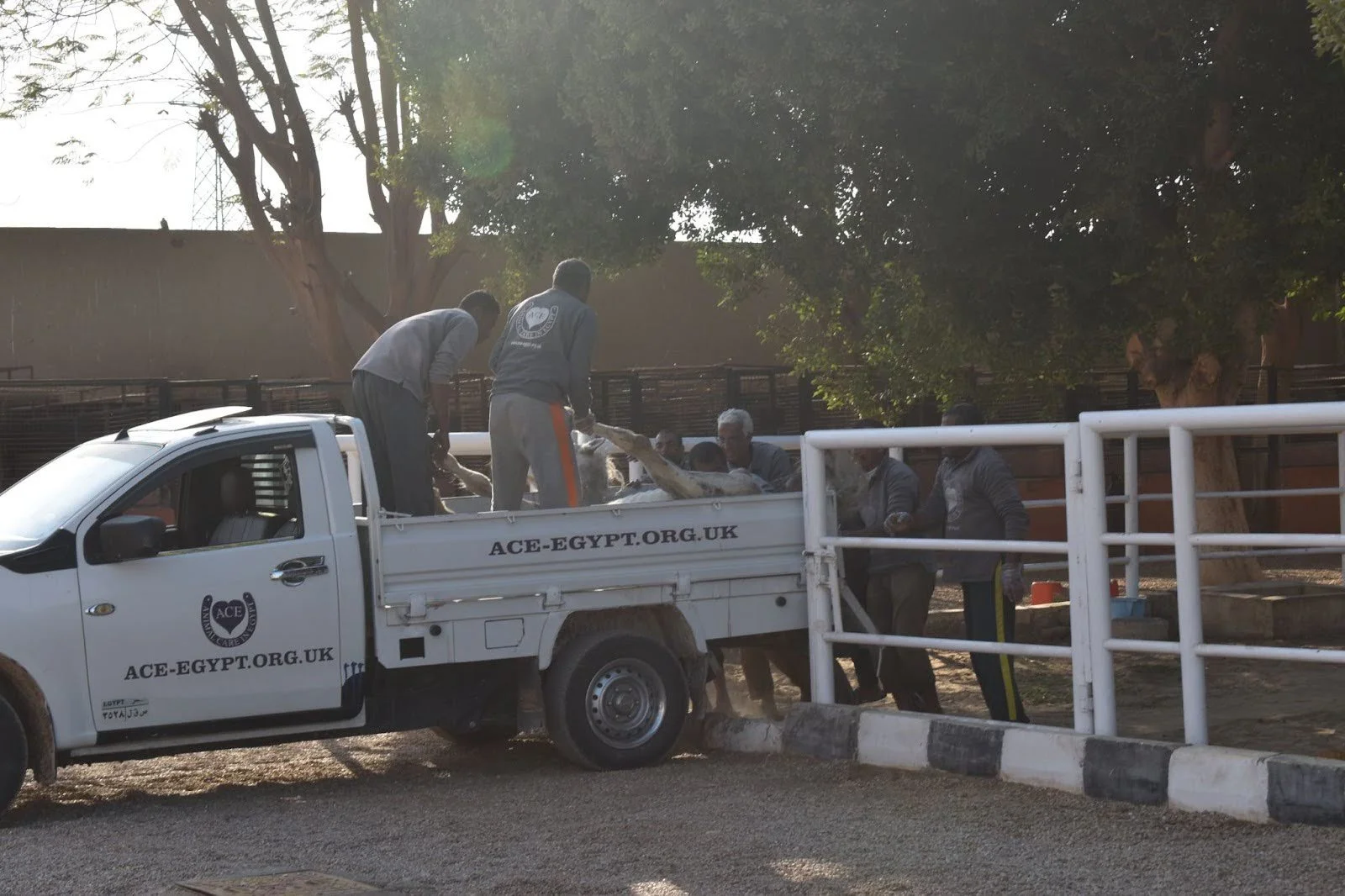
Seven men stand above a dead horse, discussing the easiest way to move its carcass into a truck bed. This is the second expired equine my tour group has encountered in Egypt; the first, an unfortunate foal, was discarded like trash on the streets of Cairo. Sadly, this is a common sight for many international travelers and is the reason Luxor’s Animal Care in Egypt (ACE) charity veterinary hospital exists. The organization was founded by U.K. traveler Kim Taylor 25 years ago, after she observed the mistreatment of working horses and donkeys in Luxor. 

Luxor’s ACE veterinary staff loading a deceased horse into a pick-up truck. Nick Dauk.

In 2023, while I am on tour with Exodus Adventure Travels, I see horses pulling carriages through Luxor that get whipped, kicked and treated like machinery. The reality is that many of the animals working in Egypt’s tourism sector are irresponsibly cared for at best and grossly abused at worst. The issue is not unique to Egypt; elsewhere in the world, equines, elephants and other animals are also subject to mistreatment within a tourism context.  


The ethics of animal welfare seem black and white in principle, but both the tourist and the tourism company are often guilty of harboring, even subconsciously, a murky gray scale. Listening to the voices of tourism companies, veterinarians and animal welfare advocates can help travelers draw the line in making ethically educated decisions when encountering animals in the tourism industry. “Animal advocacy is absolutely central to how responsible wildlife tourism should operate,” Head of Positive Impact at Jacada Travel, Natalie Lyall-Grant, tells me. In 2025, Jacada performed an audit of its wildlife-related activities and subsequently removed more than 40 animal experiences from its portfolio of tours. “We prohibit physical interactions with wild animals, refusing to sell attractions that exploit them for profit or forced performance,” Lyall-Grant adds.

Jacada is far from the only tour company to reassess animal encounters; a decade ago, companies like G Adventures and Intrepid Travel banned elephant rides on their tours. The Elephant Conservation Center (ECC) in Laos claims that traveler expectations have also shifted: more travelers are actively seeking out ethical wildlife experiences and pointedly rejecting activities like elephant rides. But even so, the fact is that animal mistreatment is often made less obvious to travelers.

Abuse and Mistreatment Are Often Hidden From Tourists

“Travelers increasingly want to do the right thing, but they’re rarely given the full picture,” says Emily Guice, Corporate Responsibility Officer for PETA. “They don’t see the open sores hidden under saddles, the stables saturated with urine and waste, or animals that are forced to work for hours without proper shade, food or water.”

A group of camels used for tourism at the Giza Necropolis. Nick Dauk.

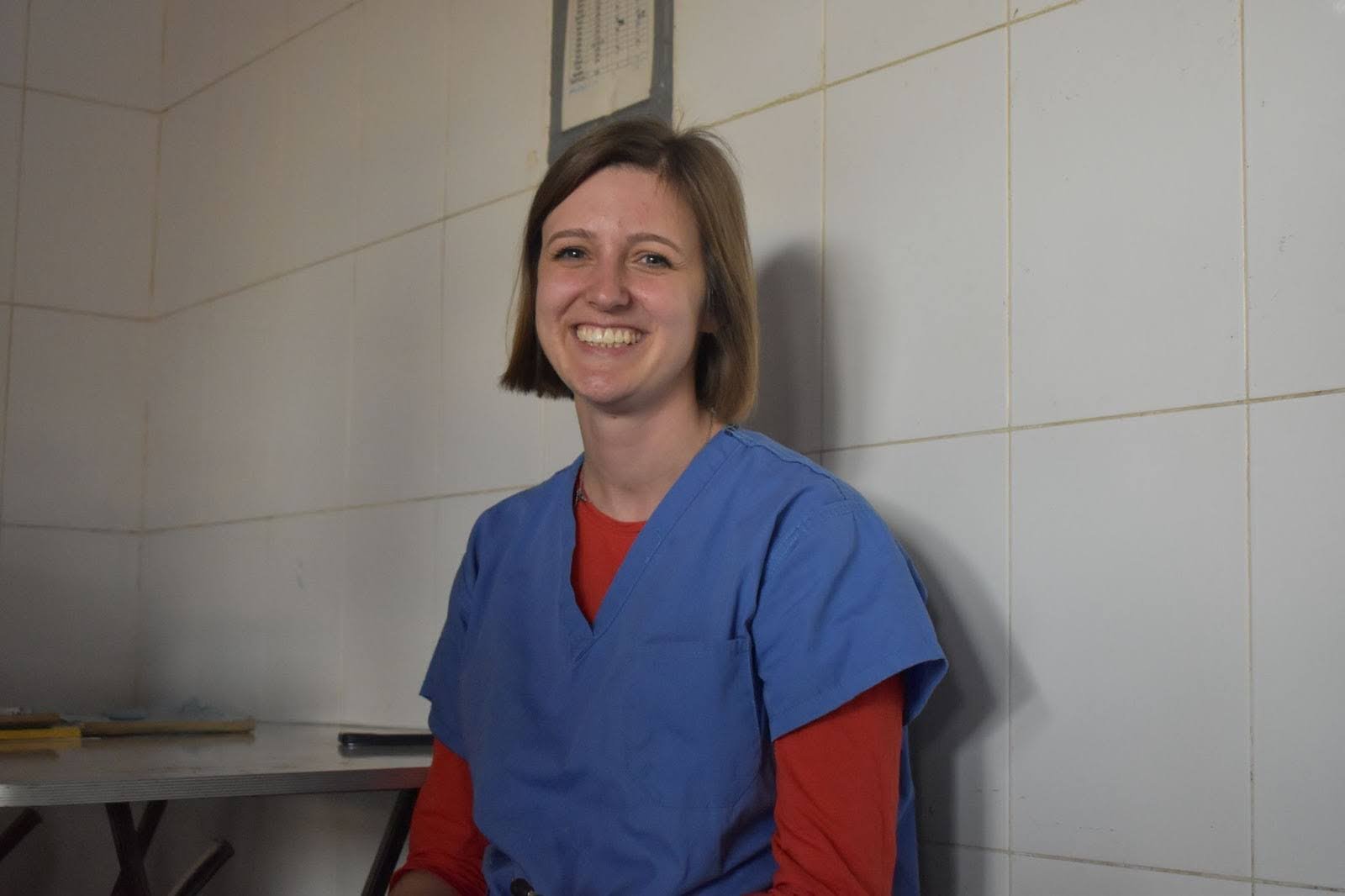
In 2019, PETA uncovered widespread abuse of both horses and camels in Egypt that continued through 2025. The animals were covered in wounds and emaciated, then dumped daily in a hidden graveyard near the pyramids when they expired. I hear these same claims when I visit Luxor’s ACE veterinary hospital. Jana, a German volunteer equine veterinarian, tells me that she regularly sees severe wounds and diseases that she typically doesn’t encounter in Europe. Speaking from a medical perspective, she believes that tourists should not purchase Luxor’s horse-drawn carriage rides, but she also doesn’t think that opting out instantly saves the animals’ lives. “You see a really skinny horse and assume the owners are so cruel, but they’re often just as skinny,” Jana says. “It’s not as easy of a decision as it seems, and I haven’t found a solution for myself yet.”

Jana, a German equine veterinarian at ACE in Luxor. Nick Dauk. 

A spokesperson from Brooke, an international charity focused on the protection and welfare of working equines, agrees that the issue is complicated for the animal operators. “Most do the best they can within their resources, even if they lack the capacity, opportunity or motivation to make changes.” Yet, while purchasing these services may contribute to the animal’s care, the traveler still needs to understand their responsibility. “Demand drives practice, so ethical choices support better care. Consider if use of the animal is necessary, and how operators support their welfare during and outside of work.”


Other advocates like PETA take a different stance, noting that the need for change lies at a deeper level. “Jobs tied to animal exploitation are precarious by design,” Guice says. “When companies stop promoting animal rides, tourism doesn’t disappear; it shifts to ethical alternatives and opens the door to more sustainable tourism work.”

The Gray Area Between Animal Rides and Animal Rights

At no point did our Exodus tour guide offer or encourage us to ride any animal in Egypt, opting instead to include an ATV ride near Giza’s pyramids and free time to stroll Luxor’s markets on foot. However, Exodus, along with G Adventures, Intrepid Travel and Jacada Travel, does currently offer horseback riding on some Latin America tours. Travelers may find themselves in unfamiliar, sometimes uncomfortable positions where they’re encouraged to make a decision without knowing all of the details. “It really shouldn’t fall on the traveler to figure this out on their own. That’s our responsibility,” said Intrepid’s Leigh Barnes.

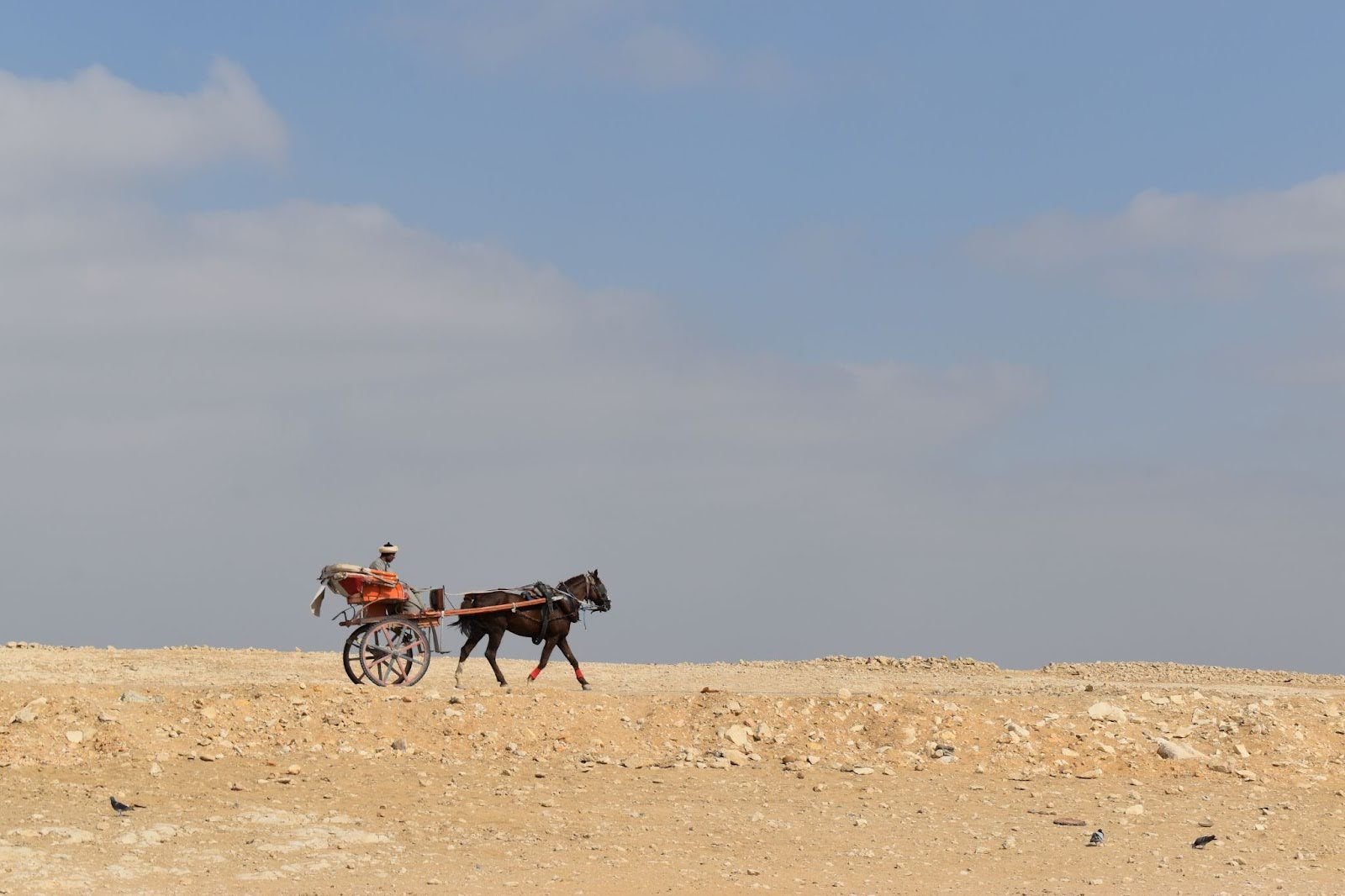
Horse cart and owner near the Great Pyramid of Giza. Nick Dauk.

Thankfully, those looking for alternatives to riding an animal can still achieve a memorable experience at many unforgettable destinations. In Giza, for instance, tourists have the option of riding the new electric buses to the pyramids. Ultimately, the responsibility does fall on both the tour company and the tourist. It’s the operator’s choice on who and how to partner with animal-focused activities, and it’s the traveler’s decision of how they choose to financially support these operators. “The future of animal-friendly tourism isn’t about finding the least harmful ride,” Guice says. “It’s about choosing experiences that let animals be animals, not attractions.” 


Nick Dauk

Based in Florida, Nick Dauk is a travel writer primarily focusing on tourism sustainability initialives, endangered wildlife, and vulnerable populations. His work has been featured in National Geographic, Afar, The National Post, and Euronews. When he's not photographing the wonders of the Arctic, the Amazon, or Africa, he's usually seeking out cultural, cuisine, and community-based stories across the Americas and Europe.

Iran at War: A Day in Tehran

Carol Khorramchahi

For civilians in Tehran, war isn’t a headline; it’s the sound of strikes at night, the scramble for safety and the fear of what comes next.

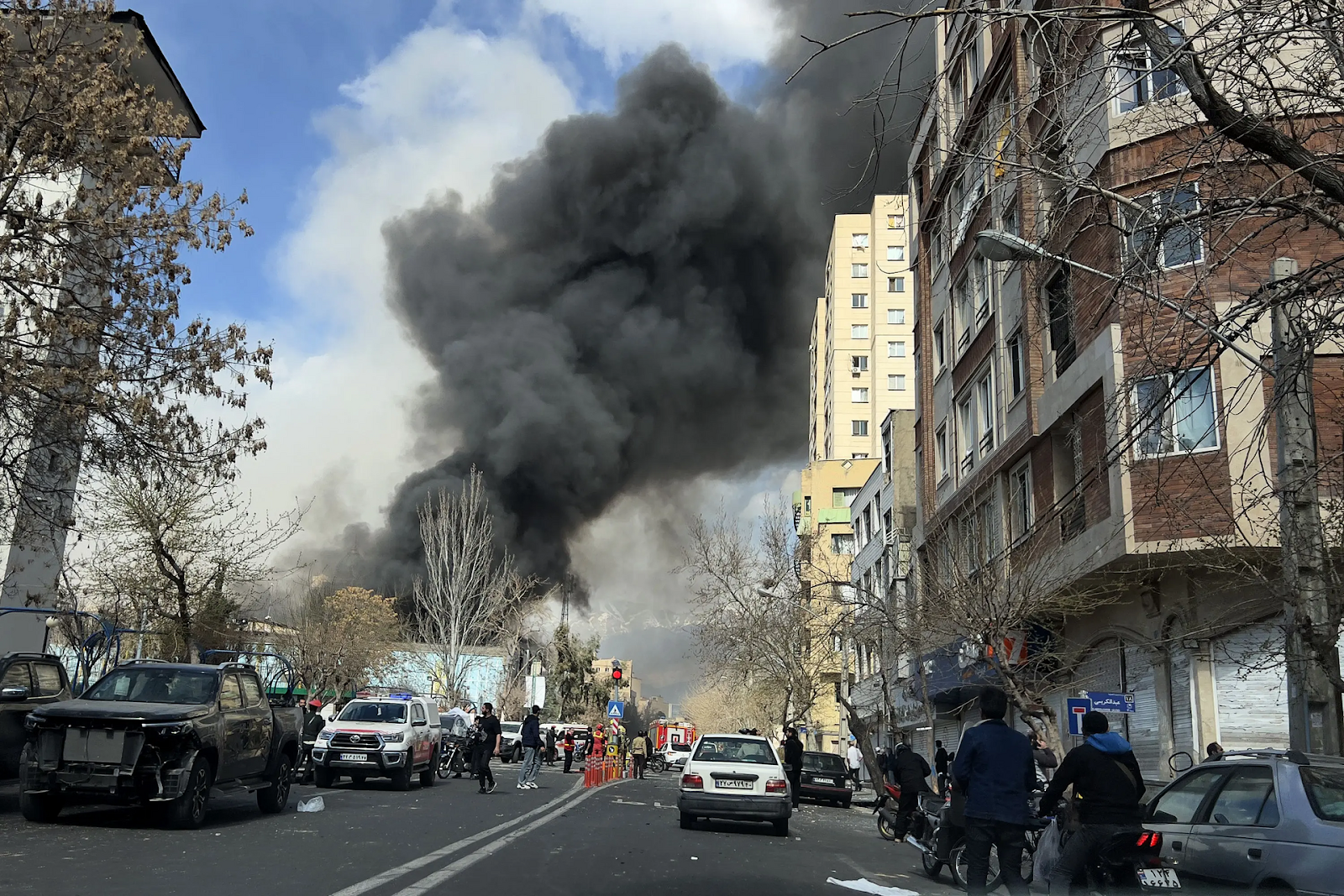
War in Tehran. Muhammad Ali Burno. CC BY 4.0.

For people in Tehran, war is not experienced through maps or military briefings. Instead, it’s felt in nights that don’t feel safe to sleep through, in the sudden rush to a hallway or bathroom when blasts shake the building, in the moment the lights flicker, and you don’t know if it’s a blackout or something worse.

In recent days, the scale of loss has been staggering. Iran’s U.N. ambassador said at least 1,332 Iranian civilians have been killed so far in the conflict, with thousands more injured. And while numbers can’t capture fear, they do show what Tehran residents already know: This is not a distant front line. This is a war reaching into neighborhoods, hospitals, schools and daily routines.

Iran’s Red Crescent reported that about 20,000 civilian buildings have been affected, along with over 70 healthcare facilities. In Tehran, that’s not just damage on paper; it’s what determines whether families can return home, whether clinics can operate and whether ambulances can move quickly when streets are congested or unsafe.

Some of the clearest snapshots of war in Tehran come from the voices of residents themselves. In one report, several Tehran residents described bright flashes turning night “into day,” and one woman told Al Jazeera that “the ground and the windows and our hearts were shaking,” adding that her family sheltered in the bathroom and asked not to be named for security reasons.

Hospitals are still running, but they are under strain. Tehran’s Gandhi Hospital was damaged after strikes hit nearby, and officials said medical facilities and schools had been impacted in multiple places. When healthcare sites are hit or even shaken by nearby blasts, the ripple effects are immediate: Patients get moved, surgeries are delayed and staff are forced to work in uncertainty.

Schools, too, have become part of the story. Reports described strikes that hit schools near Tehran and a wider pattern of attacks affecting education sites. Many parents now face a question that shouldn’t exist: Do you send your child to class when the situation can change overnight?

Even communication, something people rely on to find family, confirm safety and understand what’s happening, has become unreliable. NetBlocks has posted repeated social media updates showing Iran’s wartime internet blackout reaching extreme levels, with connectivity around 1% of ordinary levels during parts of the shutdown. When the internet collapses, it not only silences communities but also cuts off payment systems, disrupts work and makes it harder for people inside and outside Iran to reach each other.

As the threat grows, displacement has become another measure of fear. A U.N. estimate said 3.2 million Iranians have been displaced since the war began, alongside wrenching decisions families face, like whether to flee, where to go and whether leaving might mean not being able to return.

Underneath all of it is a question Iranians are likely arguing about quietly, even when they can’t say it publicly: What comes after this? Some will hope war brings political change. Others will fear that it brings only deeper repression and instability. Some will rally around the state. Others will blame it. Those divisions are visible in glimpses, like demonstrations framed as “defiance and resilience,” even as fear and exhaustion spread.

What’s certain is that for Tehran, war is no longer something “out there.” It is an atmosphere, felt in the noise overhead, the tension in ordinary errands, the uncertainty of school and hospital access and the desperate need to stay connected to the people you love.

GET INVOLVED:
Follow humanitarian updates through ReliefWeb and civilian protection statements from the International Committee of the Red Cross. Track internet shutdown reporting via NetBlocks and digital rights advocacy through Access Now. For human rights documentation, see the U.N. Human Rights Office and Amnesty International.


Carol Khorramchahi

Carol Khorramchahi is a student at Boston University, where she studies English and Psychology and minors in Journalism. She enjoys writing and reporting on stories that bring together culture, identity, and community, and has experience in both newsroom reporting and digital media. She is especially interested in thoughtful storytelling with a global lens.

Beyond the Pyramids: A Guide to Egypt

Carson Jelinek

Discover what else Egypt has to offer from its other natural wonders to its hearty cuisine.

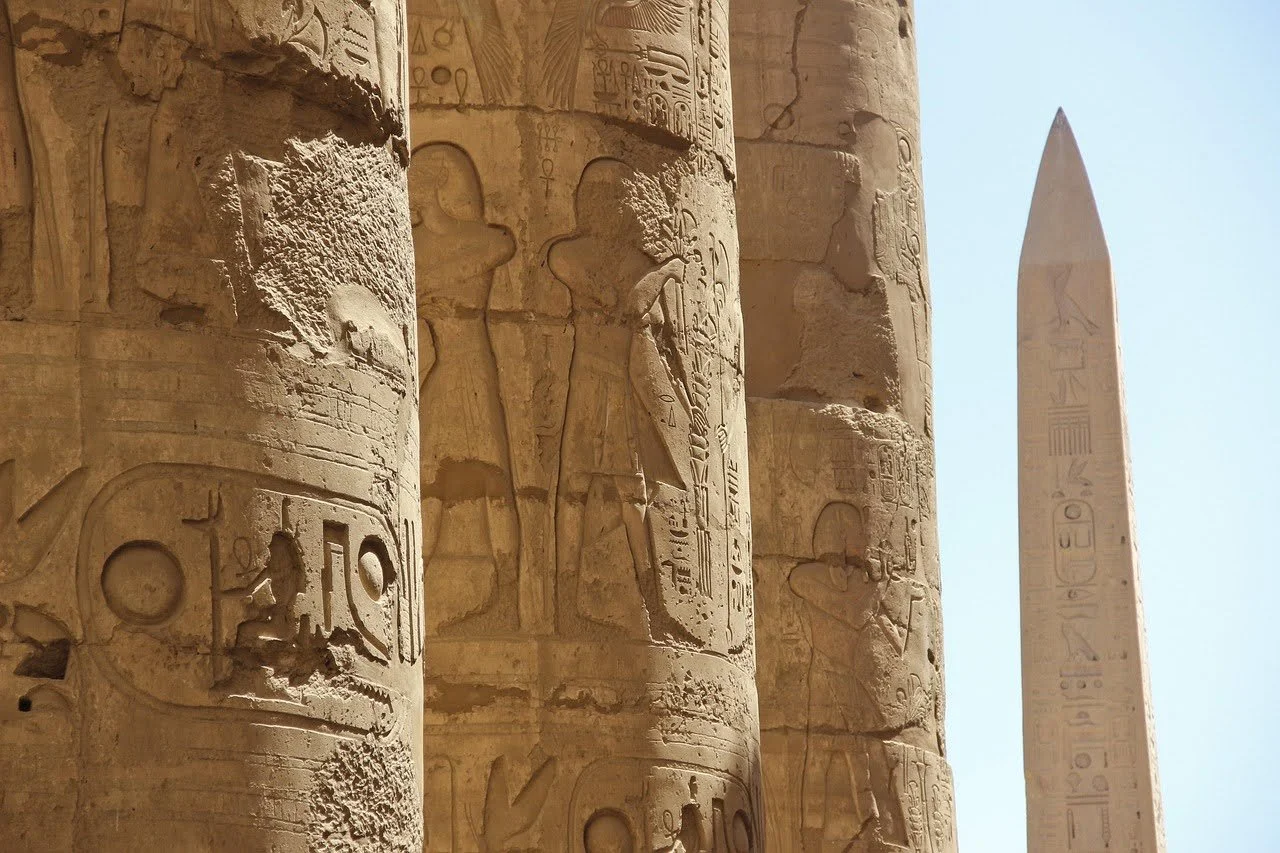
Columns in Egypt. imedias. Pixabay.

The pyramids are often the first things people picture when they think of Egypt, but they are just one part of the country’s rich heritage. With deserts shaped by wind, saltwater oases, colorful coral reefs in clear water and cities where ancient temples stand next to modern buildings, Egypt is much more than just one famous landmark. Visiting without seeing the pyramids lets you discover a deeper and more varied side of a timeless country.

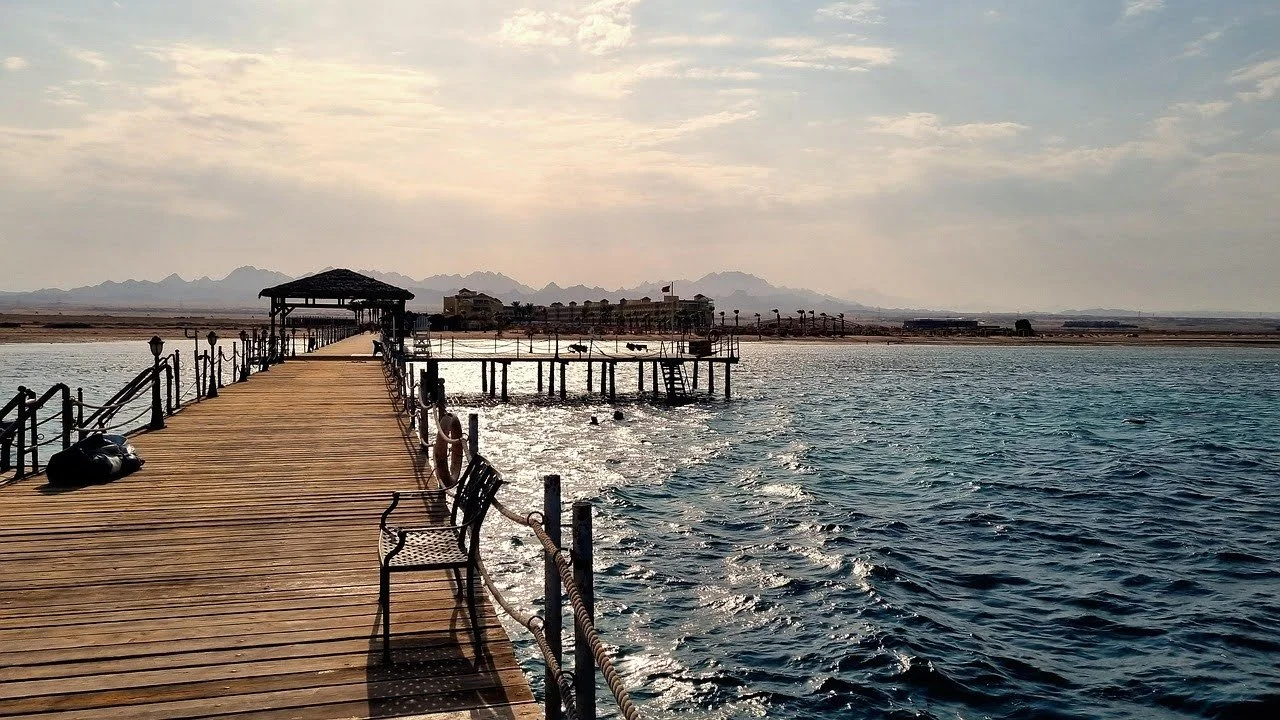
Dock at Red Sea.. Irfan Mujagic. Pixabay.

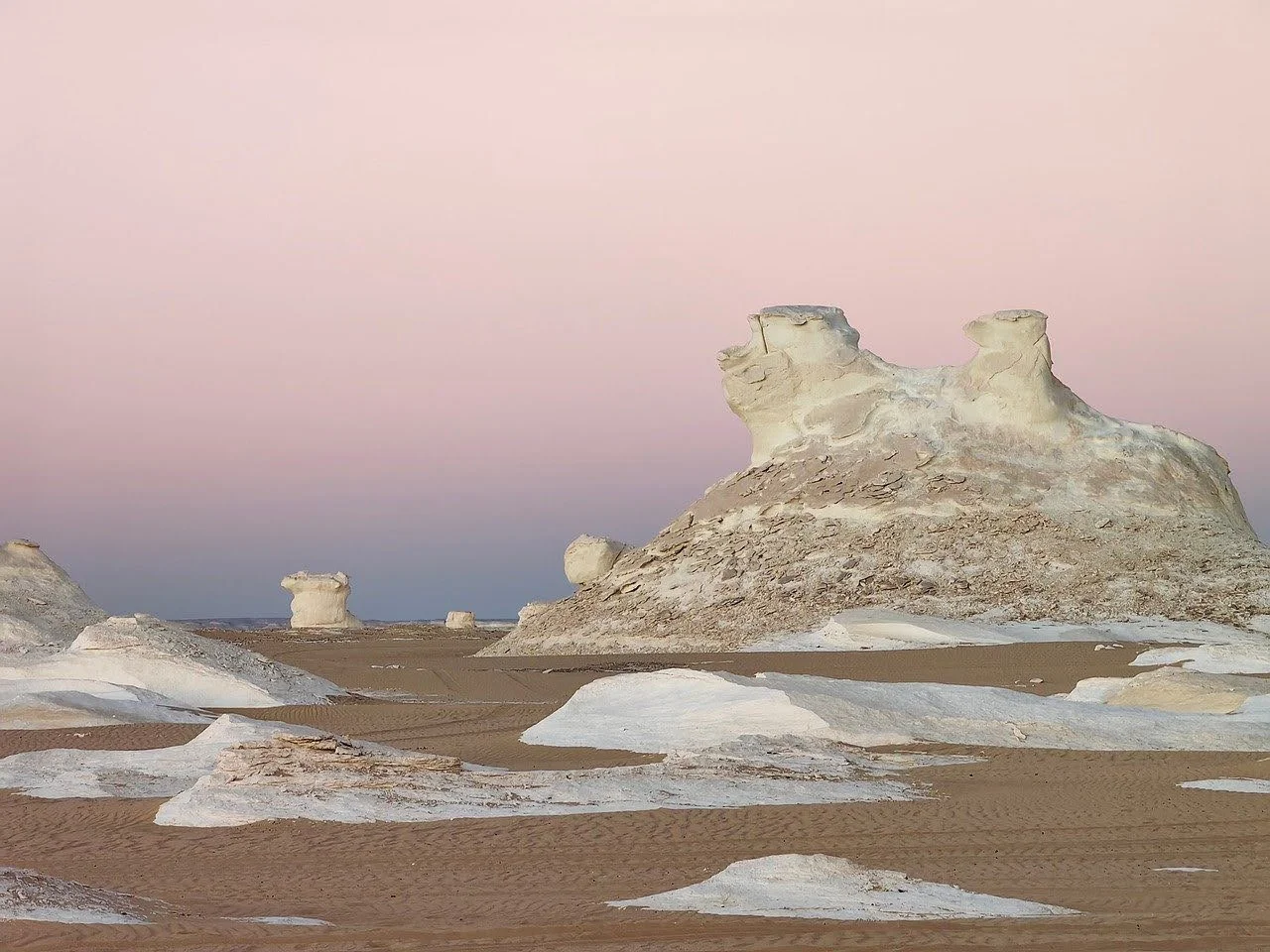
One of Egypt’s natural wonders is the Sahara el Beyda, also known as the White Desert National Park. This protected national park is famous for its surreal, otherworldly white chalk formations, sculpted by wind erosion into shapes resembling mushrooms and animals. The desert is rich in fossils from an ancient sea and is a popular nighttime camping spot because of the golden sun that sets over it.

White Desert National Park. Xingchen Xiao. Pixabay.

Located near the Libyan border, the Siwa Oasis is a significant natural site characterized by hundreds of springs and thousands of olive and palm trees. The oasis is also home to the temple of the Oracle of Amun, a historical landmark once visited by Alexander the Great.

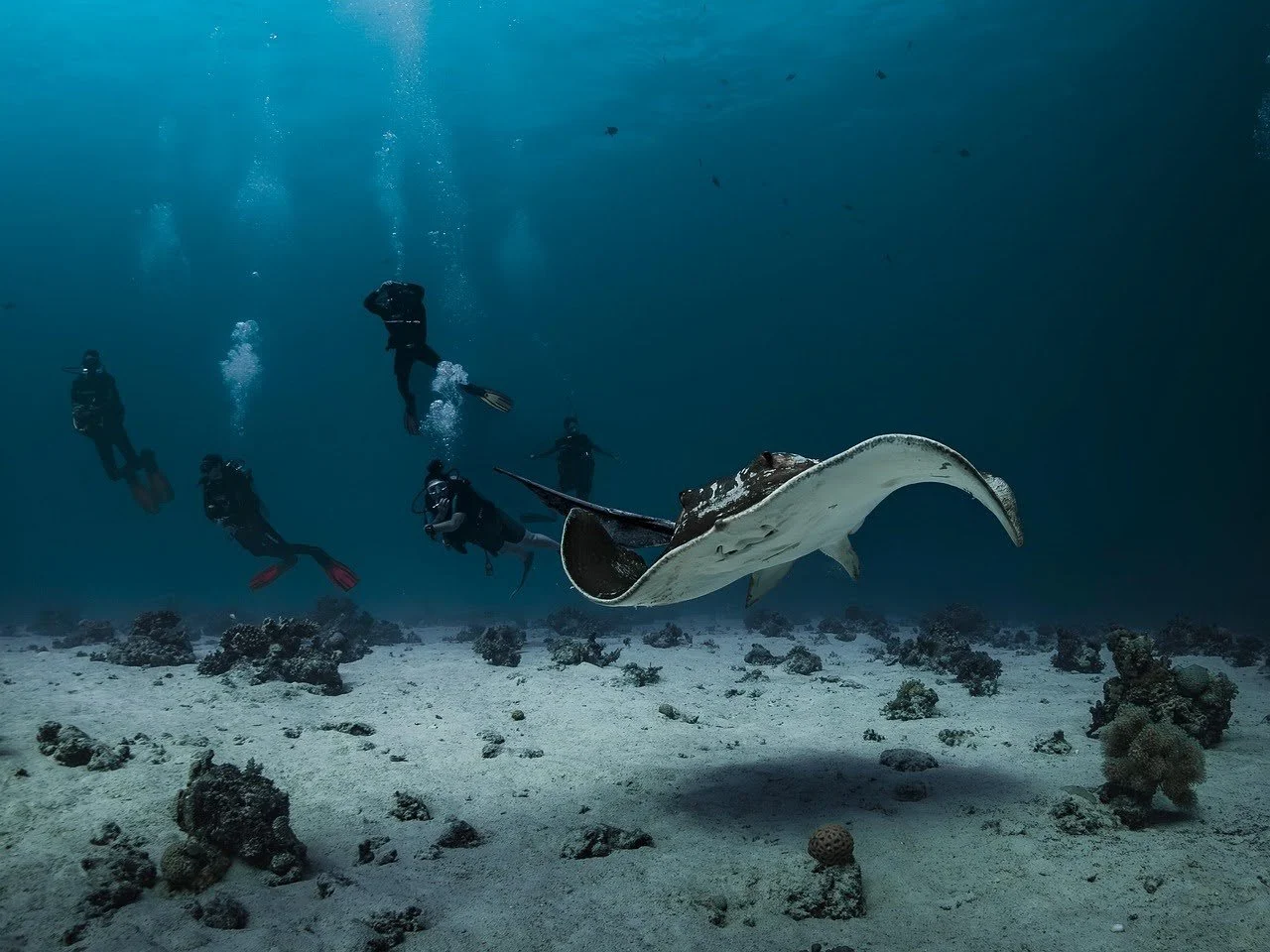
Feathertail rays in the Red Sea. Franziska Stier. Pixabay.

Stretching along the western shore of the Gulf of Aqaba and the eastern coast of the mainland lies the Red Sea Riviera. With over 1,000 miles of shoreline and clear, warm waters, this spot is perfect for diving, where travelers can observe colorful coral reefs and exquisite marine life. The Red Sea features a world-class ecosystem of over 2,000 different fish species, and 10% of which can’t be found anywhere else in the world. There are also more than 300 coral species, making it a prime spot for dugongs, spinner dolphins and various sharks.

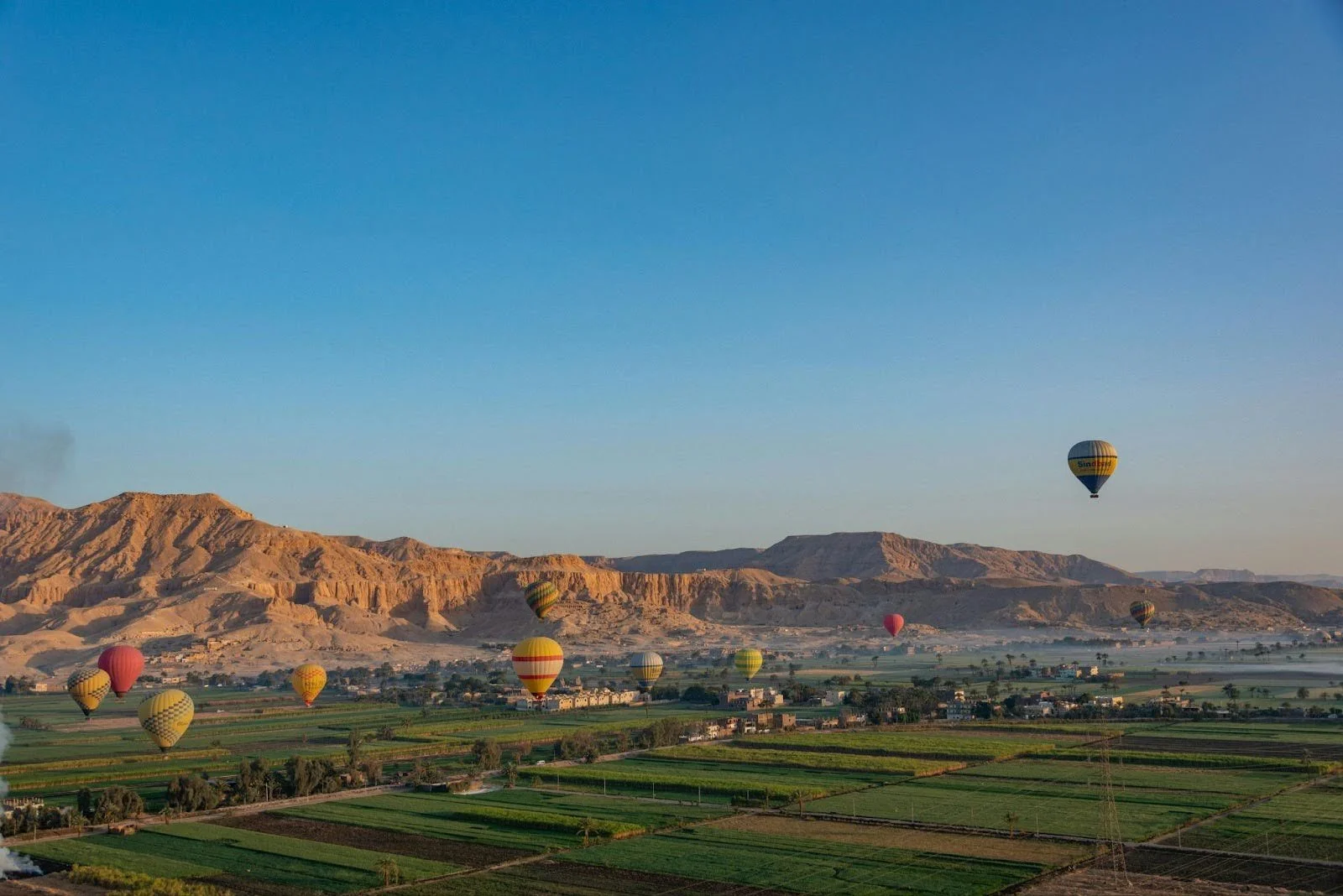
Hot air balloons in Luxor. Diego F. Parra. Pexels.

Luxor, Egypt, is renowned as the world's largest open-air museum, featuring extensive ancient Theban ruins, such as the Valley of the Kings, which contains the tomb of Tutankhamun. Visitors can also explore the city’s intricate temple complexes, like the Karnak and Luxor Temples. For a comprehensive perspective of the area, hot air balloon tours offer panoramic views of these historic sites.

Egyptian paella. koki_4ever. Pixabay.

Egyptian cuisine is characterized by flavorful dishes that prominently feature beans, legumes, rice and fresh herbs. Notable staples include koshari, which is a pasta, lentil and rice dish that serves as national street food, commonly consumed by students and office workers. Another significant dish is ful medames, a slow-cooked meal of mashed fava beans cooked in oil and spices, typically served with bread for breakfast. Both dishes are inexpensive, filling and widely available from street stalls and small local restaurants, making them an everyday option for a wide range of Egyptians.


Carson Jelinek


Carson is a 22 year old writer and filmmaker studying film and media productions at Arizona State University. His work explores travel, culture, and the people behind the places, with a focus on stories that encourage curiosity and global understanding.

How Drones are Protecting the Amazon

Carson Jelinek

With the Amazon nearing a critical ecological threshold, drones have emerged as innovative forest guardians.

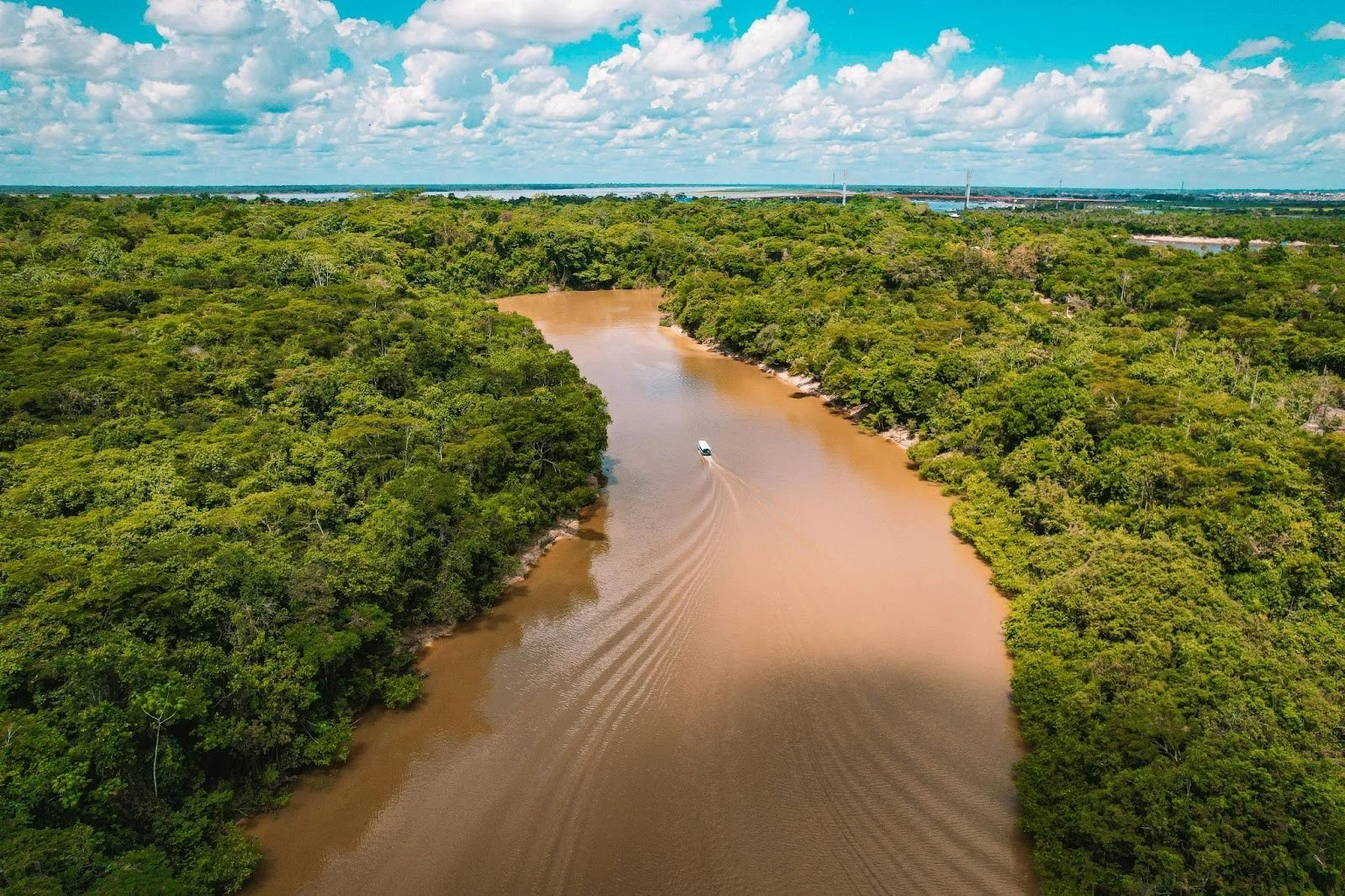
Amazon River. Nando Freitas. Pexels.

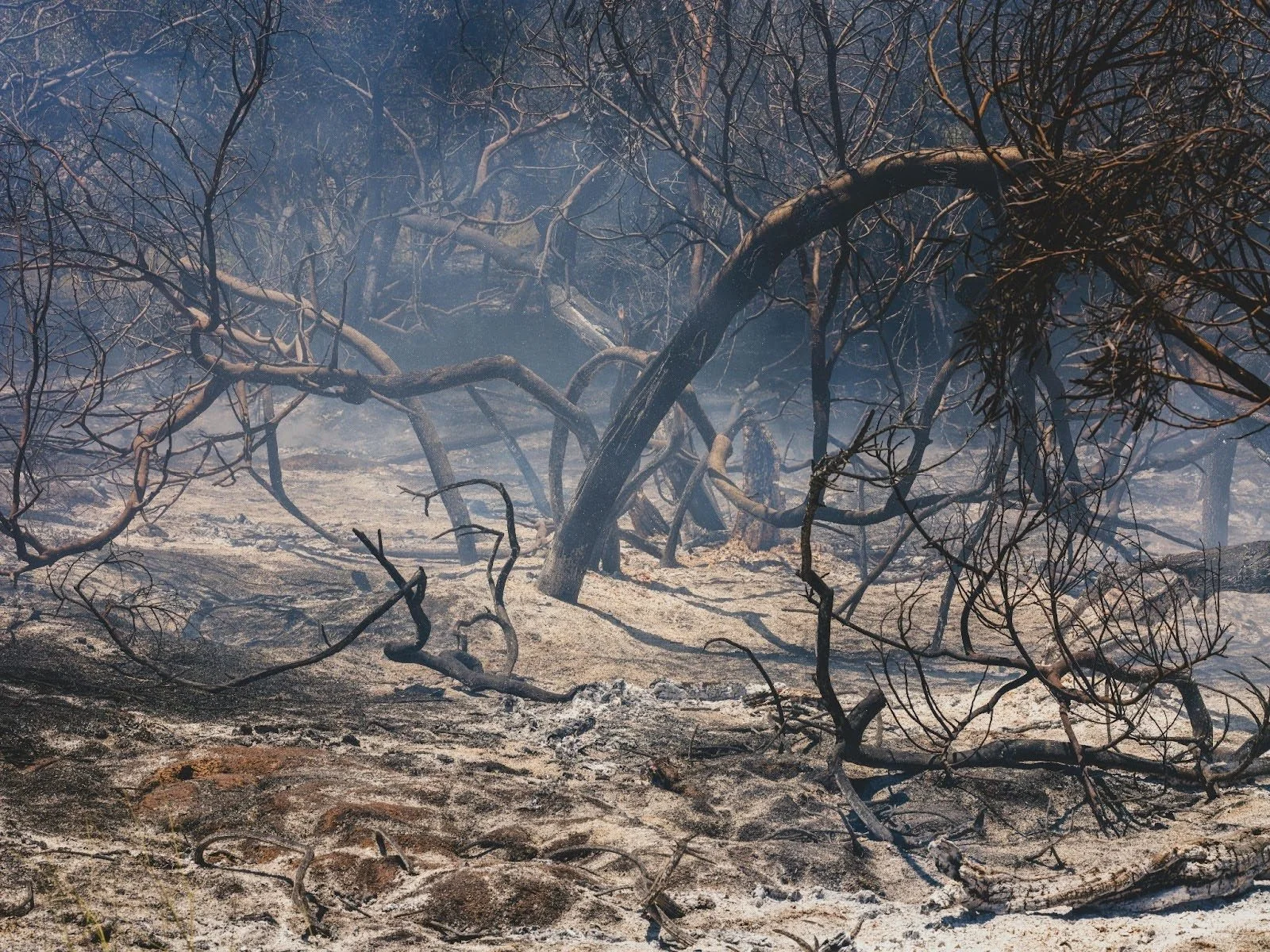
For 50 years, the Amazon Rainforest has experienced extensive deforestation due to illegal land grabbing, cattle ranching and agricultural expansion, particularly soy cultivation. There have been some signs of improvement, such as deforestation falling 30% at the end of 2024, but ultimately, activities have pushed the ecosystem to a critical tipping point. Illegal forest fires, for instance, increased in 2025, having been set to clear land and thus leaving the forest more vulnerable to future damage.

Aftermath of forest fire. Engin Akyurt. Pexels.

MORFO is a French-Brazilian climate tech startup working to restore ecosystems like the Amazon. The company operates in Rio de Janeiro, Brazil, and Montpellier, France, where they focus on science-based, nature-oriented solutions and reforestation led by drone imagery. The mission at MORFO is more than just planting trees; it is about making tropical forest restoration reliable, measurable and investible. The company currently has 24 ongoing projects and 2,000 hectares under active restoration with long-term monitoring and compliance.

DJI drone. ClickerHappy. CC0.

One of MORFO’s projects was an old gold mining site in the Amazon that had less than 1% vegetation cover at the start of their involvement. Local environmental authorities gave MORFO permission to help reforest the area, and now the site has reached 81% vegetation cover. The project, which started at about 10 hectares and has grown to nearly 100 hectares,  has demonstrated how technology can accelerate forest recovery alongside regulatory approval.

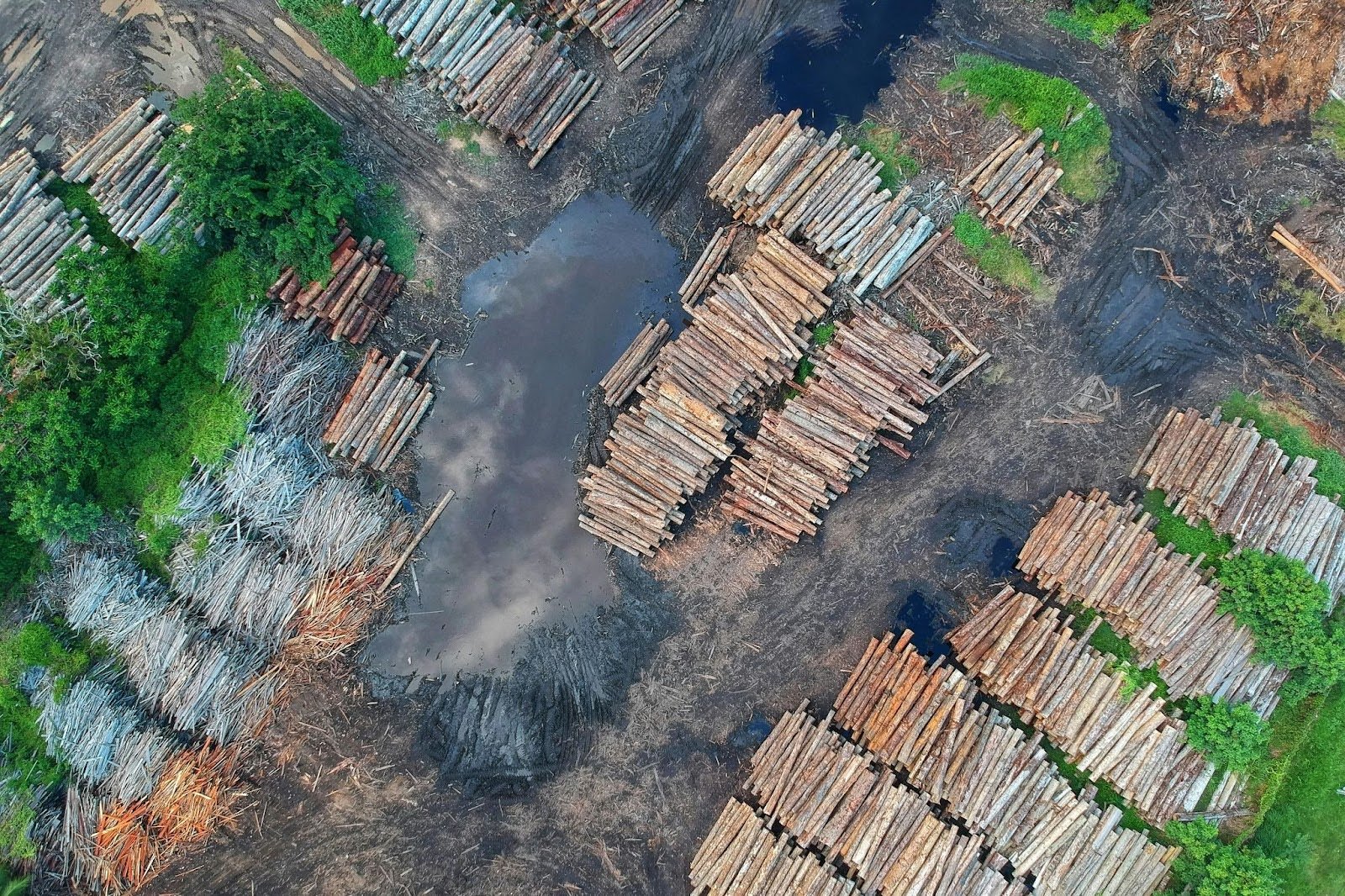
Woodpile. Pok Rie. Pexels.

Additionally, Indigenous groups are increasingly employing drones to monitor their territories and detect illegal logging or other potential threats. Members of the Uru-Eu-Wau-Wau tribe, for instance, have utilized drone technology to identify the deforestation of 200 hectares of their land. As a result of this surveillance, they successfully intervened to halt further deforestation. The implementation of drones within tribal communities has facilitated the development of technological skills among village members, with each village seeking to train at least seven individuals in drone operation.

GET INVOLVED:

WWF Brazil and the Kaninde Association of Ethno-Environmental Protection: WWF has helped train Indigenous youth, including the Uru-Eu-Wau-Wau tribe, to use drones for patrolling. 

Rainforest Foundation US: Donate to support Rainforest US and their working directly with Indigenous peoples, where technicians analyze high-resolution aerial images, GPS data and videos to detect illegal land clearing.
MORFO: Check out MORFO’s website to learn more about their organization, as well as other activities they do.


Carson Jelinek

Carson is a 22 year old writer and filmmaker studying film and media productions at Arizona State University. His work explores travel, culture, and the people behind the places, with a focus on stories that encourage curiosity and global understanding.

Do Greenlanders Really Need Saving?

Salome Liptak

Trump's continued pursuit of annexing Greenland has complicated international discussions of the territory's relationship with Denmark.

Protester holding Greenland’s flag. Peter Platou. Pexels.

Greenland, the autonomous territory of Denmark that is home to about 56,000 people, has been the subject of international debate during the second Trump administration. Trump first expressed interest in purchasing Greenland from Denmark in 2019, but now he has escalated to threats of tariffs against Denmark and its European allies, as well as military action against Greenland. 

Greenland has had its own parliament for domestic governance since the 1979 Home Rule Act, and it achieved self-rule in 2009, when legislation outlining Denmark’s legal pathway to voluntary independence was passed. Current polls show that Greenlanders hope to utilize this pathway to complete independence from Denmark, but Greenland’s vast, remote landscape and low population make economic independence presently impossible. This is also a major factor for the healthcare access issues that concern Greenlanders of all viewpoints, since the most remote community clinics are typically understaffed and underresourced.

Several European leaders have expressed their disapproval of Trump’s threats and emphasized their solidarity with Greenland against foreign intervention. Greenland’s unique status as a territory has required careful wording when defending the island’s right to self-determination, including U.K. Prime Minister Keir Starmer’s affirmation that “the future of Greenland is for the people of Greenland and the Kingdom of Denmark alone.” French President Emmanuel Macron made a similar statement, choosing to affirm Greenlanders’ sovereignty while speaking in Indigenous Greenlandic.

Greenland’s post-colonial relationship with Denmark, as is true for many Indigenous groups around the world, remains complicated. Greenland, whose population is majority Inuit, bears several national wounds from Danish colonial rule, which only ended in 1953. These include social experiments that separated Inuit children from their families and put them in Danish foster families to assimilate in 1951, as well as the forced sterilization of Inuit women throughout the 1960s. While Denmark has made strides toward reparations with public apologies and payouts for those involved, this painful history has left its mark, and systemic discrimination continues to be an issue in Greenland’s healthcare, education and social services, all of which are funded by Denmark.

Trump’s current push to annex Greenland has taken a different tone than that of his first term, utilizing the Kingdom of Denmark's present sovereignty over Greenland to justify U.S. intervention. On Truth Social, he announced his plan to send the U.S. hospital ship USNS Mercy to Greenland “to take care of the many people who are sick, and not being taken care of there.” The post’s unsubstantiated claim, along with its AI-generated image of the Mercy, caused widespread confusion. It appears this plan may have originated with Jorgen Boassen, a Greenlandic Trump supporter who has been vocal about issues of healthcare access in Greenland’s rural clinics. In response, Greenland’s Prime Minister, Jens-Frederik Nielsen, noted that Greenland currently has a “public healthcare system where treatment is free for citizens,” providing more access to services than the current U.S. healthcare system, despite being flawed.

This new attempt at a humanitarian claim to Greenland only further complicates international discourse on Greenland’s sovereignty. For the majority of Greenlanders who oppose American acquisition of Greenland, Trump's threats of intervention on their behalf have only increased the obstacles they face in establishing independence, as they are reliant on Denmark for defense; if Greenland were to leave the realm of Denmark, it would likely be unable to defend itself from unwanted intervention. Many Greenlanders have expressed humor at the ironic effect Trump’s actions have taken, such as one viral video from the Danish public broadcast DRP3, where a man tells the camera, “Yes, Mr. President! You are a true peacemaker. Because your threats have actually brought Denmark and Greenland closer together than ever!”

While Denmark’s control leaves much to be desired for many Greenlanders and complete sovereignty remains a political goal, it is clear that intervention from Trump is both unwarranted under international legal norms and unwanted by the majority of Greenlanders.

Salomé Liptak

Salomé is a student at Sarah Lawrence College studying literature and writing. She is passionate about storytelling (both true and fictional) and its power to reflect the world as it is, or imagine what could be.
The Unflattering Truth of Asian Women’s Fetishization

Claire Park

The fetishization of Asian women is a reinforcement of the late 19th century’s imperialistic practices and mindsets, stripping them of their individuality and complexity.

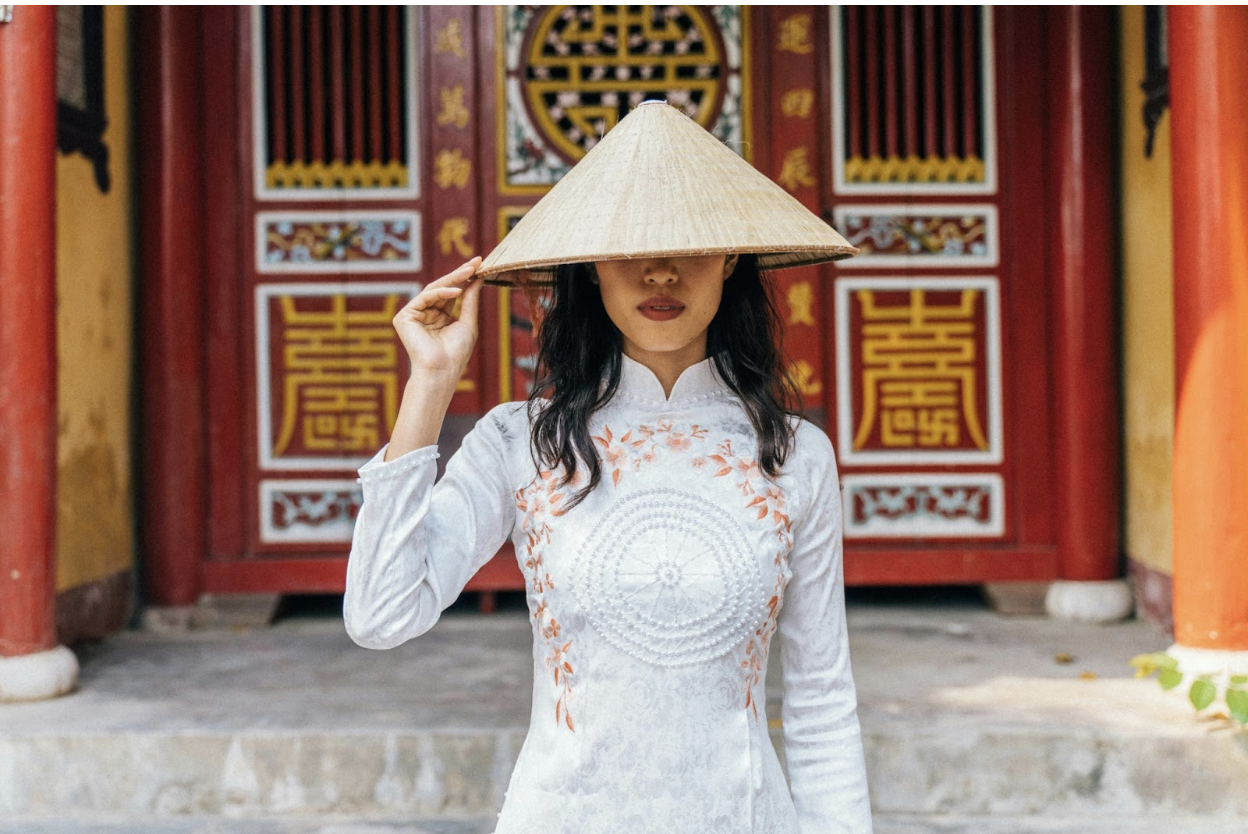
Asian woman in traditional Vietnamese dress. Anna Tarazevich. Pexels.

During the early to mid-20th century, in the midst of Western imperialism, the United States’ formal occupations of Asia left many soldiers leveraging their domination of a more specific subject: Asian women. When white soldiers arrived in countries like Japan and Vietnam with Western beliefs of supremacy, they viewed the local women as weak, submissive and demure individuals who could easily be controlled. With the plight, despair and poverty of the wars, namely World War II and the Vietnam War, this representation materialized in the form of sex and prostitution, with Asian women’s “submissiveness” catering to soldiers’ needs for outlets of rest and recreation. The rape and degradation of these women birthed the symbol of Asian women being hypersexual, docile playthings, subservient to white superiority. 

As soldiers made their way back to America, they brought this fantasized Orientalism with them. These characterizations of Asian women as sexually compliant have since been reinforced through contemporary arts, literature and media. Novels like “Madame Chrysantheme” and stage productions such as “M. Butterfly” and “Miss Saigon” have perpetuated the stereotype of Asian women as mere objects dependent on white males for validation and existing only for sex. These “love” stories have romanticized the idea of forced prostitution, the struggle of Asian people during times of war and the white-savior story. Alternatively, other media, such as the film “Kill Bill,” have used Asian women’s alluring foreignness to establish the Dragon Lady stereotype, portraying them as mysterious and dangerous figures who tempt men for their own gain.

The recent popularity of anime in the West often appeals to large male audiences by combining both of these racialized stereotypes of meekness and enticement. While some female anime characters may be powerful heroines, a good portion of them are scantily clad with youthful, childlike features, which undermines those more optimal portrayals and exalts the objectification, hypersexuality and infantilization of Asian women. This depiction is not only harmful to Asian women and their perceptions of self but also completely disrespects Japanese and Asian culture by bastardizing it.

The misrepresentation of Asian women, their racial characteristics and their stories crafted through the Western gaze has conditioned people to view them as a type of fantasy rather than as individuals. While it may initially feel flattering to be desired for certain attributes one possesses, this fetishized attraction is rooted in a longstanding power imbalance, denying Asian women complexity and respect. The development and promotion of the acquiescent yet provocative racial label for Asian women has not only created external harm through harassment but has also fostered an internal pressure to perform a certain kind of sexuality or look a certain way. 

 Many Asian women feel othered with this emphasis on their “exotic” qualities. The constant questioning of how they’re perceived and the historical and media evidence confirming that they’re valued for certain racial traits rather than who they are as a whole person can deeply affect how they understand their self-worth. Moreover, Asian women’s racial and sexual objectification has been linked to health issues related to body image and eating disorders in pursuit of fitting the petite litheness associated with the idealized Asian woman. These uncertainties and pressures are not only harmful to Asian women’s self-esteem but also inhibit the development of their sense of self, at times making them resort to alignment with the fetishization in order to feel safe and accepted. 

While the fetishization of Asian women has persisted and evolved, actively working toward dismantling its enablement starts with education. Rather than accepting racial misrepresentations as something entrenched in society, media portrayals and their origins should be questioned, individuals should examine personal biases and Asian voices should be central in storytelling. In doing so, the authenticity and individuality of Asian women as people can finally be championed.

Claire Park

Claire Park is a sophomore at the University of California, Berkeley, studying English and Media Studies with a minor in Music. Her experience writing lifestyle content for UC Berkeley's The Daily Californian newspaper has inspired her to expand her scope to the realm of travel, pursuing her aspirations of becoming a travel journalist. When not writing, Claire can be found singing, reading romance books, journaling at the beach, or acquiring a sweet, caffeinated beverage.

Cuba’s Oil Shock Is Becoming a Human Crisis

Carol Khorramchahi

As fuel dries up and shortages deepen, Cuba’s state of crisis is becoming impossible to ignore.

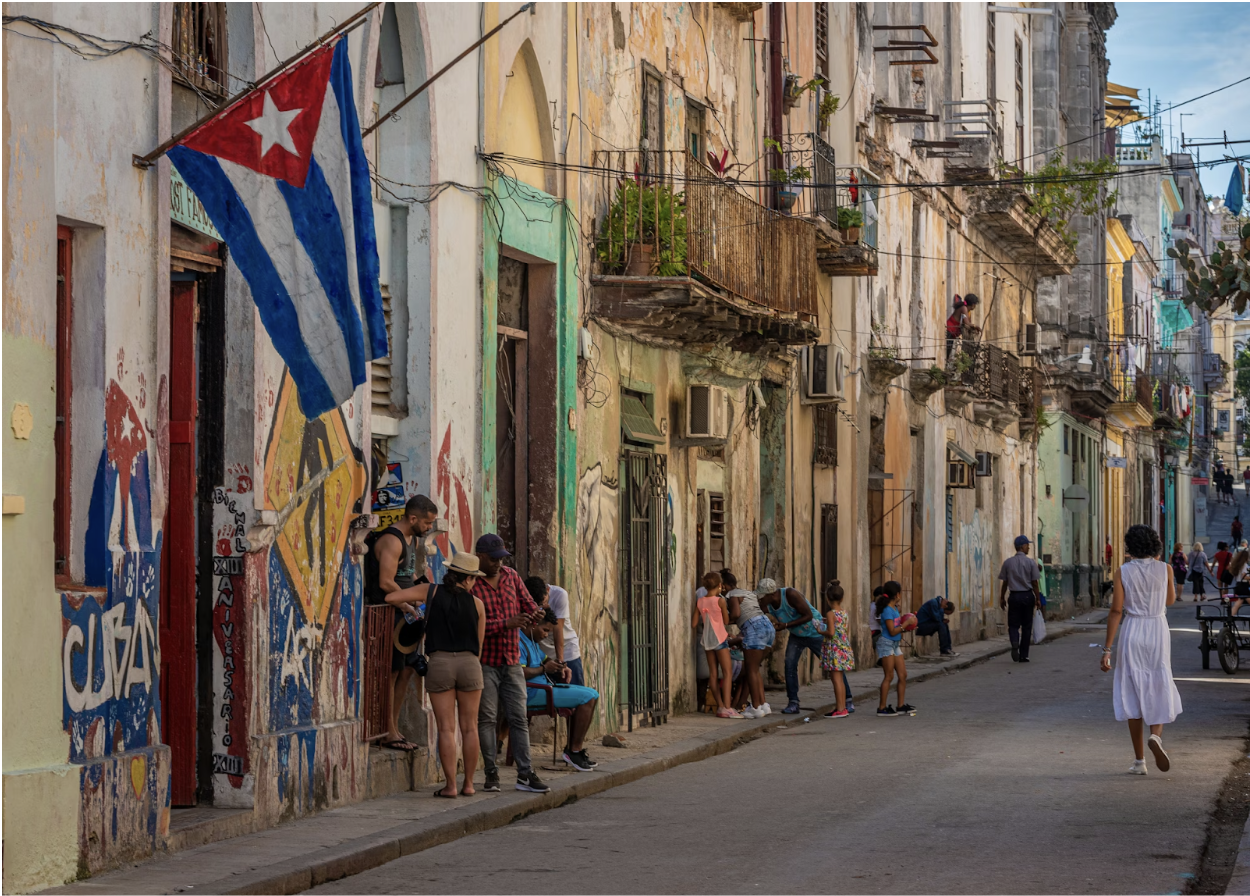
Pedestrians on a Havana street. JF Martin. Unsplash.

Cuba is back in the news this week after a violent episode at sea. On Feb. 25, 2026, Cuban authorities said they killed four exiles and wounded another six when a Florida-registered speedboat entered Cuban waters and opened fire on a patrol. U.S. officials said no American government personnel were involved and promised an investigation. But the boat story, dramatic as it is, sits on top of a much larger crisis: daily life in Cuba has been unraveling under fuel shortages, blackouts and a growing lack of food and medicine.

To understand why, one can look toward the oil industry. For more than 25 years, Venezuela was Cuba’s main external fuel lifeline. Reuters reported that in 2025, Venezuela supplied about 26,500 barrels of oil per day, which is about one-third of Cuba’s daily needs. That relationship was especially significant because Cuba does not produce or refine enough fuel to cover demand on its own. When U.S. pressure cut into Venezuelan shipments, the result was not abstract geopolitics; it was fewer buses, less electricity and harder choices about which parts of daily life could keep running.

That is what makes the current moment more than just another sanctions story. On Feb. 12, U.N. human rights experts condemned Washington’s new fuel restrictions, warning that interfering with fuel imports may trigger “a severe humanitarian crisis” and damage essential services. Cuba’s government has already announced fuel-saving measures to protect sectors like water, education, agriculture and healthcare. The country can meet only about 40% of its fuel needs domestically, leaving it deeply exposed when imports are disrupted.

The healthcare system shows the human cost most clearly. Cuba was long known for its strong public health and for frequently sending doctors abroad, but that image of expertise is colliding with today’s shortages. In a recent BMJ report, physician Tania Maria Cruz Hernandez said there is now a shortage of doctors, nurses and technicians, along with half of the country’s basic medicines and essential medical supplies. Cuban health officials also say that fuel shortages are leaving hospitals without reliable ambulance service and complicating the transport of critical supplies.

That is the question hanging over the current crisis: what exactly is the United States’ goal? Washington says its measures are aimed at the Cuban government, not ordinary people, and the Treasury has now said companies may resell Venezuelan oil to Cuba’s private sector under narrow conditions. But the gap between official intent and daily reality is hard to ignore when flights are canceled for lack of aviation fuel, hospitals struggle to stay open and other countries are shipping emergency food aid.

The speedboat incident may dominate headlines for a day or two. But the more important story is slower and less cinematic: a country where shortages shape nearly every decision, and where the pressure of sanctions is felt not only by the state but by families trying to find transportation, medicine, electricity and a workable future.

GET INVOLVED:

Follow humanitarian updates from the U.N. Human Rights Office, track public-health reporting through the BMJ and support relief work through U.N. agencies responding to Cuba’s shortages, including the World Food Programme and UNICEF.

Carol Khorramchahi

Carol Khorramchahi is a student at Boston University, where she studies English and Psychology and minors in Journalism. She enjoys writing and reporting on stories that bring together culture, identity, and community, and has experience in both newsroom reporting and digital media. She is especially interested in thoughtful storytelling with a global lens.

How Rats are Combating Cambodia’s Mine Crisis

Ryan Yianni

On the outskirts of Siem Reap, rats are leading the fight against landmines in one of the world’s most affected countries.

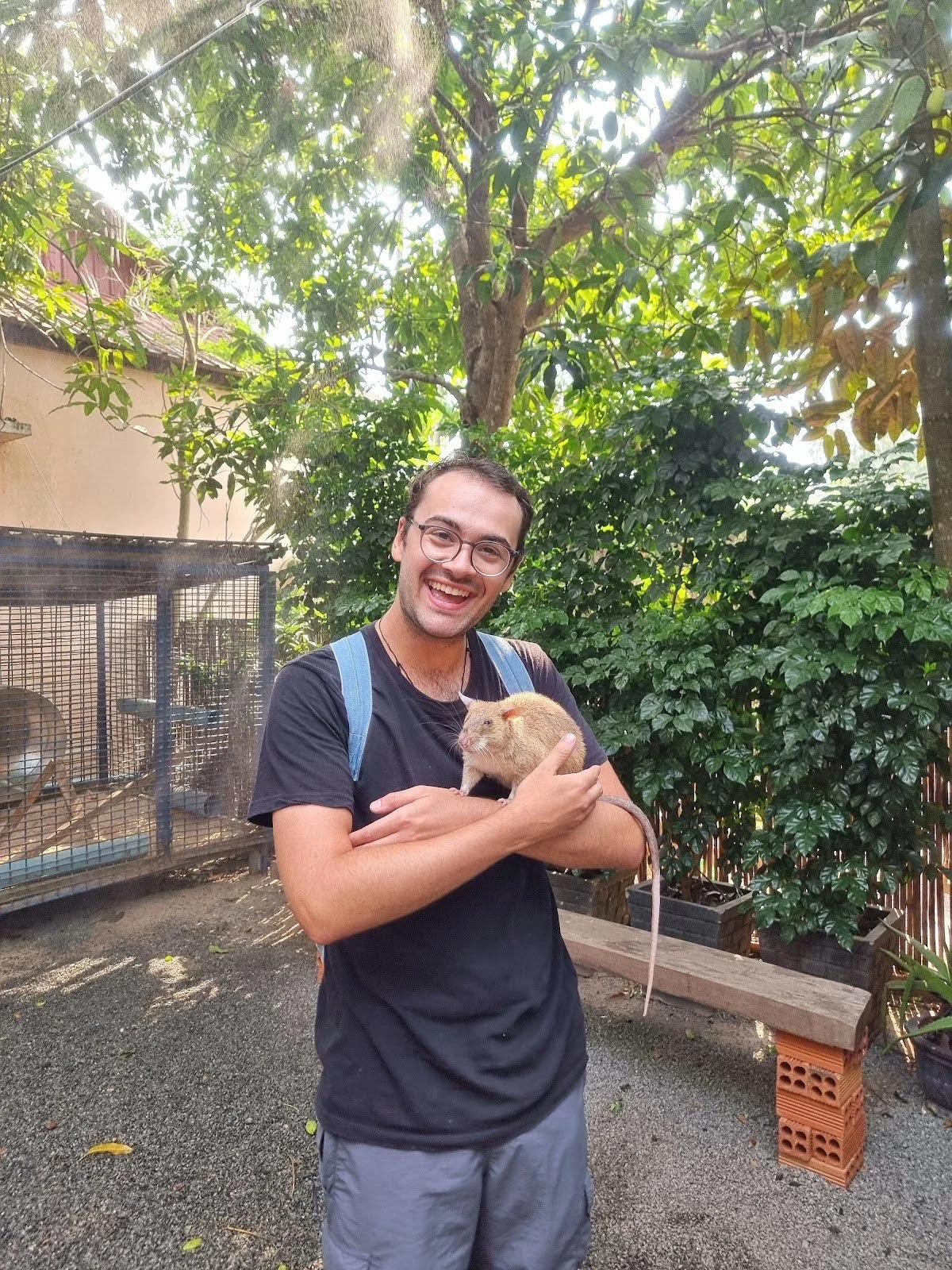
Author pictured with Glen the HeroRAT. Ryan Yianni.

“Once you’ve been to Cambodia, you’ll never stop wanting to beat Henry Kissinger to death with your bare hands.” 

One of the late Anthony Bourdain’s most recognizable quotes centers on the role the U.S. played in the devastation of the mine-infested Southeast Asian country during the Vietnam and Cambodian Civil Wars. Cambodia’s natural beauty, plethora of breathtaking temples and numerous UNESCO World Heritage sites are overshadowed by its dark history of authoritarianism and genocide under Pol Pot and the Khmer Rouge. Perhaps there is no greater evidence of the past’s lingering effect on the nation than the estimated 6 million mines still littered across Cambodia, which claimed the lives of 12 people in 2024, along with another 29 casualties and eight amputations. During my visit to the country in March 2025, I was able to seeAPOPO’s visitor center, learning how one organization is working to clear these mines using a rather unconventional method: rats.

Cambodia has one of the highest rates of amputation in the world, with over 40,000 amputees since the outbreak of hostilities in the 1960s. Several sides are responsible for planting the explosives that have caused these casualties; the Americans dropped nearly 3 million tons of ordnance between 1965 and 1973, the Khmer Rouge, under Pot, laid an estimated 4 million to 6 million landmines and other munitions, and the government of the People’s Republic of Kampuchea, a satellite state of Vietnam, planted mines along the entirety of the Cambodia-Thailand border after the Rouge’s overthrowal. There are a number of organizations working to remove the remaining unexploded ordnance (UXO) in Cambodia, such as the HALO Trust, Mines Advisory Group and Cambodian Self Help Demining, all doing valuable work. One notable group is APOPO, which stands out for its innovative use of rats as a mine action solution.

APOPO is a Belgian NGO that trains southern giant pouched rats, dubbed HeroRATs, and survey dogs to detect landmines and tuberculosis. Founded in 1997 by Bart Weetjens, who discovered a publication in which gerbils were used for scent detection, APOPO began training rats in 1998 with funding from the Belgian government before relocating their headquarters to Tanzania in 2000, where they are still based. Having gathered enough evidence that the rats would be effective, they carried out their first trials in 2003, with all twenty landmines successfully found. Achieving operational accreditation in 2004, the group officially launched its HeroRAT campaign the following year before beginning its operations in 2006, tackling mine-clearance procedures in Mozambique. They partnered with the Cambodian Mine Action Center in 2014, with the first group of HeroRATs arriving in 2015. As of 2026, they operate in Angola, Azerbaijan, Cambodia and Ukraine, and they have cleared over 170,000 mines from over 132 million square meters of land. Their work so far in Cambodia has seen them clear over 8,000 landmines and nearly 43,000 pieces of UXO, such as bombs, shells and other munitions that failed to detonate, returning over 75 million square meters of land to local communities. At APOPO’s visitor center in Siem Reap, you can learn firsthand about the work they do in helping clear Cambodia of mines and overcome the traumas of the country’s past.

The visitor center provides tours every day from 8:30 a.m. to 4:30 p.m. Each tour lasts approximately one hour, and tickets can be purchased on arrival or in advance on their website. I arrived at the center in the afternoon after a ten-minute tuk-tuk ride from the core of Siem Reap. Conveniently, the center is also located near Angkor Wat, making the temple a perfect addition to your travel itinerary (plus, they have a cafe on site and make a great mango smoothie). On my visit to the APOPO center, having gone later in the day, I was able to enjoy fewer crowds, followed by a beautiful sunset at Angkor Wat. Most people go to the center in the morning before heading to Angkor Wat during the day, as you can’t go past the main gates of the temple after 5 p.m. 

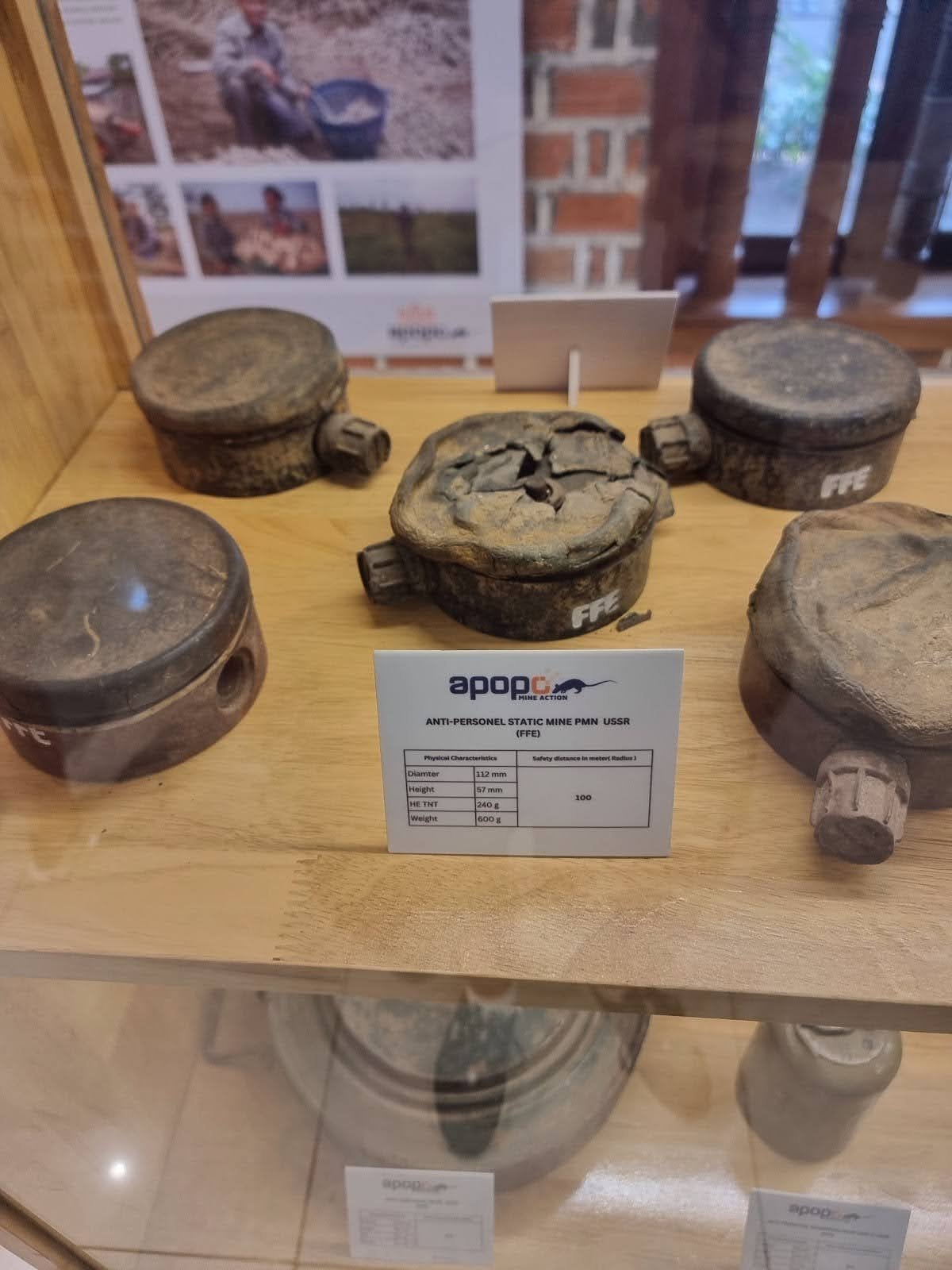
At the start of the tour, you’ll be shown a video contextualizing the scale of the mine issue in Cambodia and explaining the work that APOPO does to clear UXO. Then you will be able to look through the center at the displays of cleared explosives before heading out to the demonstration zone, where you finally meet the stars of the show: the HeroRATs.

Recovered explosives housed in the APOPO Visitor Center. Ryan Yianni

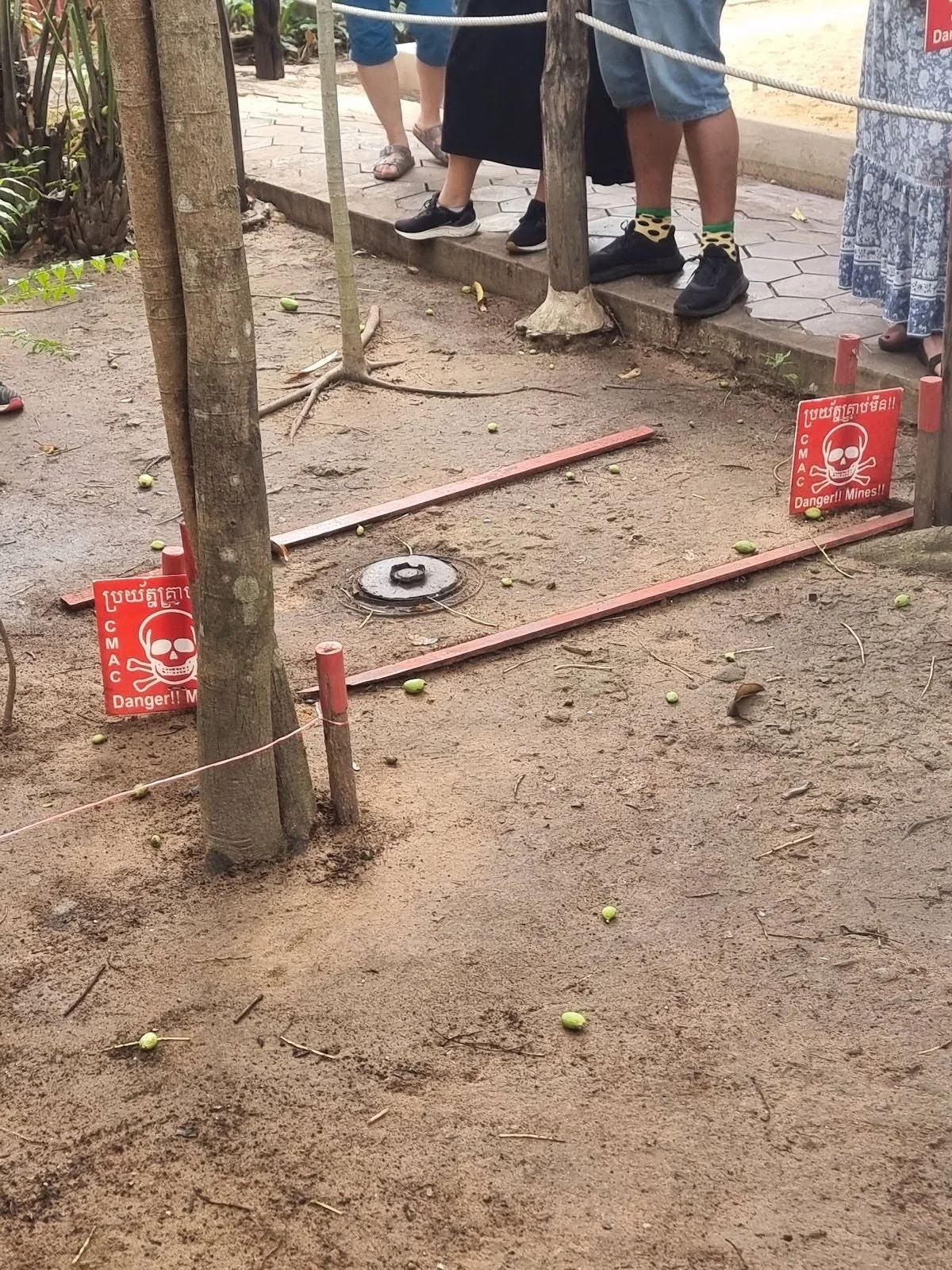
Once outside, you get an up-close and personal interaction with the rats, even being able to hold one of them. Here, I learned that the rats are trained with a click toy to encourage them to hunt before they are introduced to the TNT scent. The weight of the rats allows them to detect mines without setting them off, and the speed at which they can locate the scents makes for an efficient way to clear large swathes of land. The rats are much quicker and safer than humans ever could be; once fully trained, they can clear an area the size of a tennis court in 30 minutes. To put that into perspective, it would take a human using a metal detector four days to clear an area this size. At the center, you will also get to see a reenactment of how they scan for TNT, with defused mines laid out in the demonstration zone for the rats to sniff and detect.

Demonstration area in APOPO Visitor Center. Ryan Yianni.

Undoubtedly, the hero and poster boy of the APOPO mission is Ronin, who in 2024 was awarded a Guinness World Record for being the most successful Mine Detection Rat in history, having detected 109 landmines and 15 items of UXO in Cambodia. Unfortunately, during the production of this article, APOPO announced that Ronin had passed away after suffering health complications. There is still a whole team of HeroRATs stationed in Cambodia, with 24 new rats arriving from their training base in Mozambique in October 2025.

APOPO is a brilliant organization working hard to remove landmines and UXO from the Cambodian countryside and beyond. They strive to make the world a safer place and help countries move past their dark histories, and having recently celebrated 10 years of operations in Cambodia, they’re showing no signs of slowing down in their mission to help the country become completely mine-free. Taking a trip to APOPO’s visitor center is especially enlightening when taking in the context of some of Siem Reap’s other important historical sites, such as the genocide museum and the killing fields. Visiting will give you a raw, unfiltered look into the horrors of the Pol Pot regime and an appreciation for Cambodia’s emergence from the dark history it is still facing the consequences of.

GET INVOLVED:
If you would like to support APOPO’s work, you can do so here.

Ryan Yianni

Europe’s TikTok Crackdown

Carol Khorramchahi

As European leaders push age limits and tougher platform rules, the debate is no longer whether social media affects teens but rather what lawmakers should do about it.

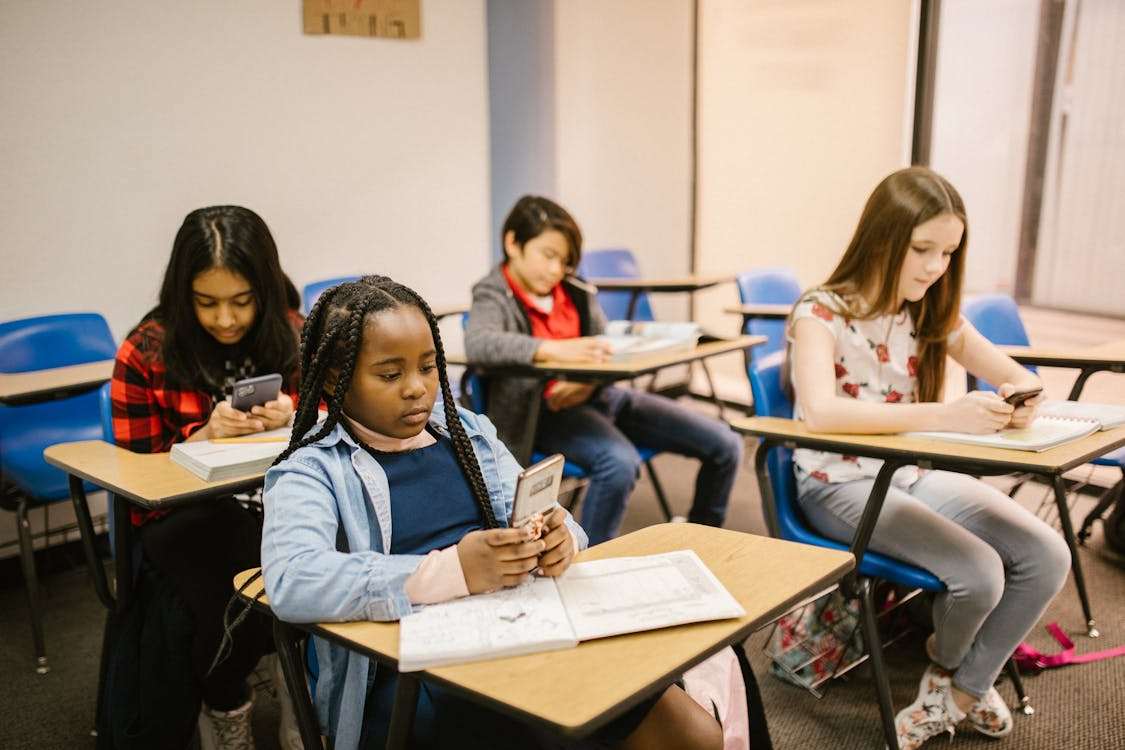
Students using smartphones in classroom. RDNE Stock project. Pexels.

In Europe, the debate over teen social media use is moving fast. What used to sound like a parenting argument about how much screen time is too much is increasingly becoming a policy fight over age limits, platform design and whether companies should be legally forced to protect minors. Recent proposals in countries including Spain, Greece, France, Britain and Germany show how quickly governments are hardening their approaches to apps like TikTok and Instagram.

At the European Union level, lawmakers are pushing for a broader shift. In a November 2025 resolution, the European Parliament called for a harmonized digital minimum age of 16 for using social media, AI companions and video-sharing platforms while still allowing access for ages 13 to 16 with parental consent. The resolution is not legally binding, but it signals where the political momentum is heading: less focus on individual parental controls and more focus on rules that platforms must follow.

Germany is one of the clearest examples of that momentum. Reuters reported on Feb. 21, 2026, that Germany’s ruling conservatives backed a motion to ban social media use for children under 14, push stricter digital age verification for teenagers and support fines for platforms that fail to enforce limits. That does not mean a nationwide ban will happen immediately, as Germany’s federal system makes media regulation more complicated, but it shows how mainstream these proposals have become.

This is also why Australia keeps coming up in the European debate. Julie Inman Grant, Australia’s eSafety Commissioner, says age-restricted platforms must now take “reasonable steps” to prevent under-16s from creating or keeping accounts, and platforms can face major penalties if they fail to comply. The model matters because it shifts the burden from parents and kids to tech companies, which is exactly the direction many European policymakers now favor.

Still, the move is not without criticism. Professor Sonia Livingstone at the London School of Economics and Political Science argues that governments should be cautious and build better evidence before rushing into broad bans. That tension is at the center of the story; many officials believe action is overdue, while researchers and rights advocates warn that blunt bans may create new problems, including privacy concerns around age verification and weaker oversight if teens move to less-regulated spaces.

For parents, the practical takeaway is simple. The conversation is no longer just about family rules at home. Across Europe, governments are now asking whether social media platforms should be treated more like products with age restrictions and if companies, not families, should be held responsible when those safeguards fail.

GET INVOLVED:

Learn more about youth online safety policy through the European Parliament’s digital policy coverage, follow implementation updates through Australia’s eSafety Commissioner social media age restrictions page and read research-based perspectives on children’s digital rights from the London School of Economics’ Media@LSE.

Carol Khorramchahi

Carol Khorramchahi is a student at Boston University, where she studies English and Psychology and minors in Journalism. She enjoys writing and reporting on stories that bring together culture, identity, and community, and has experience in both newsroom reporting and digital media. She is especially interested in thoughtful storytelling with a global lens.