
Carol Khorramchahi
As sea levels rise, coastal communities around the globe are relocating before disaster forces them out, raising difficult questions about home, rights and what safety really means.
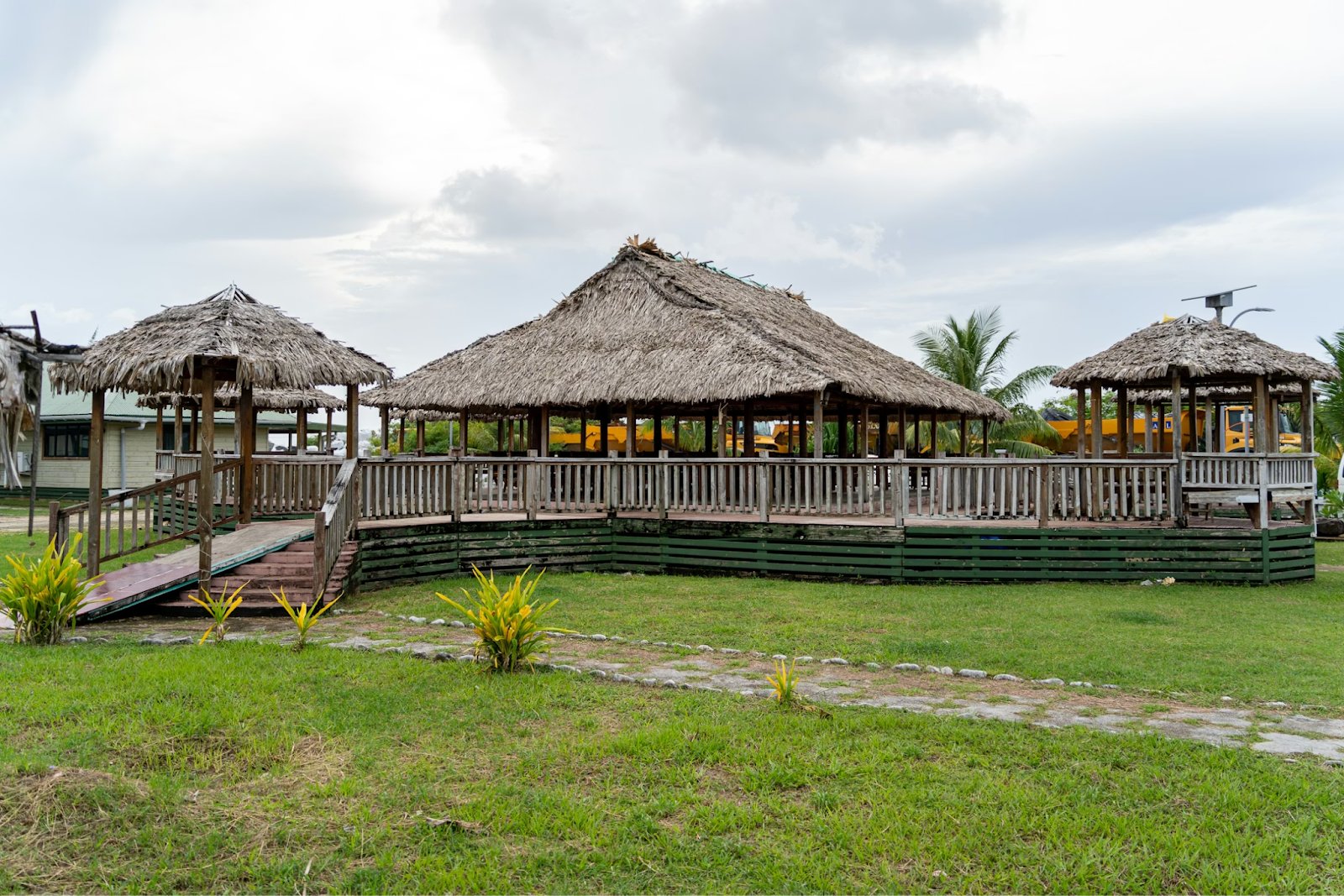
Thatched huts in Funafuti, Tuvalu. Winston Chen. Unsplash.
On low-lying Pacific islands, rising sea levels don’t always make themselves known with a dramatic storm. Sometimes the ocean shows up as a high tide that reaches farther inland than it used to, flooding roads and pushing saltwater into freshwater supplies. In places like Tuvalu and Kiribati, where much of the land sits only a few feet above sea level, these slow changes pose an urgent question: what happens when staying becomes unsafe?
A growing number of governments are responding with planned relocation, deciding to move communities before a crisis decides for them. UNHCR, the U.N. Refugee Agency, notes that climate-related movement can take different forms, including migration, displacement and planned relocation, depending on how much choice people have.
Ensuring this choice is essential. When families are forced out after a disaster, moves can be chaotic and permanent. Planned relocation is an attempt to move earlier and with support, so people aren’t scattered or trapped in temporary shelter for years. But planning doesn’t guarantee fairness. At a 2024 U.N. Human Rights Council side event, Costa Rica’s Permanent Representative, Christian Guillermet Fernandez, said that planned relocations must ensure “dignity, fairness and respect for everyone affected.”
Tuvalu has become a symbol of what orderly pathways can look like. Under the Australia-Tuvalu Falepili Union, Australia created a climate-linked visa pathway that offers legal stability, even with an annual cap. On June 29, 2025, Reuters reported that more than one-third of Tuvalu’s population had applied. The demand makes the message clear: people will choose a structured route when one exists.
Kiribati has pushed a similar idea for years. In a 2014 interview with Radio New Zealand, then President Anote Tong argued that Kiribati’s people did not want to leave “as refugees” but “as skilled, people with dignity.” It’s a line that captures what’s at stake. Relocation isn’t only about safety; it’s about agency, identity and the ability to build a future rather than flee a collapse.
This story isn’t limited to islands. In densely populated deltas like Bangladesh, rising seas and saltwater intrusion can damage farmland and threaten drinking water, putting large numbers of people’s livelihoods at risk. Even when higher ground exists, relocating at scale means planning for work, schools, healthcare and transport, because a “safe” new location that can’t support daily life is not a solution.
Planned relocation should not still be treated like a niche climate topic. It’s one of the clearest signs that climate change is becoming a crisis for any place where life is possible, determining whether people get to make real choices about their stability or act only after everything falls apart.
GET INVOLVED:
Follow guidance on climate displacement through UNHCR, track global displacement data via the Internal Displacement Monitoring Centre, and learn about rights-based relocation through the Platform on Disaster Displacement.

Carol Khorramchahi
Carol Khorramchahi is a student at Boston University, where she studies English and Psychology and minors in Journalism. She enjoys writing and reporting on stories that bring together culture, identity, and community, and has experience in both newsroom reporting and digital media. She is especially interested in thoughtful storytelling with a global lens.