
When internationally renowned Haida carver Robert Davidson was only 22 years old, he carved the first new totem pole on British Columbia’s Haida Gwaii in almost a century. On the 50th anniversary of the pole’s raising, Haida filmmaker Christopher Auchter steps easily through history to revisit that day in August 1969, when the entire village of Old Massett gathered to celebrate the event that would signal the rebirth of the Haida spirit.
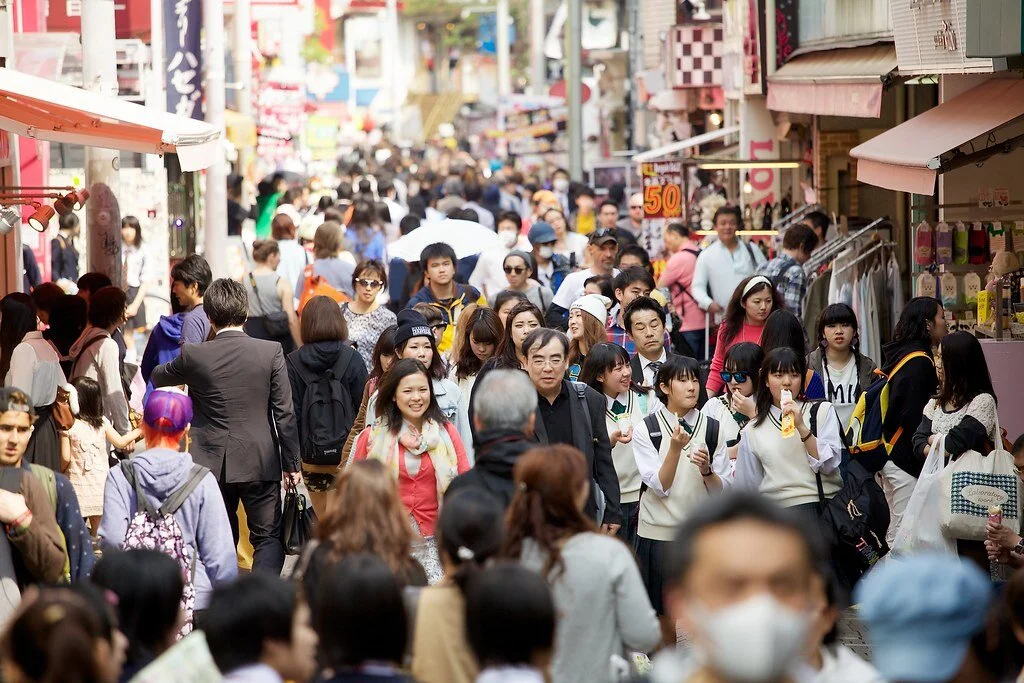
Harajuku, Japan. SkandyQC. CC BY-NC-ND 2.0
Why Fertility Rates Could Halve by 2100
The global population growth rate is predicted to take a drastic downward turn, with experts believing that major countries such as Japan and Italy will see their populations halve by 2100. This is an unprecedented problem that could negatively impact society as a whole if the trend continues. The necessity for the world to plan and prepare for this outcome has become increasingly clear as global trends solidify.
Why the Sudden ‘Baby Bust’?
In the 1950s, women were having an average of about 4.7 children in their life span. In today’s world, women are instead averaging 2.4. The causes for this turnaround include increased educational opportunities, greater numbers of women in the workforce and increased access to contraceptives. There seems to have been an attitude change toward parenthood in recent years. In more developed countries, the roles of women have turned in favor of being outside the home, leaving less time for children. This contrasts starkly with historical norms, where women stayed home to take care of the family and house while men left to go to work.
What Are the Global Consequences?
While an initial evaluation might suggest that a smaller population would be better for the environment, professor Christopher Murray of the University of Washington suggests that this would lead to an “inverted social structure” where there are more older people than young. This raises questions about who will pay taxes and take care of the elderly. These are issues that the younger generations will have to worry about as they reach adulthood. “We’ll have to reorganize societies,” Murray says, in order to make current population trends sustainable.
The world’s changing population numbers could lead to a shift in the world’s dominant powers. For example, India is set to replace China as the world’s most populous country as China faces a population decline as soon as 2024. By 2100, India’s population would be followed by Nigeria’s, China’s and the United States’.
Why Nigeria?
As COVID-19 and other health challenges ravage developing countries, access to contraceptives and other family planning becomes limited. This leads to more pregnancies in places such as sub-Saharan Africa, which is set to “treble in size.” Africa’s forecast for rapid growth calls attention to the current social situation regarding racism, with Murray stating that “global recognition of the challenges around racism are going to be all the more critical if there are large numbers of people of African descent in many countries.”
This shift in global power is expected to create issues surrounding development, social status and racism. Especially in the current social environment, racism could become one of the largest issues if these predictions prove to be true.
What is Being Done to Prevent Population Decline?
Countries such as the United Kingdom have incentivized and increased migration. However, this is only a temporary fix as most countries begin to drop in population. Other countries have increased paid maternity and paternity leave, but have still seen few shifts toward larger families. Sweden has managed to “drag its rate from 1.7 to 1.9” while Singapore still has a rate of 1.3. Women simply cannot be expected to increase the number of children they have due to policy changes, and current trends show that this attempt will not be enough.
If the global reproductive rate drops to the predicted 1.7 by 2100, population extinction could become more of a legitimate concern. The 2.1 threshold, which is necessary to sustain the world’s current population, is instead being used as a target for future growth. Ultimately, though, young adults need to start planning for a future where society’s age makeup is inverted.

Elizabeth Misnick
is a Professional Writing and Rhetoric major at Baylor University. She grew up in a military family and lived in Europe for almost half her life, traveling and living in different countries. She hopes to continue writing professionally throughout her career and publish her writing in the future.

Protestors respond to the government's mismanagement and poor aid response with signs such as this one that reads "Clean Lebanon of Corruption." BenjaminDNorto. CC BY-NC-SA 2.0
Mounting Debt Brings Lebanon’s Economy to Its Knees
Lebanon is experiencing an economic crisis unlike anything it has seen since the 1940s. Although there are a multitude of factors contributing to the country’s economic turbulence, one of the biggest problems is the hyperinflation of the Lebanese pound. A currency is labeled as “hyperinflated” if the country’s inflation rate exceeds 50% per month over an extended period of time. The casualties are so extreme that Lebanon is now the third-most indebted country. The loss of value for this currency has resulted in 5.4 million people struggling to manage an unstable economy, skyrocketing food prices and inadequate government assistance.
Life in Lebanon
Lebanon is located in the Middle East and has a diverse religious makeup. Many of its residents are refugees from Syria and the Palestinian territories, and as such, the country has survived many obstacles stemming from nearby conflicts. Lebanese luxury culture has famously endured through wars, political upheaval and civil violence, with people still willing to go out to nightclubs and buy expensive clothes. Nevertheless, it appears as though the country’s freewheeling lifestyle has finally hit a wall.
Life in places such as the capital, Beirut, is so wracked with uncertainty that months of protesting over the past year has led to the forcing out of Prime Minister Saad Hariri in October 2019. The protests revolved around frustration at Lebanon’s politics and politicians, citing corruption and incompetence in their chant of “Give back the looted money!” Despite the swearing in of a new prime minister, Hassan Diab, in January, the protests continued into March. They only dissolved once the government implemented quarantine measures in order to manage COVID-19.
One essential industry that is suffering acutely this year is Lebanon’s electrical providers. Blackouts have always been a fairly regular occurrence and are a regular money drain on the country, costing Lebanon up to $1.5 billion annually. This year, however, the power is exceptionally poor as a result of mismanagement, fuel problems and alleged foul play. Power cuts can last as long as 20 hours in some places, subsequently causing many people to depend on expensive generators. Perhaps most concerningly, these power cuts have been affecting hospitals. With hourslong power outages, hospitals have to redirect precious funding in order to buy fuel for their generators so that they can have light, air conditioning and surgical equipment. During a pandemic, this is especially concerning.
Understanding the Problem
The primary catalyst for Lebanon’s economic crash is the loss of currency value. The Lebanese pound used to be held fairly consistently at 1,500 pounds per dollar. People swapped the two currencies so interchangeably that one could pay for an item in one currency and get their change back in the other. However, that ratio has since tanked. The pound has sunk by about 80%, leaving more than 45% of Lebanese people in poverty, 33% unemployed, and most unable to access their savings.
Lebanon’s first misstep was its dependency on foreign investors and offering them high rates of return, especially during a time when other countries cut rates in order to encourage economic recovery. These high rates were appealing to wealthy foreign investors and drew many of them in, but once the Lebanese government began relying on an increasingly bloated debt to pay off its bills, investors began to withdraw. The country also failed to implement policies or reforms that could have accommodated this change, such as finding ways to unlock international aid. The country tried to counter the withdrawals by offering even higher interest rates, but they could only be covered by increasingly large deposits. As such, the situation spiraled out of control in a manner likened to a Ponzi scheme.
Ultimately, the value of a single unit of currency has been completely changed, affecting the daily lives of Lebanese residents. While the Lebanese pound has decreased in value, food costs have surged by around 190% since May 2019, leaving people hungry and desperate. Banks are only allowing limited money withdrawals or have stopped altogether as they struggle to manage the mountain of debt. The concern for many is that any money that banks are able to make is being used to pay back foreign investors rather than aiding people in Lebanon. The country now stands at a gross debt of $90 billion, a debt only topped by Japan and Greece.
Moving Forward
The government is struggling to get the economy under control, or at the very least to slow the mounting pile of debt. At the end of April, the country released a statement saying that it would seek $10 billion of aid from the International Monetary Fund, but the country has been unsuccessful in its previous bids. Above all, the country must find a way to stimulate the economy, or else its people will continue to suffer.

Phoebe Jacoby
is a Media Studies major and Studio Art minor at Vassar College who believes in the importance of sharing stories with others. Phoebe likes to spend her free time reading, drawing, and writing letters. She hopes to continue developing her skills as a writer and create work that will have a positive outward effect.
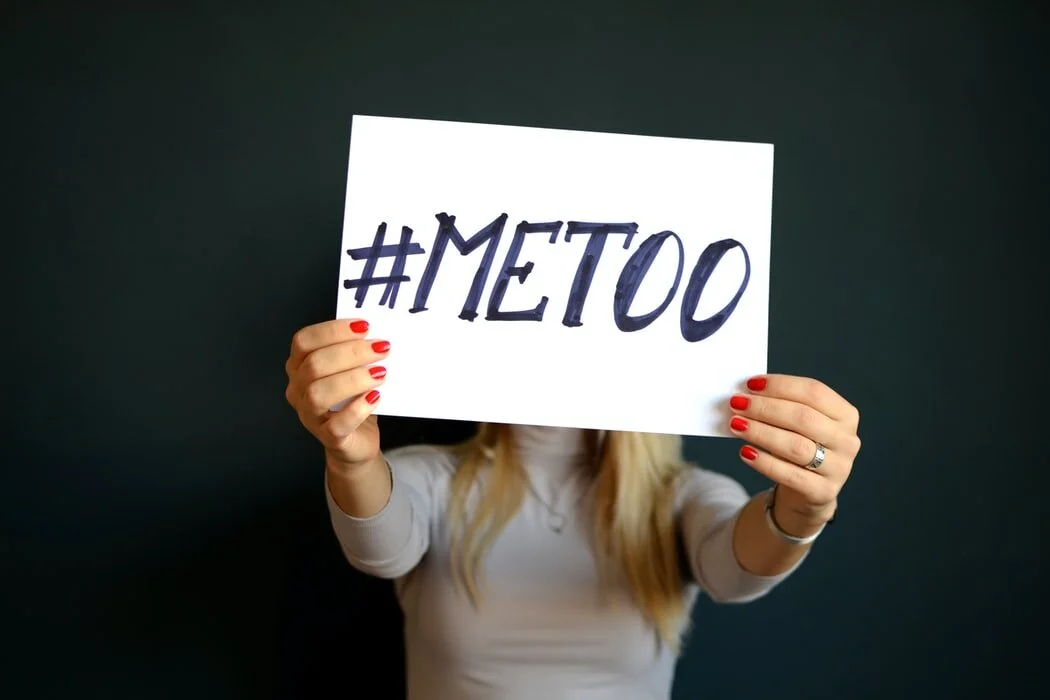
Woman holding up a #MeToo sign. Mihai Surdu. Unsplash
Russia’s #MeToo Movement Means Not Being Afraid to Speak
The #MeToo Movement has been one of the largest and fastest-growing movements of the past decade and it is not confined to the United States. Its origin was in 2006 on Myspace when Tarana Burke coined the term “MeToo” to speak out against sexual abuse that she experienced. It only gained widespread popularity in October 2017 when actress Alyssa Milano decided to post to Twitter asking survivors to tweet in solidarity using #MeToo if they had experienced any form of sexual harassment. The response was enormous and those who abuse women and men are being called out online today.
A lesser-known movement in Russia and Ukraine began in 2016, a year before Milano’s tweet. #IAmNotAfraidToSpeak was started by Ukrainian activist Anastasia Melnichenko, who in a Facebook post wrote, “I want us — women — to speak today ...We do not have to make excuses. We are not to blame. Blame always lies with the rapist.” Many women did come forward on that day and continue to speak out. Despite the fact that the hashtags have changed somewhat, women are still asking for attention from the world in the same way as in the United States. On July 16, 2019, #INeedOpenness and #IDidn’tWantToDie were trending in another attempt to challenge the norm of sexual harassment, domestic abuse and rape in Russia.
This month, bereft of a hashtag, another wave of allegations have flooded Twitter including accusations of sexual harassment surrounding many prominent men within Moscow’s media circle. One of the men accused, Sergey Prostakov, is a journalist and editor of opposition website MBKh Media. Following the allegations, Prostakov promptly resigned and issued an apology. Another liberal, veteran journalist Pavel Lobkov, was called out for inappropriate advances toward men. His response was that he grew up in an era where “students were sleeping with their teachers, and hugging or even kissing a colleague at a party was completely normal.”
Valya Dekhtyarenko was the woman who retweeted her friend’s testimony about her abusive relationship and therefore began the series of women naming their abusers. She criticized the hypocrisy of the same “progressive media who have been disclosing sexual harassers amongst Russia's ruling elites" now being outed as abusers. Similarly as in the United States, there are those who believe that sexual violence against women is not a problem. And in Russia people still use the old proverb “if he beats you, it means he loves you.” The discourse is slowly shifting and those in power are seeing the consequences of their actions. It is still unclear, however, whether the movement has fully formed into what has been seen in the United States.

Hanna Ditinsky
is a sophomore at the University of Massachusetts Amherst and is majoring in English and minoring in Economics. She was born and raised in New York City and is passionate about human rights and the future of progressivism

Protesters marching in Khabarovsk on July 18. Штаб Навального в Хабаровске // CC0 1.0.
Russian Protests Continue for Unprecedented Third Week Straight
Tens of thousands of protesters continue to demonstrate in Khabarovsk, Russia, for the third week straight in an forceful show of civil disobedience against the Putin administration. The protests, which began on July 11, are in response to the Kremlin-led arrest of the popular Khabarovsk Krai governor Sergei Furgal for accusations of multiple murders.
Khabarovsk is the administrative center of Khabarovsk Krai and a city of almost 600,000 people who live over 4,000 miles away from Moscow. Governor Sergei Furgal, who was elected to his position in September 2018, beat Kremlin-backed incumbent Vyacheslav Shport and has since been viewed negatively by President Vladimir Putin. Furgal is a member of the Liberal Democratic Party, while Shport is a member of United Russia, the country’s ruling party.
Governor Furgal was arrested on July 9 on allegations that he played a role in the murders of several businessmen in the region in 2004 and 2005. He was flown to Moscow shortly after to be placed on pretrial detention and was replaced by Mikhail Degtyarev, who previously served in the State Duma, Russia’s lower house of its Federal Assembly.
“How can Putin's trust be more important than the trust of the people?” protester Zahar Zaripov said in an interview with Deutsche Welle. “Our governor was dismissed by Putin, because he supposedly lost his trust. And what about our trust? We were the ones who elected the governor, not Putin!”
The protests have since spread to other cities in the region, such as Novosibirsk and Vladivostok. Protests in Russia’s Far East are rare; most take place in Moscow or St. Petersburg, where the Kremlin is generally able to exercise its control much more easily.
Many of the protesters not only view the ongoing demonstrations as a show of support for Furgal, but as an act of defiance against a corrupt presidential administration. A little over four weeks ago, President Putin won an allegedly fraudulent constitutional referendum which would allow him to hold his current position through 2036.
“When a person lives not knowing how things are supposed to be, he thinks things are good,” protester Artyom Aksyonov said in an interview with The New York Times. “But when you open your eyes to the truth, you realize things were not good. This was all an illusion.”
Another protester, Alexander Gogolev, expressed his disdain toward the Kremlin in an interview with The Guardian.
“The center is sucking resources from the Far East,” Gogolev said. “[And we get] nothing in return.”
This defiance toward the Putin administration has not been limited to the protesters in Khabarovsk Krai. Vladimir Zhirinovsky, the leader of the Liberal Democratic Party, protested the results of the constitutional referendum as well as the arrest of Furgal.
“We gave you the constitution, and you’re putting us in handcuffs,” Zhirinovsky said. “Shameless! You are sitting in high office and start acting like Stalin!”
Zhirinovsky later signaled that his supporters in the Federal Assembly may resign in protest if the situation does not improve.
Governor Furgal is currently in custody in a Moscow jail as he awaits his trial, which does not yet have a definitive date but may take place as early as Sept. 9. Protests are expected to continue throughout Khabarovsk Krai for the foreseeable future.

Jacob Sutherland
is a recent graduate from the University of California San Diego where he majored in Political Science and minored in Spanish Language Studies. He previously served as the News Editor for The UCSD Guardian, and hopes to shed light on social justice issues in his work.

Traditional Balinese wedding ceremony. Artem Beliaikin. CC BY-NC-SA 2.0
Women’s Rights Activists Celebrate the Abolishment of Bride Kidnapping in Indonesia
Kawin tangkap is a long-established, controversial practice that still occurs on the small island of Sumba in Indonesia. Kawin tangkap, or bride kidnapping, is carried out when members of the man’s family kidnap women who they have selected as their wives. The practice has long been argued against by women’s rights activists. After all, if the women leave the forced marriage they are ridiculed by their villages and told that they will never have a husband or children. On the other hand, if the women stay, they have no decision in the matter and remain in the marriage for the remainder of their lives. The issue came to light recently when a video of a kidnapping circulated online, sparking outrage and petitions for the abolishment of the practice.
Part of the Sumbese Culture?
Regional leaders of Sumba have come forward, signing a declaration and stating that the well-known practice is not a part of their culture and traditions. Frans Wora Hebi, a Sumbese historian and elder, speculates that the shift from marriages to forcibly taking women has been “used by people wanting to force women to marry them without consequences.” The Indonesian government has responded by passing a law banning the practice, but the details and consequences have not yet been released.
Women Who Have Shared their Stories
Some women have spoken about their experiences, saying that it “felt like I was dying” as they were led away “kicking and screaming.” Two women who came forward shared their stories, with one thinking she was walking into a work meeting and another nursing her 11-month-old son outside of her home. Both were able to walk away from the situation physically unscathed but have to carry the scars from the experience for the rest of their lives. Both have “forgiven” the perpetrators in order to preserve family relationships for the future.
How Has It Continued?
In the last four years, seven cases have been documented, but it’s been speculated that many more have happened. While a “memorandum of understanding between the provincial East Nusa Tenggara government and the regional government of Sumba showing their commitment to ending the practice” has been signed, a local parliamentarian commented that they were “not convinced it can be entirely abolished.” The statement was made following the observations that the practice is seen mainly in isolated villages, the attacks are unexpected and many women do not come forward to file criminal cases. Instead, they stay with their new groom and family, which leaves police powerless to do anything about the issue. Part of the problem comes from the fact that there were formerly only social reprimands against the practice, with no long-term consequences. However, with the recent bill passed, the practice is now outlawed - a win for women who have been fighting against bride kidnapping for years.

Elizabeth Misnick
is a Professional Writing and Rhetoric major at Baylor University. She grew up in a military family and lived in Europe for almost half her life, traveling and living in different countries. She hopes to continue writing professionally throughout her career and publish her writing in the future.
KENYA: The Village Where Men Are Banned
47 women and 200 children live in Umoja Women’s Village in northern Kenya—a community founded in response to violence against women, forced marriage, rape and female genital mutilation (FGM).
Read More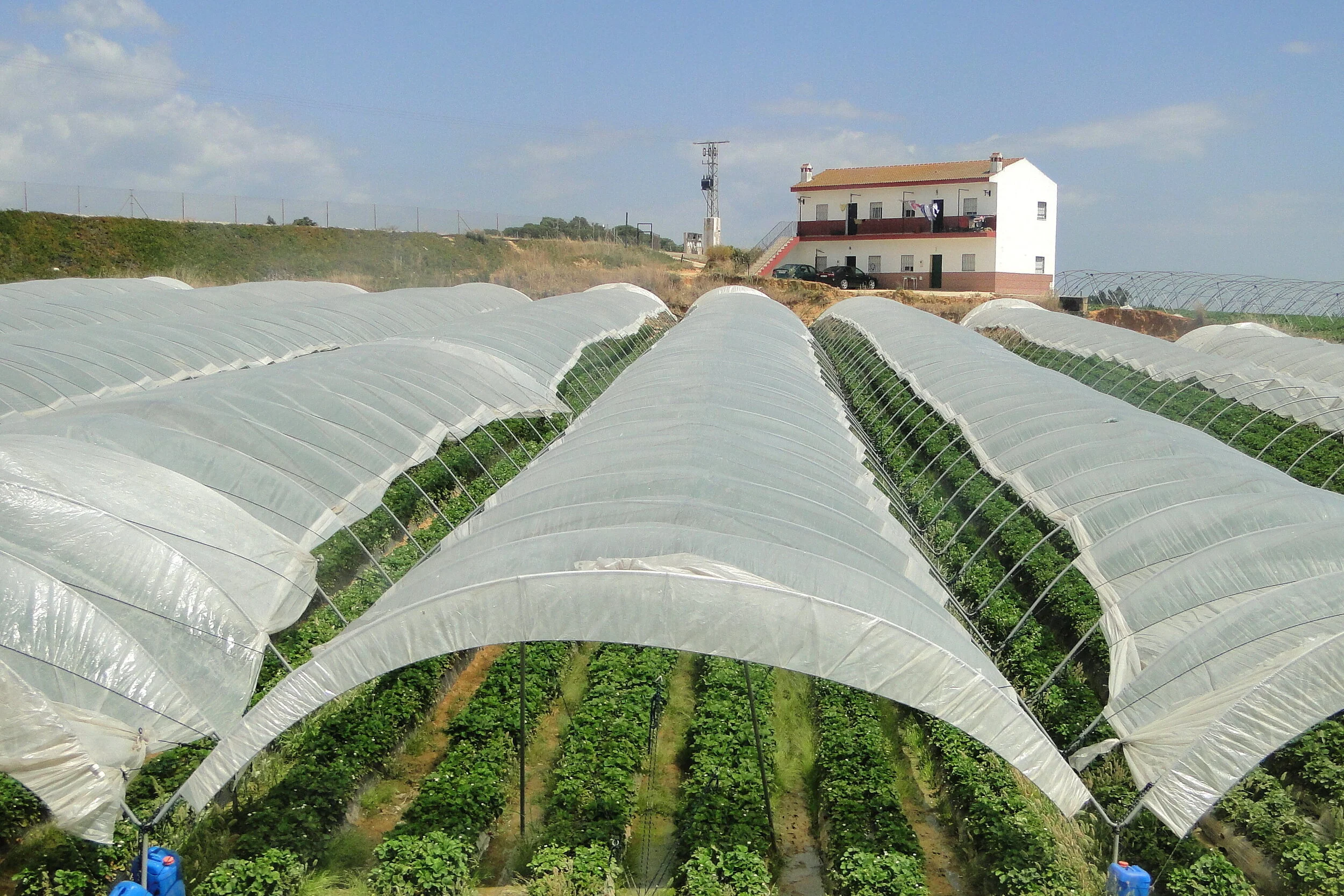
Strawberry fields in Spain, such as this one near Palos de la Frontera, supply 90% of Europe’s strawberries. Adam Jones, Ph.D./Global Photo Archive/Flickr. CC BY-SA 2.0.
The Dark Side of Spain’s Strawberry Fields
On July 1, Reuters reported that thousands of Moroccan women were brought over to Spain’s southern Huelva province as essential workers to harvest strawberries in the midst of the coronavirus pandemic. These women were housed in “abysmal conditions and without basic hygiene,” according to Olivier De Schutter, the United Nations Special Rapporteur on extreme poverty and human rights. De Schutter told Reuters that the migrant workers are housed in overcrowded settlements with “poor access to water and sanitation … no ventilation of work spaces ... absence of cleaning of any surfaces or objects.” CNN reported that more than 7,000 Moroccan workers are now stranded in Huelva province after Morocco closed its borders in order to stem the spread of COVID-19. The workers, desperate to get home to their families, have no money and nowhere to go.
The exploitation of Moroccan migrant workers—women in particular—in Spain is not new, but during the middle of a global pandemic the disregard for the migrant workers’ lives is made more apparent.
For years, Moroccan women have reported that they have been sexually assaulted and harassed, abused, forced to work in unsafe conditions, and not been paid their full wages. Many of these reports come from workers on the strawberry farms.
Spain is the largest exporter of strawberries in the European Union. The fruit is so vital to Spain’s economy that it is sometimes called “red gold.” The strawberry farms in Huelva produce 97% of the summer fruit. “The delicate fruits - which sell for around 3 euros per kilogram in Spanish supermarkets - are harvested by the hands of thousands of migrant workers, including between 14,000 and 19,000 temporary laborers from Morocco. During harvest, workers often live in crowded huts on the farm and rarely get a glimpse of life beyond the strawberry fields,” according to Middle East Eye.
In 2001, Spain and Morocco signed a labor agreement granting Moroccan women temporary visas to harvest fruit in Spain under specific conditions: the women had to be poor and they had to be mothers. These requirements ensure that the women are desperate for work and will not stay in Spain as they have a family they have to get back to in Morocco.
In July 2019, The New York Times reported on the exploitation of Moroccan women on Spanish strawberry farms. 10 women who worked on the Donana 1998 d’Almonte farm filed lawsuits that included “accusations of sexual harassment and assault, rape, human trafficking and several labor violations.” The women had been promised high wages, training and accommodations with a kitchen and washing machine with four women per room. Instead, the women lived in dusty, overcrowded rooms with windows covered in cardboard. “I felt like a slave. Like an animal. They brought us to exploit us and then to send us back. I wish I drowned in the sea and died before arriving in Spain,” one woman told The New York Times.
Workers’ unions and human rights groups like Women’s Link Worldwide are advocating on behalf of the Moroccan women. On June 3, Women’s Link and seven other organizations sent an urgent report to the U.N. warning of the risk COVID-19 poses for the Moroccan women and other seasonal migrant workers on the strawberry farms. They have asked the U.N. “to issue a joint statement to the competent authorities of Spain and Morocco and the businesses involved demanding protection for the health and rights of migrant workers in Huelva.” Women’s Link further specified that the protections should be long term and not last only for the duration of the coronavirus pandemic.
In 2019, Women’s Link represented four women who had been hired to work in Huelva in 2018. The four women were told they would have continuous employment for three months and a trial period of 15 days, with housing provided at no extra cost. When the women arrived in Spain, they discovered the conditions were not what they had been promised. In addition to having an unpaid trial period that would last an entire month, the women were expected to work longer hours for less pay, and the cost of accommodation would be deducted from their wages. According to Women’s Link, the four women also “reported the sexual harassment they suffered at the hands of the field manager.”
The field manager in question is currently under investigation and is awaiting trial by a court in the town of Moguer.
Asiya Haouchine
is an Algerian-American writer who graduated from the University of Connecticut in May 2016, earning a BA in journalism and English. She was an editorial intern and contributing writer for Warscapes magazine and the online/blog editor for Long River Review. She is currently studying for her Master’s in Library and Information Science. @AsiyaHaou
Asiya Haouchine
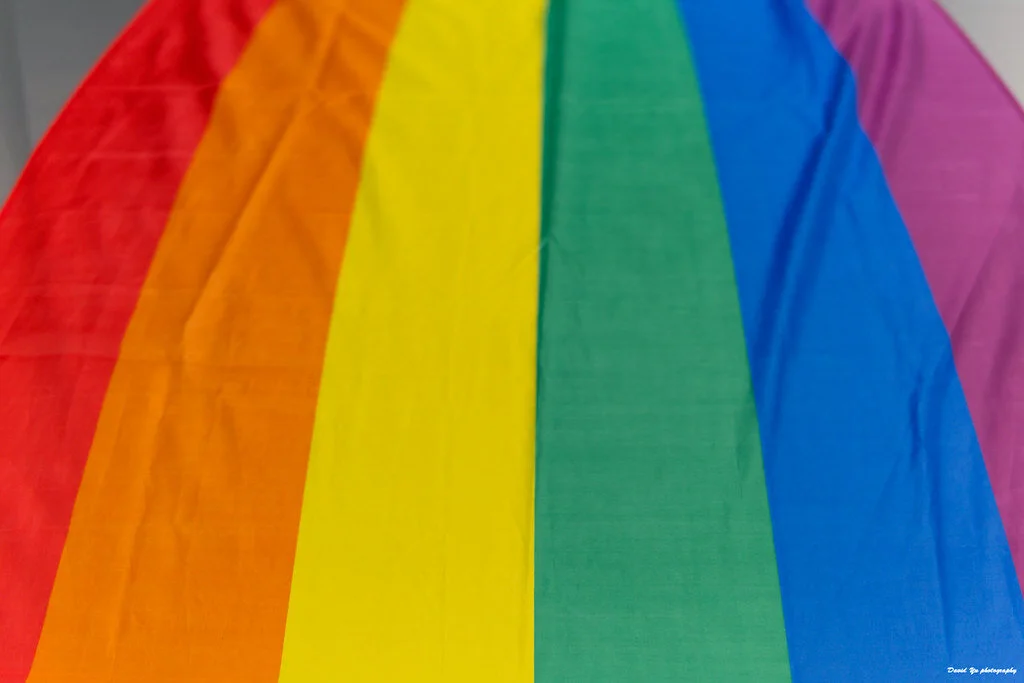
LGBTQ Pride flag. davidyuweb. CC BY-NC 2.0
The Reality of Thailand Legalizing Same-Sex Unions
On July 8, Thailand’s Cabinet made a big step in the process of recognizing same-sex couples. Under the Civil Partnership Bill couples will be able to be recognized as legitimate, which opens up the possibility for adoption and managing property together for the first time. If passed, it would be only the second place in Asia that has moved toward marriage equality. Taiwan legalized same-sex marriage in 2019.
What is important about this bill is that it does not officially legalize same-sex marraige. Thailand is known to be a rather conservative nation, but this bill is still a significant step toward potential equality for Thai LGBTQ individuals. If passed, it would make Thailand the first Southeast Asian country to recognize same-sex partnerships. For most countries in Asia, homosexuality and gay sex are still seen as criminal offenses where people may even be sentenced to death, such as in Brunei.
There are multiple limitations that come with this bill, even if it passes. There is backlash from the LGBTQ community for not accepting marriage fully. This means that there are a multitude of rights not included in this bill, ranging from spousal benefits to medical rights. It also excludes foreign partnerships, as both couples must be over the age of 17 and one must be Thai. The bill also disqualifies transgender couples.
Getting passed by the Cabinet is the first step. First introduced in 2018, it was unable to be passed by previous legislatures. However, this bill still has a long way to go until it becomes official. There must be public hearings and a vote in the House of Representatives before it goes back to the Senate for final approval. Despite Thailand’s reputation of being rather accepting of homosexuality from its Buddhist values, the country still remains focused on family-centered, conservative values, as common throughout a majority of Asia. It could take months for the bill to be even passed.
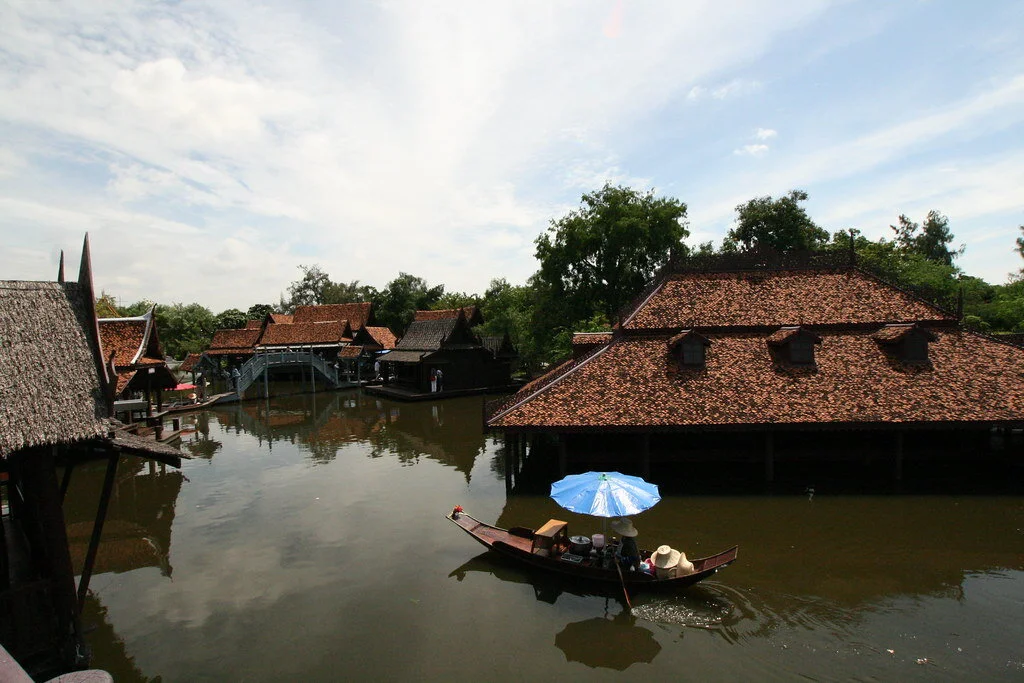
Village in Thailand. nico78. CC BY-NC-ND 2.0
Despite the backlash, this bill would still move Thailand in an entirely new direction. The country would be going against the majority perspective among its citizens. The Rainbow Sky Association of Thailand welcomed this bill, with the group’s president, Kittinan Daramadhaj, saying, “What’s in a name? It’s the content that matters,” as partnerships are still being recognized as legitimate.
Outside of the Buddhist mentality, there is another reason why Thailand is changing its perspective on LGBTQ couples: the tourists. The country has seen a large increase in individuals traveling to Thailand on vacations. Much of the anti-LGBTQ bias that persists in Thailand seems to be focused on locals. There is hope in the LGBTQ community that the influx in tourists is helping Thai locals to become more open-minded.

Eva Ashbaugh
is a Political Science and Gender, Sexuality, and Women's Studies double major at the University of Pittsburgh. As a political science major concentrating on International Relations, she is passionate about human rights, foreign policy, and fighting for equality. She hopes to one day travel and help educate people to make the world a better place.
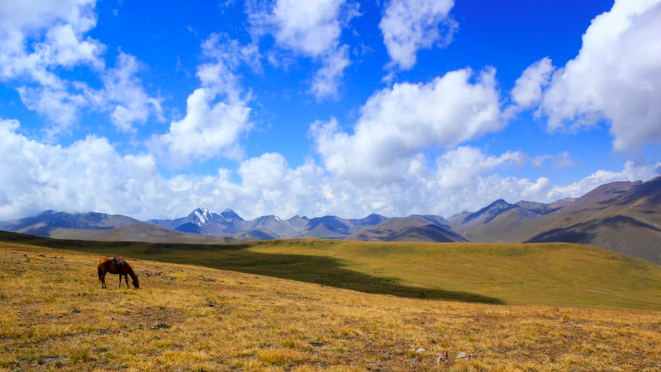
Horse grazing in a field in Kyrgyzstan. Frantisek Duris. Unsplash.
Kyrgyzstan: Central Asia’s Country Cradled in the Mountains of Heaven
Nestled in the heart of Central Asia, Kyrgyzstan is a mountainous country populated by one of the last nomadic ethnic groups in the world. What stuns most people upon arrival to Kyrgyzstan is how vast and untouched the country is. The ground is often still frozen, contrasting with the vibrant sun as it rises against the enormous mountains.
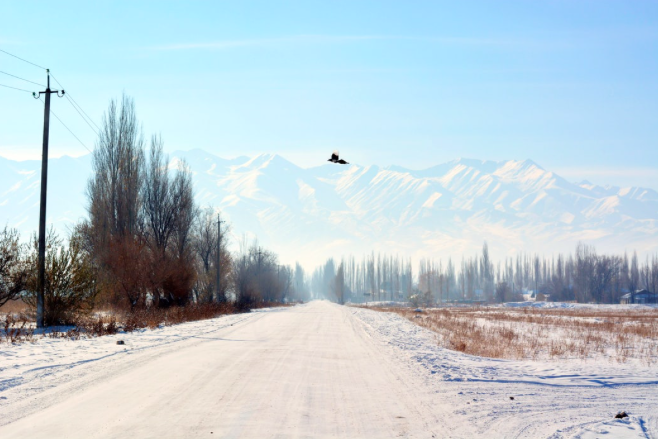
Bird soaring over a frozen road in Tokmok, Kyrgyzstan. Laurentiu Morariu. Unsplash.
Often called the “Switzerland of Central Asia,” Kyrgyzstan’s landscape is made up of expansive valleys and cold peaks. The country sits at the core of the Tian Shan mountain range, also known as the “Mountains of Heaven.” The majority of the country is composed of mountains and their valleys, while the high alpine plateau of the central and eastern regions makes up the rest. The smallest portion of terrain, the country’s lowland areas, is the most populated. Kyrgyzstan’s terrain is visually stunning in its pastoral expanse and rugged mountains.
The People
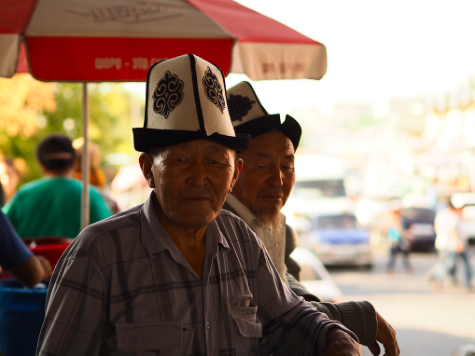
Men in traditional salburun hats at the Osh bazaar. Uiking. CC BY-NC-SA 2.0
The Kyrgyz people speak a language of the same name and traditionally followed a mostly nomadic lifestyle. The Kyrgyz have lived through very tumultuous times, facing a long history of Russian colonization which led to an attempted revolt in 1916. They continued to fight for their freedom until the Soviet Union’s collapse in 1991, but only gained independence after several hundred were killed in an interethnic clash between Uzbeks and Kyrgyz around the southern town of Osh. Adding to the country’s diversity is a significant number of Eastern Europeans who were brought to Kyrgyzstan by the Soviets in an attempt to industrialize the region.
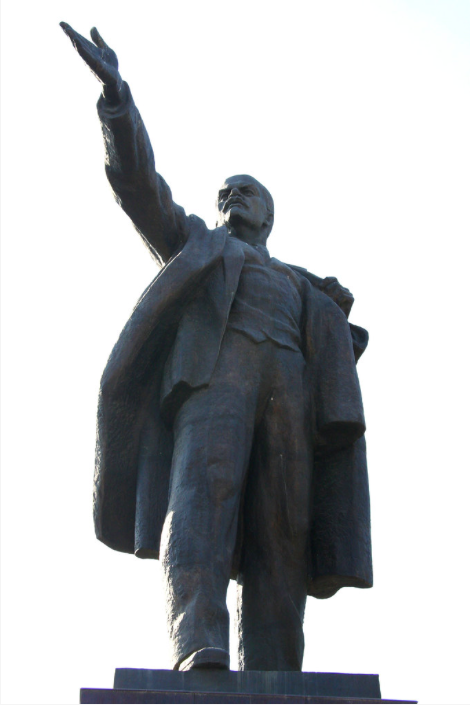
A statue of Vladmir Lenin in Bishkek, Kyrgyzstan. Richard Towell. CC BY-NC-ND 2.0.
Today, some small cities remain, like the capital Bishkek, but many Kyrgyz still live traditionally.
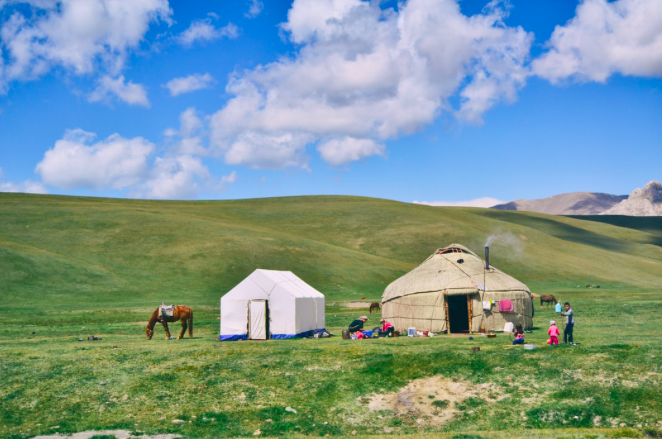
A traditional yurt and horse near Song Kol Lake. Oziel Gomez. Unsplash.
After surviving Soviet occupation for so long, a resurgence in the nomadic culture and traditions of the Kyrgyz occurred. The mountains and their valleys are painted in Kyrgyz culture, as the valleys are peppered with yurts decorated inside with hand-stitched felt carpets called shyrdaks.
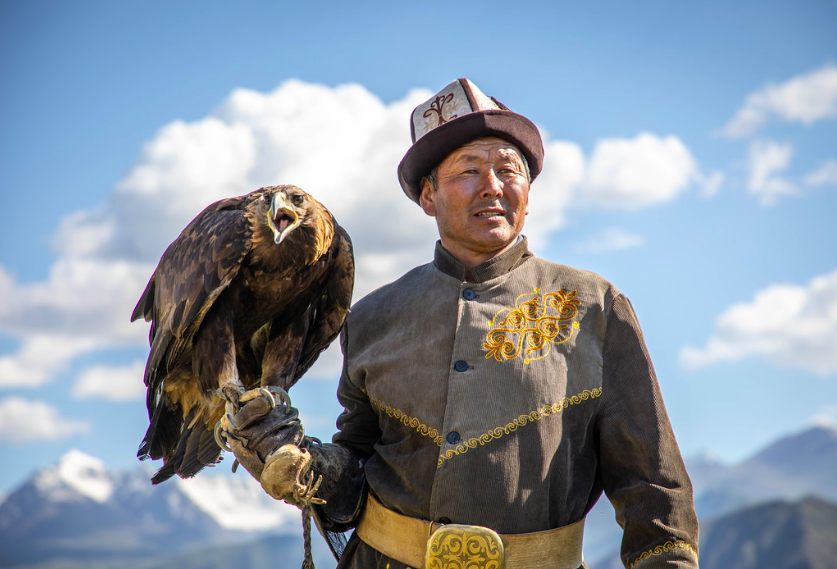
One of the most stunning things about Kyrgyzstan is its horses that gallop freely across the plains. Horses are an incredibly important element of traditional Kyrgyz life, as they are essential for travel, hunting and recreation. An even more essential player in the hunting game is the golden eagle. The Kyrgyz are some of the only people in the world to hunt with golden eagles in a style called salburun. They ride horses while practicing archery, assisted by the golden eagles and a taigan, a type of dog that dates back to the beginning of the Kyrgyz people. This tradition was also stifled during Soviet times but has been rekindled by the Salburun Federation and its founder Almaz Akunov, who prepare other hunters and share the tradition during local festivals and demonstrations.
Travel
To visit you must embrace the unknown, as many travel plans must be made upon arrival. Trips can be arranged through the country’s various community-based tourism centers which assist visitors in getting information and arranging transportation. From here, visitors are free to trek the plains, hike, horseback ride and meet the Kyrgyz people.
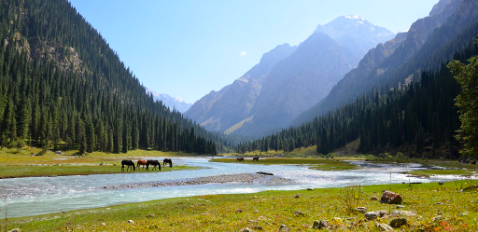
Kyrgyzstan is an entirely immersive experience as it retains so much local culture and allows nature to thrive. Despite the hardships the country has faced, it has become a safe haven for its citizens to continue their traditions and share them with others.

Renee Richardson
is currently an English student at The University of Georgia. She lives in Ellijay, Georgia, a small mountain town in the middle of Appalachia. A passionate writer, she is inspired often by her hikes along the Appalachian trail and her efforts to fight for equality across all spectrums. She hopes to further her passion as a writer into a flourishing career that positively impacts others.
Fight for Civil Liberties Doesn't Stop for a Pandemic in Chile
Despite unrest in Chile, feminist group Las Tesis continues to advocate for justice against police brutality and sexual violence toward women in Latin America.
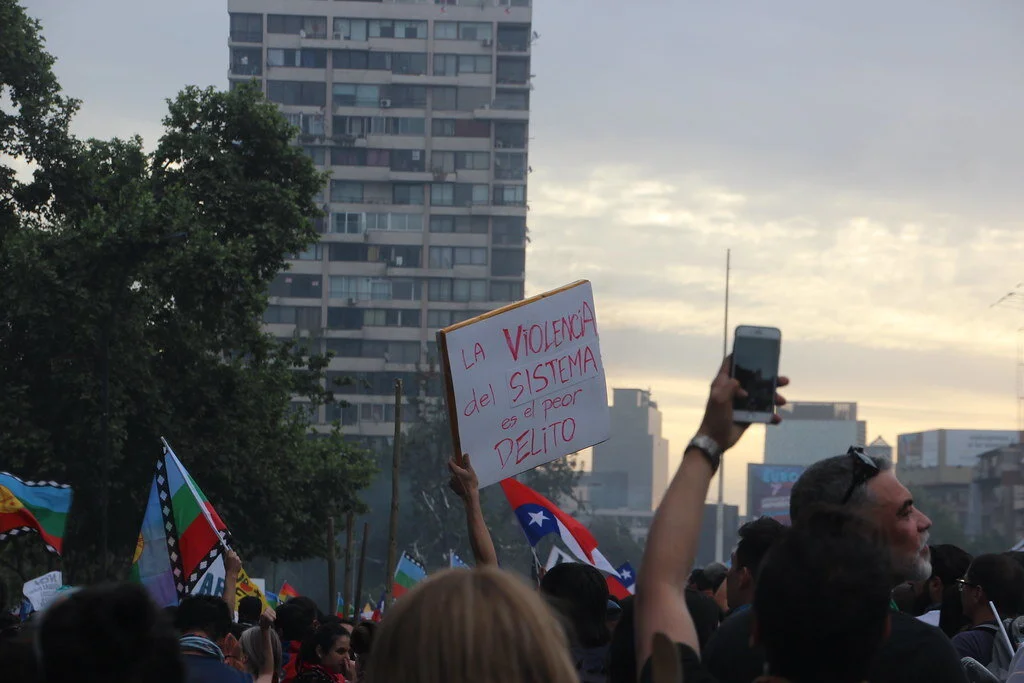
Translation: “Systemic violence is the worst crime.” John Englart. CC BY-SA 2.0
Last year, Chilean feminist group Las Tesis released “Un Violador en Tu Camino” (“A Rapist in Your Path”), a song that became an anthem against sexual violence worldwide. The piece, which calls out the judicial system and the struggle of women across Latin America, has been performed all around the world in the form of flash mobs. Many who participate wear black blindfolds and green scarves to advocate for legal abortion practices as well.
The song first was created in light of the social inequality protests occurring in Chile in November 2019. The lyrics call out the unfair treatment of the Chilean government toward women. It says that a narrative is being written where women are to blame for sexual violence. Yet, the song places blame on the patriarchy, police and government systems for being blind to this ongoing violence.
According to the Organization for Economic Cooperation and Development, Chile is considered one of the world’s most unequal countries and is susceptible to climate change. Chile is also considered to have one of the highest costs of living across South America. While the rich prosper from their investments in terms of development, the poor communities and Indigenous people suffer at the hands of urbanization.
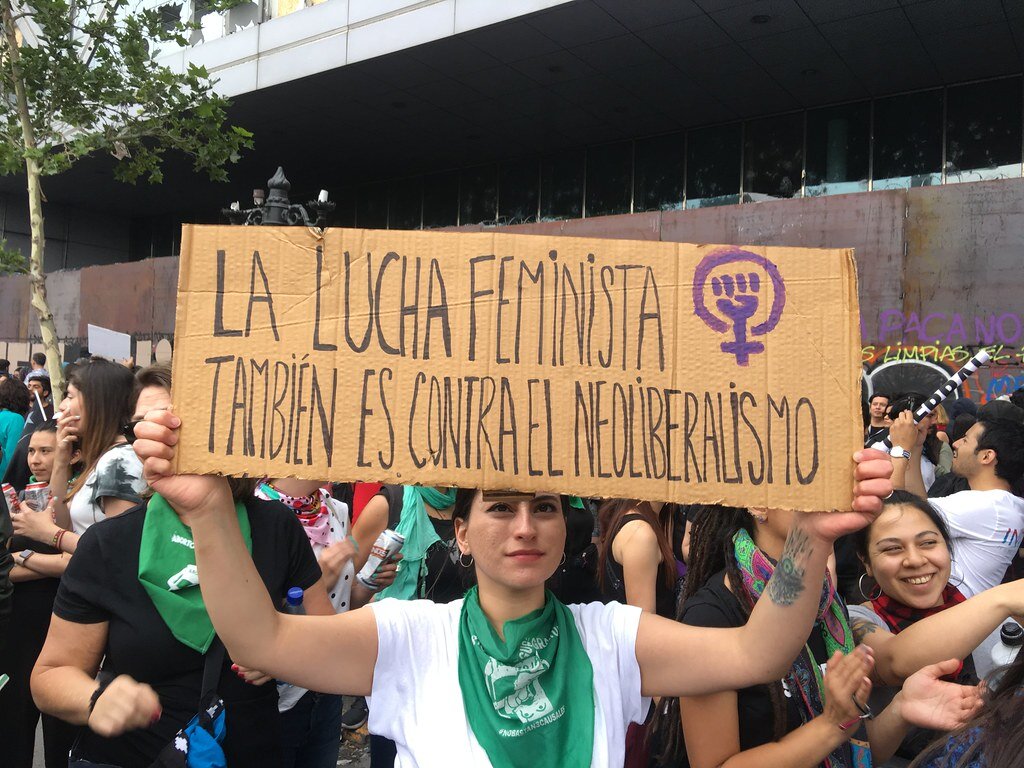
Feminist sign in Chile which translates to “the feminist struggle is also against neoliberalism.” John Englart. CC BY-SA 2.0.
Many Chileans consider themselves “at war against a powerful enemy.” Rather than succumbing to the protesters’ demands, President Pinera declared a state of emergency that involved the deployment of the military to control crowds and the institution of a curfew. These measures have caused a sharp decline in protests like Las Tesis’.
International attention has focused on the treatment of protesters, with allegations of human rights violations. For instance, there have been claims that protesters may have been tortured, resulting in at least 19 deaths and 20 people being reported missing. Additionally, there has been a 15% increase in sexual violence reports since last year.
However, on June 12, the police filed a lawsuit against Las Tesis. In the lawsuit, police claim that the feminist group encourages violence against officers of Chile’s national police force, Carabineros de Chile. Charges came after the release of “Manifesto Against Police Violence,” a video produced alongside Russia’s Pussy Riot where protesters stood outside of a police station and demanded to “fire the police.” Chilean police took the video as threats against officers, but no papers have been officially served yet to the feminist group.
Daffne Valdes, one of the founders of Las Tesis, said in an interview with Al-Jazeera that “this is an attack on freedom of expression,” calling it a form of censorship. Even though in both the song and video by Las Tesis the police are called out as “rapists,” group members say they are simply referring to the corruption seen throughout Chile’s police system.

Eva Ashbaugh
is a Political Science and Gender, Sexuality, and Women's Studies double major at the University of Pittsburgh. As a political science major concentrating on International Relations, she is passionate about human rights, foreign policy, and fighting for equality. She hopes to one day travel and help educate people to make the world a better place.
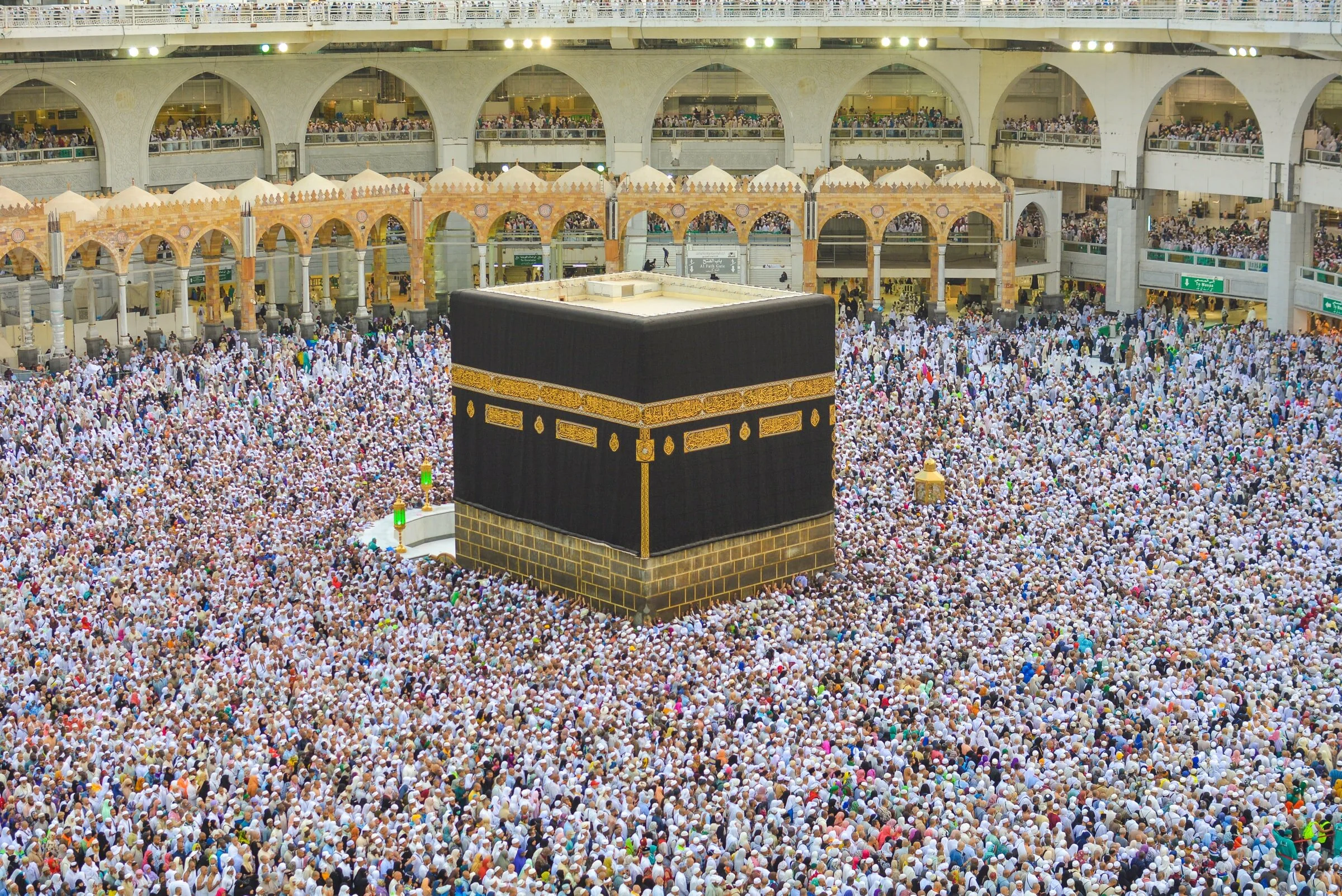
One of the rituals of hajj includes walking around the Kaaba seven times. Adli Wahid. Unsplash.
Hajj Canceled for Most of World’s Muslims Due to COVID-19
Every year, more than 2 million Muslims from all over the world perform the special pilgrimage called hajj in Saudi Arabia. Performing hajj is an extremely important ritual for Muslims as it is one of the five pillars of Islam, which make up the core practices and beliefs. It is obligatory for Muslims to make the annual pilgrimage at least once in their lifetime as long as they are able-bodied and financially able to afford the trip.
In a rare move, Saudi Arabia announced on July 6 that hajj would be canceled for the majority of the world’s Muslims—the first time in recent years that it has been disrupted by an epidemic. This is also the first time that Saudi Arabia has significantly curtailed the pilgrimage since the country was founded in 1932—only people living in Saudi Arabia may perform the pilgrimage this year. “Hajj Minister Mohammad Benten said the government is still in the process of reviewing the number of overall pilgrims allowed, saying they could be ‘around 1,000, maybe less, maybe a little more,’” according to Al-Jazeera. Furthermore, no one over the age of 65 will be allowed to make the pilgrimage this year. Authorities released strict guidelines including a ban on touching the Kaaba, one of the holiest sites in Islam.
In March, the Saudi government made the decision to enforce travel restrictions into the Muslim holy sites of Mecca and Medina for umrah, a pilgrimage that can be performed at any time of the year that is not obligatory for Muslims as hajj is. While that decision caused frustration for some, hajj is sacred and typically a once-in-a-lifetime opportunity for Muslims. As such, the decision to cancel hajj is devastating to many who were planning to go.
For the rest of the world’s Muslims, fears of spreading the coronavirus during the upcoming Eid al-Adha holiday has prompted leaders to urge Muslims to continue following coronavirus guidelines.
Eid al-Adha marks the completion of the annual five to six day pilgrimage, and takes place on the tenth day of Dhul-Hijja, the last month of the Islamic lunar calendar. Eid al-Adha serves as a remembrance of the willingness of the prophet Ibrahim (Abraham to Christians and Jews) to sacrifice his son to God. The holiday does not celebrate bloodshed in order to please God—a sheep was provided at the last moment—but instead honors giving up something beloved and promotes charity and equality. To commemorate God’s intervention, an animal is sacrificed (typically a sheep, but goats, camels and cows are also acceptable) and the meat divided into three portions—one-third goes to the poor and needy, one-third to friends and family, and the final portion is reserved for one’s own household.
Muslim countries’ leaders worry that Eid al-Adha celebrations will cause a spike in COVID-19 cases as people travel to animal markets and slaughterhouses to perform the sacrifice. The head of Istanbul’s Chamber of Veterinary Surgeons, Murat Arslan, has warned that 1 million people could be at risk of contracting the virus in Turkey. As such, he said face masks should be made mandatory and disposable plastic shoe covers should be worn upon entering the marketplace, and buyers and sellers should avoid shaking hands upon completing a sale. Pakistan’s National Institute of Health is urging the public to stick to the coronavirus guidelines, especially on Eid al-Adha. The Pakistani government issued new rules for the holiday, including instructing people to avoid greeting friends and relatives on Eid al-Adha and urging sellers to arrange online purchases when possible, according to The Washington Post. Oman announced a complete lockdown beginning on July 25 and ending on Aug. 8, a drastic effort to prevent a spike in positive COVID-19 cases.
Hajj begins on July 29 with Eid al-Adha being celebrated on July 31 by the majority of Muslims.
Asiya Haouchine
is an Algerian-American writer who graduated from the University of Connecticut in May 2016, earning a BA in journalism and English. She was an editorial intern and contributing writer for Warscapes magazine and the online/blog editor for Long River Review. She is currently studying for her Master’s in Library and Information Science. @AsiyaHaou
Athletes Want an End to the Protest Ban at the Olympics
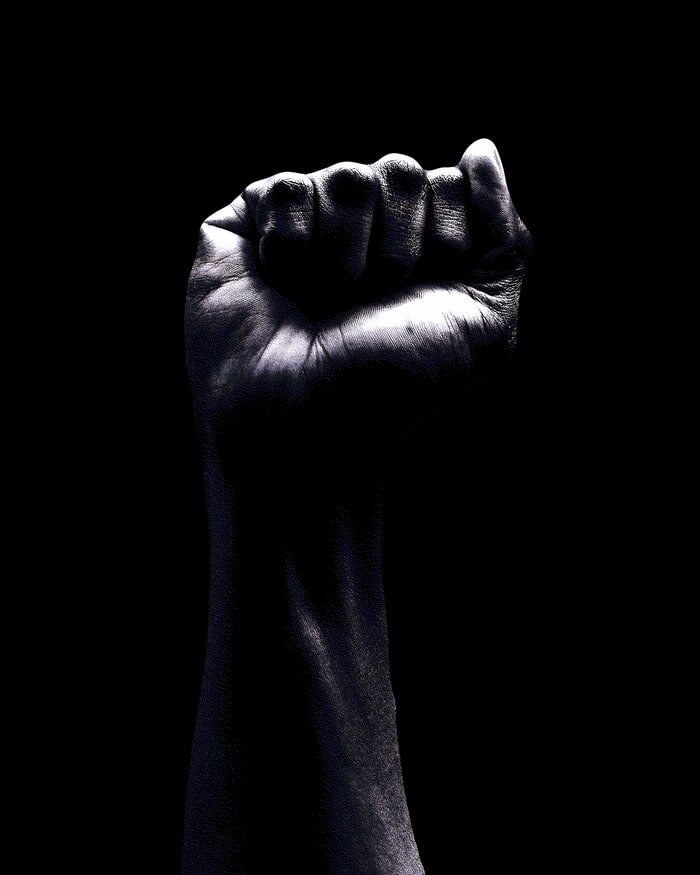
Raised Black fist. Oladimeji Odunsi. Unsplash
Olympic athletes are urging the International Olympic Committee (IOC) to remove a rule that seems out of place to some as protests sweep every corner of the world. Currently, the Olympic Charter stipulates in Rule 50 that, “No kind of demonstration or political, religious or racial propaganda is permitted in any Olympic sites, venues or other areas.” Various institutions have reckoned with similar issues in recent months, and the IOC and the U.S. Olympic and Paralympic Committee are the latest to be criticized for their rules forbidding displays of political protest.
Various athletic organizations, athletes and some sports administrators have spearheaded the movement and joined in solidarity with the push to create meaningful change for the rights of athletes. Global Athlete, an athlete-led group, said in a statement, “Athletes have had to choose between competing in silence and standing up for what’s right for far too long. It is time for change. Every athlete must be empowered to use their platforms, gestures and voice. Silencing the athlete voice has led to oppression, silence has led to abuse, and silence has led to discrimination in sport.”
This statement reflects the historic moments of protests at Olympic events, including when at the 1968 Olympics in Mexico City, John Carlos and Tommie Smith raised their fists on the medal stand. They were immediately sent home. Furthermore, this year the IOC doubled down on its rules against political protest after track athlete Gwen Berry raised her fist on the medal stand and fencer Race Imboden took a knee at the 2019 Pan American Games. It is only this month, after mounting pressure, that “IOC President Thomas Bach said the athlete group would “explore different ways” opinions could be expressed during the games — while still “respecting the Olympic spirit.”
A new athlete-led group was established on July 16 by Olympian Christian Taylor called Athletics Association “to stand up for athletes who have long felt underrepresented at the sport’s top table.” According to Taylor, the Athletics Association’s short-term goal is to see Rule 50 gone, but it also has many long-term goals for the welfare of athletes facing many Olympic committees that have not done their part. These goals, according to The Independent, include starting a “hardship fund” for athletes struggling to make ends meet, education programs on financial literacy “to help athletes not leave the sport broke,” reversing World Athletics’ controversial plans to strip down the Diamond League and ultimately driving a power shift from governing bodies to athletes.
To follow suit, Brian Lewis of the Caribbean Association of National Olympic Committees agreed with the notion that “arguing the oft-cited IOC notion that sports should be free of politics is not realistic.” As Gwen Berry put it, many Olympians believe that, “Rule 50 needs to be canceled for the simple reason that it goes against athletes’ human rights. There are rights inherent to all human beings and one is the freedom of speech.”

Hanna Ditinsky
is a sophomore at the University of Massachusetts Amherst and is majoring in English and minoring in Economics. She was born and raised in New York City and is passionate about human rights and the future of progressivism.
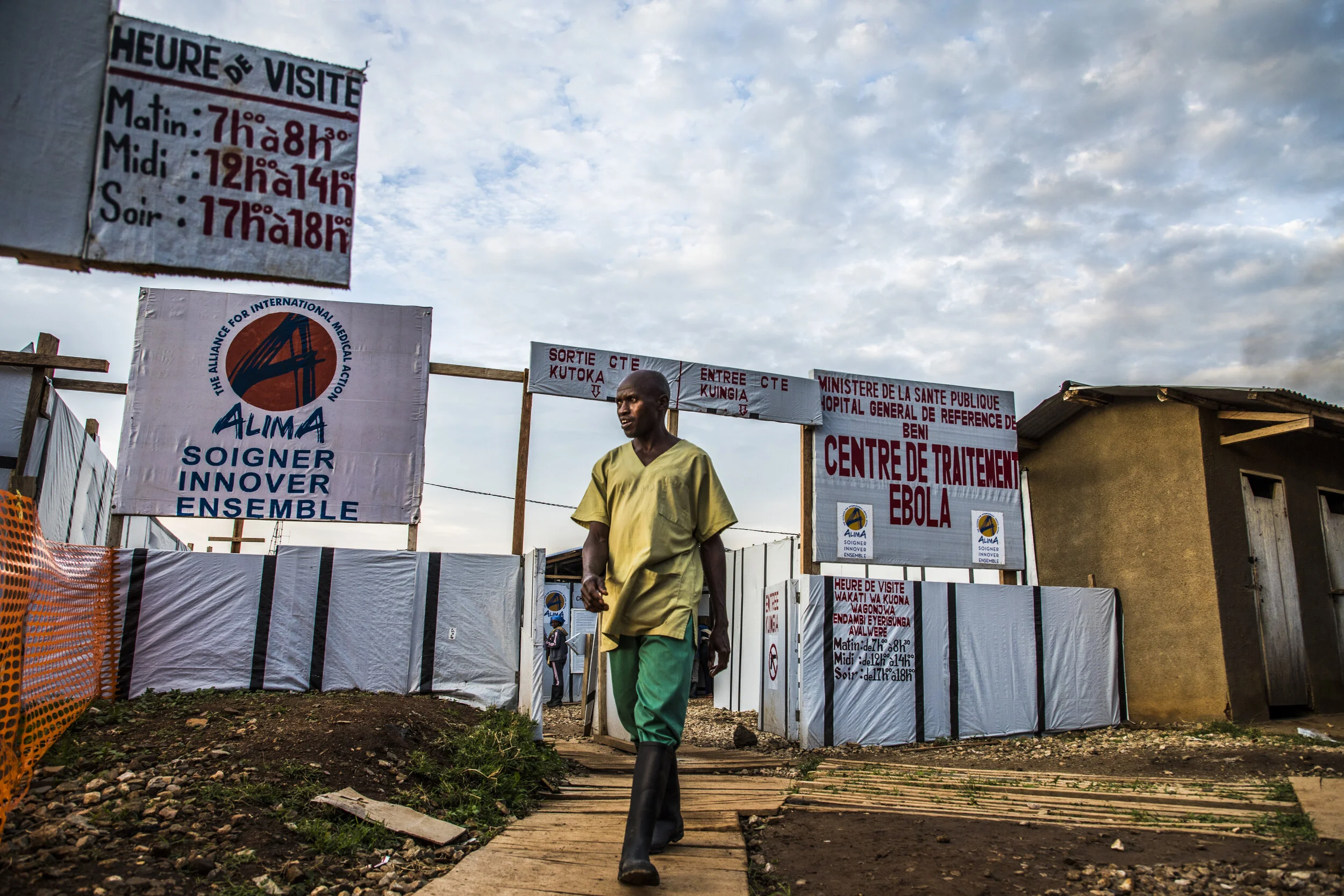
A health worker walking outside of the ALIMA Ebola Treatment Center in the Democratic Republic of Congo in January 2019. World Bank Photo Collection. CC-BY-NC-ND 2.0.
Congo Faces New Ebola Outbreak Amid Global Pandemic
The World Health Organization has called on the international community for financial support and aid in combating the latest Ebola outbreak in the Democratic Republic of Congo. This latest outbreak was announced by the country’s government on June 1 and has seen 56 cases reported in the Equateur province, a region which has been a hot spot for the disease in recent years.
Ebola is a deadly disease with outbreaks occurring primarily in Africa. In humans, the virus can be caused by one of four virus species: Ebola virus, Sudan virus, Tai Forest virus and Bundibugyo virus. The virus spreads through direct contact with organic matter from infected humans and animals. Common symptoms include fever, aches, weakness, fatigue, abdominal pain, gastrointestinal symptoms, and hemorrhaging, bleeding and bruising.
This latest outbreak comes as the 11th in a long line of Ebola outbreaks in the Congo since the disease was first discovered in 1976. A couple of weeks ago, the WHO celebrated the end of the country’s 10th outbreak, which began in August 2018. That Ebola outbreak was the deadliest recorded in the DRC and second worst in history, seeing 2,280 deaths.
According to The New York Times, the WHO has gathered $1.75 million to combat the outbreak, but this funding would only last the organization for a couple more weeks. Dr. Matshidiso Moeti, the WHO’s regional director for Africa, called for additional funding to be allocated toward vaccinations, testing and treatment, as well as contact tracing and health education resources.
“Responding to Ebola in the midst of the ongoing COVID-19 pandemic is complex, but we must not let COVID-19 distract us from tackling other pressing health threats,” Dr. Moeti said. “The current Ebola outbreak is running into headwinds because cases are scattered across remote areas in dense rainforests. This makes for a costly response as ensuring that responders and supplies reach affected populations is extremely challenging.”
Dr. Moeti also stated that over 12,000 people living in the Equateur province had been vaccinated since the outbreak was first reported in June.
WHO Director-General Dr. Tedros Adhanom Ghebreyesus echoed Dr. Moeti’s sentiments in a recent news release on the situation.
“This is a reminder that COVID-19 is not the only health threat people face,” Dr. Ghebreyesus said. “Although much of our attention is on the pandemic, WHO is continuing to monitor and respond to many other health emergencies.”
This call for funding follows a challenging six months for the organization, as the WHO has partnered with global leaders to combat the ongoing COVID-19 pandemic.
While much of the world has been supportive of the organization, the United States has been an exception. President Donald Trump pulled the country out of the WHO in late May over concerns about Chinese influence, with the withdrawal going into effect on July 6, 2021. The U.S. is the organization’s single largest financial contributor, having provided over $400 million in 2019.
President Trump has not publicly commented on this latest Ebola outbreak. While the U.S. directed $21 million in aid through the U.S. Agency for International Development for the 10th outbreak in 2019, it is unclear whether the country will direct any funding toward this latest outbreak’s relief efforts.
The WHO is expected to continue Ebola relief operations within the Equateur province for the foreseeable future, as governmental agencies such as the United Nations have directed additional funding to the organization. However, it is unclear how long this funding will last and how the ongoing COVID-19 pandemic will complicate these relief measures.

Jacob Sutherland
is a recent graduate from the University of California San Diego where he majored in Political Science and minored in Spanish Language Studies. He previously served as the News Editor for The UCSD Guardian, and hopes to shed light on social justice issues in his work.

A full bookshelf. Aleksei Ieshkin. Unsplash.
Book Sales Reflect the Amplification of Black Voices
One of the components that Black Lives Matter’s resurgence has emphasized over the past few months is amplifying Black voices and businesses; one of the most notable spikes of consumer interest is in the sales of books written by Black authors and the promotion of Black-owned bookstores. Prominent book charts by The New York Times and Publishers Weekly have released major upticks in sales for titles about race such as “How to Be an Antiracist” and “White Fragility: Why It’s So Hard for White People to Talk About Racism.” Although the biggest increases are in the United States, where the Black Lives Matter movement originated and is the most concentrated, other places such as the U.K. are seeing increased interest as well.
Why Books?
Books are vessels of knowledge, and for a mass of people hoping to learn about racial injustice, this is one of the most obvious solutions. Simply put, knowledge can overturn ignorance. Although some may disagree about how to dismantle racist systems, there is a general understanding that establishing a base level of knowledge about racial injustice is essential. As Khalil Muhammad, a Harvard University professor of history, race and public policy said, “People use reading as a way to understand what they're doing, why they're doing it and why the work is critically important.” He further explained, "There's a fundamental requirement of organizing around shared knowledge, usually coming from shared text, to build collective engagement around what histories are relevant to explain the matter."
This widespread desire for information during surges of activism is not new and has been occurring for decades. In regard to this movement in particular, some of the foremost goals have included efforts to get a more complete understanding of history through the lens of BIPOC (Black, Indigenous and People of Color) eyes, in addition to learning how to be actively anti-racist. Many of these books’ authors have made statements of support about this rush for knowledge. Ijeoma Oluo, author of bestselling “So You Want To Talk About Race,” tweeted, “I am happy people are reading my book. But if you read my book and think ‘oh - now I understand racism!’ You have a lot more books to read. My book was intended as an introduction.” Without substantive knowledge, people will not have as fluent an understanding of the actions needed to dismantle racial injustice. It is important to note that a person wishing to contribute substantial change must move beyond just reading books and translate their newfound knowledge into meaningful action.
Bookseller Reactions
As physical copies of many books about race and anti-racism have been selling out on major online sites such as Amazon and Bookshop.org, people have turned to their local booksellers. There has been a spotlight on Black bookstore owners, many of whom have shared that their business traffic has increased dramatically in terms of overall book sales and race-oriented books in particular. Though reactions are generally positive, there is also some trepidation and agitation among booksellers. Some say that as great as it is that these books are getting more attention, texts about Black experiences have been overlooked on bookshelves for years. Others want to emphasize that Black voices should be lifted in every genre, not just in race education. “We want to make sure people are not just reading books about slavery, even though that's important,” explained Shauntee Burns-Simpson, vice president of the Black Caucus of the American Library Association.
Perhaps some of the most mixed responses have come from those booksellers who have previously focused on educating Black communities and are now shifting resources to address a new non-Black audience. The creation of a White Ally Book List has aided booksellers as they attempt to make this transition. There is also the problem of those booksellers who say that during this turbulent time they are managing the “‘emotional labor’ of guiding customers” towards anti-racist literature recommendations that could have easily been determined from one of many reading lists already online.
Proof in the Numbers
Beyond the buzz of social media and blog posts, there are some companies that have tried to tackle the notoriously tricky task of monitoring “bestselling” books. One tracker reported that sales for political science civil rights titles increased by 330% and books about discrimination increased by 245% during the week of May 17 to May 23. In the United States, books about race and anti-racism have dominated bestseller lists for months. During the week of June 10, half of USA Today’s Best Selling Books list was composed of titles about race. As of July 14, multiple categories of The New York Times bestsellers are still dominated by books about race and anti-racism. Other bestseller lists to check out include IndieBound and some Amazon lists.
Although countries such as France, Germany and India did not have chart-topping books on race during June, demand for these types of books has still increased globally. Publishers Weekly, a news magazine which claims to gather information internationally in order to determine its bestsellers list, has included “White Fragility,” “How to Be an Antiracist” and “Stamped from the Beginning” on its Top 10 Overall list. In the U.K. specifically, buyers are making race-related books bestsellers on their own. For example, Waterstones, a major British book retailer, has “Why I’m No Longer Talking to White People About Race” on its list of current bestsellers. Also, the U.K. is responding to the Black Lives Matter movement in a way that speaks to that country’s own history, featuring impressive sales on Amazon for books such as “Natives: Race and Class in the Ruins of Empire” (#21 as of 7/15), and “The Boy At the Back of the Class” (#30). While the United States is the center of the Black Lives Matter movement and subsequent spike in race-related book sales, this is a global matter as well.

Book covers from left to right: “How to Be an Antiracist,” “White Fragility and “I Know Why the Caged Bird Sings.”
Need a place to start? Here’s a selection of books by Black authors:
“How To Be An Antiracist” by Ibram X. Kendi
“White Fragility: Why It’s So Hard for White People to Talk About Racism” by Robin DiAngelo
“I Know Why the Caged Bird Sings” by Maya Angelou
“The New Jim Crow: Mass Incarceration in the Age of Colorblindness” by Michelle Alexander
“Why Are All the Black Kids Sitting Together in the Cafeteria: And Other Conversations About Race” by Beverly Daniel Tatum
“Beloved” by Toni Morrison
“Why I’m No Longer Talking to White People About Race” by Reni Eddo-Lodge
“Sister Outsider” by Audre Lorde

Phoebe Jacoby
is a Media Studies major and Studio Art minor at Vassar College who believes in the importance of sharing stories with others. Phoebe likes to spend her free time reading, drawing, and writing letters. She hopes to continue developing her skills as a writer and create work that will have a positive outward effect.
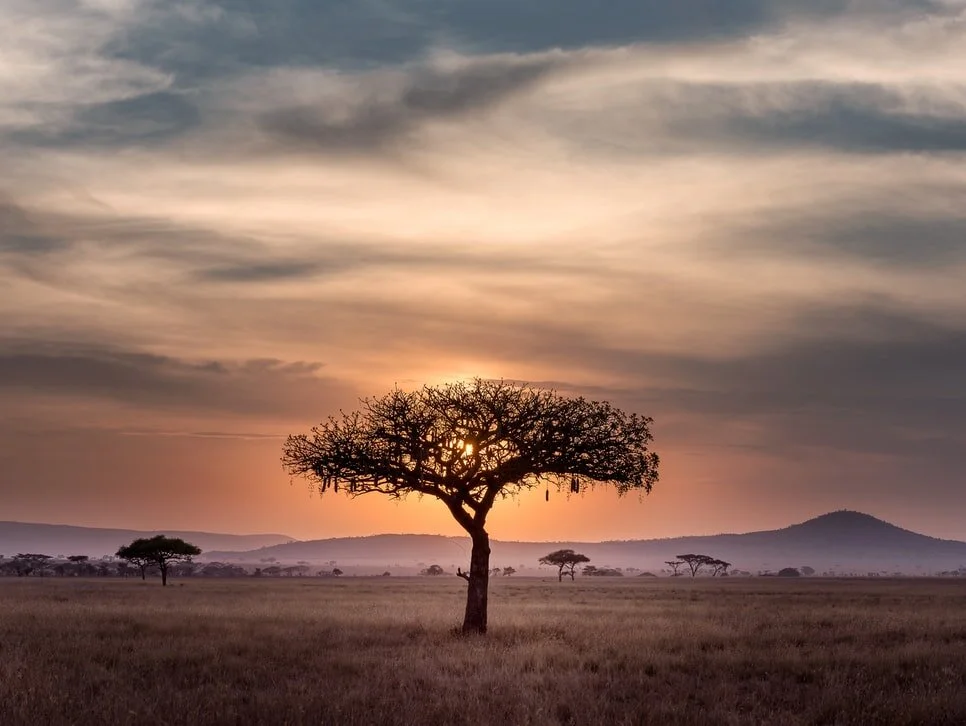
Sunrise on the Serengeti. Hu Chen. Unsplash.
10 Travel Destinations Paving the Way in Sustainability
According to the United Nations, the global community must take drastic measures to alleviate the climate crisis. The Intergovernmental Panel on Climate Change, composed of nearly 1,300 scientists, predicts that global warming could increase worldwide temperatures up to 2.7 degrees Fahrenheit by 2040. This temperature rise will almost certainly exacerbate food insecurity, disease transmission, sea level rise and loss of ecosystems. From 2009 to 2013, international travel alone accounted for 8% of global greenhouse gas emissions. Roughly 1.4 billion people travel to a new destination each year, indirectly contributing to air pollution, land degradation and strained resources. These current levels of travel threaten the Paris Agreement, which proposes an annual 7.6% decrease in greenhouse gas emissions. Many countries have recognized the importance of environmental management and have striven for sustainability. From Malta to Japan, travel destinations are implementing eco-friendly practices, such as renewable energy and wildlife conservation. Travelers to these locations can explore pristine environments while positively impacting the planet.
1. Gozo, Malta
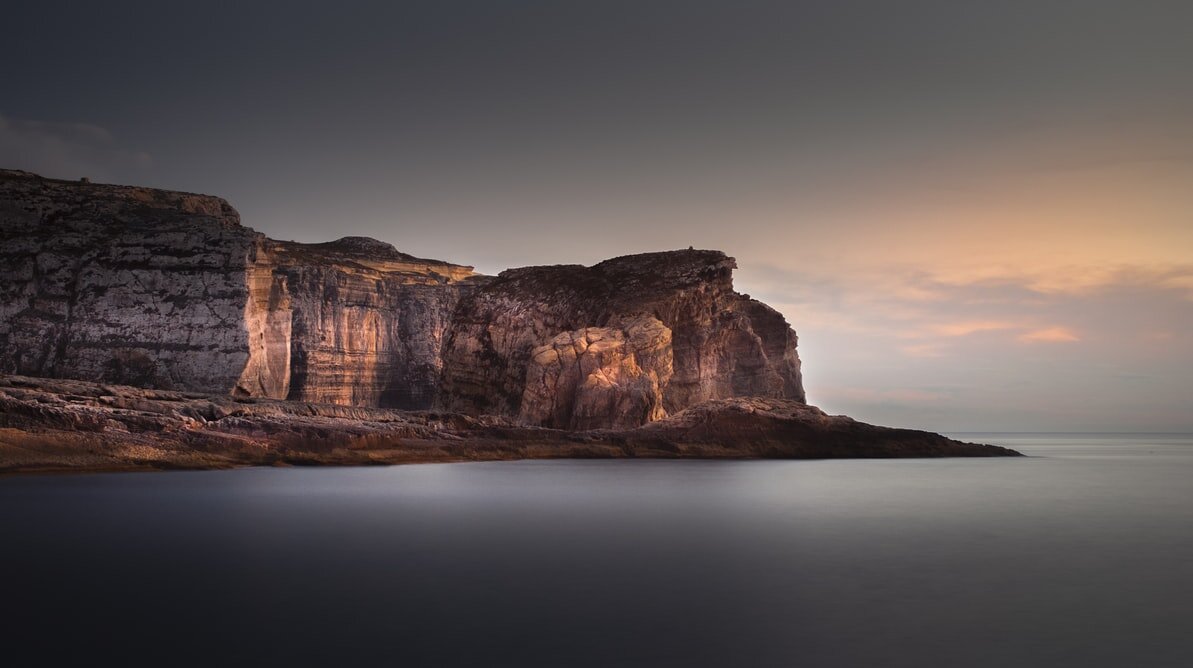
The coastline of Gozo, Malta. Zoltan Tasi. Unsplash.
Located in the Mediterranean Sea, the island of Gozo boasts a rich historical identity. Recognized by UNESCO, the Ggantija Temples are the world’s oldest free-standing structures, predating Stonehenge and the pyramids of Egypt. In addition to these historical sites, the island is relatively undeveloped, offering scenic hills and untouched coastlines. The European Environment Agency regularly monitors urban waste and pollution in coastal areas. According to their assessment, Maltese beaches rank among the cleanest in Europe. Within this pristine environment, common activities include swimming, snorkeling, deep-sea diving and kayaking. Gozo also hosts 85 endemic species of flora and fauna. To protect and preserve this unique landscape, the Ministry for Gozo established the Eco-Gozo Regional Development Directorate in 2009. Over the past decade, the island has become a model for sustainable development. Through renewable energy, green transportation and plastic reduction, Gozo is committed to reducing its carbon and water footprints. Ecologists have established protected spaces for endangered species, while local craftsmen sustainably restore ancient ruins like the Ggantija Temples. To further improve the standard of living in the Gozitan community, the island implements eco-education programs in schools and offers locally sourced, organic ingredients in restaurants. Named the Mediterranean’s Best Green Destination in 2018, this small island continues to gain recognition for its innovative conservation efforts.
2. Ljubljana, Slovenia
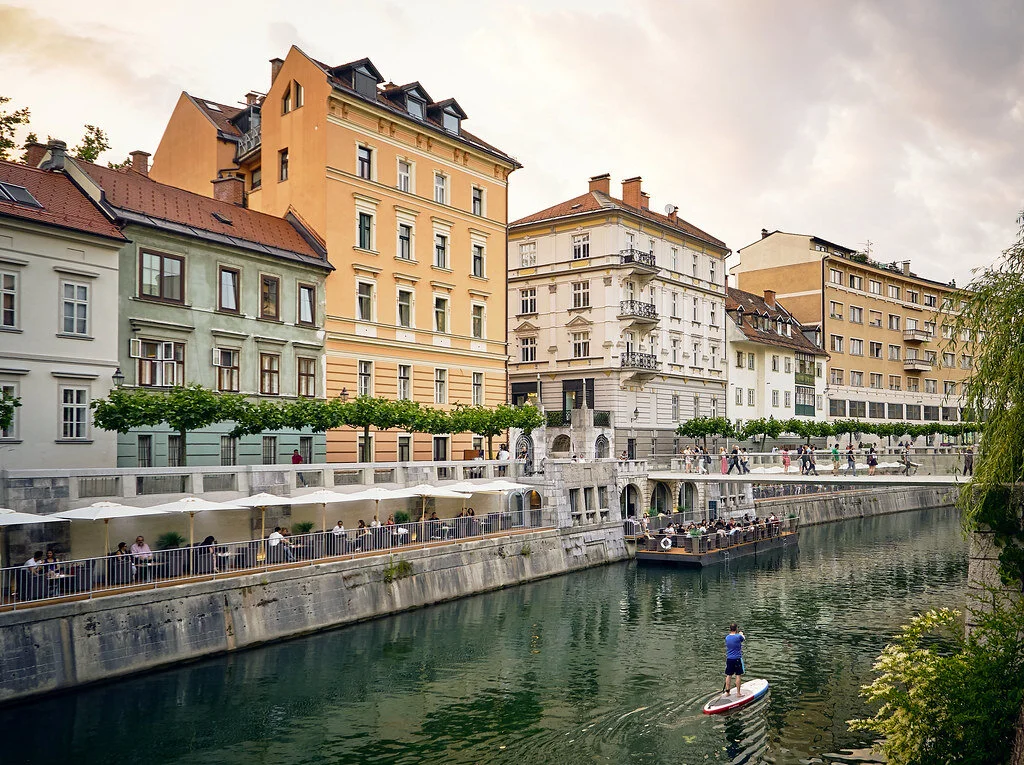
The Ljubljanica River, a pure water source in central Slovenia. Pedro Szekely. CC BY-SA 2.0
Known as “Slovenia’s Green City,” Ljubljana is the first European capital to establish a “zero-waste” initiative. The city currently recycles nearly 70% of its waste, reducing landfill trash to a mere 5%. Residual waste is processed into recyclable materials, solid fuels and high-quality gardening compost. Public green spaces, which include thousands of trees, comprise a third of the city’s territory and absorb carbon dioxide from the atmosphere. Visitors to Ljubljana can explore a variety of hiking trails, as well as an urban bee path that cares for 4,500 beehives. The city draws from the Ljubljanica River, which provides natural, non-processed drinking water and eliminates the need for plastic bottles. Since 2007, the historic city center has banned car traffic, allowing only bikes, pedestrians and electric trains. With fewer cars, the integrity of cultural and historical landmarks, like Preseren Square and Cobblers' Bridge, will be preserved for generations. In 2016, Ljubljana was deemed the “European Green Capital” and it plans to be zero-waste by 2035.
3. Azores, Portugal
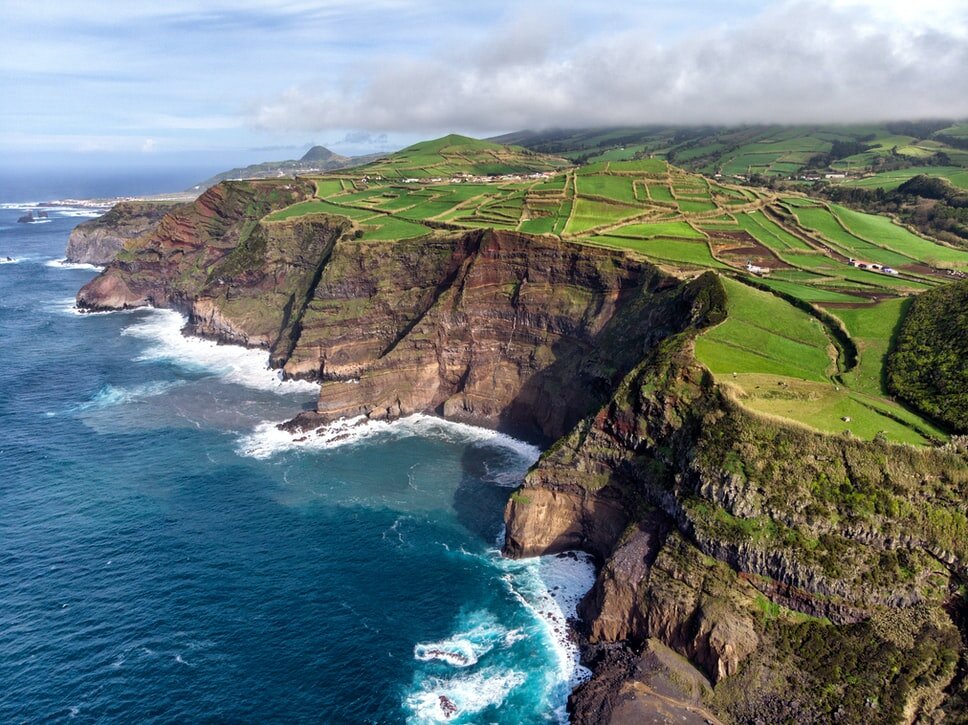
The rugged cliffs of the Azores Islands in Portugal. Yves Alarie. Unsplash.
With nine volcanic islands, the archipelago of the Azores has diverse geological significance. The islands’ landscapes are dominated by craters, lagoons, waterfalls and lava fields. Visitors can hike among dense coastal forests, relax in natural hot springs and journey through dormant volcanoes. Azorean wildlife is varied and includes whales, dolphins, seals, bats and hedgehogs. However, rising sea temperatures spurred by climate change have driven aquatic species, such as the North Atlantic right whale, to near extinction. To protect the islands’ biodiversity, the Azores Islands harbor more than 60 marine protected areas which serve as sanctuaries for endangered species. Rather than burning fossil fuels, the Azores utilize geothermal power plants to harvest renewable energy from the earth’s subsurface. Geothermal power currently provides around 50% of the islands’ energy needs. Due to these sustainable developments, the Azores ranked among the world’s top 100 sustainable destinations in 2019.
4. Iwokrama Forest, Guyana
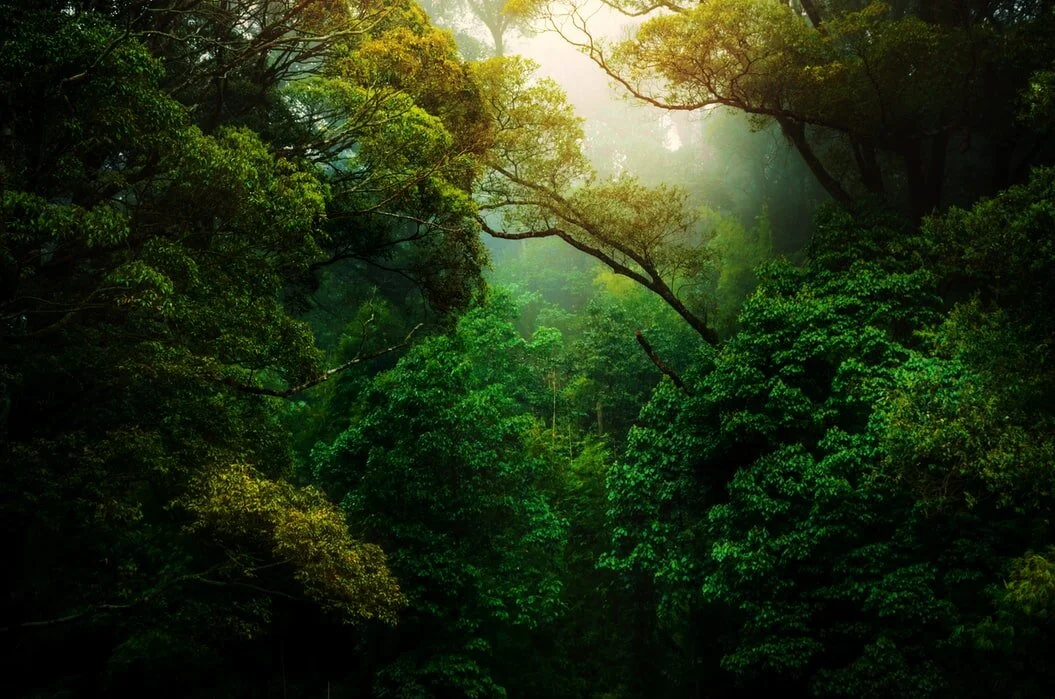
The dense foliage of the Iwokrama Forest. Kunal Shinde. Unsplash.
Named “The Green Heart of Guyana,” the Iwokrama Forest is one of the last pristine tropical forests in the world. For decades, global timber industries have exploited these natural ecosystems through deforestation, generating 18% of all greenhouse gas emissions. While tropical forests only occupy 7% of the Earth’s surface, they capture and store carbon naturally, with Iwokrama capturing over 1.4 million tons of carbon dioxide annually. In order to mitigate the loss of vital vegetation, Iwokrama employs a polycyclic harvesting system, resulting in the removal of less stems per acre and no significant gaps in the forest canopy. The Forest Stewardship Council has commended these forest management practices, which prioritize locals, wildlife and the natural environment. Amid lush forests, wetlands and savannas, visitors might encounter diverse wildlife such as jaguars, giant anteaters, black caimans and harpy eagles. While traversing the Iwokrama Canopy Walkway, a 500-foot series of suspension bridges, travelers can examine nearly 6,500 species of plants. In 2016, Guyana’s Environmental Protection Agency awarded the Iwokrama Forest with the Green Award for its exemplary environmental stewardship.
5. Galapagos National Park, Ecuador
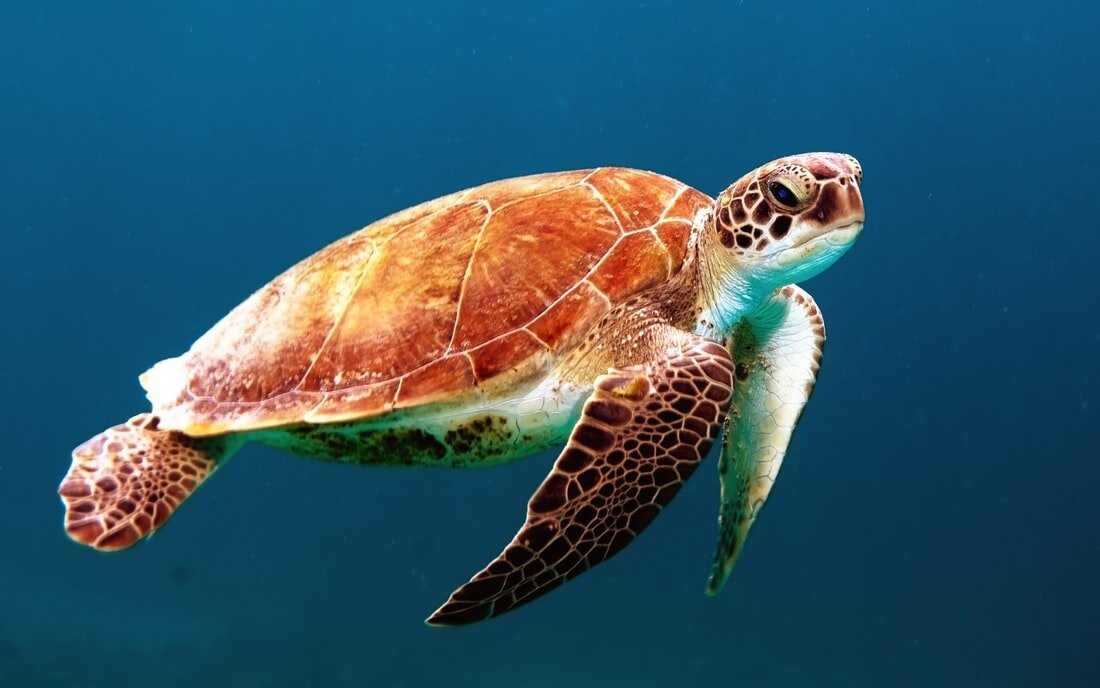
A Galapagos sea turtle swimming off the coast. Wexor Tmg. Unsplash.
As a UNESCO World Heritage Site, the Galapagos National Park and surrounding waters are protected for conservation. The 19 islands boast distinct landscapes, ranging from barren volcanic rocks to green sand beaches formed by olivine crystals. The Galapagos are home to a variety of endemic species, including 15 mammals, 45 bird species and 79 types of fish. Due to wildlife sanctuaries and habitat restorations, vulnerable animals like tortoises, iguanas and sea lions live in harmony with humans. The Galapagos Islands also have a rich variety of endemic flora, with over 500 species discovered. When visiting the Galapagos, visitors are expected to act responsibly and treat the environment with respect. Common activities include snorkeling alongside sea turtles, hiking over dried lava beds and whale watching from kayaks. The Galapagos National Park is well maintained and protected by park rangers and volunteers, who partake in regular coastal cleanups. However, to ensure long-term sustainability, the islands offer outreach and education programs. Ecologists and environmental experts teach locals and visitors about the harmful effects of climate change and pollution in the hopes that this diverse landscape will endure for years to come.
6. Felicite Island, Seychelles
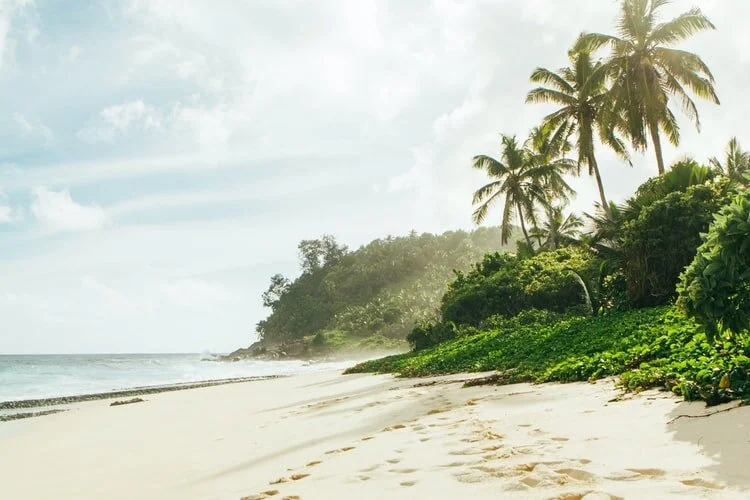
Felicite Island in the early morning. Nenad Radojčić. Unsplash.
Located in the Indian Ocean, Felicite Island contains parts of Ramos National Park and multiple marine protected areas. This small island community has multiple initiatives to conserve energy and invites visitors to share the responsibility of offsetting their carbon footprint. Drip irrigation has been introduced as a solution to water and energy waste. Widespread rainwater harvesting allows the use of rainwater for non-potable needs, such as washing clothes and watering gardens. Organic vegetable gardens support the ultimate aim of self-sustained food and beverages in the Seychelles. Special efforts are given to waste reduction, with zero-waste and plastic-free initiatives. Recently, island officials banned plastic bags, plates, cups and plastic foam boxes in order to mitigate ocean pollution. Additional conservation programs include a reforestation project, sea turtle monitoring and coral restoration. Within this pristine paradise, visitors can partake in snorkeling, diving and community outreach programs regarding climate change.
7. Serengeti National Park, Tanzania
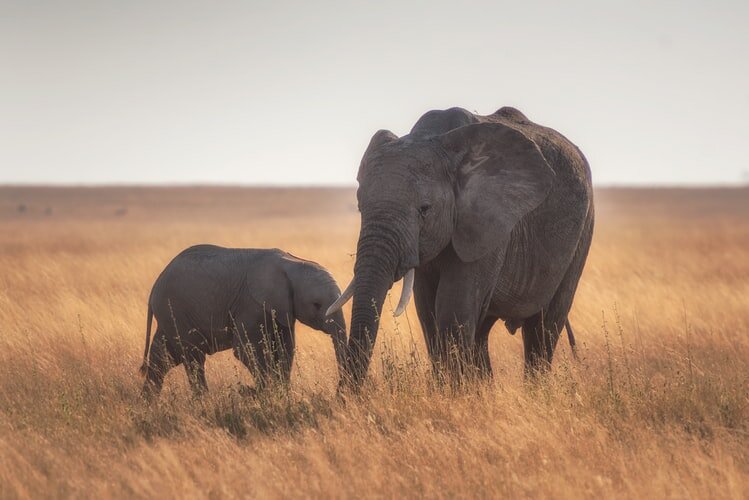
Elephants, an endangered species, graze the Serengeti. Hu Chen. Unsplash.
Founded in 1951, Serengeti National Park houses one the highest concentrations of mammals in Africa, with species such as lions, giraffes and hippos. It is also known for the largest remaining unaltered animal migration in the world, with over 6 million zebras, gazelles and wildebeests stampeding over the fertile plains. At least four globally threatened or endangered species, such as elephants and cheetahs, thrive in these heavily-patrolled conservation areas. Guided safaris allow visitors to witness this diverse wildlife from a close proximity. Serengeti, however, is committed to sustainable visitation in order to protect the environment from irreversible damage. Human activity and waste disposal are closely monitored by park rangers. Conservation areas and secure breeding grounds also mitigate the impacts of deforestation, poaching and urbanization. Through such practices, Serengeti National Park allows wildlife to roam freely in their natural habitat, an increasingly rare commodity.
8. Republic of Palau
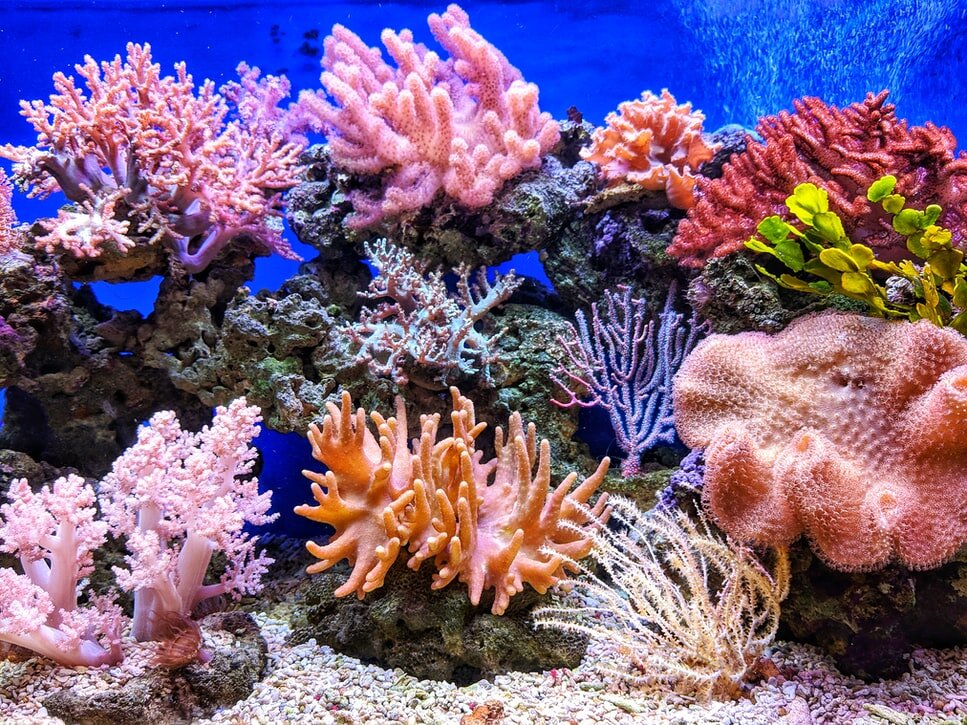
Coral reefs, an endangered ecosystem. Qui Nguyen. Unsplash.
Located in the western Pacific Ocean, the Republic of Palau includes over 200 volcanic and coral islands. Palau supports a diverse aquatic environment, inhabited by nearly 700 coral species and 1,400 fish species. Coral reefs protect coastlines from waves, provide wildlife with refuge and offer opportunities for recreation. Due to climate change, this vital ecosystem is severely threatened. The Coral Reef Research Foundation promotes water conservation, renewable energy and recycling to mitigate coral destruction. In 2018, Palau banned sunscreens that contain environmental pollutants and established marine sanctuaries in 80% of its territorial waters. Travelers to Palau must sign a pledge declaring that they will preserve and protect the island. While scuba diving, snorkeling and surfing, visitors must adhere to this pledge and respect wildlife.
9. Sun Moon Lake, Taiwan
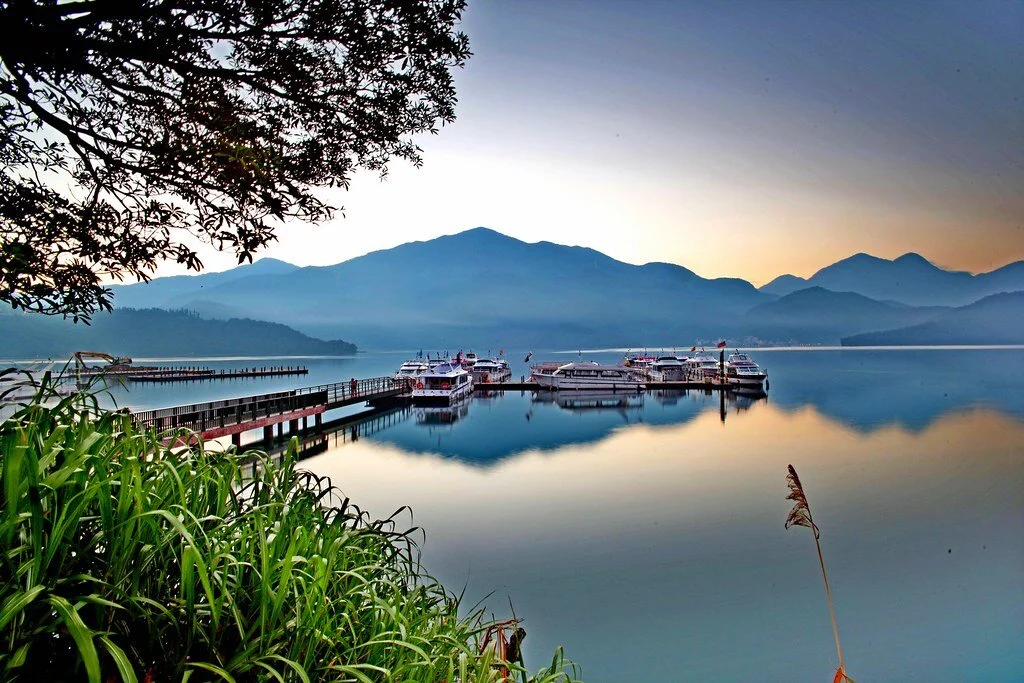
Sun Moon Lake at sunset. Eddy Tsai. CC BY-SA 2.0
Residing in the foothills of Taiwan’s Central Mountain Range, Sun Moon Lake prides itself on maintaining a low carbon footprint. Public transportation routes have decreased the reliance on driving, thereby reducing the emission of greenhouse gases. Cable car systems, electric boats and cycling paths are common alternatives to cars at Sun Moon Lake. This rural region also hosts a range of dams which generate 62% of Taiwan's total hydroelectricity. Travelers to Sun Moon Lake can hike through dense forests, kayak in turquoise waters and interact with Indigenous people who live in the area. Thao natives, such as the Bunun, believe humans and Earth are intrinsically connected, opting to practice sustainable farming and fishing. Sun Moon Lake adheres to this philosophy and strives to protect the fragile environment.
10. Kamaishi, Japan
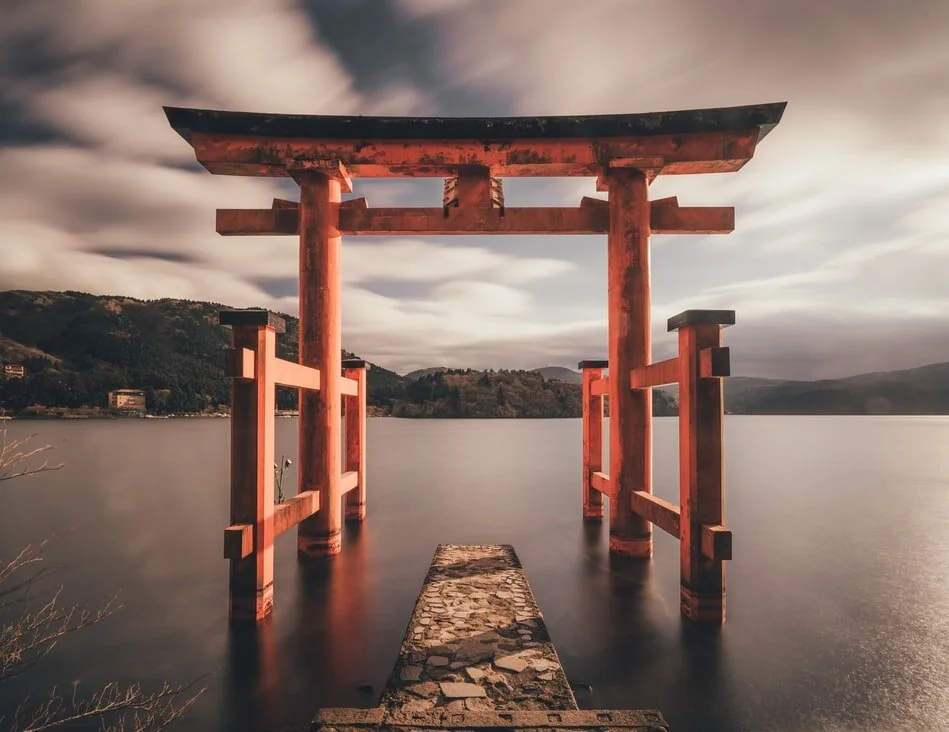
A traditional Japanese torii. Tianshu Liu. Unsplash.
Along the rugged Sanriku Coast, Kamaishi is an important fishing and industrial city. In 2011, a 45-foot tsunami swept through the city, devastating the local fishing industry and taking the lives of roughly 1,000 people. Amid ongoing reconstruction efforts, Kamaishi is prioritizing sustainability. Established two years after the tsunami, the Sanriku Fukko National Park consists of towering cliffs, unique stone formations and isolated coastlines. The Jodogahama and Kirikiri beaches, surrounded by vibrant green pine trees, host diverse marine ecosystems. Salmon, scallops, crabs and sea urchins are among the many aquatic animals that receive protections from overfishing. Through coastal cleanups, inland forestry conservation and river purification, Kamaishi strives to reduce the impact of industrial pollution. Forms of public transportation, such as electric trains and ride-shares, further mitigate car traffic and fossil fuels. Kamaishi is also a leader in renewable energy, relying on solar power and biomass fuel to power residential areas. Environmental organizations have commended Kamaishi for rebuilding a cleaner community in the wake of such a devastating natural disaster.

Shannon Moran
is a Journalism major at the University of Georgia, minoring in English and Spanish. As a fluent Spanish speaker, she is passionate about languages, cultural immersion, and human rights activism. She has visited seven countries and thirty states and hopes to continue traveling the world in pursuit of compelling stories.
Plastic Rain: The New Acid Rain
The world produces approximately 359 million metric tons of plastic every year, half of which is single-use and immediately thrown out. A 2017 study discovered that of the 8.3 billion metric tons of plastics produced, 12% is incinerated and only 9% is recycled. The remaining 79% accumulates in landfills and the natural environment, including the oceans. More than 8 million tons of plastic makes its way to our oceans every year, polluting an already fragile environment due to habitat elimination, destructive fishing practices and other pollutants such as oil spills and reactive nitrogen and phosphorus that rivers like the Mississippi carry into the ocean.
Some of those pollutants enter the water cycle in the form of acid rain. Acid rain poisons everything it comes into contact with—the sulfur dioxide and nitrogen oxides harm humans, wildlife and the Earth. Acid rain was first discovered in the U.S. “in the 1950s when Midwest coal plants spewed sulfur dioxide and nitrogen oxides into the air, turning clouds—and rainfall—acidic,” according to the National Science Foundation. It wasn’t until widespread damaging effects began on forests and bodies of water in the Northeast that Congress took action by passing the Clean Air Act in 1970, which imposed emission regulations to target air pollutants. This was not enough, however, as acid rain became one of the most well-known pollutants during the 1970s and 1980s as it damaged German, Czech and Polish forests in the “black triangle” region and increased the acidity of bodies of water in the U.S., particularly along the Atlantic coast, which in turn harmed the aquatic organisms and ecosystem.
Acid rain may be slightly less of a problem now with effective environmental regulations, but our environment is not any less at risk. There is a new threat to our environment that is falling along with rainwater: microplastics.
A study conducted in 2019 by researchers at U.S. Geological Survey shows that microplastics have made their way into the water cycle and are permeating virtually every surface on Earth with no way to control where the plastic rains down. Researchers discovered that over 90% of the water samples taken along Colorado’s Front Range contained microplastics.
Microplastics are plastic debris that are less than 5 millimeters in length that come from a variety of sources, including microbeads—exfoliants used in skin products and toothpastes— textile fabrics, and larger plastic items that have degraded into smaller pieces after being broken down by wind, the sun and waves. In addition to taking a long time to decompose, microbeads are damaging due to their ability to absorb toxins and are notoriously difficult to remove from the environment due to their minute size. They became such a problem that Congress passed the Microbead-Free Waters Act of 2015, which prohibits the manufacturing of rinse-off cosmetic products containing microbeads. Although there is not enough research at this point to determine how detrimental microplastics are, it is evident that they are polluting the Earth—appearing in remote areas such as the French Pyrenees and even hitching rides on sea breezes.
New research published last month indicates that plastic rain is a huge problem—leaving no place safe from plastic pollution. Researchers collected rainwater and air samples from 11 protected areas in the western U.S. for 14 months and discovered over 1,000 metric tons of microplastic pieces in the rainwater collected, which is “the equivalent of over 120 million plastic water bottles,” according to Wired. The researchers predicted that in just five years 11 billion metric tons of plastic are projected to accumulate in our environment, which is equivalent to the weight of approximately 55 million blue whales.
Asiya Haouchine
is an Algerian-American writer who graduated from the University of Connecticut in May 2016, earning a BA in journalism and English. She was an editorial intern and contributing writer for Warscapes magazine and the online/blog editor for Long River Review. She is currently studying for her Master’s in Library and Information Science. @AsiyaHaou
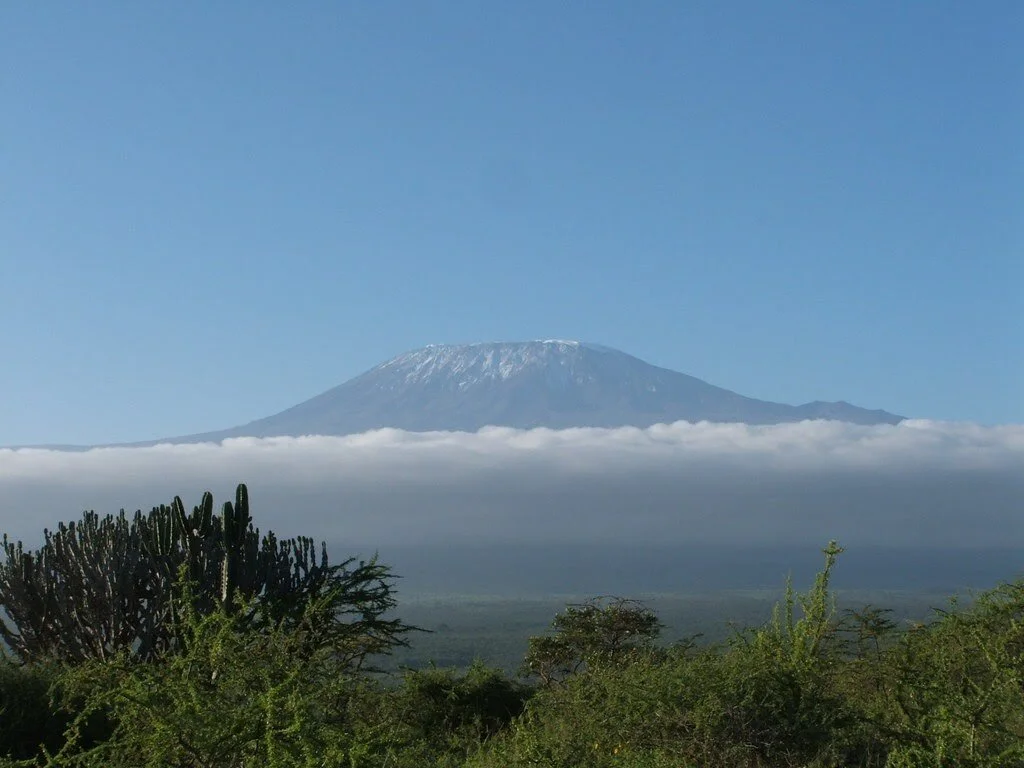
Snowcapped Kibo Peak on Mount Kilimanjaro. Ian 1602. CC BY-NC 2.0.
7 Reasons to Climb Mount Kilimanjaro - and How to Do It Sustainably
Mount Kilimanjaro, commonly known as the “roof of Africa,” is the tallest free-standing mountain in the world. At 19,340 feet, its snowcapped peak extends well above the clouds. Kilimanjaro is located in northeast Tanzania, towering over all of East Africa. Relative to other destination climbs, “Mount Kili,” as it is often known, is fairly easy. Nonetheless, the 75,000 individuals who summit the mountain each year push their bodies to the limit, experience Tanzanian culture and take in surreal views.
1.) Mount Kilimanjaro is the most accessible of the Seven Summits, the highest peaks on every continent. As the only Seven Summit hike free of technical climbing, Mount Kili does not require equipment like harnesses or ropes. Hikers simply need adequate physical fitness, a pair of hiking poles and their own two feet.
2.) That’s not to say Mt. Kilimanjaro isn’t a thrilling, challenging adventure. It remains a taxing endeavor that demands strength, stamina and an awareness of potential oxygen deprivation. Most tour operators ensure that their clients consult a doctor before embarking on the climb. The hike, however, is predominantly safe, with altitude sickness being the main reason that hikers do not complete the climb. Ultimately, Mt. Kili is a realistic challenge that testifies to its hikers’ willpower.
3.) Mt. Kilimanjaro is beautiful, both from up close and afar. Its paths scale across multiple climate zones, including lush rainforests, wide open moorlands and chilly glaciers. Additionally, the scenic campsites offer an ideal respite from a long day of trekking.
4.) The mountain is a dormant volcano composed of three different cones: Kibo, Mawenzi and Shira. Although Mawenzi and Shira are extinct, Kibo could erupt again. Along their journey to the top, hikers witness miles of lava and rock. The highest point on Kibo’s crater is Uhuru, or “freedom” in Swahili.
5.) The hike lasts roughly one week. Ascents can take as few as four nights and as long as eight, depending on the route. Once climbers complete the challenge, they can descend the mountain and turn their attention to the surrounding wildlife. Northern Tanzania is teeming with wildlife and offers some of the best safari experiences in all of Africa. Elephant herds in Tarangire National Park, flamingos and pelicans at Lake Manyara, and wildebeest in the Serengeti are only a few of the wildlife encounters to be had in northern Tanzania.
6.) Guides hail from surrounding parts of Tanzania. To the visitors, they teach Swahili hiking phrases, singsongs, and provide support during trying periods of the climb. On the trails, these porters call out “Pole pole!” (slowly slowly) to save their clients from altitude sickness. Before leaving the campsites in the morning, they often amplify the group’s energy with song and dance.
7.) By making sustainable choices, hikers can exercise social responsibility and promote the welfare of hardworking porters, guides and cooks. The Kilimanjaro Porters Assistance Project (KPAP) is a nonprofit organization seeking to improve the working conditions of exploited porters. Although they are the backbone of the trek, oftentimes guides are ill-equipped, overworked and underpaid. KPAP suggests that hikers take action by giving mountain clothing to porters and selecting ethical climbing companies. A cheap Kilimanjaro trip means lower wages and poor working conditions for the Tanzanians who carry gear, cook for and guide tourists. When hikers purchase Kili climbing programs at non-exploitative prices, they not only indulge in Tanzania’s riches, but also give back to the community.

Anna Wood
is an Anthropology major and Global Health/Spanish double minor at Middlebury College. As an anthropology major with a focus in public health, she studies the intersection of health and sociocultural elements. She is also passionate about food systems and endurance sports.
As Acai Demand Rises, Amazonian Communities Seek Out their Role
The acai palm is one of the many native plants that has been commodified for Western consumption. This has shifted acai consumption and production practices within Indigenous Amazonian communities.

Acai bowls are the most common form of Western acai consumption. Ella O, CC BY 2.0
Prior to 2000, Indigenous Amazonian communities utilized the acai palm plant on a local scale. The purple berry then found its way to the U.S., appealing to surfers in Hawaii and Southern California. It has since been in the spotlight, spurring new industries and finding its way into the global marketplace. The acai palm plant is one of many Indigenous plant foods that has been commodified for foreign consumption, shifting acai usage and production practices among Brazil’s Amazonian tribes. Indigenous Amazonian communities, who have utilized acai as a diet staple for centuries, are now exporting it for profit, hoping not to forfeit their land to multinational corporations.
Companies that sell acai heavily market its health benefits, calling it a superfood that allows individuals to reach maximum health. Acai specifically offers anti-aging benefits, improved digestive health, increased energy levels and a strengthened immune system. The berry contains high amounts of antioxidants, omega-6 and omega-9 fatty acids, fiber, protein, vitamins and minerals. When globally transported, the acai berry is processed and packaged into various forms. When reduced to powders, capsules and liquids, the acai berry becomes a watered-down entity detached from Amazonian food culture. While many understand acai’s countless health benefits, few consumers know the context from which it comes.
Grown on tall acai palm trees, the acai berry sprouts in large, clustered bunches. The trees grow to between 50 and 100 feet tall, bearing the fruit from their extended branches. In the village of Acaizal on the Uaca Indigenous reserve, villagers loop a palm leaf tied around their feet and scale the tree, knife gripped firmly between their teeth. Children, some as young as seven, learn this harvesting method. Once collected, acai pulp is served chilled and often mixed with sugar and tapioca.
Increased demand for acai pushes Indigenous groups to formalize and industrialize this cultivation process. Amazonian tribes subsequently alter their traditional production to accommodate increased consumption. In the state of Amapa, Indigenous communities want to explore potential business arrangements and have identified acai production as a top priority for natural resource management. In a workshop hosted by local government agency Secretary Extraordinary of Indigenous People, Acaizal village chief Jose Damasceno Karipuna learned how to capitalize on acai harvesting processes. The increase in acai demand creates a flourishing job market for large-scale Amazonian farmers; however, it harms farmers who rely on small-scale production. With an ever-increasing demand for acai, protection of natural areas is crucial to preservation. For the villagers in Acaizal, proper environmental management will increase productivity while ensuring sustainability. Acai companies emphasize this business exchange as mutually beneficial, bettering individuals’ health and the Brazilian economy alike. However, the mass consumption and commodification of acai is ultimately a gray area, creating an uncertain future for Indigenous communities.

Anna Wood
Anna is an Anthropology major and Global Health/Spanish double minor at Middlebury College. As an anthropology major with a focus in public health, she studies the intersection of health and sociocultural elements. She is also passionate about food systems and endurance sports.
4 Verdant Rainforests to Explore Across the US
Though the United States has a vast array of landscapes to be appreciated, one is often forgotten: its rainforests. While the term “rainforest” is not entirely defined, they are known to be densely vegetated areas that usually receive at least 75 inches of rain per year. It is easy to think that all rainforests are like the Amazon and the Congo since they are the most well-known, but the United States also boasts several unique rainforests that travelers definitely should not miss.
Tongass National Forest - Alaska
The largest temperate rainforest in the United States is the Tongass as it reaches over the majority of southeast Alaska. This region is home to many Alaska Natives, with groups represented including the Tlingit, Haida and Tsimshian. The name of the forest comes from the Tlingit people, who lived in the southernmost portions of the region. Now, the area is known as Alaska’s “Inside Passage,” and it is ideal for travelers who want to experience Alaska in its fullness. Skilled hikers can traverse high snowy peaks while other travelers can catch a wildlife tour or ride the White Pass & Yukon Route Railway. Even without travel plans, the grand fjords and glaciers are sure to stun.
Hoh Rainforest, Olympic National Park - Washington
Large hemlock trees in the Hoh Rainforest, Washington. Nathan Dumlao. Unsplash.
Washington state is notorious for its rain, but its particularly rainy winters result in an incredible sight. The Hoh Rainforest bursts with wildlife in the warmer months, with mosses and ferns covering the forest floor adding to its allure. This temperate rainforest is home to an ecosystem that has been unchanged for thousands of years, and it is now the most carefully preserved rainforest in the Northern Hemisphere.
Banana slug on a tree. John Loo. CC 2.0.
While most travel is best on a sunny day, hikers should experience the Hoh while it’s raining. Not only will the moss radiate like emeralds against the dirt beneath it, but you also have a chance of seeing a bright yellow banana slug, the second largest land slug in the world.
Hamakua Coast - Big Island of Hawaii
Akaka Falls in the Hamakua forests. Seth Cottle. Unsplash.
On the northeastern side of Hawaii’s Big Island, the Hamakua Coast is a stretch of lush rainforests home to roaring waterfalls and rich green valleys. Flanked by the Mauna Kea and Kohala volcanoes, this region is home to three of Hawaii’s most famous waterfalls–Akaka Falls, Umauma Falls and Rainbow Falls.
Flowing water in the rainforest near Hilo, Hawaii. Pascal Debrunner. Unsplash.
Outdoor adventure is abundant, though the area’s scenic driving tours are just as likely to impress. The rainforest also has a large abundance of eucalyptus in certain areas that can be explored on fast-paced tours by all-terrain vehicle.
Appalachian Rainforest - Southeastern United States
Black Balsam Knob in North Carolina’s Pisgah National Forest. Darrell Moore. Unsplash.
The Appalachian Mountains are stunning by themselves, being some of the oldest mountains in the world. The southern portion of the Appalachian Mountains is home to a particularly breathtaking temperate rainforest noted for its vibrant colors in the fall and gentle mist. Many travelers are familiar with the Great Smoky Mountains in Tennessee and North Carolina, which get their name from the blue mist that rises up from the mountains after they receive heavy rainfall. The Great Smoky Mountains National Park is the most biodiverse national park in the country, making it perfect for wildlife lovers. In addition, the Pisgah, Nantahala and Chattahoochee-Oconee national forests are also temperate rainforests in the region ripe for exploration.

Renee Richardson
is currently an English student at The University of Georgia. She lives in Ellijay, Georgia, a small mountain town in the middle of Appalachia. A passionate writer, she is inspired often by her hikes along the Appalachian trail and her efforts to fight for equality across all spectrums. She hopes to further her passion as a writer into a flourishing career that positively impacts others.