• Travel Features
  • Global Action
  • Take A Trip
  • Travel Guides
    • Podcast
    • Courses
    • Bookshop
  • About
  • Sign Up
Menu

CATALYST PLANET

  • Travel Features
  • Global Action
  • Take A Trip
  • Travel Guides
  • Discover
    • Podcast
    • Courses
    • Bookshop
  • About
  • Sign Up

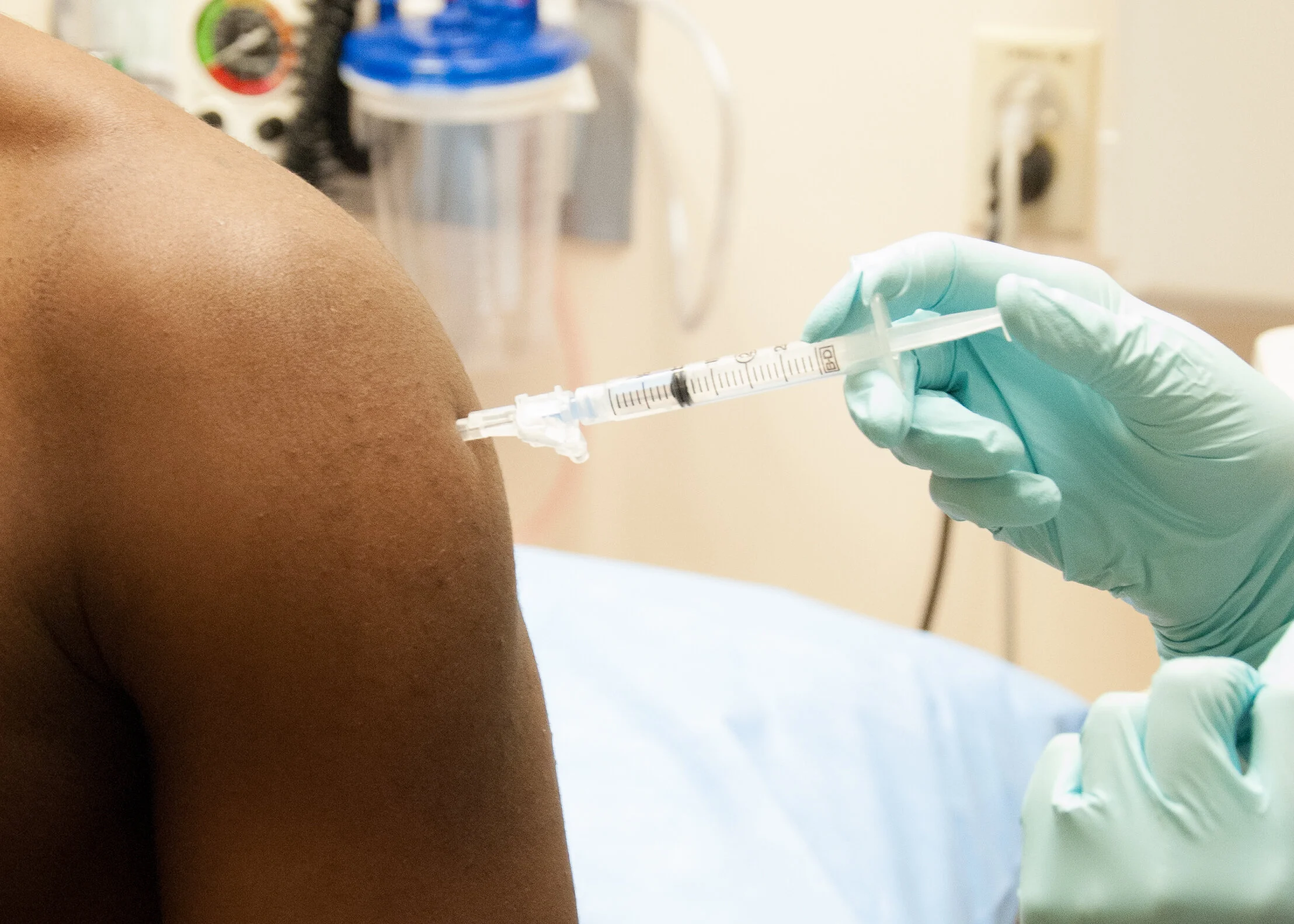
A patient receiving a vaccine via an injection similar to those used by some of the COVID-19 vaccines. NIAID. CC BY 2.0.

Developing Countries Get Left Behind as COVID-19 Vaccines Gain Approval

January 20, 2021

As COVID-19 vaccines began to be approved and distributed worldwide at the end of 2020, the consequences of global inequality were starkly revealed. Poorer countries now find themselves uncertain as to when they will be able to administer their first vaccinations.

Wealthy countries secured the bulk of the initial supply of vaccines through preorders placed in mid-2020, with the majority of available vaccines being distributed first to countries in Europe and North America. Of the three major vaccines which have received full approval for use, the Pfizer-BioNTech and Moderna vaccines had promised the majority of their first round of doses to high-income countries, and the Sinopharm vaccine, which was approved for use in China, had all of its initial doses promised to upper middle-income countries.


“We need to show global cooperation, global solidarity”

Richard Kozul-Wright, director of the division on globalization and development strategies at the United Nations Conference on Trade and Development, expressed concern over unequal vaccine distribution in an interview with The New York Times.

“It’s clear that developing countries, and especially poorer developing countries, are going to be excluded for some time,” Kozul-Wright said. “Despite the understanding that vaccines need to be seen as a global good, the provision remains largely under control of large pharmaceutical companies in the advanced economies.”

A December 2020 report by the People’s Vaccine Alliance found that if virus distribution continues unaltered in its current state, nearly 70 poor countries would only have enough vaccines for one in 10 people by the end of 2021, in comparison with wealthier countries which would have enough doses to vaccinate their populations nearly three times over.

Africa Centers for Disease Control and Prevention director John Nkengasong called this unequal distribution of vaccines a “moral issue” in a December press conference urging the United Nations to call a special session to address vaccine inequities.

“We need to show global cooperation, global solidarity,” Nkengasong said. “The time to translate those powerful words into action is now.”

These initial preorders have left many developing countries scrambling for support as the COVID-19 pandemic continues to break global records on a day-to-day basis. South Africa, a middle-income country with half of its population living in poverty, was deemed “too wealthy” by international organizations in charge of distributing vaccines to developing countries. As a result, experts believe the country, which has reported the most confirmed cases of COVID-19 on the continent, will not administer its first inoculation until mid-2021.

Elsewhere, prospects for a swift vaccine distribution process remain grim. The People’s Vaccine Alliance report also stated that five of the countries which are currently expected to receive enough vaccines for only one in 10 residents by the end of 2021, Kenya, Myanmar, Nigeria, Pakistan and Ukraine, had collectively reported 1.5 million cases when the report was published last month.

The COVID-19 pandemic is not isolated in regard to having a patchwork system of global protection. Polio, which had been eradicated throughout the Western world by the mid-20th century, was only deemed eradicated in its wild form from Africa in August 2020. Tuberculosis, another disease which has been all but eliminated as a threat to life in the West, killed 1.4 million people worldwide in 2019, the majority of cases being reported in developing countries. 

In an effort to mitigate the effects that global inequality has on vaccine distribution, a number of public and private organizations have undertaken various vaccine efforts. The ACT-Accelerator Partnership, a collaboration between the World Health Organization and several philanthropic and economic organizations, seeks to facilitate the equitable distribution of COVID-19 vaccines. However, as of this article’s publication, the partnership had only received a little over $5.8 billion of its targeted $38 billion to facilitate the effort.

Other countries, like India and South Africa, are trying to circumvent problems with global vaccine distribution efforts by developing their own vaccines. These efforts, though, have largely been stalled by the World Trade Organization due to disputes regarding patent rights for the vaccines.

As of mid-January, only 41 million COVID-19 vaccinations had been administered worldwide, representing .4% of the global population.


RELATED CONTENT:

Why Airlines Won’t Return to Normal for Years to Come

A Global Look at the Consequences of COVID-19 School Closures in Developing Countries

The Detrimental Impact of Covid-19 on Developing Nations


Jacob Sutherland

Jacob is a recent graduate from the University of California San Diego where he majored in Political Science and minored in Spanish Language Studies. He previously served as the News Editor for The UCSD Guardian, and hopes to shed light on social justice issues in his work.
In COVID-19, News and Social Action Tags COVID-19, developing countries, People's Vaccine Alliance, distribution, inequality, International Affairs
Comment

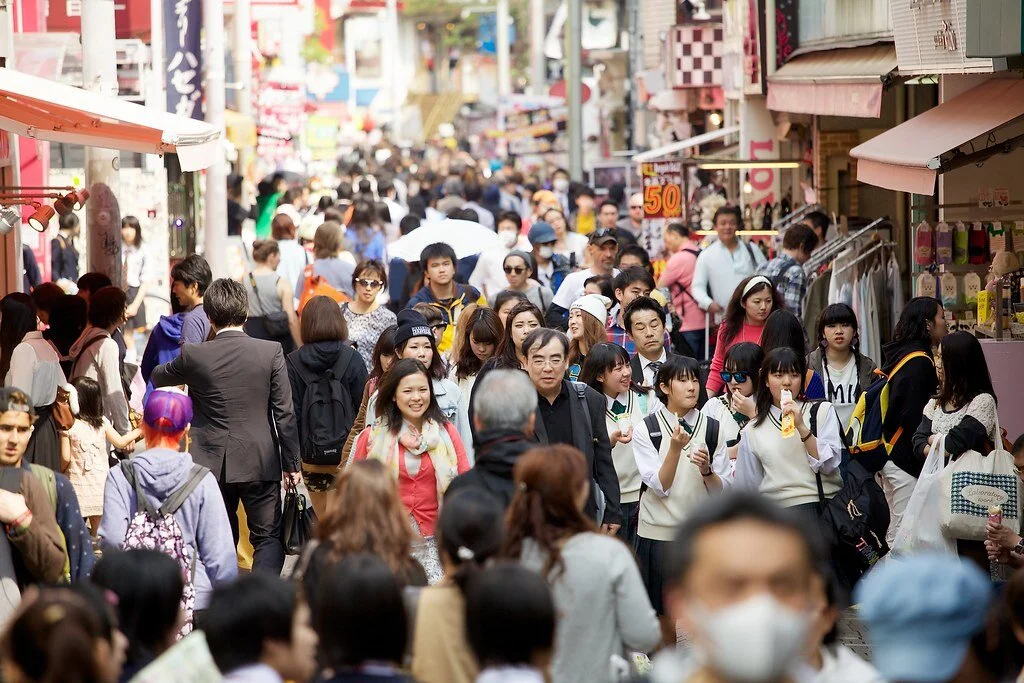
Harajuku, Japan. SkandyQC. CC BY-NC-ND 2.0

Why Fertility Rates Could Halve by 2100

July 30, 2020

The global population growth rate is predicted to take a drastic downward turn, with experts believing that major countries such as Japan and Italy will see their populations halve by 2100. This is an unprecedented problem that could negatively impact society as a whole if the trend continues. The necessity for the world to plan and prepare for this outcome has become increasingly clear as global trends solidify. 

Why the Sudden ‘Baby Bust’?

In the 1950s, women were having an average of about 4.7 children in their life span. In today’s world, women are instead averaging 2.4. The causes for this turnaround include increased educational opportunities, greater numbers of women in the workforce and increased access to contraceptives. There seems to have been an attitude change toward parenthood in recent years. In more developed countries, the roles of women have turned in favor of being outside the home, leaving less time for children. This contrasts starkly with historical norms, where women stayed home to take care of the family and house while men left to go to work. 

What Are the Global Consequences?

While an initial evaluation might suggest that a smaller population would be better for the environment, professor Christopher Murray of the University of Washington suggests that this would lead to an “inverted social structure” where there are more older people than young. This raises questions about who will pay taxes and take care of the elderly. These are issues that the younger generations will have to worry about as they reach adulthood. “We’ll have to reorganize societies,” Murray says, in order to make current population trends sustainable. 

The world’s changing population numbers could lead to a shift in the world’s dominant powers. For example, India is set to replace China as the world’s most populous country as China faces a population decline as soon as 2024.  By 2100, India’s population would be followed by Nigeria’s, China’s and the United States’. 

Why Nigeria?

As COVID-19 and other health challenges ravage developing countries, access to contraceptives and other family planning becomes limited. This leads to more pregnancies in places such as sub-Saharan Africa, which is set to “treble in size.” Africa’s forecast for rapid growth calls attention to the current social situation regarding racism, with Murray stating that “global recognition of the challenges around racism are going to be all the more critical if there are large numbers of people of African descent in many countries.”

This shift in global power is expected to create issues surrounding development, social status and racism. Especially in the current social environment, racism could become one of the largest issues if these predictions prove to be true. 

What is Being Done to Prevent Population Decline?

Countries such as the United Kingdom have incentivized and increased migration. However, this is only a temporary fix as most countries begin to drop in population. Other countries have increased paid maternity and paternity leave, but have still seen few shifts toward larger families. Sweden has managed to “drag its rate from 1.7 to 1.9” while Singapore still has a rate of 1.3. Women simply cannot be expected to increase the number of  children they have due to policy changes, and current trends show that this attempt will not be enough. 

If the global reproductive rate drops to the predicted 1.7 by 2100, population extinction could become more of a legitimate concern. The 2.1 threshold, which is necessary to sustain the world’s current population, is instead being used as a target for future growth. Ultimately, though, young adults need to start  planning for a future where society’s age makeup is inverted.

Elizabeth Misnick

is a Professional Writing and Rhetoric major at Baylor University. She grew up in a military family and lived in Europe for almost half her life, traveling and living in different countries. She hopes to continue writing professionally throughout her career and publish her writing in the future.

Tags fertility, population, baby bust, India, Nigeria, China, developing countries, global power, racism, social status, migration, maternity leave, paternity leave, Sweden, Singapore, Environment, Human Rights, USA, Japan
Comment

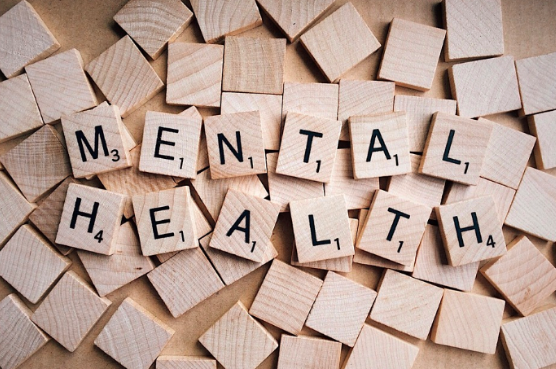
Mental Health Wellness Psychology Mind, Photo CC0 Public Domain, https://www.maxpixel.net/Mental-Health-Wellness-Psychology-Mind-2019924

Mental Health Awareness in Developing Countries

June 26, 2018

When it comes to building awareness about global issues, it is simple to access information about the world’s most pressing, media-enhanced problems. It’s not difficult to come across a long list detailing the burdens of the developing world… Physical health and medical shortcomings are largely common knowledge, even to the disengaged…Mother’s die regularly from child birth, treatable diseases- avoidable diseases- run rampant through communities, slowly bringing more disadvantage into the lives of the underprivileged. Health issues in the developing world are not privy to an elite group. In fact, medical teams are regularly dispersed around the world to supply people with basic medical care. As prominently as physical health is talked about within society, mental health and wellness awareness are becoming increasingly important to acknowledge.

With the United States as a model, mental health is at the forefront of social efforts. In recent years, at the expense of those who suffer from mental illness expressed in one form or another, the country has grieved school shootings, public shootings, and regular suicides of those who seem to “have it all.” Within the past month, the country lost two well-known figures, Kate Spade and Anthony Bourdain, to suicide connected with depression and mental struggle. According to CNN’s report of the CDC’s 2018 study, suicide has increased by 25% since 1999. The study suggests many relevant factors, including economic troubles, personal conflicts, having a rural residence, and limited exposure to mental health care or communities that acknowledge its value all contribute to the increase. Simply understood, mental disorders are certainly impacting both the individual and the larger society. Therefore, it is no stretch to suggest that these concerns pose an international challenge.

The very same issues of financial struggles, limited access to healthcare professionals and understanding communities of mental strife, and of course, rural geography are all extremely relevant to developing countries. While mental wellness campaigns have become more frequent and nationally recognized around the United States, it has taken the country years to work towards de-stigmatizing mental disorder. For those countries who are socially and economically behind the United States, what happens to the people who experience the hidden diseases that develop out of the most critical of environments?

With the knowledge that poverty and rural isolation produce greater mental struggle, those impoverished peoples of the developing world are starved for advocacy about a problem many don’t even know can be blamed for their personal burdens. Just as mental health has been stigmatized in the United States, countries with ancient cultural depth have also formed their own insights and rationale about mental illness. For many cultures around the world, mental disorders have been considered a form of possession or devilish curse. Thus, mental health is strongly associated with isolating qualities. Like an issue of physical health, disease does not play favorites or avoid the rich and famous, it is a generalized concern. With its far reaching capacity, mental illness must be addressed on a larger global scale as its impact reaches deep into the negative realities of societal dysfunction. As this stigma around mental illness slowly melts from the inner workings of American society, there remains a question of how mental health is treated, recognized and perceived in countries that must prioritize the most tangible of problems.

In an effort to expose whether mental illness “exists” in the developing world, the World Health Organization (WHO) presents some findings. WHO reported that the world is “facing a global human rights emergency in mental health.” Andrew Chambers of The Guardian recorded that in countries like Zambia, Africa, mental disorder is largely unaddressed. That said, the same individuals who are uneducated in any sort of physical health maintenance are more severely uneducated in mental health issues. The terms, the diseases, the treatments, the community affected, the causes- all inter-related and important information- are not structures available to those who struggle within these impoverished communities.

Mental illness in a young child is much easier to overlook than when that same child suffers from a broken arm or a high fever. The solution is arguably quick, and the answer is material. The child can heal and carry on with his/her life. Mental illness is an intangible issue that is much harder to treat, much harder to understand, and far more difficult to confront due to its associated stigmas. All that said, it is no less of a real problem. Moreover, the dilemma of not addressing mental disorder is its extent into impacting the cycle of poverty and lack of opportunity. Several studies have been done to confirm the idea that mental disorders “further impoverish the individual.” One study on mental wellness in developing countries suggests, “People who live in the poor income groups, those who are less educated, those who are faced with acute economic difficulties (for example, consequent to unemployment), those who face debt, and those who face hardships in acquiring basic necessities (such as food) for survival, are at much greater risk to suffer mental disorders.” The same study goes on to conclude, “In turn, the disabling effects of mental disorders impair the ability of persons to search for and sustain productive employment.” Therefore, mental wellbeing is much more than meets the eye, so to speak. The study provides the evidence that, while medical teams are making a large impact in many ways, large amounts of people remain debilitated by their mental incapacities.

Mental health advocacy remains an issue stunted by the stigmas and ancient beliefs that coined their categorization. In developing countries, mental disorders are especially hard to treat. They are costly to integrate into societies and they are harder to acknowledge as the majority population is widely uninformed about the different types of disorders and how they manifest in the individual. This lack of education is only further inhibited by the population who refuse to accept mental disorder as anything more than some sacrilegious behavior or cursed punishment.  

While many developing countries remain uninformed and thousands go undiagnosed and untreated, the WHO is working to build a foundation of awareness. Uganda, as of 2015, was working to implement awareness, education, treatment, and western practices to address mental illness throughout the country. A study by Global Health Consultant, Janice Kopinak records, “There is recognition by the national government that the challenges faced in mental health services poses serious public health and development concerns.” To that effect, and despite many of their best efforts, the access and the capacity by which healthcare professionals in Uganda can make an impact still meets many obstacles. In developing countries, with Uganda as a strong representation, the education for treatment is feeble, the financial system is unsupportive, and the reach is limited. In short, mental disorders are just as prominent in countries where there is little to no awareness as it is in countries with large wellness advocacy campaigns. With time, and more concentrated efforts,  there is hope for a better future. However, for developing countries, the road ahead is long and arduous.


ELEANOR DAINKO is an undergraduate student at the University of Virginia studying Spanish and Latin American Interdisciplinary Studies. She recently finished a semester in Spain, expanding her knowledge of opportunity and culture as it exists around the world. With her passion to change the world and be a more socially conscious person, she is an aspiring entrepreneur with the hopes of attending business school over seas after college. 

Tags developing countries, awareness, Global Health
Comment

Also check out...

Featured
Vietnam’s Floating Markets Are Disappearing
The Supernatural Role of Masks in Nigeria’s Yoruba Tribal Culture
Opening the World to Deaf Travelers with Lily Yu

Featured trips

Featured
Offer NGO Support While Visiting Quito
Experience Life as a Mongolian Nomad
Help Grow Organic Costa Rican Coffee

Sign up for the CATALYST newsletter

Sign up for our newsletter to get the scoop on international travel, global social impact insights, our latest podcast releases, and more from around the world, all delivered right to your inbox!

We respect your privacy.

Thank you!
Newsletter Sign Up | Advertise | Careers + Internships | Privacy Policy | Submissions | Contact Us

Copyright © 2025, MISSION MEDIA LLC. All rights reserved.