
• Travel Features
  • Global Action
  • Take A Trip
  • Travel Guides
    • Podcast
    • Courses
    • Bookshop
  • About
  • Sign Up
Menu

CATALYST PLANET

  • Travel Features
  • Global Action
  • Take A Trip
  • Travel Guides
  • Discover
    • Podcast
    • Courses
    • Bookshop
  • About
  • Sign Up

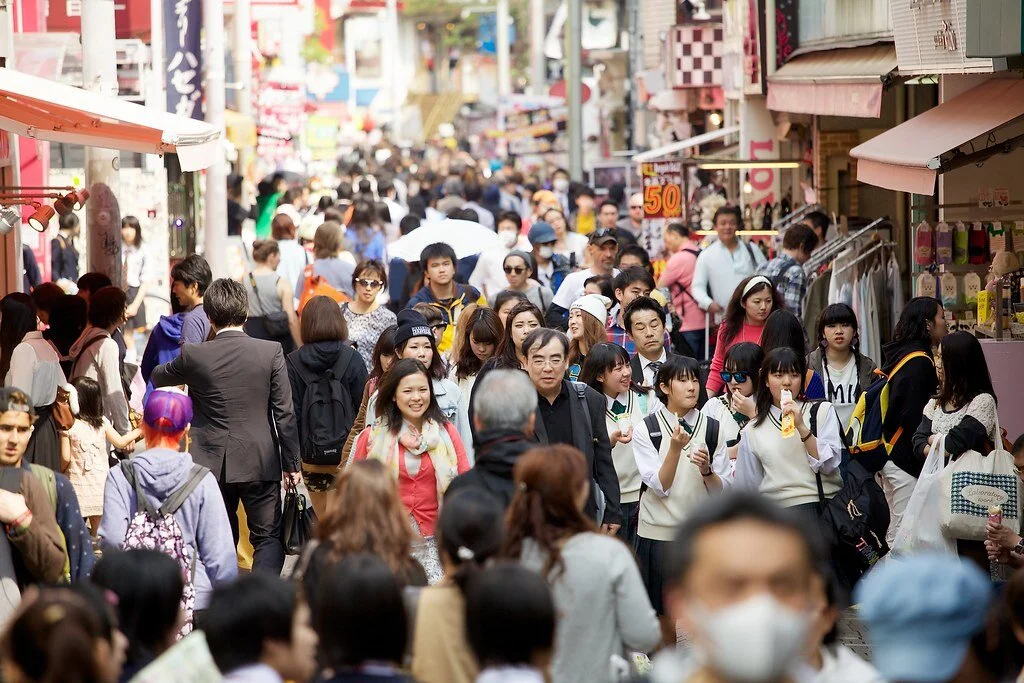
Harajuku, Japan. SkandyQC. CC BY-NC-ND 2.0

Why Fertility Rates Could Halve by 2100

July 30, 2020

The global population growth rate is predicted to take a drastic downward turn, with experts believing that major countries such as Japan and Italy will see their populations halve by 2100. This is an unprecedented problem that could negatively impact society as a whole if the trend continues. The necessity for the world to plan and prepare for this outcome has become increasingly clear as global trends solidify. 

Why the Sudden ‘Baby Bust’?

In the 1950s, women were having an average of about 4.7 children in their life span. In today’s world, women are instead averaging 2.4. The causes for this turnaround include increased educational opportunities, greater numbers of women in the workforce and increased access to contraceptives. There seems to have been an attitude change toward parenthood in recent years. In more developed countries, the roles of women have turned in favor of being outside the home, leaving less time for children. This contrasts starkly with historical norms, where women stayed home to take care of the family and house while men left to go to work. 

What Are the Global Consequences?

While an initial evaluation might suggest that a smaller population would be better for the environment, professor Christopher Murray of the University of Washington suggests that this would lead to an “inverted social structure” where there are more older people than young. This raises questions about who will pay taxes and take care of the elderly. These are issues that the younger generations will have to worry about as they reach adulthood. “We’ll have to reorganize societies,” Murray says, in order to make current population trends sustainable. 

The world’s changing population numbers could lead to a shift in the world’s dominant powers. For example, India is set to replace China as the world’s most populous country as China faces a population decline as soon as 2024.  By 2100, India’s population would be followed by Nigeria’s, China’s and the United States’. 

Why Nigeria?

As COVID-19 and other health challenges ravage developing countries, access to contraceptives and other family planning becomes limited. This leads to more pregnancies in places such as sub-Saharan Africa, which is set to “treble in size.” Africa’s forecast for rapid growth calls attention to the current social situation regarding racism, with Murray stating that “global recognition of the challenges around racism are going to be all the more critical if there are large numbers of people of African descent in many countries.”

This shift in global power is expected to create issues surrounding development, social status and racism. Especially in the current social environment, racism could become one of the largest issues if these predictions prove to be true. 

What is Being Done to Prevent Population Decline?

Countries such as the United Kingdom have incentivized and increased migration. However, this is only a temporary fix as most countries begin to drop in population. Other countries have increased paid maternity and paternity leave, but have still seen few shifts toward larger families. Sweden has managed to “drag its rate from 1.7 to 1.9” while Singapore still has a rate of 1.3. Women simply cannot be expected to increase the number of  children they have due to policy changes, and current trends show that this attempt will not be enough. 

If the global reproductive rate drops to the predicted 1.7 by 2100, population extinction could become more of a legitimate concern. The 2.1 threshold, which is necessary to sustain the world’s current population, is instead being used as a target for future growth. Ultimately, though, young adults need to start  planning for a future where society’s age makeup is inverted.

Elizabeth Misnick

is a Professional Writing and Rhetoric major at Baylor University. She grew up in a military family and lived in Europe for almost half her life, traveling and living in different countries. She hopes to continue writing professionally throughout her career and publish her writing in the future.

Tags fertility, population, baby bust, India, Nigeria, China, developing countries, global power, racism, social status, migration, maternity leave, paternity leave, Sweden, Singapore, Environment, Human Rights, USA, Japan
Comment

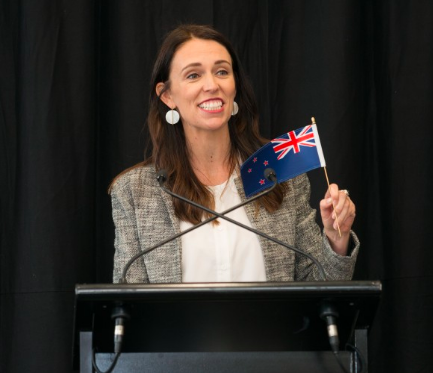
By Ministry of Justice of New Zealand (justice.govt.nz) [CC BY-SA 4.0 (https://creativecommons.org/licenses/by-sa/4.0)], via Wikimedia Common)

New Zealand's Female Prime Minister Takes Maternity Leave

August 29, 2018

Women in positions of power, especially those of political nature, have historically been insufficiently represented within society. According to an article by TIME Magazine, just 11 countries of nearly 200 globally are lead by women today. However, gender norms are changing as feminist movements throughout the past century have pushed the limits of traditional female roles. New Zealand is one of the most progressive and equal countries around the world when it comes to issues of race and gender. As of October 26, 2017, Jacinda Ardern became the country’s third female prime minister—a feat on its own. She then went on to represent a greater controversy regarding the lack of women in positions of political power and the expectations placed on them once there. Ardern countered these expectations as a young female leader, unmarried and pregnant while still in office.

The prime minister used this opportunity to make a statement about gender equality, proving that traditional roles and rules regarding men, women, marriage, and children are outdated and wrongfully stigmatized. Ardern went on to suggest she would take a maternity leave, a first for any leader around the world. She announced that following her maternity leave, her husband and fishing documentarian will become a stay at home dad. She pridefully acknowledged on Instagram that her and her partner would become two of the many parents who “wear two hats.” New Zealand Labour prime minister Helen Clarke stated, “These are the kinds of practical arrangements working women make all over the world—the novelty here is that it is a prime minister who is making them. The signal this sends, however, is that this is life in the 21st century.” Clearly, Ardern has defied what has been typically represented in political positions by living and acting as many families do in today’s age. All at once, she disputes the expectations placed on politicians, traditional relationships and the role of women by decisively representing the new reality.

Upon the announcement of her pregnancy to the country, she remarked, “I don’t want to ever give the impression that I’m some kind of wonder woman or that women should be expected to do everything because I am. I’m not doing everything.” On June 21, 2018, her young daughter was born and it appeared that the whole of New Zealand was watching, waiting, and supporting the 37-year old leader. She shared the news of her child’s birth over a Facebook Live video. This openness implies a level of commitment to relatability to which her country has connected. She has achieved a 76% personal approval rate among NZ citizens.

Among her many achievements, from becoming the youngest prime minister to take office in NZ to being the first woman to take a maternity leave as the leader of a country, she was also named as part of TIME Magazine’s most influential people of 2018. Jacinda Ardern challenges the notion that women can’t have it all, she confidently meshes motherhood with career while leading a country into the new epoch. For women and politics around the world, she is paving the way for more female empowerment and acting—not simply remarking—on behalf of her values about equality.


ELEANOR DAINKO is an undergraduate student at the University of Virginia studying Spanish and Latin American Interdisciplinary Studies. She recently finished a semester in Spain, expanding her knowledge of opportunity and culture as it exists around the world. With her passion to change the world and be a more socially conscious person, she is an aspiring entrepreneur with the hopes of attending business school over seas after college. 


Tags Equality, Prime Minister, New Zealand, maternity leave, Women and Girls
Comment

Also check out...

Featured
Vietnam’s Floating Markets Are Disappearing
The Supernatural Role of Masks in Nigeria’s Yoruba Tribal Culture
Opening the World to Deaf Travelers with Lily Yu

Featured trips

Featured
Offer NGO Support While Visiting Quito
Experience Life as a Mongolian Nomad
Help Grow Organic Costa Rican Coffee

Sign up for the CATALYST newsletter

Sign up for our newsletter to get the scoop on international travel, global social impact insights, our latest podcast releases, and more from around the world, all delivered right to your inbox!

We respect your privacy.

Thank you!
Newsletter Sign Up | Advertise | Careers + Internships | Privacy Policy | Submissions | Contact Us

Copyright © 2025, MISSION MEDIA LLC. All rights reserved.