
From family-run yurt camps to felt-making workshops, locally led tourism is bringing income to rural Kyrgyzstan while connecting travelers with traditions communities are working to sustain.
A Journey Into Kyrgyzstan’s Nomadic Heart
Discover the people, food and traditions that give Kyrgyzstan its place in the center of Central Asia.
Read MoreKyrgyzstan: From the Silk Road to the Celestial Mountains
A Central Asian country not known for its tourism, Kyrgyzstan boasts three Unesco World Heritage Sites. Each differs greatly in terms of its cultural significance, all providing different experiences for a traveler.
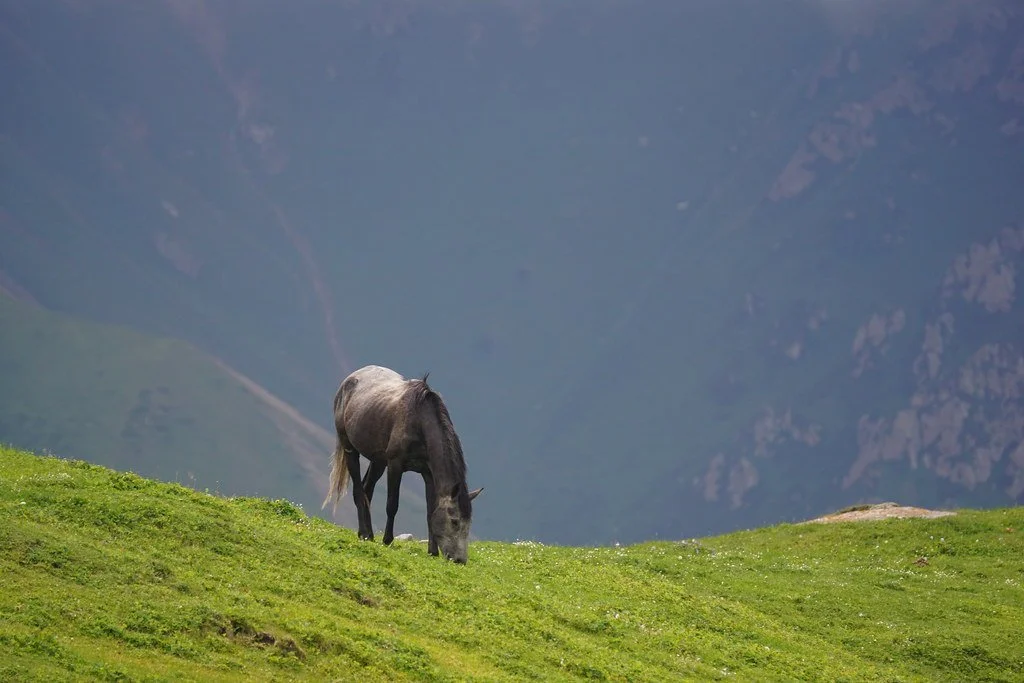
Wildlife in Kyrgyzstan. Charles Fred. CC BY-NC-SA 2.0.
Kyrgyzstan is known for its beautiful scenery; for example, there are two stunning canyons in Kyrgyzstan: the Fairy Tale Canyon and the Konorchek Canyons. The Kyrgyz people lived a nomadic lifestyle well into the 20th century, and aspects of this rich culture are still recognizable in architecture today. For example, a traveler to Kyrgyzstan can see a Bozui house—a type of architecture distinct to the Kyrgyz—and learn how it is built. In terms of the UNESCO World Heritage Sites, the three sites are deeply historically and culturally significant, as well as breathtaking.
1. The Chang'an-Tianshan Corridor of the Silk Road
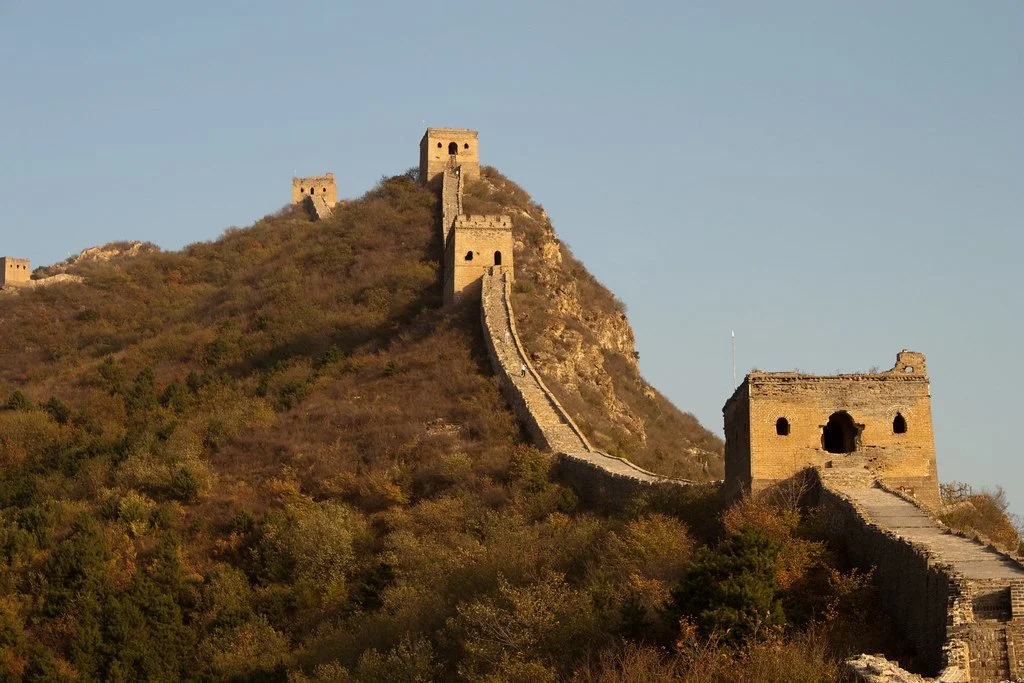
Section of the Great Wall of China in Kyrgyzstan. Matt Barber. CC BY 2.0.
The Chang’an-Tianshan Corridor is a section of the Silk Road, the most used collection of trade routes during ancient times, which primarily connected China with countries in Europe, the Middle East and East Africa. The Chang'an-Tianshan Corridor was named a UNESCO World Heritage Site in June of 2014, due to the historical significance of the Silk Road, which had been used until as late as the 16th century. The Chang’an-Tianshan Corridor in Kyrgyzstan is an especially interesting and important sector of the Silk Road due to its beauty, rocky terrain and historical significance. The Chang’an-Tianshan Corridor was used from the 4th through 16th century to transport mostly luxury goods, with its use beginning to facilitate trade between the Chinese and Roman empires. It was also very difficult to navigate due to its massive peaks and valleys—the climate of which ranges from snowy to arid to humid. In addition to natural sites, the corridor contains many cultural and historical destinations. Parts of the Chang’an-Tianshan Corridor run along the Great Wall of China. Additionally, there are several Buddhist temples, ancient palaces and tombs along the corridor.
2. The Sulaiman-Too Sacred Mountain
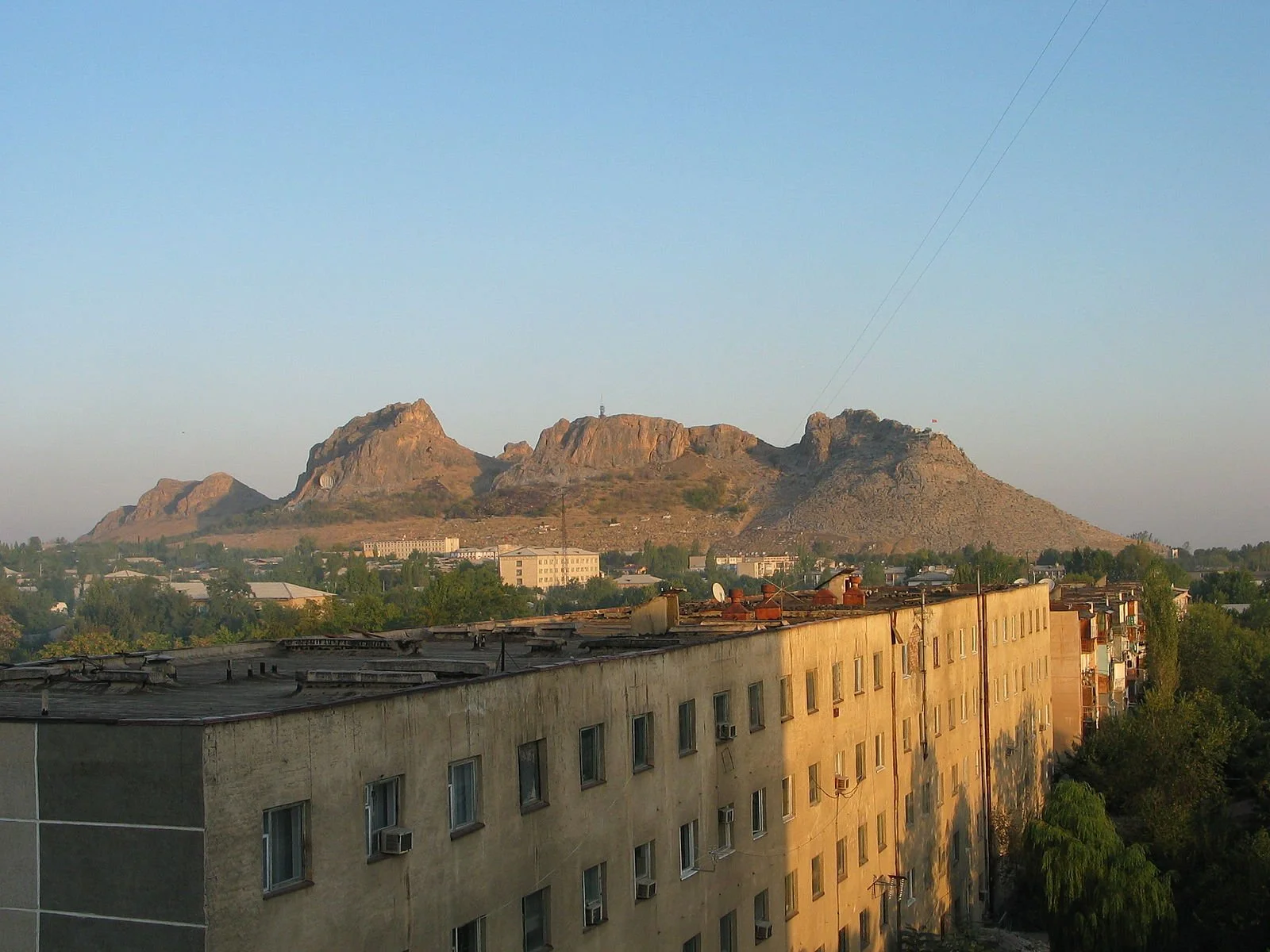
View of Sulaiman Too-Sacred Mountain from Osh. Christian Gawron. CC BY-SA 2.0.
Also located on the Silk Road, the Sulaiman-Too Sacred Mountain (located next to the city of Osh) was declared a UNESCO World Heritage Site in 2009. The Sulaiman-Too Sacred Mountain has been regarded for hundreds of years as a sacred destination, primarily in Islam, but also in religions and belief-systems that contain only some aspects of the Islamic faith. The mountain contains two reconstructed mosques from the 16th century, caves with ancient petroglyphs and many other sites for worship—17 of which are still in use today. One of the main non-Islamic groups which has historically worshiped at the Sulaiman-Too Sacred Mountain is the cult of the horse, which is reflected in much of the cave art.
3. The Tien-Shan Mountains
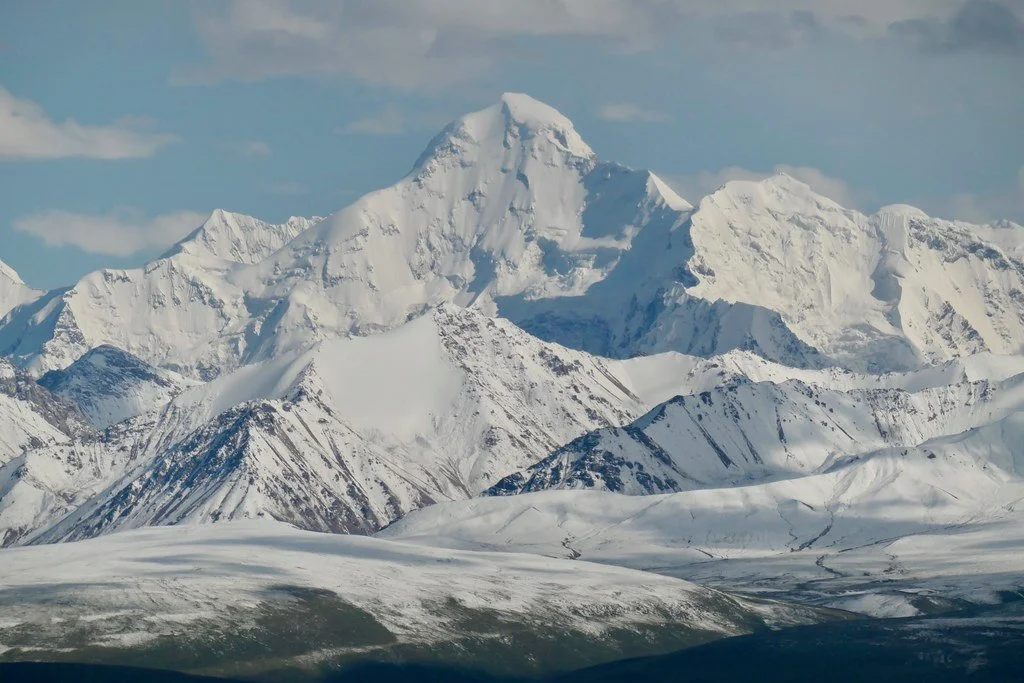
The Tien-Shan Mountains. Bruno Rijsman. CC BY-SA 2.0.
“Tien-Shan” in Chinese means “celestial.” The mountains may have gotten their name from their extremely high peaks; the highest points of the Tien-Shan mountains are also the highest points in all of Kyrgyzstan. The peaks in Kyrgyzstan were officially declared a World Heritage Site in 2016, although the parts of the mountains in China had been named a World Heritage Site in 2013. The Tien-Shan Mountains are mostly known for their diverse wildlife and for being home to several ethnic groups such as the Uyghur people and various Buddhist sects. While the oppression of the Uyghur people is not nearly as severe in Kyrgyzstan as it is in China, in recent years, there have been reports of violence from the Kyrgyz majority towards the Uyghur, as well as governmental interference in Uyghur political organizing. Despite Kyrgyzstan’s treatment of the Uyghur people, the Tien-Shan Mountains remain the home of many Uyghur people in the country. The mountains are covered in glaciers, many of which are threatened by climate change. This could change the entire geological landscape of the Tien-Shan mountains. Wildlife found on Tien-Shan include snow leopards and the Himalayan snowcock. Out of the three World Heritage Sites in Kyrgyzstan, the Tien-Shan Mountains is the most focused on the nature of Kyrgyzstan as opposed to the history featured in the other two sites.

Calliana Leff
Calliana is currently an undergraduate student at Boston University majoring in English and minoring in psychology. She is passionate about sustainability and traveling in an ethical and respectful way. She hopes to continue her writing career and see more of the world after she graduates.
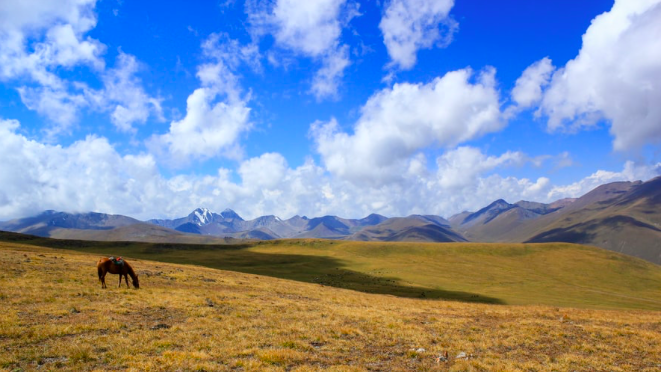
Horse grazing in a field in Kyrgyzstan. Frantisek Duris. Unsplash.
Kyrgyzstan: Central Asia’s Country Cradled in the Mountains of Heaven
Nestled in the heart of Central Asia, Kyrgyzstan is a mountainous country populated by one of the last nomadic ethnic groups in the world. What stuns most people upon arrival to Kyrgyzstan is how vast and untouched the country is. The ground is often still frozen, contrasting with the vibrant sun as it rises against the enormous mountains.
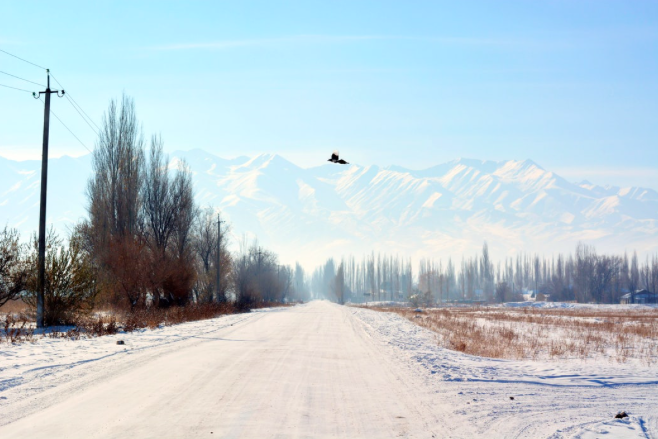
Bird soaring over a frozen road in Tokmok, Kyrgyzstan. Laurentiu Morariu. Unsplash.
Often called the “Switzerland of Central Asia,” Kyrgyzstan’s landscape is made up of expansive valleys and cold peaks. The country sits at the core of the Tian Shan mountain range, also known as the “Mountains of Heaven.” The majority of the country is composed of mountains and their valleys, while the high alpine plateau of the central and eastern regions makes up the rest. The smallest portion of terrain, the country’s lowland areas, is the most populated. Kyrgyzstan’s terrain is visually stunning in its pastoral expanse and rugged mountains.
The People
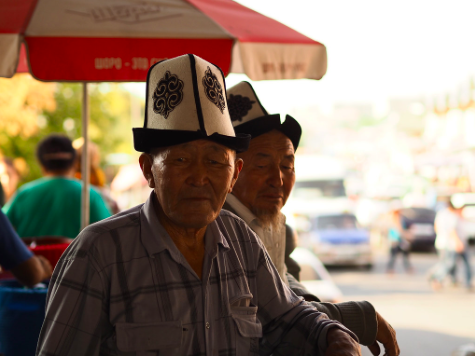
Men in traditional salburun hats at the Osh bazaar. Uiking. CC BY-NC-SA 2.0
The Kyrgyz people speak a language of the same name and traditionally followed a mostly nomadic lifestyle. The Kyrgyz have lived through very tumultuous times, facing a long history of Russian colonization which led to an attempted revolt in 1916. They continued to fight for their freedom until the Soviet Union’s collapse in 1991, but only gained independence after several hundred were killed in an interethnic clash between Uzbeks and Kyrgyz around the southern town of Osh. Adding to the country’s diversity is a significant number of Eastern Europeans who were brought to Kyrgyzstan by the Soviets in an attempt to industrialize the region.
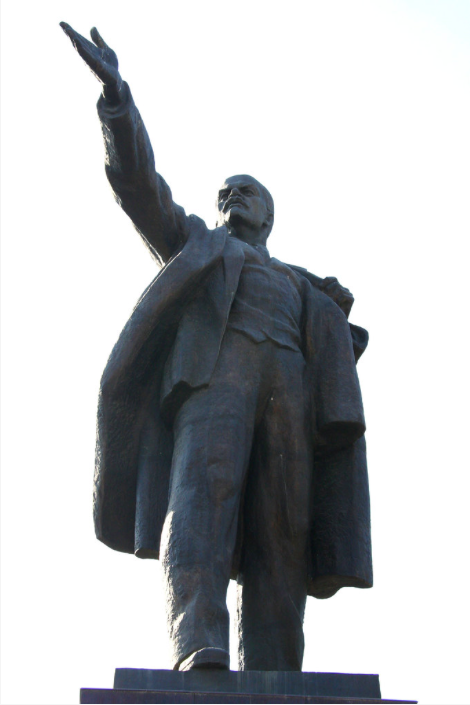
A statue of Vladmir Lenin in Bishkek, Kyrgyzstan. Richard Towell. CC BY-NC-ND 2.0.
Today, some small cities remain, like the capital Bishkek, but many Kyrgyz still live traditionally.
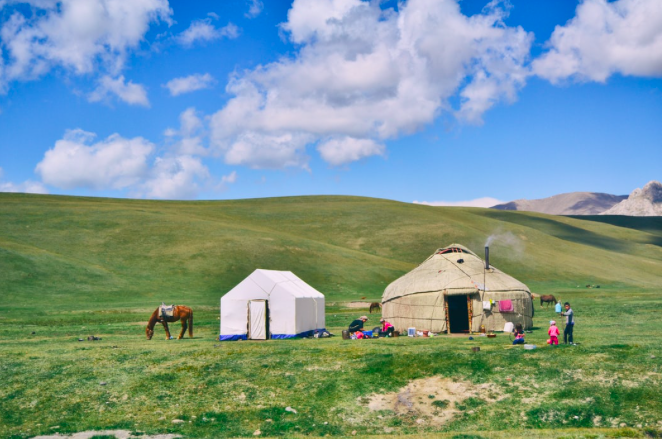
A traditional yurt and horse near Song Kol Lake. Oziel Gomez. Unsplash.
After surviving Soviet occupation for so long, a resurgence in the nomadic culture and traditions of the Kyrgyz occurred. The mountains and their valleys are painted in Kyrgyz culture, as the valleys are peppered with yurts decorated inside with hand-stitched felt carpets called shyrdaks.
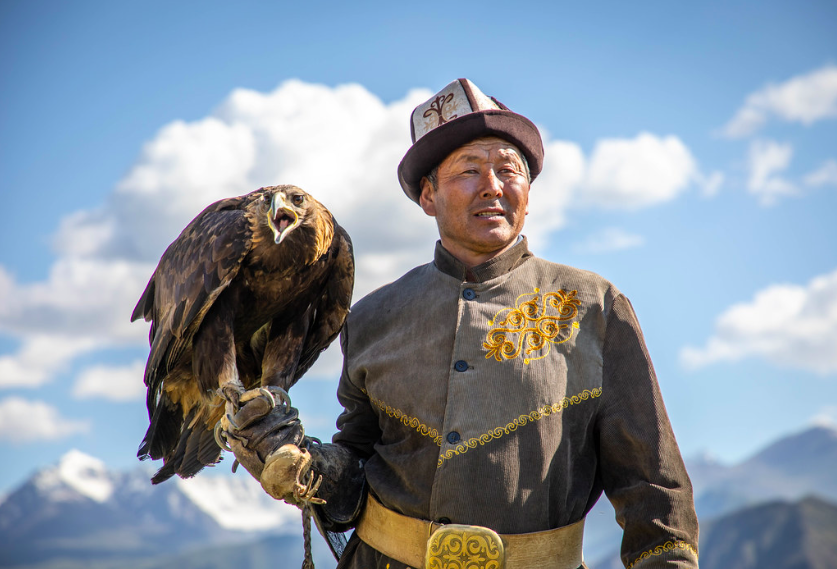
One of the most stunning things about Kyrgyzstan is its horses that gallop freely across the plains. Horses are an incredibly important element of traditional Kyrgyz life, as they are essential for travel, hunting and recreation. An even more essential player in the hunting game is the golden eagle. The Kyrgyz are some of the only people in the world to hunt with golden eagles in a style called salburun. They ride horses while practicing archery, assisted by the golden eagles and a taigan, a type of dog that dates back to the beginning of the Kyrgyz people. This tradition was also stifled during Soviet times but has been rekindled by the Salburun Federation and its founder Almaz Akunov, who prepare other hunters and share the tradition during local festivals and demonstrations.
Travel
To visit you must embrace the unknown, as many travel plans must be made upon arrival. Trips can be arranged through the country’s various community-based tourism centers which assist visitors in getting information and arranging transportation. From here, visitors are free to trek the plains, hike, horseback ride and meet the Kyrgyz people.
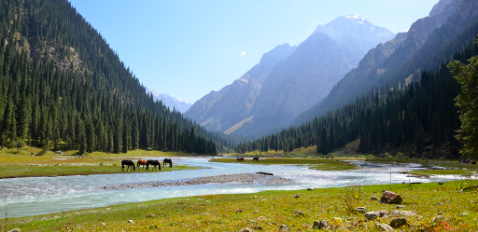
Kyrgyzstan is an entirely immersive experience as it retains so much local culture and allows nature to thrive. Despite the hardships the country has faced, it has become a safe haven for its citizens to continue their traditions and share them with others.


Renee Richardson
is currently an English student at The University of Georgia. She lives in Ellijay, Georgia, a small mountain town in the middle of Appalachia. A passionate writer, she is inspired often by her hikes along the Appalachian trail and her efforts to fight for equality across all spectrums. She hopes to further her passion as a writer into a flourishing career that positively impacts others.
Lost in Kyrgyzstan
Sara Izzi and Timur Tugalev, digital nomads and authors of the Travel blog The Lost Avocado.com document for the first time incredible country of Kyrgyzstan. The dreaming sceneries of the lake of Song Köl, from Orto Tokoy, a reservoir of turquoise water in the Kochkor District, up to Issik Kul, UNESCO Biosphere Reserve, and Karakol, with its canyons, wild parks and colourful markets.