
Europe’s new ETA and ETIAS systems have caused some tourists to worry about their travel plans: here’s how they’ll affect international travelers.
Read MoreBikepacking 101: Everything You Need to Know About the Growing Trend
Distinct from bike touring, bikepacking emphasizes off-road adventure, minimalism and freedom of movement — the pursuit has grown enormously in popularity in recent years.
Read MoreDubai on a Dime: A Budget Traveler’s Guide to the City of Gold
A practical guide to experiencing Dubai’s culture, food, and coastline without spending a fortune.
Read MoreA Guide to Hiking the Camino De Santiago
Stretching across Europe and concluding in Spain, the Camino de Santiago is a historic pilgrimage route that continues to attract visitors worldwide with its religious, cultural, and health experiences.
Read MoreThe Ethical Questions Surrounding “Dark Tourism”
“Dark tourism” attracts modern visitors to horrific sites, from concentration camps to war memorials, to view historical atrocities.
Read More7 Must-See Natural Wonders of the Czech Republic
Alongside the renowned architecture, the Czech Republic has an array of natural wonders that nature-loving travelers can explore.
Read MorePaved Roads Not Necessary: Mongolian Road Trip
See temples, ride camels and enjoy desert views across the country.
Read MoreSami Life in Scandinavia: An Indigenous Journey Through Reindeer Lands and Joik
A winter journey through where cultural traditions such as reindeer herding, joik and land rights endure amid growing climate and industrial pressures.
Read MoreFrom Ruins to Riviera: The Perfect Summer in Albania
From its pristine beaches to its mountains and UNESCO world heritage sites, Albania is Europe’s most underrated Summer-holiday destination.
Read MoreIndigenous Voices Reclaim Language Through Story
In the wake of Canada’s residential school system, Indigenous writers like Gregory Scofield and Lindsay Nixon are reclaiming culture through ancestral language and storytelling.
Read MoreExploring Australia’s Remote Untouched Archipelagos
Exploring Australia’s Remote Untouched Archipelagos
The small island archipelagos, Recherche and Buccaneer, are a haven for remote beauty and responsible travel off the Australian coast.
Read MoreThe 8 Best Sustainable Travel Companies
Booking a trip with a responsible tourism company can help ensure that you leave a positive impact on the communities you visit.
Read MoreBali: A Recurring Chapter in My Travel Diary
Bali, with its intoxicating mix of vibrant culture, lush landscapes and tranquil seas, has always held a special place in my heart as a travel photographer and adventure seeker.
Read MoreVenezuela’s Drowned Church of Potosi
The Drowned Church of Potosi in Uribante remains a powerful reminder of the historical resilience of the Venezuelan people and the challenges they endure today.
Read MoreMorocco: A Colorful Tapestry of Heritage and Natural Beauty
Morocco is a land of contrasts, from the vastness of the Sahara to the intricate mazes of its ancient medinas. Each moment spent here is like stepping through the pages of a vividly illustrated storybook, where every corner promises a new adventure
Read More7 Loving Mother’s Day Traditions Across the Globe
From observing religious customs to simply gifting their mothers flowers, individuals around the world take part in cherishing maternal figures through their own Mother’s Day celebrations.
Read More7 Eco-Adventures in Tuvalu: The World's Least-Visited Country
With fewer than 4,000 travelers each year, the beautiful island nation of Tuvalu is a perfect destination for exploring rich Pacific culture, ecotourism and marine conservation.
Read MoreThe Supernatural Role of Masks in Nigeria’s Yoruba Tribal Culture
Julia Kelley
Whether the feminine celebration of the Gelede mask or the spiritual transformation through the Egungun mask, these cultural objects perform an imperative role in the Yoruba people’s religious culture.

Egungun Festival Masks. Fermi12. CC BY-SA 4.0.
African masks have been functionally used for thousands of years. Recognized for their supernatural qualities, they transform wearers into new entities, symbolize animal or ancestor spirits, mythological heroes, or moral values, and can even be a way of honoring specific individuals. Moreover, specific ceremonies and masks act as visual representations of local customs. With a vibrant music and dance tradition, the Yoruba people are known for their notable mask culture. The Yoruba are one of Nigeria’s largest ethnic groups, mainly concentrated in the southwestern part of the country but also found in smaller groups throughout Benin and Togo. For over 1,500 years, they have also been defined by their advanced urban kingdoms, strong economy and unique artistic tradition. Ceremonies are imperative to their way of life; vibrant festivals, rituals and weddings display cultural pride, celebrate history and connect the physical realm to the spiritual. Beyond the symbolic instruments and costumes used during these occasions, masks are also extremely vital due to their mystic transformative qualities.
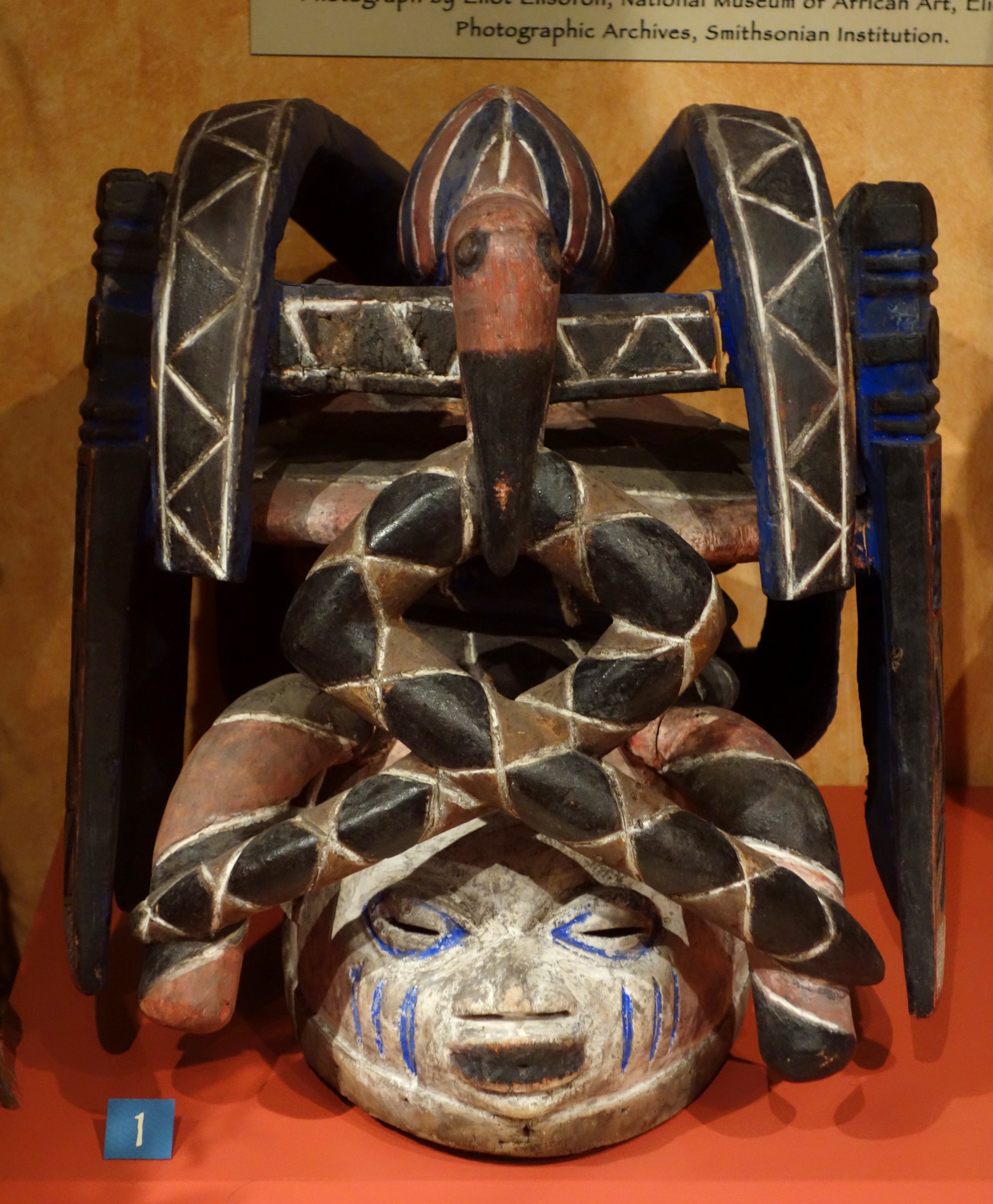
Gelede Mask With Animal Figure. Daderot. CC0 1.0.
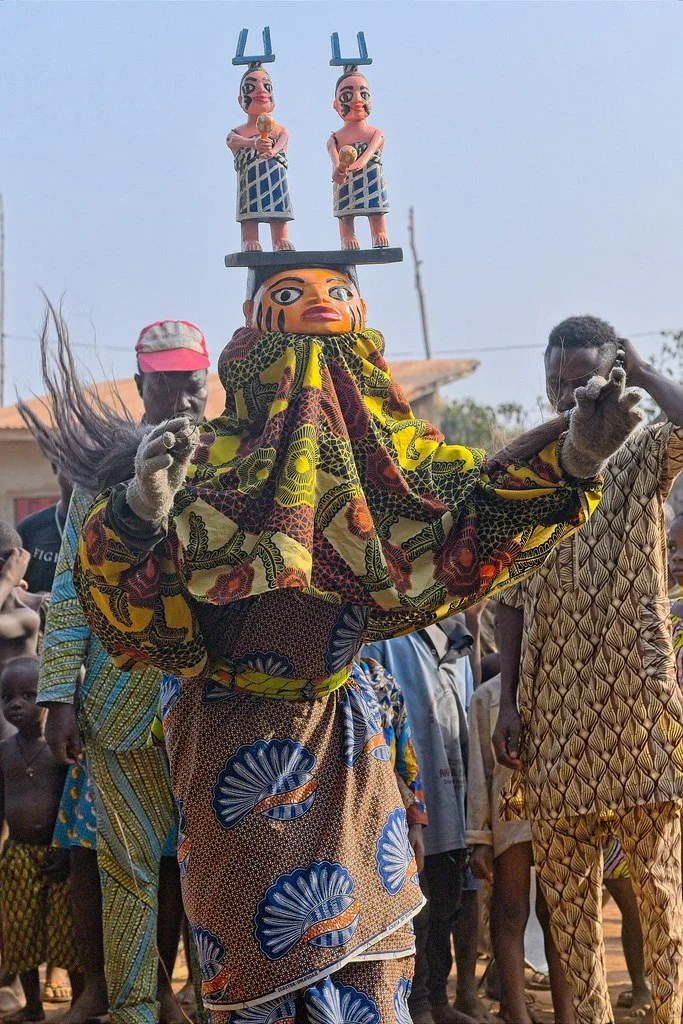
Gelede Dance. dave massie. CC BY 2.0.
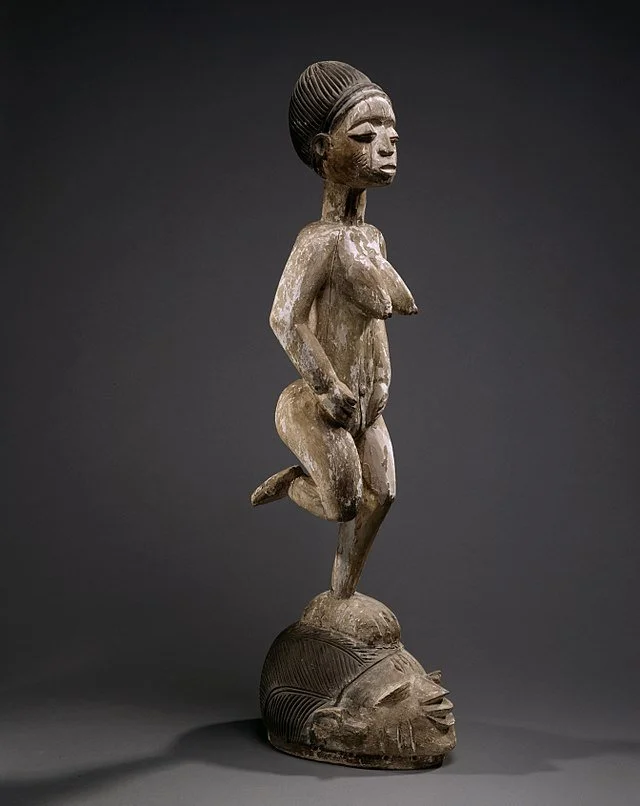
Gelede Mask With Woman Figure. Kugbenu (Vervaardiging). CC0.
However, when and how masks are used depends on their corresponding festivals. The Gelede mask, for example, is used during the Gelede dance. This ceremony is performed as a way to pay tribute to the primordial mother Iyà Nlà and recognize women’s role in social organization and development. Retracing the history and myths of the people, the Gelede takes place annually after harvests and during times of drought and epidemics. The masks, adorned with intricate motifs and vibrant colors, are worn as a way to honor “mothers,” or good witches who have power over bad ones, in their efforts to protect the community from negative forces. Individual masks reflect local traditions, such as through unique facial markings or figures included on the masks.
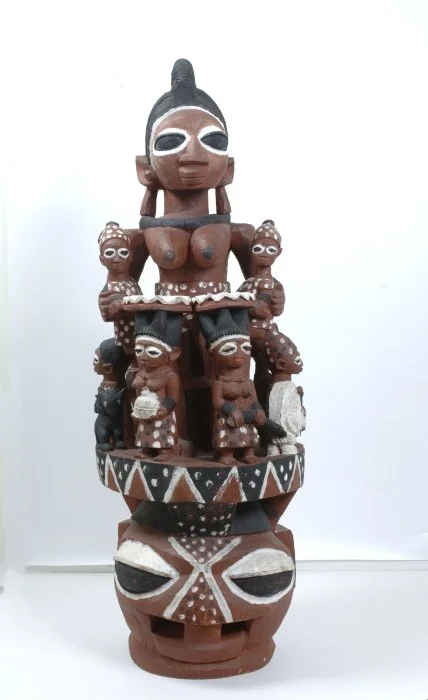
Epa Festival Mask. Beeldhouwer / sculptor: Jospeph Agbana. CC BY-SA 3.0.
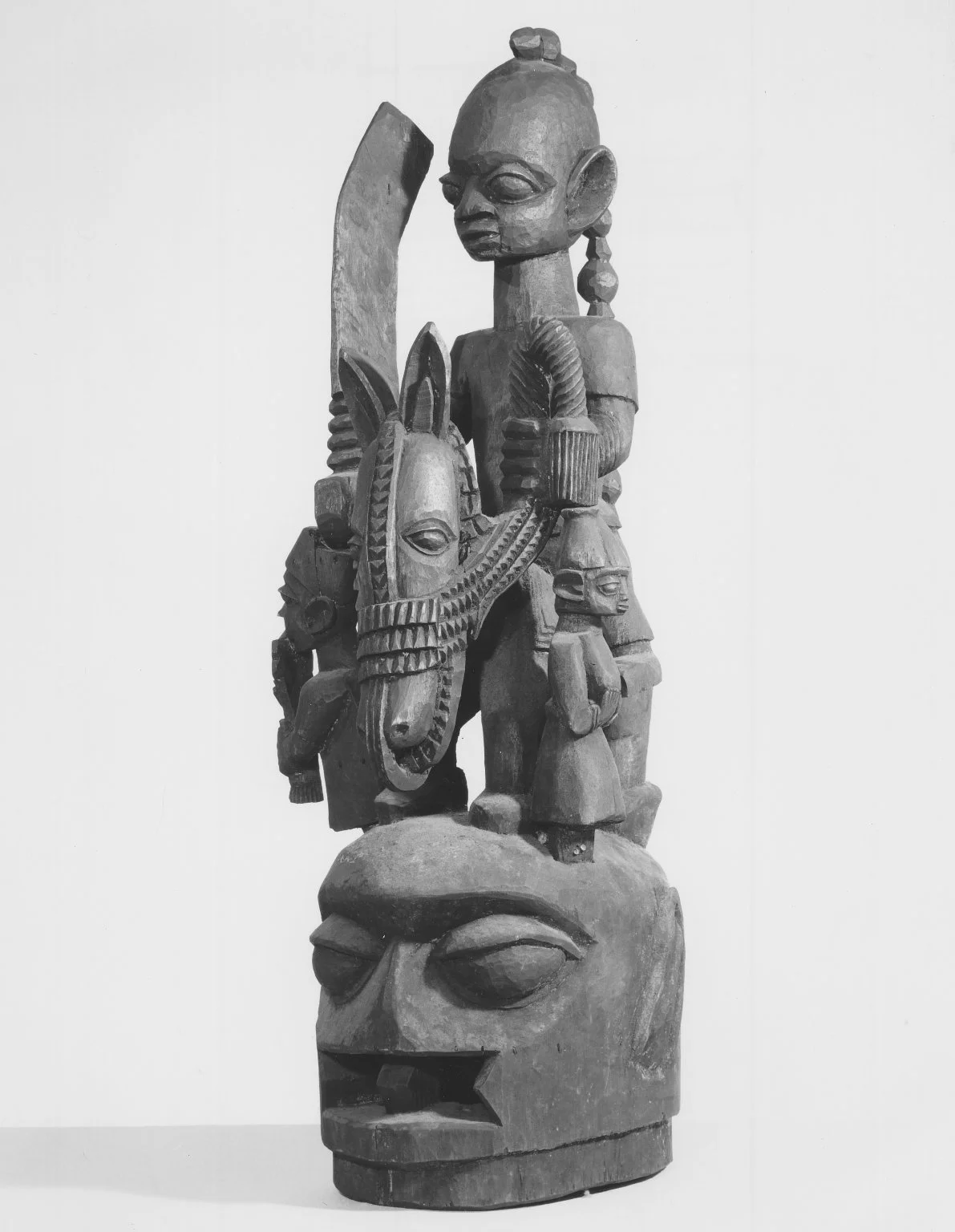
Epa Mask With Warrior Figure. Unknown author. CC BY 3.0.
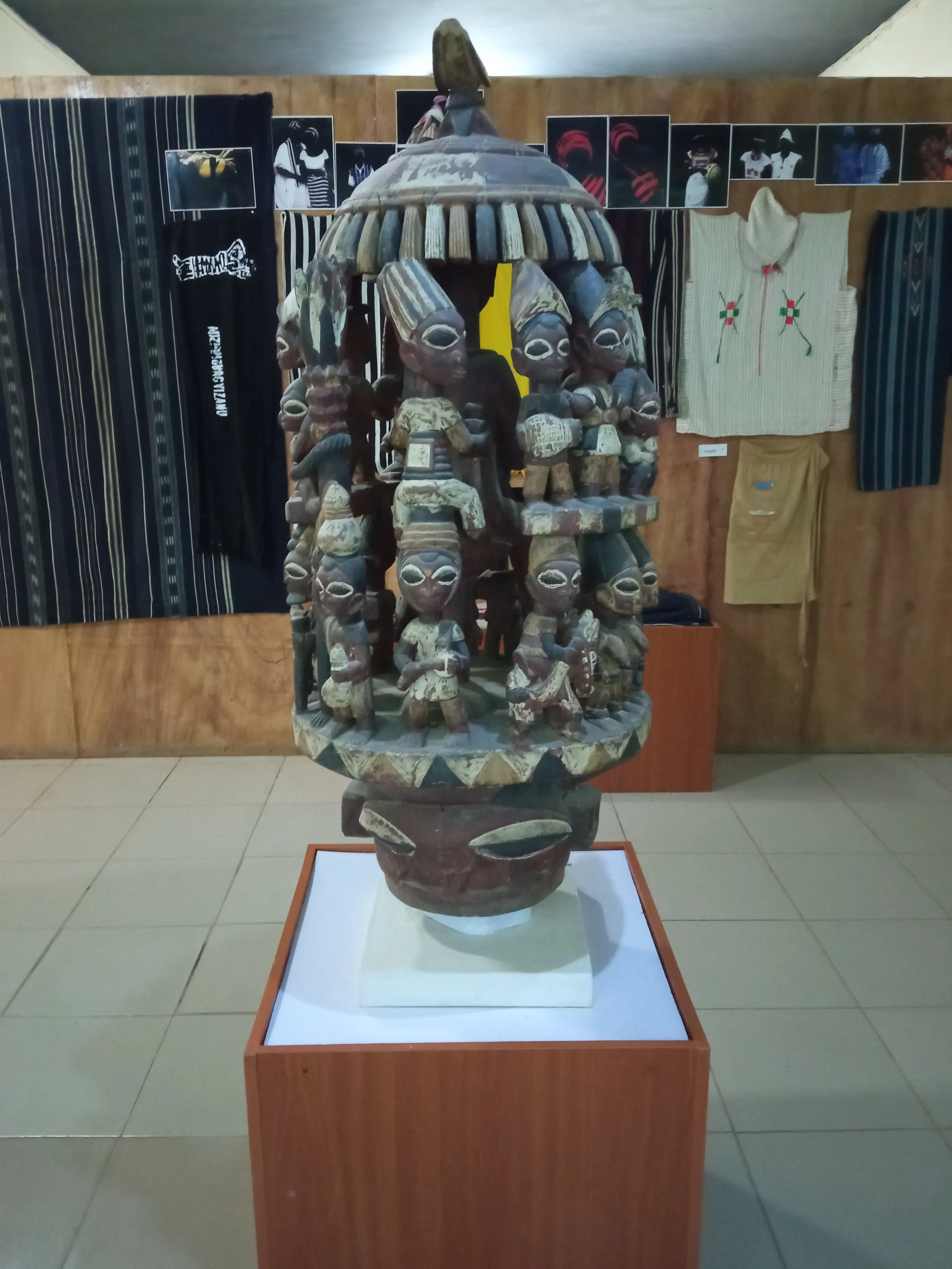
Large Epa Helmet Mask. Em-mustapha. CC BY-SA 4.0.
Epa masks are worn during yam harvest festivals by young male dancers as they leap onto mounds. The rigorous movements of this dance indicate the community’s fate over the next year; if the dancer successfully leaps, then all is well, but if not, sacrifices are made to the forces that made him fail. Leading up to these ceremonies, the masks are kept in shrines, where they are fed to increase their power and efficacy. Since they are believed to contribute to the wearer’s success, heavy weight and symbols associated with war are characteristic of these masks.
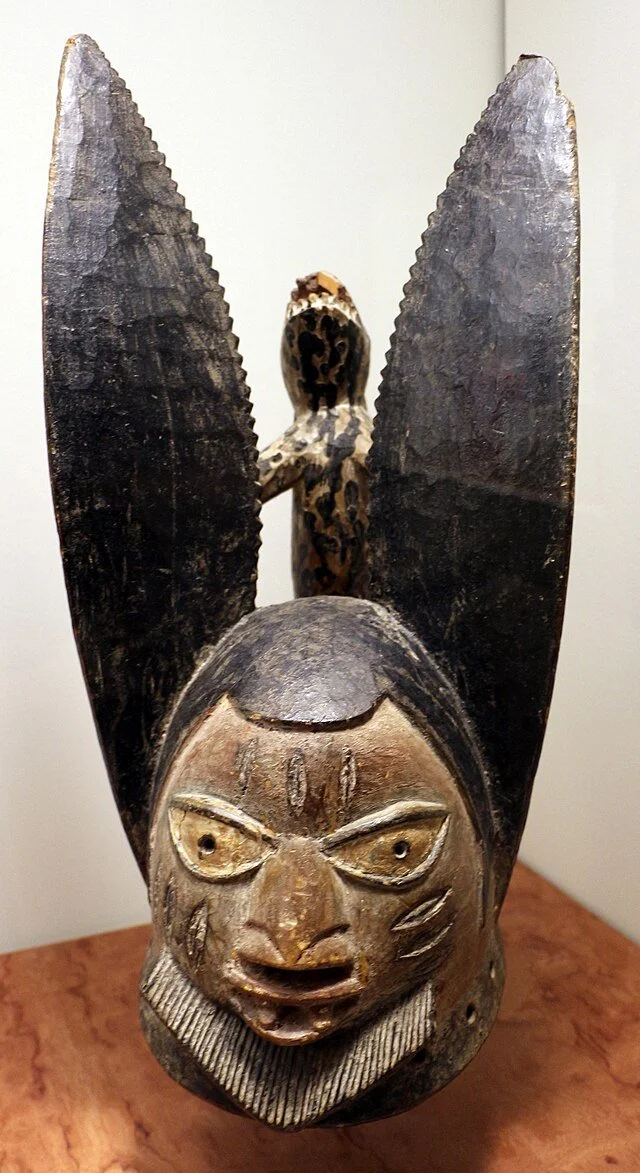
Ancestor Egungun Mask. Sailko. CC BY 3.0.

Egungun Festival. Fermi12. CC BY-SA 4.0.
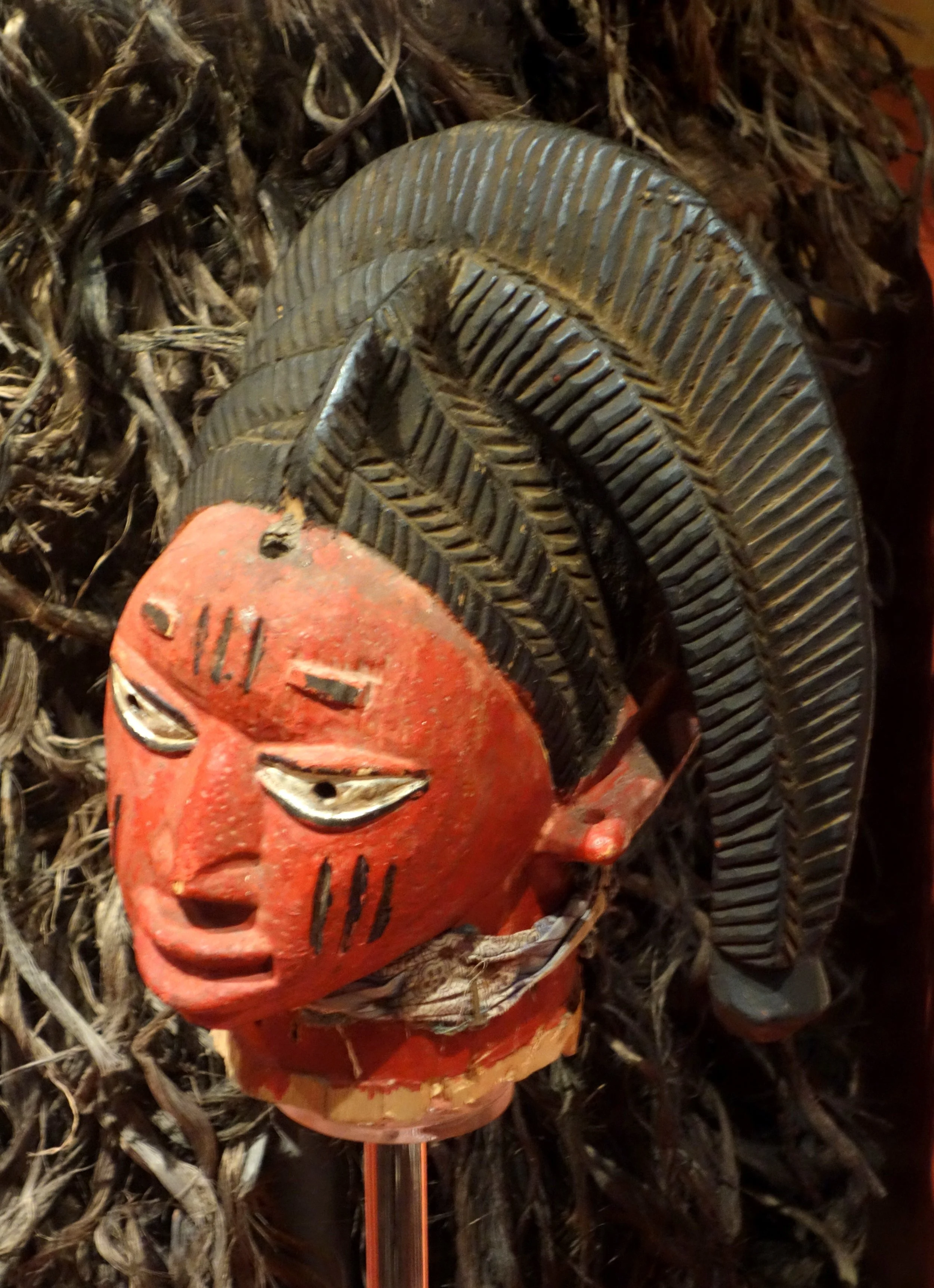
Yoruba Egungun Mask. Daderot. CC0 1.0.
One of the most important masks in their ritual culture, the Yoruban Egungun masks are worn to worship ancestors. These are used during Odun Egungun or “masquerade” festivals, during which men move through town wearing masks as they embody their ancestors. These masks act as a visual manifestation of those being depicted, offering members of the community the opportunity to strengthen their familial bonds and ask for protection or blessings.
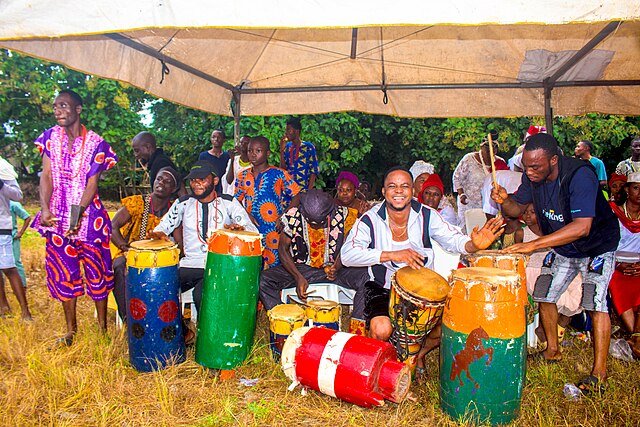
Yoruba Festival Music and Dance. Tunde Akangbe. CC BY-SA 4.0.
Developed over centuries, ceremonial masks remain a significant part of Yoruban culture. African masks have also become admired in museums worldwide for their intricate designs, but contemporary artists and historians have noted that they are exhibited mostly as ethnography. Moreover, African masks have inspired many well-known European artworks, most notably in Picasso’s 20th-century modernist paintings. This Westernization has helped shape stereotypes around African communities, decontextualizing their current cultural significance. However, as the Yoruba masks demonstrate, festivals recommence every year, and the masks continue to visually represent the community’s rich history and religious tradition.
Julia Kelley
Julia is a recent graduate from UC San Diego majoring in Sociocultural Anthropology with a minor in Art History. She is passionate about cultural studies and social justice, and one day hopes to obtain a postgraduate degree expanding on these subjects. In her free time, she enjoys reading, traveling, and spending time with her friends and family.
Opening the World to Deaf Travelers with Lily Yu
Zoe Lodge
The creator of Deaf Journey strives to make travel more accessible, one destination at a time.
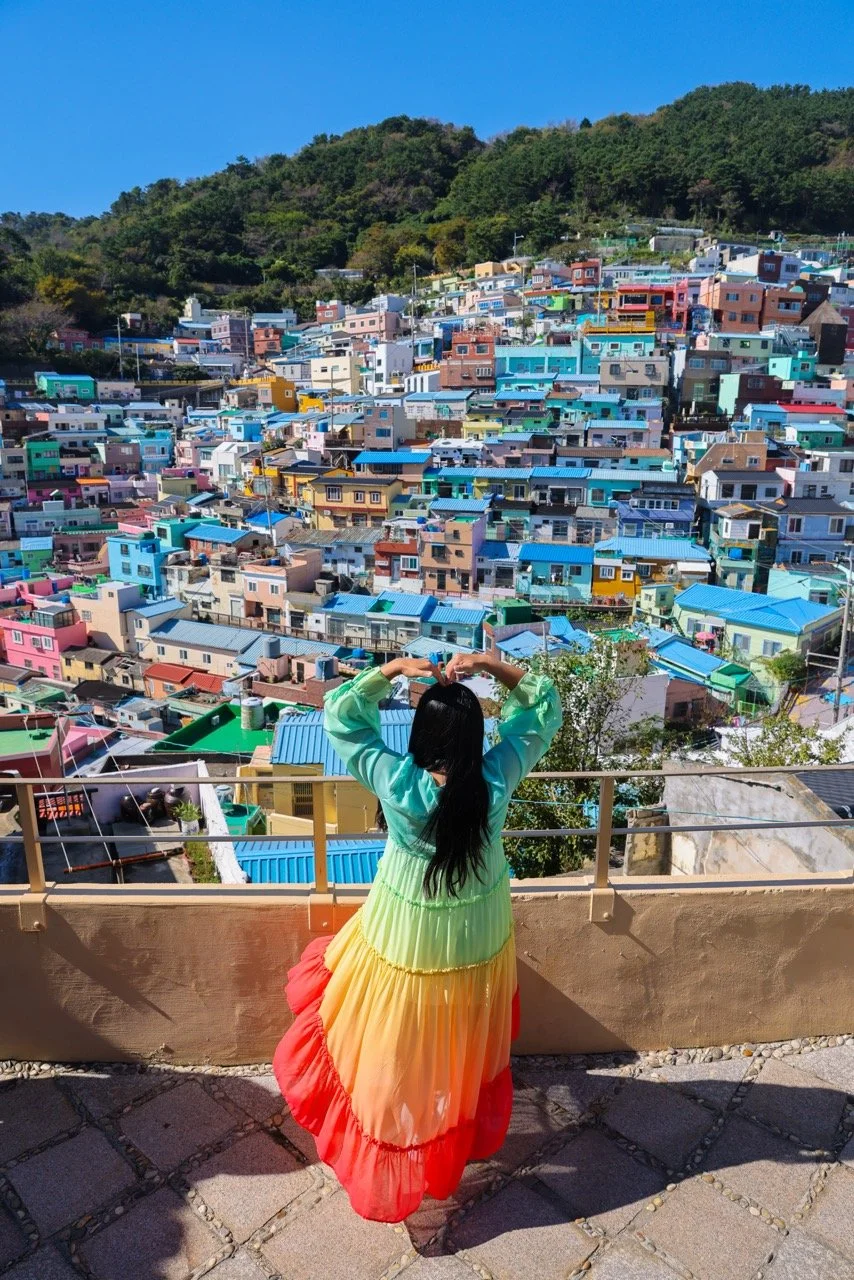
Gamcheon Culture Village in Busan, Korea.
When Lily Yu and her husband, Daniel Heidemeyer, both deaf individuals, began sharing travel photos on social media in 2018, she didn’t expect it to grow into a viral movement and a new career opportunity. What began as a private account for friends and family soon evolved into Deaf Journey, a travel media brand focused on sharing accessible guides, amassing over 100,000 followers across Instagram, Facebook, TikTok, YouTube and her blog.
Yu’s mission goes far beyond that of a typical content creator focused on travel. As a deaf traveler, she’s become a leading advocate for accessible travel, working to ensure that deaf and other disabled individuals are considered and included in every part of the travel experience, from hotel rooms to museum tours. “I want to make sure traveling is accessible for the deaf community,” Yu says. “That means having interpreters, flashing light fire alarms and visual doorbells in hotels, and captions or transcripts in museums and tours.”
Yu was raised on the East Coast and is a graduate of Gallaudet University, America’s only liberal arts university for the deaf. She began her travel content journey by posting photos from her trips for close friends. “People would ask, ‘How did you find that place?’” she said. “So I kept sharing, and then my husband and I created a public account. That’s when Deaf Journey really began.” Since then, the couple has traveled across all 50 U.S. states, partnered with nearly 40 tourism boards and visited 54 countries. Her husband often handles videography, while Yu takes the lead on editing and blogging. “I love writing and sharing stories that not only inspire but also educate,” she said.
Traveling while deaf presents unique challenges. Yu pointed out that travel accessibility tends to focus on mobility, including ramps, elevators and wheelchair access, but often allowing deaf-specific needs to fade into the background. “Hotels might have accessible rooms for wheelchairs, but nothing for deaf people. When we’re showering, we can’t hear someone knocking or a fire alarm going off,” she said. “I give advice to hotels about things like flashing light signals, visual doorbells or providing video relay services with interpreters.”
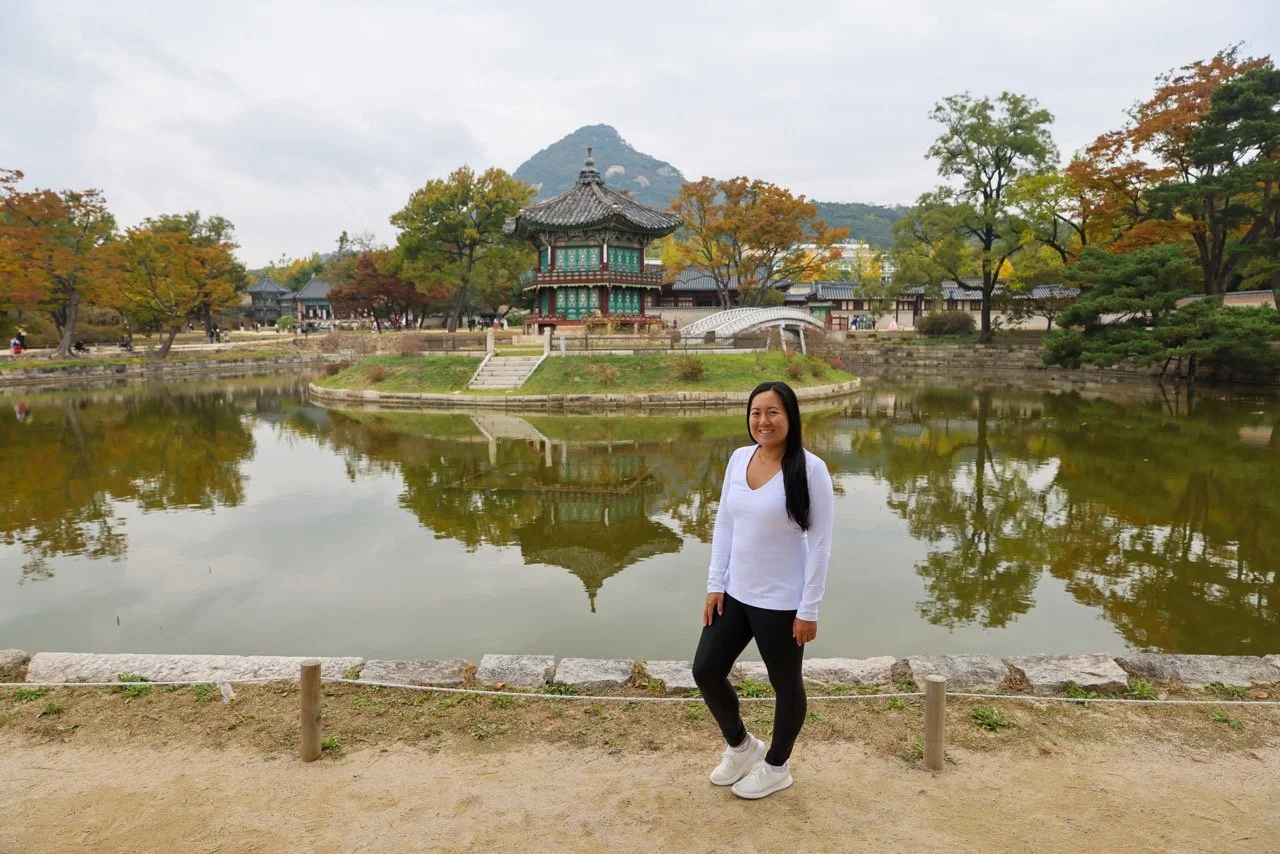
Gyeongbokgung Palace in Seoul, Korea.. Courtesy of Lily Yu.
From the sweeping beauty of national parks to hidden small-town charm, Yu's adventures have offered a broad view of the diverse travel landscape available within the United States. She described the natural beauty of Hawaii, noting the islands as one of her favorite destinations within the U.S. However, Yu was also surprised by smaller cities like Boise, Idaho, and Bentonville, Arkansas. “Boise had amazing food and outdoor activities. Bentonville really impressed me with its modern art museums and bike trails,” she said. “Every place is different, and that’s what makes traveling here so special.”
While visiting every corner of the U.S. was her first major travel goal, Yu is now setting her sights globally. She’s already visited 54 countries and has noted Japan as a particular champion of accessibility. “In Japan, even the soda cans have braille,” she says. “Crosswalks have both visual lights and floor indicators, which are helpful for blind travelers too. And in hotels, you can select your language on digital screens to communicate. I’ve never seen that level of accessibility before.” Yu also shared how museums in places like Ireland and Boston have become exemplary leaders in the world of accessibility. “During our trip to Ireland, the Guinness Storehouse provided us with an iPad featuring an International Sign interpreter. I’m also fluent in International Sign, which is different from American Sign Language (ASL). In Boston, there was a deaf guide giving an ASL tour. That kind of access makes a big difference.”
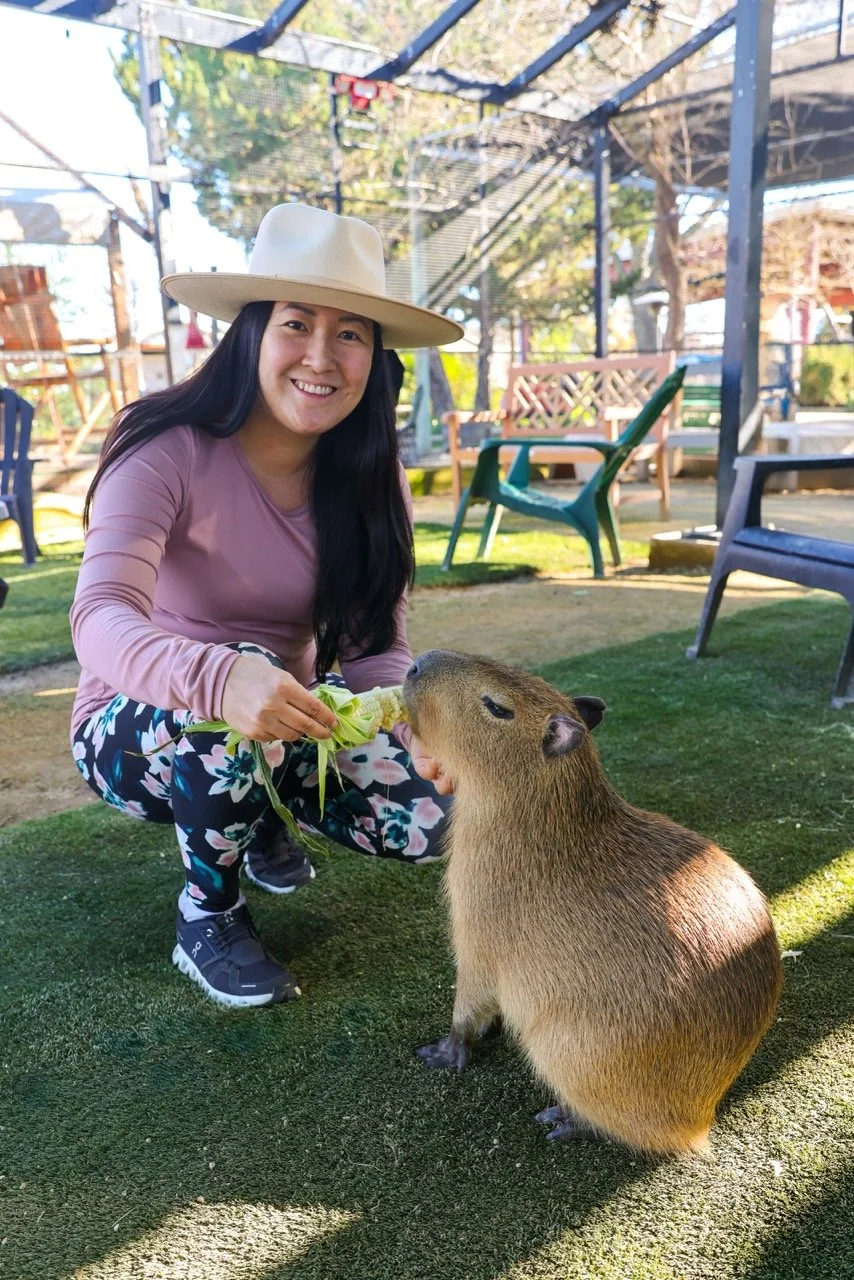
Yu with a capybara at Zoo to You in Paso Robles, California. Courtesy of Lily Yu.
Yu’s vision for Deaf Journey is not just to document her own experiences as a deaf traveler and content creator, but also to provide ease for future travelers. She’s passionate about providing accessibility tips, raising awareness on social media and consulting directly with businesses. “I think spreading awareness is key,” she says. “We need to educate hotels, airlines, museums and tourism boards on how to be more inclusive. And we need to share both the positives and the gaps, what works and what doesn’t, so we can keep improving.” Yu also emphasized the importance of using respectful and inclusive language. “We prefer to be called ‘deaf,’ not ‘hearing impaired,’” she said. “That term feels outdated and even offensive within our community.”
After conquering all 50 states, Yu’s next challenge is tackling the rest of the world, one accessible destination at a time. “I haven’t made a full plan yet,” she said. “TBut I’m hoping to partner with more tourism boards internationally. There’s still so much work to do.” With every post, blog and video, Lily Yu is proving that travel doesn’t have to be outside of the realm of possibility for disabled adventurers. It can, and should, be made accessible for everyone.
Zoe Lodge
Zoe is a student at the University of California, Berkeley, where she is studying English and Politics, Philosophy, & Law. She combines her passion for writing with her love for travel, interest in combatting climate change, and concern for social justice issues.
7 Less Traveled Wonders of the Natural World
As urban spaces dominate more and more of the world, it is important to remember the natural beauty the Earth has to offer. Here is a list of 7 less popular but equally enchanting wonders.
Read More