
Isabella Feraca
Distinct from bike touring, bikepacking emphasizes off-road adventure, minimalism and freedom of movement — the pursuit has grown enormously in popularity in recent years.
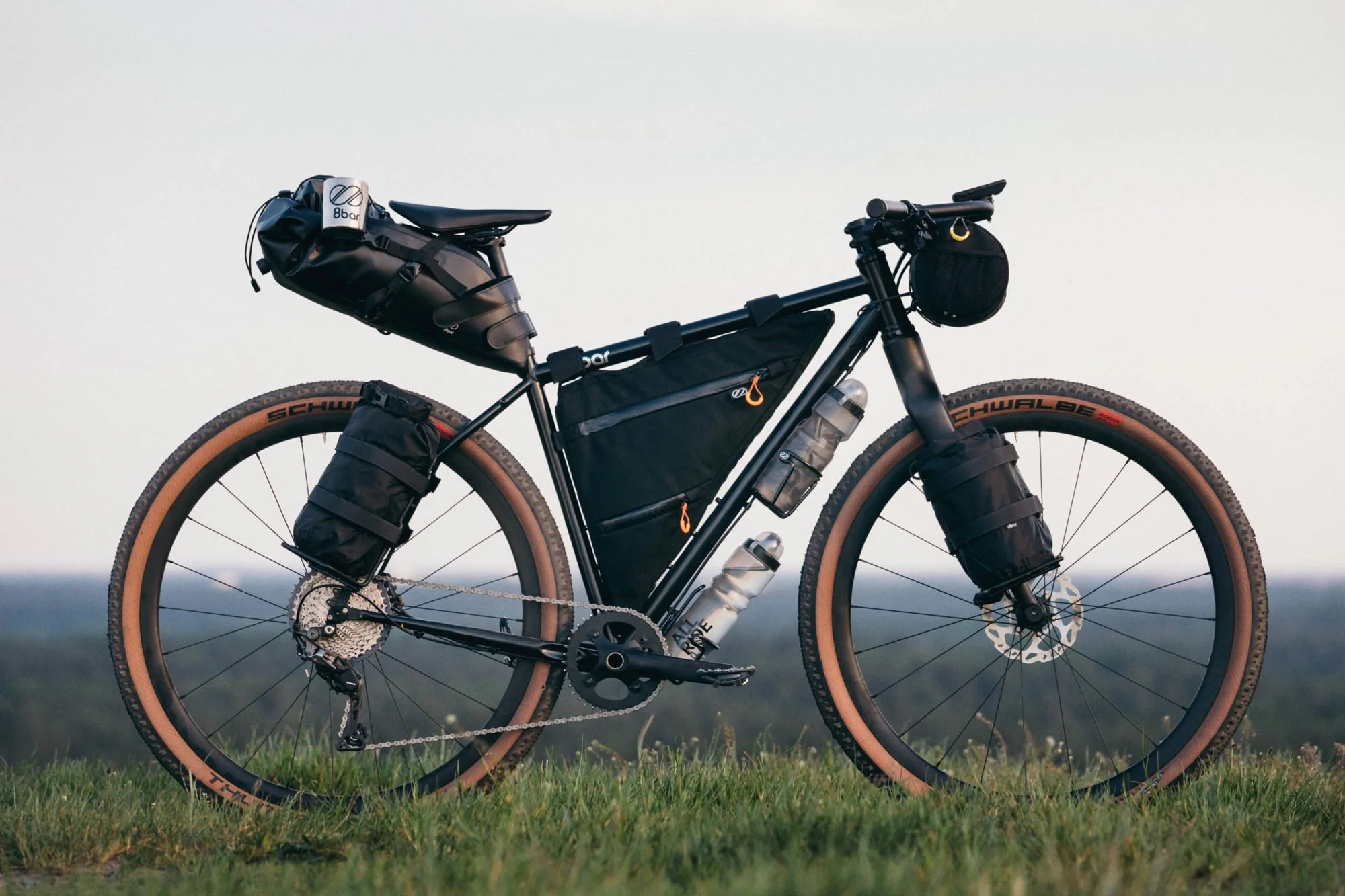
Bikepacking gear set-up. Stefan Haehnel. CC by 2.0
With its minimal gear, maximum mobility and reduced environmental impact, bikepacking is quickly becoming a popular trend for those seeking fluid travel and adventure. As the name suggests, bikepacking combines the best of both worlds from cycling and backpacking. While bike touring has long offered a similar sense of adventure, it usually focuses on paved routes, sightseeing and carrying more gear for longer travel. Bikepacking, however, allows you to travel and camp lightly and embrace more of a rugged, off-roading experience, closer to backpacking on two wheels. If you’ve been searching for a way to travel with this level of freedom, bikepacking might be for you. Here is some must-know information to learn more and possibly get started.
Gear:
The most important component to consider when bikepacking is, of course, the bike. While it is certainly possible to turn any bike into a proper bikepacking vehicle, some models are better suited for the job. Many bikepacking forums recommend looking into hardtail bikes for those unsure of where to start. These are bicycles designed for mountains and off-road terrain and, as such, are best for travelers interested in more rugged adventures. These bikes are large, durable and sturdy, making them extremely efficient on rugged terrain, but less so on paved roads. Furthermore, their size makes them very suitable for carrying heavy luggage while maintaining a sense of stability. Given these highlights as well as their affordability and simplicity — which allows for easier upkeep — these bikes are a reliable choice for getting into bikepacking.
Another important aspect of gear to consider is the packs. With the growing popularity of bikepacking, there is currently a large variety of options, each versatile in its size and placement. As such, it is first important to consider the size of the load that you wish to bring on your adventure. From there, you can choose an appropriate size and consider which placement would be most appropriate — options exist for frame bags, rack bags and saddlebags. With this variety, it is easy to alter the size of your load depending on the type of adventure you seek.
Routes:
With gear sorted, bikepacking offers a unique abundance of adventures to choose from, but with so much possibility, it can be overwhelming to know where to begin. Here are a few classic routes to consider.
The Little Switzerland Loop is a great route to consider for your first adventure. The two-day adventure spans 42 miles through rural Iowa with plenty of campgrounds to rest at. It is a manageable first entry into bikepacking with gorgeous scenery to elevate the experience.
For a more intense adventure, consider the Log Driver’s Waltz through Ottawa, Canada. The 500-mile route follows about 75% of unpaved terrain with gorgeous mountain and river views throughout. Nightly accommodation ranges from campsites to hotels and B&Bs, meaning adventurers can determine how rugged of an experience they would like.
For a mix of countryside and city, the Rambouillet Forest Overnighter is ideal. The 42-mile route starts in busy Paris and ends with quaint villages and quiet roads.
Resources:
As bikepacking has grown in popularity over the years, a large number of resources and communities have popped up on the internet. To learn more about gear and routes and hear from members of the community, try starting with bikepacking.com. You can also check out one of the many influencers sharing their adventures and advice on social media like YouTube, including popular channels Jenna Alexis and Henna Palosaari.
Isabella Feraca
Isabella is a junior at Carnegie Mellon University studying professional writing and music technology. In her free time, she can be found reading, making music, and playing shows with her band around Pittsburgh.