
Gabriella Farrell
Inside a Rwandan village school where students, teachers and volunteers are reshaping education — together.
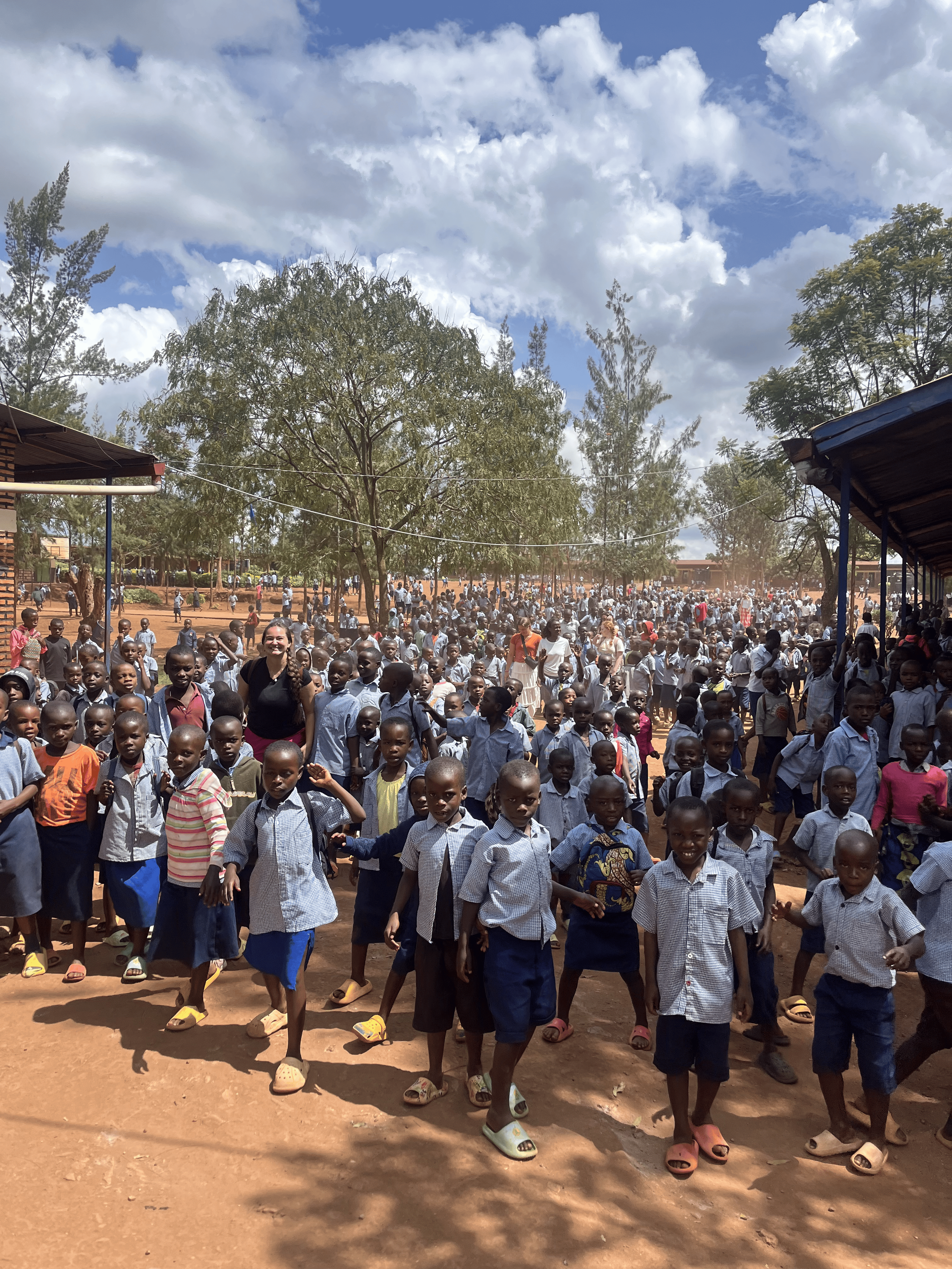
Students at Duha Complex School in Musha, Rwanda. Gabriella Farrell.
As the sun rose over the rolling hills of Musha, Rwanda, students cheerfully walked to school, joined soon after by our college group, all of us eager to exchange knowledge, culture and curiosities. Over the span of two weeks, Rollins College partnered with the Rwanda Education Assistance Project to observe and contribute to local classrooms, experiencing firsthand how students, teachers and families are writing the next chapter of Musha’s story. In a country where education has become a driving force of national progress, Musha’s vibrant, student-centered schools reflect not just the community’s current achievements but a shared commitment to the future.
A Nation Built on Learning:
In the years following the devastating Rwandan Genocide in 1994, the nation has taken to education as a critical pillar in its efforts to sustain its now thriving community. The majority of Rwanda is young, with two-fifths of the population under the age of 15, so expanding accessible education has become a vital cause for all. The government has made significant strides in increasing enrollment, providing necessary supplies and improving literacy rates.
In 2008, the Rwandan government added English as a national language to complete the quartet of Kinyrwanda, Swahili and French. This change has rapidly impacted communities who are now incorporating the English language into their daily lives. During my short time in Musha, I had the privilege of contributing to the community by assisting in English language learning for both students and teachers.
A Glimpse into Musha:
Nestled in Rwanda’s Eastern Province, Musha is a rural village surrounded by iconic rolling hills and winding red dirt roads. While daily life in Musha may look different from urban or Western settings — lacking some of the infrastructure and resources — it is rich in community and culture. Families here work primarily in agriculture, farming bananas, cassava, sweet potatoes, beans and maize. People work incredibly hard and live on about 277,674 Rwandan francs per month (about US $242 per month). Schools in Musha serve as vital hubs of learning, connection, resources and hope. Though challenges persist, the energy in Musha’s classrooms reflects a village deeply invested in building up its future.
Inside the Classroom:
During the first days of our visit, I met with faculty and staff from the Rwanda Education Assistance Project to discuss how best to support local schools. Eugene Nteziyaremye, the program manager, guided us through the differing needs of the schools and helped assign roles within our team. Our efforts were divided among several sites: Ineza Academy, Duha Primary and Complex schools, the community center and the girls’ room.
At Duha Primary School, where I primarily worked, lessons were taught in both Kinyarwanda and English. This bilingual approach challenges both students and educators, but also opens doors to new opportunities, connecting students to a wider world. With the invaluable support of our guide and translator, Grace Umuziranenge, we were warmly welcomed by teachers and students alike.
We taught up to seven classes a day with various ages and skill levels. Regardless of difficulties, students were always prepared to ask and answer questions, and teachers listened attentively to how we were teaching the English lessons as native speakers. We were constantly struck by everyone’s determination, kindness and eagerness to learn. Their passion for education, despite the demands placed on them, was inspiring.
Learning Together:
While bringing the knowledge of the English language was the primary goal of my time in Musha, I quickly noticed that I was learning just as much from the students’ resilience as they were from my lessons. Each day, students would walk us to and from school, eager to extend our conversations beyond the classroom. They asked questions about English words and phrases, and just as often, they became the teachers. We would stroll through the lush hills of Rwanda, pointing at trees, houses and clothing items, sharing with each other the Kinyarwanda and English terms for every item. We learned from each other, one word and one step at a time.
While many in Musha do not have access to as many resources as those in more privileged countries may have, their drive was limitless. In each child’s face, I didn’t just see students. I saw future leaders, artists and educators — young people already shaping the story of their village and their country. In each teacher beaming with pride, I saw a changemaker, filling their students with the tools to continue writing Rwanda’s story. Many of the children I spoke with told me they hoped to become teachers themselves. Like their nation, they have come to see education not just as a means to an end, but as the very root of progress.
Being part of Musha’s classrooms reminded me that education is a shared experience and a privilege that should not be taken for granted. Though my time in Rwanda was brief, the connections I formed and the lessons we shared left a lasting impact. And while not everyone can travel to Musha, there are still many ways to support the work being done there and across Rwanda
GET INVOLVED:
For those inspired by Musha’s remarkable story, there are many meaningful ways to remain engaged. The Rwanda Education Assistance Project (REAP) offers educational and vocational initiatives that support students, teachers and families throughout the region. REAP also welcomes volunteers and interns through structured programs, many of which can be found on platforms like Idealist and Volunteer New York.
If you're planning a visit to Rwanda, consider a culturally immersive experience that extends beyond the city. In communities like Musha, visitors can participate in community activities and richer cultural exchanges. These opportunities are not only enriching for travelers but also deepen cross-cultural understanding. By immersing yourself with curiosity and a willingness to learn, anyone can become part of the larger story of education and empowerment unfolding for youth in Musha.
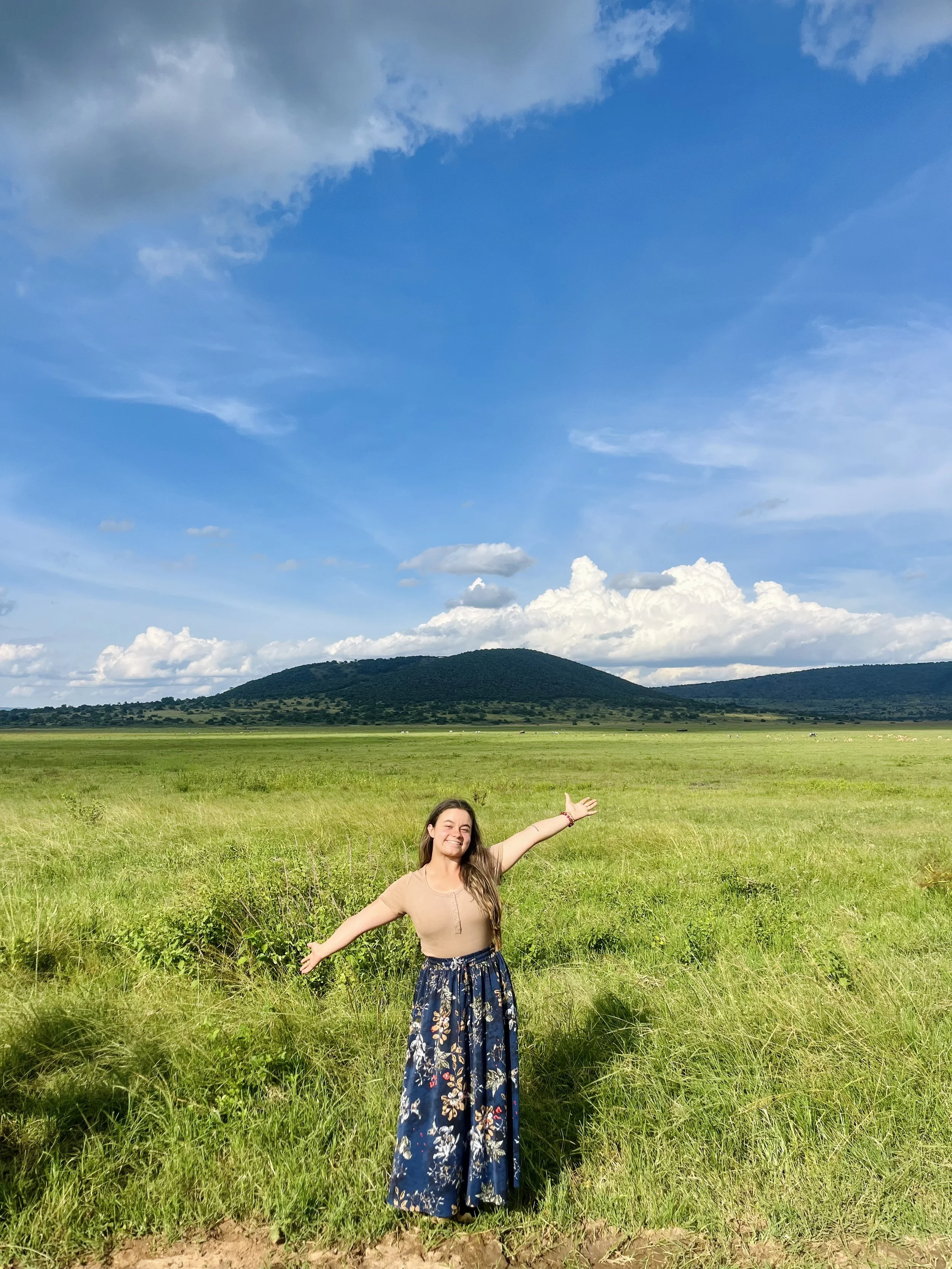
Gabriella Farrell
Gabriella is a student at Rollins College studying English. She hopes to further her education and continue writing about the world around her. When she is not writing, she enjoys playing music, being with friends, and exploring nature.